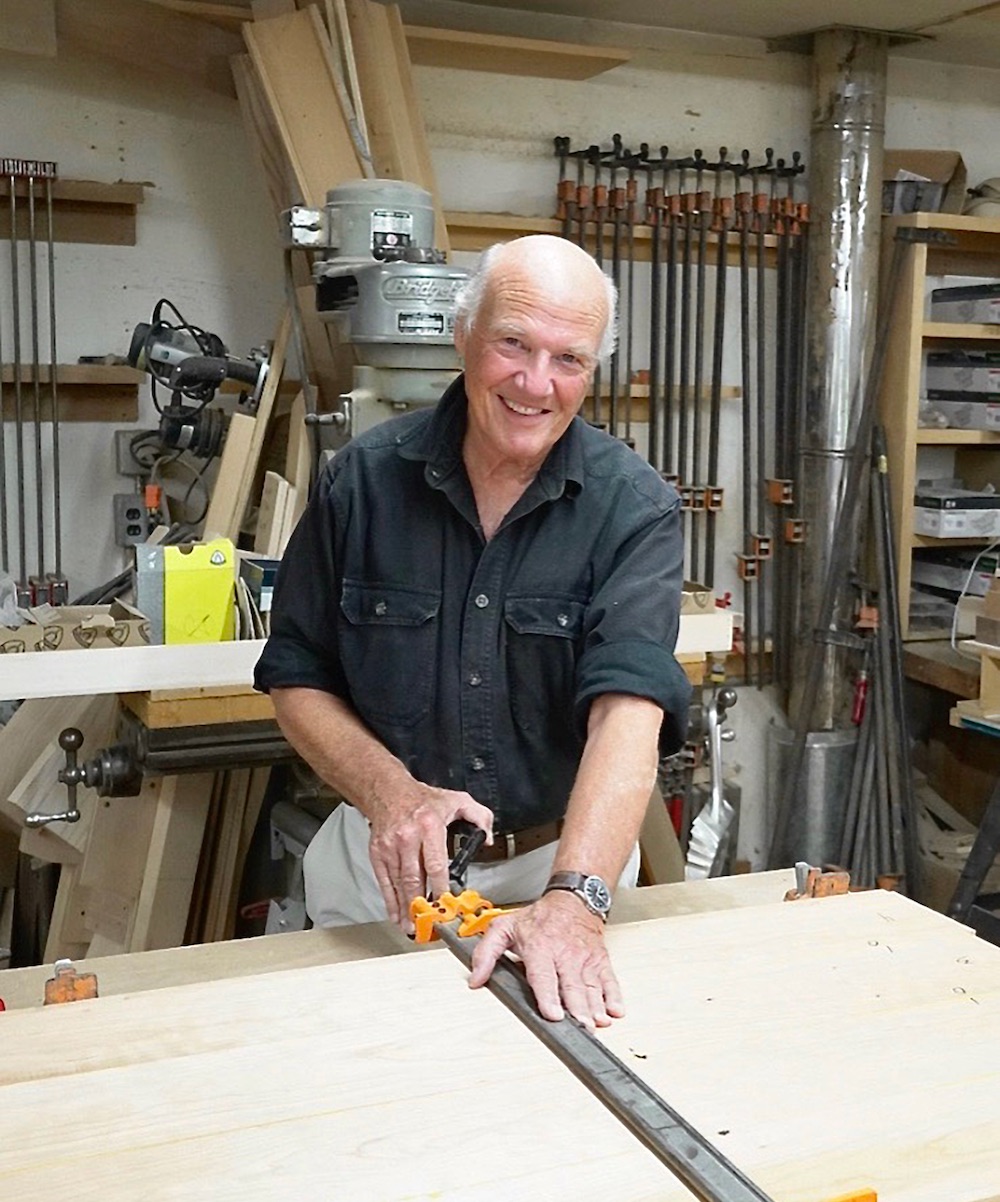
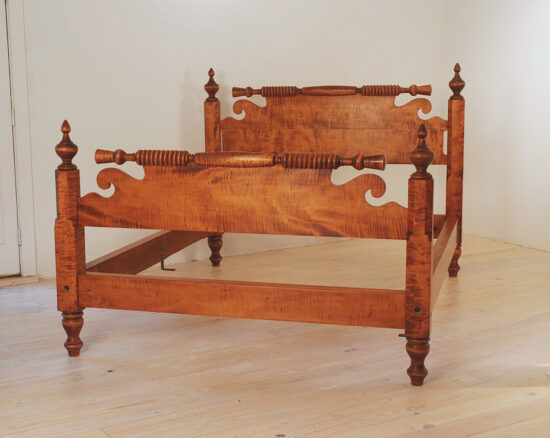
For 45 years, Ian Ingersoll has been creating custom cabinetry in the sleepy town of West Cornwall. Up until the pandemic hit, his guild of ten craftsmen were producing pieces for architects and designers of hotels and restaurants throughout the U.S.
Furniture Designer Keeps It Small and Local
By Wendy Carlson
For 45 years, Ian Ingersoll has been creating custom cabinetry in the sleepy town of West Cornwall. Up until the pandemic hit, his guild of ten craftsmen were producing pieces for architects and designers of hotels and restaurants throughout the U.S. When COVID-19 forced those businesses to close, Ingersoll shifted gears to meet a growing demand from local newcomers and weekenders-turned-permanent residents seeking to re-imagine their remote-work environment or remodel their home.
If decades in the woodworking business has taught Ingersoll anything, it is how to pivot during a changing market and brace for the unexpected. Since he started woodworking in a one-room workshop back in the mid-70s, he has survived five recessions and two fires.
After serving as an infantry platoon leader in the Army’s First Air Cavalry during the Vietnam war, Ingersoll returned to Litchfield County in 1969 and needed a place to live. He built a house in West Cornwall, using old barn wood he salvaged from the area. “That house burned down, so I built another one”, says Ingersoll nonchalantly.
He is standing in his showroom in the historic Toll House building, which he compares to being in a harbor overlooking vintage sailing vessels. The Toll House, which sits opposite from the town’s famous covered bridge and just steps from the Housatonic River, is in the company of Victorian homes, weathered barns, and a train depot that, all of which once housed businesses that have come and gone—except for his.
Ingersoll began woodworking in the early 70s after friends in Manhattan asked him to redesign their apartment. For Ingersoll, it was an awakening. He realized furniture design would be his life’s work and he found his niche, drawing inspiration from Shaker furniture.
“I decided to replicate it to teach myself woodworking. I was aware of marketing cycles for furniture trends, and I thought I would be doing Shaker for like five years,” he says. “But Shaker became more recognizable in the antique and design worlds, and in1986, when Whitney Museum featured a Shaker furniture exhibit it catapulted internationally. I hired more craftsmen and began shipping furniture to Europe and Asia.”
Meanwhile, his designs kept evolving. “Five years ago, I realized about 85 percent of what we do is now contemporary furniture. We still do Shaker, country, and traditional pieces, but we also do five types of contemporary—modern, original designs,” he says.
His craftsmen, most of whom begin as apprentices, work out of a three-story building, where Ingersoll moved his operation after the shop attached to his showroom burned down in 1990. The business outgrew being in a small village long ago, but Ingersoll prefers working in West Cornwall, where he put down roots and raised a family. “We did a sort of straw poll among the workers and we decided we wanted to stay here. We’ve kept ourselves small, and maybe that is part of our survival skill,” he says.
It has always been Ingersoll’s desire to design furniture that advances the art form, although he explains that only two percent of the work he does is actually design. The rest is rebuilding and rebuilding, and perfecting the design.
The Shakers, in their effort to simplify their lives, took Chippendales and Queen Anne furniture popular in their time and redesigned those pieces, creating an entirely new art form.
“Eighty-five percent of a design is grounded in history, fifteen percent is a matter of intuition. In order to take an intelligent step forward you have to know everything that has come before,” he says.
Like the Shakers, Ingersoll has created a legacy in furniture design in West Cornwall. As for what the future holds, Ingersoll shrugs. “If this doesn’t last,” he says, “at least, I can say I’ve had a really good run.”
One of my favorite jaunts in Litchfield County on a warm sunny day is zipping by the pretty antique houses and big expanses of farmland in Sharon enroute to Paley’s Farm Market. Paley’s is both a garden center and authentic farm market, with oodles of plants, gourmet cheeses, and locally grown produce.
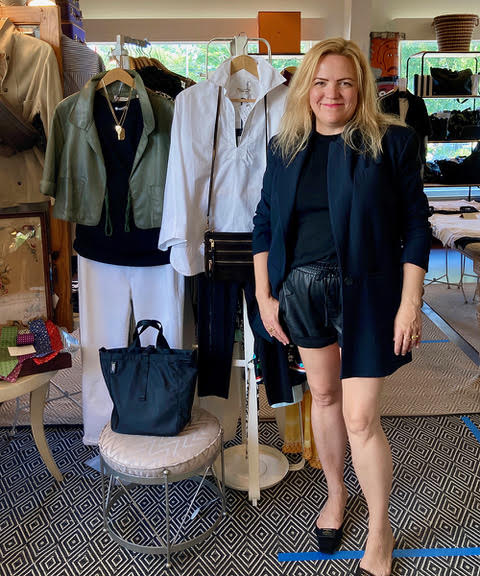
Bartley Johnstone, owner of B. Johnstone & Co. boutique
in Sharon, shares her Litchfield Faves…
1 One of my favorite jaunts in Litchfield County on a warm sunny day is zipping by the pretty antique houses and big expanses of farmland in Sharon enroute to Paley’s Farm Market. Paley’s is both a garden center and authentic farm market, with oodles of plants, gourmet cheeses, and locally grown produce. It’s the place to buy corn, and get a big air hug and smile from Reneé.
2 Also in Sharon is the charming wine bar—The Edward, the local gathering place and café—Gifford’s, the TriArts summer theatre, and the hipster barber Smitty’s—owned by the bubbly and friendly Corey.
3 Driving towards Lakeville on Rte 41, is one of my favorite views looking over Mudge Pond and the hills beyond. You’ll often see artists with their easels set up, painting the landscape. Mudge Pond and the Grove in Lakeville are the ‘go to’s for swimming and beach for the family. There are places to picnic, sailing lessons, and camps for kids.
4 Further up the road in Salisbury is Provisions at The White Hart Inn. They make great coffee and baked goods, and I always take home their homemade granola and something yummy for dinner—lamb tagine or green chicken and white bean chili.
5 To unwind and relax we like to put our canoe in at Long Pond, or wander over to Troutbeck for a burger and a dip in the pool.
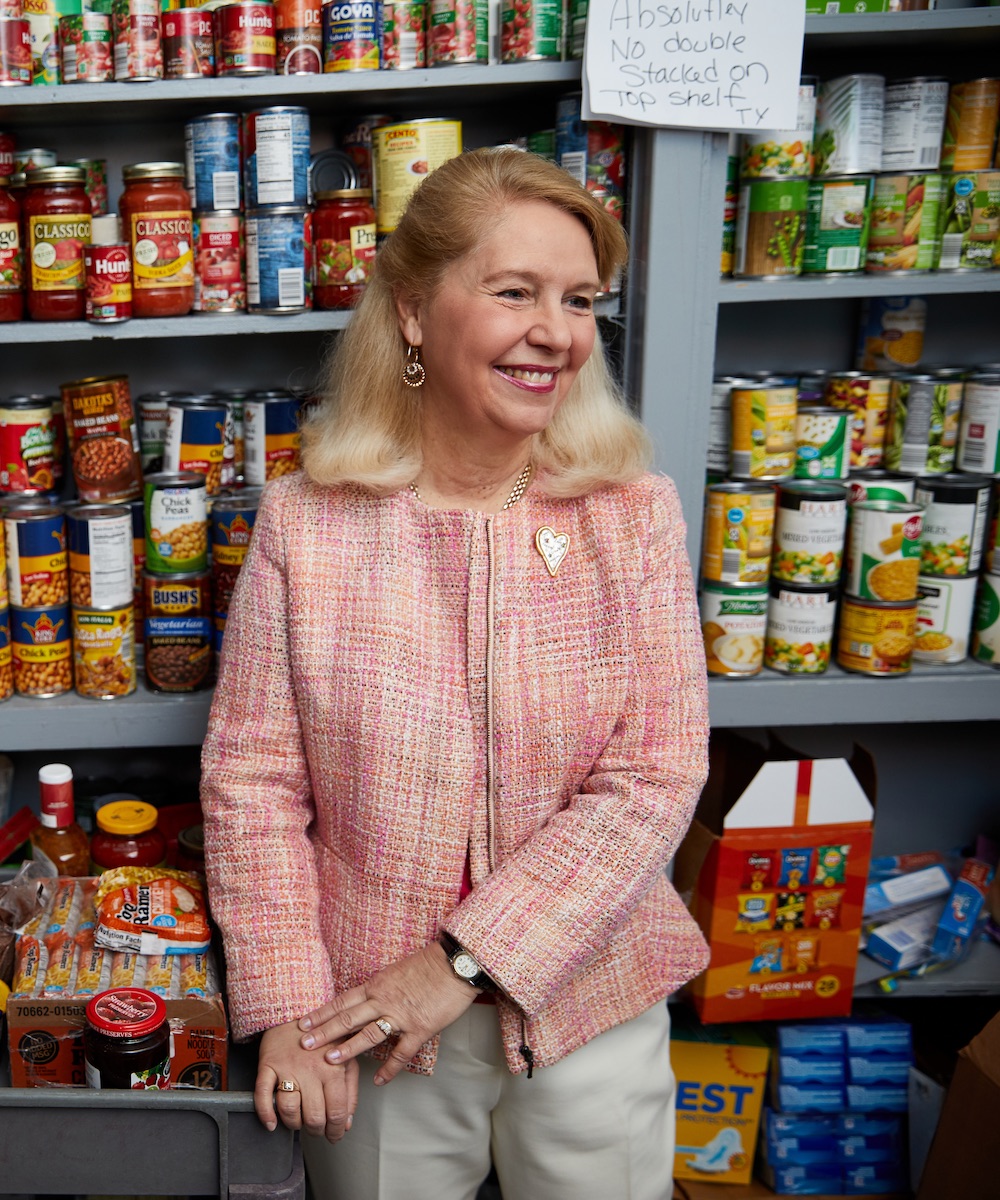
Deidre Houlihan DiCara had spent 29 years as a professional in girl scouting, 23 of those as the executive director of the Girl Scouts of NWCT, until she was approached seven years ago to assume the leadership role at FISH NWCT—Friends in Service to Humanity—in Torrington.
Deidre Houlihan DiCara had spent 29 years as a professional in girl scouting, 23 of those as the executive director of the Girl Scouts of NWCT, until she was approached seven years ago to assume the leadership role at FISH NWCT—Friends in Service to Humanity—in Torrington. While contemplating the gravity of taking on homelessness and hunger, it took her six months to accept the offer, one she now realizes is her true calling in life. It seems that things have come full circle for this urban studies major from Wheaton College whose senior paper once delved into the homeless of Boston.
How did your family influence you?
My parents raised us in an idyllic country setting—surrounded by dogs, cats, bunnies, and ponies—where they instilled a great sense of community and volunteerism in us. I’m fortunate to be living in our family home in Winchester, where three generations of the family still gather for Christmas.
Can you describe what FISH NWCT does?
In the best of times, we maintain a 35 bed homeless shelter—last year serving 101 individuals—71 adults, 13 children, and 17 veterans. Our shelter residents receive meals, bedding, mental health and medical assistance, and GED classes if needed. They have case management to coordinate services, assist with job search support, and vocational training as they await permanent supportive housing placement. At the FISH Food Pantry, we distribute enough food to provide 113,841 meals to 1,506 individuals.
What do people need to know about the homeless and the food insecure of Litchfield County?
Every homeless person is an individual facing tough economic times, and every hungry family has their own unique story. We at FISH NWCT see the very human social welfare challenges of families, individuals, and veterans facing life crises every day and now the fear of the Coronavirus. We strive to restore the confidence and well-being of those who are the most vulnerable and have the courage to come forward and humbly ask for help.
When the pandemic hit, what were your first thoughts?
The moment they closed Italy and the market plummeted, I knew we were facing a world crisis. Immediately I thought how will we stay well on the front line, and keep our doors open at FISH to serve those who depend on us? How will I fund the organization? And my greatest fear is how will we keep the FISH Homeless Shelter staffed if illness enters?
How did FISH respond to Covid-19?
We re-arranged dorm rooms, created isolation areas, and developed protocols. “Team Stay Healthy” worked to keep up morale, and to deliver food services at the pantry. We are now stretched to add those who are furloughed and those with families in need.
How have you received support from the community during the pandemic?
So many heroes and angels have appeared during this pandemic! I use Facebook daily to report good deeds by folks who volunteer—who provide dinner to the shelter as we are now serving three meals a day. These include mask makers, health providers who helped rearrange the shelter sleeping areas and advised me as I developed health and safety protocols, miraculous financial donors, friends and Food Rescue USA delivering groceries for the food pantry, receiving pictures from children with hearts and rainbows—so many are shining in their goodness and generosity! We are forever grateful.
Besides donating food, money, or our time, how else can we help? Once the pandemic ends, I invite everyone to take my “grand” tour of FISH and to join me in our “Rally Day to End Hunger and Homeless in NWCT,” the Saturday before Thanksgiving. fishnwct.org
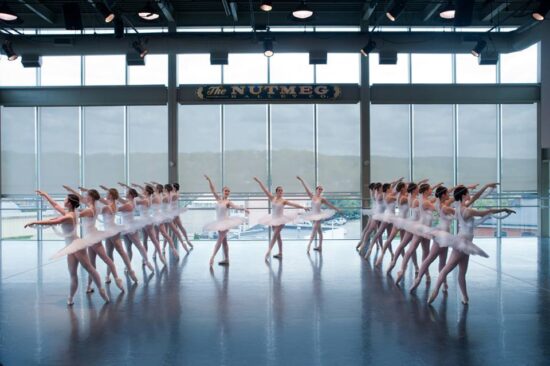
Fifty years ago Sharon Dante followed a dream and started a classical ballet training program that grew into the Nutmeg Ballet Conservatory—an organization that has trained thousands of dancers across the country and abroad, many of whom have gone on to successful careers with some of the premier dance companies in the world.
The Nutmeg Ballet Celebrates a Half-Century Milestone
By Joseph Montebello
Fifty years ago Sharon Dante followed a dream and started a classical ballet training program that grew into the Nutmeg Ballet Conservatory—an organization that has trained thousands of dancers across the country and abroad, many of whom have gone on to successful careers with some of the premier dance companies in the world. And it all began in a modest studio on Migeon Street in Torrington.
“When I started my school I was immediately asked by folks here in town to become involved with the Torrington Arts Festival, which had just been funded by the Connecticut Commission for the Arts. And I set three goals for myself: first, to create world-class dancers using Vaganova fundamental training and to win major ballet competitions so that the name Nutmeg would make its way into the larger ballet world. Secondly, to see the Warner Theater reopen with live performances and be restored to its original glory. And lastly, to build a major training complex with beautiful studios, a production department, and housing for students.”
Mission definitely accomplished. The Warner Theater reopened in 1983 with the Nutmeg’s production of Coppelia.The main role of Swanilda was performed alternately by Victoria Mazzarelli and Donna Mattiello, who now hold the positions of Artistic Director and Academic Director, respectively. As a young dancer, Mazzarelli went on to win the first New York International Ballet Competition in 1984.
In 2001 the Nutmeg moved into a 40,000 square-foot complex with five dance studios, seven dressing rooms, a community room, and full costume and dance shops. There are three student lounges, a fitness room, and a physical therapy room. The state-of-the-art building also contains rooms for boarding students.
Photo credit: Don Purdue
Denise Warner Limoli, who recently retired as Professor Emeritus in Dance at Skidmore College, has returned to the Nutmeg as Senior Ballet Mistress. “I met Sharon in 1968 when I was a young dancer with the Hartford Ballet,” recalls Warner Limoli, “and performed as a guest dancer for several years. I am thrilled to be back in Torrington and continuing my work with Sharon and the Nutmeg team.”
Warner Limoli’s husband, Michael, serves as the principal pianist for the ballet company. The Limolis recently curated a public exhibition to celebrate the 50th anniversary of the Nutmeg Ballet, housed in the conservatory’s gallery.
Before everything changed with the advent of the coronavirus pandemic, plans were in place to celebrate the company’s milestone anniversary. Former students from all over the world had plans to return and participate. Teaching has continued during the shutdown and has been challenging but successful. “The most interesting transition has been taking our ballet classes online,” says Mazzarelli. “We’ve set up a Zoom studio at the Conservatory with a ballet barre, a chair, a yoga mat, and a sound system. It’s not the same as being in our regular studio, but there are things we do that work very well on Zoom, and the students are very accommodating.”
Mattiello commented that the academic aspect of the students’ education continues without interruption since the Nutmeg partners with organizations that offer online curricula.
While it remains to be seen when traces of normality may return, the Nutmeg faculty will continue to work virtually, nurturing the talents of youngsters who will become the next generation of ballet stars. And perhaps some of them will join the ranks of those like Mazzarelli, Mattiello, and Warner Limoli who have returned to the fold and carry on Dante’s dream.
It is easy to understand why so many horse enthusiasts are enamoured with Arabians. On a visit to Trowbridge’s one day, I met a sweet dapple-grey named Atlanta Blue who had me at hello. He nudged me gently with his soft muzzle and tempted me to linger.
In Bridgewater, a stable of prize winning Arabians
By Wendy Carlson
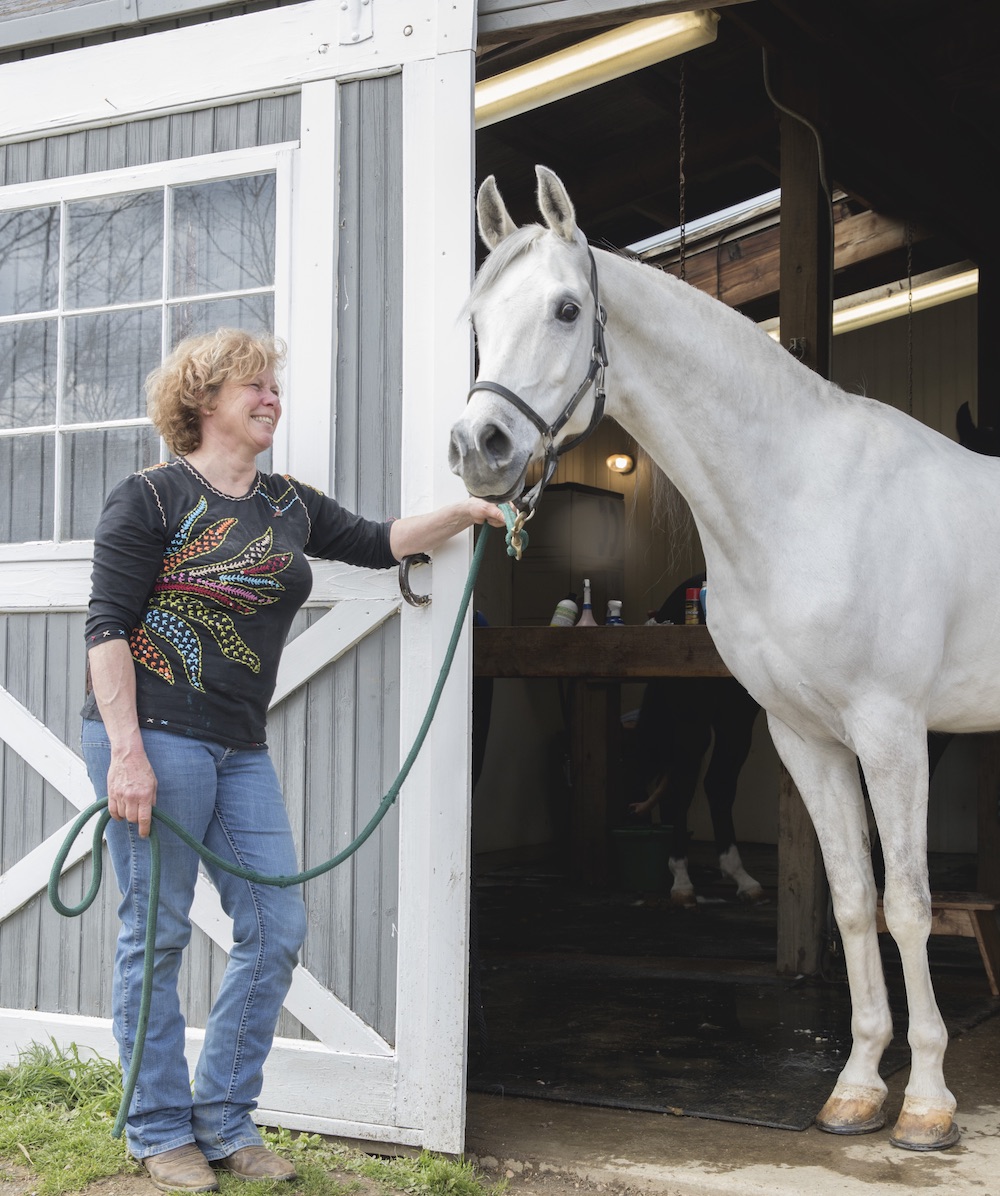
If the world had an animal ambassador it would be an Arabian, insists Mary Trowbridge, who with her husband, Pat, owns Trowbridge’s LTD in Bridgewater; a farm where they breed and train purebred Arabians and Half-Arabians.
Aside from sharing their passion for the breed, Mary and Pat are committed to giving back to the equine community. When the pandemic struck, the Arabian Horsemen’s Distress Fund, which they founded in 2004, disbursed more than $150,000 in just one month to help Arabian owners and farms through the crisis.
“Certainly, nothing prepared the fund for the events of the last few months, but the outpouring of support from within the tight-knit community of the Arabian horse world has been overwhelming, and is enabling the fund to assist hundreds of people,” Mary says.
It is easy to understand why so many horse enthusiasts are enamoured with Arabians. On a visit to Trowbridge’s one day, I met a sweet dapple-grey named Atlanta Blue who had me at hello. He nudged me gently with his soft muzzle and tempted me to linger. But one stall over, Fandango, a palomino Half-Arabian with a silky white mane and the sculpted features of a Breyer model horse, beckoned me with one turn of his handsome head.
Photo by Wendy Carlson
Besides their striking looks––characterized by a long, arched neck, dished face, diminutive muzzle, and high tail carriage––Arabians are known for their ability to bond with humans. The breed originated in the deserts of the Middle East as war horses and were so prized by the Bedouin families that they were used as currency and kept in tents with the families; which Mary believes explains their natural ability to connect with humans.
Mary has an innate understanding of equines, which she has honed since she was a horse-crazy kid growing up in upstate New York. At age six, she got her first horse after making an agreement with her parents that as soon as she could carry a bucket of water from the house to the barn she could get a horse. Mary hightailed it down to the hardware store and bought the smallest bucket she could find. “They never said what size the bucket had to be,” she quips.
Without any formal training, she eventually started winning ribbons at regional 4-H and county fairs. The more she became involved in the Arabian community, the more she felt it aligned with her down-to-earth personality and began breaking barriers in what was then a highly male-dominated field. In 1978, she took a break from college to work at Sir William Farm in Hudson Valley, NY, under the tutelage of legendary horseman Bill Bohl, where she learned the ins and outs of horse breeding and training.
In 1989, she met Pat, a former cattleman, and the two joined forces. With Mary’s training and breeding expertise and Pat’s farm knowledge and business savvy, the couple launched Trowbridge’s LTD in 1991 in Salisbury, and in 1994 leased and eventually purchased their current farm from Broadway and movie producer, Mike Nichols, who was an avid Arabian enthusiast himself.
The farm office is bedecked with red ribbons and medals, a testament to the farm’s success in the show ring and producing hundreds of horses found in pedigrees throughout the world. The core of the business remains breeding, training, and showing client horses, but the farm also offers a thriving lesson program. And if you ask Mary, we all can benefit from spending time with these handsome creatures.
She notes that since social distancing began, more people have been heading outdoors and enjoying the scenic road that borders the farm property. As they walk past the farm, they are drawn to the horses grazing in the fields; and true to their nature, the horses are drawn to the folks on the other side of the fence. That kind of emotional connection is crucial not only to humanity, but to Mary’s passion of building awareness of the Arabian community. And, with ambassadors like Fandango and Atlanta Blue, she already has a leg up.
Poeppel is the author of three novels: Small Admissions, Limelight, and her latest one Musical Chairs. They have been described as quick-witted and razor-sharp.
A Fiction Writer Believes Dialogue is Key to a Successful Novel
By Joseph Montebello
Many novelists begin with a plot, the germ of an idea that develops into a story. Amy Poeppel thinks in terms of dialogue. She will imagine a conversation and then create the characters and the plot.
“I did some acting after college,” explains Poeppel, “and I’ve never stopped reading plays, attending productions, and studying playwrights. I strongly believe that there is a lot a novelist can learn from the theater, in particular what makes great dialogue.”
Poeppel is the author of three novels: Small Admissions, Limelight, and her latest one Musical Chairs. They have been described as quick-witted and razor-sharp. They are a unique combination of humor, pathos, and a view of real life. The first two were New York City books, as Poeppel refers to them. Musical Chairs is set in Connecticut.
Poeppel is originally from Dallas, but her mother was a Connecticut native and instilled in her how it was the best place in the whole world to live.
“I wound up going to the Kent School,” says Poeppel, “went off to college, got married. My husband and I lived in many different places, but when we decided to move back to New York, we wanted a place in the country. I fell in love with Kent and we bought a house. Now, during this pandemic, I am so happy to be living here.”
Unlike many authors Poeppel does not work from an outline.
“I put people in a room and start them talking, then fill in the background. I don’t think it’s the most efficient system because I rewrite constantly; I scrap hundreds of pages. But I don’t mind redoing something. There are times when I have gotten a whole character wrong and started all over again. Don’t cling to that first draft, which, in most cases, is not good. A draft is a draft. You finished it. Great. But now you have to rewrite it.”
Poeppel’s other piece of advice is to read.
“I read all the time, all kinds of things, not just my own genre. I really learn so much from reading other people’s work.”
And humor is always of Poeppel’s equation. Even in a serious moment, there is a trace of irony, something to make the reader smile. And conversation is always uppermost in her mind. She engages her three children in reading dialogue out loud to test its authenticity.
“If it doesn’t sound right when spoken, then it doesn’t work on paper either.”
Because of the coronavirus, Poeppel and her publisher are thinking of new ways to promote Musical Chairs. She has been attending events online to see what will work best for her. Be assured she will get the word out.
Oh, and she is at work on a fourth novel and doing an outline for the first time. We can’t wait to see how that works out.
Elegant. Discreet. Quiet. Generous. Cultured. Curious. These are some of the adjectives that were used to describe Anne Bass by those who knew her. A resident of South Kent for many years Bass died of ovarian cancer this past April.
Arts Patron and Philanthropist Anne Bass Was One of a Kind
By Joseph Montebello
Elegant. Discreet. Quiet. Generous. Cultured. Curious. These are some of the adjectives that were used to describe Anne Bass by those who knew her. A resident of South Kent for many years Bass died of ovarian cancer this past April. And while she kept a low profile she will most be remembered for setting the bar high on preservation, restoration, and conservation in Litchfield County. She also owned property in Fort and Nevis, where she maintained the same exacting standards.
Heather Watts, former principal dancer with the New York City Ballet, has known Bass for over 40 years and was one of her closest friends. “We met through dance,” Watts explains. “She was involved with the School of American Ballet and was living in Fort Worth with her two girls. We became quite close and traveled together. We both loved flowers and we’d go to the Chelsea Flower Show. I’d be admiring the flowers; she’d be taking notes and became a botany expert. She was perpetually inquisitive.” Author and garden specialist Jane Garmey profiled Bass and her property in Private Gardens of Connecticut.
“Anne was a serious scholar and astonishingly and sometimes even dauntingly knowledgeable about horticulture, garden history, and garden design. While she worked with Russell Page and Madison Cox on her gardens in Fort Worth, South Kent, and Nevis, in recent years the continuing design was all her own. Her gardens offered a private sanctuary from the outside world and are a fitting tribute to an impassioned and talented gardener.”
“Anne has always been a champion of preservation and conservation efforts,” says philanthropist and neighbor Agnes Gund. “She was very generous and interested in learning about gardening all over the world, including how plants could survive in all kinds of climates. She was a perfectionist and everything she enjoyed was perfect, yet fun and filled with good conversation. I shared many wonderful times with Anne over the years.”
Larry Lederman
Hiram Williams, president of the board of directors of the Weantinoge Heritage Land Trust, joined the board of trustees at the same time Bass did and also worked with her on the revitalization of the Kent Center.
“Anne was instrumental in transforming Weantinoge into the largest land trust in the state. She kept a low profile yet was influential in so many areas. She was certainly a great benefactress and philanthropist, but she was also a worker and she worked hard. A Midwestern ethic in the nicest way. She also championed Joel Viehland and supported him in the opening of Swyft in the historic Kent Barns.”
Fellow Connecticut resident Carolyne Roehm admired Bass for her inquisitiveness.
“She was always the student,” Roehm recalls, “wanting to learn everything she could about a particular subject. I myself learned a lot just observing her. I so admired her curiosity about everything and the style in which she did things.”
Literary agent Lynn Nesbit, who met Bass in New York many years ago and shared her love of Litchfield County, reaffirmed what others said about her passions.
“She cared deeply about climate and preserving the heritage of the land and certainly did that with her own property and the historic houses she restored.”
“Anne did everything in the most extraordinary way,” recalls interior designer Robert Couturier. “She was always beautifully dressed and charming but very modest. It was all perfection and she worked hard to maintain her standards. She was very interested in making sure that the land and properties she loved and developed would continue to be protected after she was gone. Her devotion was unsurpassed.”
Her gardens, according to her family, will be preserved, probably as some kind of land conservancy. Nothing will be sold in Connecticut, Nevis, or Texas. Thus there will always be reminders of the extraordinary woman who was Anne Bass.
Photos by Larry Lederman, copyright(c) all rights reserved. There will be a spread about Anne’s Garden in a forthcoming book by Larry Lederman called: Garden Portraits: Experiences of Natural Beauty. The book will be published by Monacelli Press this coming October, 2020.
They say golf and tennis are sports one never ages out of. Throw rowing in there as well.
Just check out the Litchfield Hills Rowing Club, founded in 1978 to promote the sport for the residents of the area. Sure, the club boasts a vibrant junior membership, many of whom go on to row in college, some even attaining scholarships. But there are also many adults, or “masters” in sportspeak. All ages blend into one harmonious collection of rowers, super supportive of one another and passionate about the sport.
Row, Row, Row Your Boat Not so gently across the water
By John Torsiello
They say golf and tennis are sports one never ages out of. Throw rowing in there as well.
Just check out the Litchfield Hills Rowing Club, founded in 1978 to promote the sport for the residents of the area. Sure, the club boasts a vibrant junior membership, many of whom go on to row in college, some even attaining scholarships. But there are also many adults, or “masters” in sportspeak. All ages blend into one harmonious collection of rowers, super supportive of one another and passionate about the sport.
Sue Edelstein makes the half hour drive to the Bantam Lake boathouse on Old North Road pretty much every day during rowing season, basically from early spring until November. She is 68 and looking fit as someone half her age. The reason, she says, is rowing.
“We have a number of rowers 50 and over. It’s a sport for body, mind and spirit. A big part of being a member here is the camaraderie and sense of team that comes from rowing in a quad (four rowers) or an 8 (eight rowers and a coxswain). I absolutely love the sport. It teaches grit, determination and perseverance.”
A.J. Butler, a graduating senior at Litchfield High School and headed for the University of Connecticut, has won medals at several races and competes in the double (two rowers) and quad boats. He was a basketball player, but upon the recommendation of a neighbor he tried his hand at rowing his freshman year at LHS. Soon, the basketball was put in the closet and oars became his closest friends.
“It is a physical sport yes, that takes a lot of core and leg strength. But it is also mental because you have to push through when you are hurting. The life lessons you learn are invaluable. It can be an individual sport to some degree but you are never alone in a boat and the bond you develop with your teammates is amazing.” He hopes to row with UConn’s club program.
The club’s solar powered boathouse was built in 2009. The LHRC currently has a fleet of singles, pair/doubles, quads, fours and eights, and has additional rack rental space for members. The club has an indoor training facility at 607 Bantam Road.
A major goal of the club is to introduce area youth to the sport of rowing, with the high school program pulling from towns around the region, including Litchfield, Morris, Goshen, Naugatuck, Bantam, and Warren. The junior boats compete in area regattas and races during spring, summer and fall, while also training and competing at indoor “erg” (ergonomic rowing machines) competitions during winter.
“National Learn to Row Day”, usually in early June, allows adults to try their arms and legs at rowing. Members volunteer and help teach technique, as well as introducing visitors to the club. Individuals can move on to “Learn to Row” clinics (usually six to eight, two-hour coached sessions). Then there is the option of becoming full members.
Drew Combs was hired last year to coach the club, coming to the job with impressive credentials. He has worked with a number of college teams and private clubs up and down the East Coast. “I grew up in the area and it’s great to come back close to home. The members wanted someone to take the teams and rowers to new levels and get rid of the stigma that the club is the best kept secret in Litchfield. You give me anyone and I can make a rower out of them.”
Each year we are excited and surprised by the amazing and fascinating people we discover who contribute to making Litchfield County the unique place that it is. Enjoy this annual list of the Litchfield 25 for 2020.
Each year we are excited and surprised by the amazing and fascinating people we discover who contribute to making Litchfield County the unique place that it is. Enjoy this annual list of the Litchfield 25—Edited by Joseph Montebello
Michelle Anderson Director of Childhood and Family Programs at EdAdvance, has been involved in numerous statewide initiatives dealing with children and families, homelessness, and education matters. She serves as the McKinney-Vento Homeless Liaison for EdAdvance and partners with local shelters to assist families in need. In 2019 she was named one of the First 100 Plus members in Connecticut for helping to improve the lives of women and children residing in domestic violence shelters.
JOHN BOURDEAU
John Bourdeauhas created some of the county’s best places to dine and drink: Lucia Ristorante, Main Street Grill, Highland Brass Company, and the Owl Wine Bar. He sponsors many charitable events including the Flanders Farm-to-Table dinner and is the ambassador for Spring Hill Vineyards. He partners with Salvatore Anthony on the Pride in New Preston event. With new business partner Ryan Cangello, The Owl has recently been renovated and expanded.
Bob Avian, of Kent, is the Tony and Olivier Award-winning dancer and choreographer who has worked with major female stars Barbra Streisand, Katharine Hepburn, and Patti LuPone. Since he first danced in the original West Side Story, he has choreographed countless Broadway shows, including Dreamgirls, Sunset Boulevard, and A Chorus Line. He recently published his memoir Dancing Man.
Caroline Bossetti, who grew up in France, has created pop-up event spaces and salons in various places in Litchfield County. Several years ago she took over a derelict manufacturing space in the Oakville section of Watertown and turned it into Old Platform 6, a unique venue offering food, free Wi-Fi, monthly music events, and dancing—a place fostering creativity, camaraderie, and comfort. An example of how resourcefulness and talent is turning forgotten spaces into hubs of excitement.
Ed Cannata, a Torrington resident, is a graphic designer, marketing consultant, and brand specialist. He is a volunteer at FISH Food Pantry and Homeless Shelter and is a member of the Torrington Historic Properties Commission, Torrington Arts & Culture Commission, and Connecticut Preservation Action. He has served on various other boards, including the Torrington Historical Society and the Torrington Library and is dedicated to championing the place where he lives.
Charles Atkins, MD is a board-certified psychiatrist, speaker, and author of numerous books. He has penned two textbooks on co-occurring substance use and mental disorders, and opioid use disorders, which are used nationwide. He is a volunteer faculty member of Yale University School of Medicine.
Architect Clifford Cooper has provided design services for numerous residential and commercial clients. He has been the driving force behind the success of the Litchfield Community Greenway. He has served as president of the Rotary Club of Litchfield/Morris, a corporator at Litchfield Bancorp, a member of the Town Hall Building Committee, and chairman of the transportation subcommittee for POCAD.
Judith Hogan saw the transition of the Visiting Nurse Association into the Litchfield Health & Wellness Resources during her tenure as president. She serves as secretary of the board of managers of the Maria Seymour Brooker Memorial. Additionally, she has served on the boards of the Litchfield Community Services Fund, the Litchfield Aid of the Connecticut Junior Republic, Women’s Forum of Litchfield, and theTown of Litchfield Social Services Committee.
Kristine Newell
Kristine Newell is a Litchfield County Regional Manager for William Pitt Sotheby’s International Realty. She created the “Escape to the Hills” campaign to help attract buyers to Litchfield County. Newell was named Manager of the Year in 2018 and 2019. Currently she serves on the board of directors of the Litchfield County Board of Realtors and volunteers on the board of Prime Time House. In 2019 she launched the Box of Gratitude, a small business that teaches how to share gratitude with others.
Barry Labendz moved to Kent in 2013 while starting Kent Falls Brewing Company, a long-planned venture with a group of friends and partners. When the brewery opened two years later it became Connec-ticut’s first farm brewery. He is passionate about beer, local agriculture, and building a community-oriented supply chain. As a founding member he sits on the advisory board of the Northeast Grainshed. On a personal note: he wonders if he can still play competitive Ultimate Frisbee.
Denise Warner Limolihas been associated with the Nutmeg Ballet since its inception in 1969, first as a guest dancer, then as teacher, ballet master, and advisor. She rejoins the Nutmeg as Senior Ballet Mistress after retiring from Skidmore College as Professor Emeritus in Dance. Her extraordinary knowledge of traditional, classical ballet, her dance experience, and her dedication to the art enable her to work with young dancers and bring them to their maximum potential.
Jason and Rene MacKenzie are the owners of Bohemian Pizza, now celebrating its 20th year. With its laid-back atmosphere, quirky décor, friendly waitstaff, and diverse menu, featuring its classic pizzas––it is one of the go-to places in Litchfield. The owners are committed to their community and have instituted a charity of the month for which they raise funds and awareness for various local causes, particularly during the COVID-19 pandemic.
John Newton, a former Time Warner executive, has been an angel investor in various start-up companies, including Bear Naked Granola, Bonobos, and local business M. LaHart & Co. He was on the board of the Litchfield Historical Society for many years and now serves on the board of the Connecticut Community Foundation and is a staunch supporter of the Oliver Wolcott Library.
Suzanne Paxton is a five-time Emmy Award-winning founder of Point Studio––a video, television, and live production company. Her clients include: ABC News/Good Morning America, CBS, CNBC, and AT&T. She was a nationally and internationally ranked fencer and a member of the 1996 Olympic team. She sits on the board of the Gunn Memorial Library and produced five videos for the 20th anniversary celebration of ASAP.
Jeffrey Lapham & Emily Mattina, executive director and artistic director, respectively, are the founders of Shakesperience, a nonprofit theater company with a mission to educate and inspire students, families, and theater professionals through the arts. Located in the Litchfield Hills, Shakesperience reaches a wide audience of adults and students alike with outdoor and in-studio performances, private acting classes, and school and camp tours.
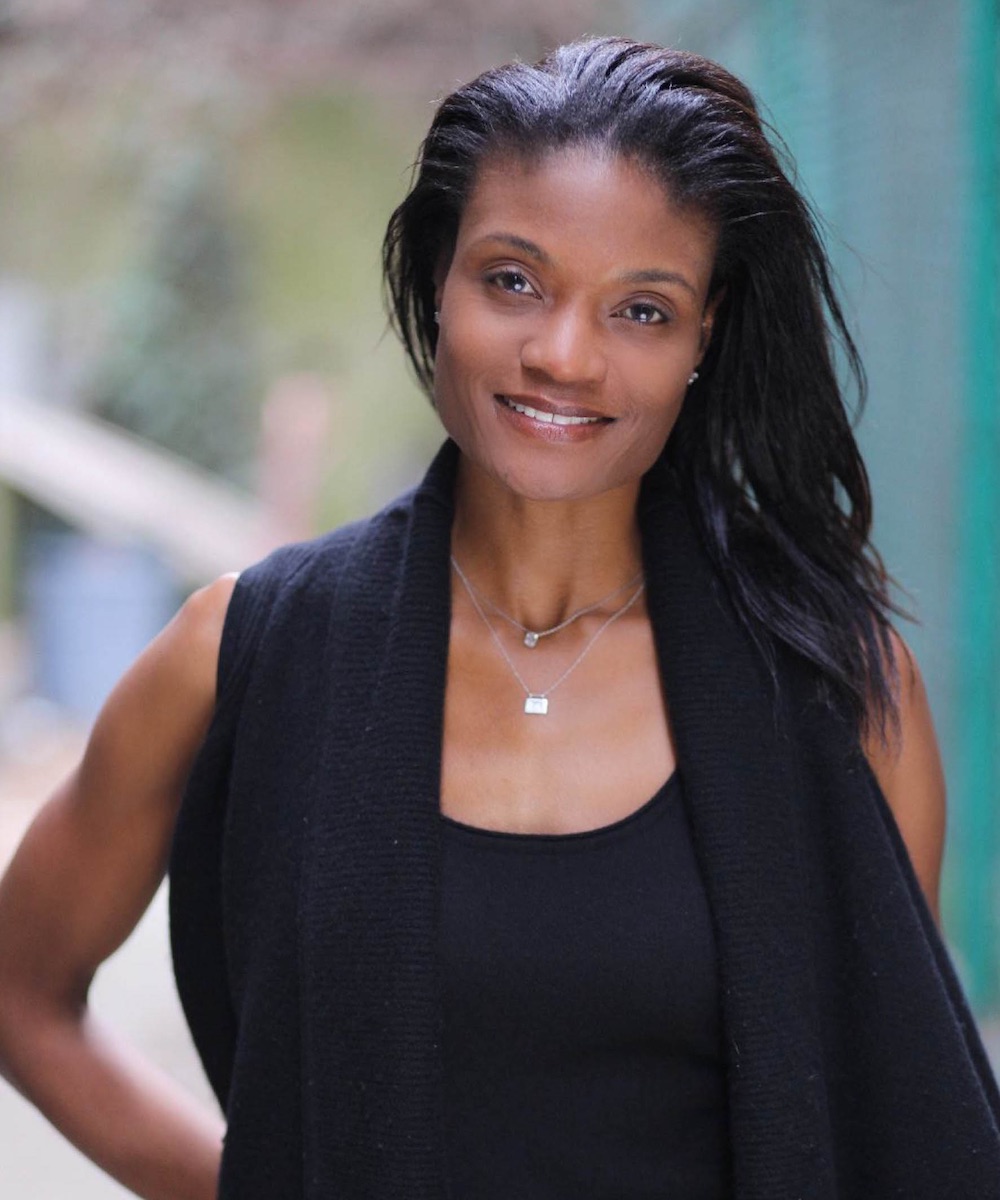
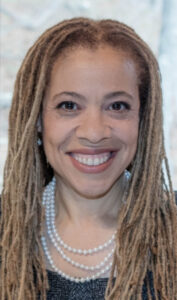
Kimberly Ayers Shariff (lead photo) has spent more than half her career in the nonprofit arts sector and is currently chief administrative officer of American Ballet Theater. She is also a freelance photographer and visual artist. She has been involved with several philanthropic and volunteer causes, including Jazz at Lincoln Center, and advisory services to the Litchfield Jazz Festival and After School Arts Program.
John Post has been active in community service since moving to Litchfield in 2013. He currently chairs the Litchfield Community Center’s board of directors, the town-sponsored Sustainable Litchfield Committee, and represents the Litchfield judicial district on Connecticut’s Statewide Grievance Committee. He was co-captain of Litchfield’s Community Emergency Response Team (CERT) and regularly volunteered at the Litchfield Hills Farmers Market.
Susan Rea is president of the board of directors of Prime Time House, a Torrington-based clubhouse program serving over 300 mentally ill adults. She retired from a career as a corporate psychologist and family therapist. She has been committed to helping Prime Time thrive and grow ever since.
Mary Schinke
Mary Schinke, after practicing law in New York for many years, opened an office in Roxbury. She has served as vice-chancellor of the Episcopal Diocese of New York and on Committee One of the Episcopal Diocese of Connecticut. She has been on the Board of Directors of New Milford Hospital Foundation, Susan B. Anthony Project, and the Connecticut Community Foundation. Currently she is president of the Board of Regional Hospice and Home Care of Western Connecticut and is on the board of the Minor Memorial Library.
Jerry Schwab, president and chief executive officer of High Watch Recovery Center, has been part of nonprofit health organizations for over 20 years. He is a licensed paramedic and is on the State of Connecticut Alcohol & Drug Policy Council. He has served as a municipal ethics commissioner, a board member of the Pomperaug Health District, and a member of the Connecticut Department of Public Health EMS Advisory Board. He is the co-founder of Empowering Communities WorldWide, which sponsors and organizes free medical aid missions to traditionally underserved African nations.
Jane Slaiby served as school nurse for the Torrington Board of Education for 29 years. She is co-chair of Dining for Women, a global organization that funds grassroots projects in developing countries to fight gender inequality and a member of Beta Sigma Phi, which gives support to local agencies helping the needy. She was a deacon at Center Congregational Church. A devoted supporter of FISH, she supplied food during the COVID-19 epidemic, and made cloth masks for community use.
Diane Swansonis executive director of the Pratt Nature Center and founder of the Pratt Nature School, the first outdoor preschool. She is a member of the New Milford Public School Wellness Committee and NM CAN New Milford Local Substance Abuse Prevention Council. In 2019 she received Asset Builder of the Year award from the Western CT Coalition.
BARBARA TALBOT
Barbara Hyde Talbot is a composer, pianist, singer/songwriter, and photographer who has worked in multimedia for many years. Most recently she co-curated the Washington Art Association Sculpture Walk, featuring work by some of the most important artists of the 20th century. As a former trustee of WAA, she is deeply committed to bringing communities together through the arts for educational, environmental, and socioeconomic benefits.
Peter Vaughn
Peter Vaughn,co-owner of House of Books in Kent, is dedicated to independent bookstores. He worked as an architect and assistant to designer Albert Hadley and is owner of Albrizzi Designs, a line of classically modern furniture. He is a founding board member of the Gotham Chamber Opera, founding member of the Planned Development Alliance of Northwest Connecticut, and a member of the Weantinoge Heritage Land Trust.
Chris Herrmann is a film-maker, environmentalist, and LGBTQ activist. His production company Mannic Media has clients as diverse as the Rainforest Alliance, Chanel, and Pearson Education. His documentary films on Martha Graham and Twyla Tharp premiered on PBS. He is the co-founder of the Pride in the Hills Fund that benefits LGBTQ youth of Greater Waterbury and the Litchfield Hills.
When Covid-19 swept in, restaurants closed to crowds for the first time since anyone could remember. They could, however, keep their kitchens functioning to feed us. Venturing out for curbside pickup became something of a special mission—a permission slip to tiptoe off property.
Anything but business as usual.
When Covid-19 swept in, restaurants closed to crowds for the first time since anyone could remember. They could, however, keep their kitchens functioning to feed us. Venturing out for curbside pickup became something of a special mission—a permission slip to tiptoe off property. What pining restaurant regulars and fed up home cooks came to see as a glorious night off, was however, a tightrope act for many restaurateurs. From the moment the Connecticut governor issued closures, owners set about scrambling to survive.
The announcement came midday Monday, March 16…effective 8pm.
“I knew it was coming, but I was expecting another week or two,” recalls Kaitlyn Gogo, of Yia Yia’s Greek Kitchen in Torrington (pictured), “I was having a talk with staff when I looked at my phone and I saw it…and I was like, oh my God.”
“That really didn’t give anyone enough time to properly prepare for it,” says Gogo, whose importer had just delivered her a fridge full of food that morning. Gogo and her husband, Yanni Gogo, had only been in business for nine months—the critical first year—and had just started turning the wheels of success.
Down the road at Bohemian Pizza in Litchfield, Mondays are typically busy nights. Co-owner Jason MacKenzie wasn’t prepared either, “It was kind of shocking for us for sure. We ended up having a pretty good crowd. It was kind of like a last hurrah for table service.”
Then it was on to harsh realities. Laying off waitstaff and bartenders. Trying to source food distributors still making deliveries. Working out contingency plans with landlords and banks.Adjusting entire business models to become curbside pickup only.
Yia Yia’s tried it for the first few days, but couldn’t move the food they had on hand fast enough. They begrudgingly decided to shut their brand-new doors until they could regroup, donating the ingredients in their kitchen to the local food pantry.
At Community Table in Washington, they spent the better part of three days beefing up their rarely used online ordering system.
“There were orders as soon as we were online. It was hysterical,” says Joann Makovitzky, Community Table’s managing partner. “Everyone was more concerned about us having financial hardships, so they supported us to make sure we wouldn’t close.”
Restaurants without a captive audience had to keep hustling, on top of evolving with the situation—six foot-distancing, mask mandates, and the ever-changing projected ‘end’ of the crisis. One of the keys to communicating on the fly became social media, where the restaurants’ flavors came out. Bohemian crossed zany humor with more serious matters like praising staff for updating their food safety practices during unemployment; Yia Yia’s balanced pertinent business updates (including its scaled-back reopening), with the occasional arresting photograph of the Mediterranean.
“I thought at least maybe once a day if you see something that just takes your breath away and makes you think about something else…it will make you feel better, even just for a minute,” says Kaitlyn Gogo.
If laughter or beauty couldn’t lift spirits, tales about the circular stream of community support could. Community Table and Bohemian Pizza both attested to Litchfield Distillery dropping off free hand sanitizer when it mattered. While closed, Yia Yia’s received daily messages from customers telling them how deeply they were missed. Bohemian’s Rene MacKenzie marveled at Bantam Tileworks and Sportsmen’s unified effort to get masks for her staff, “We have some really really great small businesses up here. Not just in this town, but our whole county came together.”
Your weekly guide to can't-miss events, hidden gems, and local favorites in Litchfield County.
Sign up now for curated things to do, eat, and explore—delivered every week.
It’s free. It’s local. It’s essential.