Your guide to the heart of Litchfield County:
Discover local stories, hidden gems, and must-know events.

Her Inner Child

You might think that after growing up among the hustle bustle of the lower East side, Cornwall might be way too subdued a place to put down roots. But for artist Magaly Ohika it offers the solitude she craves.

Artist Magaly Ohika Finds Solace in Cornwall

By Wendy Carlson

You might think that after growing up among the hustle bustle of the lower East side, Cornwall might be way too subdued a place to put down roots. But for artist Magaly Ohika it offers the solitude she craves. Before she moved into her house, which is perched on a hillside above the Housatonic River, she lived off the grid in a cabin on top of Bald Mountain with her partner George Wolfe, a woodworker.

She shares her house with her mother and space is tight so her studio doubles as her bedroom, but functions like a Matryoshka doll. Within it, she houses her pets: two cats, three rotund hamsters—Jellybean, Twiggy and Willow—and a Chinese dwarf hamster named Loki. Her two dogs have taken up residence on her sofa.

The menagerie of animals are her extended family. So are her colorful, abstract artwork of children, which she calls her “wacky whimsical characters.” The paintings, drawings, and mixed media depictions of children have a primitive doll-like style: their heads are balloon-shaped, and facial expressions are simple marks. She writes in her blog theitsybitsyspill.blogspot.com, “Everything I create is based on the innocence and beauty of children, friendship and the bonding between them and the little gestures that makes them special. The little girl inside me inspires me to stay true to what I love.”

When she was a child, Ohika couldn’t stop drawing. “My Mom would get calls from my elementary school teacher that I was drawing all the time and not doing school work,” she says.

Not surprisingly, she went on to attend Art and Design High School in New York, and after graduating she enrolled at the Fashion Institute of Technology. She landed a job that most kids would consider a dream, designing superhero figures and plush animals for toy companies. But the work kept her from creating her own art. 

“It was very limiting. I wanted to paint and I didn’t have that freedom as a designer,” she says. She moved to Puerto Rico with her parents, who are from Puerto Rico. After meeting Wolfe who was traveling there, she moved with him to his hometown Cornwall. 

“I don’t have children of my own. I can’t,” Ohika explains further. “So I’ve created my own imaginary characters and I bring them to life by giving them each personality.” As an artist, she finds inspiration for those personalities by observing people, noting their imperfections and their reactions and behaviors. Ohika draws inspiration for her work from artists Jean-Michel Basquiat, Joan Mitchell, Pablo Picasso, Marc Chagall, and Egon Sheile.

She savors the peacefulness of her New England natural surroundings. Winter is one of her favorite times, when the snow falls and houses are strung with holiday lights. “It’s so quiet outside, you can hear the river rolling past and that is all,” she says. “I love my solitude, being near nature, and I can’t live without my art. It’s my oxygen.”

Magaly Ohika

Flower Power

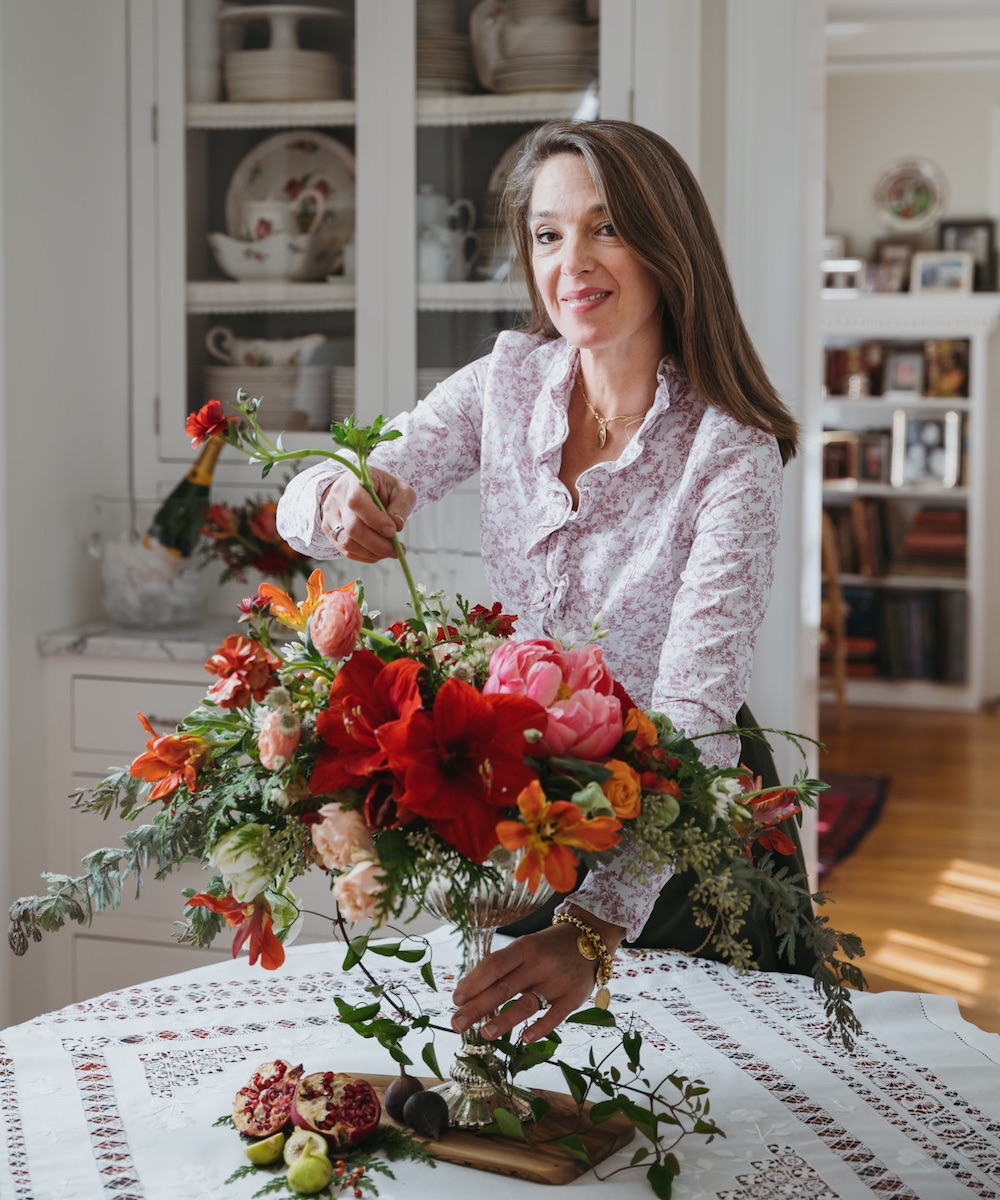
Tierney Moran has always known that flowers can transform an environment and create a sense of well-being. “Flowers are both beautiful and fleeting. Maybe that’s why they hold such an attraction for us,” says Moran, who creates stunning floral arrangements for friends and family and works freelance by referrals.

Tierney Moran Discovers a New Passion Through Flowers 

By Wendy Carlson

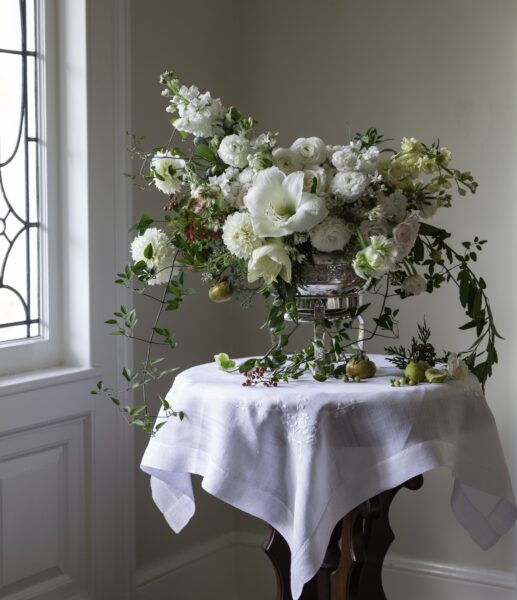
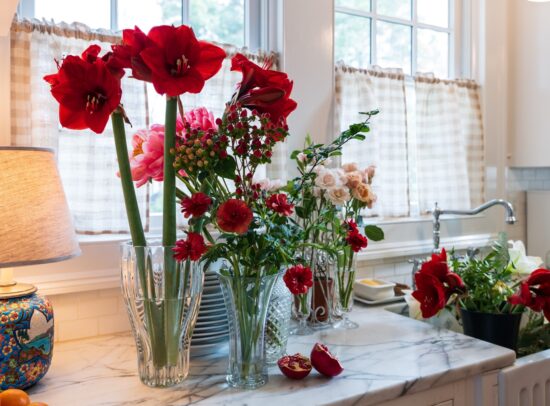
Infusing a home with flowers, whether it’s an elegant vase overflowing with blooms or a simple bedside table bouquet, brings us closer to the natural world. During the cold, winter months, that can be a powerful connection.

Tierney Moran has always known that flowers can transform an environment and create a sense of well-being. “Flowers are both beautiful and fleeting. Maybe that’s why they hold such an attraction for us,” says Moran, who creates stunning floral arrangements for friends and family and works freelance by referrals.

But it wasn’t until a friend asked her to help with a floral display for a luncheon several years ago that she realized she enjoyed creating arrangements on a larger scale. She started out self-taught, working largely for friends and family. Soon, her kitchen in Watertown was overflowing with blooms. As word spread about her work, a priest at the Basilica of the Immaculate Conception, a grand Italian Renaissance-style Roman Catholic church in Waterbury, asked her to create the floral arrangements for the church.

It was a massive undertaking for Moran, not only for the multitude of arrangements but for producing large displays that would accommodate the incredible space.

“It was so different from creating tabletop arrangements. But I also love the challenge of creating arrangements that complement beautiful, architecturally designed public spaces,” she says.

Last year, Moran, who has a background in graphic design, completed a program in floral design at the Flower School in New York City, where she worked with many incredible city designers. She started photographing work and posting them on Instagram @TierneyMoran. The FlowerSchool put her on their “Feeds to Follow” series and Flower Magazine, an industry publication, began posting her images.

Although her posts draw tons of “likes” and more referrals, Moran demurs when asked about her own talent. “People can create their own beautiful arrangements at home, if they follow a few simple design rules,” she says.

“Color and balance are important, and you have to understand how things grow, not in the literal way, but you have to understand how flowers move and bend in the natural environment so when you put them together in an arrangement it all makes sense.” Texture is also important—take the much maligned carnation, for example. “People overlook carnations as inexpensive and common, but they have a lovely fragrance and ruffled edge and when you mix them with other varieties they add a layer of interest,” she says.

With her eye for floral design, Moran could have easily turned her passion into a career, but she enjoys it too much to get mired down in running a formal business. Instead, she works free lance taking referrals, and finds that she enjoys the success that results from forming personal relationships with clients.

“When I create a beautiful bouquet and see the look on a person’s face when I deliver it, to me that’s satisfaction. That’s what I like about my work the most, seeing the joy flowers can bring to people.”

Houseplants by Design

No matter what your look—whether it’s mid-century modern or early Pompeii—there’s a houseplant out there to fit the mood. 

By Tovah Martin

You already know what houseplants can do for your psyche. Here’s what they can do for your décor.

Somewhere deep in your heart, you always knew houseplants were the answer. Every year, as the days shortened and the chill weather turned everything outdoors brown, you felt the yearnings for something green. You always suspected that the solution might lie in that little potted plant gracing the floral section in the supermarket. But then, your inner designer pushed back. You need to do something with an edge. For you, it has to be architectural, or skip it. 

So, your suspicions were spot on, because houseplants do come to the rescue. They literally breathe life into a room and turn a spotlight on nature. There are thrilling houseplants out there, but you might need to frequent some nurseries or specialty shops (consider stopping by Pergola in New Preston) to find them. No matter what your look—whether it’s mid-century modern or early Pompeii—there’s a houseplant out there to fit the mood. 

Agaves 

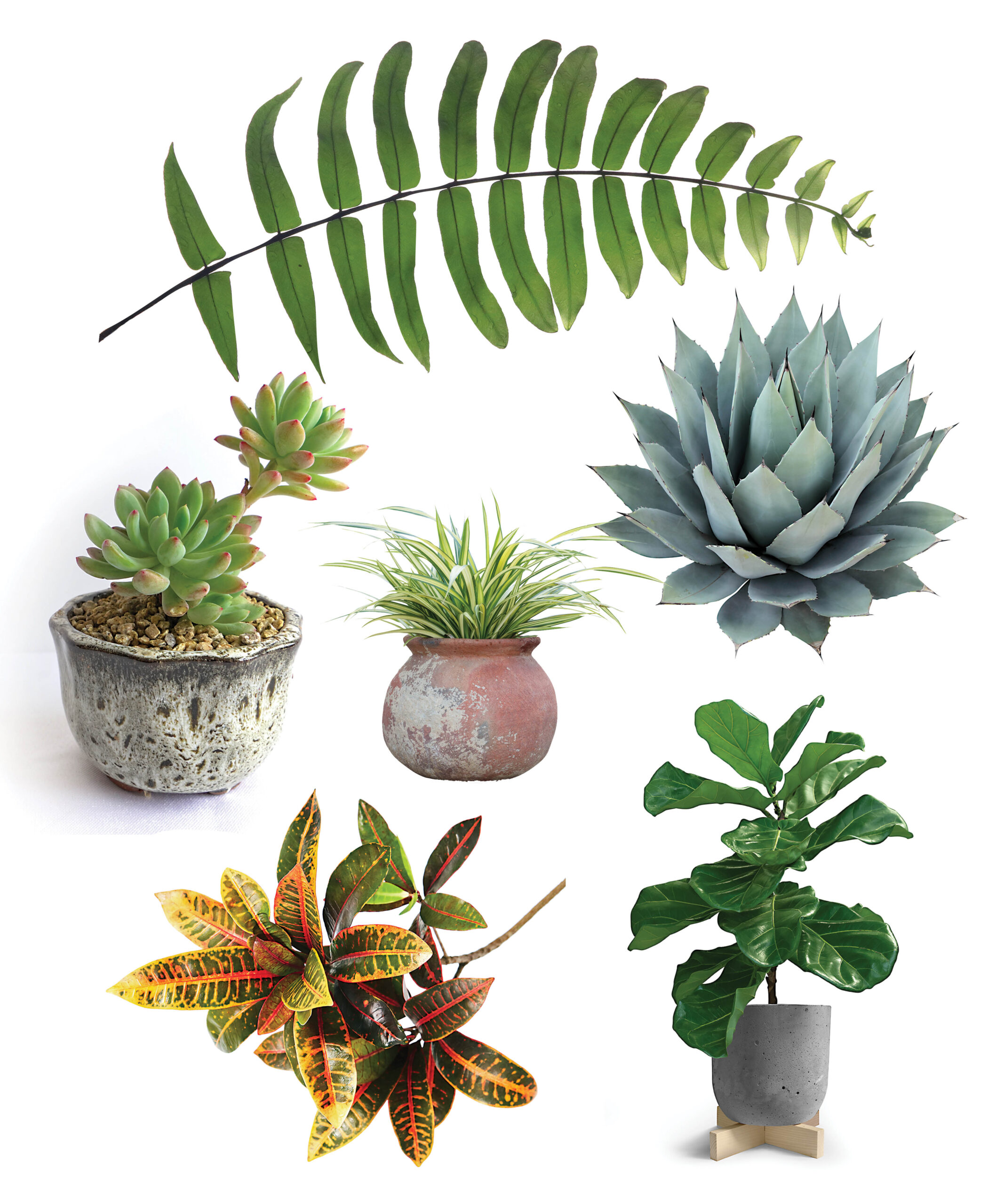
If it’s architecture you need, agaves can do the trick. Their long, sleek arms make a statement. Go to Michael Trapp’s website, and you’ll find them prominently portrayed. Can you think of a better endorsement? They come in a varied size range from small, spikey versions that look like swollen porcupines to majestic individuals with swooping, articulate appendages. The only issue is that they come equipped with some fairly impressive barbs at the tips of their succulent leaves. Some people see that artillery as ultra-cool, others fear puncture wounds. If you have children or bouncy pets, you might want to think twice. Or, you can clip the weaponry off without damaging the plant. 

And the beauty of agaves is that they’re truly easy to grow and take care of. Forget to water? Not a problem unless you do it repeatedly over a beastly prolonged span of time. They’re cool with cramped roots and, although they prefer a bright window, they’ll learn to live with less. 

Succulents

Expanding on the agave theme (but skipping the thorns), there are succulents galore out there and you can pretty much pick a favorite and run with it—they all work in a sunny window. If you like rosettes, go for an echeveria. If stark upright branches are your thing, try fire sticks (Euphorbia tirucalli). And if tongue-like leaves lined with dozens of tiny rose-like “babies” is a likable look, adopt a mother of millions (Kalanchoe hortagel). Size range can stretch from little nuggets to succulents that stage a major presence. As for cultivation, check out the advice for agaves.

Fiddle-leaf Fig

Fiddle-leaf figs are enjoying a major spike in popularity right now. Pay a visit to anyone, and you’re apt to meet one or more loitering in the living room. Green thumb or not, Ficus lyrata is the go-to roommate for wannabe indoor gardeners. And truly, these small trees with large, glove-like leaves on woody stems make a strong, intriguing statement. 

The trick to growing the fiddle-leaf fig lies in generous watering. They love to drink––and be generous with their container. Cramped roots are going to dry out frequently and become a nuisance factor. As far as light is concerned, they’re cool with indirect light. 

Ferns

Lacking light? Turn to a fern. They’ll do fine in a low-light situation. You’ll find incredible diversity in ferns and all those fronds groping around gives a room a cozy, earthy, woodsy ambiance. Most ferns commonly sold are easy to grow, although you might steer away from the Boston fern which looks like a bad hair day and drops fronds the moment you forget to water. And watering is a big issue for a fern, don’t repeatedly forget to serve drinks.

Crotons

The perfect foil for mid-century modern is a croton with large, carnival-colored leaves. We’re talking flaming orange and bright yellow with olive-green veins. This is a standout plant that brings the periphery of a room into focus. They’re tidy, but will drop leaves if their soil is parched. Usually sold potted as a threesome, you’ll want to be fairly generous with the container.

Ornamental Grasses

If you figured that grasses were only an outdoor garden thing, think again. Almost any sedge (carex) will add a sense of outside to your indoor scene and they’re sufficiently compact to grace a windowsill or wherever you find room. Their blades are striped with silver, gold, or tawny and they beg to be touched. Or try bringing in a fountain grass (Pennisetum setaceum ‘Rubrum’) for plumes that feel like bunny tails. Indirect light is fine, but all grasses are thirsty. 

No matter what your style, plants are going to improve your outlook inside. Compared to what isn’t happening in your garden outside at this time of year, houseplants are lifesavers. And you’ll be surprised at how easy they are to entertain once you get your mojo in gear. 

A Choir of Joy

joy

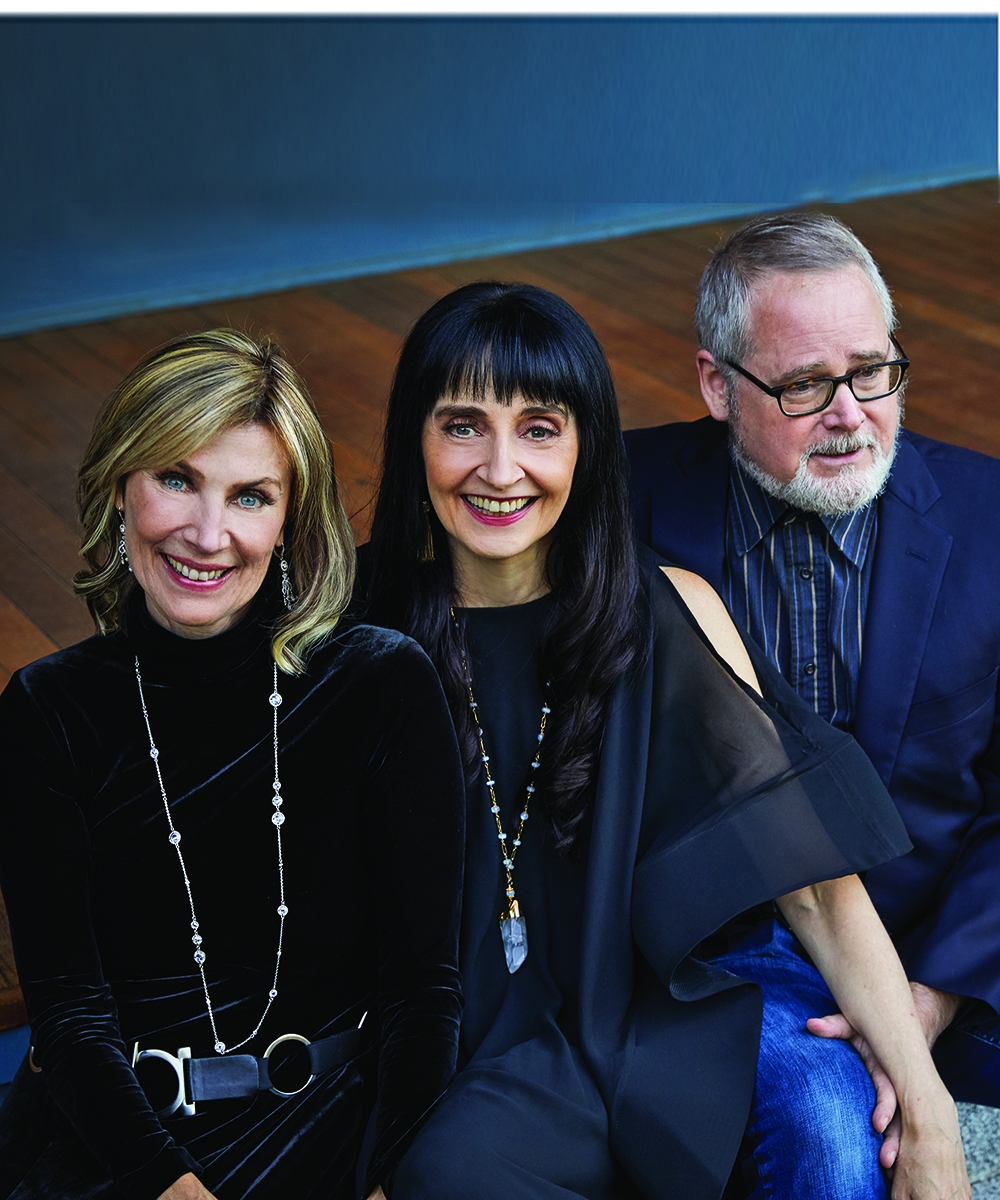
As if on cue, a trio of award-winning musicians have a precious and timely gift to share: as part of an initiative to spread joy through music, October Project has released their Virtual Choir of Joy video on YouTube.

Spreading Love Through (Virtual) Song

By Hannah Van Sickle

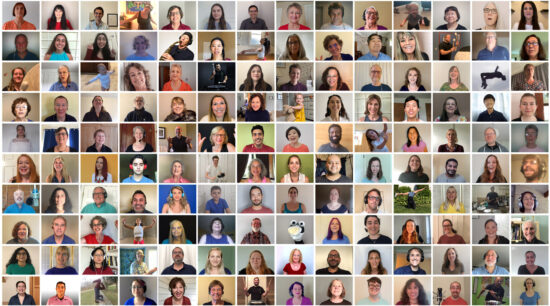
Mustering joy this holiday season will be a challenge for many considering the ongoing global pandemic. As if on cue, a trio of award-winning musicians have a precious and timely gift to share: as part of an initiative to spread joy through music, October Project has released their Virtual Choir of Joy video on YouTube. Emil Adler, Marina Belica, and Julie Flanders were inspired last March as cities around the world came together each night to raise their voices—in solidarity and song—to honor healthcare workers and acknowledge explosions of grief and turmoil across the country; in response, the group decided to offer Joy as an antidote to so much pain in a troubled world.

“Expressing the unbridled spirit of defiance to the despair of being locked down” was the animating force behind this collaboration—featuring 163 performers from 15 countries, including one alto saxophone and a sock puppet—Flanders explained. The group’s response to adversity felt natural considering their shared outlet, singing—not to mention breathing—was suddenly deemed dangerous. Participants were curated through an open call on Facebook and the October Project website; well over 200 individuals responded, and 165 recordings were ultimately uploaded including a drum corps from Austin, Texas and a hip-hop dancer from Australia. A team was then assembled to produce the virtual choir video, including local stars Ulrich Vilbois, a video editor from New Preston who has won numerous Emmys for ESPN, and Ed Boyer, a Grammy-Award winning audio engineer based in Ridgefield whose credits include the Pitch Perfect movies and Pentatonix. The video premiered, and the Spotify single launched, on October 30 (hence, the group’s moniker); their ‘Season of Joy’ campaign on social media was geared to carry people through the adjacent winter holidays.

Of course, there were hurdles. “You don’t look like you hope to look, and you don’t sound like you hope to sound,” Belica of South Kent chuckled. On the production side, human rhythms set the tone, not algorithms, and there was no escaping the latency—or technology lag—when joining together over the internet. “It had to be asynchronous, not synchronous,” Belica explains of the virtual choir that, in the moment, served a means to an end: a solution for groups to remember what it is like to sing together.

Creating space to breathe and sing, after months of confinement, has been the epitome of the holiday spirit for the October Project musicians. “Being able to breathe freely is a gift not everyone experiences,” Flanders points out, in a nod to George Floyd’s last words as well as those affected by widespread forest fires on the West Coast. “When you take away breath—even for a moment—you interrupt life,” she adds, drawing a parallel to the “collective gasp” experienced by so many of us, together, over the past eight months. Belica prefers to look ahead. “Joy (The Virtual Choir Version)” is the first single from a new choral recording of The Book of Rounds: 21 Songs of Grace—an entire album of songs meant to soothe and lift the spirit—which will be released over the coming year. As such, Belica wraps her sentiments neatly with a tidy bow:  “We are launching joy as a leap of faith, as a wish we have for today and the coming year.”

October Project

Lead Photo Credits:

Hair:  Sanina Rizvic, Washington Hairport, Washington Depot
Make-up;  Linda Temkin, Lulu Face Company, Litchfield
Jewelry: Trish Becker (Julie Flanders), Yatra (Marina Belica)
Photo Stylist: Nina DeWolfe

Personal Spaces

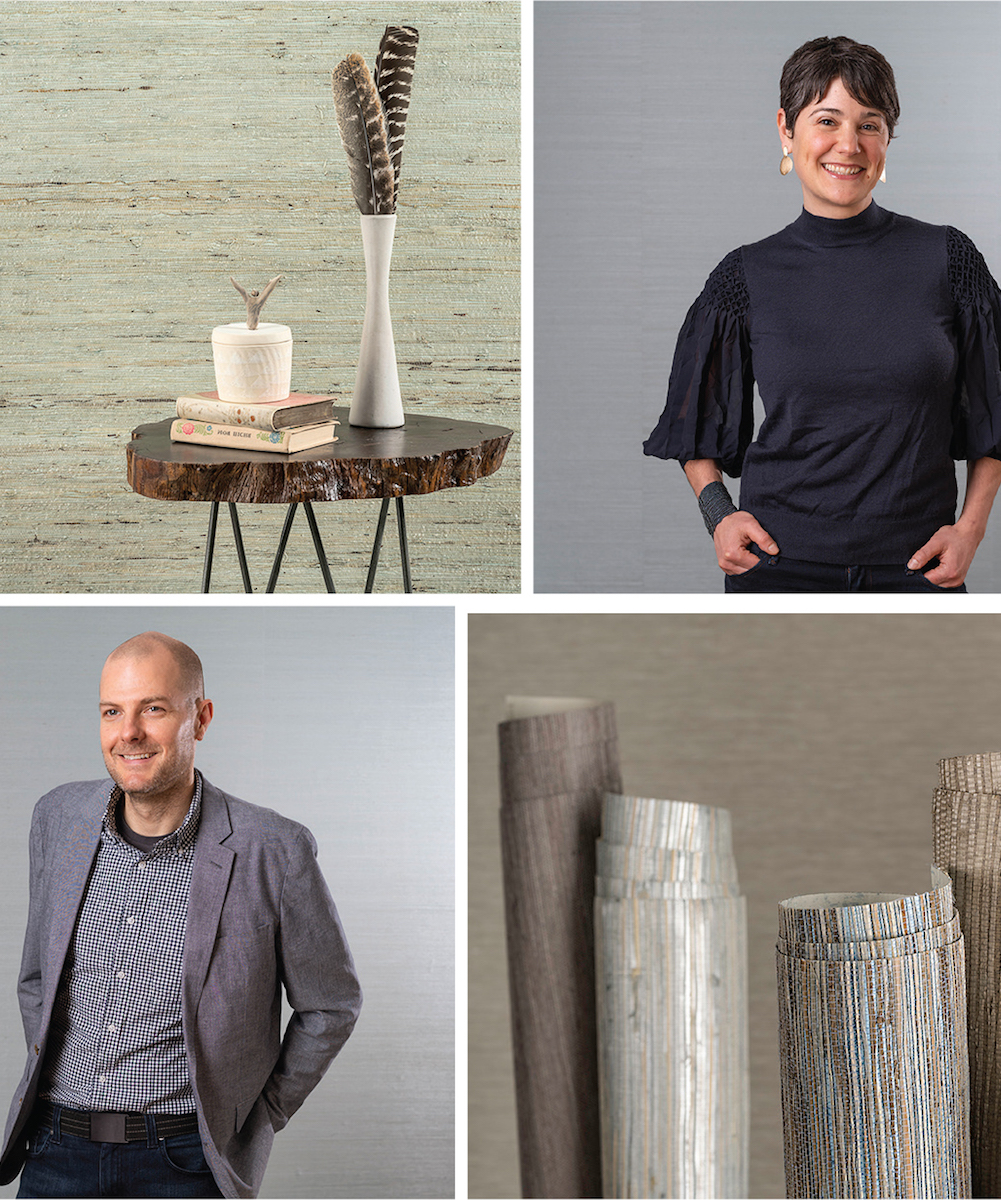
Together, they have propelled Twenty2 to become a successful private-label wallpaper manufacturing company that helps more than 100 businesses develop and produce their own collections. When asked about the meaning behind their company name, the couple explained, “It’s our lucky number and both of our ages when we first met!”

Local Bantam Private-Label Wallpaper Company Twenty2 Enjoys Success Amid Pandemic

By Jessica Grutkowski

It’s easy to fall in love with Litchfield County. Its charm, rich history, and bucolic landscapes, paired with interesting architecture and ubiquitous artisan community make it a special place for locals and visitors alike. Like many long-time city dwellers, Kyra and Rob Hartnett fell in love with the area and decided to lay roots in the country.

The love affair with Litchfield began when Rob’s parents moved there in 2000. While house-sitting, they perused a real estate brochure from the grocery store and saw the perfect 1846 Bantam farm house.

“We loved the soul and history of the area—dating back to the 1700s—but also how it infused mid-century modernism,” says Hartnett. “We knew the garage would make the perfect studio space for our growing wallpaper design business.”

Admittedly self-taught designers, the couple was influenced by their grandmothers’ shared passion for decorating with textiles, wallpaper, and antiques. Together, they have propelled Twenty2 to become a successful private-label wallpaper manufacturing company that helps more than 100 businesses develop and produce their own collections. When asked about the meaning behind their company name, the couple explained, “It’s our lucky number and both of our ages when we first met!”

This year’s quarantine has created a boom for the wallpaper industry. “People are embracing the power and sanctity of personal spaces, using wallpaper to help express their unique personality,” explains Hartnett. The Hartnetts are inspired heavily by their community, including fellow Litchfield resident Emily Dalton, co-founder of Jack Black, one of the largest U.S. men’s personal care brands. “She has been a huge inspiration and guide while navigating the challenges of running and scaling a business,” shares Hartnett.

Twenty2 currently offers more than 72 different color ways in its grasscloth collection alone, all of which are sustainably sourced and hand-dyed. “I love our grasscloths layered on metallic foil, which add texture and shimmer to the wall,” says Hartnett. “We’re proud to print many of the most beloved, inventive wallpapers on the market,” notes Hartnett. “We still offer our own curated collection of eco-friendly natural grasscloths through our website and various showrooms.”

Bringing a design concept to paper involves many careful steps. Twenty2 spends anywhere from one to six months developing digital artwork with its customers—originating anywhere from a napkin sketch to a fully-formed wallpaper pattern.

“In some cases, we photograph original artwork in-house, develop pattern repeats, and then produce the wallpaper,” explains Hartnett. “Once the files are approved for production, made-to-order wallpaper has a five-week lead time.”

Designers continue to break from tradition with wallpaper, utilizing pattern and texture to create unexpected pops. Recently, the Hartnetts worked with a Nashville client to create a “vibrant wallpaper cave,” with their friend Andra Eggleston’s wallpaper. “No room is off limits,” says Hartnett. “Bathrooms can be tricky, but as long as they are well ventilated, we have papers that can handle moisture.”

Twenty2 is honored to work frequently with artist Derrick Adams, including the recent installations at the Hudson River Museum in his “Buoyant” exhibition. The couple also enjoyed helping Voutsa create its iconic Memphis-style mural that wrapped around a large spiral staircase at The Kips Bay Showhouse in 2018.

Artful Rescue

Michael Quadland is big into heavy metal—not the jarring music of Metallica or Iron Maiden, but battered, bent, warped, patina-flecked, rusty metal. An artist, Quadland draws inspiration for his abstract paintings and sculpture from the Works Progress Administration and Ashcan schools that found beauty in the industrial landscapes of early 20th-century.

A Rescued 250 Year Old Farmhouse

By Wendy Carlson

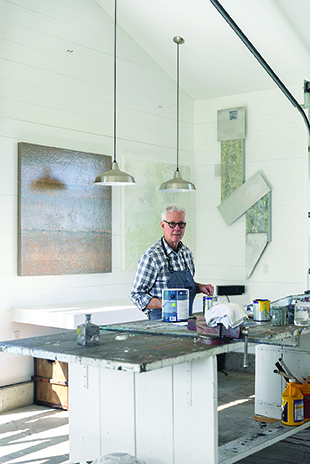
Michael Quadland is big into heavy metal—not the jarring music of Metallica or Iron Maiden, but battered, bent, warped, patina-flecked, rusty metal. An artist, Quadland draws inspiration for his abstract paintings and sculpture from the Works Progress Administration and Ashcan schools that found beauty in the industrial landscapes of early 20th-century. But he also has a soft spot for vintage houses. So, in 2016, when he stumbled upon a 250-year-old farmhouse in Morris, he saw an opportunity to create a home, studio, and gallery wrapped into one.

Quadland first spotted the white clapboard farmhouse when he was exploring Litchfield County one day. He noticed the “For Sale” sign stuck on the front lawn, and knew immediately that he wanted to buy it.

“I’m a sucker for houses that really need rescuing, and this one really needed rescuing,” said Quadland, who renovated several century-old apartments in New York before moving to Litchfield County.

He envisioned using the farmhouse, with its simple lines and plain interior, as a space to illustrate how abstract modern art can complement even the most traditional of homes. “People look at my art and say it won’t go in my antique home, but it does,” he insists.

Quadland returned to creating art ten years ago. As an undergrad at Dartmouth, he majored in art, but his parents discouraged him from pursuing it as a career. Instead, he earned his Ph.D. in psychology from New York University and a Master of Public Health degree from Yale. After demanding New York City careers as a clinical psychologist, assistant professor of psychiatry at Mt Sinai Medical School, AIDS researcher, and eventually as a novelist––penning two books,

That was Then, in 2007, and Offspring, in 2012, he came full circle and returned to the studio.

He and his partner, Rod Oneglia, live in a contemporary home just a stone’s throw away in Litchfield. But Quadland felt he needed his own work space. At first, buying another home that badly needed updating didn’t go over well. “When Rod, who is in the construction business, saw the place he just rolled his eyes and said it was going to cost a fortune to restore. That was when he started calling it Pretty Penny Farm. But as the construction proceeded, he saw that I was accomplishing a great deal at far less expense than he thought possible. That was when he changed the name to Pinch Penny Farm. We call it “the Pinch” for short,” says Quadland.


Restoring the antique farmhouse, which took two years, became Quadland’s own project.

He worked alongside the contractors, pulling nails, filling the dumpster, and making decisions on the fly. “Perhaps the hardest part physically was that the house was not heated and we worked January through into spring. Emotionally, there was the tension of making the house livable without losing or spoiling its many original features,” he said.

Structurally, the house had good bones, but there were surprises—like when he pulled up the hallway carpet and could see collapsed floorboards right down into the cellar.

Quadland is only the home’s third owner since it was built by the Benton family in 1767. His goal was to keep the architectural integrity of the house intact by preserving its historic features, including the wide-board pine and chestnut flooring, a cook fireplace with bake oven and two smaller fireplaces around a center chimney, original doors with original hardware, plaster walls and wainscoting, and the two original staircases.

The original portion of the main house is approximately 3,200 square feet, but in the 1960s an attached barn was converted to an apartment. Quadland gutted the addition, adding a vaulted- beamed ceiling.

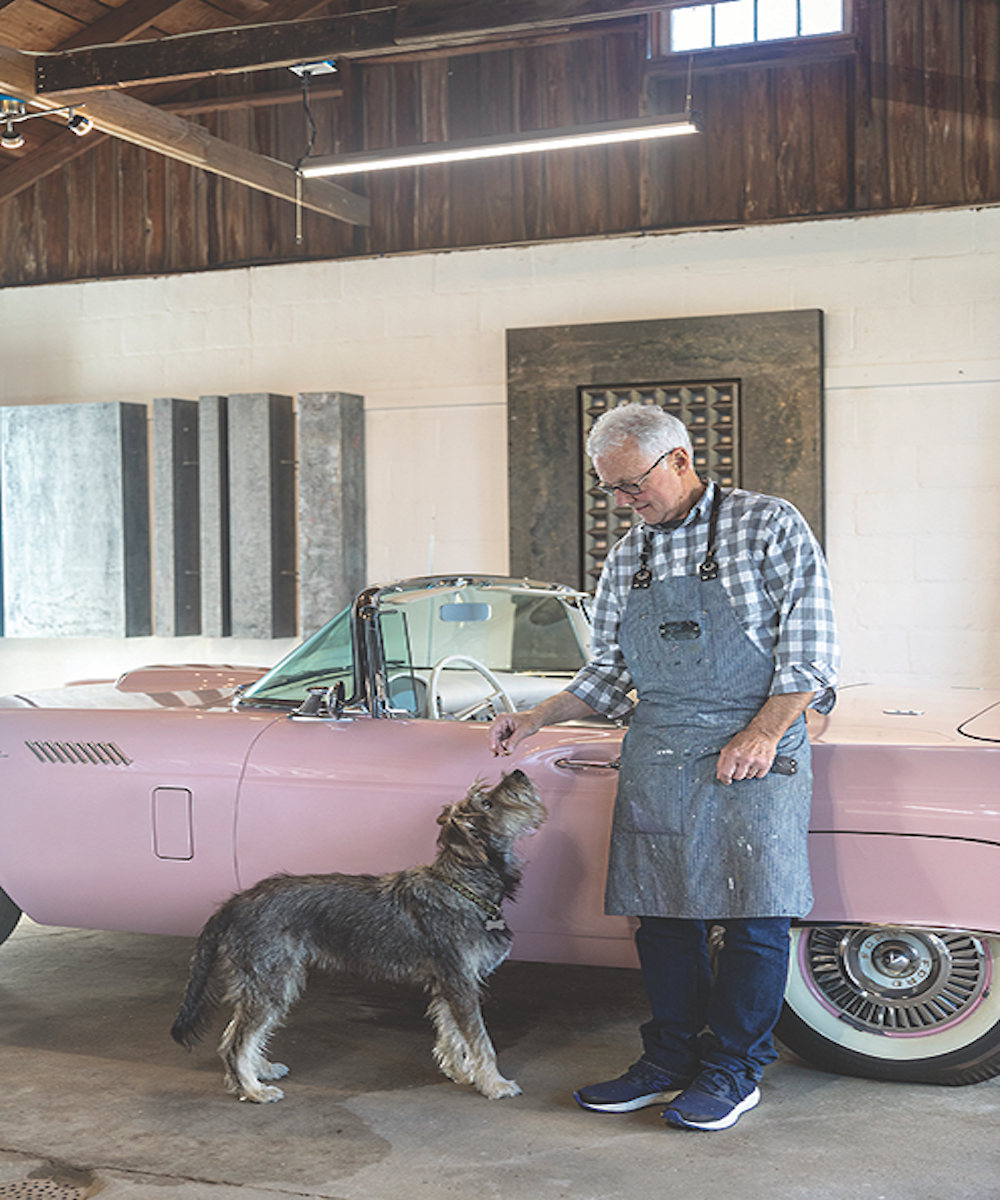
At first, the space functioned as his studio. Then, he decided he needed more room so he built a 2,200-square-foot studio behind an existing three-bay garage, which houses a 1957 pink Thunderbird convertible, and a 1966 Ford pickup. Vintage cars are another one of his interests.

“I come from a long line of car men,” he explains. “My grandfather with his 1941 Packard touring car. My father with his 1949 Ford convertible. My brother races cars. I have always loved cars too. Now my passion is for 1950s and 60s—the cars I grew up admiring.”

Quadland painted most of the farmhouse’s walls white, creating a gallery-like atmosphere for displaying his large-format, three-dimensional paintings, and sculptures by him and by other artists, including his partner Rod, who is also a sculptor.

These days, Quadland spends most of his time at the farm; its long history inspires him. Originally, the farm included several hundred acres of land, which is now held in conservancy. The house now sits on three acres and is framed by stonewalls, mature trees, fields, and is punctuated by two Bulls, colossal cast-bronze sculptures by artist Peter Woytuck.

“In whatever direction you look, both inside and out, there is such a strong sense of history. I often imagine someone cooking at the big fireplace, or climbing the narrow twisting staircase, or storing jars of vegetables in the cellar,” he says. Now, his artwork adds another aesthetic dimension to this old house, and another chapter in its long history.

Litchfield Faves

One of my most favorite parts of living in Litchfield County is how steeped these towns are in history. In the historic district of Milton there are so many homes and buildings from the 1700’s and 1800’s, many sitting on the beautiful town green. It makes Milton feel like it’s out of another time. It’s the same with Litchfield.

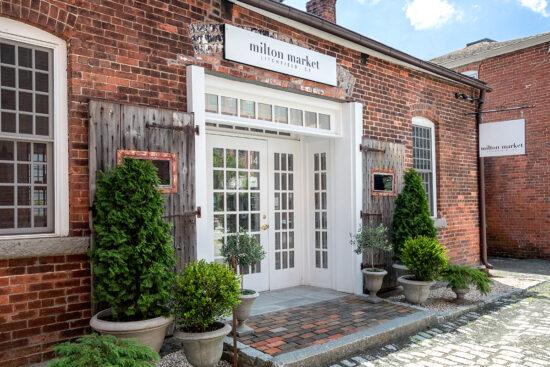
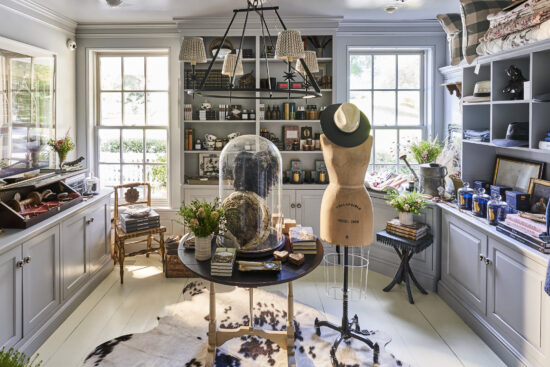
Martha Fish, owner of Milton Market in Litchfield, shares some of her favorite things about living in Litchfield County.

1 One of the most special spots in Litchfield is White Memorial. It is a 4,000 acre sanctuary in the middle of our town. My favorite quick walk is the Little Pond Boardwalk trail which is a 1.2 mile elevated walkway loop around Little Pond. Each season is more beautiful than the next, from emerging wild flowers in spring to foliage and bird migration in the fall.

2 My favorite local spot for coffee is Arethusa a Mano in Bantam. This was an absolute game changer in our area. The best coffee, the most delicious treats. Try the coconut donut, you will not be disappointed! Then go across the street for an ice cream at Arethusa Farm Dairy and stock up on cheese, milk, yogurt, eggs, all from their wonderful farm.

3 When I lived in West Chelsea in NYC one of my favorite things to do was to walk in and out of the galleries all around our home. Now when I need a fix, I go to Bantam Factory and visit Carol Leskanic, master gilder and artist, whose beautiful work you can find in Milton Market and Charlie Dumais, an incredible lighting designer. Their artist lofts remind me of old New York.

4 Each year, beginning when my son Charlie was a baby––he’s a teenager now!––we go to Averill Farm in Washington for the best apple picking. Averill Farm is a tenth generation apple farm in Washington Depot with over 100+ varieties of apples. Go for the apples and stay for the homemade apple cider donuts. Next up is pumpkin picking at Bunnell Farm, a fifth generation family run farm. It’s located in Milton, right in my backyard. Take a horse or tractor drawn carriage out to the fields to pick your own pumpkin. We close out the year at Meadowview Farm in Litchfield where you can cut your own Christmas trees.

5 One of my most favorite parts of living in Litchfield County is how steeped these towns are in history. In the historic district of Milton there are so many homes and buildings from the 1700’s and 1800’s, many sitting on the beautiful town green. It makes Milton feel like it’s out of another time. It’s the same with Litchfield. Exploring town I feel such a sense of history and of course in the Cobble Court, where the shop is located in a building that was once the town blacksmith.

Mayflower Redux

The Mayflower Inn, Washington’s venerable landmark resort, has a whole new look. When hotels shut down last spring in response to COVID, Auberge Resorts, which acquired the inn two years ago, used the closure to do a complete makeover, hiring New York-based designer Celerie Kemble to orchestrate the reimagining.

Reimagined by Designer Celerie Kemble

By Wendy Carlson

The Mayflower Inn, Washington’s venerable landmark resort, has a whole new look. When hotels shut down last spring in response to COVID, Auberge Resorts, which acquired the inn two years ago, used the closure to do a complete makeover, hiring New York-based designer Celerie Kemble to orchestrate the reimagining.

The redesign encompassed 17 guest rooms and suites, including Mayflower’s signature restaurant, and the inn’s historic main house and parlor. Drawing inspiration from storied English and Scandinavian country houses, Kemble used a palette of florals, complex patterns and color, Gustavian antiques, and contemporary art to renovate the interiors.

From the outside, the inn’s historic 19th century Shingle-style facade remains the same. A row of Hunter boots are dutifully lined up on the portico entrance, and an ever-present valet is ready to spring into attention. However, the real transformation begins inside the grand foyer. Gone are the white walls, the Turkish rugs, the varnished woodwork, the polished wood tables, and the antique oil portraits of New England ancestors glaring down at guests. Instead, a ficus tree planted inside an enormous 18th century Spanish vessel commands the attention of all who enter.

“Before the inn had been very traditional, very old New England,” says general manager Israel Benyair. “Celerie Kemble has taken it to a whole new level so it is more of a discrete country house experience.”

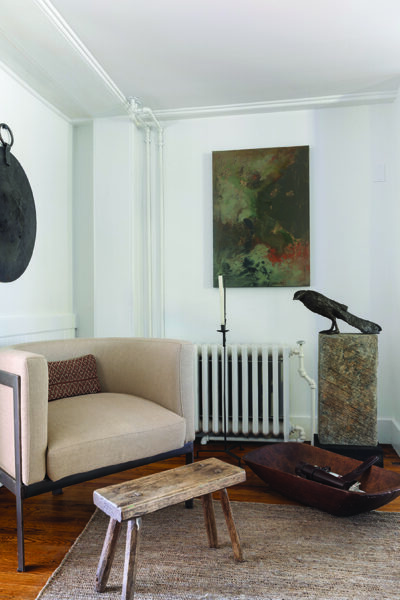
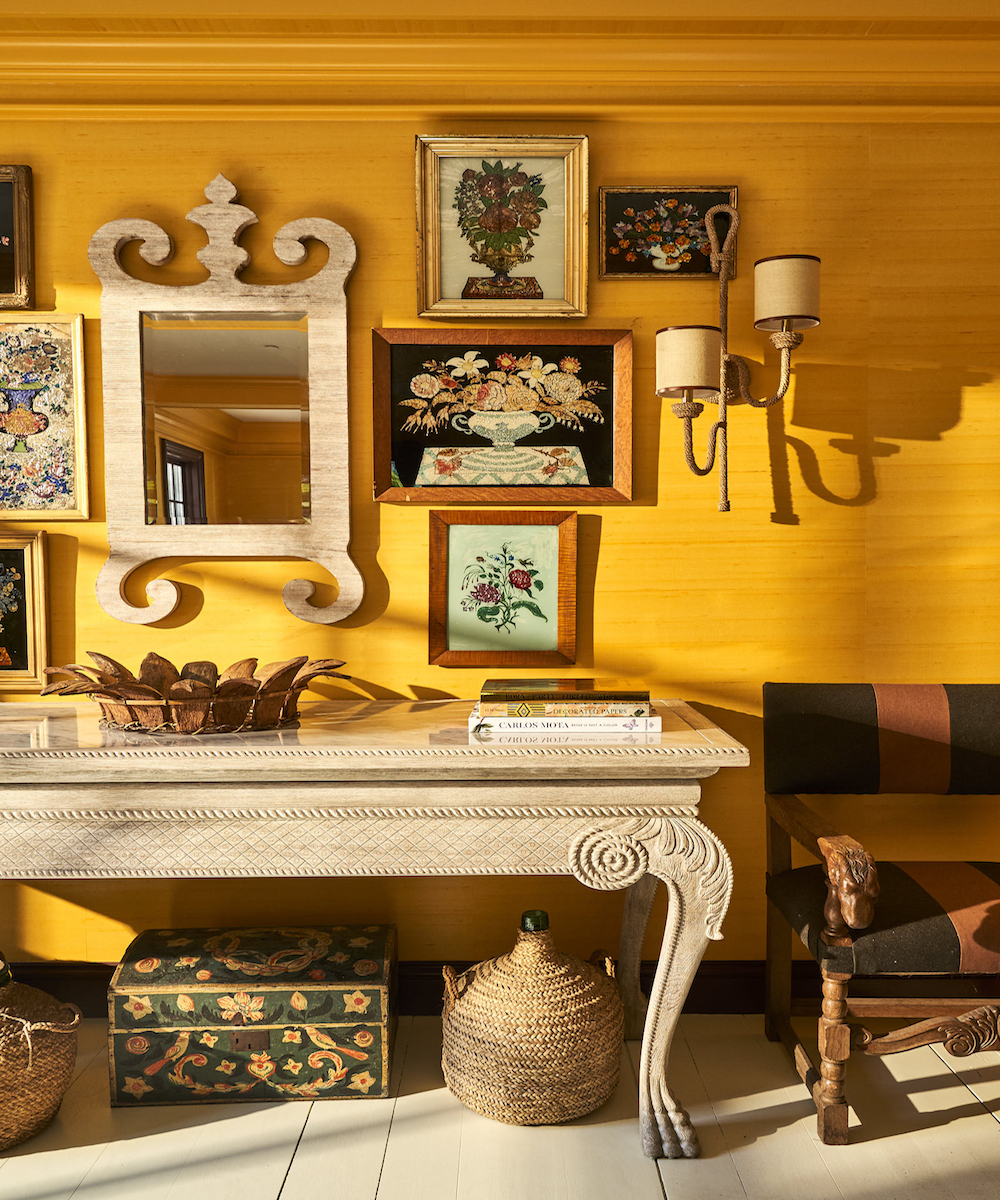
To that end, much of the inn’s richly-detailed woodwork, including mantles, trim, and staircase, have been painted to compliment new textile wallpaper. In the foyer, rope stools circle a table topped with an eclectic mix of African sculptures, and a pair of contemporary accent chairs have upstaged the traditional leather arm chairs. The parlor has been painted a deep mustard yellow (although Rayo de Sol would be a kinder name for it) and the hardwood floors are now cream colored, which along with the floral-themed artwork, antique Gustavian side table, and needle point pillows complete the country retreat tableau.

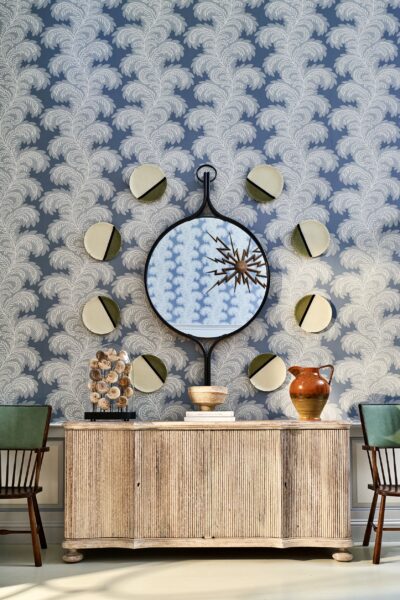
Leading into the dining areas, the hallway features ceiling wallpaper in a Venetian-marbled motif, and a series of metal disc-shaped sculptures representing the planets make for curious wall art. Inspired by the inn’s 58 acres of natural surroundings and the Shakespeare garden, Kemble’s renovation of the formal dining room features hand-painted wallpaper, painted hardwood floors, and more spacious seating. In the tap room, there is a new bar and bar stools, textile wallpaper—and Voila!—the oil portraits return here, taking their place on the walls just to “give it an old Mayflower vibe,” says Benyair.

The only room untouched in the redo is the library. With its built-in curved window bunk seat, wall-to-wall bookcases, fireplace, and well-worn leather reading chairs, “it’s legendary to the inn,” explains Benyair.

The guest rooms and suites still include timeless pieces such as the inn’s signature four-poster beds, but have been refreshed with custom furnishings, sisal carpets, Turkish rugs, hand-crafted ceramics, and whimsical wicker. Colorful textiles from Schumacher, Sister Parish, and Penny Morrison reflect a modern sense of comfortable country life. Damasks, crystal lamps, and French influences have been traded for more eclectic furnishings and artful layering, to give each room its own persona.

Despite all the changes, one feature well preserved is the original solid-oak entrance door. The doorknob is set lower than usual, a remnant from when the inn was once a boys dormitory for The Ridge School before it became an inn in 1920. In 1990, after years of neglect, the structure was purchased and restored by Washington residents Adriana and Robert Mnuchin, who turned it into one of the country’s premier luxury resorts.

Mayflower Inn & Spa
118 Woodbury Rd, Washington
860-868-9466

A Micro-Farm Blossoms

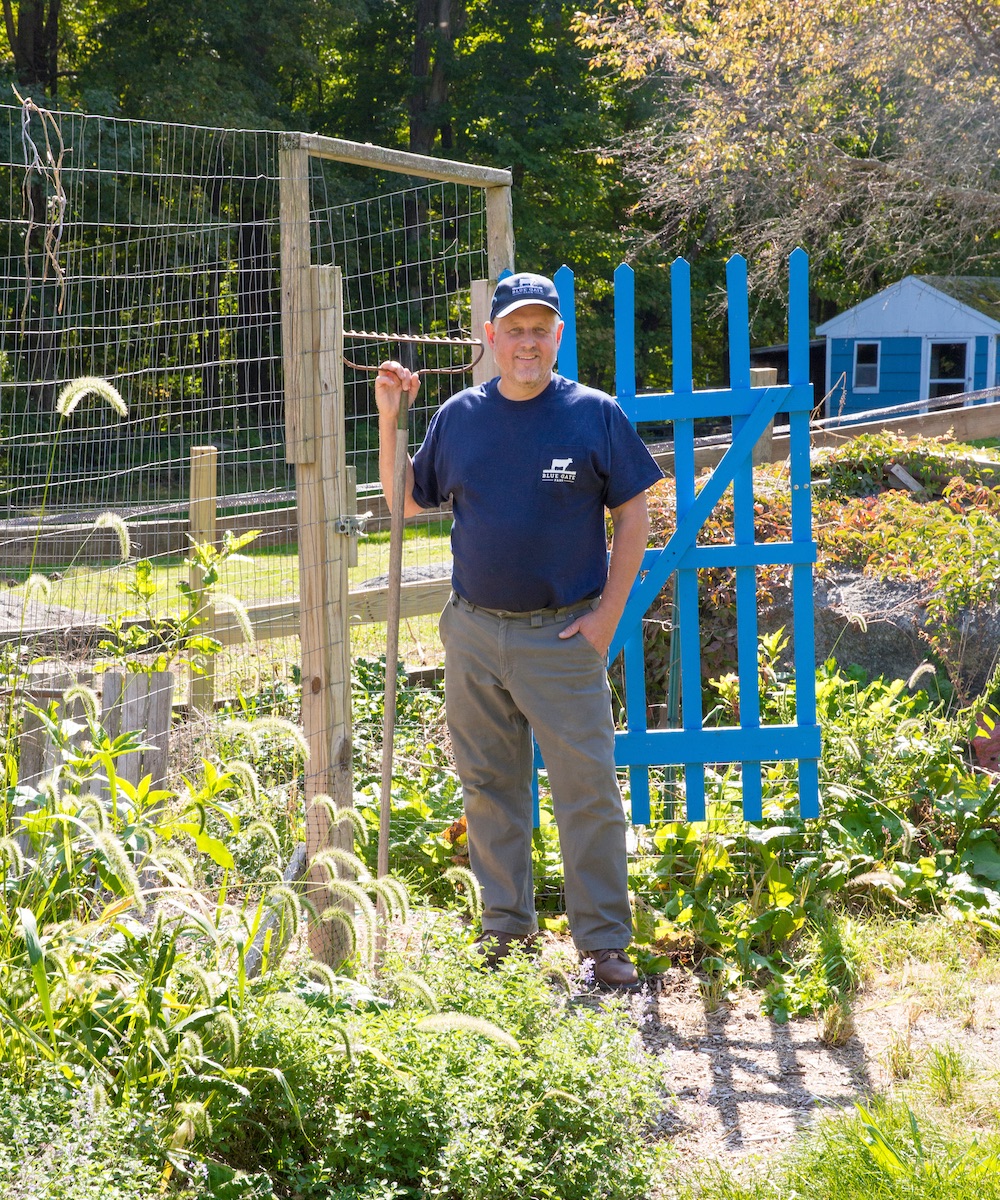
Bruce Young’s little slice of heaven is a scant three acres in Warren called Blue Gate Farm—and he’s far from bashful about the diminutive size. The land on Curtiss Road (named for Young’s paternal grandmother), is a micro-farm that has blossomed in the decade since he returned to the area to farm with his partner, Yobana Garcia.

Blue Gate Farm in Warren Thrives on Three Acres

By Hannah Van Sickle

Bruce Young’s little slice of heaven is a scant three acres in Warren called Blue Gate Farm—and he’s far from bashful about the diminutive size. The land on Curtiss Road (named for Young’s paternal grandmother), is a micro-farm that has blossomed in the decade since he returned to the area to farm with his partner, Yobana Garcia. “Start where you are with what you have” was the couple’s guiding philosophy, one that has remained through numerous growing seasons as neighbors increasingly lean on the local food economy to sustain them through the growing season and beyond.

“Each year, we narrow and refine what we are doing,” Young explains of his commitment to growing Blue Gate Farm in a focused way. From the first tender leaves of spinach come spring to the last butternut squash harvested before it freezes, the pair strive to be as varied and resilient as possible—which translates to honing their niche. On the day I toured Blue Gate, Young had 150 pounds of onions in the back of his truck bound for the Warren farmers’ market––a hearty crop that grows beautifully with little effort and will keep over the winter. With time and space in short supply, every decision on a micro-farm is particularly important. At present, Young and Garcia are raising a trio of American Aberdeen beef cattle, prized for their efficiency in turning pasture to protein. Young’s foray into raising animals began with chickens—of which he processed 150 last spring—and he has an affinity for American Guinea hogs as well. Turns out, so do his neighbors.

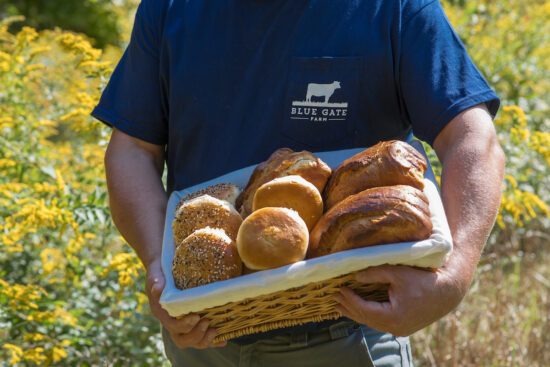
“It’s been very satisfying, very rewarding, to help so many people access local food,” says Garcia who hails from the city of Chiquimula in Guatemala. Knowing where their food comes from and how it was raised is a huge part of what fuels the pair in their work. “It would be impossible to overstate the feeling of  ‘going off the grid’ food wise,” Young says. Not to mention “the food we raise tastes amazing,” Garcia adds in a nod to what keeps her and Young focused on farming. To complement their harvests from the field and pasture, Young cites his passion for baking as a lucrative cottage industry. He sells upwards of 35 loaves of bread a week, with customers flocking for squares of his nearly famous garlic and rosemary focaccia—flavored with the very fruits of his labor. Blue Gate also participates in the Warren Grown CSA, in conjunction with Earth’s Palate Farm and Warren Valley Farm, where their pork, chicken, and bacon round out the locally grown produce and pasture raised eggs that fill patrons’ weekly boxes.

Along with the pride of planting each seed by hand come challenges. “Many underestimate the time and effort it takes to farm on a small scale,” says Young in a nod to the nonstop weeding and harvesting––all of which he and Garcia do themselves while working off-farm jobs. The ultimate goal is to replace one of their incomes with revenue from the farm. As to what keeps the pair farming? The work is simple but necessary, and very satisfying. The small parcel of land harnesses huge potential from the fruit trees and berry bushes that abound to the maple trees they tap come spring. Young sees it as a small-scale responsibility, one that simply starts with doing something—which is the biggest tip he hopes to be able to pass on to other would-be small acreage farmers. “We are doing our part, stepping outside of a flawed system and making solutions for ourselves and our family.”

Blue Gate Farm
14 Curtiss Road, Warren
860-898-0742

Litchfield County Design Boom

While many local designers and home furnishing brands feared societal changes would force a shut down, the reality is that most are seeing higher demand for products and services. Litchfield Magazine polled the best-of-the-best locally to provide you with go-to design sources and tips for projects of any size.
Local Style Experts Offer Creative Advice

By Jessica Grutkowski

Time spent home during quarantine has forced many people to revisit the functionality of their current living space, and how they can safely entertain during a pandemic. Families are moving out of Manhattan to full-time suburban living where they can safely social distance and enjoy a controlled outdoor space.

While many local designers and home furnishing brands feared societal changes would force a shut down, the reality is that most are seeing higher demand for products and services. Litchfield Magazine polled the best-of-the-best locally to provide you with go-to design sources and tips for projects of any size.

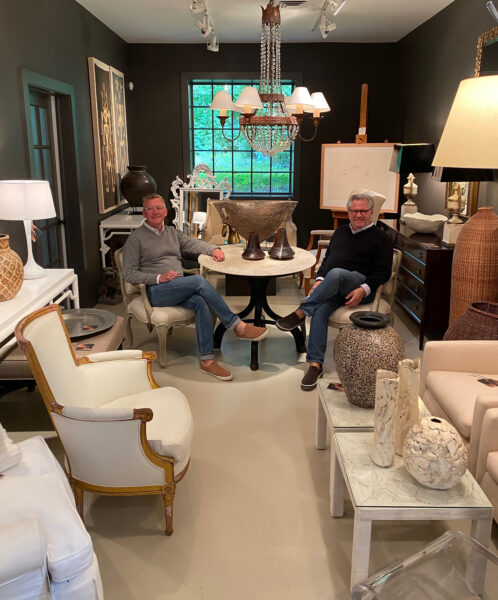
George HomeWashington Depot

Owned by Bruce Glickman and Wilson Henley, long-time weekend residents turned locals, George Home is a favorite destination for designers, architects, and private clients in the Northeast and beyond. Stocked with unique furniture, art, lighting, and one-of-a-kind objects and accessories, its studio also features interior design services for residential and commercial clients.

“Our collection is a chic mixture of styles with plenty of patina and ‘look,’” adds Glickman. They believe that “one or two unusual pieces really make a room!” “We buy things we want to live with ourselves,” explains Henley. @GeorgeHomeCT
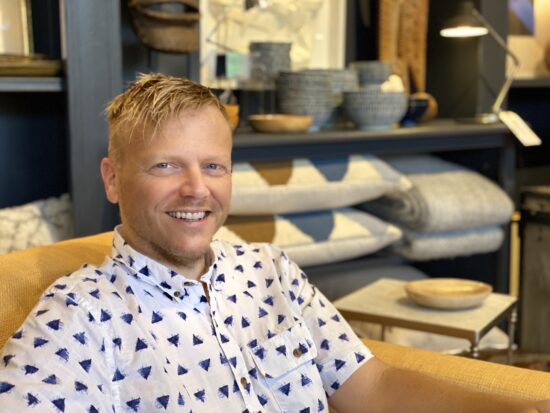
Housatonic Trading CompanyBantam

The Housatonic Trading Company showroom offers a carefully curated selection of high-quality furnishings, antiques, art and home decor, including one-of-a-kind vintage pieces that reflect an eclectic mix from multiple genres and origins across the globe.

“Whether it’s the patina of a hundred-year-old chest, the softness of a well-loved armchair, or the glow from a Baccarat decanter capturing the sunlight—every piece should inspire,” explains co-founder Robert Graham.

“Home should be comfortable and functional, and full of pieces that make you feel good, spark conversation, and keep you smiling,” adds Graham. @HousatonicTrading
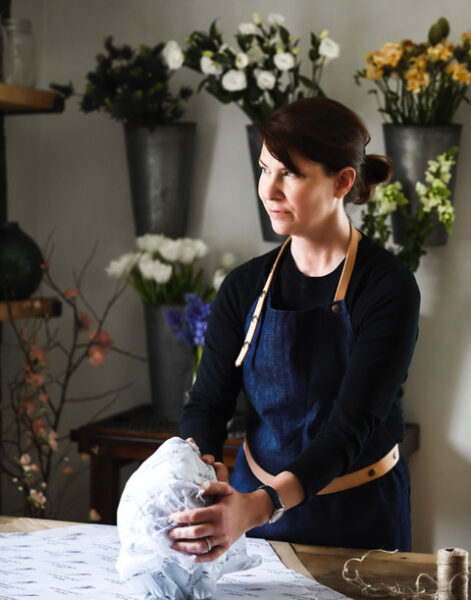
Honeychurch HomeSalisbury

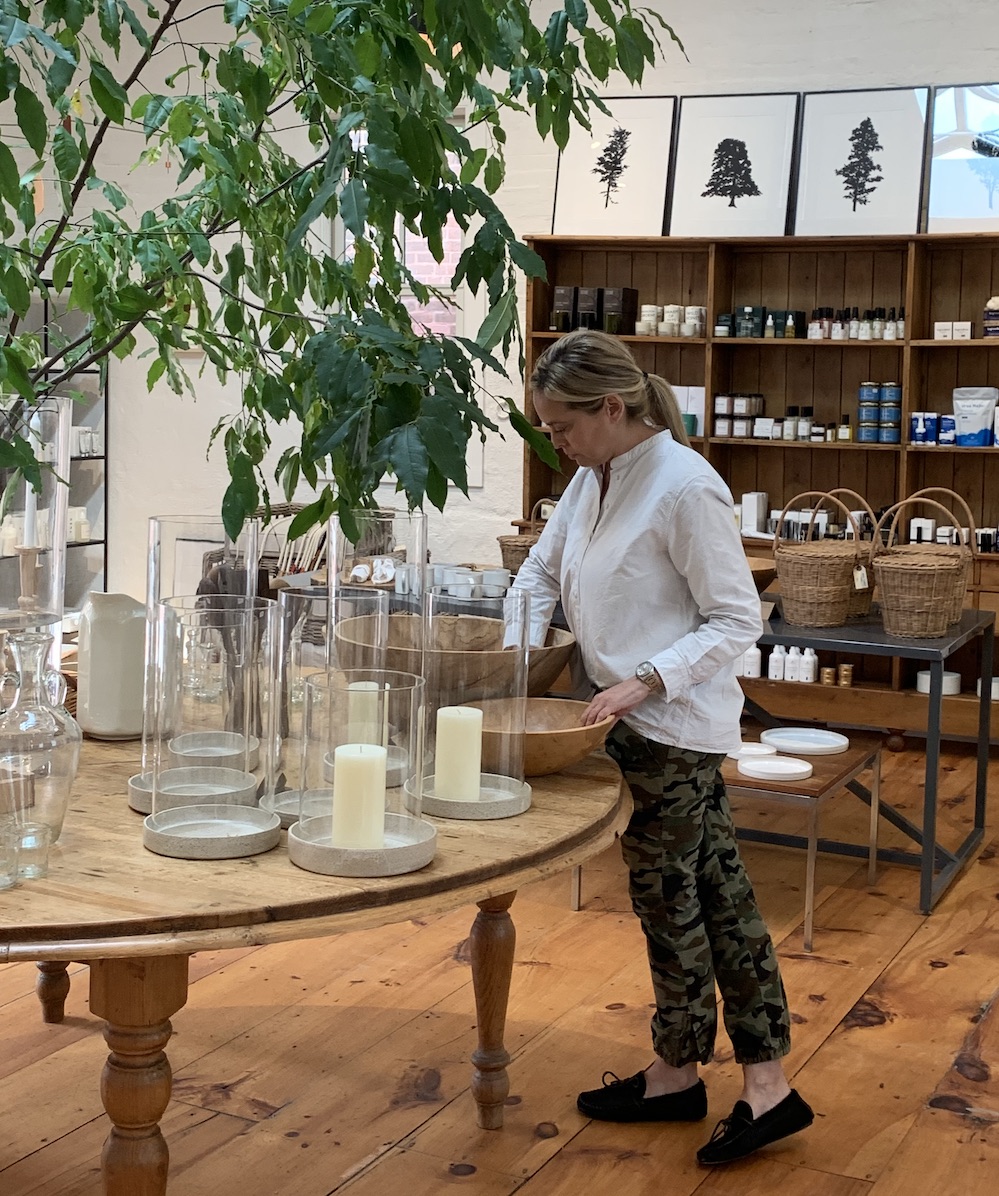
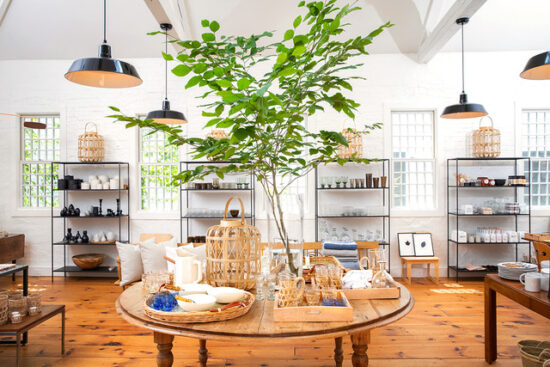
A self-described “romantic-at-heart,” Carolyn Piccirelli is inspired by all things vintage, and Italian, French, and Swedish country design. She loves to travel to source well-made textiles, ceramics, tabletop accessories, gifts, baskets, and fresh flowers for her shop, Honeychurch Home.

When designing at home, Piccirelli cautions that clients often mistakenly group too many similar-sized accessories together on mantels, tables, and shelves. “Try and achieve balance through proportion, size, and color. Often, less is more—and your home will feel fresher with little effort.” @HoneychurchHome
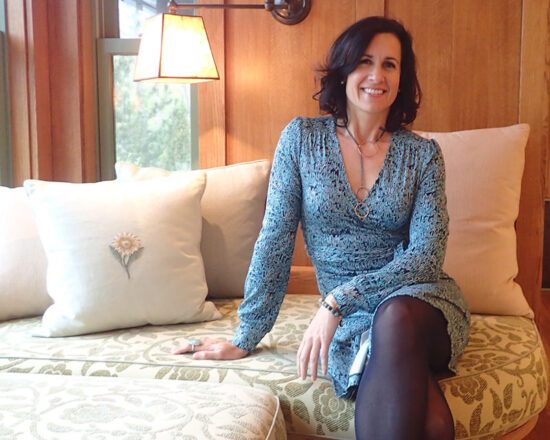
Interiors by KLM 

After two decades of working in the design field, Kristen Meissner opened her own design studio, KLM Interiors, where she helps clients with everything from custom furniture, wall-coverings and window treatments, to color consulting, furniture arrangement, and more. She consults with architects and contractors to ensure her clients’ vision is brought to life.

“Don’t buy the cheaper, throw-away furniture––rather, do just the opposite!” Meissner advises clients. “Always use better quality fabrics and construction in rooms that are used (or abused) the most … good design is timeless!” @KristenMeissner
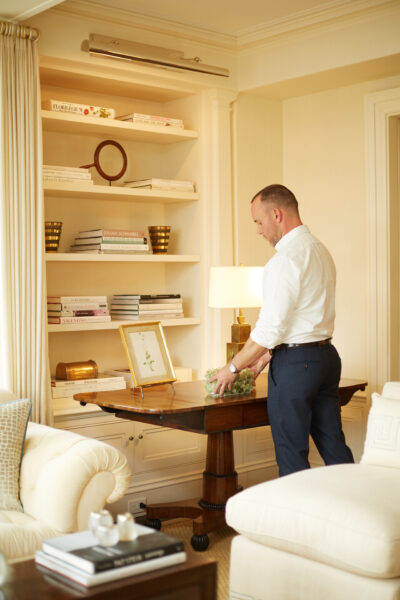
Joshua Smith

Local interior designer and life coach Joshua Smith brings a holistic approach to everything he does for his clients. Since being homeless at 21, Smith has transformed himself into a successful interior designer and life coach, whose work has been featured in countless national trade magazines.

When designing a home or interior space, Smith prefers to take a holistic approach, urging clients to think beyond how a space should look, and instead focus on how it should feel.

“A beautiful interior is not just something we see, it’s something we experience; it should engage the senses and nourish the soul,” advises Smith. @JoshuaSmithInc
CLOSED
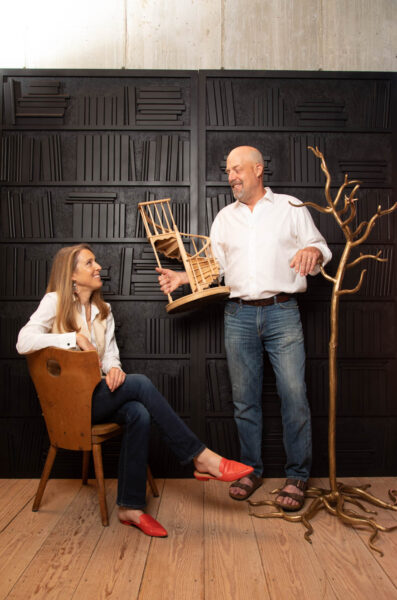
RT Facts Design & AntiquesKent

Inspired by classical architecture, sculpture, and nature, Natalie and Greg Randall originally opened RT Facts in the old Kent Town Hall, a building they purchased to sell antique home and garden pieces. They expanded and opened up a second much larger location in Kent Barns, right down the road. Recently they began selling their own creations, including lamps, chandeliers, hand-forged iron table bases, copper-wrapped distressed mirrors, leather and linen-topped tables, and zinc planters made by their team of local artisans with locally sourced materials whenever possible.

“We worried we’d have to close in March, but thankfully orders kept coming in,” explains Randall. “Clients wanted to create home offices, enhance outdoor living for entertaining, and some purchased second homes for full-time living.”

The Randalls advise clients to consider a narrow dining table as it’s more versatile, friendly, and functional. “You won’t regret going custom here, just allow space between each chair and ample legroom across.” @RTFacts
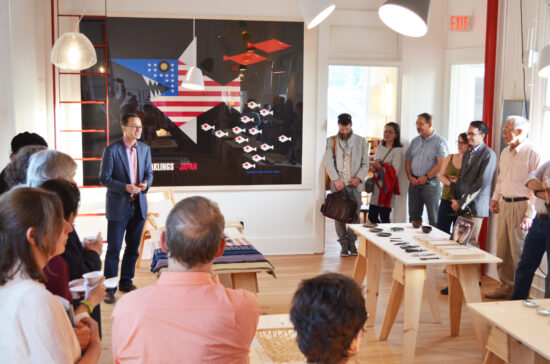
AmeicoNew Milford

Founded by Peter Kahane in 1995, AMEICO has quietly been supplying modern design products to contemporary art museum shops and design stores across the country for 25 years. Headquartered in the historic 1918 SNET Telephone Exchange building of New Milford, the company opened to the public for the first time in 2014. Although this year was expected to be one of celebration, instead it has caused Peter to become reflective, “The most exciting part of our business for me has always been the curatorial role we attempt to play within an international community of designers, craftspeople, mostly smaller manufacturers and our audience of retail partners. We have realized, more than ever, how important these collaborations, some going back to our formation 25 years ago, really are. We are truly all in this together.” @Ameico_Design
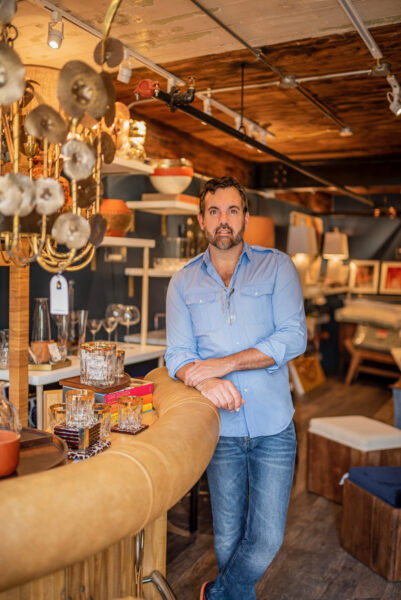
Blue Print CTLitchfield

For over three years, BLUEPRINT CT HOME owner Louis Lemieux has offered what he calls the antithetical “antidote” to mass market design elements for the home. As with many small businesses during COVID-19, he adapted by shrinking the retail component creatively focusing his business on small to medium residential and commercial interior design projects. His smaller space at the former Litchfield Jail offers an edited selection of his products plus additional decorating items including fabrics, bedding, and pillows—see Litchfield Magazine May 2019 for a look at his loft at the Jail.

His clients sing his praises for offering them exciting, unexpected, and stunning interiors. In early 2021, Lemieux will open an eponymous design studio and shop, LouisCT. Focusing on client demand and his core interests, Lemieux will offer vintage and modern furniture, textiles, ceramics, art, lighting, and more. @ShopBlueprintCT 
CLOSED

Current Issue
May / June 2026
The Garden Issue
Subscribe Now
.
  • STAY IN THE KNOW

    Your weekly guide to can't-miss events, hidden gems, and local favorites in Litchfield County. Sign up now for curated things to do, eat, and explore—delivered every week. It’s free. It’s local. It’s essential.

  • Karen Raines Davis