

Your guide to the heart of Litchfield County:
Discover local stories, hidden gems, and must-know events.

Becoming an Artist

Pulitzer Prize-winning art critic Jerry Saltz dreamed of a career on the other side of the easel—as a real artist.

From the Art Critic Jerry Saltz

By Joseph Montebello

Pulitzer Prize-winning art critic Jerry Saltz did not start out wanting to write about art.  He dreamed of a career on the other side of the easel—as a real artist.

“It pains me to say it, but I am a failed artist,” Saltz explains. “Pains me because nothing in life has given me the boundless bliss of making art for tens of hours at a stretch in my 20s doing it every day and always thinking about it, looking for a voice to fit my own time.”

But Saltz’s demons kept telling him he wasn’t good enough, that his art was irrelevant, and that he was an impostor. So he caved in and listened.

“Every artist does battle every day with doubts like these,” says Saltz. “I lost the battle. It doomed me. But also made me the critic I am today.”

But before he became a critic, he was a long-distance truck driver. In retrospect Saltz believes it was good for him.

“Everybody begins with or has a certain amount of doubt, and I think doubt is really useful. This is the dark energy that keeps the engine churning. I was a truck driver for ten years. I self-exiled after I stopped making art, and I grew more and more unhappy. I thought, I’ve got to be in the art world. I decided to become an art critic.

“I had no degrees of any kind and I’d never written a word in my life, so I started to read Art Forum, which is kind of the school newspaper of the art world. I would read it religiously and the truth is I never understood a word of it. But I had to learn to write like this, which is the way I first started as a critic.”

In 1998 Saltz was asked to write for The Village Voice.

“My good friend art critic Peter Schjedahl was leaving to go to The New Yorker,” he explains. “It never occurred to either of us that I should consider taking the job.”

Saltz and his wife Roberta Smith, co-chief art critic for The New York Times, were leaving for Italy when The Voice’s editor Vince Aletti called and made him an offer.

“Within ten days I had come to an understanding that if I turned down this job I would be tormented for the rest of my life every time I read The Voice. That pain was greater than the fear I had of writing a weekly column. So I took the job and that’s where I really learned to write. A deadline every seven days will do that for you.”

Since 2007 Saltz has been senior art critic at New York Magazine. He and Smith, who have a home in South Kent, will see 25 to 30 shows a week, in galleries, museums, artists’ spaces, just about any place open to the public with regular hours.

“When the openings are over and people start going to parties and dinners, Roberta and I go back home and start writing. We pretty much discuss art 24/7. When you do something you love and are this passionate about, especially if it’s writing, it means this is what you are.”

Although he is not a practicing artist, Saltz knows more about the subject than most and shares his thoughts in his most recent book How to Be an Artist. It is meant for artists of all kinds. In short, succinct chapters he tenders advice on how to develop your inner artist and to not be afraid. He even suggests dancing—at least once a year.

Calling All Johnny Appleseed Wannabees

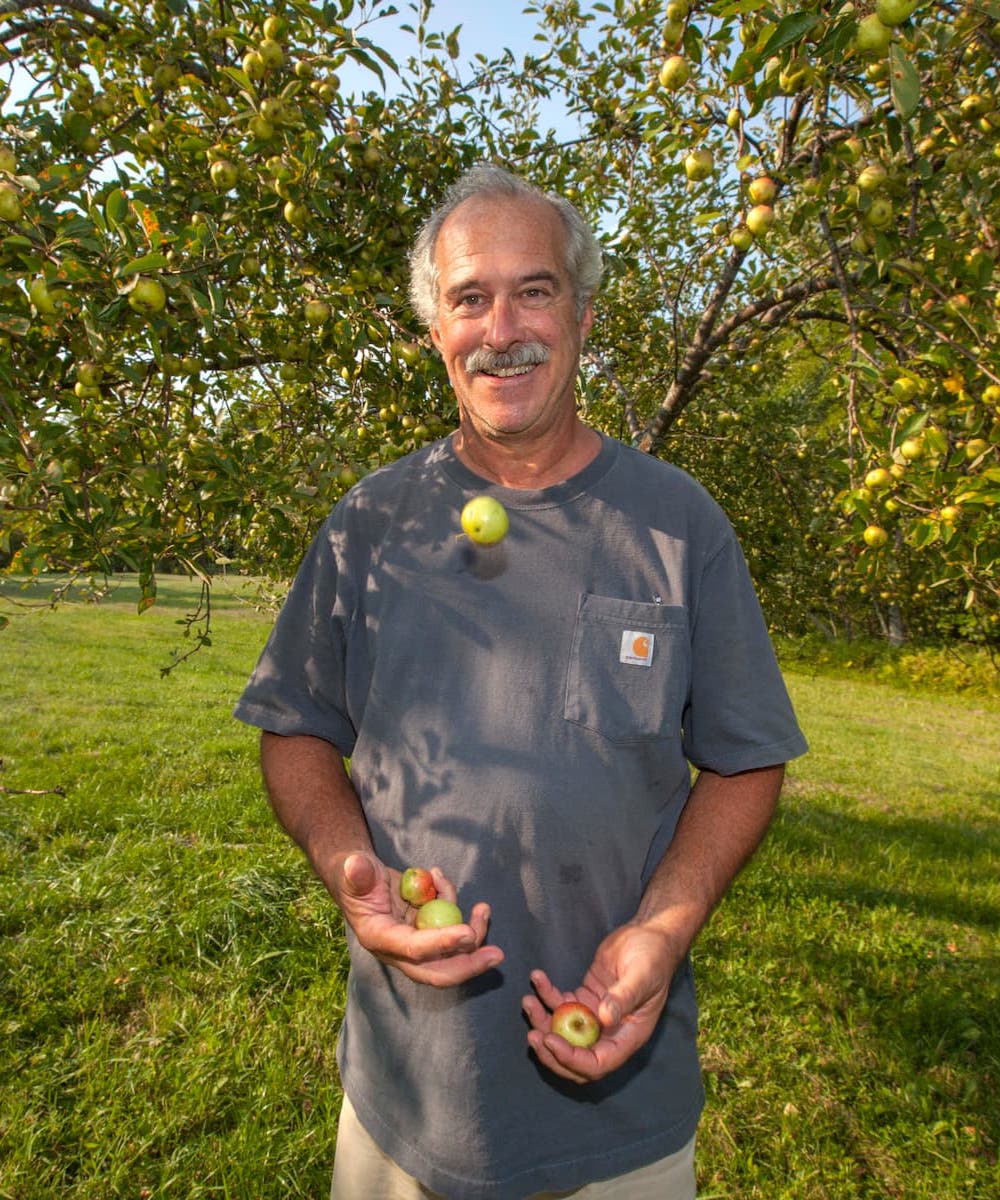
Thinking of planting a backyard orchard? Peter Montgomery of Montgomery Gardens and Heirloom Orchards in Warren offers tips for newbie growers.

By Wendy Carlson

Thinking of planting a backyard orchard? Peter Montgomery of Montgomery Gardens and Heirloom Orchards in Warren offers tips for newbie growers.

Fertilize three times a year—spring, when trees need nutrients to produce foliage, blossom and fruit; summer, as the fruit is developing; and fall, when half of the foliage has fallen.

Prune in winter to open canopies to allow more sunlight. Only 3 percent of the blossoms need to be fertilized to yield a large harvest. Semi-dwarfing trees, now commonly planted, are easier to prune. 

Zap fungi and insects organically. Try Bonide copper fungicide and use their organic insecticide: Captain Jack’s Deadbug Brew. Organic products protect the early native fruit pollinizers such as Blue Orchard Bees. Never use nicotine or tobacco-related insecticides, which is deadly to bees.

Yield varies between apple and pear—and stone fruit trees. Some apple trees produce every other year, depending on the variety and whether trees are recovering from a bumper crop. Stone fruit are self-fertile and are consistent producers year after year. Plant a neighboring peach, nectarine, or Asian pear to increase yield.

Beware of weather. Snow protects young spring roots from frost damage and dry weather produces more concentrated flavors and sugars. Late April cold snaps often kill the earliest fruit blossoms, while wet summers can lead to fungal issues. 

Recommended fruit trees for Litchfield County: heirloom apples, and more recent disease resistant cultivars; peaches, nectarines, and Asian pears.

Dolce Vita

At Byrde + the b, a full-service luxury salon in Washington Depot, Lucy Callaway and Scott Bond stand ready to renew and rejuvenate hair.

Beautiful Tresses Ride Again at Byrde + the b

By Clementina Verge

SPONSORED CONTENT

With winter hats now stored away for another season, it is time to spring to your favorite salon for revived color, fresh styles, renewed highlights, and full-blown transformations. At Byrde + the b, a full-service luxury salon in Washington Depot, Lucy Callaway and Scott Bond stand ready to renew and rejuvenate hair.

“We want to help clients get rid of Covid-quarantine hair, winter hair, any hair that’s been neglected,” notes Bond, salon owner and multiple Emmy award-winning stylist whose experience spans two decades.

Hair is as prone to dehydration during cold, humidity-void months as bodies are, with tell-tale signs of distress including dullness, split ends, and lack of sheen.

Those with outgrown roots who desire color but prefer easier maintenance should consider a shadow root, Callaway suggests. Roots may be kept dark but proper blending into lighter ends is a great way to extend the life of the color between salon visits. With lower maintenance than ombre, a shadow root will seamlessly connect a dark base to brighter ends, extending the life of a hue.

Another option is balayage, a French coloring technique. Though not new, the trend is gaining popularity not only due to beautiful highlights—imagine sun-kissed hair—but because balayage does not involve saturating hair in bleach or color dye, making it a healthier alternative to foil-achieved highlights and resulting in silkier, less damaged hair.

Proper color application is critical: brunettes need depth to make tresses rich and silky, while reds need “a little more punch” for better intensity and brightness. Deep conditioning is especially important for blondes, adding dimension and creating a softer, more natural look, Bond explains.

Callaway, color and stylist expert, finds great fulfillment in making clients feel good about themselves and bringing out natural beauty, advising them to embrace the power of fresh haircuts and styles. She consults with clients about their preferences, personality, lifestyle, facial features like eye color and skin tone, and encourages them not to fight their natural hair. Not every aging woman is best suited for a short haircut, while another’s appearance might be enhanced by growing bangs or fringing them, she notes.

“It is important to not get stuck holding on to hairstyles from 15 or 45 years ago,” Callaway advises. “Don’t be afraid of change, especially this year.”

Bond agrees, emphasizing the need to erase the misconception that trimming results in short hair.

“Trims are needed maintenance,” Bond explains. “If you do not trim it, hair breaks and stops growing, so cutting it actually helps it grow longer. That doesn’t mean that we cut it if we don’t think you need it. We evaluate the condition and make the best decision for you.”

Maintaining the coveted just-left-the-salon feeling is important and Bond’s line of non-toxic products, along with Olaplex and Verb, are designed to enhance color, moisturize, clarify, protect, and strengthen. A certified aromatherapist, Bond has created natural products, such as brown sugar scalp scrub and lavender scalp oil, because “you should treat your scalp like you do your face.”

Byrde + the b
10 Titus Rd
Washington
860-619-0422

The Jewel in the Crown

Carol Bergren Santoleri literally walked upon the subject of her latest book “The History of Steep Rock Association: The Jewel in the Crown.”

A Landscape Historian Chronicles Steep Rock Preserve

By John Torsiello

Carol Bergren Santoleri literally walked upon the subject of her latest book The History of Steep Rock Association: The Jewel in the Crown.

The author and landscape historian chronicles the evolution of Steep Rock’s preserves from the original purchase by famed architect Ehrick Rossiter in the late 1800s through today.

Santoleri, a New Preston resident and landscape historian and photographer, has a personal involvement with Steep Rock’s land that goes back some 20 years when she began walking its trails. Her 240-page book beautifully depicts through words and images the town of Washington’s Steep Rock, Hidden Valley, and Macricostas preserves.

“I started to work on the book in my spare time,” says Santoleri, “expecting to spend a year writing a slender 40-page pamphlet similar to SRA’s two prior histories.” Little did she know that she would end up spending five years creating the elegant 240-page hardcover book with more than 150 illustrations, half of them her own photographs.

Founded in 1925, Steep Rock Association’s mission is to conserve ecologically and historically significant landscapes in and around Washington and the Shepaug River Valley, and to enhance the community’s connection with nature. It protects over 5,200 acres of land.

Brian Hagenbuch, Executive Director of SRA, says, “Santoleri’s book carefully traces the stories behind the preserves, as well as the conservation initiatives undertaken to protect their ecological significance. It should be a welcome addition to the lexicon of natural history books on the Litchfield Hills.”

Gunn Historical Museum

In 1886, Rossiter, a famed architect who designed many homes and buildings in Washington, began acquiring land on the hillsides of Steep Rock Summit and the “Clam Shell,” buying up hemlock groves to save them from loggers. He opened the land, known as Steep Rock Park, to the community for carriage driving, horseback riding, hiking, and picnicking.

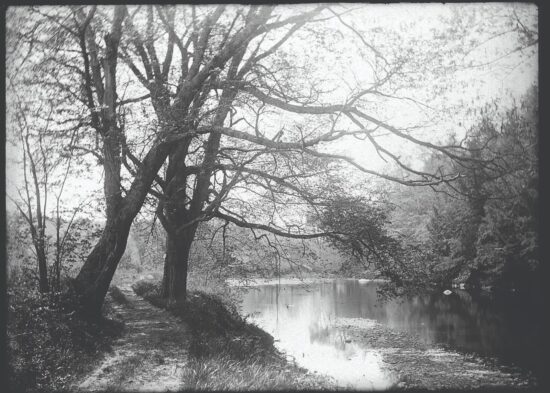
After studying early photographs taken by Joseph West (1876-1952), now in the collection of the Gunn Historical Museum, Santoleri found some of the image descriptions “vague.” She sought the exact spots on which West placed his tripod. “My goal was to replicate his photos in order to create `then and now’ photographs.” She discovered today’s trails are lined with many of the same trees, boulders, seasonal riverine islands, and barriers that mark the locations of bygone bridges and fords. “The view from Steep Rock Summit still reveals open space. Rossiter would surely be pleased to know that his efforts to protect the valley’s picturesque natural resources have been successful.”

A number of Steep Rock Association officials and members assisted Santoleri with her work. In addition to those of her own and West, she incorporated images from a number of other photographers.

“I couldn’t have completed this book without the support of my husband, John Santoleri, who hiked the trails with me, my daughter, Anna Santoleri, who edited my drafts, transcribed interviews, and woke at the crack of dawn to accompany me on photo shoots, and my father, Robert Bergren, who lent his editorial skills and photographer’s eye.”

“The History of Steep Rock Association: The Jewel in the Crown” is available at The Hickory Stick Bookshop in Washington Depot, and can be ordered online. All funds from sales will go directly to support Steep Rock Association.

Five Decades and Counting

The comprehensive team at Dental Associates of Connecticut has brightened smiles, eased pain, and delivered outstanding quality care.

Dental Associates of Connecticut Celebrates Outstanding Milestone

By Clementina Verge

SPONSORED CONTENT

For half a century, the comprehensive team at Dental Associates of Connecticut has brightened smiles, eased pain, and delivered outstanding quality care. This year, its 50th anniversary celebration will feature a variety of virtual and safely-planned events.

“This is a major milestone that few achieve,” declares Adam Richichi, CEO of Dental Associates of CT. “For a practice to not only be around for five decades, but also to thrive and expand the way we have, while continuously improving the patient experience, is something we are extremely proud of as an organization.”

Founded in 1971 in Newtown, Dental Associates of CT relocated to the Village at Lexington Gardens three years ago in response to increased patient demand. Today, the state-of-the-art, 15,000 square foot facility is “the largest dental office on the Eastern Seaboard,” Richichi reveals, adding, “it is dental opulence.”

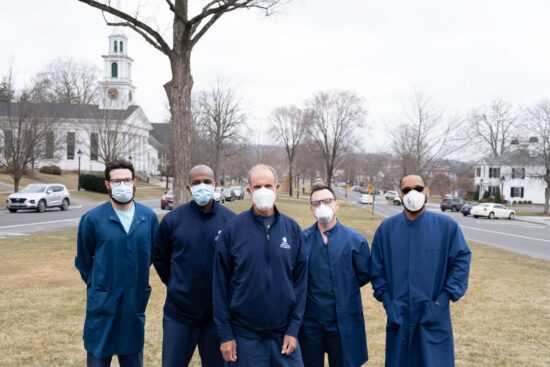
Additionally, 14 other offices located throughout the state serve approximately 70,000 patients. The organization employs 330 staff members and 46 dentists from all specialities—ranging from endodontists to periodontists, and including the longest-standing Dr. Robert Dores who joined the group in 1984 and practices in the New Milford office.

Instrumental in the organization’s success has been the outstanding care extended across all ages, demographics, and dental needs, Richichi explains. Whether it involves laser frenectomies for lip-tied newborns, routine care, cosmetic intervention, emergency assistance, or implants for someone suffering tooth loss due to an accident, disease, or aging, every procedure is completed under one auspice offering a full range of state-of-the-art general and specialized dental care.

“Every aspect of a patient’s care is under one roof, which ensures consistency in standard and communication,” Richichi assures. “One team takes one coordinated approach and the clinical outcomes are wonderful.”

Another important benefit is the ability to establish trust and eliminate the anxiety of having to seek out new relationships and environments.

Establishing such trust is critical starting at a young age, which is why pediatric dentistry is an integral part of the organization. The dentists complete additional years of training, learning specific skills to work with children, even those with developmental disabilities. Furthermore, they have created a fear-subduing environment where children actually enjoy going to the office (a reality game room equipped with arcade games helps, too), Richichi notes.

As they grow up, many need braces and Dental Associates of Connecticut’s orthodontic specialists are among the top Invisalign® providers in the country. Keeping with the dedication to technology, their orthodontists deploy the latest digital technology to create straight and beautiful smiles.

The same dedication extends across the age spectrum. Many older adults are led to believe that dentures are unavoidable, but implants are often a better option. Utilizing the latest technology and a team of specialists, their practices get patients biting and chewing with the confidence of their natural smile.

“We have the clinical team and technology to do this, and the result is high quality care, low pain, and the restoration of confidence,” Richichi reassures.

Dental Associates of CT

Must Desserts

Anthony D’Amelio, pastry chef and baker at Swyft Restaurant in Kent, turns every person into a dessert eater.

By Charles Dubow

Some people claim they don’t like dessert. Anthony D’Amelio loves to change their minds. “Customers will come in and tell me they ‘aren’t dessert eaters,’” he says, “but I will still send them out a little something, a complimentary macaroon, a scoop of ice cream, a bonbon, and that usually does it. Every time they come back they order dessert.”

D’Amelio is the pastry chef and baker at Swyft Restaurant in Kent. The desserts and breads he makes have turned what many people see as a sideshow when dining out, into the main event. A veteran of famous restaurants such as Mercer Kitchen, Payard—where he learned to make his wildly popular macaroons—and Jean-Georges, as well as a graduate of the French Culinary Institute in New York, D’Amelio wants diners to understand that desserts are not about sweetness. “Most people think of desserts as sugar but I try to achieve a more balanced flavor using fresh local ingredients and inserting multiple components that complement each other.”

This complex layering of textures and tastes was something he learned while cooking in France. “My cheesecake looks like a candy bar because it’s covered with white Valrhona chocolate, but when you eat it there’s an almond crust on the bottom, then a cream cheese layer infused with Meyer lemon, and a topping of mousse flavored with coconut. The crunchy and the smooth, the light and airy, the sweet and the acid, blend perfectly together.”

While he is passionate about pastry and bread-baking, D’Amelio is also justifiably recognized for his ice cream and sorbets. “I’ve even had customers come in here and ask me to open up a gelateria here in Kent.” But don’t expect to return each time and be served the same item. This talented patissier changes his menu regularly according to the season and availability of ingredients, which he sources from as near as Rock Cobble Farm in South Kent and as far as Sicily.

“I’m an impatient person and get bored easily. I love to experiment and always want customers to have something new on their palette.”

Swyft
3 Maple Street
Kent
860-592-0404

A National Conversation

Jane Whitney explains that Conversations on the Green provides factual and reliable information from all sides and rational discussion.

Jane Whitney and Lindsey Gruson Bring Our Country to the Hills

By John Torsiello

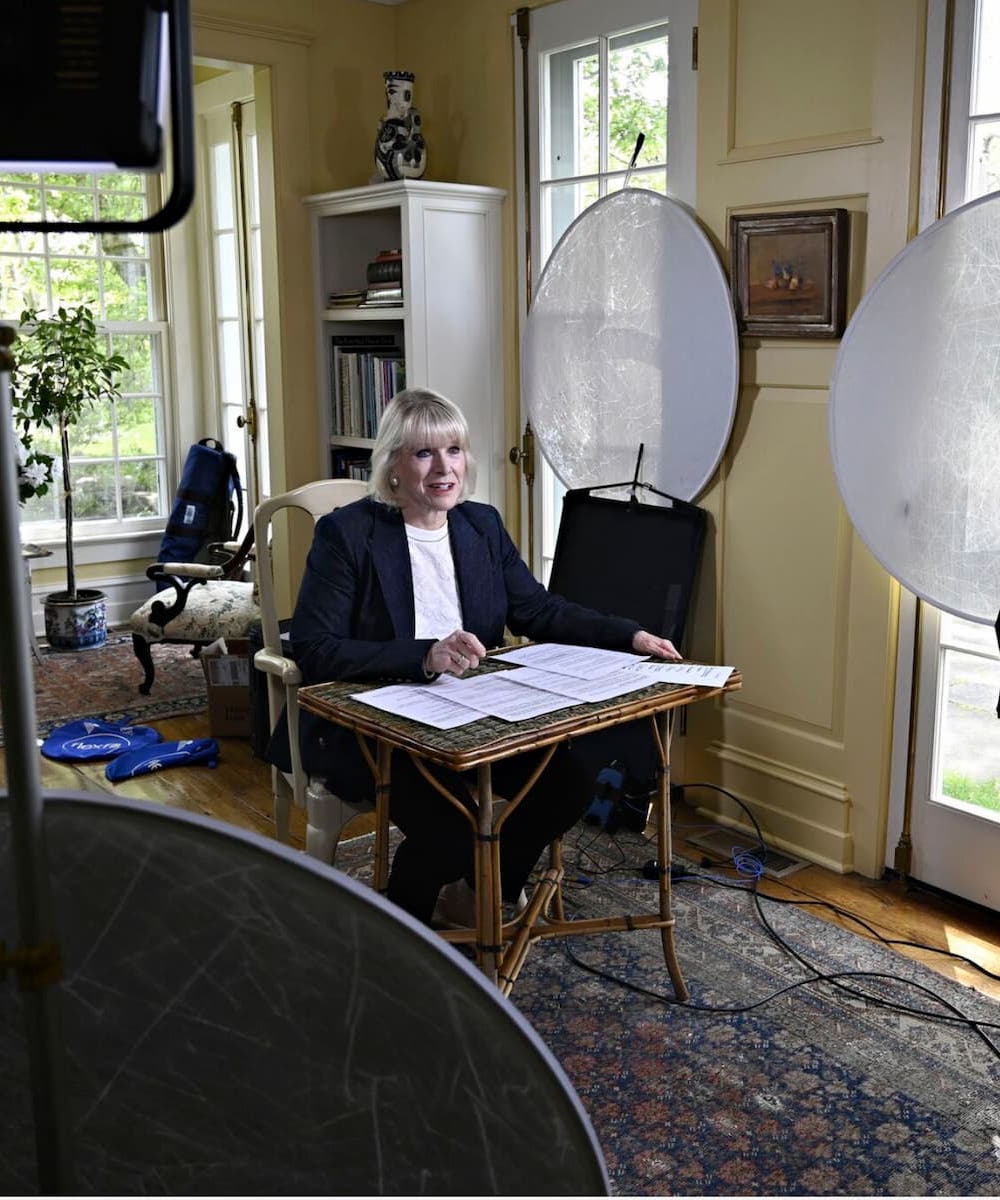
Jane Whitney had to prove herself as a moderator when Conversations on the Green was launched some 10 years ago. Why would a talented 25-year veteran of television (hosting several shows) and print media be in such a situation?

“A group of people in Washington (where she and her husband, New York Times reporter Lindsey Gruson, have lived since 2005) talked to Lindsey about presenting a lecture series,” says Whitney. “They also wanted Lindsey to moderate the panel discussion. He said he would do it but his wife was going to be the moderator. Well, I guess they weren’t aware of my background. They agreed but I had to try it out first.” Needless to say, Whitney passed the “audition” with flying colors.

Conversations On the Green’s stated mission is “to educate and invigorate the community through discussion of the country’s issues and ideas.” The Town Hall style forums allow both the speakers and the audience to share experiences, perspectives, and insights.

The Parish Hall of St. John’s Episcopal Church in Washington, Town Hall, the Washington Montessori School and Shepaug Valley School auditorium have served as venues. The show went virtual last year at the start of the pandemic, broadcasted from Whitney’s and Gruson’s home.

A 90-minute livestream is distributed globally and is then edited for length into an hour show that CPTV broadcasts several times. Last year, CPTV  started distributing the show nationally through Wavelength. Any PBS station can get the service and check out a program and broadcast it.

American Public Television (APT), the premier syndicator of PBS shows, will start distributing COG to all public television stations in the country this year. The show is posted to its website and most major social media platforms, including YouTube, and as a podcast on most major platforms.

The series has attracted notable and varied guests such as Chris Hayes of MSNBC, David Stockman, the Reagan Administration’s budget director, and late night talk show host Seth Meyers.

“The amazing thing is that we have a high-quality, important, nationally broadcast emanating from a small town in Litchfield County,” says Whitney. “I can’t think of any other such show that had its genesis as a community fundraising event. We really don’t have much of a staff, one and a half paid workers, and great volunteers.”

“I always feel COG is the community’s show, never mine or Jane’s. The show itself is put together by a whole group of volunteers with the help of countless community members who donate time, experience, money and curiosity,” says Gruson.

Gruson produces the show and edits the livestream with CPTV, while Whitney moderates and writes all her copy. Guests appear without fee, which is a credit to the couple’s reputations in the industry, connections, and the fact that guests view the show as an important undertaking.

Whitney was a correspondent for NBC News based in Central America and a reporter for Entertainment Tonight.” She also anchored broadcasts for PBS, CNN and CNBC, and a Warner Brothers nationally syndicated TV program, “The Jane Whitney Show.”

“We have always been in a place where we were against the odds with this. As a 501(c) non-profit we apply for grants to help offset costs. My husband has really been a driving force through the years.

“I don’t have anything to prove professionally. We are doing this because the country and our culture are in a place where they need factual and reliable information from all sides and rational discussion,” says Whitney.

Check CPTV.org and conversationsonthegreen.com for show times.

Conversations with Haver and Skolnick

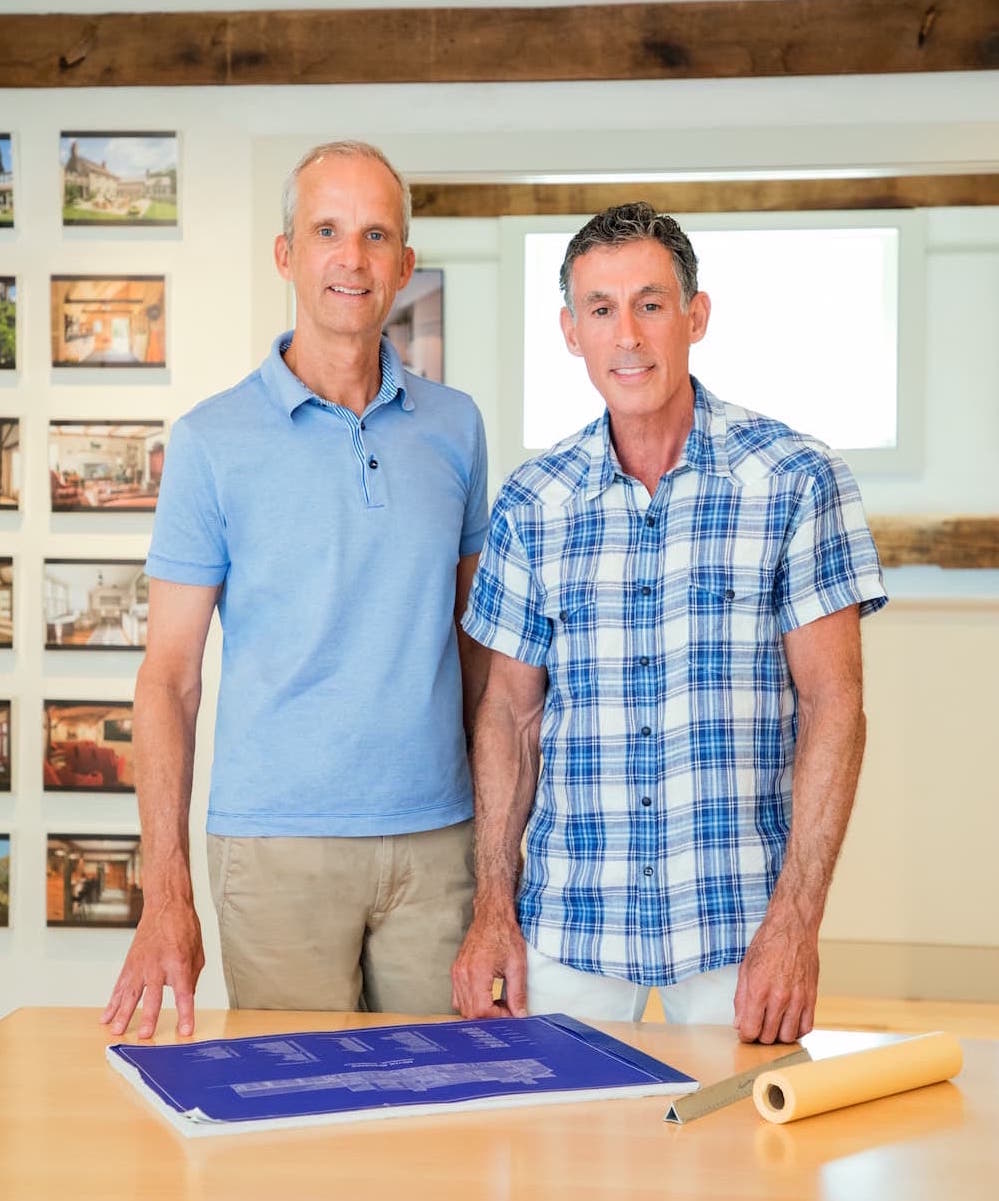
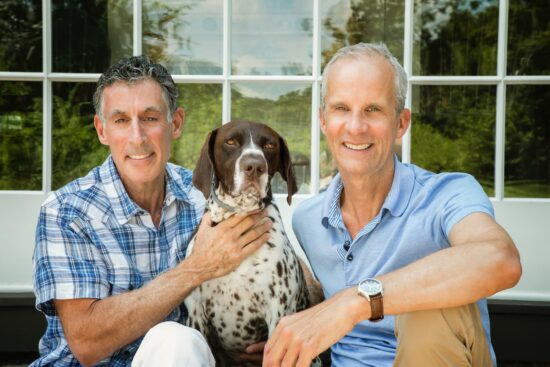
Over two decades ago, Charles Haver and Stewart Skolnick founded an international award-winning architectural firm.

Over two decades ago, Charles Haver and Stewart Skolnick founded an international award-winning architectural firm. Since then, their projects include new homes, renovations and additions, and a full range of architectural design, interior design, and landscape architecture services—with many of their designs nodding to New England history while incorporating the modernity of the 21st century.

What inspired you both to become architects?
SS:
In my sophomore year in college I attended a “Semester at Sea” program. When you arrive in a country by ship the skyline is a very powerful and informative image. I knew then that I wanted to create architecture.

CH:
When I was five, my father would give me the cardboard from his laundered shirt each day so that I could draw a picture of a house for him. I’ve been drawing houses ever since.

How did you discover Litchfield County?
Thirty years ago, we went looking for a small weekend country house, not too far from NYC where we both worked full-time. We knew the first time we came to Litchfield County that it was a magical place that we hoped could someday be our home.

What do you love about Spring in Litchfield County?
There’s nothing more joyful than seeing “snow drops” pop up in early March. It means Winter is finally over!

What types of projects are your favorites?
Projects where we can get involved in every aspect: architecture, interiors, and certainly the landscape.

Can you describe your style?
“Connecticut Country Casual.” Our architectural designs respond to the historical Connecticut vernacular buildings, while still being comfortable, inviting and playful.

Where are most of your clients located?
The majority of our projects are in Litchfield County, often second homes for clients from New York, California, and Chicago.  We also do projects within a two-hour radius, including Fairfield County, New York City, Upstate New York, and currently Fishers Island.

How is your firm different than others in the area?
We look at the totality of the property, not just the built form, but the entire site and all the natural landscape features. We don’t make a distinction between interior and exterior; the entire design has to flow and has to represent the client’s point of view.

Of the awards you’ve won, which means the most to you? Why?
The Palladio Award is a national award presented once a year for traditional design excellence. Projects from all over the country are submitted by a very distinguished group of Architects. We have been fortunate to receive this honor twice within the past few years.

Tell us about your antiques shop. How did it come about?
Charles has been collecting Americana since age ten, and as with many avid collectors opening a shop provided a perfect excuse for continuing to constantly search for unique treasures. Charles’ first shop was a tiny nook in Lakeville but now occupies the entire first floor of our restored barn, also home to our architectural studio.

What are some tips on designing a beautiful outdoor space?
We love to create gardens as an extension of the architecture, creating a series of “outdoor rooms,” linked together with meandering pathways, stone walls, pergolas and arbors. In designing exterior spaces, we always try to respond to both the expansive scale of the property while still creating intimate spaces and a sense of discovery.

Haver & Skolnick 
3 Southbury Rd
Roxbury
860-354-1031

David Whitman shares his Litchfield County Faves

David Whitman, co-owner of Pergola Home, a unique and naturalistic boutique in New Preston shares his Litchfield Faves.

David Whitman, co-owner of Pergola Home, a unique and naturalistic boutique in New Preston shares his Litchfield Faves.

My “commute” down to PERGOLA in New Preston takes me from the northern edge of Litchfield County, near Salisbury, down along the Housatonic River and the Appalachian Trail, over the hill to Warren, and ending up at the shop above New Preston Falls. The Litchfield Hills provide different perspectives around every turn which inform and inspire my work at PERGOLA—the botanical layering, the mix of old and new, for inside and outside. I have been making this trek for over 15 years and have come to know and love many spots along the way. With my dog Misaki as co-pilot, we have several fave trailheads for walks just off this route. For the return trip, I usually head up the hill toward Sharon for the end-of-day light and to drop the kayak into one of the area ponds for a paddle before dinner. My husband Peter and I alternate shop days so we each have our own comings and goings with a variety of stops down and back.

Favorite trail:
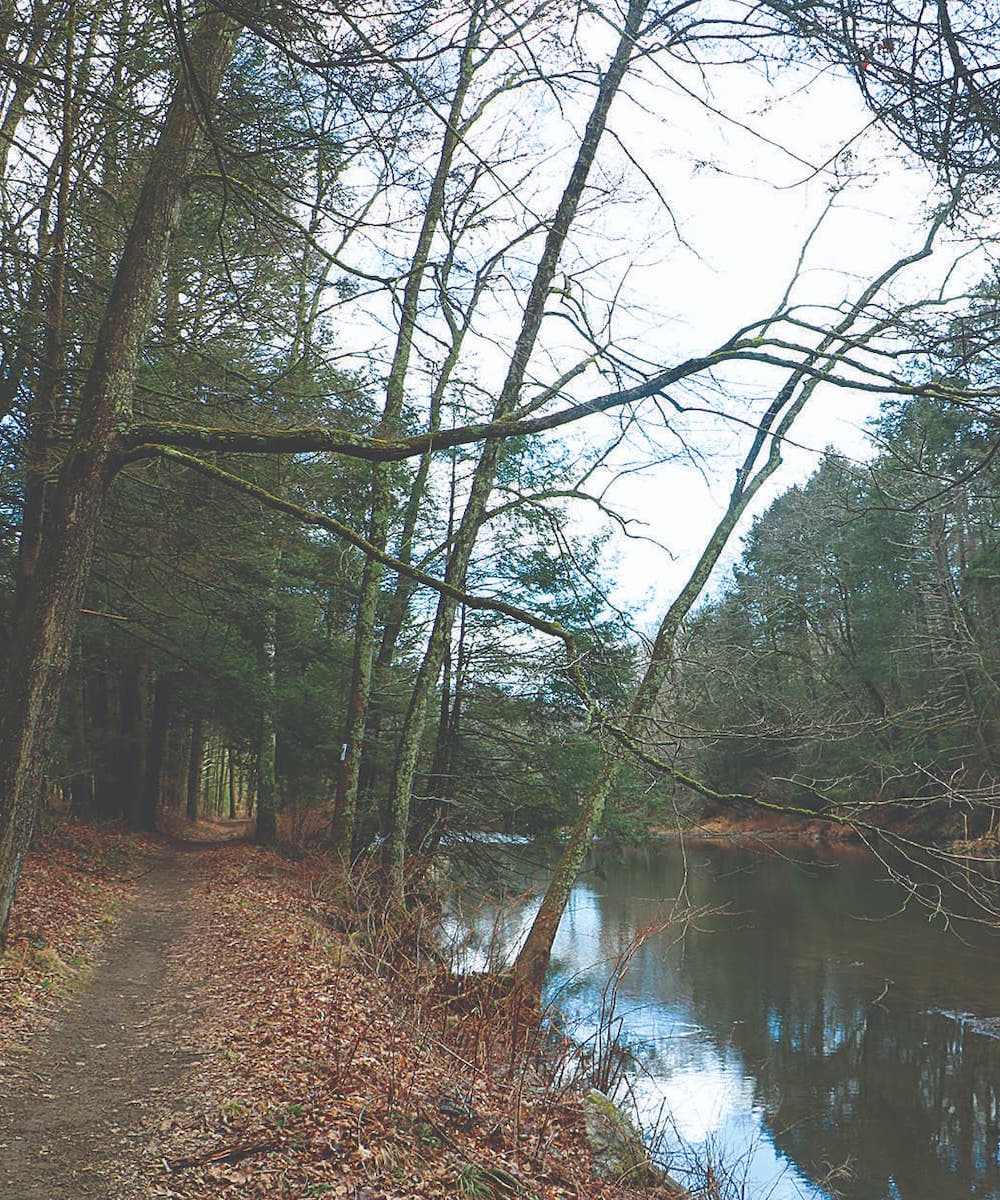
The Appalachian Trail enters and exits Connecticut only in Litchfield County with well-marked, easy access trails. Misaki’s favorite is the trailhead hidden away on Water Street in Falls Village, just downstream from the Great Falls. A tree-lined flat path follows along the bank of the Housatonic.

For the garden:
The Salisbury Garden Center on Route 44 has an edited, high-quality selection of annuals and perennials for my spring container plantings. Find out when their plant deliveries are happening and get there first.

For on-the-road bites:
Dog bone cookies for her, the best scones in the county for me. Both can be found at Sweet William’s Bakery on Main Street in Salisbury, along with an excellent cup of coffee.

Dog essentials:
Dr. Dave and his wonderful team at Sand Road Animal Hospital in Falls Village have cared for all our dogs over the years. Misaki also likes getting her hair and nails done there.

For lunch:
Passing by the Warren General Store each day I can’t help but stop for a lunch salad to-go or the artisanal food from Arcadia’s Kitchen to take home for later. Their green tomatillo salsa is a local legend.

Favorite dog park:
The Salisbury Community Dog Park is a happening spot for both four and two-legged. Just off Long Pond Road not far from the Sharon town line, it has easy access for fenced romping in both larger dog and smaller dog areas. While only 21 pounds, Misaki likes to think of herself as belonging to the former.

Favorite late afternoon kayak pond:
It’s a toss-up between these two nearby ponds—Mudge Pond in Sharon, and The Cedars Pond just down the dirt road from the Salisbury Dog Park. An easy launch at both for a quiet paddling session to wind down the work day.

For dinner:
Peter and I look forward to the return of our Thursday night routine at the Tap Room of The White Hart Inn. Tasty fish tacos and burgers are best eaten sitting at the bar with a glass of whatever is being poured.

Pergola
7 East Shore Rd
New Preston
860-868-4769

Hip Hops

When James and Shrevie Shepherd were living in Africa and India, little did they dream that one day they would find themselves running the largest hops farm in Connecticut.

An Old Sharon Dairy Barn Finds New Life as a Hops Farm

By Charles Dubow

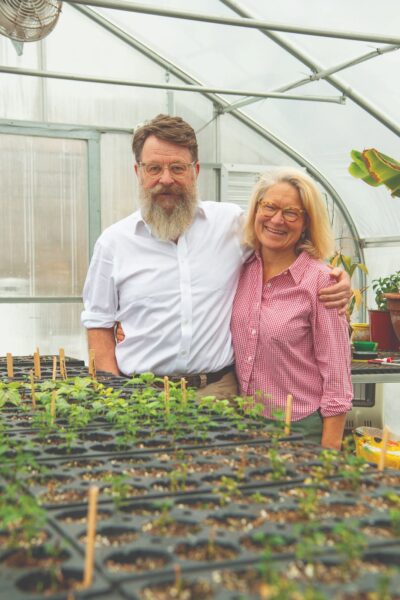
When James and Shrevie Shepherd were living in Africa and India, little did they dream that one day they would find themselves running the largest hops farm in Connecticut. In 2014, after more than a decade overseas where James worked as an epidemiologist with the C.D.C. and Shrevie for the U.S. State Department, the couple bought an old dairy farm on Sharon Mountain and renamed it Smokedown Farm (after a farm in Oxfordshire where James’s mother and uncle had been evacuated during WWII). Neither of them had ever farmed before, but as James puts it, “every Englishman is a farmer at heart.”

Sari Goodfriend

So they made a go of it. James, a Briton who sports a magnificent beard, continues to work three days a week as a consultant for the W.H.O. and as an infectious disease specialist at Yale. The rest of his time is devoted to the growing of hops, which are integral ingredients in the brewing of beer. There are dozens of different hops varieties, each one offering a unique flavoring characteristic.

The Shepherds’ timing was propitious. The domestic craft beer craze was taking off and Smokedown began supplying their sustainably-grown hops to many Connecticut breweries, including Firefly Hollow in Bristol, Black Hog in Oxford, Two Roads in Stratford, and Kent Falls in Kent. “We are really lucky to live and brew our beers in an area with growers as passionate, talented, and neighborly as the folks at Smokedown,” says Kent Falls’ Barry Labendz.

Sari Goodfriend

“It’s been a steep learning curve,” says James. “But we are getting better every year.” In 2018 they hired Nebraska-native Ally Mills to manage the farm. The farm not only grows and harvests hops but also dries and turns the hops into the pellets that they sell to the breweries. The 667 18-ft. poles that James erected by hand form the trellis architecture of the lush and fragrant nine-acre hops-yard, and he hopes to expand on to more of their 175 acres. By mid-August when the hops are ready the Shepherds bring in the harvest. “Our sons, friends, local helpers, everyone comes,” says James. “It’s hard work but so rewarding.”

Smokedown Farm
196 East St
Sharon
smokedownfarm@gmail.com

Current Issue
March / April 2026
Our Kind of Healthy
The Health & Wellness Issue
Subscribe Now
.
  • STAY IN THE KNOW

    Your weekly guide to can't-miss events, hidden gems, and local favorites in Litchfield County. Sign up now for curated things to do, eat, and explore—delivered every week. It’s free. It’s local. It’s essential.

  • Karen Raines Davis