Your guide to the heart of Litchfield County:
Discover local stories, hidden gems, and must-know events.

The Po’s OutPOst Delivers Lakeside

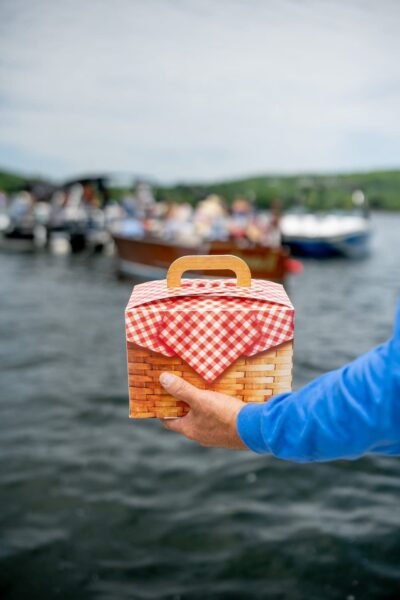
The OutPOst offers a slimmed-down version of The Po’s regular menu as well as lobster rolls and burgers, delivered to you by boat.

By Charles Dubow

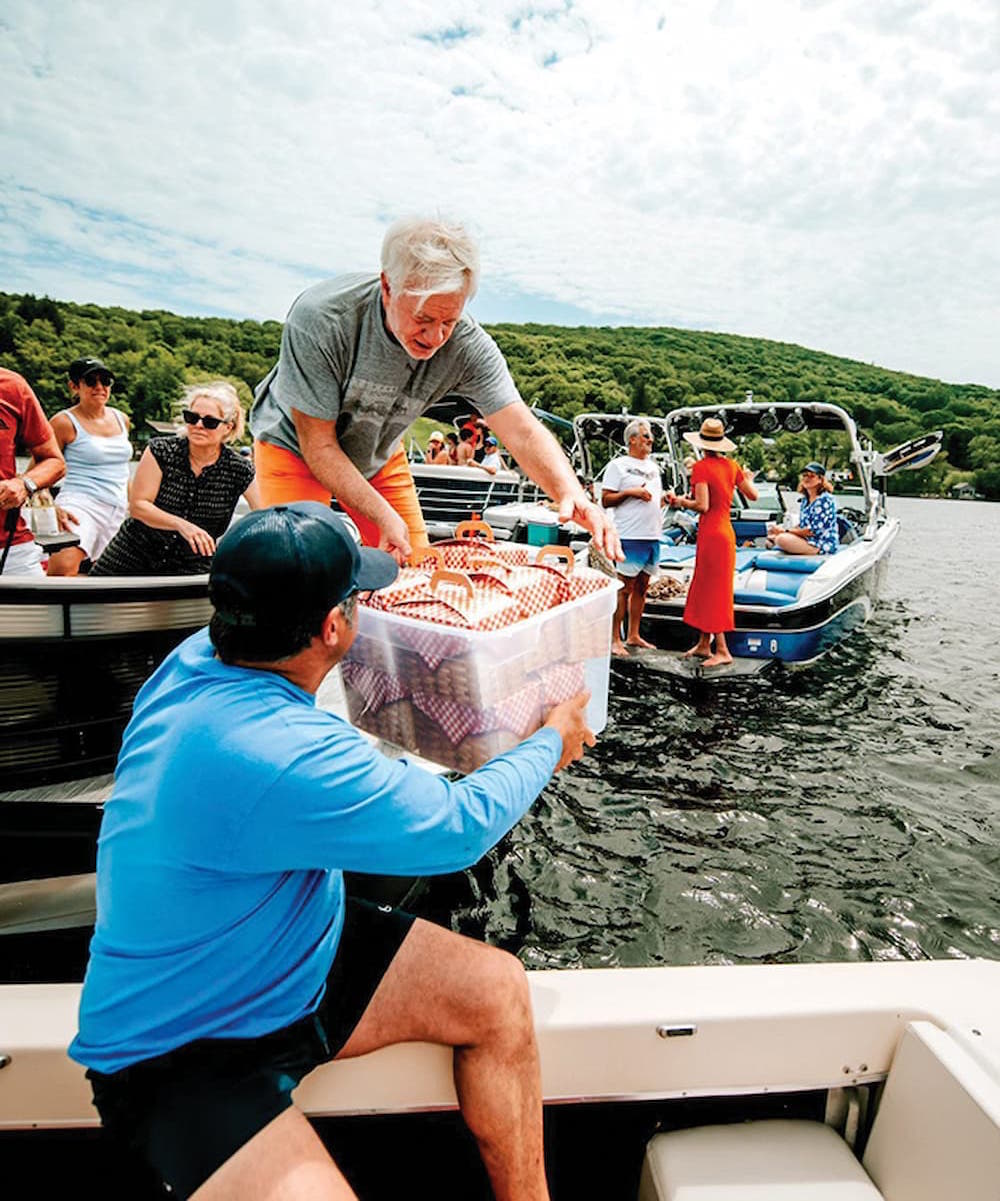
There you are, sunning yourself on your dock on Lake Waramaug and you feel a bit peckish. What do you do? Well, you could maybe go inside and fix yourself some lunch or, better yet, order a lobster roll and wait for it to be delivered. By boat.

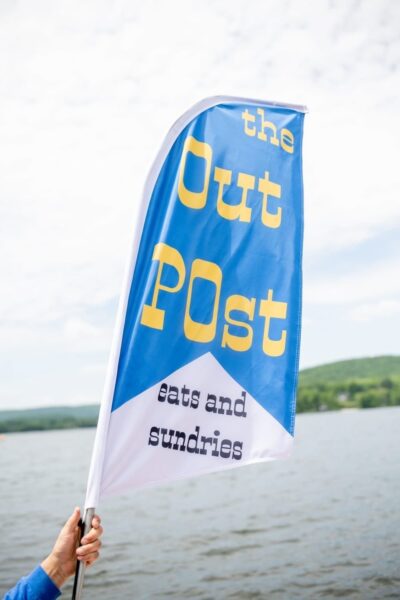
A fantasy? Not any longer. That’s because this summer Margaret Colangelo, owner of The Po Café on the Washington Green, has opened The OutPOst in Lake Waramaug State Park. All you need to do is go online, select your order, make your payment, and then sit back and wait for her son Nic to drive over in his motorboat with your food. 

In addition to lobster rolls and burgers, The OutPOst will also be offering a slimmed-down version of The Po’s regular menu—think pastries, cold salads and sandwiches—as well as fresh-squeezed juices and mixers for your favorite cocktails. (Sorry, state law prevents them from selling alcohol.) Planning a get-together with friends? With their partners New Curds on the Block and To the Gills, The OutPOst can also provide charcuterie and cheese boards, shrimp cocktail, oysters, and more. 

Of course, you don’t need to live on the lake to take advantage of The OutPOst. If you want to drive yourself there, by car or boat, that’s fine too. Open for breakfast, lunch, and dinner. Closes at sunset.

30 Lake Waramaug Road, New Preston

Blueprint CT Kitchen

Blueprint CT Kitchen, located in Litchfield, offers the best local and globally conscious-made, organic, non-GMO products.

By Pamela Brown 

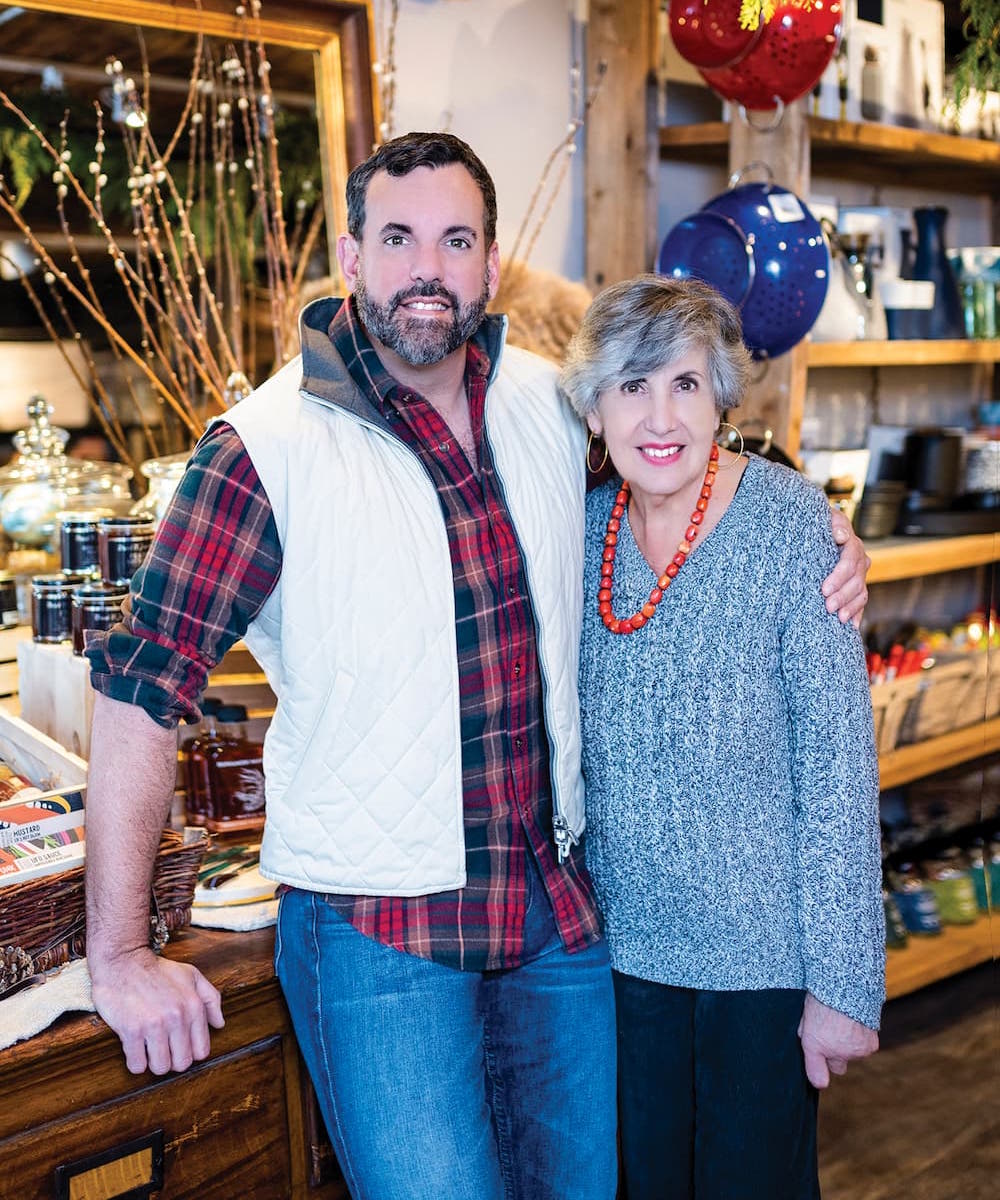
If the kitchen is the heart of the home, then Blueprint CT Kitchen is at the heart of your lifestyle. Ideally located on the Litchfield Green, the delightful shop offers the best local and globally conscious-made, organic, non-GMO products. “The impetus for the store was to add to the kitchen concept—to not only provide a service to the community but help people expand their repertoire,” says owner Louis Lemieux who also owns Louis CT, an interior shop & design studio. “Today, people are coming together with family and friends around the dinner table to experience something new.”

Blueprint CT is a collaboration between Lemieux and his mom, whose friendly, welcoming demeanor is reflected in her nametag, ‘Therese, a.k.a. Mom.’ “She and my dad were true adventurers, serving overseas in the Foreign Service for 36 years and their influence is felt in the shop,” says Lemieux. The shop is a global smorgasbord inspiring every imaginable culinary adventure. “We offer customers access to items they’ve never experienced—an experiential opportunity to dazzle their senses. They can increase the range of their palate and have a full-on experience in a particular culture,” says Lemieux. Having traveled through 45 countries, he introduces customers to a vast selection of specialty foods and kitchen products ranging from oils and vinegars, pesto, herbs, and pasta, to linens, small appliances, Sardel pots and pans, stunning handmade chopping and presentation boards, and more. A Gift Basket program allows customers to pick-and-choose items for any occasion. Lemieux also features CT-based items, including house-made scones and breads from nearby Mockingbird Kitchen and Bar and locally-sourced farm fresh eggs.

New this year at the shop is a spice market featuring Lemieux’s private label. “It’s really exciting,” says Lemieux who just returned from Thailand and Dubai with a plethora of exotic spices. Stop and stay awhile in the whimsical Tea Room, complete with cozy furniture and butterflies dotting the ceiling, to browse a global tea collection, including JusTea, farmer-direct tea from Kenya that creates sustainable employment for small-scale Kenyan farmers. Most of the shop’s products are sourced from purpose-focused vendors. For example, the manufacturer of The General’s Hot Sauce creates jobs for veterans and donates a percentage of profits to veterans. Apolis bags are handcrafted in Bangladesh by mothers who receive Fair Trade-certified wages, and Sustainable Threads provides micro loans to women artists all over the world to create hand-blocked linens. “When we sell the products, it refunds the program for another woman artist,” notes Lemieux. “We raise social consciousness around quality ingredients and natural products that go toward improving the quality of life.”

Lemieux’s mission is to bring people together. “We like to talk to customers, give them recommendations, explain about a product, share our histories, and get to know them. The shop is very interactive. Strangers meet and talk, neighbors come in, and it creates a sense of community and inclusion. After COVID, people are seeking that,” he says, grateful to offer such a positive space. “There’s an old railroad bench I repurposed and it’s in the entry. People sit and take it all in. Food is universal and connects people.”      

43 West Street, Litchfield, shopblueprintct.com, 860-361-6789

Good & Sweet & Smart & Simple

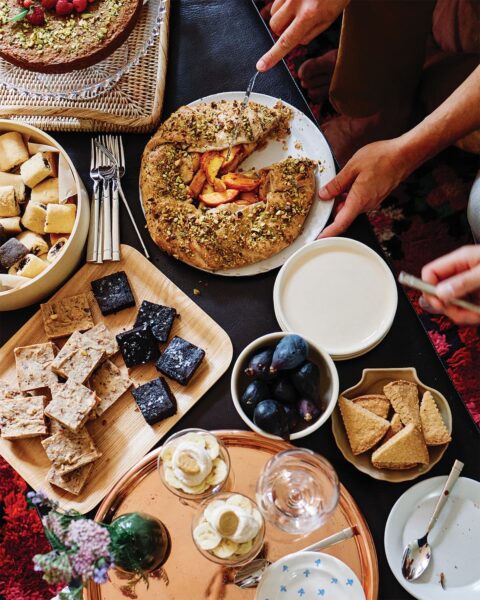
Good & Sweet & Smart & Simple is chock full of remarkably smart and simple ideas to make desserts and baked goods without sugar.

By Charles Dubow

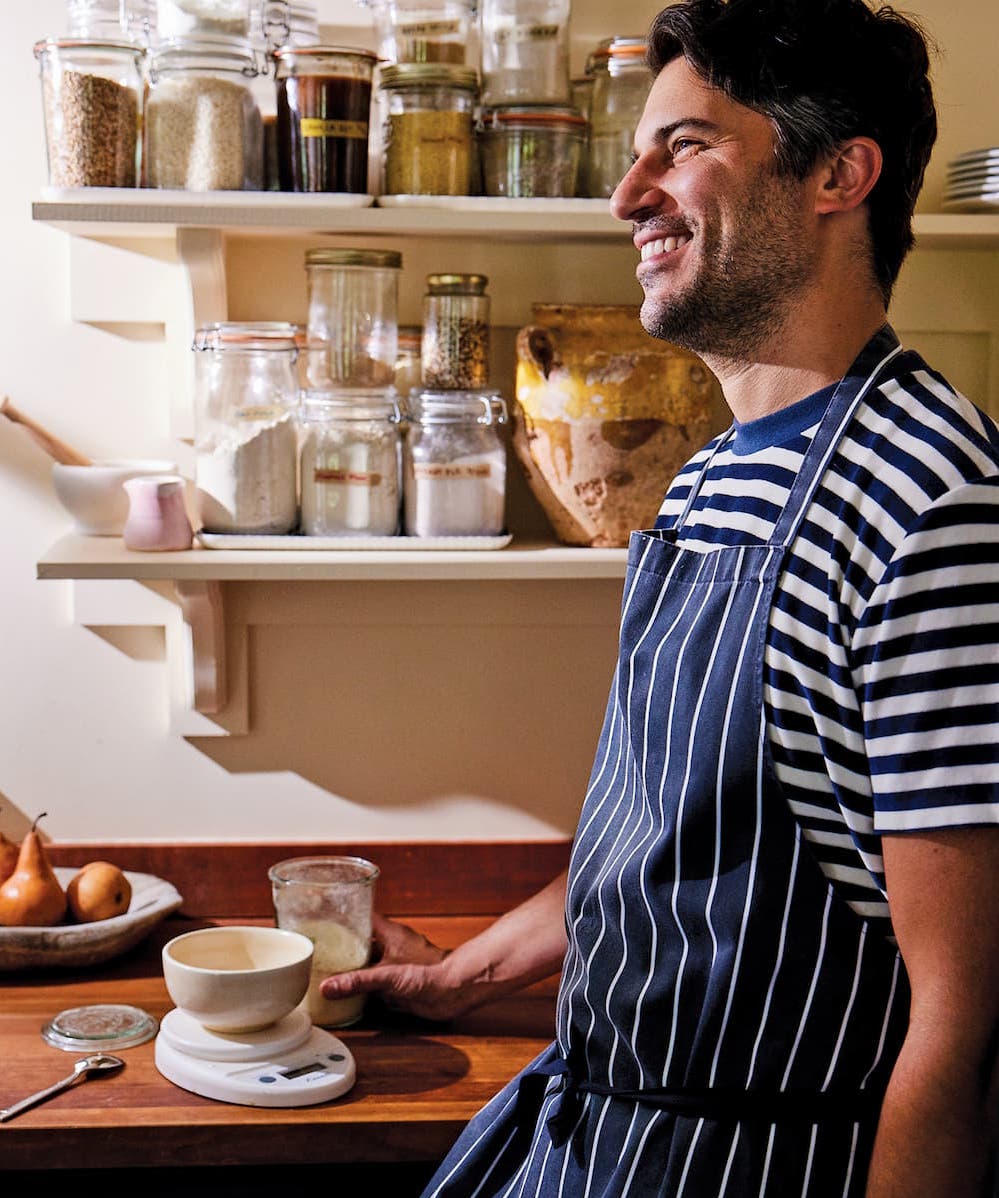
In the staggeringly competitive world of cookbook publishing—there were more than 21 million printed in the U.S. alone in 2020, according to the New York Times—you need more than good recipes (and a little bit of luck) to stand out. You need something else, some kind of gimmick or hook to appeal to the ever-growing legion of home cooks. For some it is name recognition—think Ina Garten or Daniel Boulud. For others it is a unique approach to food that may not have been previously explored. That is the route that Brian Levy has taken with the publication of his first cookbook, Good & Sweet.

Difficult as it might be to conceive of a method of cooking that hasn’t yet been trapped between a dust jacket—sous vide, Afro-Kosher, cannabis, plant-based meats, et. al.—Levy has had a remarkably smart and simple idea: Making desserts and baked goods without sugar. 

Impossible, you say? Isn’t the whole point of these foods to provide us with a sugary high? No one gobbles down a glazed cruller for its health-giving properties, after all. Not so fast, says Levy. “You can still get the sweetness you crave. You just don’t need to use sugars to do it.”

Kristin Teig

He does it by choosing sweet alternative ingredients to more traditional products like refined sugar, honey, agave, and even maple syrup. “When you bite into a mango, you get this incredible natural sweetness, right? But it’s all contained in the fruit itself. You don’t need to add anything else to make it sweet. It not only tastes great, it’s also better for you.” 

To achieve his sweetness goals he focuses on natural substitutes, such as fresh, juiced, and dried fruits, as well as freeze-dried corn, apple cider, coconut cream, and even miso paste. “It took me years to come up with the right ingredients. There was a lot of experimentation. I even used it as the basis for some of my food recipes that my mother made in the ‘70s.”

The results speak for themselves. Readers can find recipes for such goodies as Sticky Toffee Pudding, Chestnut Ricotta Ice Cream, Granola, and a Black and White Milkshake. 

Levy is more than just a weekend dabbler. He spent years as a pastry chef at Babbo, where he was mentored by James Beard Award-winner Gina DePalma. “I wasn’t a big baker as a child,” he admits. “I did have a sweet tooth but I fell into cooking by accident. After I graduated from college I tried to get a job at Gourmet magazine. So I thought that maybe if I got a kitchen internship that would help my chances. I landed an unpaid gig at Babbo. After a couple of months one of the girls left and I was hired full-time.”

After that he worked as a private chef in Spain and France, and toyed with the idea of turning his recipes into a book. Then, during Covid, he got the opportunity. Now his book is coming out from Penguin Random House on July 22. That’s pretty sweet. 

Celebrate the launch of local pastry cook Brian Levy’s debut cookbook, Good & Sweet, at House of Books on Saturday, July 30 at 6pm.

Lake Waramaug’s Beauty and History

Lake Waramaug reflects not only sunsets and seasonal splendor, but centuries of history shaped by those fortunate enough to have witnessed its beauty. 

By Clementina Verge

Lake Waramaug’s crystalline surface reflects not only sunsets and seasonal splendor, but centuries of history shaped by those fortunate enough to have witnessed its beauty. 

Connecticut’s second largest natural lake—whose expanse touches Washington, Kent, and Warren—is a “striking microcosm of the American story,” notes Christine Adams, whose family has kept a cottage on the lake for five generations. “It has allowed itself to be reinvented while retaining its character.” 

The natural features of this “quintessentially New England” lake formed when the last Ice Age glacier melted have remained unchanged, transcending time and anchoring many cultural and social shifts, from the Indigineous people who first called it home, to Colonial settlers who arrived in the 1680s, followed by decades-long residents, vacationers, and weekenders.

“The Indigenous people are unique in that they have experienced the entire history of this lake first hand,” reflects Adams, who serves on the Lake Waramaug Task Force Board of Directors. “They make up the longest serving stewards of Lake Waramaug,” named after the chief of the Wyantenock tribe that encamped, hunted, and fished here in the summer. 

More than ten Native American archeological sites found within two miles of Lake Waramaug emphasize the importance of remembering that the land was “the ancestral home of many who from millenia came before us,” Adams highlights.

A shoreline transformation was underway by the 1730s; Lake Waramaug became an industrial landscape when residents like Daniel Averill and Edward Cosgrove discovered the iron ore on the west shore. The lake began to serve “as a holding pond” for 21 water-powdered industries, including an ironworks grist, sawmill distilleries, and various factories manufacturing everything from tools and furniture, to clothing and grain sacks. 
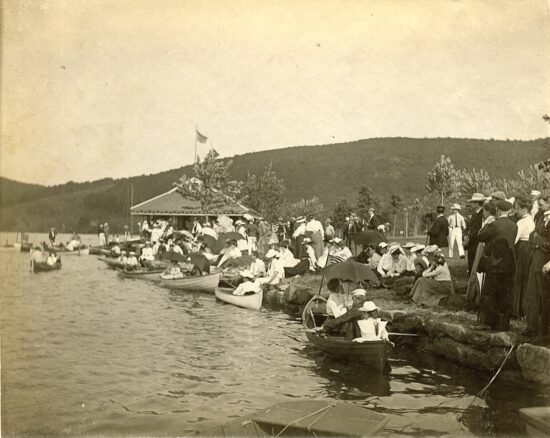
As the Civil War culminated, steam power replaced hydropower, and the community morphed again. The population dropped 20 percent between 1850-1920 as cities attracted workers, but the lake enticed many back, entering “a heyday of sorts, becoming a summer community, an artist haven,” and likely the site of the first campground in America. 

“The times were lively,” shares Adams, a researcher at the Gunn Historical Museum

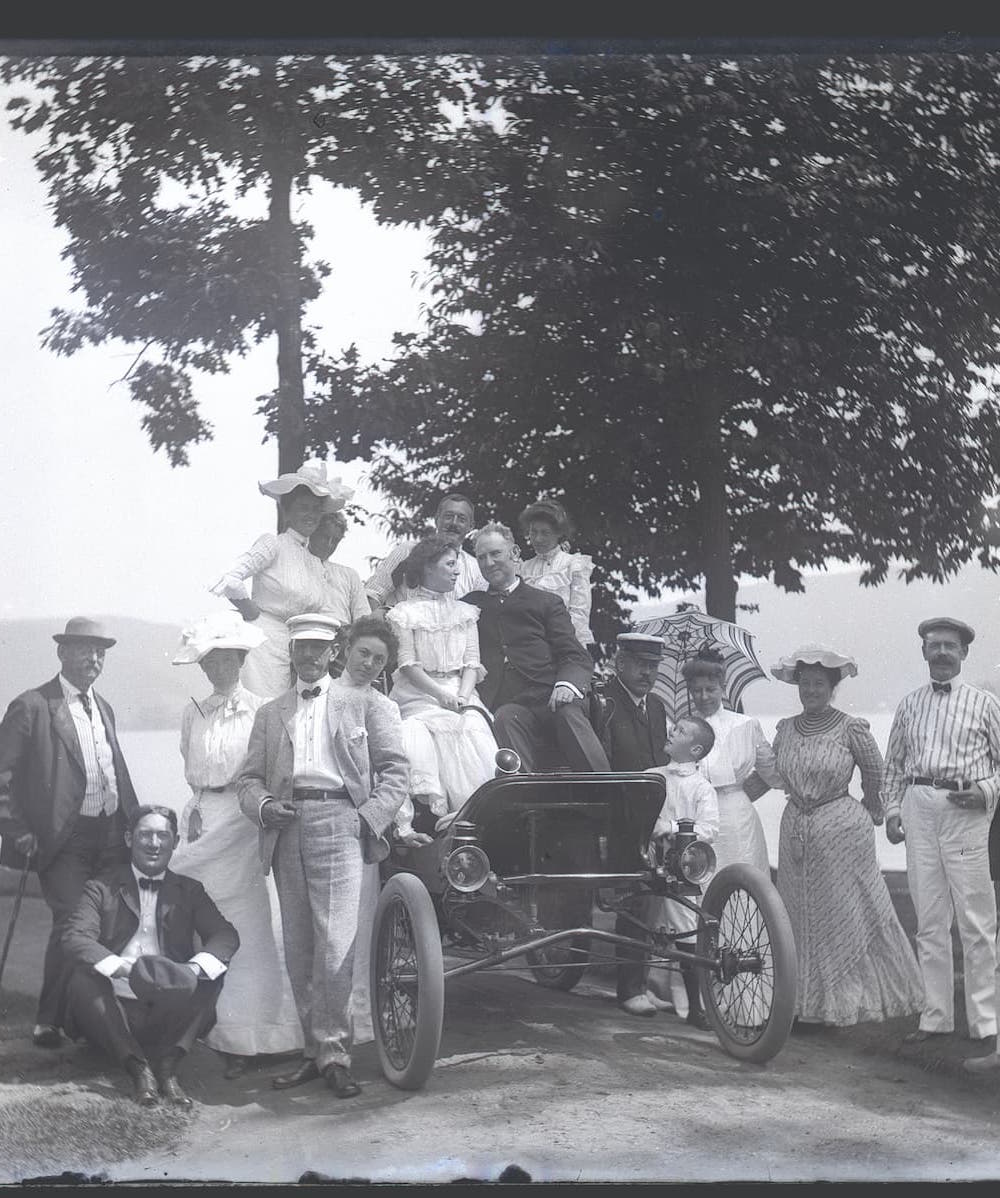
By the 1920s, 300-400 guests arrived at the Preston train station on Bee Brook Road every summer, traveling Flirtation Avenue in horse-drawn covered wagons while being transported to one of the 17 lakeside inns. Steamboat tours, concerts, and plays at Pavilion Hall, antique car rallies, dances, fireworks, water sports, and regattas became the social norm. 

And then, the shoreline transformed again. Some buildings burned between the 1960s and 1980s; others were demolished or sold, making way for today’s waterfront residences. 

Lake Waramaug State Park offers public access to swimming, camping, and boating. Beyond those boundaries, the shoreline of the 625-acre lake is privately-owned. 

“Although the use of the lake has changed, the inherent sense of place conceived by all that dwell here is constant. Its culture has shifted with every generation, but a unique sense of attachment and belonging is felt by all who know and love Lake Waramaug,” remarks Adams, who speaks from experience. 

In the final stages of writing a book, Homespun, she chronicles the history of a centuries-old cottage she recently purchased along East Aspetuck River, whose source is the lake on which her great grandfather built his home, and where her ill father chose to spend his last summer.

“The DNA of this place has interlaced with our own and although each generation has nurtured the lake very differently for more than 10,000 years, its beauty and power to inspire and connect us are constant.”

Laking it with Connecticut Watersports

Connecticut Watersports offers everything from tube rides to wakeboarding and water skiing—teaching is their speciality.

By Linda Tuccio-Koonz

Ian MacRae was six when he first tucked his feet into a pair of water skis, gripped the tow rope, and waited to feel its pull. 

“My older cousin was in the water helping me keep my skis straight,” he says. “My dad was driving the boat. After about 20 tries I finally got up on the skis.” 

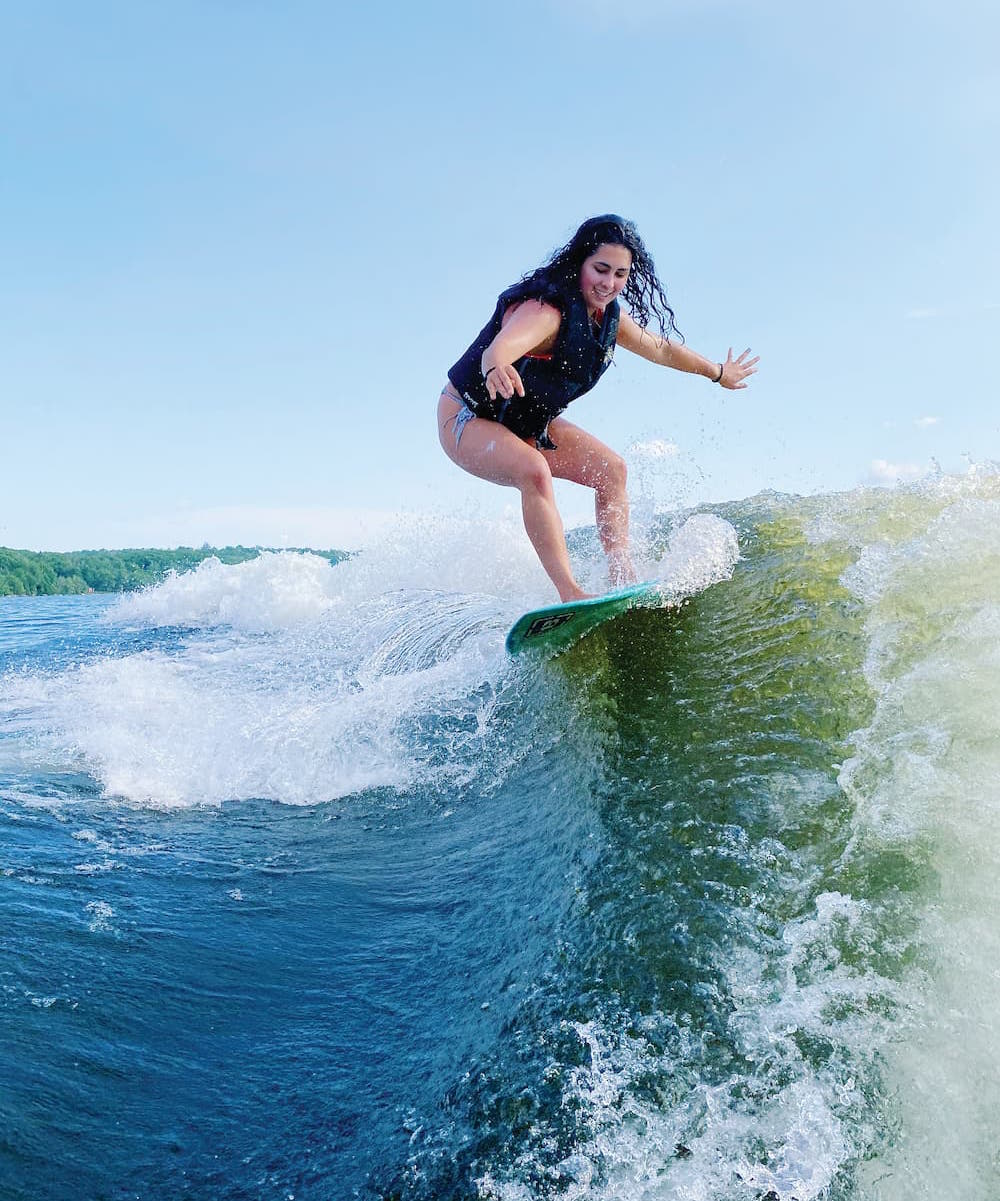
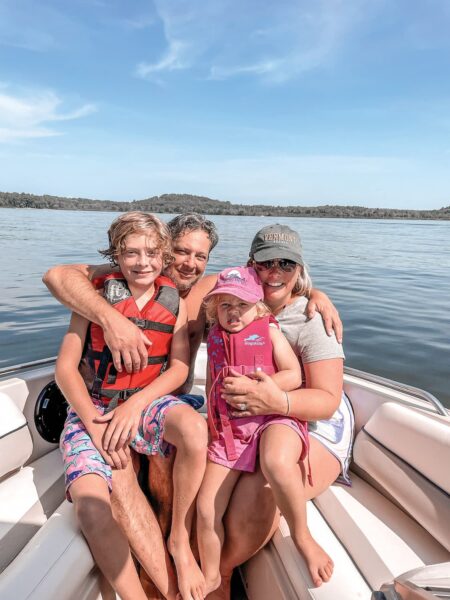
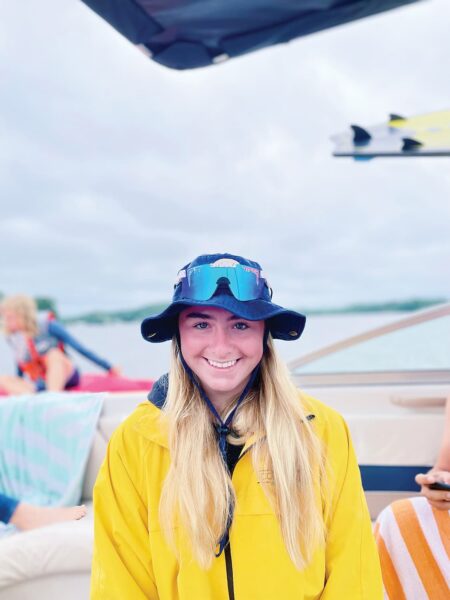
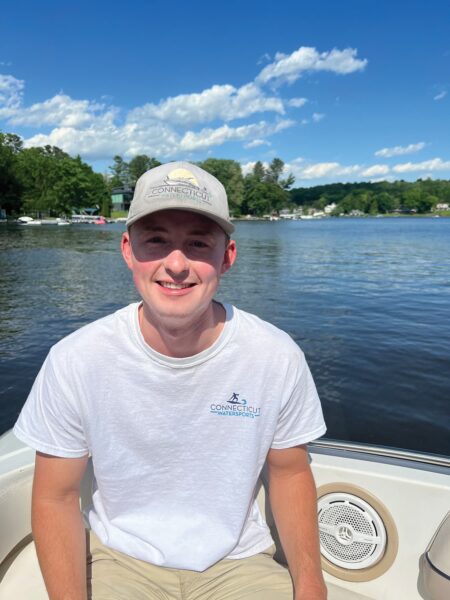
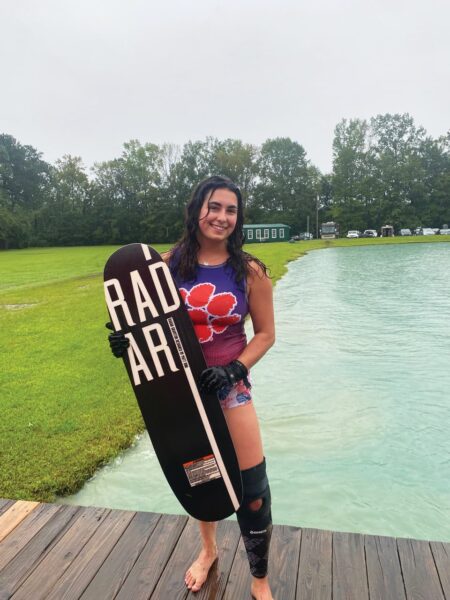
Soon MacRae was flying across the lake, begging his parents to go out on the water whenever possible; he was hooked. At 19, while still in college, he started his own business, Connecticut Watersports. He and his Bantam Lake crew offer everything from tube rides to wakeboarding and water skiing.

“Our specialty is teaching; we have a lot of families that come out. Oftentimes parents will say, ‘I haven’t water skied since I was a teenager but I’m ready to give it a try and show the kids that I still have it,’ or something along those lines. Usually, they’ll be back up on skis by their first or second try. That’s always fun to watch. Their kids are usually shocked to see it too!”

Even if you’ve never skied, MacRae says give it a try. His favorite way to get beginners up is with a “body board.” Would-be skiers “can lay on the board and gently be pulled along at speeds as slow as five mph, just to get comfortable…” Next you try kneeling, then work on standing.

But if you’d rather just enjoy a boat ride or be pulled in an inner tube, that’s cool, too. MacRae says when kids “get off the tube and tell their parents, ‘This is the best day ever,’ it’s a great feeling.”

MacRae started Connecticut Watersports from his dorm room at Arizona State University (ASU). His roommates couldn’t understand why he was on the phone for hours a day; he was researching everything from insurance to which boats were best for teaching. The business entrepreneurship major (and four-year member of the ASU Water Ski Team) graduated this spring. 

Having a talented, upbeat crew helps make Connecticut Watersports successful. “We all wear many hats and beyond just taking people out on the boat and teaching water sports, we each have our own specialties,” MacRae says.

“Phil (DeRienzo) is great with people and talking to customers, Kelly (Hill) manages a lot of our social media, my sister Alyssa (MacRae) is a great help with our summer camp program, and Jesse (Choate) does a little bit of everything, just to name a few. It’s a lot of hard work but we keep it fun.”

Hill, who lives on Bantam Lake, has been skiing since she was one (she and her sister are competitive skiers). “We are a young crew, the oldest is 24,” she says. “We have kids who are graduating high school this year; they are great drivers and instructors.”

Just as he did that first day when he was six, MacRae continues to challenge himself in the water. Only now, he does it barefoot. “The boat goes about 35 mph and you plant your feet in the water so you’re actually skiing without skis! It’s quite difficult and the falls are tough, but it’s a fun challenge. I try and do that at least a few times each summer.”

Flemming’s Hidden Valley

When a sign finally went up announcing the arrival of “Flemming’s Hidden Valley Restaurant” a collective cheer went up.

By Charles Dubow

For almost two years people driving down Route 47 in Washington wondered what was happening in the old Hidden Valley Eatery space. Was there a new restaurant going in? When a sign finally went up announcing the arrival of “Flemming’s Hidden Valley Restaurant” a collective cheer went up. Residents of Litchfield County are lucky to be home to some really excellent restaurants and now we have a new one.

“I would describe my food as American with an Asian flair,” says executive chef and owner Flemming Brown. “I have lived all over Asia—Singapore, Malaysia, Indonesia and Japan—and that’s influenced how I cook. If you order the braised beef rib it looks traditional but it comes with a soy demi-glaze and wasabi whipped potatoes that gives it an extra twist.”

A native of New York City, Flemming’s family has a weekend home in Roxbury and she grew up coming to the area. She developed her love for cooking early on from her mother Lisa, who is now helping out at the restaurant. Like so many New Yorkers she moved out of the city at the beginning of COVID and decided to stay put. “I had been running a successful catering business but the pandemic just flattened it. I had always wanted my own restaurant. When the old Hidden Valley space opened up, I went for it…”

Sourcing her ingredients from a number of local farms, Flemming has put together an eclectic menu that reflects her culinary influences. Her vision is to have more casual food at lunch and then elegant dining at night. Highlights from the dinner menu include her soy-braised beef sushi roll with wasabi aioli, panko-crusted Chicken Katsu with a lemongrass glaze, and a three-cheese white pizza with her house-made bacon jam. A word about the bacon jam. It is, just like it sounds, absolutely delicious and completely addictive. She also uses it as an appetizer paired with Boursin cheese and, at lunch, on a seriously good hamburger, made with local beef and also topped with Swiss cheese, garlic aioli, tomato and arugula, served with her signature parmesan and parsley fries. Welcome to the neighborhood, Flemming!

88 Bee Brook Road, Washington, flemminghvrestraurant.com, 860-619-0027

Momma’s Terrific Tacos

Momma’s Tacos offers mouthwatering meals with all the complex, smoky, spicy richness that characterizes true Mexican cuisine.

By Charles Dubow

Thanks to the prevalence of fast food chains such as Taco Bell, most Americans have never experienced the pleasures of authentic Mexican food. This is unfortunate because there are nearly 40 million Americans of Mexican descent living in the U.S. today and for years salsa has been out-selling ketchup. Fortunately for serious foodies there are still plenty of restaurants, taquerias, and food trucks offering the real deal, if you know where to look.

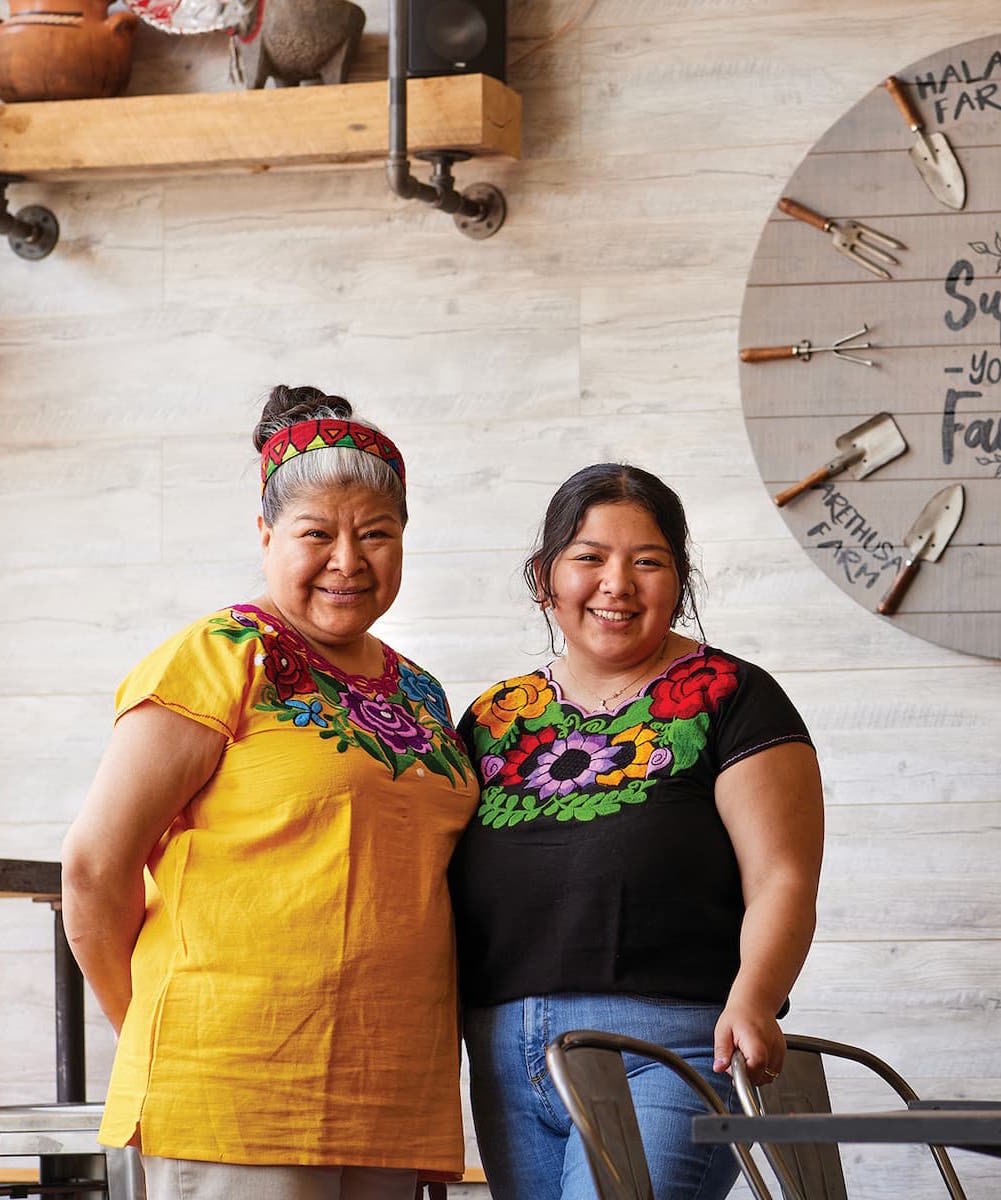
One such authentic Mexican restaurant is Momma’s Tacos, located on Church Street in the heart of New Milford. Open only since November 2021, Alejandra Aguilar Gonzaga and her daughter Alissa Swantek are cooking mouthwatering meals with all the complex, smoky, spicy richness that characterizes true Mexican cuisine.

“I’ve been a professional chef for 20 years,” says the diminutive Alejandra, who is originally from Mexico City and studied cooking at Gastronomia y Sazon in Tuluca, Mexico. “For the past 17 years I had a restaurant in Middletown, NY. But then someone bought the building.” A friend told her about an empty space in New Milford and she jumped on it. “It is a great location,” she says with a big smile. “We are right across the street from the Town Hall. We are doing a very good lunch business.”
The restaurant itself is simple but light and airy, with seating both inside and out. Alejandra offers familiar traditional Mexican dishes such as empanadas, enchiladas, guacamole, and tacos, of course, but also more adventurous items such as grilled cactus (delicious) and pernil—which is shredded roast pork served with rice and some of the best beans I’ve ever eaten. Everything is piquant, fresh, flavorful, and absolutely delectable. Not to mention reasonably priced.

The tacos deserve special mention. Fillings include grilled steak, roast pork, marinated pork, chicken, vegetarian, chorizo, or tongue. (If you haven’t tried tongue before, I recommend it.) Each serving comes with three home-made corn tortillas that are wonderfully light and chewy, and topped with cilantro and onions. 

Open every day from 11am to 7pm. No alcohol served. Delivery available through GrubHub, DoorDash, and Uber.

17 Church Street, New Milford, mommas-tacos.com, 860-717-4577

Arethusa’s Cheese Wizards

Arethusa Farm Dairy in Bantam began making cheese in 2011 and manager Chris Casiello has been there since the beginning.

By Charles Dubow

Americans love to put cheese on things. We put it on burgers, sandwiches, eggs, pizza, pasta, even vegetables. These days supermarket shelves groan under the combined weight of tons of American, Swiss, Monterey Jack, Cheddar, Brie, Mozzarella, and who knows how many dozen or so more types of cheese. But the cheese that most Americans consume is mass-produced dreck that would send the average Frenchman screaming for the hills. 

Thankfully in recent years there has been a small but steady revolution in the cheesemaking business. Artisanal dairies from California to Maine are, literally, churning out exciting and delicious cheeses that nobody would confuse with Velveeta.

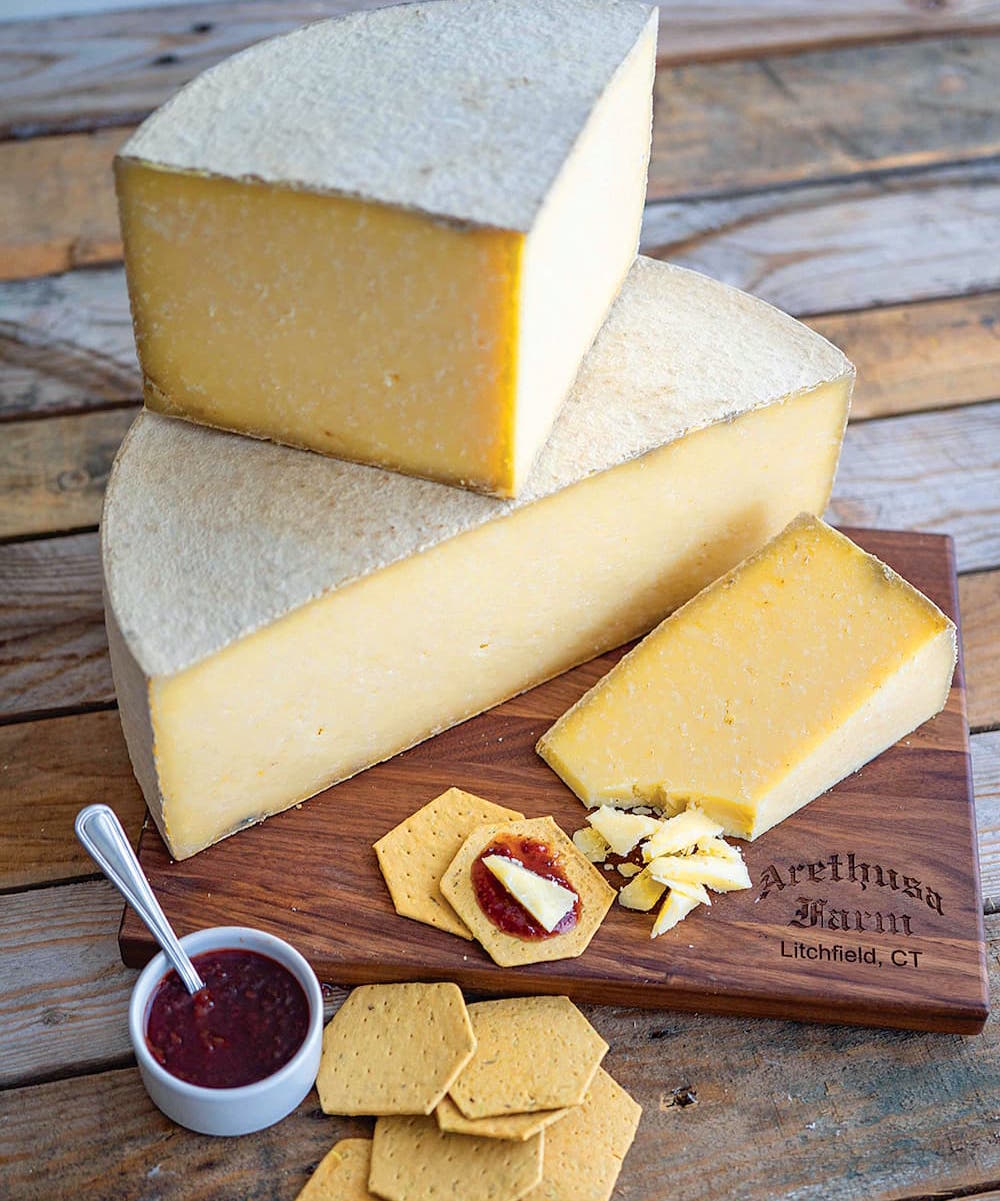
As many residents of the Northwest Corner know, Litchfield County is lucky to be home to one such artisanal cheesemaker. Arethusa Farm Dairy in Bantam began making cheese in 2011 and manager Chris Casiello has been there since the beginning. “Tony and George brought me in to oversee design and construction,” he said, referring to Arethusa’s owners Tony Yurgaitis and the late George Malkemus. “And I stayed. From nothing, we now make nine different award-winning cheeses.” 

It has recently welcomed Wisconsin native Eric Schmid as its new cheesemaker. “I had never heard of Arethusa and knew nothing about Connecticut,” he says, “but now I’ve fallen in love.” Schmid adds, “You’ve got to love making cheese. It’s hot and wet and hard work.”

Arethusa Dairy

To appreciate just how hard, think about artisanal cheesemaking the way you might about the making of a fine wine. To begin with, cheesemakers and winemakers are essentially farmers, slaves to the elements and the vagaries of Mother Nature. Much as the winemaker must conjure grapes out of the soil, cheesemakers must source the right kind of milk. In both cases it is the terroir—the particular characteristics of an individual patch of land, the minerals it contains, how much sunshine it receives, etc ., etc.—that determines so much of the flavor. 

But they must also be scientists too. They need to be able to perform the alchemical process that transforms grapes into wine and milk into cheese, not once but every time. As Casiello puts it, “Anyone can make cheese. But not everyone can make the same cheese consistently.”

And, finally, they must also be artists because it is the spark of creativity that can mean the difference between the good and the great.

Arethusa makes great cheese. We are talking a range of really superior fromage. From a classic English-style Arethusa Blue and the nutty and savory Tapping Reeve to the gooey ripe deliciousness of Karlie’s Gratitude, a farmhouse Camembert—to name just three—these are cheeses that will satisfy any connoisseur’s taste buds. 

Today Arethusa’s cheeses are available from its own retail stores in Bantam, New Haven, and Hartford—where you can also buy its delicious ice cream and milk—as well as from its restaurants Arethusa al tavolo and Arethusa a mano, local markets and major grocery chains such as Big Y and Stop & Shop. “We love what we do,” says Casiello. “We’re just your local hometown dairy.” But one that is winning national attention.

822 Bantam Road, Bantam, arethusafarm.com, 860-361-6460

Power of the Horse

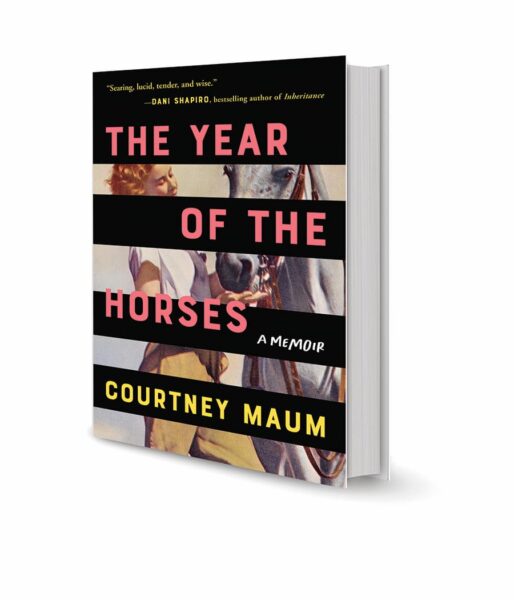
Courtney Maum has brilliantly recounted her life before and after horses in her new memoir, The Year of the Horses: A Memoir.

By Joseph Montebello

Courtney Maum seemed to have it all. She was 35, a successful novelist, married to a filmmaker, and the mother of a beautiful baby girl. It was all quite wonderful. Until it wasn’t. Two years later she knew something was wrong. She was plagued with insomnia, couldn’t write, or move beyond her depression.

“At 37 I didn’t know what depression looked like,” Maum recalls, “but I refused to admit that it could look like me. That I felt sadness was undeniable, but I felt no right to claim it.” 

Unable to function normally, Maum entered therapy and sought to reassess her life and try to discover what might bring her a sense of peace and joy and restore her equilibrium. While exploring her life, Maum was taken back to her childhood. She recalled her affinity and love of horses and riding, which all began with the giant carved rocking horse she had received one Chrstmas. The following year, when she turned six, Santa delivered a real pony and for the next three years riding was the center of her life. That all ended through a combination of unexpected events, including her younger brother’s illness and seizures and her parents’ divorce. Maum did not get on a horse until she was 38 years old.

Maum not only mastered the art of riding a horse again, but also took up polo. She recounts her journey from depression to rediscovering the joys of riding in The Year of the Horses: A Memoir.

While as a writer of fiction, it was a challenge to write in a different genre, she has brilliantly recounted her life before and after horses. She is now the proud owner of a 1200-pound abused race horse. While she goes to the barn five times a week many of the visits are devoted to acclimating the animal to a new life.

The Year of the Horses will resonate with anyone who is hesitant to venture beyond one’s comfort zone. Maum encourages the reader to just do it. She is about to embark on an extensive book tour, from local stops like her hometown Norfolk and Kent to Florida, Kentucky, and Tennessee. Meanwhile she is continuing to offer The Cabins, a collaborative retreat she began in 2016. It brings together artists from all disciplines to challenge and enrich each other’s work and to think outside the box. 

“A group of nine people meet for four nights and five days and each has to teach a master class of their choice, and learn problem-solving techniques. The most recent one ran in February and was a great success. I am hoping to start a west coast edition in the California desert.”

She continues to offer her services as a writing coach and hosts “Beyond the Writing of Fiction,” a conversation series that takes place at The Mount, Edith Wharton’s celebrated home in the Berkshires. 

And while Maum was skeptical that she could write a memoir at all, much less one that would resonate with people of all ages, The Year of the Horses has proved her wrong. It is a book about bravery, encouragement, and belief in oneself.

Since 2007 Maum, her husband, and daughter have made their home in bucolic Norfolk.

“I’m a Connecticut native,” says Maum and I love it—returning to my returns but on the other side of the state. There’s a great public school, a general store, a library, and a post office. We have an amazing community that is so supportive of the arts.”

Chef Eddy for the Win!

Eddy is the chef at Winvian Farm in Morris, a Relais & Chateaux hotel that has quietly become the most luxurious inn and restaurant in Litchfield County.

By Charles Dubow

“You know it’s funny but our business actually increased during the pandemic,” Chef Chris Eddy tells me. “The logistics and layout of our property and the way that the cottages are spread out made us the perfect COVID escape destination.”

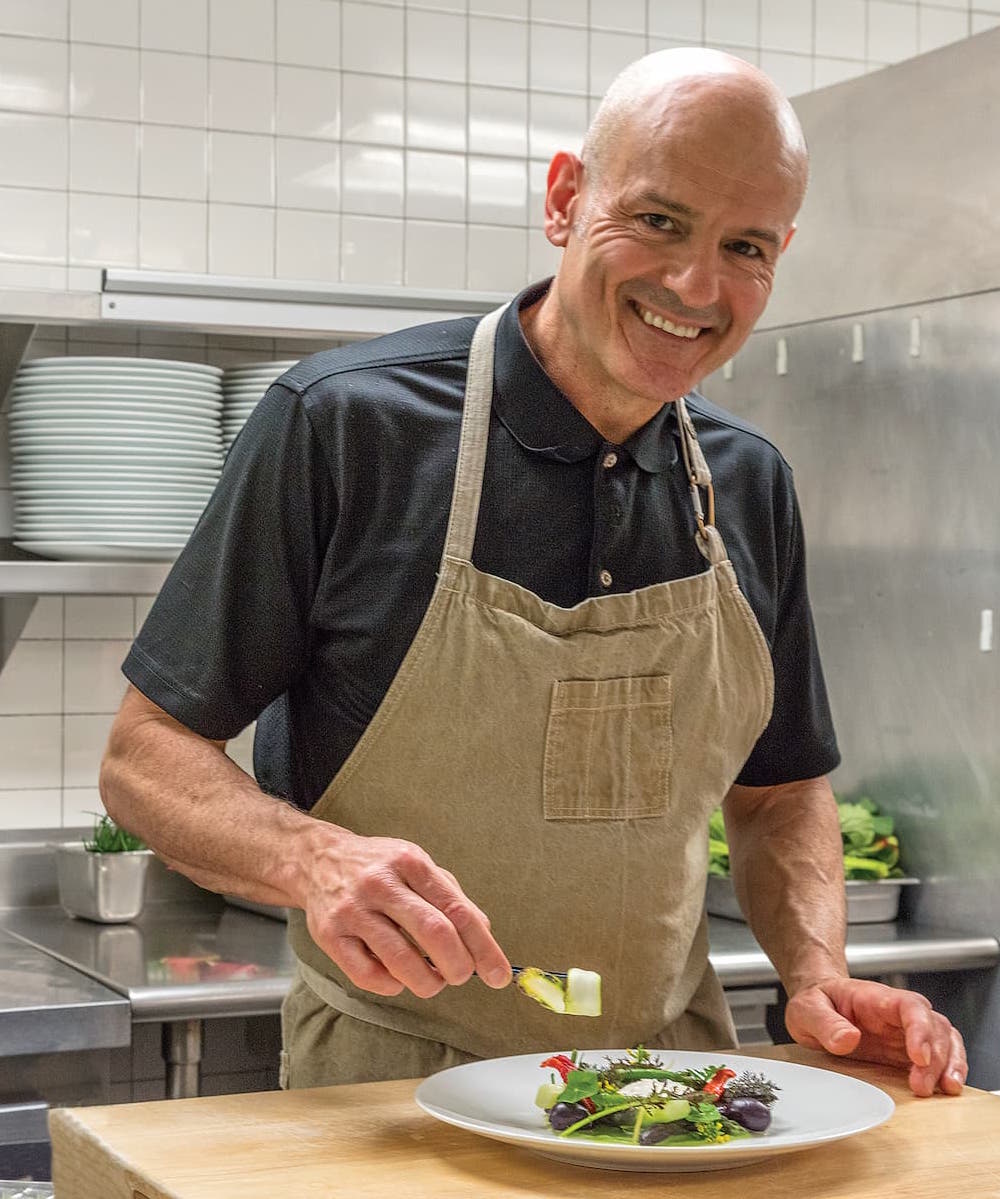
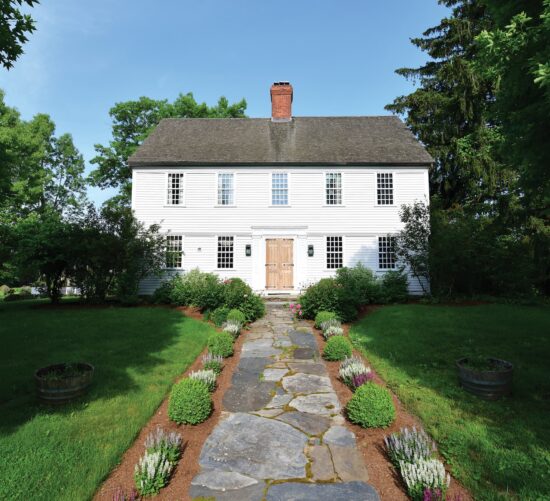
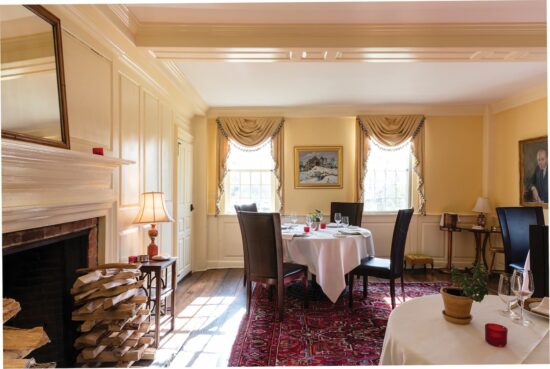
Eddy is the chef at Winvian Farm in Morris, a Relais & Chateaux hotel that has quietly become the most luxurious inn and restaurant in Litchfield County. Spread out over nearly 100 acres, Winvian offers 18 distinct cottages—ranging from a lighthouse in the woods, a two-level tree house and, yes, one incorporating a full-size Sikorsky helicopter—that cater expressly to a discerning clientele who, even before the pandemic, wished to get away from it all. “We had guests coming out with their families who had never heard of us before and now have become regulars. “

Antoine Bootz

The life of a hotel chef, especially someone with Eddy’s high standards, is a demanding one. You not only need to attend to the needs of guests three times a day at breakfast, lunch, and dinner, as well as special events such as weddings and other celebrations, you also have to welcome local diners who are looking for a memorable meal. And then there’s room service.

Antoine Bootz

But Eddy, a native Vermonter, takes it all in stride. He has been at Winvian since it opened in 2006 and has been instrumental in creating its world-class reputation. Trained in the kitchens of maestros such as Daniel Boulud and Alain Ducasse, Eddy says he leapt at the opportunity to come to Winvian and create its kitchen. “There was no playbook when I came here. I am so grateful to [owners] the Smith family. They have backed me every step of the way. I said I wanted a garden, they gave me a garden.”

Antoine Bootz

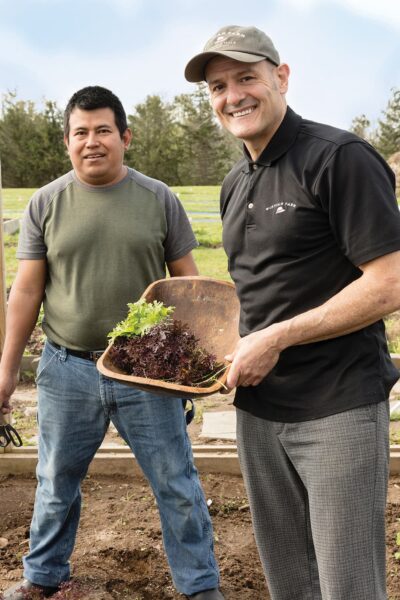
And what a garden. Winvian’s garden spans 4 acres and grows more than 70 percent of its vegetables and largely dictates Eddy’s menus. “We have a new ingredients-based menu every week, which gives us incredible freedom .”

Antoine Bootz

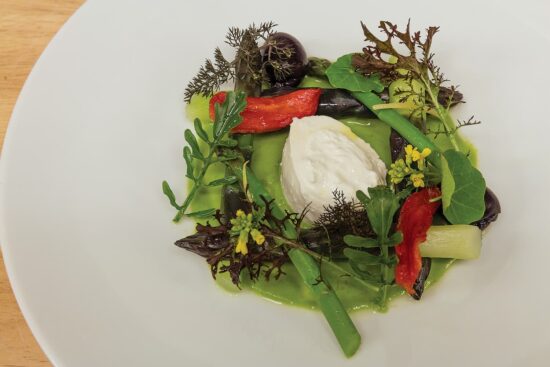
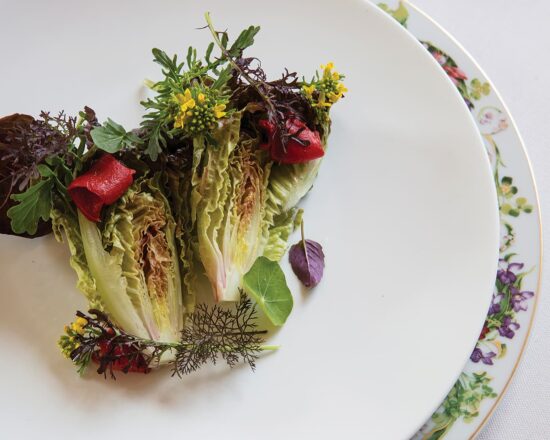
Dinners are prix fixe and start at $125 per person and the tasting menu is $150 (wine not included). The highlights of my meal, to name only a few, were a carrot-sweet potato soup with croutons and horseradish cream; seared tuna with polenta, olives, scallions, chimichurri and romesco; hand-made ricotta gnudi with spinach and sage butter; and a roasted dry-aged Pekin duck breast that looked and tasted like a perfectly grilled New York Strip Steak and which absolutely blew my mind.

Antoine Bootz

Today, working with brothers Paolo and Stefano Middei, who are respectively general manager and mâitre’d, Eddy oversees a team of 40 that does everything from growing the vegetables to preparing the sauces to serving the meals—and it is all done impeccably. 

“Creating great food is the reason I am here. To me, fine dining has nothing to do with tablecloths or silver. It’s about how much love, passion, and research you can bring to a meal. We’re like entertainers. People come for the show and we want to give them the best show we can. It’s the greatest job I’ve ever had.”

155 Alain White Road, Morris, winvian.com 860-567-9600

Current Issue
March / April 2026
Our Kind of Healthy
The Health & Wellness Issue
Subscribe Now
.
  • STAY IN THE KNOW

    Your weekly guide to can't-miss events, hidden gems, and local favorites in Litchfield County. Sign up now for curated things to do, eat, and explore—delivered every week. It’s free. It’s local. It’s essential.

  • Karen Raines Davis