Lee Link’s Sharon retreat reflects evolving gardens, understated style, and a deep connection to place and comfort.
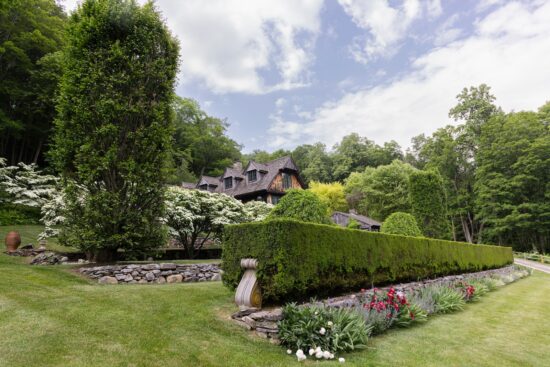
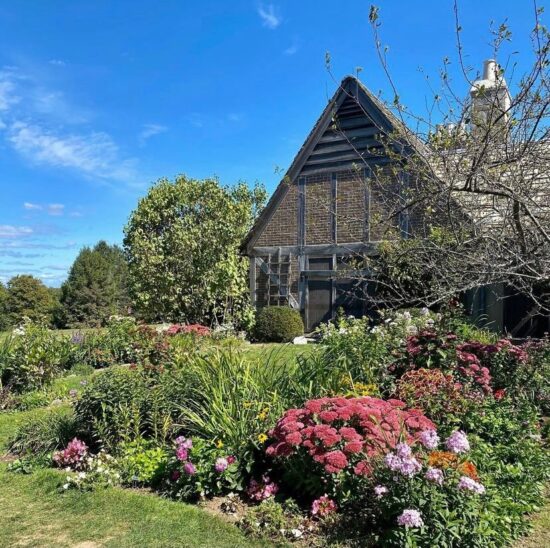
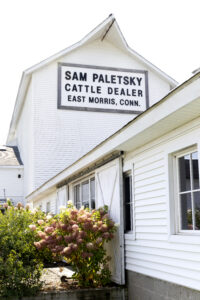
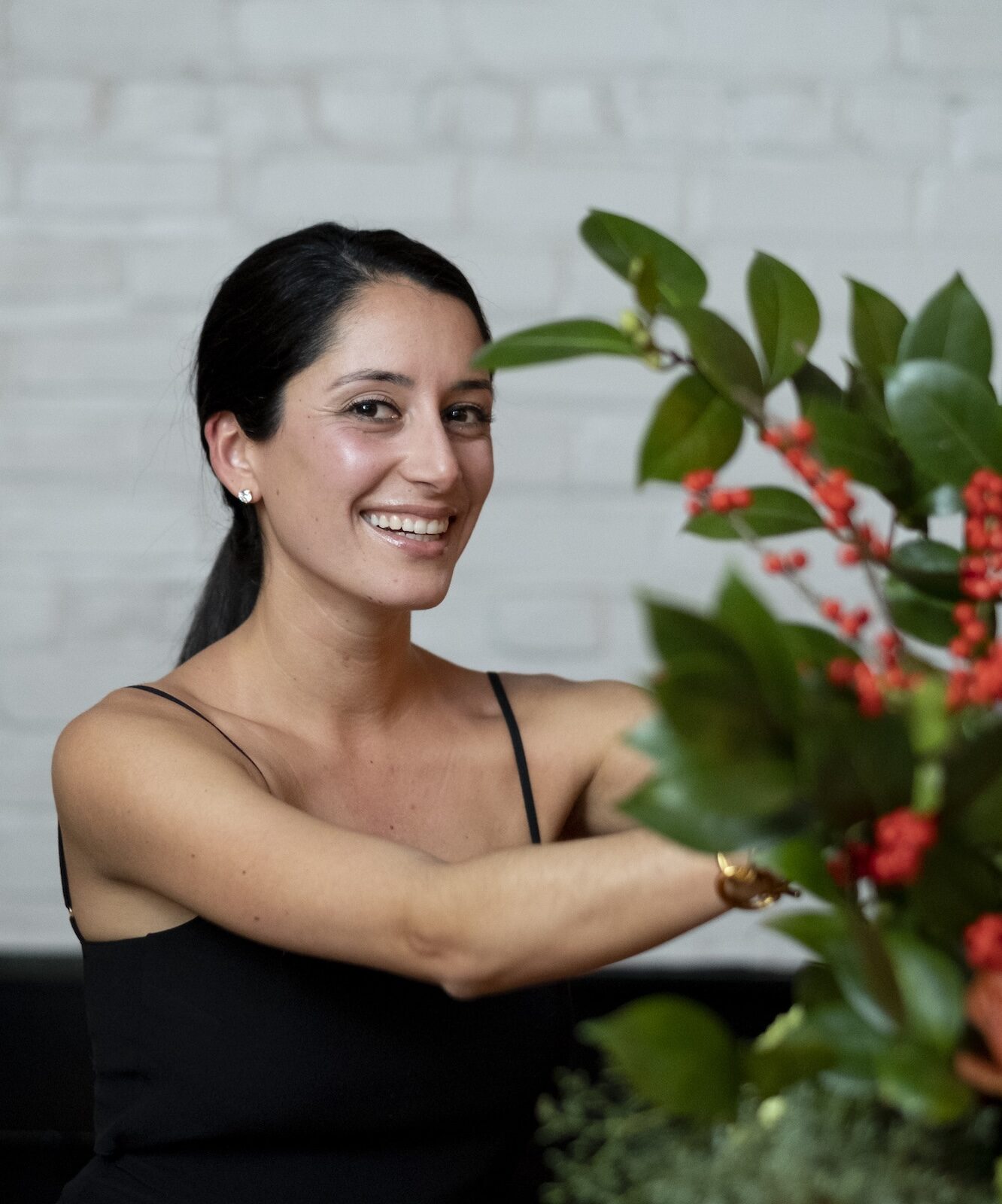
Lee Link wants her land to stay grounded. Sense of place is everything to her. So yes, 46 years ago, Lee Link and husband Fritz bought the very modest A-frame on the strength of its breathtaking views. But Lee is always keenly aware that the house and land are located in rural Sharon. “I don’t want it to get too uptown,” is how she puts her efforts to put swank at bay. However, the woman has infinite style. And her savvy is readily apparent wherever you turn. Plus, as an added perk, Lee continually reassesses the picture, keeping it current, making improvements, revamping if necessary. Considering that the Links have stewarded their acreage for nearly half a century, every element is relevant to the family’s living style now. It’s all carefully thought out and tweaked. Every square foot feels relaxed and right. When you visit Lee Link, you just feel at home.
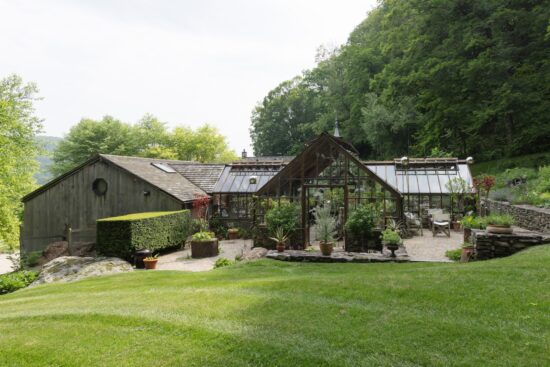
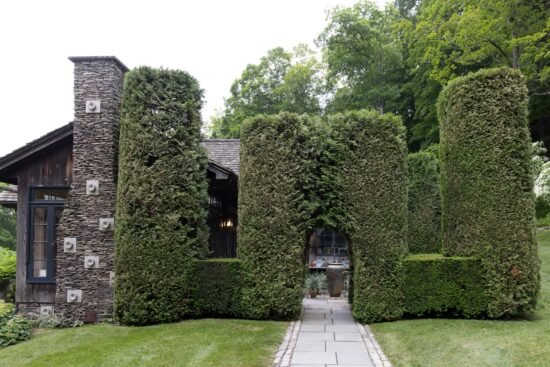
Not long after the Links came to Sharon, the A-frame sprouted wings. The first addition officially celebrated the view, and the vibe. Not everyone immediately thinks of adding a summer, open-air sleeping porch to their floor plan, but an addition with a modest daybed was an early move. It’s the sort of unassuming room where you just want to take an afternoon snooze or maybe read accompanied by that incredible view. No black flies invited in. And during winter, the room is closed down. Three years later, a conservatory and indoor dining room were added to expand on the snug kitchen and living room where the family formerly entertained. “The table easily seats eight with a working fireplace at the end,” Lee describes the room’s perks. With yawning windows, thanks to Michael Trapp, the room is home to Lee’s collections of succulents and geraniums. The conservatory is where you enter after slipping through a clipped arborvitae hedge that has matured to create a magnificent castle-like courtyard. No matter what time of year you visit, your arrival is a botanical event. Ditto for the addition of an expanded screened porch with sofa and dining table added on the other side of the A-frame to balance the conservatory wing. “I’m all about symmetry,” Lee admits.
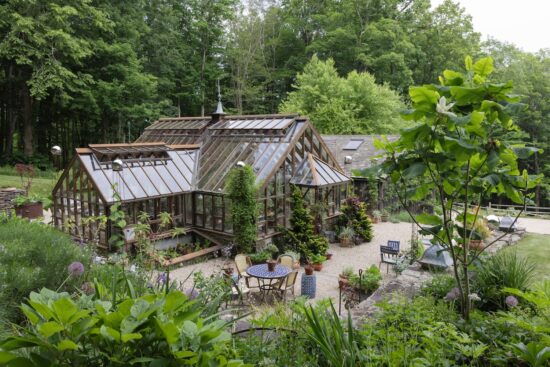
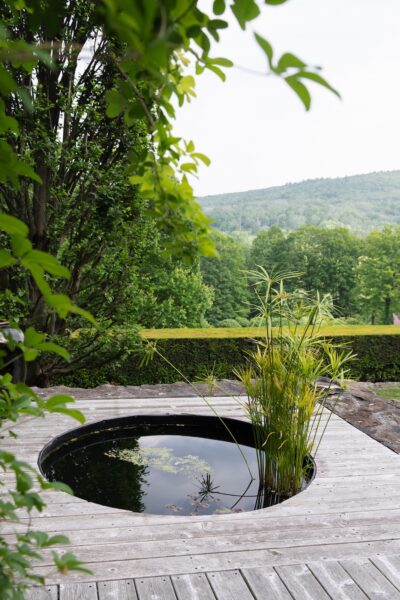
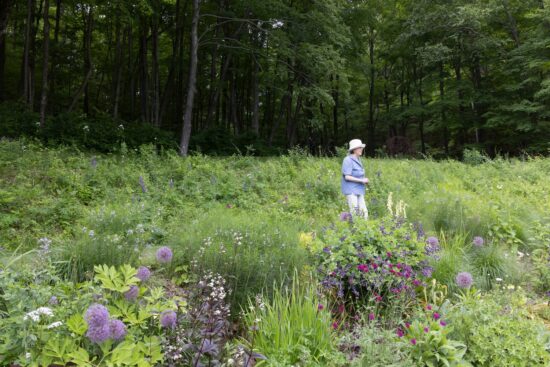
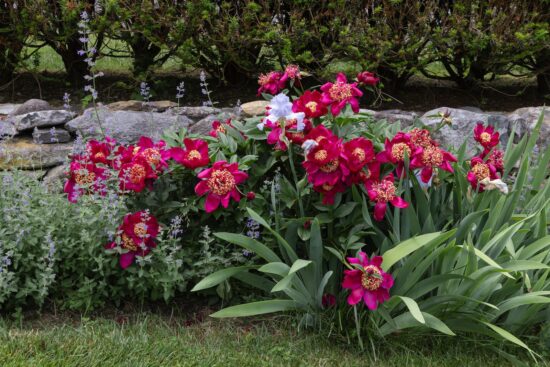
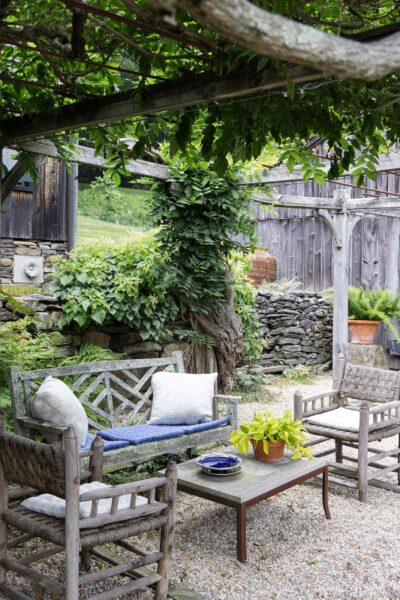
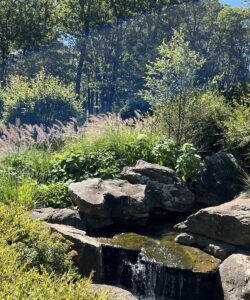
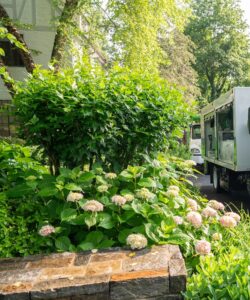
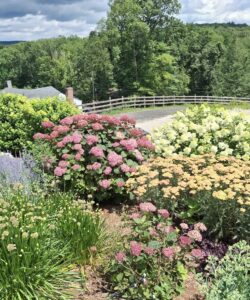
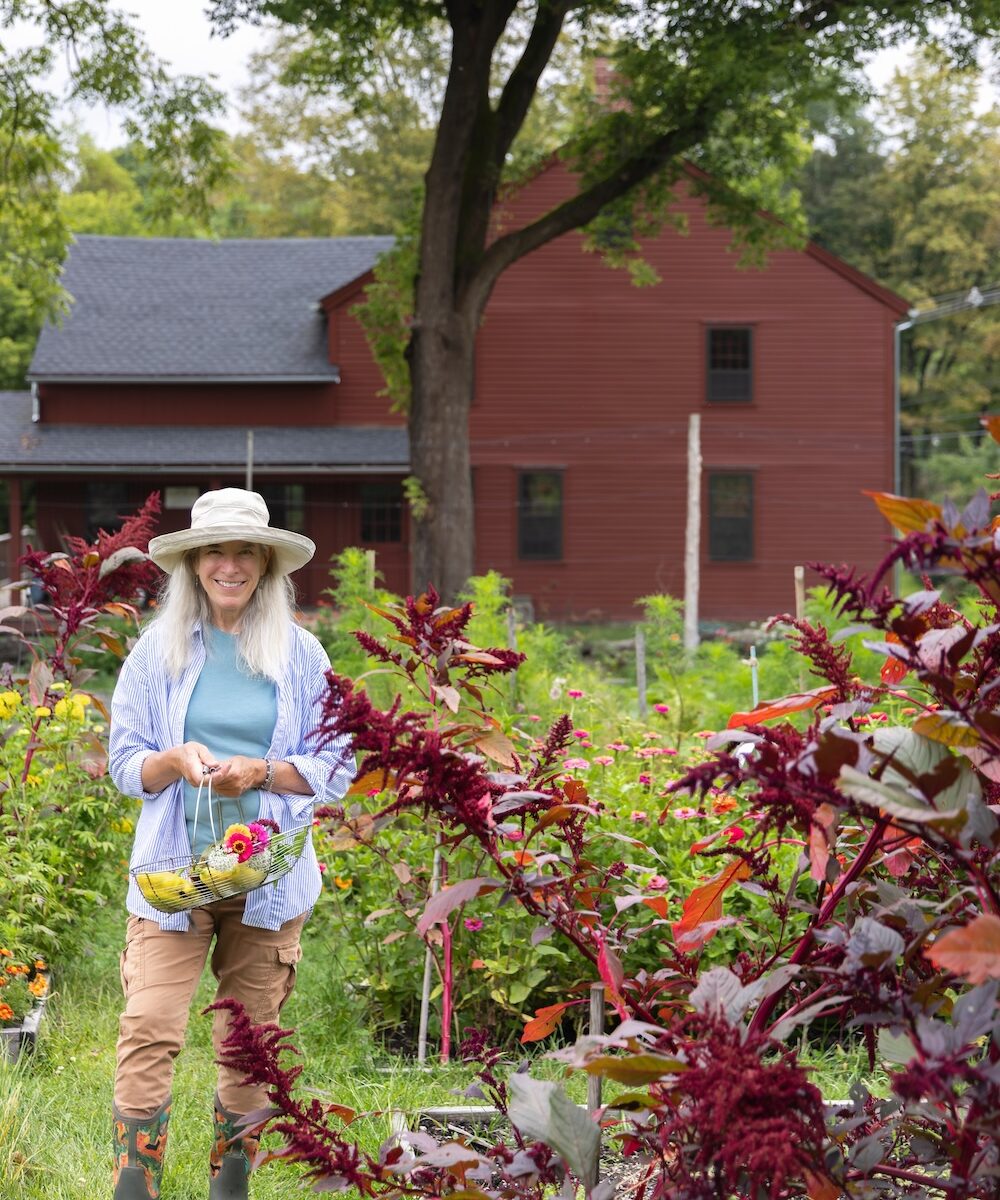
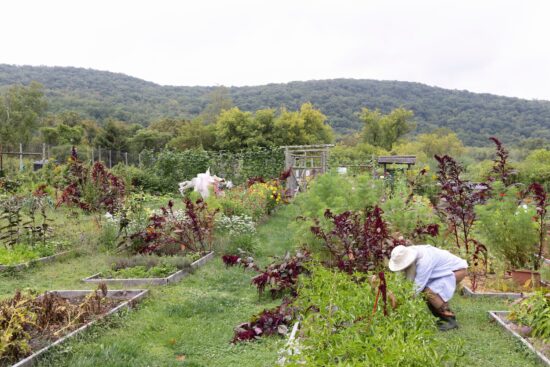
The gardens are equally creative and they kicked in almost immediately after Lee, Fritz, and their son moved in. It started with a woodland garden that owes its hosta bounty to a nursery with a surplus, nearly giving their superabundance away for only $1 apiece. Ferns were added, plus it has “a few nice woodland things,” as Lee modestly puts it. Gardens were also installed around the house, but each has transformed with the family’s evolution. “The hardest part of gardening is editing,” Lee declares, but that’s where she excels. A former perennial garden ultimately felt fussy and its maintenance was continually distracting Lee from her porch relaxation time. Instead, she removed the fussy features and moved in some multi-stemmed kousa dogwoods that formerly lined the entry drive, smartly framing the trees with cobbling. Similarly, when the vegetable and cutting garden began to feel like a burden rather than a beautiful interlude, it was simplified. Meanwhile, a vine-wrapped pergola screens in the outdoor shower while a former hot tub, made redundant when a pool and pool house were installed, now hosts aquatic plants. It’s all very blissful. And impeccably stylish. Constant reassessment being the not-so-secret formula.
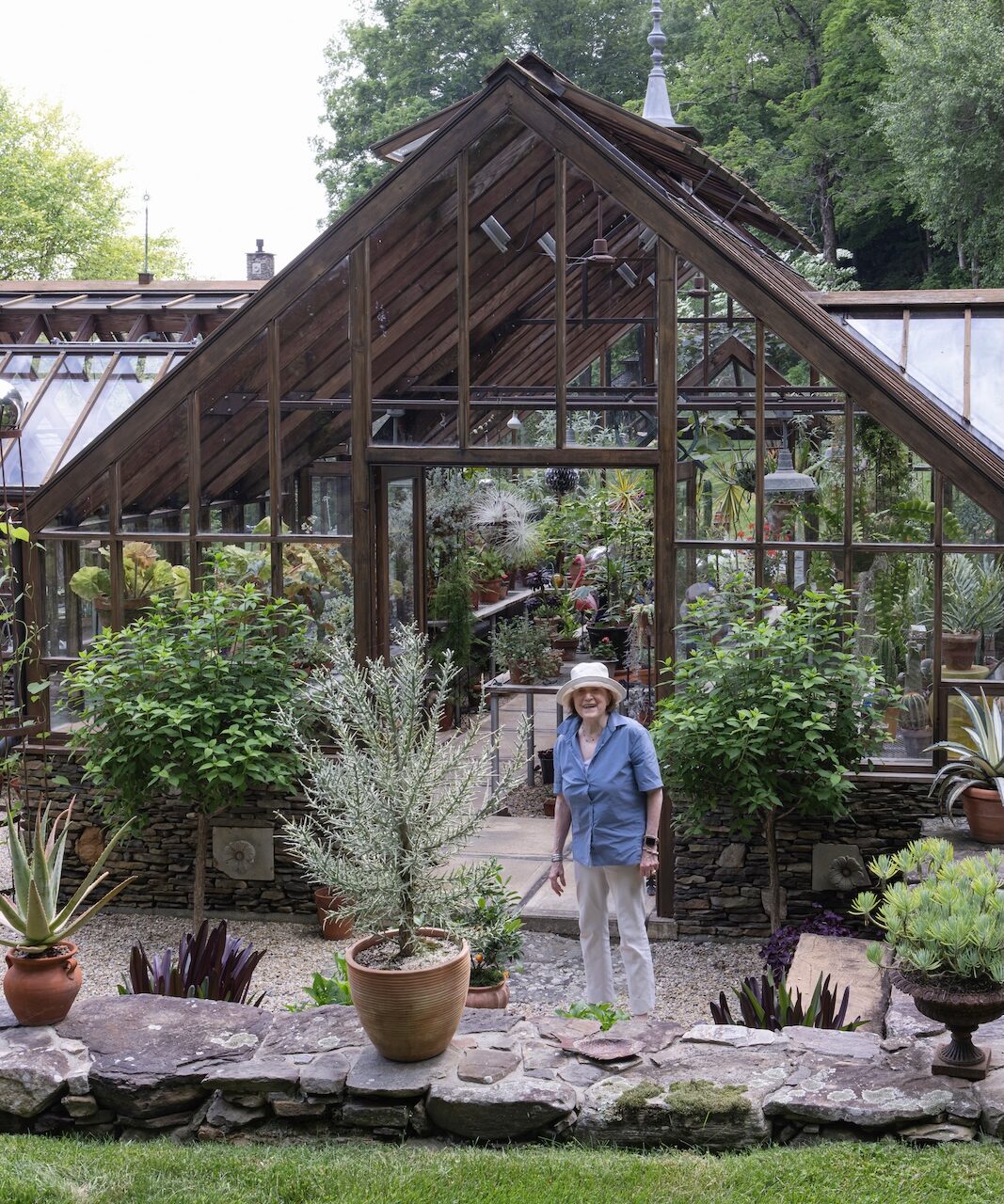
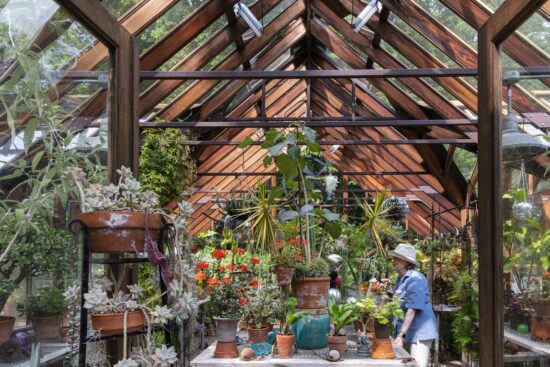
Of course, Lee is invariably modest and credits her friends as constant resources, especially Bunny Williams (“Everything stems from Bunny”) and Michael Trapp. When Lee needs something wonderful to cap off an idea or turn it up a notch, Trapp finds the goods. And evolutions are continually in the wings. For example, there’s the greenhouse. The time came when the conservatory couldn’t contain Lee’s plant collection or lust to be surrounded by nature in the winter. That’s when the greenhouse sprouted behind the garage. Designed and crafted by Stan Dzenutis, “the greenhouse is a masterpiece,” Lee describes its presence. And the jewelbox-like ecosystem isn’t lost on Lee, who spends two to three hours in it daily when weather doesn’t allow her to putter around outside. “The greenhouse is my happy place if I’m feeling a little overwhelmed,” she says. “The fragrance hits you immediately when you walk in. It’s sort of madness, but you can’t help thinking, ‘this is good.’” In summer, plants and souvenirs from travels overflow onto the surrounding terrace.
It’s all good. Despite her efforts to keep the family’s 26 acres from being uptown, it is undeniably a jewel in Sharon’s crown.
We’ve put together a list of 100 things to do this summer—whether you live or vacation here—these are ways to make the most of your summer!
By Allie Steers, Harry Harwood, and Julia McMurray
Litchfield County has been a summer retreat for many for generations. The beautiful scenic views, numerous lakes and waterways, variety of restaurants, and strong art scene makes for a memorable summer. We’ve put together a list of 125 things to do this summer—whether you live or vacation in Litchfield County—here are some ways to make the most of your summer!
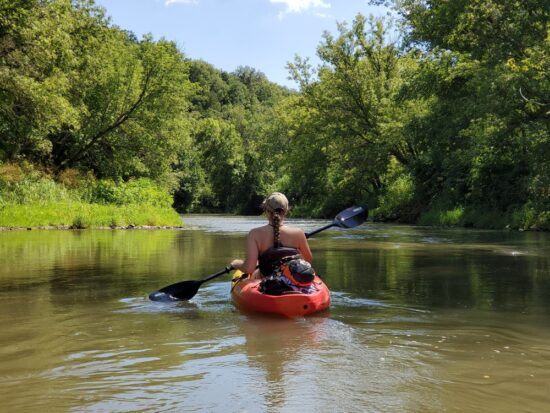
1. Paddle a three, five, six, or ten mile section of the Housatonic River with Clarke Outdoors in West Cornwall. Open by appointment only.
2. Don’t miss out on ‘New England’s Best Event’! The Goshen Stampede runs June 12-14 and features a rodeo, live music, and a demolition derby.
3. Hike the Roxbury Land Trust trails. There are over 32 preserves with 30 miles of hiking trails, historical landmarks, and quiet places to enjoy Roxbury’s scenery. In addition to trails, the Roxbury Land Trust also hosts various nature walks and educational programs.
4. See all the waterfalls in Litchfield County. Do go chasing waterfalls.
5. Pop into Litchfield Distillery and take a short and interesting tour of their facility and sample their award-winning spirits. The tours and tastings are free. Booking in advance on litchfielddistillery.com is encouraged. Make sure to try their newest Agave selection and their summer vodkas—blueberry and strawberry.
6. Experience some of the most idyllic country roads in our area on bikes. Covered Bridge Electric Bike in Cornwall has a variety of e-bikes for rent and will fit you for your size and needs. If you go, be sure to check out the scenic route along the river to Falls Village.
Covered Bridge Electric Bike
7. Hike the trails at Steep Rock Preserve in Washington. There are trails for all ages and levels of experience. Find the historic Holiday House trail, go up the mountain to enjoy a beautiful vista, or hike through the old tunnel carved through rock for a long ago train route. The Steep Rock Association also hosts a series of events throughout the summer.
8. Grab a cup of coffee and a bite to eat in Washington after a hike at one of these charming cafes.
9. Get your fair fix at the Goshen Country Fair featuring games, amusement rides, contests, exhibitions, and fair food. The fair runs September 5-7 this year.
14. Tour the historical places in Torrington, including the John Brown birthplace site, Torrington Historical Society. Visit the newly developed walking area in downtown, the art galleries, and numerous restaurants including Geppetto Osteria e Bisteccheria to check out their outdoor patio style seating and outstanding, authentic Italian food!
15. Visit the Eric Sloane Museum in Kent. View his paintings, illustrations, and collection of early American hand tools. While there, walk next store to the Connecticut Antique Machinery Association for a look at historical trains, tractors, a fully restored 19th century schoolhouse, and mining/mineral museum.
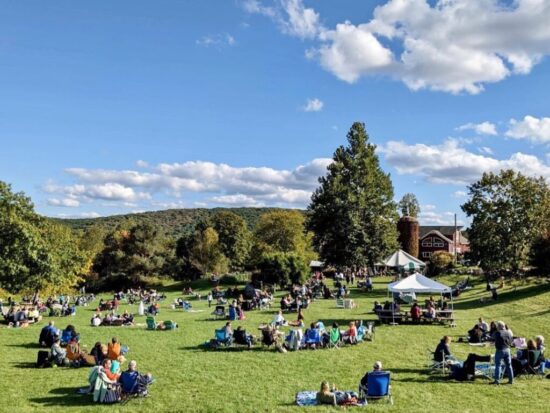
16. Relax and listen to live music at South Farms’ Summer Socials every Thursday night from 5-8 PM throughout June-September. There will be live music, food trucks, local beer, and more. Be sure to check out the new Boardwalk and enjoy the growing flower fields and views on Social nights.
17. Head to 100 Main Street in Falls Village curated by Bunny Williams and Christina van Hengel for one-of-a-kind products made by local artisans.
18. Feel like you are getting away to France at one of these French restaurants:
20.Woodbury is home to some cute gift shops and antique shops.
Shop Cathy B has summer essentials for women; accessories; baby clothing, gifts, and accessories.
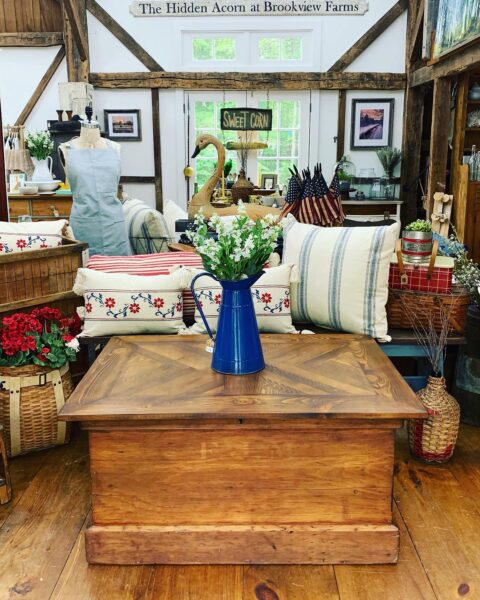
The Hidden Acorn offers vintage furniture, antiques, and restoration products.
George Champion Modern Shop features 20th century American, Italian, and Scandinavian furniture and objects.
The Hidden Acorn
21. Take advantage of seasonal outdoor restaurants. West Shore Seafood in Bantam has mouthwatering seafood and a garden area or seasonal tent. If you like a drive-up experience, Gooseboro Drive-In in Bantam serves up traditional food like hotdogs and hamburgers. Popey’s in Morris is a local favorite with picnic tables and glider swings. Head to New Milford for Clamp’s–a traditional hamburger stand with a casual atmosphere.
22.The Institute for American Indians in Washington offers many educational programs to engage learners of all ages and create a deeper understanding of Native American history.
23.Immerse yourself in creative collaborations and conversations at Spring Hill Arts Gathering multi-day event, June 26-28. There will be many different public programs that connect artists with nature
HTC Home in Bantam offers fine art, antiques, home furnishings, objet d’art, and other finds.
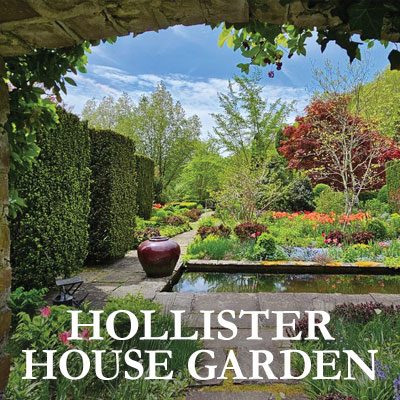
26. If you love beautiful landscapes, be sure to visit the Hollister House Garden in Washington. The gardens, open to the public, complement the 18th century house, barns, and outbuildings.
27. The Oliver Wolcott Library offers several events for kids throughout the summer including arts and crafts, a dinosaur scavenger hunt, Learn to Read Tuesdays, and Summer Reading Programs for different age levels.
29. Gardening enthusiasts, stop by White Flower Farm in Morris. Not only do they have a variety of plants but they have beautiful display gardens to inspire you.
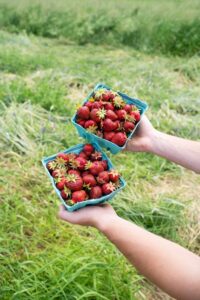
30. Pick your own berries and fruits at March Farm in Bethlehem and grab a fresh baked pie at their farm store & bakery.
March Farm
31. Kayak and paddleboard in Bantam Lake, the largest natural lake in Connecticut covering 947 acres. There are two launches, State Launch at the corner of Rt. 209 or White Memorial Family Campground Launch.
32. Visit Kent Falls Brewery, part of Camps Road Farm—a 50 acre diversified farm in Kent. The most recent addition to their operation is their tasting room. Visitors can learn about the process in detail while sipping on some great beer. Children will love visiting with their pigs and chickens.
33. Spend a day at Lime Rock Park in Lakeville. Sign up for a driving program or check out their special events such as their Nascar weekend held July 10-11.
34. Cool off after a hot summer day at Farmington River Tubing and enjoy a 2.5 mile ride down the wild and scenic Farmington River.
35.Community Table located in New Preston is recognized for its acclaimed food and cocktails, is a great place to meet with friends, celebrate, or dine solo this summer.
36. What’s better than warm summer nights accompanied by live music? March FarmsFriends Friday will be nights you don’t want to miss out on.
37. Stop by a local farmers market. We have many in our county!
38. Picnic at Topsmead State Forest in Litchfield. Topsmead offers 510 acres of forests and meadows. There is plenty of space for social distancing, walking, picnicking, and bird watching at this beautiful former estate of Edith Morton Chase.
40.Head on over to the Litchfield Historical Society to take a themed historical walking tour of Litchfield, like the Architects of Litchfield or Artists of Litchfield tour. Make sure to check out their Independence Day events, too!
41. Check out East Kent Hamlet Nature Preserve in Warren. Go shopping at WKND in Warren, filled with upscale men’s and women’s clothing, children’s clothing, and gifts for home. There is something for everyone. Afterwards, enjoy a bit of lunch outside at Warren General Store.
42. The land behind the Tapping Reeve Law School is the perfect place for relaxing and learning. It features a children’s garden, education pavilion, small orchard, and more. The meadow is open from dawn to dusk.
43. Taco Heaven at El Camion in Woodbury! Voted best in CT by numerous publications and one of the best places to get tacos in the county—their tacos are made with locally grown produce and fresh ingredients for healthy and original Mexican food.
45. Go fly fishing on the Housatonic. This river is known to be the perfect spot for brown trout and rainbow trout fishing. Call Housatonic River Outfitters for tours and equipment.
46. Visit a covered bridge. We have beautiful historical covered bridges in Litchfield County, and both offer great hiking trails nearby. Please note that it is unsafe to go into the water at any of these areas due to strong currents.
47. Check out Mine Hill Distillery in Roxbury and enjoy a craft cocktail while learning about the history of the Roxbury Station property during the Industrial Revolution.
51. Make sure to visit the world famous Big Idaho Potato Truck when it stops in Torrington on July 16th this summer! Hosted by Zach and Louza’s BBQ, the event features live music, an art exhibit, kids activities, and, of course, potatoes.
53. Take a stroll through the Action Wildlife Foundation in Goshen and observe wildlife from six of the seven continents.
54.Evergreen Berry Farm in Watertown—pick your own black raspberries, blackberries and blueberries. Try berry juice pops and iced teas created from berries, herbs, and flowers grown on the farm.
55. Visit Beckley Furnace in Canaan; historical, educational, and beautiful place for all age groups. Learn about the furnace, picnic with the family, and surrounding areas offer wonderful photo opts.
56. Take a journey through the Naugatuck River Valley with the Railroad Museum of New England in Thomaston. Different train experiences are offered throughout the seasons.
57.American Mural Project in Winsted (Winchester) is a tribute to American workers and sheds light on what aspects have defined the country over the last century. It now serves as a way to educate and inspire people of all ages the many ways they can add to American culture.
American Mural Project
58.Norbrook Farm Brewery in Colebrook is fun for the whole family, with their 450 acres of land they offer hiking trails, mountain bike trails, and so many more activities. Try out their farmhouse style beer, lagers and ales.
61. Visit local parks in the area such as Field 1- Veterans Memorial Park in Watertown. It is part of the Where Angels Play Foundation and the playground was built in honor of Dawn Lafferty Hochsprung, Sandy Hook Elementary School’s Principal.
63. Looking to enjoy some time away from the city? Take a trip to Bellamy Ferriday House and Garden in Bethlehem. This spectacular property includes an 18th-century residence, barns, and formal parterre garden.
64. Calling all social media stars! Saville Dam in Barkhamsted offers picture-perfect spots!
65. Attend the annual Podunk Bluegrass Music Festival in Goshen from August 5-9! Listen to outstanding bluegrass acts, participate in family fun activities like tie dying and scavenger hunts, shop their craft and merchandise area, and eat some delicious food from a variety of options!
66. Support volunteer firefighters and EMS members at the Bridgewater Country Fair in Bridgewater from August 21-23. Stop by the many food tents serving tacos, ice cream, and slow cooked chicken and start the weekend with the Annual Bridgewater Fair Parade!
67.Take a trip to Guy Wolff Pottery in Bantam for some wonderfully unique pots made by local artisan Guy Wolff, who focuses on the architectural integrity of the pot and knowledge of the materials being used.
69. Take a break from everyday life and take a walk into nature. Explore the 106 acres of Boyd Woods Sanctuary in Litchfield. The Sanctuary is home to a diverse habitat. Enjoy the hiking trails and take in the wildlife.
70. Grab some food and beverages and make your way over to Litchfield County Axe House in Thomaston for a fun night with friends or families. Uniquely, Litchfield County Axe House also has a mobile axe-throwing trailer for rent.
72. Feeling creative? Head on over to Glazey Dayz in Watertown and paint your own pottery or glass. Perfect for birthday parties, a trip with friends, or even family gatherings.
73. Spend a few nights or longer camping at Gentile’s Campground in Plymouth. The campground offers hot showers, propane gas, flush toilets, a basketball court, and many more activities.
74. Head on over to one of Infinity Music Halls in Norfolk or Hartford for some live music this summer! Upcoming shows include a Music of Prince and David Bowie concert in Hartford on June 26 and Howie Day in Norfolk on July 18.
75.Get your fitness on this summer with Blue Boy Boxing Club in Thomaston. They offer self defense classes for kids and adults. They also specialize in Parkinson’s boxing fitness!
76. Looking to connect with local wildlife? Take a self-guided walk or book a tour of the Ripley Waterfowl Conservancy in Litchfield. Boasting more than 60 species of waterfowl, the conservancy welcomes visitors to admire their beauty!
Ripley Waterfowl Conservancy
77. Sit back, relax, and enjoy the show at Bantam Cinema & Arts Center, a non-for-profit in a historical building offering a diverse program of film, theater, music, and visual arts. After, head right next door to JR’s Southwest Grill & BBQ to enjoy one of their many delicious meal options!
78. Looking for a quick family escape in the great outdoors? Cozy Hills Campground in Bantam offers camping in cabins, rental RVs, and a good old fashioned tent! Packed with amenities, activities, and themed-weekends, a trip to Cozy Hills is bound to be full of unfogettable fun.
79. Shoot for the stars at the J. McCarthy Observatory in New Milford! Visit them for their monthly “Star Parties” and other events, or book a private visit!
81.Founded in 1967, The Dutch Epicure Shop has been a Litchfield staple for decades. Specializing in Dutch imports, The Dutch Epicure also sells fresh baked goods, plenty of exciting cheeses, and other tidbits that would make up a wonderful picnic.
86.It’s grilling season! Stop by Litchfield Locker, a locally-owned business whose primary purpose is to provide great service and meats to the residents of Litchfield County. Stocked and ready to handle all your sausage, poultry, meat, and game needs, the Locker also does preorders for whole, locally sourced pigs — perfect for a big Fourth of July bash!
88. Take a bite (but probably more) of fresh bread from Bantam Bread Company in Bantam! Pick from a variety of loaves and grab something delicious from their sweets and desserts! Dog lovers can also purchase treats for their good boy or girl!
89. Start your morning right at Jackie’s Restaurant in Bantam – whether in the mood for a stack of fluffy pancakes or a stacked breakfast sandwich, you’re sure to leave with a belly full of delicious food.
90. Attend a “Weed and Wine Wednesday” at Judea Garden in New Preston. Clear your Wednesday night to weed the vegetable beds at Judea Garden alongside fellow gardeners! You’re sure to be thirsty after that…well it’s a good thing you get to enjoy a free glass of wine next!
91. Sip on some delicious wine and enjoy live music on Saturdays and Sundays at Hopkins Vineyard in Warren! Tickets are free, snacks are available, and music is plentiful…what could be better than that!
94. Want to spend a day like Rory and Lorelei from Gilmore Girls? Hang out in Washington, CT to visit the town that inspired the show writer to create Stars Hollow. Here are some places around town that are reminiscent of the show’s setting:
95. Attend the Bethlehem Fair in Bethlehem! You can look forward to a great variety of exhibits, music, rides and food, from roast beef to fried desserts!
96. Cool down with Connecticut Watersports on Bantam Lake! Offering waterskiing, wakeboarding, tubing, kayaking, and more, there is no shortage of fun summer activities to look forward to!
99. Spend a day exploring Kent Barns in Kent; enjoy the shops, galleries, restaurants, and other businesses occupying more than a dozen buildings, including six restored or rebuilt historic barns!
100. Take a break from your everyday and stay at Twilight Dreams Farm in Roxbury. Not only is this farm an AirBnB superhost with 5.0 stars, but it offers the unique opportunity to stay on a working farm with a farm stand on site. Twilight Dreams Farm is also close to popular hiking trails, family day trips, restaurants, and other outdoor activities!
101. Watch the sunset from Haystack Mountain. Climb the stone tower in Norfolk’s Haystack Mountain State Park for sweeping views of the countryside, especially beautiful in golden hour light.
103.Attend Shakespeare in the Park in Washington Depot. Every summer, enjoy free, open-air performances of Shakespeare’s plays by talented local actors in a charming, intimate setting.
104. Spend the afternoon picnicking at Dog Pond in Goshen. An ideal location for a quiet waterside retreat!
105. Join a stargazing night with the Litchfield Hills Amateur Astronomy Club hosted at White Memorial Conservation Center in Litchfield. These star parties bring together local astrology enthusiasts to not only observe the night sky, but to discuss their findings as well, making this a curious nighttime activity!
106. Find the spacious and luscious Harrybrooke Park as a place to enjoy greenery, stroll, and a rich tapestry of history. Tucked away in the southern end of town, this is the gem of New Milford.
107. Participate in the Litchfield Hills Road Race! Join runners from across the state in this challenging, historic, and culture filled race, held every June.
108. Support Flanders Nature Center and Land Trust by enjoying their nature classes, art programs, guided walks, and 2,100+ acres of preserved land.
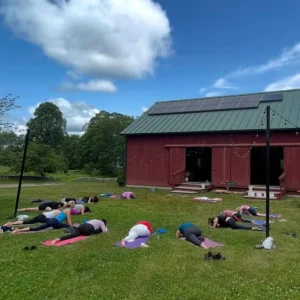
110. Unwind and relax with Farm Yoga at Waldingfield Farm in Washington. Combine the beautiful outdoors with a nourishing yoga session.
Farm Yoga
111. Bringing the boogie of the Louisiana bayous to the Goshen Fairgrounds from June 19-21, visit the Bayou Boogie Festival. Accompanied by Cajun and Zydeco bands, camping, and dance lessons.
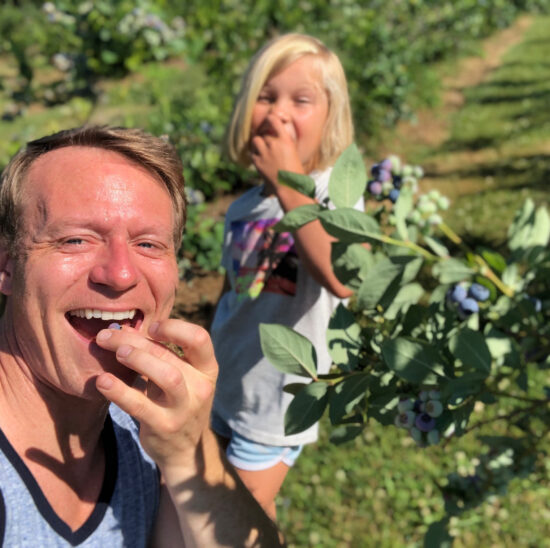
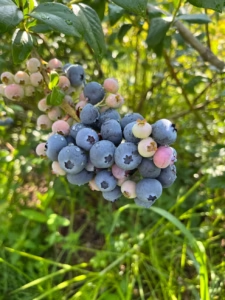
112. Make a trip to Maple Bank Farm in Roxbury for annual hilltop blueberry picking. Find yourself between rows of bursting blueberry bushes, a perfect afternoon family activity.
Plenty of blueberries to pick from!
113. Stop by The Farm in Woodbury for their Sunflower Festival, keep an eye on their socials for the schedule. While you are there stop by their farm stand for more goodies to take home.
114. Try your hand at fly fishing on the Farmington River. Well-known for its trout population, the Farmington River is a great place for beginners and seasoned angler alike. Gear rentals and guided lessons are available.
115. Get thrifty in Litchfield and Bantam by visiting beloved non-profits and consignment boutiques.
116. Take a step back in time with a visit to the Wild West. This collection of cowboy memorabilia, donated by Al Singer, is an appointment only exhibit sure to entertain.
117. Sunbathe at a collection of beaches in Litchfield County.
119. Get ready for a one of a kind experience at Robin Hood’s Medieval Faire at the Harwington Fairgrounds, weekends from May 16 through June 21. Watch live combat, jugglers, artisans, axe-throwing, archery, and fantasy-themed entertainment!
120. Concerts on the Green return June 26! Make sure to bring your own chairs and blankets, and pick up dinner from one of the many local restaurants on the Green for these concerts that run through August 19. A full schedule, including lineups, can be found here.
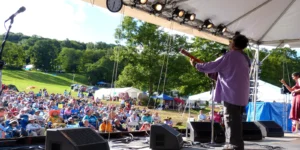
121. Experience a three day community celebration of folk music and dance with the Falcon Ridge Folk Festival. This event is taking place at the Goshen fairgrounds from July 24-26.
Fabulous music at Falcon Ridge
122. Stand amongst towering old-growth pines, and cathedral-like light shafts at the enchanting Cathedral Pines Preserve in Cornwall.
123. Take a hike through Macedonia Brook State Park in Kent. With over 2,300 acres for camping and hiking with sweeping views of the Housatonic and Catskills.
124. Walk through the Litchfield Marketplace, a juried craft and artisan fair on the Green, June 13 from 9 am-3pm. Browse 60+ vendors while benefitting local charities.
125. Sip craft cocktails at Materia Ristorante in Historic Litchfield. This upscale Italian restaurant serves fresh and seasonal cuisine accompanied by a European charm. Perfect for a date night or elegant gathering.
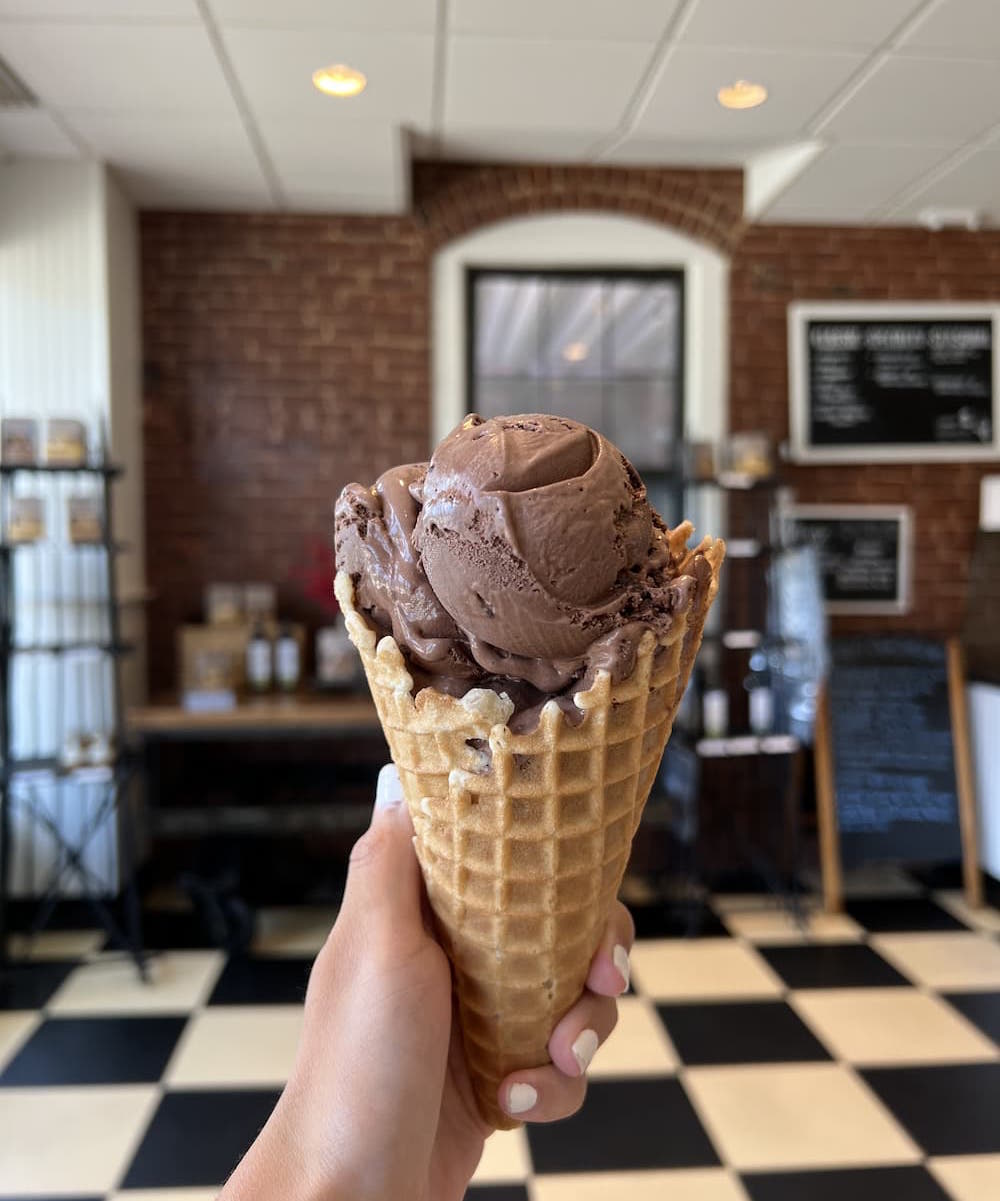
Our summer interns put together a list of their favorite places to grab ice cream in Litchfield County.
Our summer interns put together a list of their favorite places to grab ice cream in Litchfield County. When you’re out and about this summer, cool off with a sweet scoop of ice cream at one of these spots!
By Maddie Mallon
Bantam
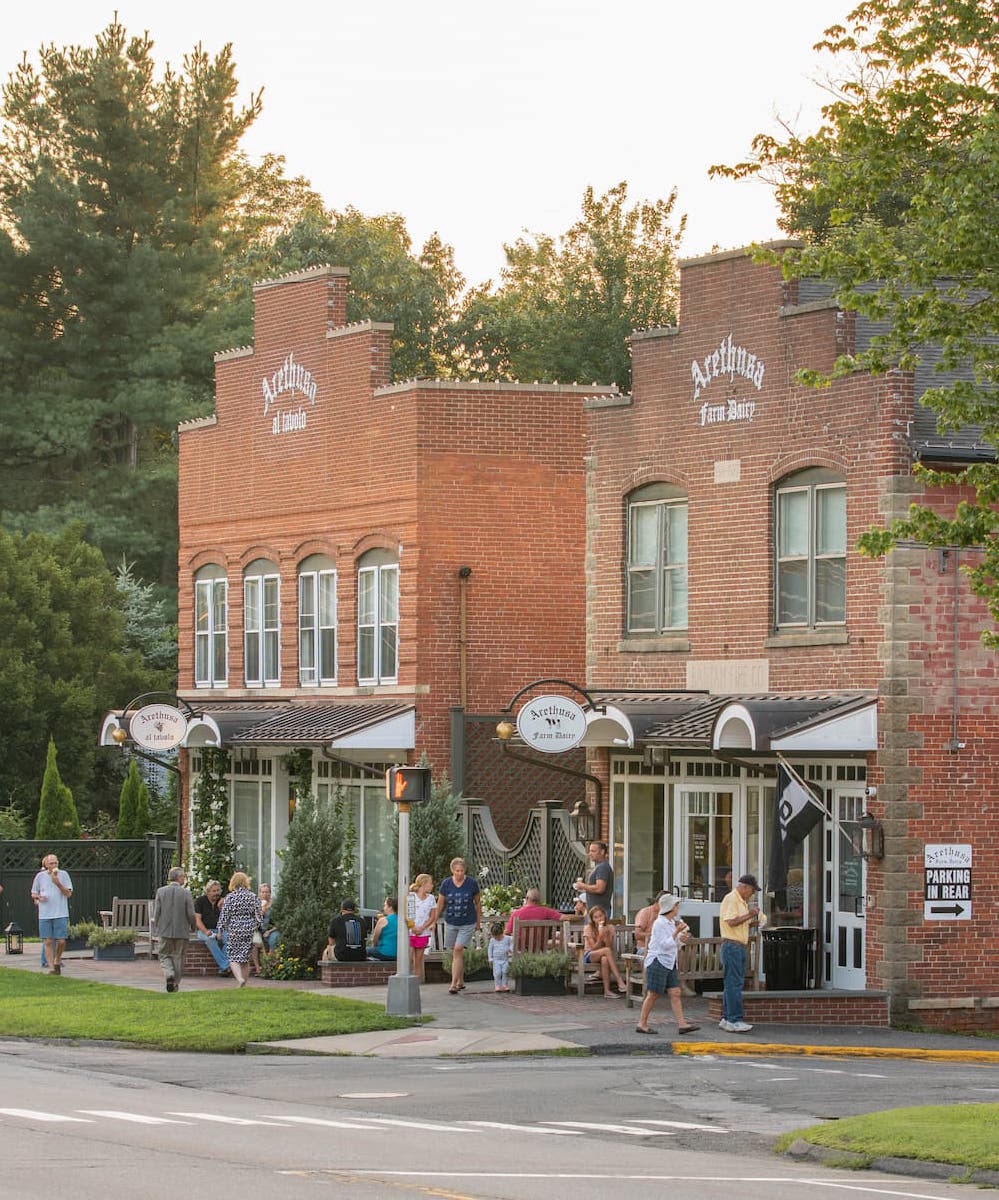
Arethusa Dairy
Made with fresh milk from Arethusa Farm’s dairy cows, Arethusa Dairy serves “ice cream like it used to taste”. Enjoy your ice cream on the benches outside, or on the go!
Caddie Shack
Caddie Shack is more than just ice cream! They offer mini golf, batting cages, an arcade, and food! They have both a picnic area and a pavilion.
Berkshire Country Cafe
The Berkshire Country Cafe offers breakfast, lunch, and dinner options as well as desserts. They have locations in Norfolk and Canaan.
The Colebrook Store
The Colebrook Store is the longest operating general store in Connecticut! In addition to ice cream, they also offer daily special sandwiches.
Cornwall Country Market
The Cornwall Country Market offers ice cream, bakery options, provisions, and local products. Enjoy breakfast, lunch, or shop for dinner!
45 on Main
45 on Main offers a variety of sweet treats in their picturesque storefront on Kent’s main street. Browse the store or order at the front counter for the perfect pick-me-up!
Espresso 59
Espresso 59 specializes in gelato, as well as serving coffee and other cafe classics! Located in the heart of Litchfield, grab a treat and enjoy perusing the nearby shops!
Peaches n’ Cream Litchfield
Peaches n’ Cream has a flavor for everyone! Their large menu is accommodating, offering sugar-free and dairy-free options in addition to traditional ice cream.
Popey’s Ice Cream Shoppe
Popey’s is a local favorite, open seasonally only minutes from Bantam Lake. They have both hand-scooped and soft-serve ice cream, as well as flurries, milkshakes, and floats. Enjoy outside in their spacious dining area!
Summertime Sno-Balls
Summertime Sno-Balls offers a variety of flavors including blue razzberry, blue bubblegum, cherry, orange, pina colada, root beer, lime, and more!
Berkshire Country Store
The Berkshire Country Store offers breakfast, lunch, and dinner options as well as desserts. They have locations in Norfolk and Canaan. Norfolk serves pizza!
Cleveland’s County Store
Cleveland’s County Store offers outdoor seating and a barn style storefront. Not only do they serve ice cream, but they also have a large selection of candy.
Riverton General Store
The Riverton General Store serves breakfast and lunch, as well as 21 flavors of ice cream! They offer a quaint outdoor seating area to enjoy.
Sweet William’s Coffee Shop and Bakery
Sweet William’s offers freshly baked pastries and desserts as well as fresh coffee! They even have ice cream sandwiches!
Scoop It Up
Scoop It Up has a thorough selection of flavors! Their colorful interior matches their cookie monster flavor and they are open rain or shine!
The Nutmeg Fudge Company
The Nutmeg Fudge Company is the perfect stop to satisfy your sweet tooth! They serve Canton Creamery ice cream, and even have vegan options! Be sure to try some of their fresh-baked fudge.
Marty’s Cafe
Marty’s serves breakfast and lunch as well as their mouth watering pastries. Be sure to head to the back counter for a scoop of ice cream! They offer a cozy indoor seating arrangement as well as an outdoor area.
The Po Cafe
The Po serves breakfast and lunch, as well as pastries and desserts including ice cream sandwiches! Eat in or enjoy their beautiful outdoor area.
The Pantry
The Pantry has a delicious dine in menu, as well as prepared meals to heat up and a deli counter! They now offer a selection of house made ice cream.
Join us on Sunday, September 13, for Savor Litchfield, the culinary event of the year at South Farms in Morris!
Savor Litchfield Litchfield County’s Culinary Event of the Year Sunday, September 13, 2026 | South Farms, Morris, CT
Join us for Litchfield Magazine’sSavor Litchfield on Sunday, Sept. 13, 2026, the premier culinary event held at the beautiful South Farms in Morris. Enjoy an unforgettable afternoon of flavor as Chef John Bordeau of Sparrowbrings together the area’s top culinary talents, each preparing signature bites for guests to enjoy. Expect craft cocktails from Litchfield Distillery and South Farms, upscale pop-up shops, live music by the Dirk Quinn Band, a full cash bar, and fun for the whole family with a dedicated kids zone.
Looking to elevate your experience? VIP tickets offer early access beginning at 2 pm, featuring an exclusive hour of elevated offerings, including premium bites, signature cocktails, and a deluxe goody bag. VIP guests will enjoy special tastings —all before the main event opens to the public. Limited quantity of VIP tickets available.
Make Savor Litchfield unforgettable with a private table for six. Your group will enjoy a private shaded table for the entire event, dedicated tableside service, a bottle of prosecco, and elevated food and drink offerings in a beautifully styled setting..
GENERAL ADMISSION: $150
◗ Tastings available for 26 local chefs from 3-6pm
◗ Kid’s Zone, craft cocktails, pop-up shop area
AGE 4-12 ADMISSION: $50
◗ Age 3 and below – FREE ADMISSION
VIP EARLY ACCESS: $225
◗ Early VIP entry before the crowds
◗ Complimentary glass of Prosecco
◗ Exclusive Chef’s Tastings, created just for VIP guests
◗ Swag bags filled with gifts from sponsors
PRIVATE TABLE FOR 6: $2,400 (Limited availability)
◗ Reserved table for 6 for duration of event.
◗ Early VIP entry before the crowds
◗ Complimentary bottle of Prosecco
◗ Exclusive Chef’s Tasting Plate, created just for table guests
◗ Swag bags filled with gifts from sponsors
◗ Personalized table signage with your brand or group name
◗ Professional photo opportunity with the new Litchfield Magazine cover
Sparrow offers a “world menu” of global flavors. Bourdeau previously helmed two beloved eateries, The Owl in New Preston and Lucia in New Milford. @sparrownewmilford
Pastry chef at Salisbury’s White Hart Inn since 2021, Alexander came from Gramercy Tavern and Lafayette Bakery, balancing refined plated desserts with comforting pastries. @sarahalexander.pdf
Arbor brings classic French charm and warm hospitality to Le Gamin in Sharon, where his beloved café fare has made the restaurant a neighborhood fixture. @legamin
Since 2012, Braddock has been a beloved part of the Watertown community, serving handcrafted cupcakes, premium cakes, stuffed cookies, and other sweet treats. Their passion and talent gained national attention when they won Food Network’s Cupcake Wars in 2013. @hardcoresweetbakery
Trained at The French Laundry and Le Bernardin, Burke earned Michelin recognition for three consecutive years at La Crémaillère before joining Litchfield’s Lost Fox Inn. @chefthomasburke
A CIA graduate, Carbone brings refined technique to Swyft and Ore Hill. Previously chef de cuisine at Jupiter in NYC, he’s inspired by local farms. @chefboyrc91
A ’94 CIA graduate, DeBellis has led John’s Café in Woodbury since 2000, blending New American cuisine with Italian influence, house-made pastas, and desserts. @johnscafe693main
With over 20 years of experience, DeLongis serves as corporate executive chef for Market Hospitality Group, overseeing culinary operations across 11 Connecticut restaurants. @marketplace.kitchenandbar
A CIA graduate who honed his craft at Blue Hill at Stone Barns, DiStasi brings seasonal, ingredient-driven Italian cuisine to his Bantam restaurant, Materia. @double_d224
Executive chef at the Mayflower Inn & Spa, Dowdy trained with Thomas Keller and Jean-Georges, bringing refined, seasonally inspired farm-to-table cooking to Washington. @mayflowerauberge
Born in Mexico City, Estrada and his wife Consuelo opened La Catrina in 2024, bringing 30 years of experience to an inventive Latin-Asian-Mexican menu. @chef_enrique68
Eucalitto’s Coltsfoot Valley Farm brings fresh raw milk and handcrafted cheeses to the Northwest Corner—made with milk from their own cows, grazing on open pasture. @coltsfootvalleyfarm
Both Litchfield County natives, Gowan and Feola are dedicated to fine, approachable food that showcases the best local ingredients at Kingsley Tavern. @kingsley_tavern
Garcia and co-founder Erin Vasquez grew La Guera Cantina from a food truck into a Morris brick-and-mortar known for tacos, burritos, and birria. @laguerafoods
Raised in the Connecticut Valley, Goff brings nearly two decades of experience and a deep commitment to local farms and seasonal cooking. @sweet_xstuffct
An executive chef with broad hospitality experience across notable kitchens, Gapasin leads the culinary program at The Abner hotel in Litchfield. @theabnerhotel
Chef/owner of award-winning Greca and director of the Silo Cooking School, he leads culinary tours to Greece and hosts the podcast “What’s Dino Got Cookin’?” @grecamed
Established in 2018, The BakeHouse in Litchfield—run by Jeremy McKendry and Allison Varian—specializes in buttercream cakes, French pastries, and artisanal breads. @thebakehousect
Irish-born O’Shea opened West Street Grill in 1990, pioneering farm-to-table dining in Litchfield and earning the restaurant more than three decades of national recognition. @weststreetgrill_ct
A Woodbury native, Perez leads Good News Restaurant with award-winning farm-to-table cuisine, blending artistry and bold flavors with locally sourced ingredients. @chefcarlosperez
Rybolt’s woman-owned Pastries by Hanna in Canaan turns out craft donuts, cookies, pies, and seasonal baked goods that keep customers coming back. @pastriesbyhanna
South Farms Kitchen, part of the celebrated award-winning South Farms venue, offers distinctive catering experiences for events of all sizes, featuring creative seasonal menus with locally sourced ingredients. @southfarms
From landscape visionaries to a pool designer to an arborist, meet the people cultivating beauty across our region.
Spring has arrived, and with it, a renewed passion for gardens and green spaces. We spoke with a handful of inspiring local garden-related businesses who bring creativity, expertise, and heart to everything they grow and design. From landscape visionaries to a pool designer to an arborist, meet the people cultivating beauty across our region.
Abby and Patrick Taylor have built a business that extends well beyond a traditional landscape company, combining custom plant production, advanced arboricultural consulting, and a software platform designed to bring clarity and coordination to the green industry.
Old Farm occupies an early 1800s farmstead in the Litchfield Hills, where acres of display gardens have matured over decades alongside the family that tends them.
The nursery prioritizes plants sourced from local growers, a decision rooted in both quality and sustainability. Shorter transportation times mean less stress on the plants and a stronger likelihood they are already adapted to the region.
Jamie Scott recently rejoined the family business to lead Scott Pools into its third generation. Here, she reflects on legacy, craft, and what comes next.
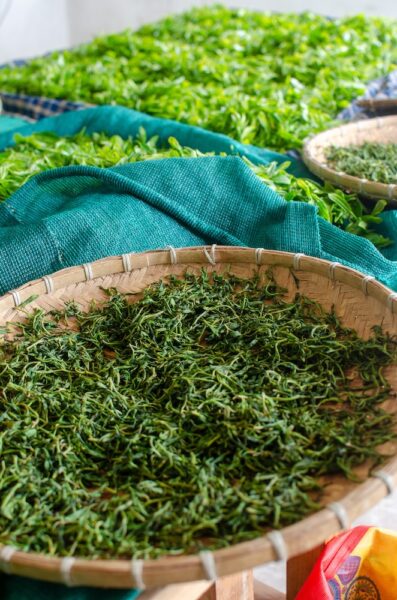
In Pursuit of Tea brings ethically sourced, single-origin teas and herbal infusions from Cornwall to curious drinkers.
As chamomile, elderflower, and lavender bloom in Connecticut this spring, tea purveyor Sebastian Beckwith and his business partner Ana Dane bring bright floral and citrus notes to herbal tea.
In Pursuit of Tea brings ethically sourced, single-origin teas and herbal infusions from Cornwall to curious drinkers.In Pursuit of Tea operates between Cornwall and New York and is known for ethically sourced, single origin teas. Beckwith and Dane are passionate about building personal relationships with tea farmers and preserving ancient hand-picked harvesting traditions, along with the subtle flavor nuances they produce. For that reason, they rarely blend teas or add flavors—a trait that sets them apart from many other U.S. tea companies.
The company began in 1999, after Beckwith, who grew up in Cornwall, made several journeys through the Himalayas as a trekking guide and became fascinated with the tea gardens there.
“There was so much complexity of flavor and aroma,” he says. All that complexity comes from just one plant. Camellia sinensis is the source of all six types of true tea: white, yellow, green, oolong, black, and dark. The differences come from how the leaves are harvested and prepared.
Herbal tea, Beckwith explains, is separate from true tea—more accurately called an infusion or tisane. For those new to tea, herbal infusions can be an inviting place to start. Unlike true teas, which are sensitive to water temperature, herbals are more forgiving.
Beckwith encourages people to step outside their comfort zones and explore beyond familiar favorites like chamomile and mint.
“I love lemon verbena; it’s amazing,” he says. He also recommends elderflower, linden, and a Greek mountain flower tea called Mount Olympus, describing their flavors as “unexpected.” Infusing the herbs into cocktails, cakes, or ice creams can add even more variety.
Despite their expertise, Beckwith and Dane are far from pretentious. Instead, they take joy in connecting with others over a cup of tea.
“We really get to have that experience of sitting down with someone and introducing them to a new flavor, which is pretty fun to do. And you get to do that over and over again,” says Dane. “Just being able to have that shared connection over, ‘Wow, this is amazing; I’ve never tasted anything like this’—we hear that a lot.”
Tea can be purchased online and in local stores such as the Cornwall Market, Warren General Store, or John Robshaw in Falls Village.
For those interested in trying something new or connecting with others over tea, In Pursuit of Tea will host tea sits in Cornwall twice a month, as well as a tea-and-ice cream event at The Pink House this summer. Private tastings are also available.
“We just enjoy the process and the culture, and seeing these different regions, and then introducing that a little bit to people here in whatever way that we can. Tea is sort of a bridge to a culture or a flavor,” says Beckwith. Start with an herbal infusion or a tea tasting, and see where that bridge might lead.–inpursuitoftea.com
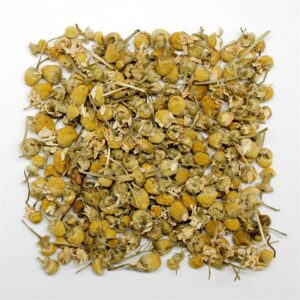
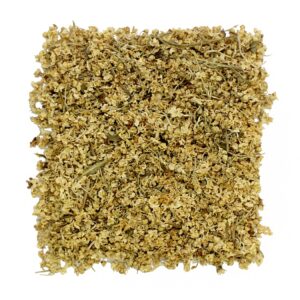
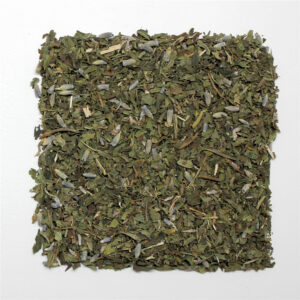
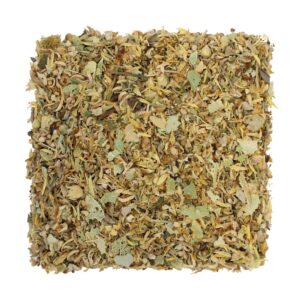
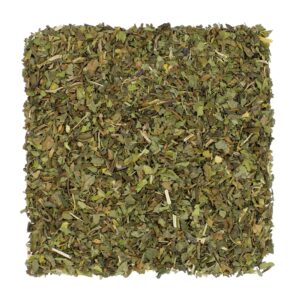
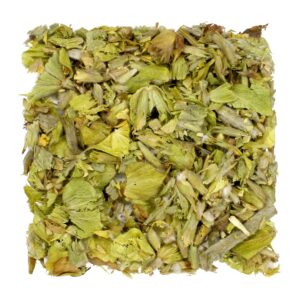
(Clockwise starting from top left) Chamomile, Elderflower, Lavender Mint, Mt. Olympus, Mint, and Linden herbal teas, or infusions, from In Pursuit of Tea. These are made from flowers and other plants beyond the regular Camellia Sinensis tea plant and thus are naturally caffeine-free and less sensitive to temperature and steep time. Simply infuse in boiling water and enjoy.
If the early morning chorus of birdsong outside your window sounds more like a racket than a symphony to you, it’s time to reconsider.
Finding joy and calm in Litchfield’s wild spaces
By Wendy Carlson
Illustrations by Rex Brasher
If the early morning chorus of birdsong outside your window sounds more like a racket than a symphony to you, it’s time to reconsider. Turns out that tuning into the avian world can make us happier. New studies have shown that birding, the act of observing and listening to birds, can reduce anxiety, stress, and depression by directing our attention outward. The therapeutic practice of observing birds, known as ornitherapy, has been likened to forest bathing and sound bathing, which promote mindfulness, strengthen our connection to nature, and inspire a sense of wonder, ultimately leading to relaxation and a sense of well-being.
So, maybe there’s some truth to the expression “the bluebird of happiness”.
Woodcock Print
“I think that almost everyone can appreciate the beauty, wildness, and charm these animals bring to our lives, whether we live in an urban landscape or on the slope of a mountain somewhere. Their songs move us, comfort us, and arouse curiosity in us,” says Sharon Audubon naturalist Bethany Sheffer.
Wood Duck print
You don’t have to be a globetrotting bird enthusiast to reap the health benefits of birding. The 4,000- acre White Memorial Foundation in Litchfield, with its diversity of habitats including woodland, water, six miles of river frontage, and 40 miles of trails, is rated one of the top five birding hot spots in the state. The Foundation lists 240 bird species and is known for its nesting warblers, with 15 or more species breeding.
Litchfield County is also home to two national Audubon centers: The Sharon Audubon Center and Miles Wildlife Sanctuary and The Bend of the River Audubon Center and Sanctuary in Woodbury. In spring, both host free guided bird hikes and hold monthly-themed programs like “Tech Assisted Birding.” Fee-based guided tours and private photography sessions are offered at Ripley’s Waterfowl Conservancy in Litchfield, which features more than 90 species of rare and endangered birds.
Redstart Print
If you can’t tell a Barn Swallow from a Tree Swallow without reaching for a guidebook, no worries. Birding has become much easier for beginners with the availability of bird ID apps and bird song ID tools that help newbies recognize species quickly and identify birds by sound. Tech has helped birding become an increasingly popular hobby in the United States with the U.S. Wildlife and Fish Service reporting that nearly one-third of adults in the United States engage in some form of birding, whether it’s observing birds in their natural habitats, creating bird sanctuaries, or keeping watch on backyard feeders.
Ovenbird Print
Beyond making us feel happier, birding enhances our cognitive function and teaches us patience, says Geri Griswold, White Memorial’s director. Bird watchers might start by learning species names, but move on to studying behaviors, breeding rituals, migratory patterns, and habitats. Griswold finds the stories of each bird fascinating. “You become aware of habitats and the other plants and animals that share theirs with birds,” she says. She eagerly awaits the first Woodcock, Ovenbird, Wood Duck, American Redstart, Bobolink, and Wood Thrush; and, of course, the harbinger of happiness, the Bluebird.
Bluebird Print
Beautiful illustrations of spring birds by Rex Brasher. In his lifetime, Brasher painted every bird species in North America; and, notably, he painted more birds than James John Audubon. Learn more about his life in Kent and view his work: rexbrasher.org
Rex Brasher, world famous artist, ornithologist, and Kent resident whose detailed artwork of birds illustrates this story, died in 1960. But bird lovers pay homage to the artist by visiting his grave at Morningside Cemetery in Gaylordsville.
When Mileen Zarin plans an event, the setting is everything.The event planner splits her time between New York City and the Litchfield Hills, and has built a reputation for producing exceptional celebrations in landmarks, storied institutions, and gardens–places where nature and elegance meet in equal measure. With a meticulous eye for design, Zarin approaches each gathering the way a gardener approaches a landscape, with intention, patience, and an understanding that every element must work in harmony. She layers florals, lighting, textiles, and architectural detail into experiences that feel as carefully composed as the outdoor spaces that frame them. No two events are alike, and that is precisely the point. She has worked at some of the most celebrated horticultural venues in the country, including the New York Botanical Garden and Filoli Historic House and Garden in California, bringing a deep appreciation for the natural world to every occasion she produces. Her client list spans intimate garden dinners, destination weddings, and high-profile philanthropic galas, each executed with the same calm precision and creative vision. For anyone dreaming of a garden celebration that is as thoughtfully planned as it is breathtaking, Mileen Zarin Events delivers with grace. —mileenzarin.com
What Every Great Garden Party Needs
Golden Hour
Regardless of start time, ensure your party peaks at sunset. There is nothing better than that amber glow before transitioning into the evening with ambient lighting.
Garden-to-Palate
Create a tangible connection to the garden with botanical cocktails and onebite hors d’oeuvres. Guests should mingle effortlessly without being tethered to heavy plates or cutlery.
Texture and Bloom
Design around what is currently flowering. Layer cohesive textiles, furnishings, and decor with varying textures.
Level the Playing Field
Provide heel stoppers and utilize hidden plywood under rugs to create stable furniture islands on soft or uneven terrain.
The Prepared Landscape
Look beyond the tent. Pretreat the lawn and conceal climate control. Tuck away repellent and candles so your event remains unaffected by the elements or uninvited pests.
Discreet Infrastructure
Position service paths and stations out of the guests’ line of sight and nestle audio equipment within the foliage. Seamless hosting relies on what remains unseen.
Gretchen Mol balances acting, design, and family life, drawing creative inspiration from her peaceful Berkshires home.
By Christopher Stella
Photographs by Aly Morrissey
“When you walk out the door, you have to have a good feeling,” says Gretchen Mol, referring to her home in the Berkshires. “I also have brain space for creativity.” After years navigating theater, film, and television amid New York City’s relentless pace, Mol and her family traded subway stops for mountain views in 2020. The shift hasn’t slowed her prolific output. She’s been busy filming the fourth season of “Tulsa King” with Sylvester Stallone, and her upcoming feature film, Horsegirls, is slated for release in May. Rather, it has unleashed new creativity. The actor recently added “designer” to her résumé, launching clothing line Gretchen M in 2024. The creative life always appealed to Mol, who grew up in Deep River in southern Connecticut. She recalls a childhood with space to explore her talents, initially starring in her brother’s Super 8 films, later in high school musicals. She went on to study at the American Musical and Dramatic Academy and worked as an usher at New York City’s iconic Angelika Film Center while auditioning for the stage and screen. Since then, she’s been cast in more than 50 films, theatrical productions, and television series, embodying iconic characters like Bettie Page in The Notorious Bettie Page, Roxie Hart in the Broadway production of Chicago, and Gillian Darmody in HBO’s “Boardwalk Empire.”
“When auditioning, I’d think carefully about what to wear to portray a character,” Mol says. “Clothing is an extension of a personality.” While Gretchen M was born from decades of channeling personas through wardrobe, a vintage house dress purchased for $15 in the East Village became the catalyst for launching a design career. “I was always thinking about how to make it better, more functional,” she recalls. Gretchen M takes inspiration from women’s clothing of the 30s and ’40s, an era Mol admires for its resilience. “I love that can-do spirit,” she says. “A woman could be physically engaged, do hard things, and still own her femininity.” The collection is divided into “acts” (collections) and “scenes” (individual pieces), some of which are named for stars of the era. The pieces, manufactured in New York City, feature classic details, sharp collars and subtle shoulder puffs, balanced with practical pockets, luxurious fabrics, and playful prints Mol designed herself.
These are clothes made to be worn and to last. “I want wearers to feel elevated,” Mol says.“But the clothes should be easy to wear.” Living full-time in the Berkshires has played an important role in Mol’s ability to balance designing, acting, and raising a family. “It allows me to appreciate everything more fully, from reengaging with what NYC has to offer to a country sunrise, now with fresh eyes.” Mol somehow manages to find time to enjoy what Litchfield County has to offer, from the food at White Hart Provisions and hikes at Lion Rock in Salisbury, to acupuncture treatments at Gotham in Lakeville, retail at Dugazon and B. Johnstone in Sharon, and The Pinnacle in Washington, among others.
There’s more on the horizon for Mol. This spring, Gretchen M will revisit its line of terrycloth dresses in new colorways and collaborate with Liberty London Fabrics on a line featuring 30s-inspired floral prints. The creative pursuit remains joyful. “You get to a stage in life where you have to pursue things that are interesting, with honesty and humility,” says Mol. “I’ve always read another person’s lines or worn another person’s clothes, but Gretchen M is self-expression. People ask what my dream is for it, but by just doing it, I’m already in the dream.” —gretchenm.com
Judea Garden supplies fresh produce to food banks, powered by volunteers and a mission to nourish community.
Judea Garden, a community project that supplies food banks across Litchfield County, has grown from a small plot in 2008 to a full half acre of vegetables. It began when the economy crashed and residents of Washington wanted to help their neighbors.
“They encouraged people to get the shovels out of their sheds and plant seeds,” says Denise Arturi, volunteer coordinator, garden manager, and head gardener. The project started with Ann Burton and Marlene Smith at St. John’s Episcopal Church before finding a permanent home at Steep Rock Association. “I had just finished the Master Gardeners certificate, and they reached out to me,” Arturi says. The garden officially became part of Steep Rock in 2014.
Now, after 17 seasons, Arturi is ready to hand the project to a new manager, Blair Granum. “I feel good about leaving this in Blair’s hands,” she says. “You have to have passion first, and that’s what Blair has.”
Granum, who is from Worcester, Mass., owned a gardening business for several years and was also a competitive rower. She was looking for her next chapter when she came across a quote by Pope Francis: “You pray for the hungry, then you feed them, and that’s how prayer works.” The next day, she saw the listing for Judea Garden. “It was very serendipitous,” she says.
The garden currently distributes to the Washington-Warren Food Pantry and welcomes anyone in need to come on Monday mornings. Food Rescue picks up surplus and delivers to additional food pantries, with plans to expand to senior centers for special programs and lunches.
A new initiative called Harvest to Home addresses a practical gap. “We give all this food away,” says Arturi, “but people don’t always know what to do with it.” The program now distributes recipes and prepared samples to food banks, with several area restaurants participating.
Granum hopes to install an irrigation system and establish a working compost pile. Steep Rock already has plans to build a greenhouse, which will help increase production.
The garden runs on volunteers. A core group of ten comes every week, with roughly 100 people contributing throughout the year, including school groups. Monday and Wednesday mornings are harvest days, Thursday is traditionally weed and wine day, and interns are hired each summer. Annual workdays in spring and fall draw additional help. Granum plans to keep the same schedule.
“We hope to get more volunteers, and young people who can stay for years,” Granum says.—steeprockassoc.org
STAY IN THE KNOW
Your weekly guide to can't-miss events, hidden gems, and local favorites in Litchfield County.
Sign up now for curated things to do, eat, and explore—delivered every week.
It’s free. It’s local. It’s essential.