

Your guide to the heart of Litchfield County:
Discover local stories, hidden gems, and must-know events.

The Power of Poetry

Sharon Charde embraces the power of poetry to help heal her pain while giving young women a chance to be vulnerable.

Lakeville Poet Helps Troubled Girls Through the Written Word

By Joseph Montebello

For Sharon Charde writing has been the ultimate healer. Many years ago her teenage son fell to his death in Rome during his junior year abroad. She was at home and felt totally helpless. It is a loss she carries with her to this day. Putting words to paper and writing poetry has helped her through the pain, which is ever-present to this day.

“The fall after Geoffrey died, my older son had left to start a new life in Boston,” Charde explains. “I was left as a mother whose services and attention were no longer needed. I had a career as a practicing psychotherapist, but I was lost. I began attending various writing conferences with some amazing teachers and learned how to craft poetry.”

Charde is not a poet who likes to write alone in a garret. She likes people and loves to share ideas. So she started a writing group for local women and while that enabled her to share her writing, she felt she needed something else.

“I really didn’t know how lost I was,” says Charde. “I was stuck in the morass of complicated grief. I couldn’t let go of Geoff. When you lose someone you love, it seems like loyalty to hold on to your grief. It gets into your bloodstream and it never goes away.”

One day while visiting Wisdom House Retreat and Conference Center in Litchfield, Charde remarked to Sister Jo-Ann Iannotti that she wanted to work with the incarcerated—perhaps helping them through writing to gain confidence and start on a new path. Iannotti responded immediately and suggested going to Touchstone, a facility for delinquent girls, which happened to be just across the street.
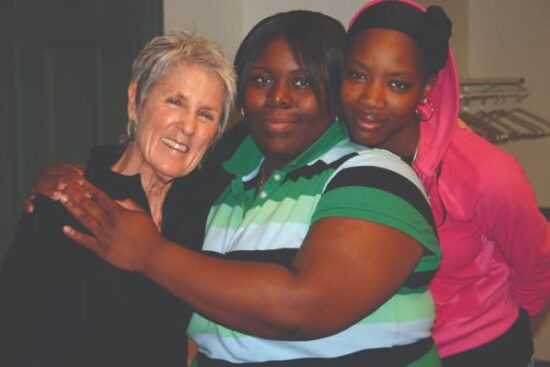
“I spoke to the director and explained what I hoped to achieve and she agreed to give me a chance. I would present ideas to the girls and ask them to write something. There were 25 girls, so I did it in two sessions and had no idea what to expect,” says Charde.

The girls were at the facility for various reasons, from prostitution to theft to drug-related issues and assault. Many were still in their teens. After a period of some skepticism, they took to Charde and wrote from the heart and shared their stories. Not all of the pieces were poetry but Charde was so grateful that they were attentive and in tune with her mission.

Charde taught at Touchstone for ten years and kept notes on the sessions. In 2005 she published an anthology of the girls’ work. Now she has taken her experiences a step further and written I Am Not a Juvenile Delinquent: How Poetry Changed a Group of At-Risk Young Women. It is Charde’s story as well as theirs—her unflinching loyalty and belief in what these girls could do if given a chance.

“I want people to know about these girls—their humanity, their gifts, to see what they can offer the world, without the cruel labels assigned to them by society,” says Charde. “These young women saved me. My gratitude for them is immeasurable and my book is a small expression of that gratitude.”

Curiosity and Chaos

Michael Maren talks of storytelling and the career path he took leading to director and screenwriter of his forthcoming movie Shriver.

Michael Maren on Telling Stories within Stories about Storytellers

By Kerri Arsenault

Multi-colored wires, gleaming wrenches, and sections of pipe sloshed around the backseat of electrician Morris Kopelman’s car. Morris’s grandson, Michael Maren, would drown himself in those tools as would a modern-day kid in a ball pit, coming up only for air.

Michael was the kind of kid who stuck his fingers in light sockets or fiddled with 220V outlets to see what happened. He unscrewed every screw he encountered. Once, after watching Disney’s Wonderful World of Color on NBC, after the adults left the room, he disemboweled the back of the TV set in order to understand the machinations of a TV program in full color. He was six. Michael’s curiosity occasionally electrocuted him, but those bits in the backseat of his grandfather’s car were dots to connect. Michael wanted to know how things worked.

Curiosity was the perfect conduit for becoming a storyteller, the career path Michael took, which started after college when he went to India and lived a sensory-overloaded maelstrom amid a broken heart. He joined the Peace Corps, then began a journalism career which began adventures galore: canoeing across Lake Victoria; tailed by secret police in Ethiopia; jailed in Sudan for practicing journalism on a tourist visa. Michael thrived. It makes sense; to be a great storyteller, you must be obsessed with mechanism, process, the innards and underbellies of things, and organizing chaos into something whole.

After a near fatal encounter in Somalia, he met Dani Shapiro at a Halloween party and that’s when his journalism enterprise began to lose its shine. They married, and Michael and Dani’s creative partnership has held steady ever since. “There’s no question I would have gone back to Africa or some other war zone had we not met,” he says.

Michael’s CV also includes father to a son studying film, writing instructor, author, and now, director and screenwriter for his forthcoming movie Shriver, which has been momentarily on hold; when the pandemic hit, the film was eight days from finishing.

Shriver includes Kate Hudson, Michael Shannon (as Shriver), Don Johnson, and Zach Braff, among others. The characters and actors all reflect Michael’s comedic tone: quirky, intelligent, and slightly dark.

“My father had an ability to say the most insulting things and everyone thought he was adorable and funny. He wasn’t kidding…but he wasn’t wrong,” Michael says with the deadpan of a heat-seeking missile. Then he laughs.

Shriver, like his first feature film, A Short History of Decay, is also about storytelling itself, and features a man struggling to tell or understand his own story; Shriver is a handyman mistaken for a famous reclusive writer, which is another narrator in the plot, too.

“We tell ourselves a story to remember,” Michael says about the craft itself. And for Shriver, people continuously tell him his story because he can’t remember or is confused about his own. This idea of forgetting and remembering repeats in A Short History of Decay, when a flailing Brooklyn writer visits his parents in Florida and finds his father recovering from a stroke and his mother deepening into Alzheimer’s anxious grip even while she knew she had the disease. And it’s also a storyline in Michael’s life: his mother suffered from Alzheimer’s but was an expert at covering it up.

“We are our stories,” he says. “Stories are how we organize our life.” I think about the tangle of wires he played with as a child, the need to circumvent his father’s tyranny, his mother’s memory. For Michael, there’s hardly a separation between storyteller and story, disorder and order, humor and darkness, forgetting and remembering… and hovering on that precipice is what makes stories and their tellers, great.

Stewarding the Land

Francis Schell, husband of Page Dickey—garden designer and writer, tells of their transition from Westchester to Falls Village.

Page Dickey and Francis Schell begin again

By Francis Schell

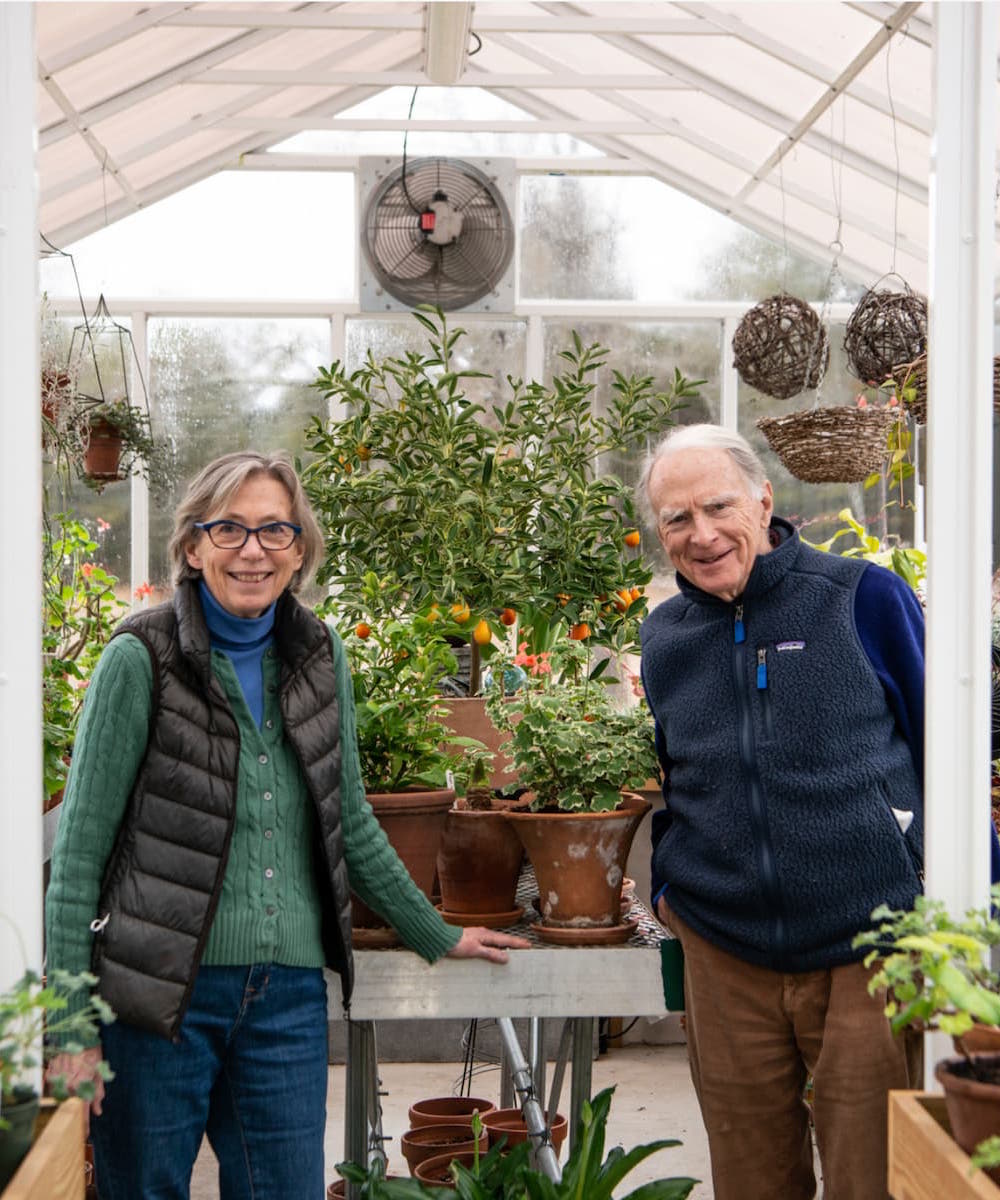
Six years ago, my wife Page Dickey and I moved from Westchester County, New York, to Connecticut’s Northwest Corner. At Duck Hill, our former home, Page, a garden designer and author, had spent over 30 years lovingly cultivating a three-acre garden of formal plantings that had achieved some renown, but which, with our advancing years, had become a burden. As much as it pained us, we needed to leave it behind.

Sari Goodfriend

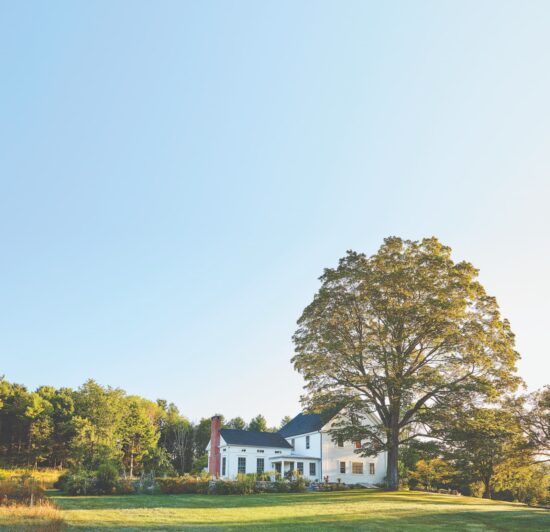
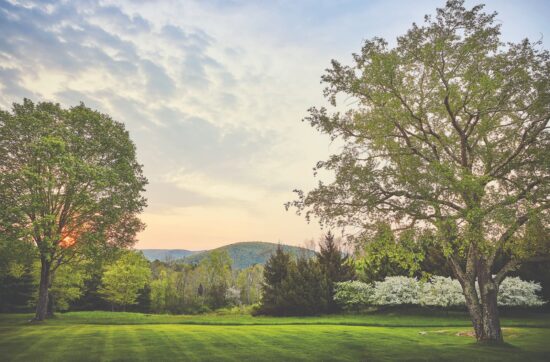
At Church House, as we named our new property centered around a 1793 Methodist meeting house in Falls Village, we were richly rewarded. An immense centennial sugar maple towers sentinel-like over our three-story building, perfectly sculpted ancient apple trees stand nearby, the tallest black cherry ever seen stands in solitude across the driveway. The site captivates us daily, with a view of Cobble Hill almost close enough to touch, the Berkshire Hills glimpsed above meadow and woods, and the huge open sky enveloping it all.

Sari Goodfriend

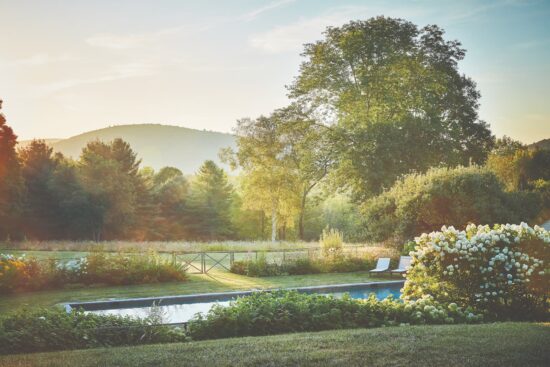
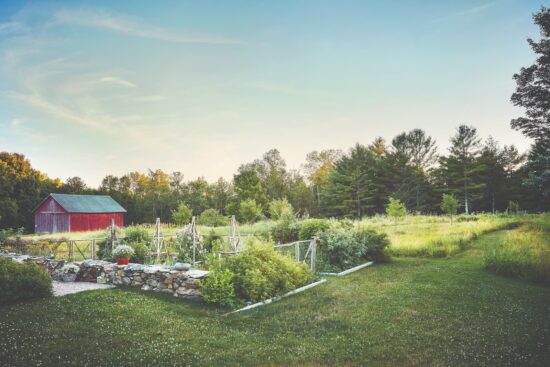
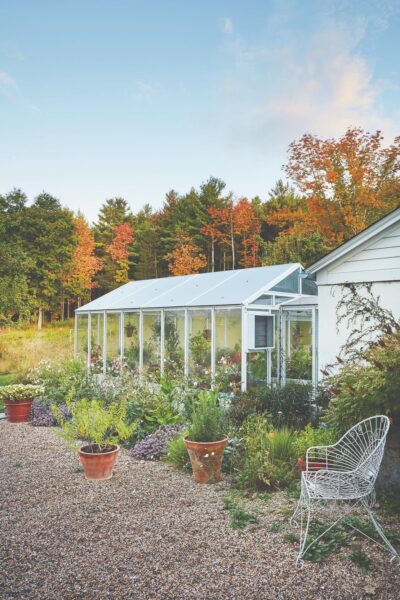
Duck Hill had been a garden of hedge-enclosed “rooms” with billowing boxwoods, perennial borders and plantings of exotic shrubs and trees. At Church House, man-made gardens are few. Page has “edited” with natives the long flower bed we found fronting the house, created a 30×30’ patterned cutting garden in the back, fenced with our local cedar, and added new varieties of hydrangea to the annabelles and tardivas massed near the swimming pool. We have added many spring bulbs, and have also built a small greenhouse. But, especially, we have embraced our 17 acres of woods and meadow.

For all its magnificent artifice, Duck Hill was imposed on the landscape. At Church House, as Page says in her book, Uprooted: “I wanted to listen to the land, discover its denizens, thrill to what it offers, nurture it—not make it into something else.”
Sari Goodfriend

In the meadows extending in the front and back of the house, the native grasses—russet little bluestem, feathery Indian grass, and tall smoky purple love grass—are allowed to grow, and are mowed only once in the spring. In summer and fall, swaths of Queen Anne’s Lace, goldenrods, bergamot, black-eyed Susan, and Joe-Pye weed burst into flower and call to birds and butterflies. Winding paths, cut weekly through the tall grasses, tantalizingly beckon to the woodlands beyond.

Sari Goodfriend

In what we call the High North Woods, Page has marked further paths along the steep outcroppings of limestone bluffs and massive stones covered with lichen that dot the forest floor. From spring into summer, these dry limey woods are alive with native columbines and bell flowers. The Low East Woods are moist, rich with aged white pines, shaggy-barked swamp oaks, fall-blooming witch hazel, and prickly ash—the northernmost American member of the citrus family. On the edge of these dense moist woods is our fen, a small calcareous wetland under a patch of open sky whose mineral-rich soil nourishes hundreds of native plants. Page has built a boardwalk to cross it, and in summer we walk through a carpet of wild asters that turns the fen blue.

Sari Goodfriend

While leaving nature undisturbed, ridding our land of non-native invasives remains a constant battle. In the meadows spotted knapweed, mugwort, bedstraw, and multiflora rose are the villains. In our woodlands, we mercilessly cut down bush honeysuckle, European buckthorn and Oriental bittersweet that choke out the native undergrowth. We pile the debris into large bushy mounds that become habitat for birds and other forest creatures. Page writes, “This is as close as I’ll ever be in my lifetime to stewarding a piece of land in its wild state. And it has changed me as a gardener.”

Stop and Smell the Flowers

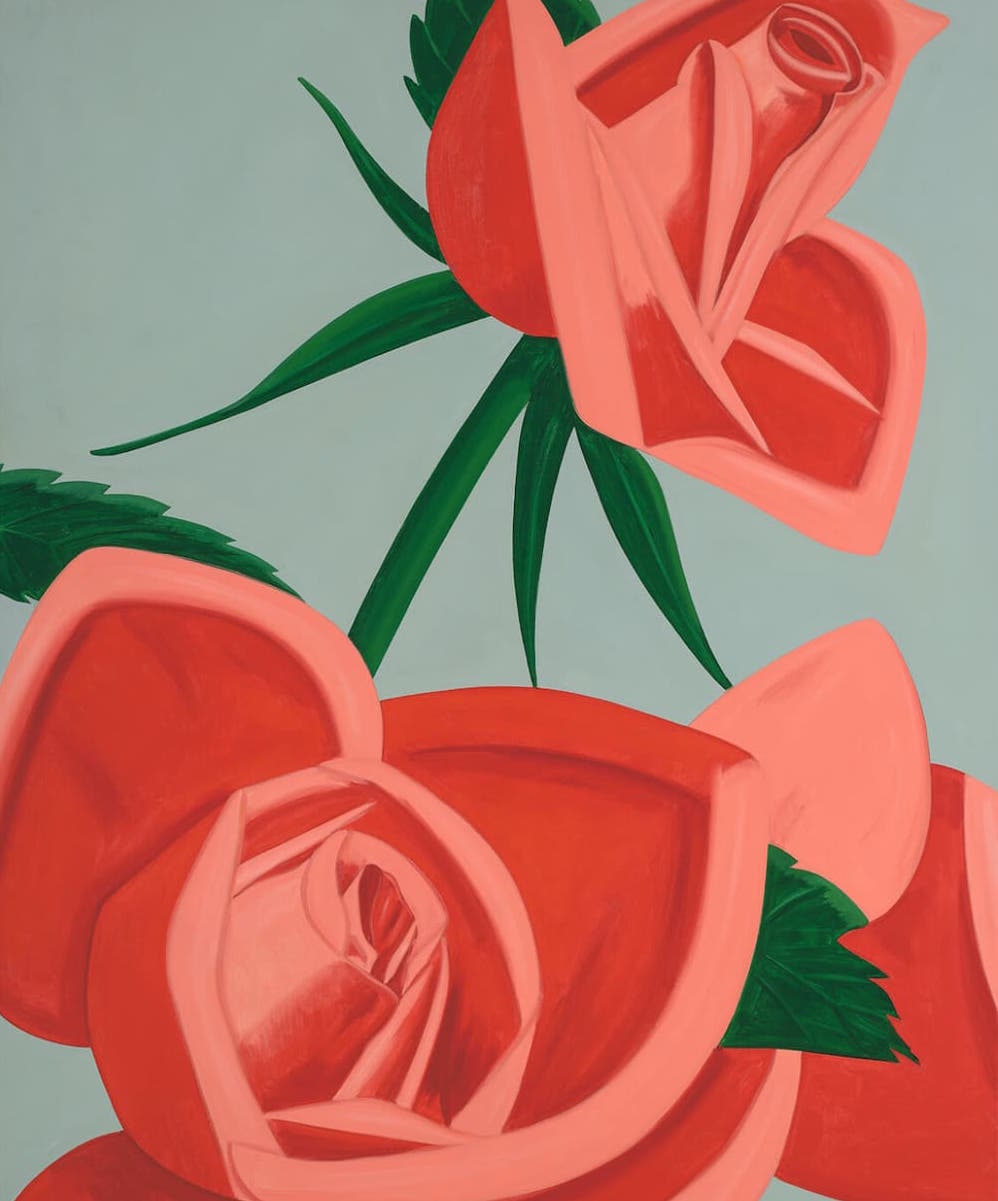
Starting Memorial Day Weekend Craven Contemporary will feature four large flower prints by renowned painter and printmaker Alex Katz.

It’s flowers, flowers, flowers at Craven Contemporary! Starting Memorial Day Weekend and throughout the summer, the gallery will feature four large flower prints by renowned painter and printmaker Alex Katz. These instantly recognizable works in the artist’s signature pared-down style will have three separate shows revolve around them. The first is a mixed group show of works also featuring flowers by other leading contemporary artists including Nicholas Party, Billy Sullivan, and Jonas Wood. The second show will present works by New York City street artist Michael De Feo or ‘The Flower Guy.’ Michael will be showing pieces from a series of work where he adds his floral treatments and cascades of multicolored petals to existing printed images from the fashion world. The third show will include a selection of Alex Katz portraits alongside the flower prints, showcasing two different but complementary bodies of work by the artist. Alex Katz continues to work in New York City and Maine at age 93 and will have a major retrospective show at the Guggenheim Museum in 2022. Make your plans to visit the shows and be sure to stop and smell the flowers along the way!

Craven Contemporary
4 Fulling Ln
Kent
646-355-8142

Summer Learning

Summer is a welcome time for a break from traditional schooling, but it doesn’t have to be a break from learning.

By Helen Waldron, founder and principal at Waldron Education

Summer is the time to mitigate the COVID learning slide

While the far-reaching impacts of the COVID-19 pandemic are affecting almost every aspect of life, one area hit particularly hard is education. When school resumes, it seems reasonable to expect two things: students will have made varying degrees of progress academically, and some version of a “COVID slide” will occur. We know there is variability in learning loss over the summer break, but adding in COVID interruptions, many students are experiencing unprecedented gaps in their education.

The term, COVID slide, was introduced by Dr. Megan Kuhfeld and Dr. Beth Tarasawa in a recent policy brief, connecting the expected slip in progress due to COVID-19 with the established “summer slide” phenomenon. According to the brief, educators and administrators should draw from their understanding of how summer breaks impact learning in their efforts to gauge the pandemic’s effect and this is an important consideration for parents.

Helen Waldron

Summer is a welcome time for a break from traditional schooling, but it doesn’t have to be a break from learning. Attending a summer program that offers an academic curriculum, mixed with summer fun like hiking, swimming, sports and field trips, is needed now more than ever. Over the course of 5-6 weeks, a solid summer learning program can offer about 70 hours of learning and an abundance of recreational opportunities. Here are few additional reasons to consider a summer program this year:

1. Social emotional learning—the American School Counselors Association suggests that students who have been remote and hybrid learning need more guidance and focus on whole self care. This refers to the integration of mental, emotional, physical and spiritual well being. Many students have experienced a significant level of disruption to their lives and will benefit from an opportunity to make new friends and build a solid extended support network. Exploring interests in a summer session can build a positive self image while also increasing grit and resilience. Many programs are ‘sleep away’ or summer boarding schools allowing adequate space for developing independence and self determination.

2. A sense of normalcy—in person summer programs offer a daily dose of human connection, something we are all craving. Teens in particular need social connection after the isolation caused by the pandemic. While programs will take the needed precautions for health and safety this summer, the daily schedule and routine provided in these environments will get our children off their screens and engaging in live conversations and activities with peers.

3. A chance to explore new interests while strengthening learning—In person learning provides more compelling opportunities to engage and explore new areas of interest in a more relaxed summer environment. Daily coursework can keep students moving the needle on their own learning and make up for some of the loss experienced in the past year.

Three months or so from now, we’ll send our kids back to school for another year of learning. With that in mind, why wait until September when there are many summer programs in session, in person this summer? This is our chance to build on new skills developed during time at home and to share with peers beyond the two-dimensional computer screens. We want to reignite student passion for deep learning, rebuild some of the excitement and engagement in school for students.

Local Resources:

Welcome Spring

The Hollister House Garden—recognized on the National Register of Historic Places—offers experiences as unique as those who wander through it.

Flowers Meet Architecture at Hollister House Garden

By Clementina Verge

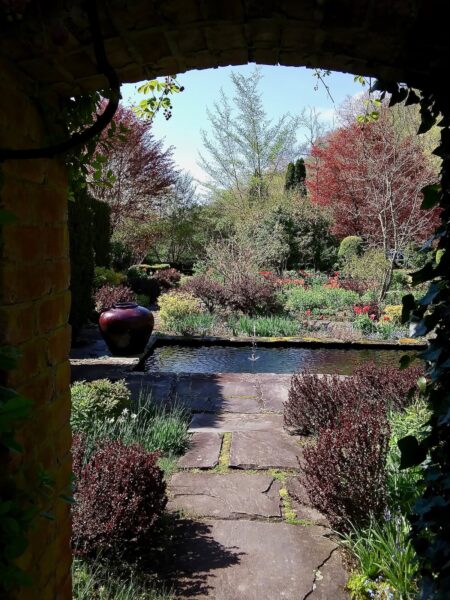
Tucked away in picturesque Washington awaits an enchanting, not-so-secret garden where visitors can delight in summer snowflakes and listen for the flutter of bluebells. The Hollister House Garden—recognized on the National Register of Historic Places—offers experiences as unique as those who wander through it.

Krista Adams, Head Gardener at Hollister House Garden

“Some people come just for the beauty of flowers, while others take an interest in artistry and architecture,” notes owner George Schoellkopf, who has gifted the property to Hollister House Garden Inc., a nonprofit organization dedicated to its preservation. “For others, it takes on a profoundly moving spiritual dimension and for children it proves to be a great adventure as they are enticed from space to space.”

Krista Adams, Head Gardener at Hollister House Garden

Last year, Hollister also proved a therapeutic antidote for thousands who sought serenity during the Covid-19 pandemic.

The botanical dreamscape sprouted some 42 years ago when Schoellkopf—then an antiques dealer in New York City—found his weekend retreat on Nettleton Hollow Road and decided to recreate magnificent gardens like Sissinghurst and Hidcote, which captured his heart during travels through England.

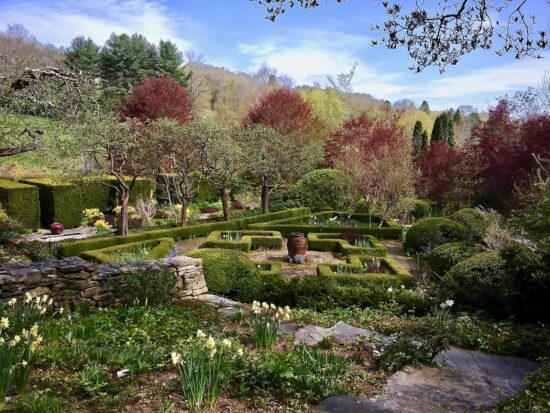
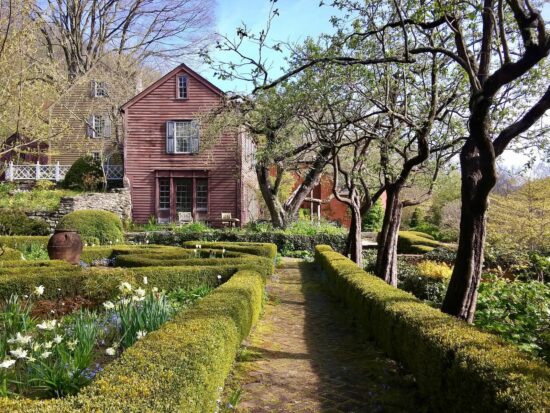
Trees, perennials, dramatic hedges, calming water features, stone walls, and passageways were born out of clay models and today, the sprawling estate’s landscape maturity is among its most charming attributes. Typical of English gardens, Hollister incorporates a formal design, but plantings are informal—even wild, because Schoellkopf desires an architecturally-pleasing space that is dignified yet unpretentious; a natural extension of the New England countryside.

Krista Adams, Head Gardener at Hollister House Garden

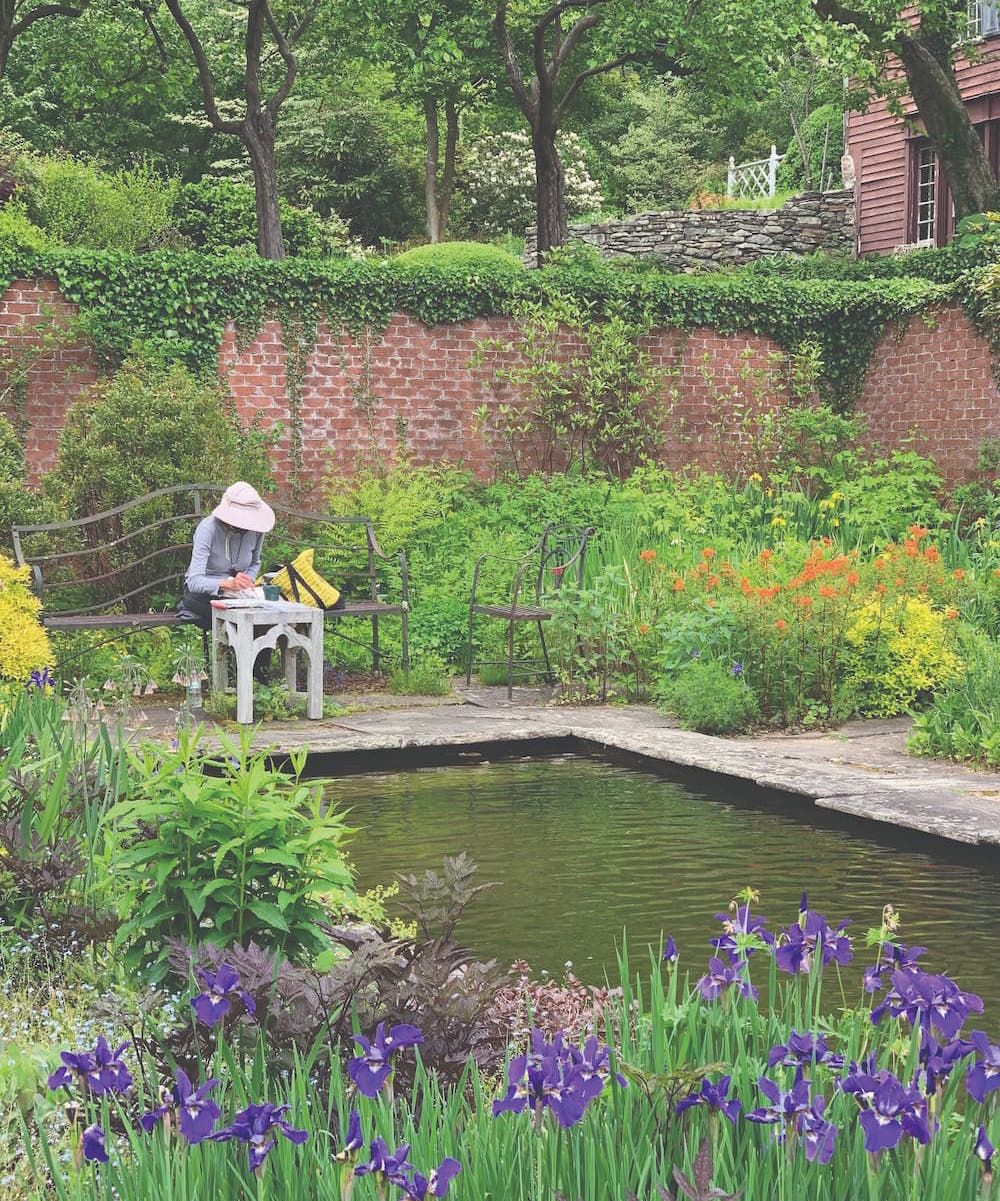
The 18th century house (not open to visitors), which Schoellkopf describes as a “wonderful jumble of various periods that all work together,” is always in the background but never a focal point. Instead, the garden unfolds in layers, drawing visitors into multiple “rooms,” each revealing hidden treasures. Strolling through forget-me-nots spilling onto the stone pathways of the Grey Garden, reflecting in the Wall Garden, and admiring the Kitchen Garden’s elegant symmetry complement the bucolic views of the pastoral hillside.

Krista Adams, Head Gardener at Hollister House Garden

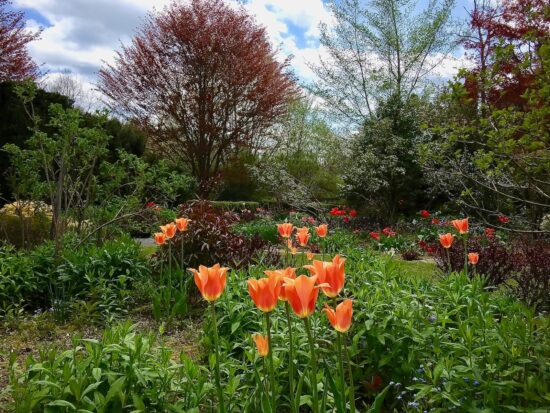
There is no “best time” to visit since each month offers distinctive delights. Schoellkopf insists that his favorite flower “is the one in bloom,” but admits to a special fondness of daffodils. Expect to find those blooming in early season, followed by bursts of peonies, lilacs, dahlias, lilies, poppies, irises, primrose, asters, and evergreen climbing ivy—representing just some of the synthesis of diverse fragrances and colors that create mystery, drama, and tranquility.

Krista Adams, Head Gardener at Hollister House Garden

Care has been taken to foster a lush landscape that blossoms continuously, which has meant a decades-long adventure in mastering plant acclimation and compatibility.

“Gardens are special because they allow us to experience nature in a manmade, artistic way,” explains Schoellkopf, expressing great pleasure at being able to share the property with others.

This spring, Hollister House is poised to welcome visitors with a lineup of lectures and workshops appealing to a wide array of interests, including book conversations, art sessions extending from plein air painting to smartphone photography, and discussions ranging from successful floral combinations to artist talks.

Hollister House
300 Nettleton Hollow Rd
Washington
860-868-2200

Bounty from the Good Earth

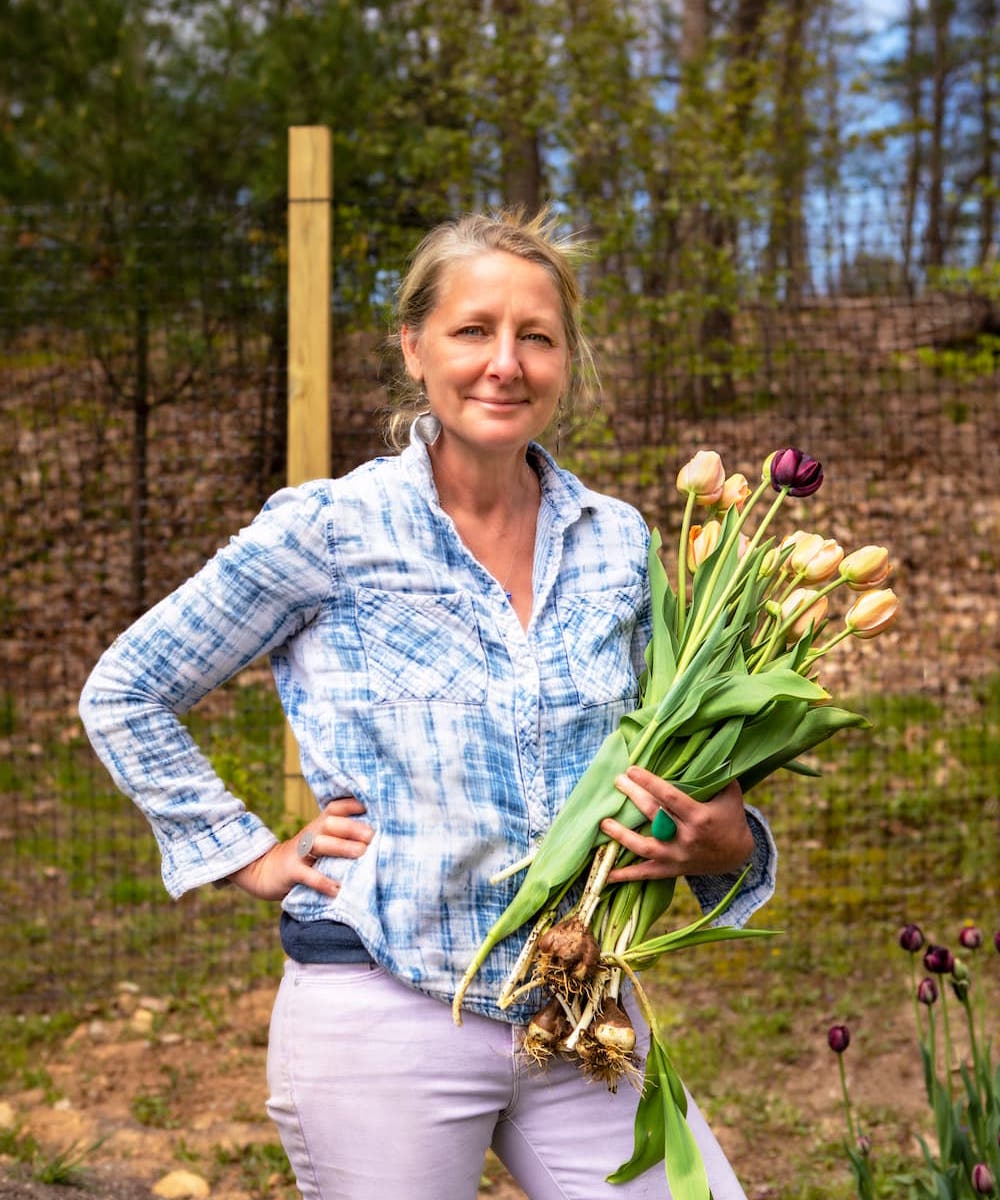
Beth Fowler’s goal is to connect the community through flowers, natural curiosities, and other endeavors that honor the land’s bounty.

By Tovah Martin

When you think of Loam, Beth Fowler wants you to envision something ravishingly beautiful.

The name of Beth Fowler’s business says it all. When the time came to brand her business, one word captured the concept. Loam. “We want to express that connection with nature,” she explains of the vision conceived with husband Ryan Fowler. “We’re always digging in the dirt, pulling up the connection.” But it’s not just about one family’s awakening. Beth Fowler’s goal is to bring the whole community into that dialogue through flowers, natural curiosities, and other endeavors that honor the land’s bounty.

Rebecca Pollak

Loam started many years ago when Elijah, the Fowlers’ high school sophomore (now in the AgSTEM program), was only three years old. “I began to think about my next chapter,” Beth explains. She was working in fashion styling and editorial work—a profession that she continues to pursue and love. But she wanted to branch out and add a more earthy expression for her talents, so she enrolled in floral design courses at the New York Botanical Garden. At the time, the floristry program had not progressed to its current understanding of homegrown ingredients and did not feel sufficiently organic to pull Fowler in. It wasn’t until she revisited floral design in 2017 that Fowler felt the bond. “The old guard was gone and hot young Millennials were giving Master Classes in a movement that had fast-forwarded into cognizance and caring about where cut flowers are coming from, and the bigger picture of pollinators and ecological stewardship.”

Rebecca Pollak

But Fowler wasn’t content just to work with the finished product, she wanted to get down to the basics. That’s how Loam gained a micro-farm in New Preston. On extremely poor land, the Fowlers fed what was formerly “a no-man’s land of invasive plants.” The space was limited, “it’s really just a postage stamp—less than an acre.” But what really broke the Fowlers hearts was the fact that it was starving. “The land was initially void of birds and insects.” Gradually, they cleared it, fed it, added raised beds, and cultivated it. Now that formerly malnourished land grows ingredients for Loam.

Rebecca Pollak

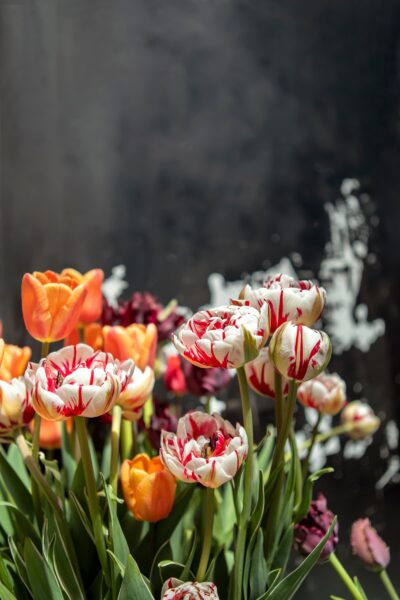
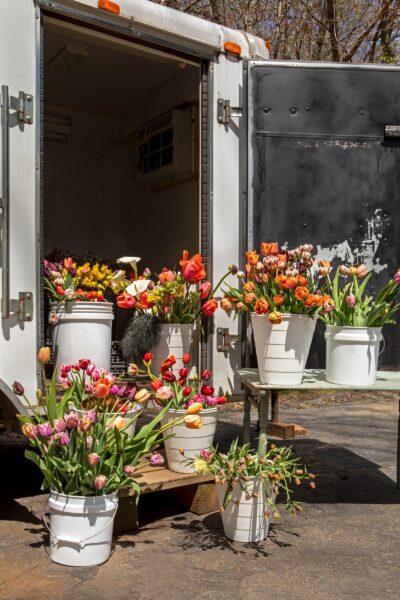
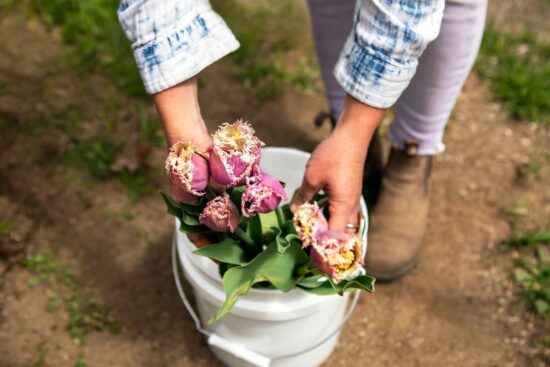
Fowler’s cut flower year starts early with the first tulips, progressing into the last zinnias of the season with plenty in between. That said, she doesn’t confine her repertoire solely to the typical cuts. Instead, she explores the field and adds ingredients that bring nature’s beauty to the fore. And she definitely does not work alone—being part of a community of growers is paramount to her philosophy. “I never want to grow it all myself. My approach is always to be inclusive—not competitive.” Working with fellow local farmers is part of the allure, but she also seeks fascinating elements globally. And all those flowers find their way into the most wonderful, multi-faceted creations imaginable. From floral “clouds” to floral jewelry worn as fleeting artwork, Fowler explores all expressions. And she has further plans. Currently, Loam has a pop-up shop/studio called The Valley with jewelry designer Bowen NYC in Washington Depot. In addition, Fowler has added a truck to sell her planted container creations, arrangements, and natural curiosities at Elephant’s Trunk Flea Market, etc. Meanwhile, she continues to pursue her career in styling. “I love fashion,” she says, “but flowers are my passion. What I create really does come from the soul.”

Loam Floral
8 Anna Jay Lane
New Preston
860-488-2992

Seeing Green – A Roxbury Garden

In collaboration with DWB Botanical Designs, Mark Drendel and Chad Conway’s antique home boasts beautifully landscaped gardens.

The moment Mark Drendel finesses a space in his Roxbury garden, he sees another project in the distance.

By Tovah Martin

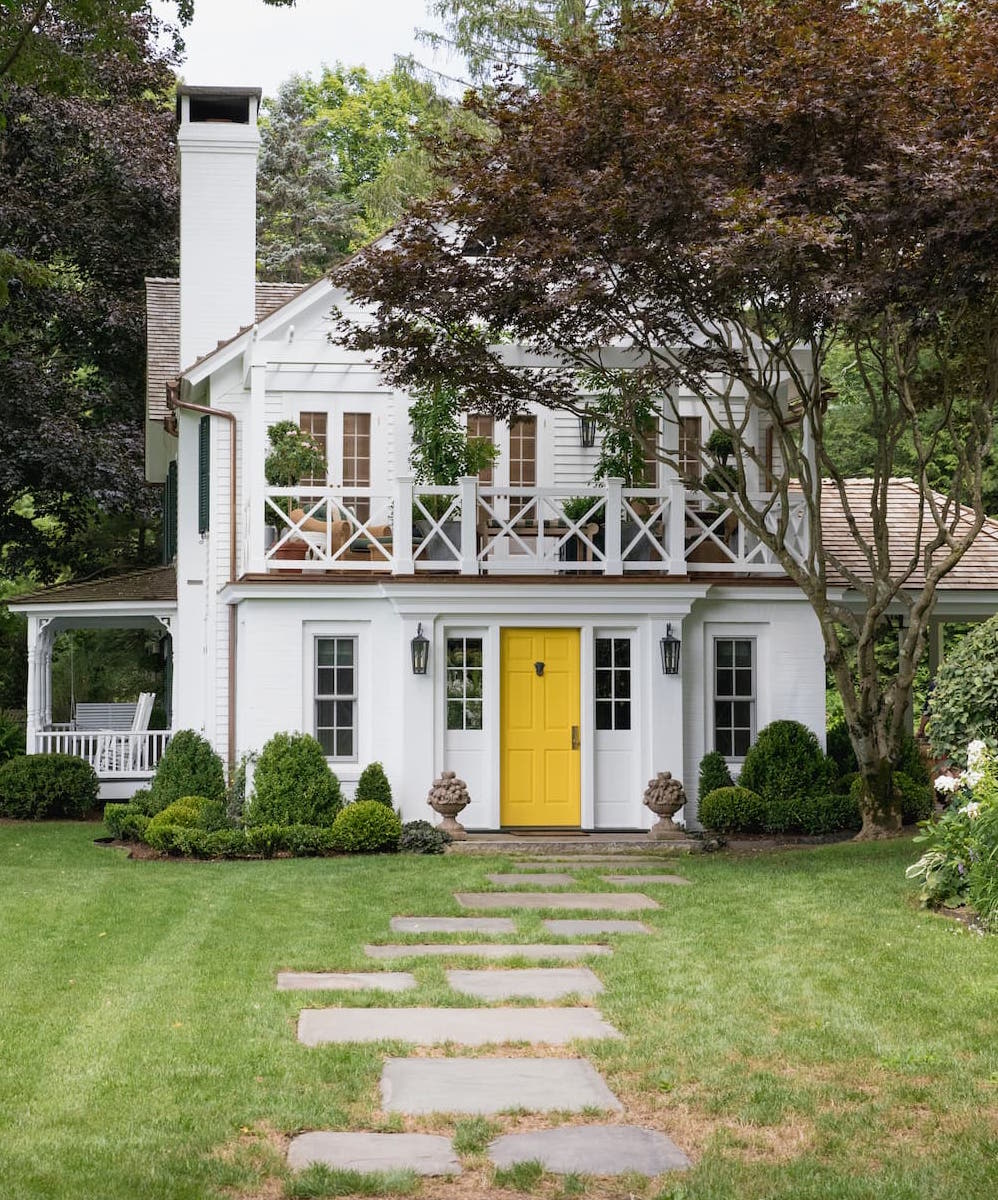
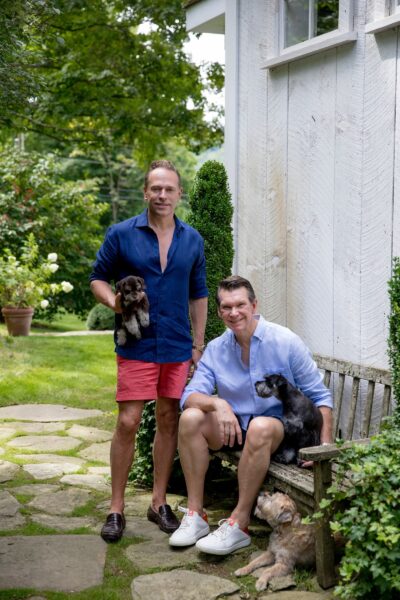
Mark Drendel and Chad Conway’s wish list was fairly modest when they went looking for a home in Litchfield County. Immediately after their son Nicholas was born, the couple discovered a need for “a new lifestyle” and the search began. Basically, they just wanted a house where you could hear the screen door slam from the yard. So a yard was definitely in the picture. But beyond a little space for their toddler’s kiddie pool, there was no agenda. “I think we bought the cheapest house in Roxbury,” declares Drendel—owner of Canine Styles in New York City and Roxbury resident since 2003.

mark drendel and chad conway's roxbury garden
Rana Faure

The house they found was undeniably modest. The 1920 Sears kit house was definitely not flashy, but they fell in love with the front porch—and the requisite screen door. Sitting on an acre of land, hearing that door slam from all points wasn’t an issue. Plus, beyond their fondest dreams, the house boasts direct views of farm fields—now donated to the Land Trust and cultivated for crops and hay. “We can wave to the farmers on their tractors,” Drendel enthuses.

view of farm fields
Rana Faure

Although their adopted house was modest, initial indoor renovations were limited to providing additional play space for Nicholas. Outdoors was a whole different story. They had already added shutters and improved on the paint hue, “We figured the previous owners bought into a special on beige paint—everything inside and outside was that same drab color.” They found themselves using the outdoors as additional room for their little family, but the scene was severely basic until a vacation spent on an estate in Provence gave a glimpse at what gardens could do for a property. They came home with a newfound urge to enhance their little parcel.

gathering on the patio surrounded by garden
Rana Faure

When Mark Drendel is ignited by an idea, he embraces it fully. Not only did he take inspiration from other landscapes in the Litchfield region, he also expanded his vistas through books. Tracey Young of The Elemental Garden in Woodbury gave him his first copy of Russell Page’s The Education of a Gardener and he was sufficiently captivated to swing into the initial design with Young. Drendel sent her photos of scenes he found alluring—like a dogwood hillside and rose gardens tripping down slopes, and she purchased the ingredients. Pretty soon, trucks were arriving with trees and shrubs by the dozen and Drendel was juggling mind boggling quantities of plants. That’s when David Bergman of DWB Botanical Designs was called in to help implement the vision. Bergman has been a critical facet of the picture ever since.

garden
Rana Faure

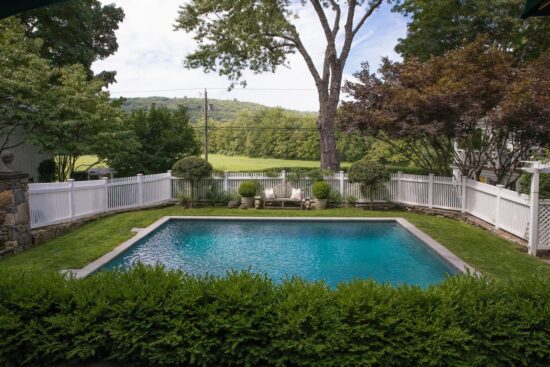
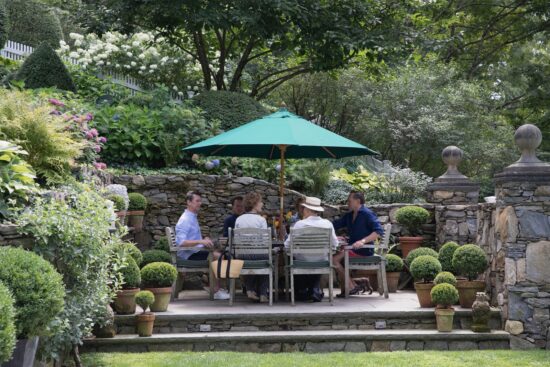
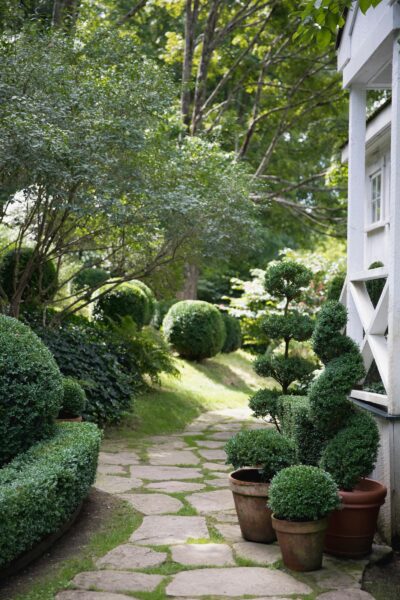
One characteristic of the landscape predominated, limited, and directed all the plantings. The Roxbury acre that Drendel and Bergman are tackling inhabits one of the steepest hillsides in town. High up on the want list was a pool for family recreation. Finding a way to wedge a water feature into the land was an engineering feat that required serious terracing and bolstering with stone walls. But the exercise simultaneously opened the opportunity for further lounging and dining areas to utilize the levels. Meanwhile, Drendel had discovered a love for clipped boxwood, his unique approach being to create wonderful undulating edging around floriferous rose and perennial gardens. What resulted is a sumptuous fusion of formal and floral that satisfies all sides of his personality. Hydrangeas also play a key role in making Nirvana happen.

boxwoods and garden
Rana Faure

“Now, it’s a garden with a full span through the seasons,” says Drendel of his collaboration with David Bergman. Meanwhile, renovations include a new dining room, house additions aloft, and an outdoor pergola/lounging area. Entertaining has become a primary function. Interestingly, Drendel takes moments spent sharing his landscape with friends as jumping off points for further projects. “When I sit and look around, I see a new sight line which leads to the next sight line. It’s constantly evolving,” Drendel remarks.

Beyond Face Value: A creative exploration of Art, Race, and Empathy 

Thanks to the generous support of the Litchfield Education Foundation, Art Room Atelier, Litchfield’s award-winning family art studio, offers Beyond Face Value: Art, Race, and Empathy.

In the words of equity consultant and illustrator Giovanna Adams, culture is an iceberg: what can be seen on the surface is only a fraction of our full identity. Which begs the question, how does the visual information in an artwork reveal the process of making it? How does seeing what’s usually unseen change our understanding of it?

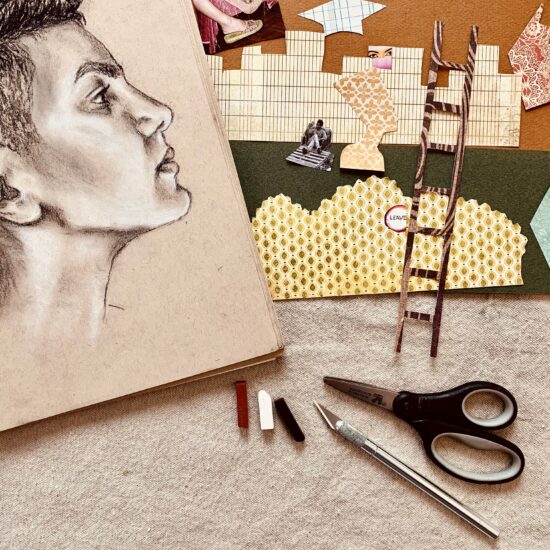
This March, thanks to the generous support of the Litchfield Education Foundation, Art Room Atelier, Litchfield’s award-winning family art studio, offers Beyond Face Value: Art, Race, and Empathy. This free, online art program for tweens and teens will be exploring identity through collage and pastel portrait drawing, under the guidance of teaching artist Sarah Zahran.

Provided with custom art kits for materials, our project will be completed in two phases: collage with patterned paper and magazine cutouts, then portraits mixing skin tones with pastel. These portraits will provide visual narratives of each artist’s layered personal histories.

Juan Paolo Alicante

Zahran’s philosophy centers on building trust and respect with her students. She will introduce the class to leading contemporary black artists and activists, then demonstrate techniques and prompt independent off screen work. One of the many functions of art, and, more importantly, the process of creating, is as an antidote and cultural sounding board for complex, emergent issues around race.

Raised in a mixed-race household with an immigrant parent, Zahran’s personal art making process is often concerned with unraveling the tangled threads of her own identity. She learned from an early age that race and cultural identity is nuanced and multidimensional.

Cultural disconnects and lack of language around the subject created a great deal of confusion for Sarah growing up in the predominantly white public school systems of Southbury. Gaining access to more inclusive spaces and a wider range of voices online during her college years as an engineering student at Stevens Institute of Technology, in NJ, Sarah quickly discovered that her quest to navigate her own identity was inextricably linked to the greater social dynamics. With Beyond Face Value, Sarah will weave her passions for art, activism, and education into a transformative experience for Litchfield area teens.

Facilitated by Sarah Zahran of Art Room Atelier.

4 Online classes FREE
Thursday 3/18 – 4/8
4 -5 pm or asynchronous, with recording

For more information and registration, go to artroomatelier.com, follow on Instagram at @artroomatelier, and Facebook at Art Room Atelier

WAA Member Show

WAA is a nurturing place for those of all ages and ranges to take part in creative exploration. They showcase a wide range of art in all media, bringing art to the community through events such as lectures, field trips, workshops, parties, art sales, and educational programs. Their 2021 Member Show exhibition is being held now through February.

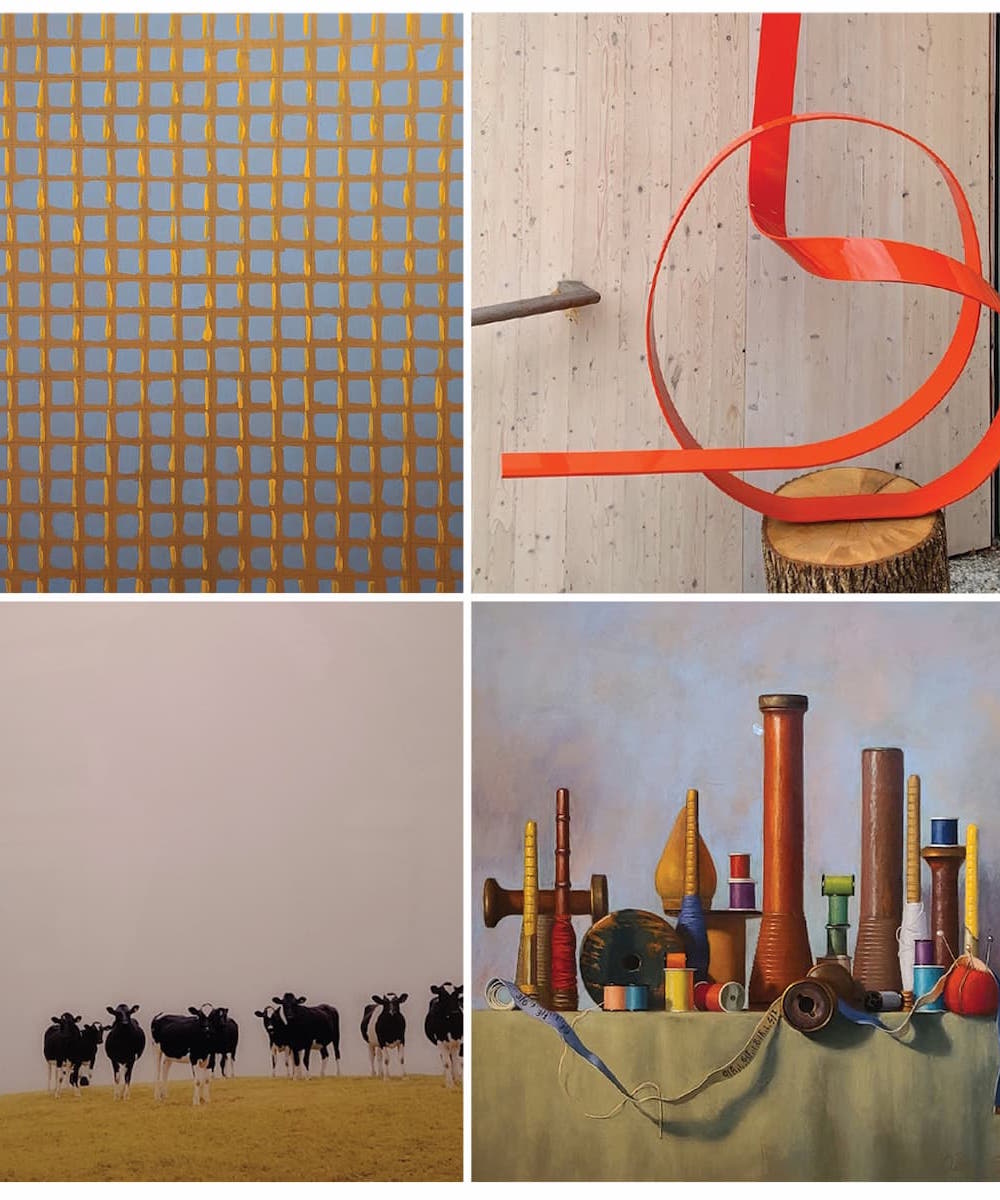
Washington Art Association is a nonprofit organization dedicated to enriching the community through education, exhibitions, and special events. WAA is a nurturing place for those of all ages and ranges to take part in creative exploration. They showcase a wide range of art in all media, bringing art to the community through events such as lectures, field trips, workshops, parties, art sales, and educational programs. Their 2021 Member Show exhibition is being held now through February. The show features local artists in four categories: painting, photography, sculpture, and works on paper. Zemma Mastin White, a painter and printmaker, focuses on mark making. She combines a matrix of layering line, color and forms. White took first place in Painting for her work titled Reflecting Light.

Zemma Mastin White / Reflecting Light

In first place for Photography, Tom Kretsch won for his work titled Many Moos, New Zealand. Kretsch is mostly self-taught but inspired by the works of the Wyeth family of painters. He uses the elements of light, texture, form, and color to capture peaceful moments and surroundings.

Tom Kretsch / Many Moos, New Zealand

Joe Gitterman took first place in Sculpture for his work titled Orange. Gitterman, who has sculpted for over 50 years has work included in private and corporate collections. He is inspired by movement such as ballet and modern dance.

Joe Gitterman / Orange

Lastly, in Works on Paper, Peter Seltzer took the winning spot for his work titled Threads 4. Seltzer has had paintings in oil and pastel exhibited at numerous public venues and has been featured in many articles for his work and technique.

Peter Seltzer / Threads 4

Washington Art Association
4 Bryan Memorial Plaza, Washington Depot
860-868-2878

Current Issue
March / April 2026
Our Kind of Healthy
The Health & Wellness Issue
Subscribe Now
.
  • STAY IN THE KNOW

    Your weekly guide to can't-miss events, hidden gems, and local favorites in Litchfield County. Sign up now for curated things to do, eat, and explore—delivered every week. It’s free. It’s local. It’s essential.

  • Karen Raines Davis