

Your guide to the heart of Litchfield County:
Discover local stories, hidden gems, and must-know events.

Greenwoods Counseling Addresses Mental Health

Greenwoods Counseling has served Litchfield County for three decades to meet the mental health needs of county residents.

By Nancy McMillan

“I don’t know if people really grasp that we have a mental health crisis in this country and Connecticut is not immune, especially during a pandemic,” says John Simoncelli, Greenwoods Counseling & Referrals, Inc.’s Executive Director. “We’ve seen an enormous increase in suicide, anxiety, and drug use among our teens and adolescents.”

Greenwoods has served Litchfield County from their offices in St. Michael’s Church on South Street in Litchfield for three decades and continues to expand their mission and services to meet the mental health needs of county residents. Four years ago, they partnered with local schools to address the needs of young people.

Simoncelli, a licensed alcohol and drug counselor and a lifelong county resident, joined Greenwoods in 2017. A grant from an anonymous donor precipitated the establishment of the Youth Mental Health Program. During the first year, Greenwoods provided assessments and referrals for the students. The following year, the program extended its reach to include Litchfield public schools, Wamogo Regional School, and Oliver Wolcott Technical High School. Clinicians were placed in-house at Wamogo and at a private school in Goshen.

When licensed clinician Lucy Vail joined the staff at Wamogo, she built a full caseload in two weeks—it usually takes three to four months. Vail meets with students during the day; she offers counseling to Region 6 staff after school hours. In the fall of 2021, 18 months into COVID, demand for the latter service exploded.  

Students in need of services are quickly identified and, once parental permission is gained—assessed. Vail collaborates with guidance counselors, teachers, social workers, nurses, admins, and student services to formulate a comprehensive approach to her clients. “I work for Greenwoods but see myself as part of this school community.” 

An essential factor in the program’s success is clinician supervision by a neuropsychologist who specializes in adolescent behavior. Due to the unique nature of the developing teenage brain, clients may present an unusual collection of symptoms. The neuropsychologist brings several decades of experience to working with this age group.

“You can have a dramatic improvement in behavior in a short time, but you need the licensed clinician and the supervisor,” says Simoncelli. 

Success stories include a student who had been running away from home and not attending school and who is now with their family and succeeding in the classroom; another student felt alienated from teachers and staff and is now willing to accept assistance. 

“It’s all about helping the student arrive at the place where they are more available to take advantage of academic opportunities,” adds Vail. “Our mental health program supports educational success.”

However, Greenwoods cannot keep up with the need for services despite stretching dollars by, for example, utilizing graduate students as interns. 

“Our staff is amazing!” Simoncelli says. “But our funds are maxed out.” 

Financing for the program comes through contracts with the school district, with the remainder generated from donors, who provide 40 percent of Greenwoods’ total budget. Light the Way, the annual gala celebrating Greenwoods’ 30th anniversary, takes place on Saturday, May 21, at Washington Town Hall. After a record amount raised last year, Simoncelli would love to see that number increase.  

“Our vision is to meet every student’s needs. Our schools aren’t that big; with ample funding, we could meet that demand.”
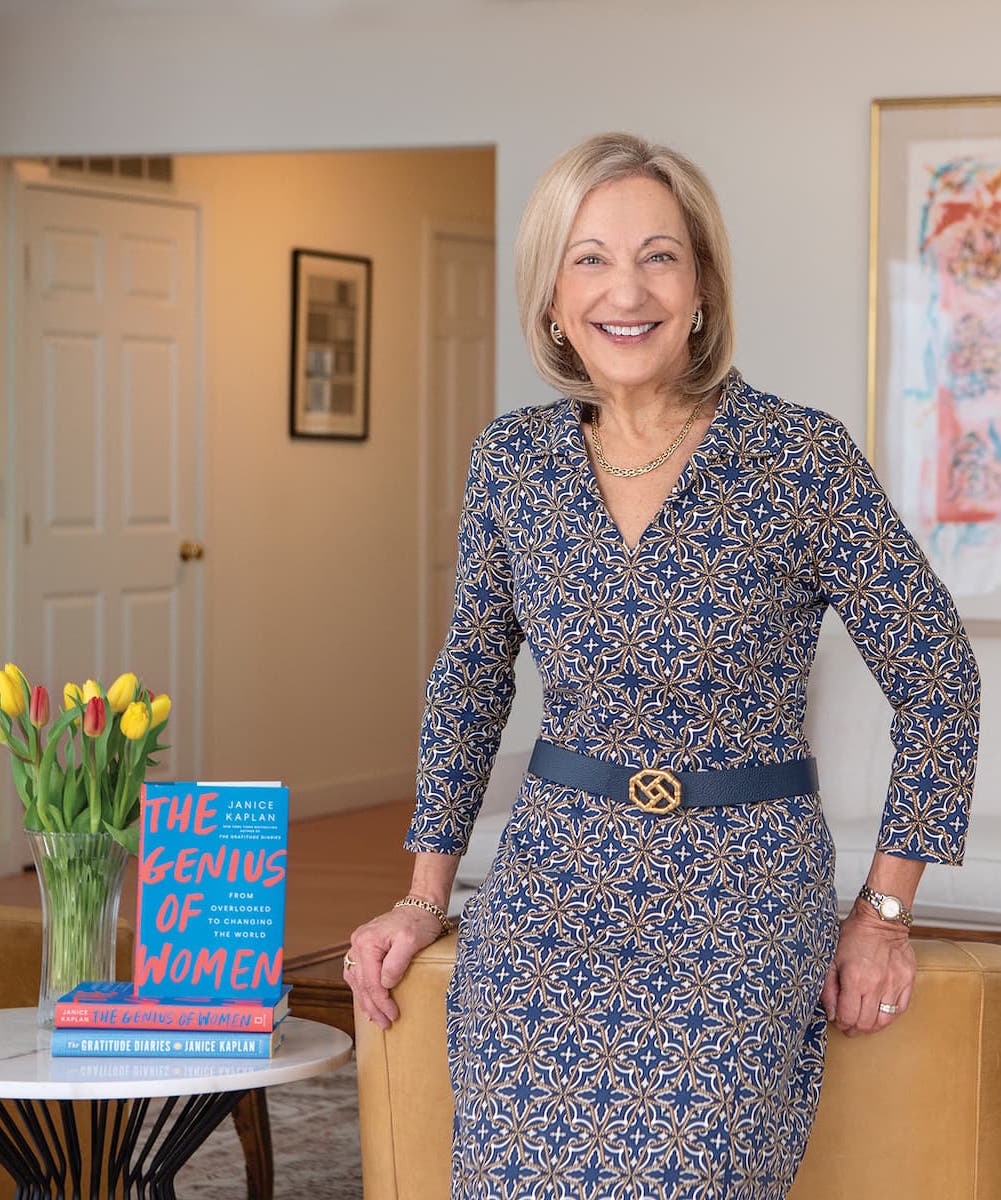
Janice Kaplan’s The Gratitude Diaries

Taking a seat at the gratitude table is just that simple, according to 15-time author Janice Kaplan.

Former Parade Magazine Editor Finds Happiness

By Anne McAndrew

There’s magic in these Litchfield Hills. If you can’t feel it you’d better read a page from Janice Kaplan’s The Gratitude Diaries and try again. Kaplan, 15-time author, magazine editor, television producer, podcast journalist, and Kent resident, credits the rolling hills, forest trails, and calming views of Litchfield County as major factors in her best-selling book and successful podcast, “The Gratitude Diaries.”

Gratitude is the zeitgeist of the COVID pandemic, but by then Kaplan’s research had concluded and her book had already been published. This was no “strike while the iron’s hot” intention birthed during days of quarantining. Kaplan’s curiosity emerged years before after concluding a survey on gratitude for the John Templeton Foundation. After some poignant self reflection on New Year’s Eve, she had an idea for a book. “This year,” she told her husband Ron, while he was making her French toast on New Year’s morning, “I’m going to be more grateful for everything.” So over a cup of coffee and with a tweak in her attitude, she committed to living one year being grateful. What started as a literary device became a lifestyle. “Goodwill became natural,” she concludes.

Taking a seat at the gratitude table is just that simple, according to Kaplan. Using herself and her home in Kent as a subject, parts of her book explore nature’s relationship with gratitude. She discovered a perfect harmony. She continues, “living here makes it easy to practice the nature and gratitude connection.” She is referring to research done by noted Harvard biologist E.O. Wilson, the leading expert in biodiversity. In basic terms, his work has proven that all species are interconnected and have an evolutionary bond. That’s why we are at peace in nature. The colorful jumble of Litchfield County’s best; hiking the Appalachian Trail, listening to the morning song of the birds, letting the mountain breezes hit your face, and taking in the verdant abundance of the countryside, are all a big part of Kaplan’s gratitude story. Further, the mind-body connection flourishes for all of us when we pause to count our blessings. Our blood pressure improves and our anxiety lessens. It’s not feelin’ groovy hooey, it’s actual science. And Kaplan backs it all up with extensive groundwork and anecdotal evidence.

Kaplan, former editor-in-chief of Parade Magazine, started her career as a sports writer for CBS Radio. She has authored 15 books, both mystery novels and fun women’s fiction, many of them using her experience as producer at “Good Morning America” as framework. Her most recently released book, The Genius of Women: From Overlooked to Changing the World researches women’s contributions to science and society and how they were unjustly slighted by historians. 

Kaplan hosts the podcast “The Gratitude Diaries” for iHeart Media and is a keynote speaker, both on Zoom and in person. She and her husband Ron live in Kent and New York City and have two adult sons. And of course, she is grateful for everything.

Sustaining Washington’s Agricultural Heritage

Washington’s rich agricultural heritage spans centuries; its numerous dairy farms once earned Connecticut a reputation as the “Holstein capital.”

Washington’s Agricultural Legacy  

By Clementina Verge

From the days when indigenous people worked Shepaug River Valley, to the arrival of Colonial settlers in the 1730s, to modern microfarms, Washington’s rich agricultural heritage spans centuries; its numerous dairy farms once earned Connecticut a reputation as the “Holstein capital.” Faced with difficulties, many farms closed or relocated west, but remaining ones continue to nourish the community while shaping its future. 

“In spite of many challenges that both nature and the economy have put in their way, Washington’s farmers have proven to be persistent, resilient, and innovative for more than 280 years,” reflects Patrick Horan, who comanages Waldingfield Farm with his brother Quincy. “We’ve weathered impediments such as elevation, ruggedness, stony soil, droughts, increased production costs and rent prices, and even bankruptcies.”

Though contemporary farming may not resemble the early homesteads of Judea Parish—as Washington was known—it carries on a rich legacy that once included tobacco, pork, and more than 100 dairy farms. Waldingfield Farm, purchased by Horan’s great-grandfather C.B. Smith at the beginning of last century, was among them.

For decades, milking operations thrived, including at Echo Farm, whose butter was recognized at the 1901 Pan American Exposition in Buffalo, NY. But a 1906 drought dimmed the flourishing landscape, and by 1910, Echo sold its land. Between World War I and World War II, more dairy operations ceased throughout New England. In Washington, they whittled from 118 to roughly 50.

Waldingfield was among them; neighboring farmers worked the land in different capacities for 50 years until Daniel Horan, Smith’s great-grandson, reclaimed it in 1990 as a working family farm dedicated to vegetables; sprawling more than 25 acres, today it is one of the largest certified organic operations in Connecticut.

Similar adaptability saved the tenth-generation Averill Farm, purchased in 1746 from Chief Waramaug’s holdings. Between the 1940s and mid-1960s, about 20-30 cows were milked daily, but increased herds did not equate to increased profits, so the family shifted focus to orchards. It was a wise decision, Horan affirms, given the thousands who ascend the hilltop property every autumn for its apples and pears.

Other farms expanded elsewhere or succumbed to hardships, leaving residual reminders—such as stone walls in the woods—throughout properties that have morphed. The cows at Hollister Farm that grazed the now Hollister House Garden are a faded memory, as is Spicerack Farm once housed on the sprawling Macricostas Preserve.

Significant acreage was sold for housing development, but six-10 working farms remain, Horan says, and all have found innovative ways to create bountiful farmers markets, CSA programs, and engaging community events, such as the farm-to-table dinners. 

Agriculture in the area has come full circle, Horan reflects. In the past, local produce was transported into cities—especially after the invention of refrigerated transportation—but since 2020, the Covid-19 pandemic turned many seasonal occupants into year-round residents, increasing local food demand and emphasizing the value of Washington’s rural and agricultural legacy. 

“Farms have sustained the community and hopefully the community will continue to sustain them and any new ones established in the future,” Horan notes.

Marcia DeSanctis’s Passion for Travel

Marcia DeSanctis fully understands the push and pull of being a wanderer and explorer, the tension of always wanting to be somewhere else and also wanting to be at home.

Author Marcia DeSanctis Shares Her Love and Life of Travel

By Joseph Montebello

As an inveterate traveler, Marcia DeSanctis fully understands the push and pull of being a wanderer and explorer, the tension of always wanting to be somewhere else and also wanting to be at home. But her love of traveling and discovering has fed her talent for writing and has made her a much in-demand travel writer. To celebrate her career she has put together a collection of her stories in a forthcoming book A Hard Place to Leave: Stories from a Restless Life.

“It was hard to choose the pieces,” says DeSanctis. “I started the book at the beginning of Covid. I had finished a memoir and didn’t want to approach it again. I realized that I had this body of work. My first major magazine article appeared in Vogue Magazine when I turned 50. In the decade that followed I had published dozens of pieces. I selected stories that best illustrated the essential tension in my life—always wanting to be some place else and then wanting to be at home.”

DeSanctis, who is originally from Boston and has lived with her family in Bethlehem since 2002, graduated from Princeton and holds a master’s degree in International Relations from the Fletcher School of Law and Diplomacy. For almost two decades, before she segued totally into writing essays, she was a broadcast news producer for ABC News, CBS News/60 Minutes, and NBC News/Dateline, among other news outlets. She was also a producer for Barbara Walters for “20/20” and the “Barbara Walters Specials.”

Since she turned to writing full time, DeSanctis has written well over 100 pieces. Surprisingly, she discovers few of them are travel essays, although that is the subject she finds most appealing. Instead they deal with love, memory, devotion, aging, and the creative life. And while she loves the essay genre, she prefers to call her pieces “stories.” And indeed they are—stories by someone who is eager to explore the unknown, meet and understand people from other places, and yet retain that assurance that home and family await her return.

The 37 pieces included in A Hard Place to Leave run the gamut and span the globe from a dreary hotel room in Moscow to Cambodia, a snow storm in Bismarck, a volcano in Rwanda, and atop a dumpster in her own backyard. The vivid description and emotional content of these pieces make it unnecessary to be envious about her experiences. They are so richly portrayed that the reader is transported and can almost feel the hotbed of emotions that are present in each episode of DeSanctis’s journey. One’s own wanderlust is satisfied during the adventures offered by DeSanctis and the fact that she reveals so much of herself makes the experience that more satisfying. She holds back nothing and the reader comes away having been taken on an extraordinary adventure by a master storyteller. One eagerly awaits DeSanctis’s next trip and her next book.

Bob Levine’s Japanese Garden in Roxbury

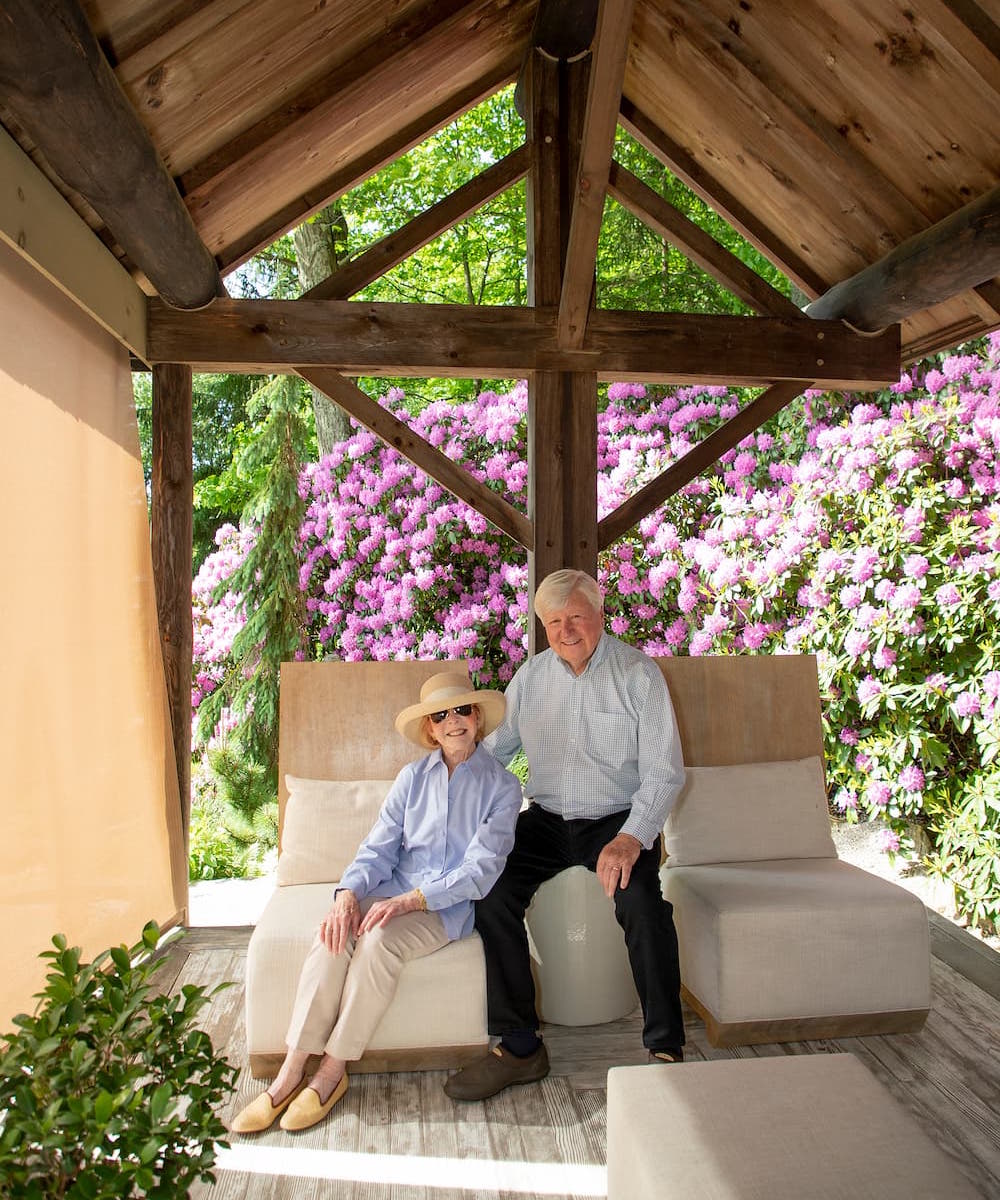
It wasn’t until he retired in 2013 that Levine saw the opportunity to truly embrace his fascination for the physical expression of Japanese culture in his Roxbury domain.

By Tovah Martin

People have many reasons for planting a garden. For Robert Levine, the goal was nothing less than enlightenment.

Rana Faure

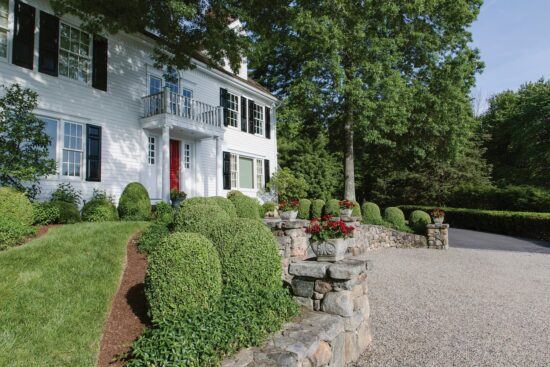
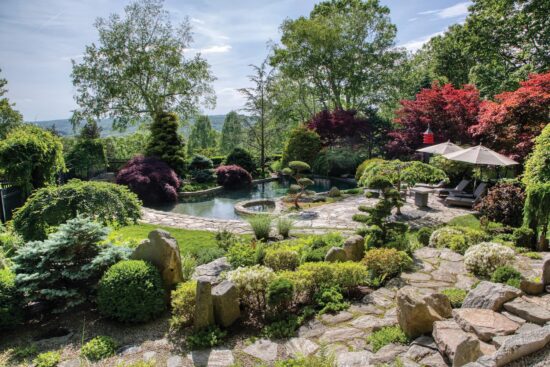
Robert Levine traces the roots of his Japanese garden back to martial arts. Long before 1986 when he bought his 32-acre Roxbury property with wife Abby, Levine was practicing kung fu, karate, and other martial arts that served as a physical outlet from law school and ultimately legal practice. Granted, he needed a way to let off steam. But really, it was the spiritual connections forged while studying Eastern disciplines that really captivated his inner psyche. 

Rana Faure
Rana Faure

It wasn’t until he retired in 2013 that Levine saw the opportunity to truly embrace his fascination for the physical expression of Japanese culture in his Roxbury domain. He was eating sushi with friend/designer Chris Zaima when they sprouted the idea of creating a Japanese/American garden on his land. Previously, the Levines had installed a handsome pool with plantings flowing around it; they provided immediate maturity and a pithy basis for the plans that Levine and Zaima were dreaming up. “It was the realization of his lifetime,” Zaima recalls of the extended project. As they embarked on the new leg of the journey, Zaima had the design sense and the cultural connections, Levine had the strong spiritual goals, and they added Eugene Reelick of Hollandia Nurseries to the configuration for his horticultural/botanical insights. Together, they were going to turn a landscape into an awakening. 

Rana Faure

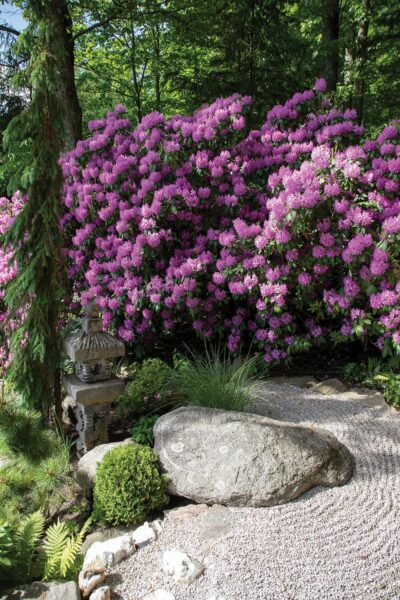
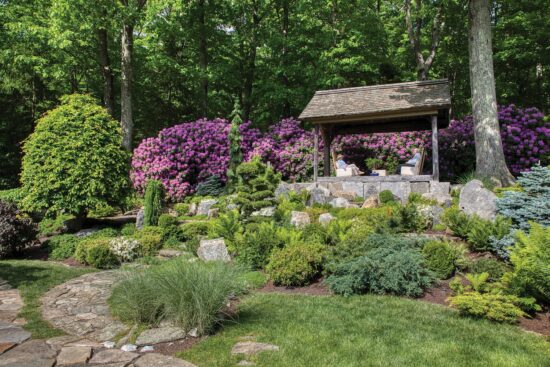
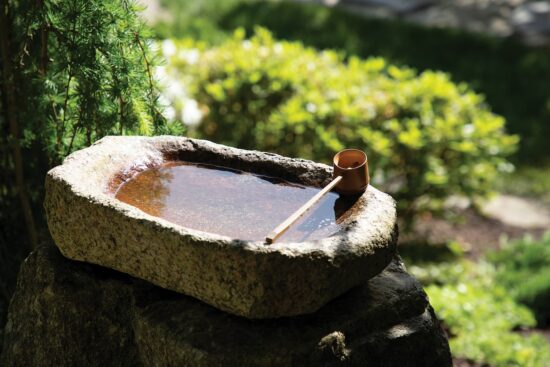
The plan finally came into fruition in 2017 with tons of stone. Above the pool, a ledge of mature 30-year-old rhododendrons formed a backdrop. Zaima united the ledge, a retaining wall, and a pavilion. Then, they proceeded with the extremely focused and carefully positioned placement of stone that is the basis for Buddhist gardens. “Stones capture tranquility,” explains Levine, “boulders symbolize mountains and rugged shorelines. They give perspective. Raked stone represents rippling water and clouds. Together, they tie together and enhance the experience; and they create the illusion of a miniaturized world.” The meticulously placed boulders guide everything from the syncopation of movement around the garden to the delivery of revelations. “You wander the garden with eyes cast down on the stone pathways until you come to a juncture where you stop and behold the aha! moment,” Levine explains. Placing those stones was a focused discipline. “There is nothing haphazard about it,” Levine explains. Similarly, the garden’s rhythm flows. Waterfalls direct water from east to west, plantings swirl in a clockwise motion to channel energy in a course that says “sanctuary.” And it all layers together to whisper symbiosis. 

Rana Faure

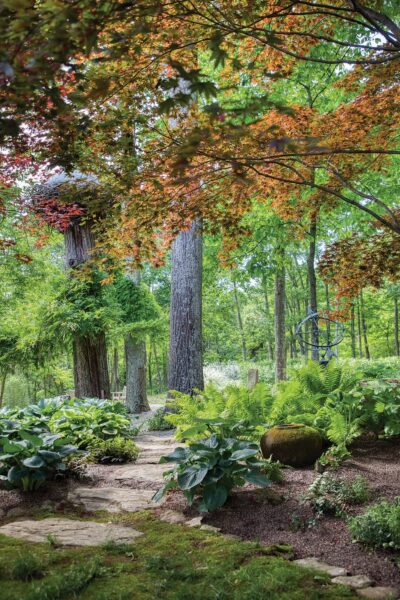
Every plant was carefully selected. Zaima layered shapes together; he balanced symbolism in spaces such as the orchard where a dozen trees represent the 12 months of the year. Rooms open into further rooms. Simultaneously, the color palette is based on greens, but also punctuated by flowering shrubs like azaleas, Japanese maples, rhododendrons, and dogwoods to create seasonal accents. “It has to be balanced,” explains Levine, “it has to have the proper palette but also the right form and texture. The dialogue is unified in harmony.” However, they never strove for perfection, “We want slight asymmetry,” Levine explains. “There is no material perfection; nothing is permanent.” That said, his garden is always a haven. 

Rana Faure

Has the garden worked its magic? Absolutely. “I go there to meditate. I am centered in the garden and it frees my mind for clarity,” Levine says. Whether he is in the pavilion, overlooking the scene with its waterfalls and free-form dragon stone sculpture, or nestled into one of the many benches in varying rooms, the garden is a path toward deeper submersion. Robert Levine summarizes the experience into three succinct words, “It resonates within.”

Rana Faure

Excitingly, Robert Levine’s garden has been chosen as one of the featured segments in the new PBS series “GardenFit.”

Rana Faure

Garden Experts Share Their Dirty Little Secrets

Five well known garden experts in Litchfield County share their favorite gardening tools.

By Tovah Martin

Michael Trapp:
Legendary antiques collector/interior & garden designer Michael Trapp would never describe his gardening trajectory as an uphill battle, but he definitely had a steep learning curve when he decided to landscape around his West Cornwall shop 30 plus years ago. His not-so-secret solution was to terrace the space, using the excavated topsoil while leveling off to enrich his planting beds. The result was so totally romantic and intriguing, he has become a proponent for multi-leveled landscapes, “An elevation change is so much more intriguing.” Plus, his garden is well-drained and full of micro-climates. What types of plants thrive? Bulbs love it. And he avoids botanical drama queens. “If they are sensitive, they die,” he shrugs, “leaving more space for something else.”

Favorite Tool: A long-handled four-pronged hoe similar to the tool his grandfather wielded. “It dispatches weeds in far corners,” says Trapp who invariably gardens barefoot (but that’s just between you and me).


Linda Allard:
It’s no secret that Linda Allard, the famed fashionista, has an affinity for vegetable gardening. A massive walled vegetable/herb garden pumps out the produce beside her Washington home. Long ago, she began incorporating flowers between her veggies. Her secret to success with interplanting is to give both vegetables and flowers plenty of room by spacing her beds between pathways for easy harvest. Hungry veggies like tomatoes and onions are given bountiful space. And fast crops such as Asian greens, lettuces, spinach, and arugula are replanted after harvesting.

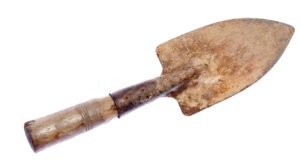
Favorite Tool: Not only does Linda Allard have a prodigious basket collection, she always stashes a trowel (“Any old trowel”) ready for action in her back pocket.


George Schoellkopf:
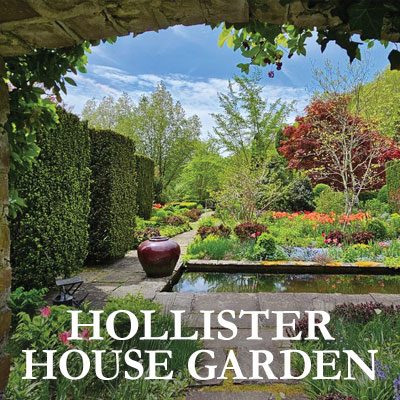
Like many other Litchfield County properties, George Schoellkopf is marshalling a generous chunk of land at Hollister House Garden, his 25-acre masterpiece open to the public at regular intervals throughout the growing season. His secret in the war against weeds? He enlists his own army of “weeds” and lets them thug it out. “It’s the economic way to deal with a large garden,” is his theory. He’s particularly fond of self-seeders such as Verbena bonariensis and Perilla frutescens. “Some gardeners don’t share my love of shiso,” he admits, “and they call it perilla gorilla.” He even welcomes the athletic spreading comfrey (Symphytum azureum) because it wrestles “the vicious goutweed” and wins. 

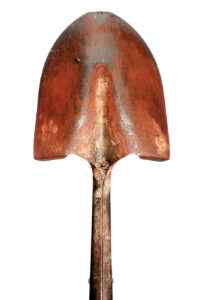
Favorite Tool: George Schoellkopf has stringent rules for his “go to” shovel and no wooden handles are allowed. “My shovel handle doesn’t break.”


Page Dickey:
Page Dickey needs less than a nanosecond to think up a secret she is dying to share. For the past six years, the famed gardener/author (her latest book is Uprooted: A Gardener Reflects on Beginning Again) has been digging deep into Church House, the Falls Village landscape shared with husband Bosco Schell. Dickey enlists bulbs in her conspiracy to extend the garden season. Cunningly, she incorporates bulbs into perennial beds rather than delegating those early risers into separate spaces. She places splashes of scillas, snowdrops, early alliums (like Allium moly), Colchicum vernum, dwarf narcissus, fritillarias, and species tulips to rush around before the shrubs leaf out. Snowdrops are a particular favorite, “They multiply in the most satisfying way,” she advises. “Place them especially along your pathways where you’ll pass often.” 

Favorite Tool: A hand cultivator with flexible tines. “It’s like an extension of my hand all summer long,” she says of her super weeder.


Bosco Schell:
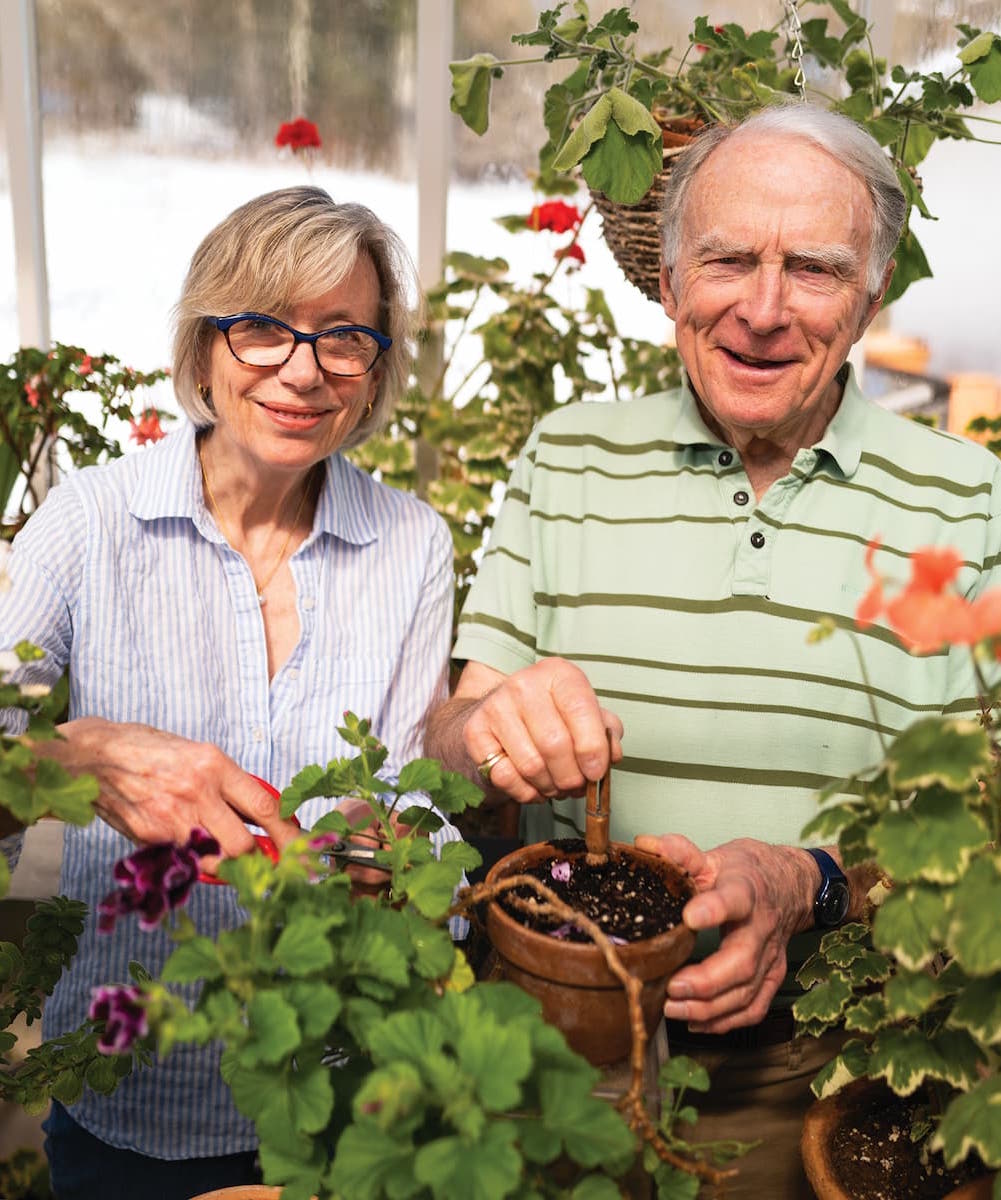
Writer and fellow garden luminary Bosco Schell is the other personality behind Church House in Falls Village. Potted plants are his favorite domain and they dwell in a greenhouse (aka “his playpen”) over the winter and then take up positions outdoors when danger of frost is no longer an issue. Bosco dabbles in everything from pelargoniums to succulents, but begonias are his babies. His secret flies against the rules for keeping them salubrious. “Rhizomatous begonias need more water than I was led to believe,” he explains. With more water, his begonias are amazing. “And everything goes out for summer camp,” he says. The succulents are staged in the sun, begonias go under the canopy of an apple tree.

Favorite Tool: To expedite repotting, Bosco wields an old dinner knife to run around the pot edges and liberate the roots. Then he uses dinner spoons to insert the potting soil around the root ball. And finally, an old-fashioned clothespin with a rounded head is leveraged to firm the soil in the new container. 


Litchfield Hills Nursery, Kent Greenhouse and Gardens, and Cortina Gardens have a comprehensive supply of garden tools.

Making the Cut

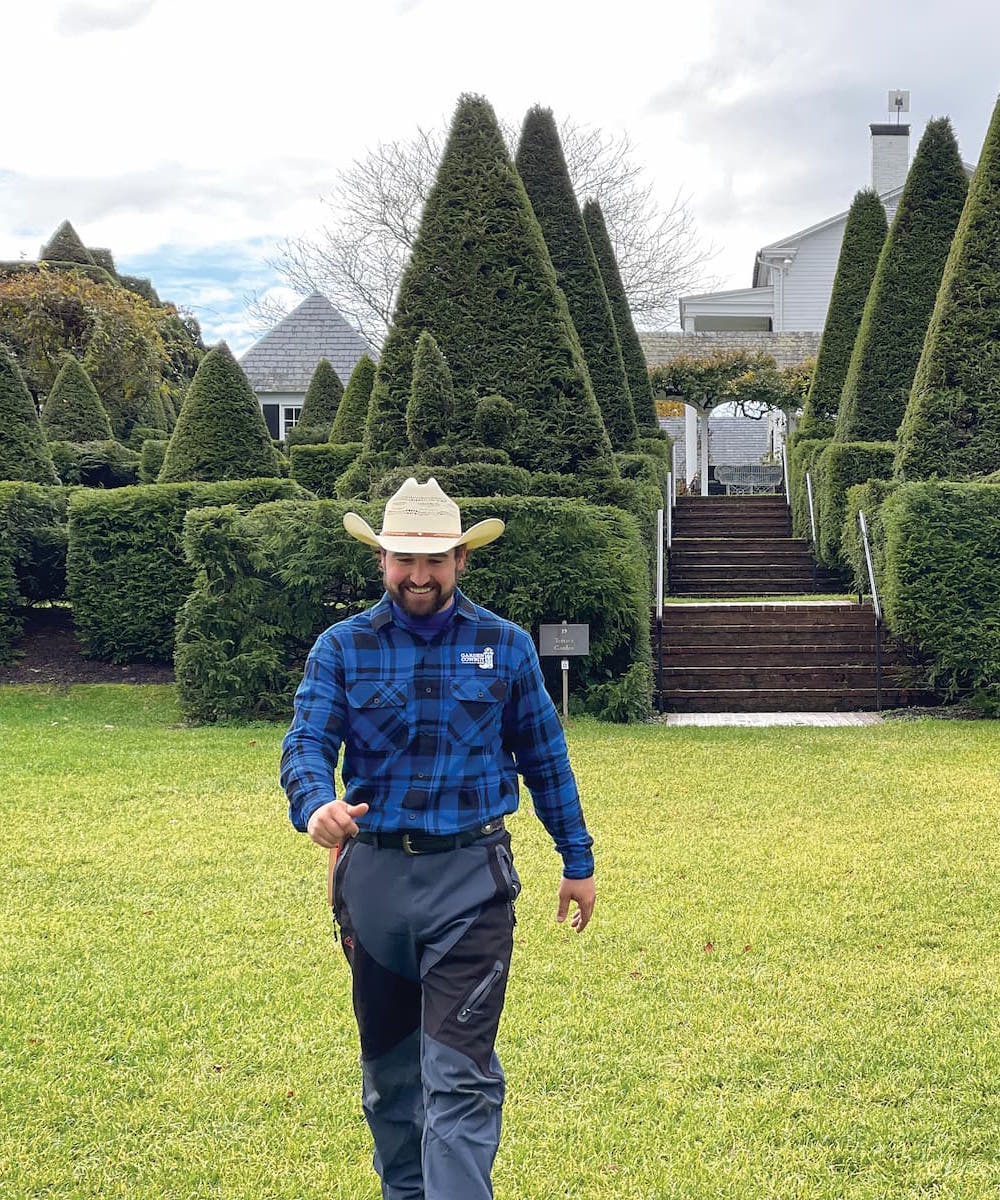
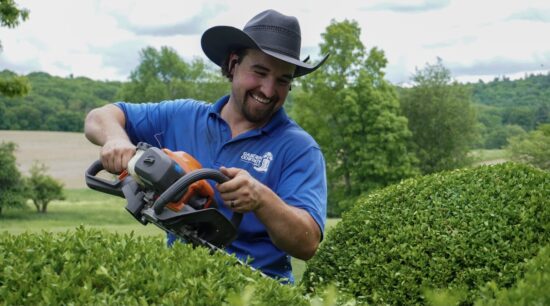
Ed Pequignot Jr., owner of Garden Cowboy Landscaping Services in Kent began transforming local gardens years ago.

By Clementina Verge

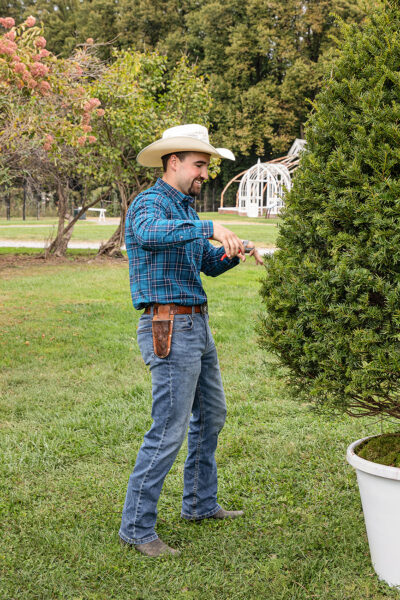
Born and raised in Kent, Ed Pequignot Jr. began transforming local gardens years ago, but the owner of Garden Cowboy Landscaping Services is now garnering widespread recognition after appearing last year on HGTV’s “Clipped.” 

Filmed at Lyndhurst Mansion in Tarrytown, NY, the six-episode show challenged seven landscape artists from across the United States to meticulously groom shrubbery and flowers into ornamental shapes, including animals and functional sod “furniture.”

At 30, Pequignot was the youngest to compete in the design showdown for a panel of judges headed by Martha Stewart. He finished fifth and still remembers the surprise of having been found via Instagram and given an opportunity he’d never imagined.

“It allowed me to see that the sky’s the limit,” he reminisces. “It was such a great experience, and truly a blast and a blessing.” 

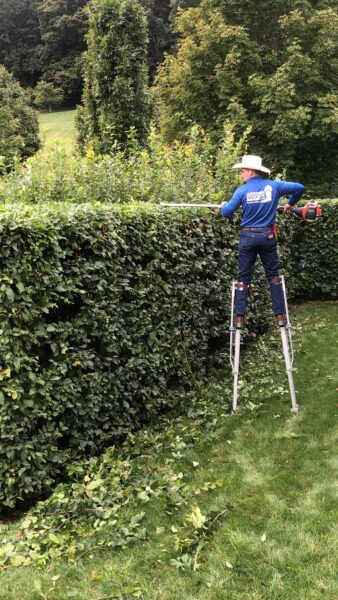
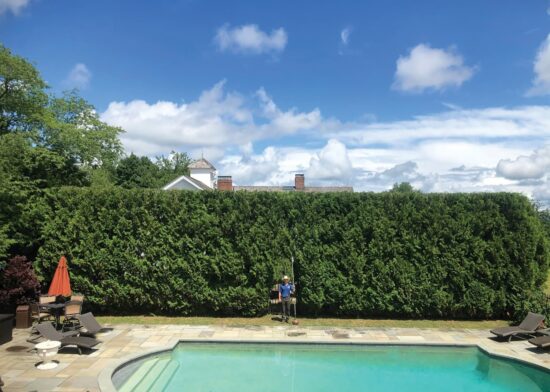
The exposure showcased the formal hedges and topiary art that have become a personal brand. From Florida to Maine, his work adorns properties along the Eastern seaboard and beyond—including Naumkeag in the Berkshires—but the journey to success was not easy.

A little more than a decade ago, horticulture was not in Pequignot’s plans. A standout athlete at The Frederick Gunn School, he was recruited on a scholarship by UMass Amherst. His baseball dreams, however, were halted by an injury that ended his sports and academic career during freshman year. He returned home, where at 19, he traded the baseball cap for a cowboy hat, a nod to his grandfather who helped raise him on a Kent homestead.

Affectionately nicknamed “Cowboy,” he apprenticed on the former Oscar de la Renta estate in Kent, where learning under an English topiary master intensified his passion for the art and motivated him to self-teach about more than 100,000 plants. Four years ago, with the unwavering support of parents, grandparents, and his wife Angelica, he launched his own business. The increased success, he says, is thanks in great part to his dedicated team.

“The guys who work for me are my family,” he acknowledges. “Without them, none of this is possible.”

Interested in formal English gardens and inspired by legendary places such as the Palace of Versailles, he was drawn to boxwoods—their beauty, challenges, and legacy. They, in particular, are difficult to work with because they are prone to disease, slow growing, and expensive, he explains. But their versatility—imagine towering hornbeam pillars or boxwood clouds carpeting a courtyard—and longevity make the reward great. 

“Everything I work with is alive and I appreciate the challenge,” notes Pequignot. “It requires precision and knowledge because one wrong cut, and the plant dies, but the happiness on my clients’ faces and seeing the transformation of what I planted 10-12 years ago is amazing. It’s changing art.”

“We have such a short time in this world to make a difference,” he reflects. “My designs will outlive me. To have my name associated with 1800s estates or the Kent Town Green means a lot. It’s not about personal pride. It’s about passing on knowledge, inspiring the next legacy, and helping the earth.”

Michael Trapp’s Elevated Gardens

Anyone who lives in or has traveled through Litchfield County and seeks the unusual and unique knows of Michael Trapp.

Michael Trapp Creates a Lush Green Treasure

By Joseph Montebello

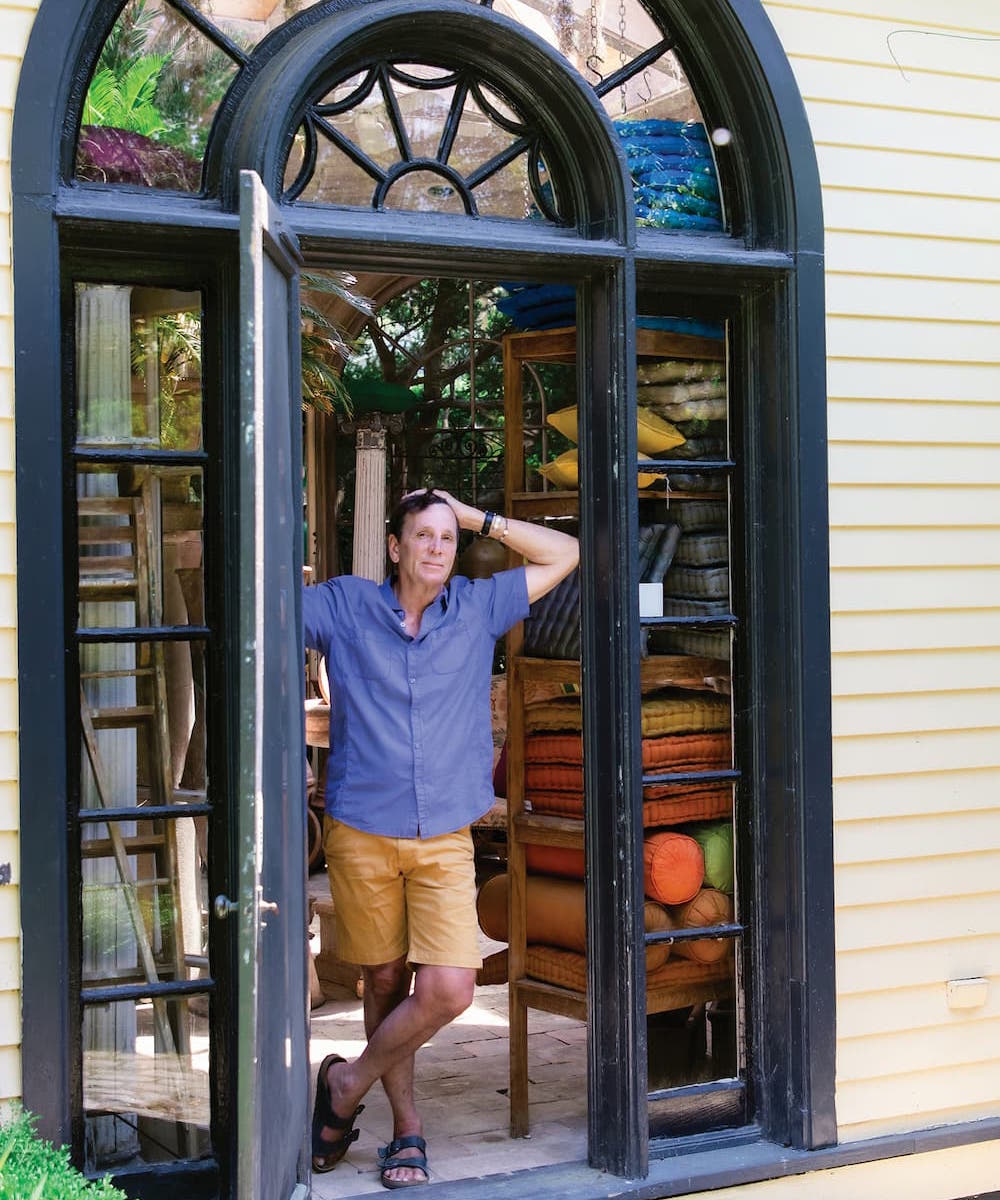
Anyone who lives in or has traveled through Litchfield County and seeks the unusual and unique knows of Michael Trapp. The treasures he collects and sells in his West Cornwall shop and the gardens and interiors he designs are in a class by themselves. His ability to juxtapose old with new, antique with modern is his secret artistic weapon. Whether it be a patch of land or a room, his goal is always to focus on the offbeat.

Trapp did not grow up anticipating he would become a designer. He was born in Maine but since his father was a professor of logistics for the Air Force, he spent much of his childhood in Spain and France. His mother was a collector and he learned from her the value of a particular piece and developed the knack for finding one-of-a-kind objects and pieces of furniture. 

Rana Faure

“My parents were gardeners and they felt that children were a good labor force. I never took art classes, but I did study landscape architecture. My landscape business came from people seeing my garden around the shop and wanting me to make one for them.”

Over 25 years ago Trapp discovered West Cornwall while visiting friends who were house hunting. “They had looked at this property and decided it was too small for them,” explains Trapp, “but they convinced me to buy so I did and made my home upstairs and opened a shop.”

Rachel Robshaw

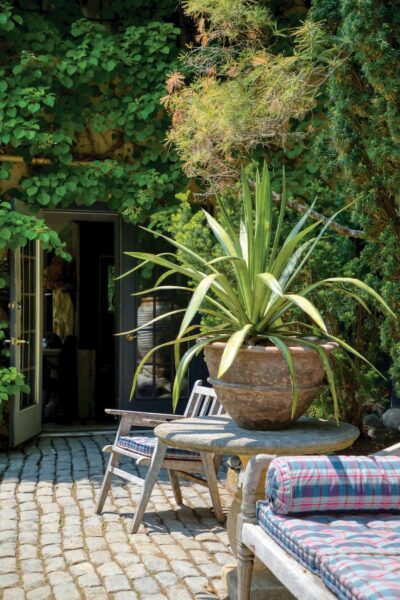
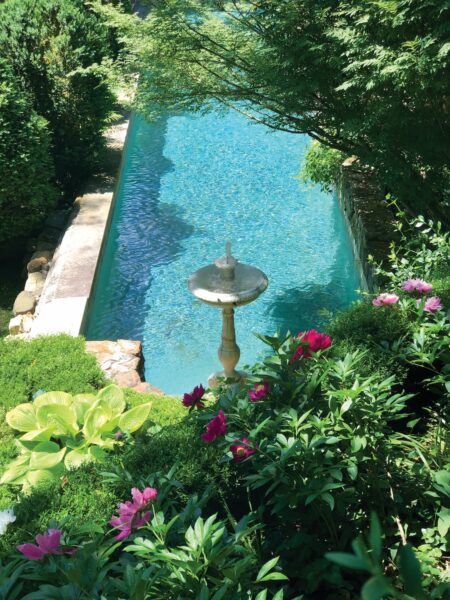
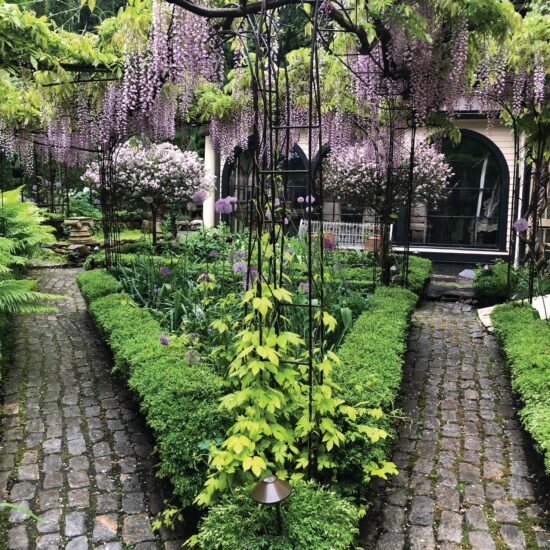
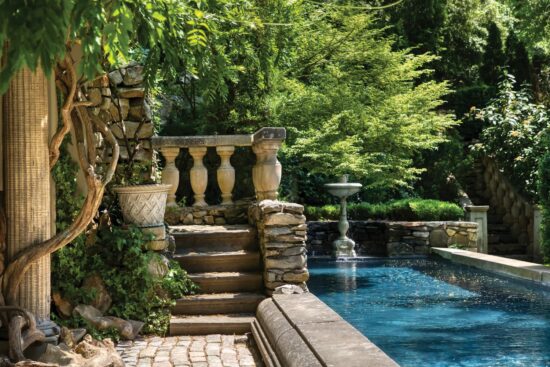
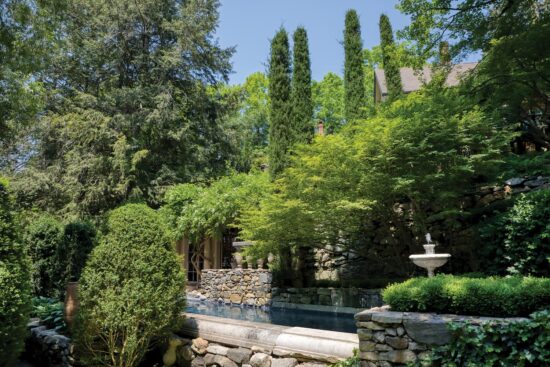
The shop, of course, is one aspect of the story, but the gardens have brought the property to a whole other dimension. Perched on a hillside overlooking the Housatonic River, they have been described as distinctly Italian, European, Mediterranean, and Old World rolled into one. There is definitely a medieval flair to the setting. Strolling the gardens along the cobble pavers one encounters pieces Trapp has salvaged and turned into works of art: concrete balustrades, fractured pillars, antiques urns, and, of course, the plantings themselves. Ah, and the surprise of discovering a spectacular 10 x 60 lap pool with limestone coping tucked away between perfectly curated shrubs and a blooming wisteria. 

Rachel Robshaw

There was no garden on the property when Trapp purchased it and while it is less than ¾ of an acre, it encompasses most of the property. He drew no plans, but simply followed his instincts and filled the area with perennials (there are some annuals in various pots). Over the years many plants have grown and matured; while some have done well, others have disappeared.

Rana Faure

“Gardens are alive, things grow and thrive, others die,” says Trapp. “That is what a garden is—it is never the same year to year but that is what I like about it. I don’t add plants often, but I rely heavily on self-seeding. It makes weeding a challenge but the results are rewarding.”

Rana Faure

While his own gardens are free of formal layouts, Trapp will sometimes do rough sketches for clients but there are no formal CAD (Computer Aided Design) drawings. On most projects he is given free reign to make all plant choices.

Even though Trapp designs both indoor and outdoor spaces he does not favor one over the other.

“Both are about balance, proportion, and texture. I enjoy both as long as it is interesting work, but I end up doing more landscape design because it is easier to manage.”

Rana Faure

In either case, he continues to explore new horizons through his travels and is able to translate his visions into reality for both himself and his clients.

Washington Supply Company Under New Ownership

Washington Supply Company is under new ownership following a seamless transition, so it’s business as usual at this community staple.

Washington Supply Company: ‘It’s not a family-run business, but we’re like a family here’

By Linda Tuccio-Koonz

Washington Supply Company is under new ownership following a seamless transition, so it’s business as usual at this community staple, which has been going strong since 1893.

“We just want to continue the success the former owners have had,” says Jason Liebnitzky, of Trade Supply Group, the Manhattan-based partnership that took over in June. “Part of the allure was how it’s very customer-focused.”

The store sells everything people need to build and maintain a home. Employees know their customers, many of them personally, he says. “The current team has been so successful. We’re looking to stay with that.”

That team includes former co-owner Valerie Sedelnick of New Milford, who’s retiring this spring after 34 years. “It’s not a family-run business, but we’re like a family here,” she says.  

Sedelnick and four co-workers assumed ownership of Washington Supply Company in 2006. “Two retired and that left three of us. We stuck together.” 

Now that she and Jim Bate, of Cornwall, are at retirement age, they’re stepping down. (Jay Combs, formerly of Torrington, now of Arizona, already retired.) 

Sedelnick and Bate say their relationships with employees, vendors, and customers are what they’ll miss most. “We’ve had so much community support over the years. It’s just a wonderful feeling,” Bate says.

Trade Supply Group owns and operates eight building material businesses in New York, New Jersey, and Connecticut. Liebnitzky says Washington Supply Company is a “very well-run, well-managed operation.”

Phone Booth Project: Ever Changing Art

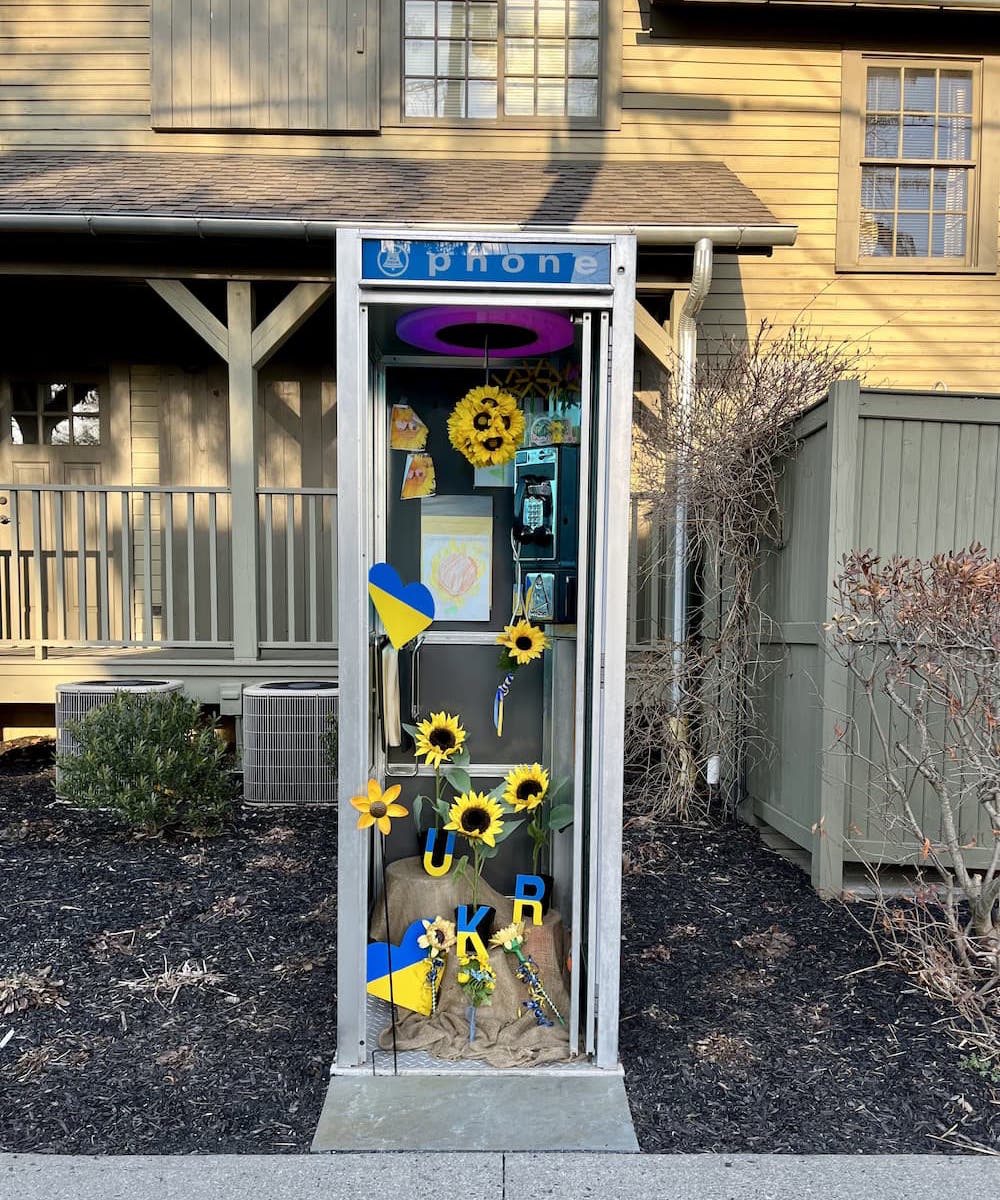
Artist Cass Hancock has begun an art installation in New Milford called the Phone Booth Project.

Artist Cass Hancock has begun an art installation in New Milford called the Phone Booth Project. He has taken an old phone booth and installed it at 29 West St. in New Milford. The installations change however, right now the theme is Supporting Ukraine. Cass invites anyone to stop by the phone booth and to leave a sunflower to share with other visitors. Take a photo and spread our support for Ukraine.

Current Issue
March / April 2026
Our Kind of Healthy
The Health & Wellness Issue
Subscribe Now
.
  • STAY IN THE KNOW

    Your weekly guide to can't-miss events, hidden gems, and local favorites in Litchfield County. Sign up now for curated things to do, eat, and explore—delivered every week. It’s free. It’s local. It’s essential.

  • Karen Raines Davis