
Your guide to the heart of Litchfield County:
Discover local stories, hidden gems, and must-know events.

It’s Not Too Late

When COVID refugees artist Alexis Rockman and his wife, writer Dorothy Spears, first encountered what would become their new home in Warren, they were drawn to several features of the property.

Artist Alexis Rockman Portrays Our Impact on the Environment

By KK Kozik

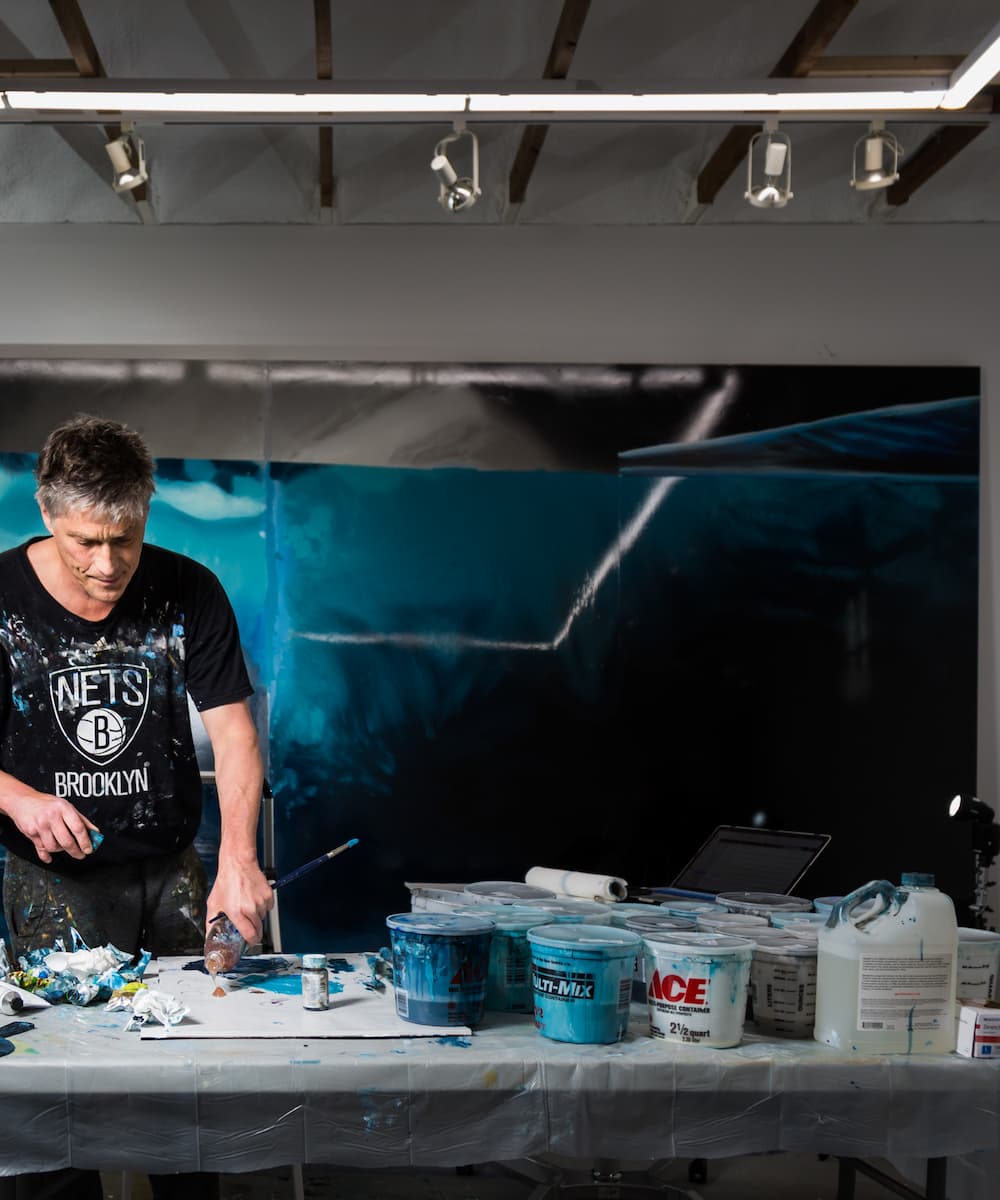
When COVID refugees artist Alexis Rockman and his wife, writer Dorothy Spears, first encountered what would become their new home in Warren, they were drawn to several features of the property: a covered bridge spanning a stream between the house and outbuildings, and a garage that with moderate renovations could become a studio just large enough to accommodate Rockman’s newest commission, Oceanus, an 8-by-24-foot painting destined for the Mystic Seaport Museum, where it, accompanied by ten large-scale watercolors, will be permanently installed. 

For Oceanus, Rockman, whose single-minded artistic focus has become the deleterious impact of humankind on the environment, was tasked by curator Christina Connett Brophy to take as his starting point the museum itself. A “living museum,” MSM has dedicated its resources to illuminating all facets of man’s historical relationship with the seas, from early vessels and industries through contemporary issues including invasions by some marine species and extinctions of others, human migration and slavery, and crises of climate change.

This is not the first time Rockman has embarked on a project of this scope. While he concentrated in the 80s and 90s on easel-sized paintings, as the emergent nature of climate change entered public consciousness, Rockman arose as one of the premier artists tackling environmental issues, and his scale expanded to epic. He has completed eight paintings of this size, including one for the Smithsonian.

Oceanus is painted in oil and cold wax on linked Dibond segments (an aluminum composite material) that will be disassembled in his studio and reunited in situ. Stylistically it occupies a unique niche. Across its high horizon’s gentle swell sails a timeline flotilla of watercraft (16 painted from models in the MSM collection) that from left to right describe the progress of man on water from canoes through container ships. Below the surface, what Rockman depicts is less benign. Amid the trenches and vents dappled with light, occur a coral reef on the cusp of collapse, seafloor mining, and whale skeletons. This apocalyptic vision describes humanity’s end game with the earth’s oceans. It’s not pretty.

Marine biologist and National Geographic Explorer-in-Residence Sylvie A. Earle asserts in an essay for this project that Rockman’s gift “is seeing what others do not, then artfully sharing the view, skillfully enabling others to feel, understand, and care about what columns of numbers, clever charts, words, and even photographs cannot convey. The message is clear. The ocean is alive and it is in trouble, and therefore, so are we.” 

But while the format of this centerpiece painting is somewhat didactic, Rockman’s ocean depths have a mysterious and terrible beauty. Paint—alternately dense and transparent—equates to ocean, enabling the piece to transcend fact-based illustration. Oceanus, as Rockman describes, “synthesizes aspects of multiple pictorial genres that aren’t often seen together: visceral, Ab Ex–like intuitive painting; poured paint; maritime genre ship painting; and natural history illustration.” Oceanus’s message is dire and acute yet its beauty is somehow redemptive. It is not too late, writes Earle, “to find an enduring place for ourselves within the natural systems that sustain us.”
Courtesy of Mystic Seaport

A Welcome Hand – Affordable Housing

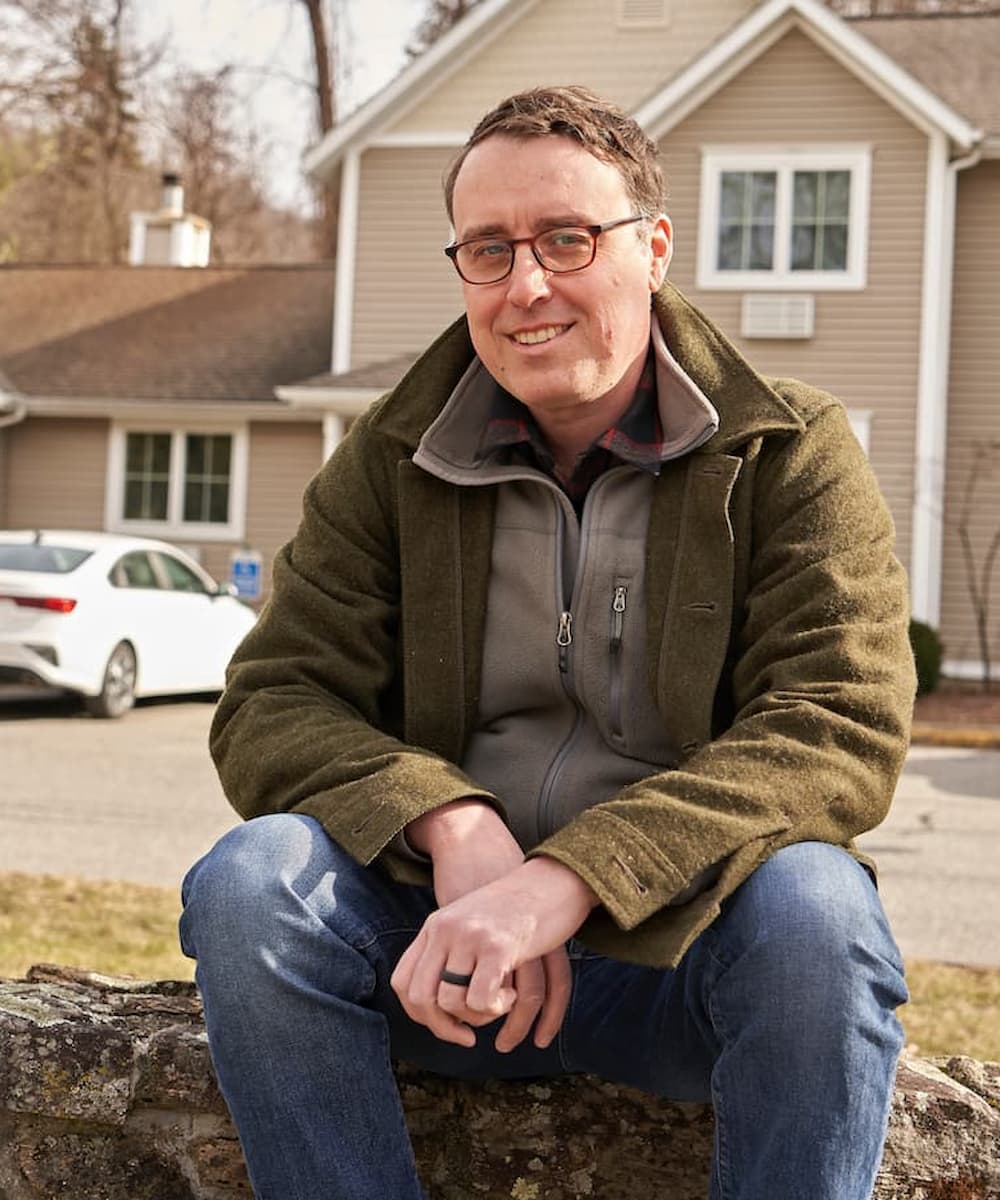
Justin Potter is home in Kent with his wife, Claire. The father of two, who grew up on a Washington dairy farm and married his high school sweetheart, is hunkered down at his desk.

Litchfield County Residents Come Together on Affordable Housing

By Linda Tuccio-Koonz

Justin Potter is home in Kent with his wife, Claire. The father of two, who grew up on a Washington dairy farm and married his high school sweetheart, is hunkered down at his desk.

“I spent all morning writing thank-you notes, and still have a long way to go,” says the president of Kent Affordable Housing (KAH), responding to donations that poured into the organization.

Since KAH is dedicated to developing, sustaining, and advocating for affordable housing, Potter is delighted to have such a task.

It’s a reminder that people are coming together—not just in Kent, but throughout Litchfield County—to provide affordable housing in a not-so-affordable area. 

“Even before the pandemic, finding a place that was affordable on a Litchfield County wage or salary was challenging, and now the situation is much worse,” Potter says, noting that Kent’s Volunteer Fire Department has lost several firefighters because of rent increases.

Teachers, healthcare and restaurant workers have also struggled with Litchfield County’s housing prices, not to mention young folks who grew up here and want to stay. Some share their stories in the documentary, Housing Our Neighbors, from the Falls Village Community Development Corporation. 

Eloquently explaining the housing crisis—while highlighting some towns addressing it—the film itself is an example of how residents are rallying.

And Jennifer Kronholm Clark is among those who are grateful. “My husband James and I met in Salisbury, married in Salisbury, and are raising our children in Salisbury,” she says. Without the support of the Salisbury Housing Trust, the couple “would never have been able to purchase a home in the town where we put down roots.” 

She and her husband volunteer on several local boards. “After benefiting so much from the support of our community, we are pleased to be able to give back and to help others.”
Potter says, “People across the spectrum are realizing this (need for affordable housing) is an issue, and are taking action ranging from joining their local affordable housing organization, to simply not objecting to zoning changes that will allow more housing when they might have in the past.”
The state is also insisting on action through a law that requires every town to prepare a housing plan every five years. Jocelyn Ayer, director of the Litchfield County Center for Housing Opportunity (LCCHO), is helping. 

“Almost every town in Litchfield County, including Litchfield, has gone through the process,” she says, naming places from Roxbury and Washington to Winchester and Torrington.

“Residents in each town got together on a steering committee that I helped facilitate to create a plan to meet their residents’ affordable housing needs.” And the needs are substantial: more than 1,000 Litchfield County households are on a waiting list.

Ayer says most of the nonprofit housing organizations are all volunteer, and have been doing terrific work. LCCHO assists by providing a shared project management staff, so they can work faster to get more units—either newly built, or renovated—up and running.

Another positive development is that several towns, including Cornwall and Falls Village, are devoting some of their American Rescue Plan Act (ARPA) funds to projects involving property purchases, renovations, and maintenance of affordable rentals.

Litchfield and Morris each devoted a little over $100,000 to purchase properties, too, she says. “Towns are really stepping up.”

Also, the Salisbury Housing Committee recently received a $100,000 grant from a private family foundation to address housing needs. 

And then there’s people such as Jim Dresser, “who donated land that’s literally in his backyard for the development of affordable housing” in Salisbury.

“Obviously, not everyone has the ability to do that, but he’s an amazing example of somebody who really stepped up,” Ayer says. “He saw the need. Now we’re working to develop housing on that site.”


Vernal Pools in Litchfield County

It’s easy to let the beauty of the Litchfield hills solely provide the backdrop for our lives. But do you ever wander in, and wonder what you’re looking at? If your timing is right, one natural treasure is an aquatic formation called a vernal pool.

By Brandee Coleman Gilmore

It’s easy to let the beauty of the Litchfield hills solely provide the backdrop for our lives. But do you ever wander in, and wonder what you’re looking at? If your timing is right, one natural treasure is an aquatic formation called a vernal pool. Vernal, from Latin ver for ‘spring,’ implies precisely when they crop up. Fed by snowmelt, rain, and groundwater, they’re typically smaller and shallower than ponds, according to Cynthia Rabinowitz, Executive Director of CT’s Northwest Conservation District. Just a few feet deep at most, she says these special pools have one other defining characteristic—they’re teeming with the budding lives of certain amphibians. These ‘obligate species’ include wood frogs, spotted salamanders, and the elusive fairy shrimp, according to local soil and wetlands scientist Edward Pawlak. By April, vernal pools support glob-like rafts of their eggs, nestled together resembling submerged bubble wrap. Vernal pools don’t support predator species, so once hatched, the tadpoles and newts can mostly metamorph without threat. However, they do race against time reaching adulthood before the pond dries up in midsummer. They then fan out to seek habitat in the upland woods, typically returning to the same vernal pool to reproduce the following spring. If you come across one of these delicate gems, the experts urge looking, but not touching vernal pools to prevent wildlife injury and contamination.

Art of It

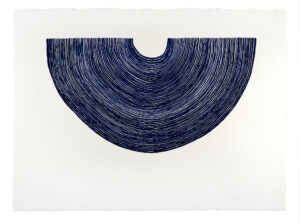
The paintings, drawings, and collages that make up Fritz Horstman’s current exhibition at Jennifer Terzian Gallery (March 25 – April 29) depict his long-running theme of U-shaped valleys. In a smaller space at the back of the gallery he returns to the Folded Cyanotypes that made up his first exhibition with Terzian.

The paintings, drawings, and collages that make up Fritz Horstman’s current exhibition at Jennifer Terzian Gallery (March 25 – April 29) depict his long-running theme of U-shaped valleys. In a smaller space at the back of the gallery he returns to the Folded Cyanotypes that made up his first exhibition with Terzian. Horstman’s interest in the formal element of the U-shaped valley stems from his study of glaciers in the arctic and of the glacially formed landscape of New England—a valley formed by a glacier will typically have a U-shaped profile, whereas a river will form a V-shaped valley. A material exploration of a form, using color, texture, and line to create images of unexpected depth, the work elegantly conflates the layers of culture and geology. Horstman’s craft and process draw connections between the landscapes we inhabit and the materials with which we surround ourselves. Based in Bethany, CT, Horstman has shown his work in recent exhibitions across Europe and the U.S. Concurrent with his solo exhibition with Jennifer Terzian Gallery is a solo exhibition at Municipal Bonds in San Francisco. He is also Education Director at the Josef and Anni Albers Foundation.

 Jennifer Terzian Gallery, 3BB South Street, Litchfield, jenniferterziangallery.com

Husky Meadows Farm in Norfolk

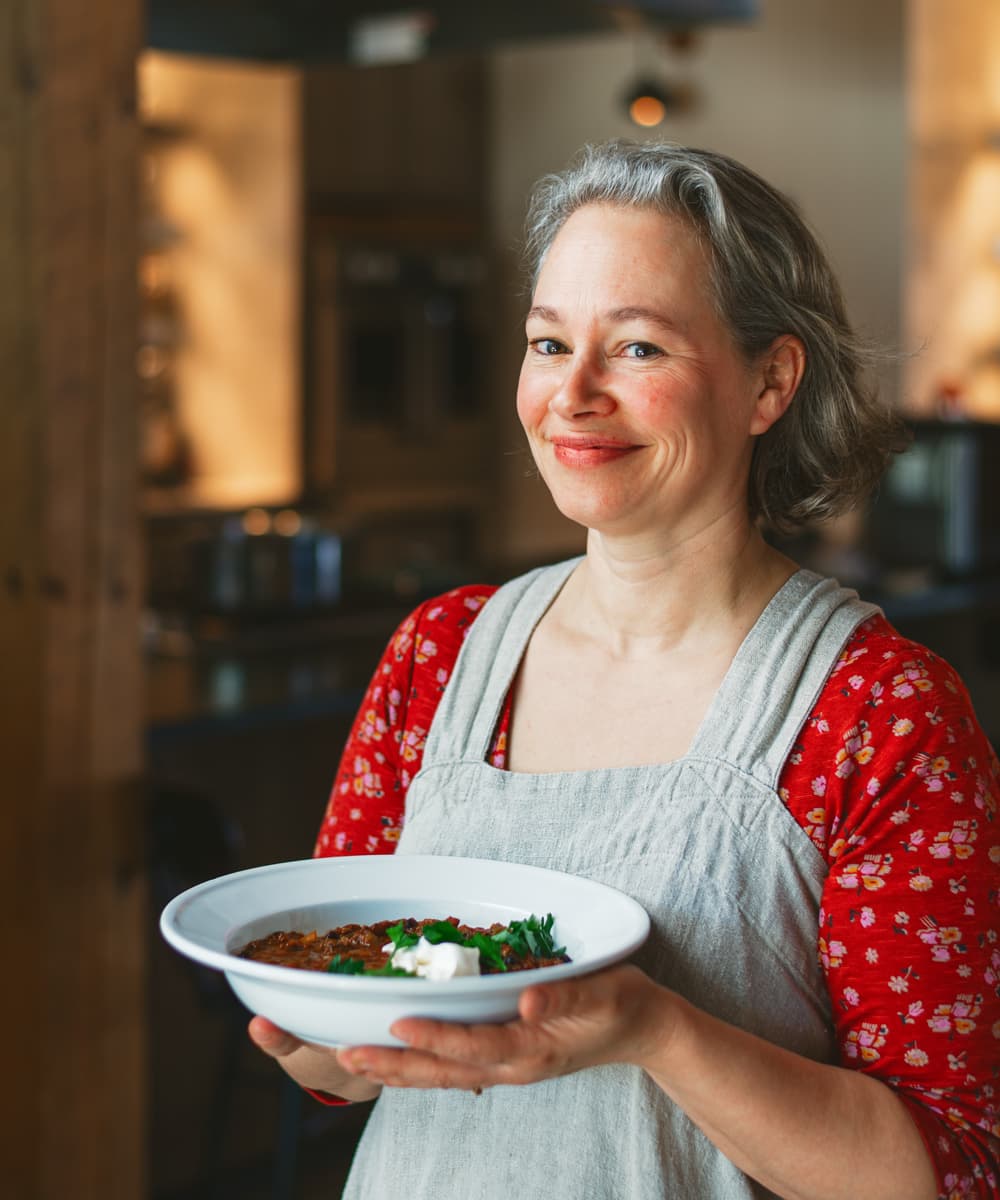
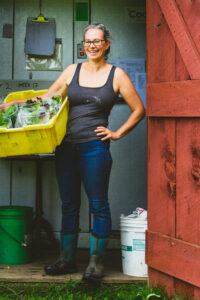
Back when Tracy Hayhurst was working on her own farm, she would often pause to admire a particularly striking blue sky or take pleasure in the basket of fresh vegetables she had just harvested. “How many people get to have this kind of experience?” she pondered.

By Wendy Carlson

Winter Caplanson

Back when Tracy Hayhurst was working on her own farm, she would often pause to admire a particularly striking blue sky or take pleasure in the basket of fresh vegetables she had just harvested. “How many people get to have this kind of experience?” she pondered. 

Winter Caplanson

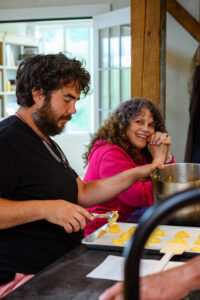
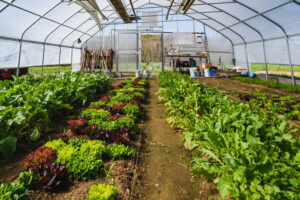
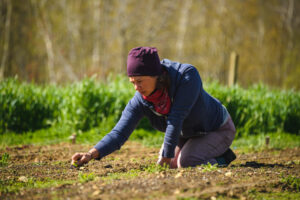
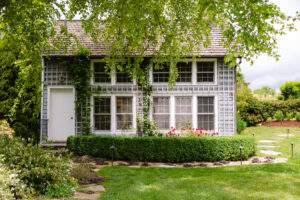
So, after she became the culinary director at Husky Meadows Farm in Norfolk, she started Seed and Spoon, a program of weekend farm stays and food events that are based on seasonally and locally grown ingredients. Visitors to Husky Meadows take a deep dive into sustainable agriculture by learning about native plants, harvesting organic vegetables and herbs from the farm’s two-acre garden, and using them to prepare imaginative dinners. It’s hardly the life of a hardscrabble farmer. At the end of the day, guests unwind in one of the farm’s five well-appointed suites, one of which is a renovated chicken coop.

Winter Caplanson
Winter Caplanson

The owners of Husky Meadows, David Low and Dominique Lahaussois, bought the 300-acre former dairy farm 30 years ago and named it after the breed of their dogs. But a few years back they began transforming the land into a center for sustainability and a diversified organic farm. In 2015, the farm began selling its certified organic vegetables and prepared foods at farmers markets and soon started a CSA (Community Supported Agriculture). Seed and Spoon was not only a natural progression, but a way to tap into the growing market of culinary tourism.

Winter Caplanson

“We conceptualized this program as a way to involve people from near and far into the whole picture of what we do here,” says Hayhurust. “So it’s growing vegetables, working in the garden, harvesting, and then enjoying the fruits of our labor at dinner.” 

Winter Caplanson
Winter Caplanson

The farm welcomes up to ten guests for two nights lodgings, special evening suppers, cooking demonstrations, and excursions. On a visit to the farm one weekend, several farm guests who spent their Saturday afternoon hiking up nearby Haystack Mountain State Park had gathered in the kitchen, with food they harvested from the garden earlier that day. Before dinner, they gathered in the communal living area, where wine writer and sommelier Terry Theise hosted a wine tasting of German and Austrian Rieslings.

Winter Caplanson
Winter Caplanson

Theise’s wife, Odessa Piper, founder of L’Etoile, who pioneered one of the first farm-to-table restaurants in Madison, Wisconsin, shared her culinary knowledge as she prepped. Dinner, served family style around an antique pine table, began with a salad of young goat cheese and husk cherries rolled in anise hyssop, then moved next to a roast farm chicken, a roasted squash “jewel box” filled with colorful autumn produce from the garden, and onward to dessert: roasted heirloom apples baked in phyllo purse with creme fraiche.

Winter Caplanson

Beyond learning about native plants and harvesting, guests are encouraged to immerse themselves in nature. About 100 varieties of herbs and vegetables grow in the farm’s garden, and there is an extensive wild flower field, and hiking trails throughout the property. Special day events like mushroom foraging or a presentation on regenerative farming draw local visitors as well. One thing for sure, anyone visiting should come with an appetite and a pair of Wellies.

Winter Caplanson

White Flower Farm Blossoms Under Son’s Leadership

Life has come full circle for Eliot Wadsworth. As a child he lived on the property of White Flower Farm, a family-owned nursery in Morris.

By Pamela Brown

Life has come full circle for Eliot Wadsworth. As a child he lived on the property of White Flower Farm, a family-owned nursery in Morris. As owner, he continues that legacy. “I’ve been around the company my whole life. When I was small, I enjoyed exploring the nursery, checking out who lived in the ponds, catching butterflies, and running around outside,” says Wadsworth who appreciates seeing generations of families visit. 

White Flower Farm was established in the 1930s by William Harris and Jane Grant whose hobby evolved into a business, and by the early 50s a thriving mail-order catalog that introduced the latest hybrids from Europe, Japan, and elsewhere. “My dad was an entrepreneurial sort of guy, and at the time was looking for a business to run and an enterprise to make his own. He came across White Flower Farm and over time built a relationship with Mr. Harris and had an apprenticeship,” explains Wadsworth. After Grant’s passing, Wadsworth’s dad purchased the business in 1976.

Since then, the farm has added greenhouses, display gardens, and a retail shop. “I’m proud of what my dad built,” says Wadsworth of his father, also named Eliot, who is 80 years old and keeps his hand in the business. “He spends the summers in Connecticut so he’s walking the nursery and poking his head in greenhouses and keeping an eye on things the same as he ever did.”

Wadsworth likes giving visitors a memorable experience. “People who may have been getting the catalog or are familiar with the farm get a kick out of seeing the place. I’m happy to hear people say, ‘I remember the nursery’ or ‘I remember the catalog on my mom’s coffee table.’ It’s nice to be in the kind of business that people can have an emotional attachment to.”

Visiting the nursery is an annual tradition for Jacob Studenroth and his family. “My Nana Gladys and Papa Zane made the annual trip to White Flower Farm to purchase heirloom bulbs for my grandmother’s garden,” explains Studenroth, owner of The Wise Old Dog in Morris. “My family would make a day trip of it, too, in the old station wagon and drive North from Long Island for a special picnic near the benchmark nursery and visit with Nana and Papa.” Years later, Studenroth rediscovered it. “The time spent on property at White Flower Farm inspires and delights. When I visit now with my young children and wife, I wander about seeing not only the beauty that is but the beauty that can be back at our house. It’s relaxing and exciting to be there, and of course, very nostalgic,” he says. 

Spring is peak time for flowers and Wadsworth notes there will be interesting new varieties in their spring line up. You’ll find Celosias, Didiscus, Ptilotus ‘Matilda,’ and a number of new Zinnias. Among perennials, White Flower will be featuring new Daylilies, Hosta, Geranium, Primula, Liatris, and more. 

“We hope visitors learn something, see an unfamiliar plant, and come away feeling empowered and excited to experiment at home,” says Wadsworth. “Even if things don’t work out quite well or it’s not exactly what you planned, just keep planting.” 

167 Litchfield Road, Morris, whiteflowerfarm.com

Conversations with Jou-Yie Chou

Jou-Yie Chou shares some of his favorite things about the northwest corner.

By Jou-Yie Chou

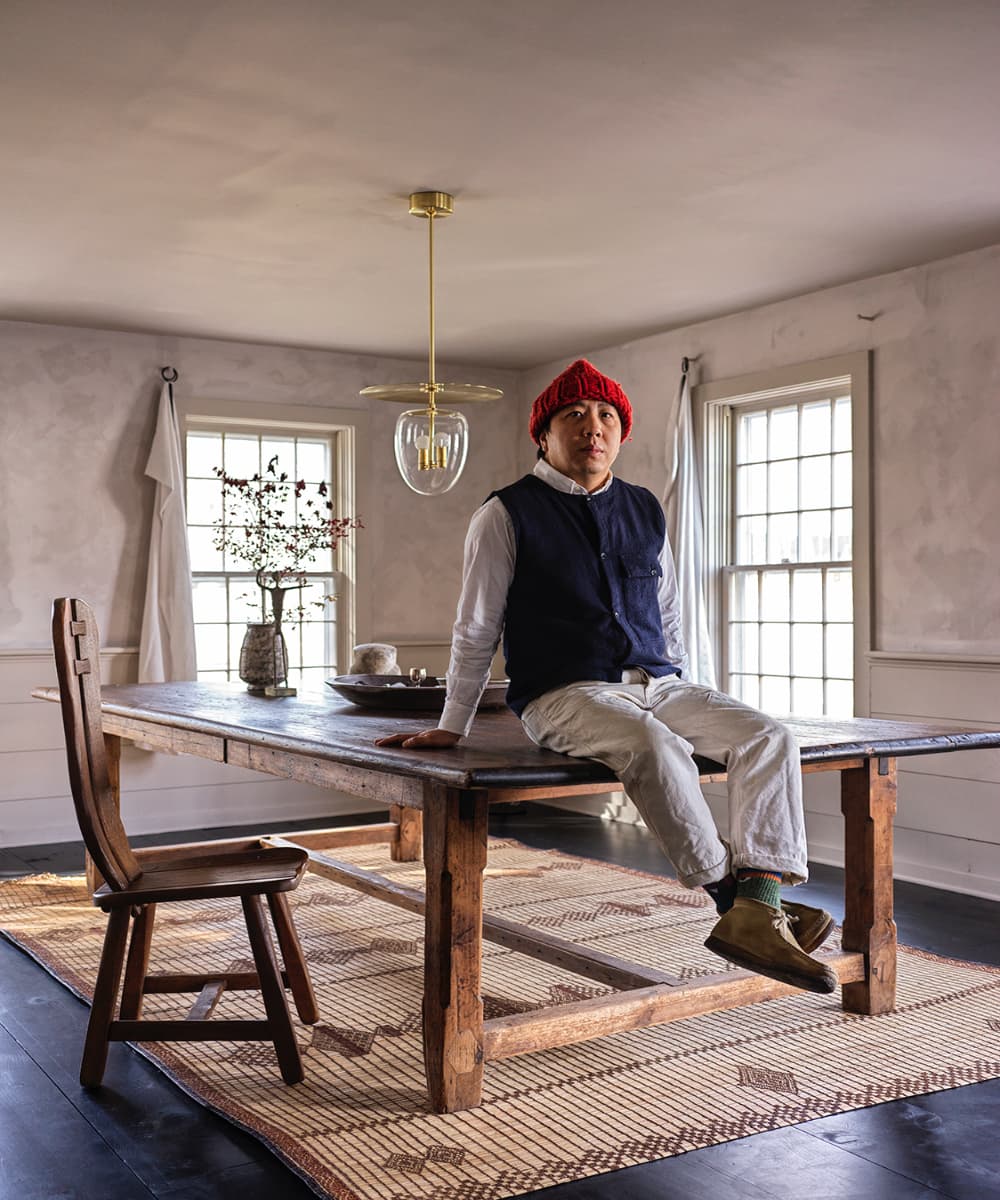
Jou-Yie Chou, a founding partner of Post Company, an award-winning design firm based in New York City and Jackson, WY, behind notable hotels such as Inness, The Lake House on Canandaigua and Scribner’s, (and now with a showroom in Lakeville), shares some of his favorite things about the northwest corner.

I was fortunate enough to grow up in bucolic and idyllic New Canaan, Connecticut, but this northwest corner of the state just hits different. Like many newcomers to the area, we (my wife Bentley and two children, ages 7 and 3) fled here from Brooklyn during the summer of 2020, seeking respite and space during those early months of COVID. We came to Lakeville a bit naively, knowing very little about the town beyond its great elementary school and with just a few friends in Millerton and Ancramdale. We have quickly fallen in love with the community and the area’s natural beauty. As a kid, we used to ski in the Berkshires on occasion, but it’s from living here the past couple of years that I’ve really begun to explore the incredible nature here in earnest. 

We have been amazed by how vibrant the design community here is and decided to be a part of it by opening our own showroom in Lakeville to showcase our growing line of Post Company furniture and lighting, as well as our perspective on interior design. Many folks know us more for our hospitality work, but we’ve been quietly growing our residential practice for a few years now. With so many beautiful homes in the area, it made a lot of sense to ‘open up shop.’

Coming upstate for years on weekends, we always thought that when we found our place upstate, it would be in a setting of serene isolation with acreage and long vistas of rolling hills. We find ourselves living in the village in Lakeville, and have fallen in love with its livability, convenience, and walkability. We bike as a family to the Town Grove where kids splash and swim and eat ice cream, take Palmer, our 11-year-old dog on long walks on the rail trail and Dark Hollow, have weekly dinners with our neighbors on Pettee Street, while the kids run around on the field at Cannon Park, all without the need to get in our cars. There’s something very special about life here that reminds me of the salad days of my youth and the innocence of it all. We feel extremely fortunate to have stumbled across this secret pocket of Connecticut. Even though it’s a haul from New York, we feel a weight lift the moment we drive over the hill on Sharon Road at Long Pond Road, down into Lakeville. 

For Nature: We have two young kids, so we keep hikes short and sweet. Our favorite would have to be Lion’s Head from the top of Bunker Hill Road. 

For Dining: Our friend Noah Bernamoff just opened Little Cat Lodge this past fall at Catamount (in a space designed by another friend, Loren Daye). They’ve got excellent drinks, Black Seed Bagels during weekend brunch, and a great apres-ski scene, and are kid friendly.

For Wine: We’ve come from the city and brought our penchant for natural wines with us. We frequent Great Barrington to get a taste of some ‘city’ life and like to stop by our friend David Bruno’s new wine shop, Depart, at the top of Railroad Street. It features a beautifully edited selection of natural wines, as well as non-alcoholic spirits.

For Antiquing: Being an interior designer, I’m always poking around antique shops for fun. Our go-tos in the area are Montage in Millerton, as well as their new annex in Salisbury, and Black Squirrel Antiques. If you’re looking for some great deals on stoneware, they’ve got them.

For Locally Made Tableware: Jane Herold in West Cornwall is a must visit. She considers herself the ‘village potter,’ but her wares are world class. She’s been turning beautiful pieces out of our studio for decades. If you’re in Litchfield, Dumais Made is also not to be missed for their ceramic creations.

Reader’s Choice 2023 Winners

Best of Litchfield County Reader’s Choice Results 2023

Readers voted for their favorite things about Litchfield County in a wide variety of categories for our annual 2023 Reader’s Choice Contest in this Best of Litchfield County issue. The results feature people and businesses in various industries—including food, health and wellness, apparel and accessories, home and design, education, spa and beauty, and many more! We are excited to share with you the top three choices in each category—not to mention, some of  the local businesses that make Litchfield County the amazing place it is.

Click HERE to view the 2023 results.

Home Court Advantage 

Hard Work Benefits Everyone

Hard Work Benefits Everyone

By Clementina Verge

Whether they are passionate about tennis, basketball, or pickleball—currently, the fastest-growing sport in the United States—Classic Turf makes sure its clients have home court advantage. 

With decades of industry experience, the award-winning Woodbury company’s reputation has been “building the world’s most durable and longest-lasting tennis and basketball courts, running tracks, and multi-sport facilities.”

The legacy began in 1980 with one question: “How can we do this better?” The inquisitive mind was Tumer H. Eren, who emigrated from Turkey in the 1970s and was working at a small ski and racquet club in northwestern Connecticut. There, winter responsibilities related to skiing reflected his personal Olympic-level abilities in the sport. In the summer, he maintained tennis courts in need of constant repair, leading to frustration and the desire to find a more efficient, longer-lasting solution. 

Like many American Dream stories, after much grit, creativity, and effort, Tumer founded Classic Turf Company. Based on Classic Turf’s patented new systems, it was one of the first businesses in the New England area to use post-tension concrete technology and end the asphalt base application.

Along with his son John, company vice president, and daughter-in-law Kate, director of finance, Tumer helped set industry quality standards with one of the first companies to offer a 20-year structural guaranteean incredible feat given New England’s seasonal shifts. Today, Classic Turf exclusively installs courts and tracks using post-tension concrete, replacing rusted rebar with fiberglass rebar. 

The second-generation owned family builds courts for a wide range of clients, including schools, municipalities, and an increase in residential properties, especially during the recent Covid-19 pandemic. Though their work has taken them far beyond Connecticut borders, from Bermuda to Florida and Montreal, Litchfield County is home.

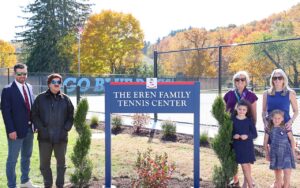
Raised in the Woodbury area, John attended local schools, including Rumsey Hall School in Washington Depot, to which the family recently gifted four new tennis courts, appropriately named “The Eren Family Tennis Center.” 

“It is a place that shaped my husband, a school that our daughters now attend, and it is important for us to give back,” notes Kate. 

Industry-recognized and the winner of many awards, including the Award of Excellence from the Post-Tensioning Institute, the company credits its success to the durability of the courts. At 76, Tumer’s days still begin early, as he ponders ongoing enhancementsfrom faster build times, to greater affordability for clients, and sustainable material use.

Having inherited his father’s work ethic, John likewise strives for continuous professional development. Following a degree in engineering from Northeastern, he went on to earn his MBA. John is a certified post-tension installer from the Post-Tensioning Institute (PTI); as well as a certified tennis court and certified track builder by the American Sport Builders Association (ASBA). 

“There is no question that my father is my inspiration, influence, and mentor,” reflects John. “He created something out of nothing: he seized an opportunity to start our business and truly lives Classic Turf’s fundamental core values of partnership, education, and innovation each and every day.” 

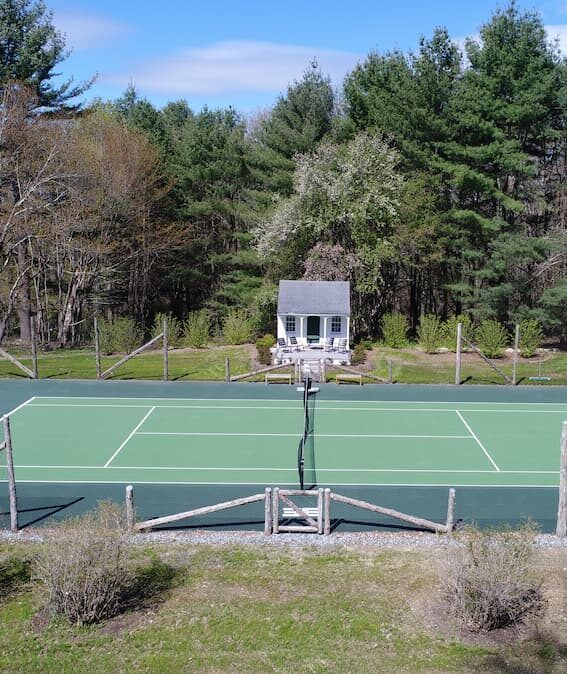
The satisfaction comes from knowing that their expertise and dedication have helped countless individuals to stay active and healthy while enjoying games they love, making memories, and enjoying products that are aesthetically-pleasing, property value-enhancing, and highly customizablesuch as a state-of-the-art tennis court recently built on a Washington estate. From windscreens, to court lighting, creative fence design and personalized monograms and colors, the products are as beautiful as they are lasting.

“What we deliver for families, organizations, and communities is the result of this commitment to excellenceand we pour our expertise, sweat, and skill into every project,” assures Tumer. “We do this because we know we’re building more than courts and tracks. We are building an experience. Our constant aim is to build lasting, safe, and stunning courts and tracks that bring people together, nurture talent, and create memories.” —classicturf.org 

Coming Full Circle

Goshen Native Takes Local to a Whole New Level in Norfolk 

Goshen Native Takes Local to a Whole New Level in Norfolk 

By Hannah Van Sickle 

Ryan Craig’s very first job, secured on the eve of his 15th birthday, was steeped in serendipity. After transferring from the regional public high school, where he was falling through the cracks, Craig enrolled at Marvelwood School; most mornings, on the daily drive from Goshen to Kent, he and his parents stopped at the original Berkshire Country Store in West Cornwall. “It became our spot,” says Craig who was drawn to the jovial guy behind the counter. One day a help wanted sign appeared in the window which ultimately opened a door for Craig. After five years spent serving coffee, making deli sandwiches and running the cash register—plus a decade spent in the corporate world gleaning customer service and communication skills—Craig returned to his roots and revived the very establishment where he cemented his retail footing.

Jim Henkens

“Building that foundation didn’t happen overnight,” Craig recalls, citing the gift of time and energy the previous owners took to shape him from a punk kid into a small business owner. 

Five years into the venture, Craig and his team aspire to make living in Norfolk—pronounced Nor-fork by a majority of his customers, a colloquialism that ultimately gave rise to a line of hats, t-shirts, and bumper stickers Craig is using to brand his business—a bit more enjoyable and convenient than it would be without the Berkshire Country Store.

Jim Henkens

“Norfolk is very much trending toward a seasonal town,” says Craig, citing breakfast to-go (plus house-baked cinnamon rolls and donuts) as a big draw among working class locals and tradespeople whose support keeps the lights on. In an effort to serve as a one-stop shop for weekenders’ local needs, Craig stocks an impressive array of regional goods including fair-trade, certified organic coffee (both brewed and bagged) from Coffee-Tea-Etc. in Goshen; Mead’s maple syrup from Canaan; Peter Sadlon’s local honey from Salisbury; and a wide array of local meat—including heritage pork and chicken, pastured lamb, grass-fed beef plus sausage and duck from Tory Hill Marketplace in Lakeville and Birdseye and Tanner Brooks Farm in West Cornwall. Felted wool mittens (lined with cashmere) are handmade in Colebrook and Rolling Rock Farm in Sheffield, Mass. created and bottled a unique-to-the-northwest-corner product: Norfolk ice sea salt which pays homage to the town’s nickname, “The IceBox of Connecticut.” 

Jim Henkens

Craig, now on the brink of 40, continues to fine tune his model: to provide a gathering place for locals and a welcoming stop for out-of-town visitors. He was initially recruited by the town’s Economic Development Commission and the Norfolk Foundation—which operates the adjacent Norfolk Hub (a central co-working space for nonprofit and community members)—remains his landlord. 

“These types of businesses are not inherently profitable,” Craig says, admitting that he mows a few lawns and offers small-business consulting on the side to make ends meet; still, he’s fueled by a commitment to his community and keeps finding creative ways to stay afloat. He recently found a vintage velvet sofa online (a perfect match for the pair of orange upholstered rockers inherited from a great aunt) and a welcoming lounge, complete with electric fireplace and free wi-fi, making the 3,200 square-foot space feel cozy for winter. 

Craig continues to be fueled by passion over profit. “We try to be a little bit of everything for everybody, which the market has made very challenging, but we’re out here trying.”

Current Issue
March / April 2026
Our Kind of Healthy
The Health & Wellness Issue
Subscribe Now
.
  • STAY IN THE KNOW

    Your weekly guide to can't-miss events, hidden gems, and local favorites in Litchfield County. Sign up now for curated things to do, eat, and explore—delivered every week. It’s free. It’s local. It’s essential.

  • Karen Raines Davis