Your guide to the heart of Litchfield County:
Discover local stories, hidden gems, and must-know events.

A Taste for Ukraine at Good News Restaurant

Renowned chef and owner of Good News Restaurant and Bar in Woodbury, Carole (Pidhorodecky) Peck is raising money for Ukraine. 

By Mary Beth Lawlor

Renowned chef and owner of Good News Restaurant and Bar in Woodbury, Carole (Pidhorodecky) Peck is raising money for Ukraine. 

In 1907 all of Peck’s grandparents immigrated to the U.S. from Ukraine, leaving their families behind for a new and “hopefully” free life in America. Which, thankfully, they found. She was raised as a Ukie kid, all holidays were celebrated with the traditional food and by going to Ukrainian church. In the summers they would vacation at a Ukrainian resort in the Catskills. At age 16 she and her parents visited their relatives in Ukraine, where it was quite a life awakening experience for her. Now, feeling helpless, Peck is offering an additional traditional Ukrainian menu at Good News Restaurant and Bar to raise money for World Central Kitchen and their refugee relief efforts. Peck invites her guests to savor these special offerings.

The additional Ukrainian menu will continue to change but as of this writing, a sampling of the menu includes a spring salad made of cucumbers, radishes, scallions, and walnuts, on a watercress bed with sour cream vinaigrette; handmade pierogies; seabass covered in a mixed mushroom sauce and parsnips puree; Ukrainian Apple Cake (Yabluchnyk) with whipped cream and brown sugar syrup.

New Milford’s Booming Bank Street

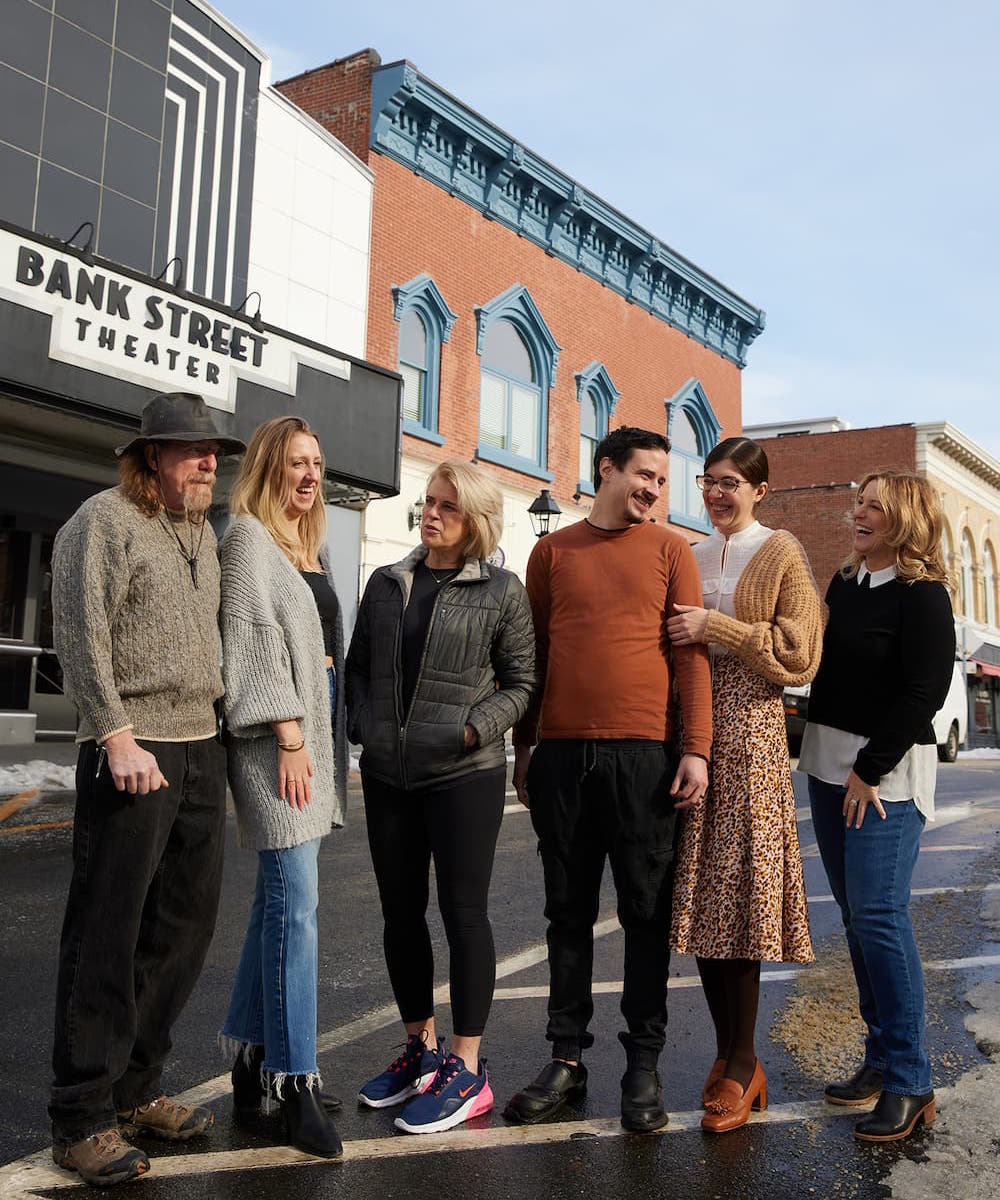
In New Milford, multiple new shops have opened, complementing old favorites and giving the charming downtown a fresh, fun feel.

Eclectic new shops create fresh, fun feel in town

By Linda Tuccio-Koonz

If you haven’t been to the heart of New Milford recently, you’re in for a surprise. “It’s wonderful, I’ve never seen anything like it,” says Karen Ross, owner of Joe’s Salon, a Bank Street staple for 40 years.

Multiple new shops have opened, complementing old favorites and giving the charming downtown a fresh, fun feel. “There’s been so much turnover,” Ross says. 

“The people coming in now are more thoughtful about what they’re doing and how they present their businesses. They’re spending time and money to make each space look special and welcoming.”

Lifestyle/gift boutiques such as Compass Road Collection and The Safari Collective feature everything from candles and home decor to jewelry crafted by local artisans. Another addition, The Hunt, offers a curated selection of vintage and new items from clothing to cookware.

Around the corner on Main Street, BD Provisions sells bulk foods from cereal to candy (plus spices, teas, nuts, and more) by the pound.

“This spot was vacant for over a decade,” says owner Jen Clark. “People said, ‘Oh, you’re so brave to open during a pandemic,’ but we thought it was a good fit for the community, and it’s been a real hit.”

Ryan Lavine

Zero—or low-waste packaging is used, including free compostable or biodegradable bags. Fill your own jars, if you prefer. Disposable gloves are provided, to wear when scooping from containers. 

“When the world shut down because of the pandemic, people realized the importance of community,” Clark says. “The awareness of hygiene and the importance of keeping everyone safe helped us.”

Ethnic restaurants, like Momma’s Tacos on Church Street near Village Center for the Arts (VCA), are also part of this eclectic mix. Sharon Kaufman, director of VCA’s pottery studio, says the change in town is a visible one.

So how did it happen? A population shift is part of it, Kaufman says. “There are people trying to get out of the metropolitan squeeze and move somewhere safer; New Milford is on their radar.”

Shops catering to this new population are making the downtown “feel more like a destination,” she says. “The shops are a little more open-minded and forward-thinking. There’s a juice bar which I don’t think in the past could have survived. Even our pottery studio has gone insane with business.” 

Although some vacant storefronts remain, several sport signs about what’s moving in. “We’re getting a cheese and charcuterie shop (Bleu on Bank),” Ross says. Also coming: Café 1840, a gourmet café and chocolate shop. “Now, it’s like ‘Let’s go down and see what’s happening.’ There’s so much more available. The shopping experience is there. It’s a destination now.” 

That means more foot traffic near old favorites like Bank Street Theater, which weathered the pandemic with a reduced schedule, screening classics/older movies when new options (like the Spider-Man smash, No Way Home) weren’t available. “We’ll stay open to remain an integral part of the downtown,” says Meredith Cleary, president of The Bank Street Group, which owns the cinema.

Ross still remembers when Adam Sandler’s film company lined Bank Street with red Corvettes for the filming of his 2002 comedy, Mr. Deeds. “People came for appointments to have their hair done just to get a peek.”

The recent influx of new stores and restaurants during the challenges of the pandemic is even more exciting than that Corvette takeover, she says. “That people have the stamina to do this is such an optimistic choice. I love them for doing it because I feel like that—optimistic.”

Great Mountain Forest’s Weather Service

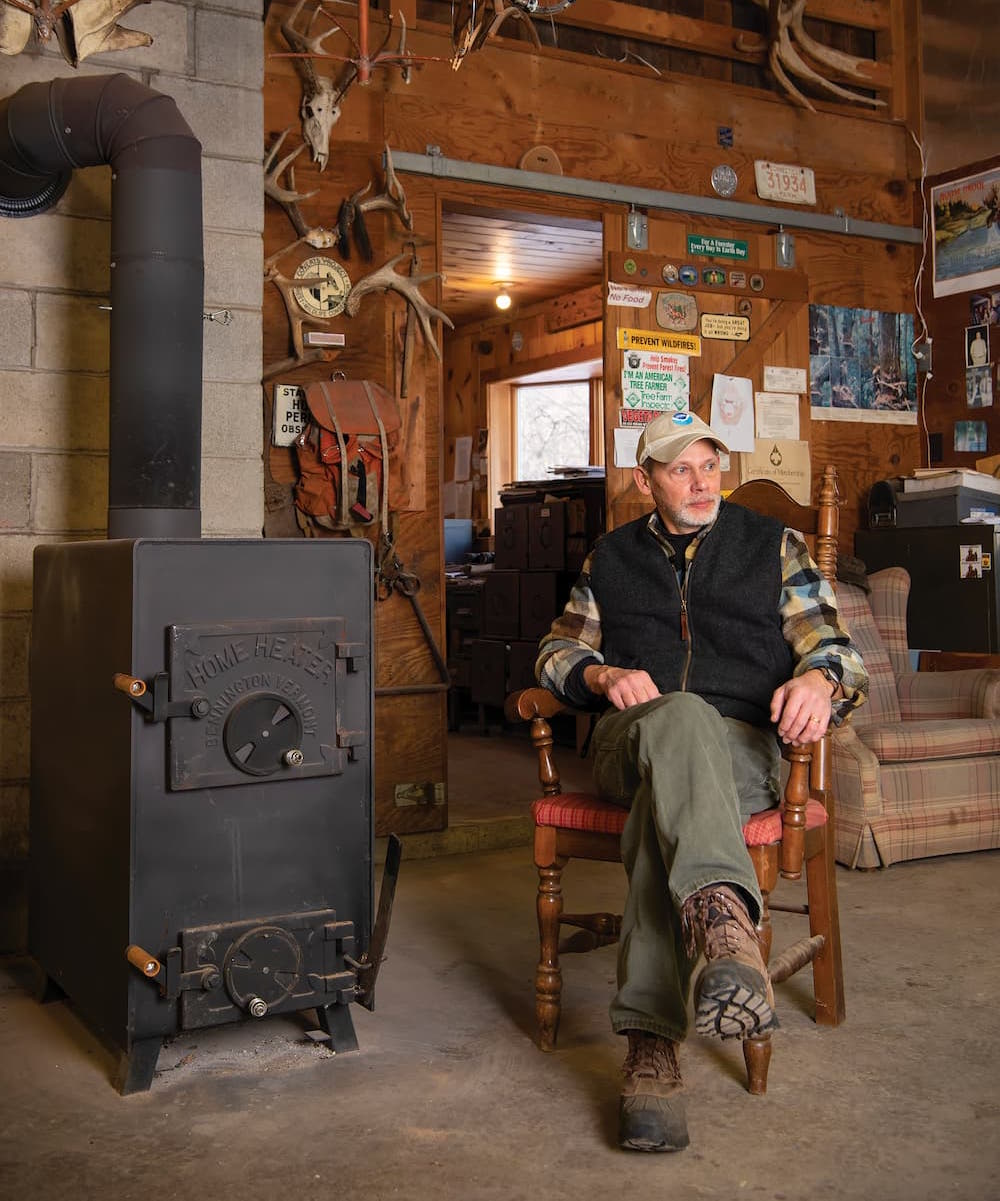
The stirring scent of a wood fireplace is the first thing you notice at Great Mountain Forest’s Forestry Office in Norfolk.

By Brandee Coleman Gilmore

The stirring scent of a wood fireplace is the first thing you notice at Great Mountain Forest’s Forestry Office in Norfolk. The weathered pine garage is filled with tools, organized to the hilt. Friendly foresters emerge clad in Carhartt and denim. At the center is a broken-in set of furniture. You get the sense it’s hard work around here, but it’s family, too. 

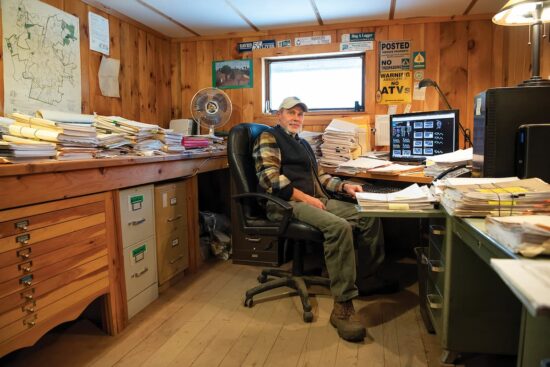
Russell Russ of Colebrook took over as the daily weather observer for GMF’s National Weather Service Cooperative Station in 2003. His father, Darrell Russ, had suffered a stroke and could no longer mind the precious task he’d been doing on a volunteer basis since the 1950s. Russell had absorbed a lot as a kid, but the chance to ask questions was gone. 

“That was tough… he wanted to tell me, but he couldn’t get it out. So I had to rely on old notes.”

There was no shortage of those. Darrell’s lengthy service was only outdone by the 60 volunteer years Edward ‘Ted’ Childs—the weather observation station’s founder—had put in. Mr. Childs, as Russell refers to him, took an interest in the weather at a young age. During his studies at Yale, he’d set up a weather recording station on his family’s estate (just down the lane from the present-day forestry office). On New Year’s Day 1932, he started taking daily readings and by 1942, Russell says, the National Weather Service came calling to see how legitimate the operation was, to decide if they should let it into their network.

“They said, ‘Holy cow. This guy’s made his own weather sheets. He’s recording everything. He’s there every day… and he’s meticulous!’” explains Russell.

Sari Goodfriend

‘Norfolk 2SW’ became one of the National Weather Service’s most prized locations because it lacked vulnerability to development. They figured it might make for years of consistent readings. 

Mr. Childs delivered for decades.

For 90 years now, one of these three men (and just a handful of others) has gotten up and trudged through all Mother Nature can muster to meticulously record daily temperature and precipitation readings. Their reports collaborate with nearly 12,000 cooperative National Weather Service stations like it around the country to make large-scale forecasting and analysis possible.

“We get high marks from the weather service, rarely do we have errors,” remarks Russ.

Some of the 1932-era weather instrumentation still meets the standard for official readings (they’ve got two, newer digital sets for backup), and Russell totes the same handmade, worn clipboards his dad and Mr. Childs used. He says one thing has changed for good, though—Excel spreadsheets over crunching numbers manually at the end of the month.

These days, it’s harder and harder to find volunteers to do this thankless but imperative work, so the job is often tied to paid positions. But for this part of Russ’s job as GMF Forester, the motivation goes beyond money. 

“They did it for so long, and I watched them do it as a kid… the fact that I can carry that on, that’s very important for me.”

Lynden Miller’s Landscape is Her Canvas

Lynden Miller makes every moment count—especially in her garden. As soon as the snow melts, her garden kicks in.

By Tovah Martin

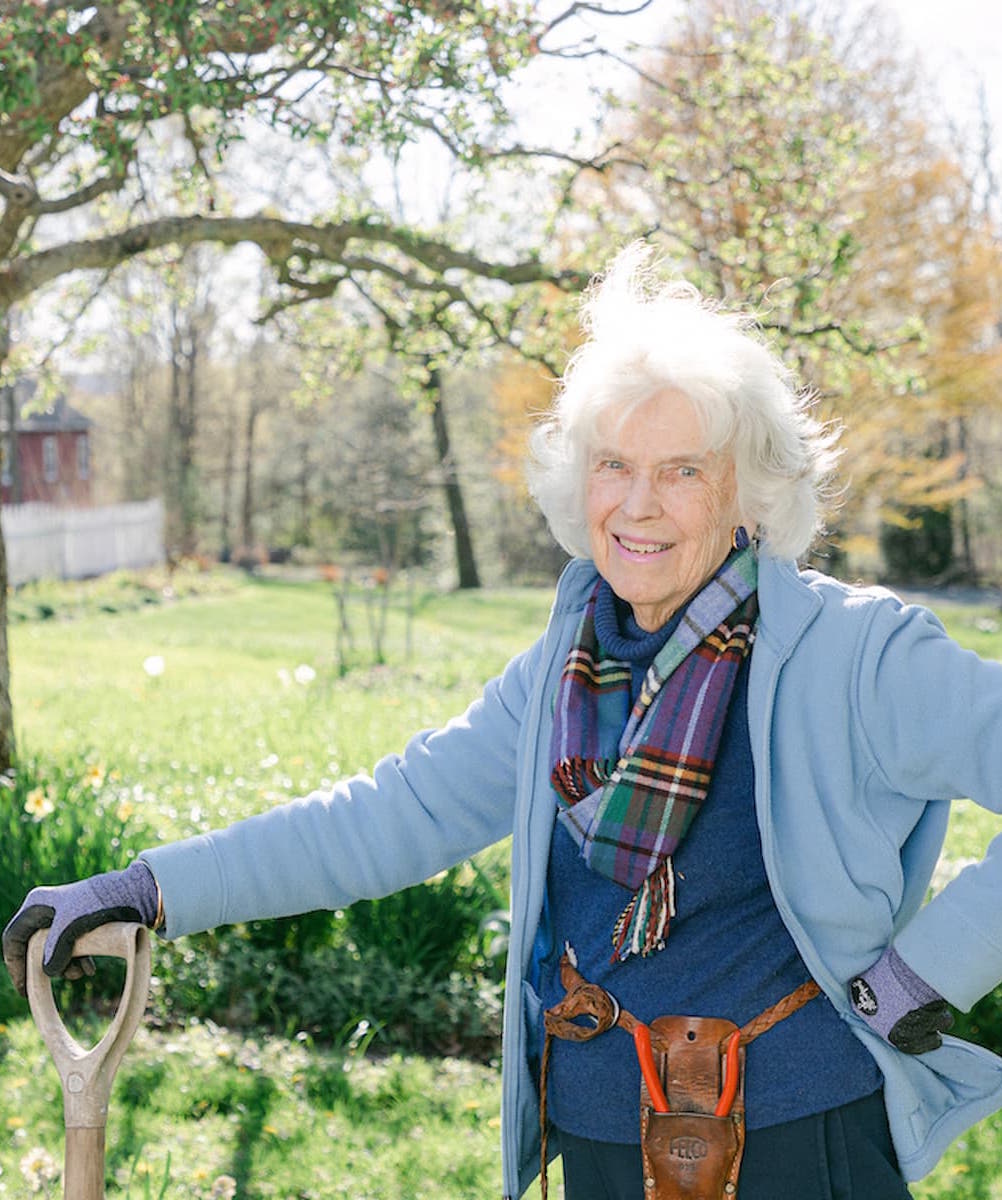
Before Lynden Miller tackled the public gardens of New York City, she transformed her landscape in Sharon. 

Lynden Miller makes every moment count—especially in her garden. As soon as the snow melts, her garden kicks in. Even before spring is official, hellebores and winter aconite perform when the ground is not blanketed with snow. As the weather warms, a pageant unfolds. It’s all part of a lifetime spent choreographing color. Previous to her trajectory as an internationally known landscape designer, Lynden was an artist composing abstract collages. She just swapped shovels for paintbrushes. “This is really an enormous painting,” she says with a sweeping gesture that encompasses her Sharon landscape. And like a canvas, every hue is premeditated. Spring might look like it has spontaneously sprung, but really, it all happens on cue. 

 
Rana Faure

Like wardrobes, color schemes change according to season in Lynden’s Sharon garden. For example, snowdrops are planted sparingly. “You don’t really need white flowers in spring, do you? You want color,” declares the award-winning mastermind/consultant behind many public gardens in New York City. To follow Lynden Miller through a garden is to receive a crash course in aesthetics. Among the treats of your tutorial is visiting a canvas that has evolved over nearly half a century. 

Rana Faure

Lynden and Leigh Miller bought their Sharon property in 1976, prior to leaving for a two year stint in Britain. While her husband was working in that country, Lynden took full advantage to educate herself as a gardener. She enrolled in courses, but she also opened her eyes. “I went to every garden within reach. My young sons were always saying, ‘Oh Mom, not another garden!’ But that’s where I gathered ideas.” Back in the US, she continued her formal education in landscape design at the New York Botanical Garden. Meanwhile, she was laying the groundwork for her personal Sharon garden—starting with a long, curved yew (Taxus hicksii) hedge that defines the garden’s borders. The hedge serves as a backdrop behind a mixed border of carefully selected and clipped perennials and shrubs. On the other side, axes lead to perennials all calibrated to match in height, girth, and blooming stint. But the real genius is the masterful color palette, and spring is when it really steps out. 

Rana Faure

Lynden Miller has always been about connoisseur plant selections. In 1982, when she was asked by Elizabeth Barlow Rogers, Administrator of Central Park, to resurrect and then mastermind the six-acre Conservatory Garden in East Harlem, she created such a confection of color that the donations poured in and the vandalism vanished. The list of her further projects in public spaces is phenomenally impressive, including Bryant Park, Battery Park City, the New York Botanical Garden, Madison Square Park, Fort Tryon Park, Hudson River Park, as well as the campuses of Columbia University, Princeton University, and Stony Brook University. Meanwhile, she somehow found time to develop her own Sharon garden.

Rana Faure
 

The formal sections of the Sharon garden feature wonders like long ribbons of grape hyacinths escorted by daffodils. But it’s not all formal—the woodland garden went in decades ago, but only now are the lungworts, hellebores, Spanish bluebells, mertensia virginica, Solomon seal, hostas, etc., gaining the substantial numbers necessary to make their statement of heart-stopping lushness. Beneath the birch trees that she added as “domes and minarets,” the woodland perennials scamper. Scattered through the scene, a graceful daffodil of luscious color catches your eye. Not surprisingly, narcissus breeders Brent & Becky Heath named it for a particularly tasteful and accomplished steward of horticulture. It’s called ‘Lovely Lynden’.

Rana Faure

Bethlehem’s Allegra Itsoga’s Work with Le Korsa

Le Korsa is a sibling organization of the Bethany-based Josef and Anni Albers Foundation, and is in keeping with the humanitarian values of the Albers.

From Bethlehem to Dakar, Allegra Itsoga’s Work Never Stops

By Marcia DeSanctis 

For the past nine years, as executive director of the NGO Le Korsa, Bethlehem’s Allegra Itsoga has lived a thoroughly bicontinental life. Before COVID, she commuted every six weeks between Litchfield County and Senegal’s capital Dakar, as well as Tambacounda, a region in the east of the country where many projects, including a dormitory and learning center for young women, and an elementary school, have flourished. Le Korsa is a sibling organization of the Bethany-based Josef and Anni Albers Foundation, and is in keeping with the humanitarian values of the Albers—the hugely influential German artist couple who pioneered modernism and for 26 years made their home in Connecticut.

Allegra oversees all of the work in Senegal—these days, from home, with the help of a full in-country staff. The model of investing local hires with authority is, she maintains, what distinguishes Le Korsa from other organizations. “Even before COVID, we have always leaned on them heavily,” she says. “They say, ‘This is what we need,’ and we say, “Here’s how we can help.” Unlike large, bureaucratic NGOs that often dictate solutions from the top, Le Korsa listens to the people they serve. Because they are a small organization, they are also able to act quickly and effectively.

The road from childhood in Watertown to building schools in Senegal included a crucial stop in California. While at the University of San Francisco, her Ghanaian micro-economics professor encouraged her to apply to the Peace Corps. She was deployed to Gabon in West Africa, where her fluent French was an asset. While teaching and setting up national parks, she met and married her husband Idanga, also known as Kenneth, a biochemist. They moved back to the States, where she worked in non-profits, and heard about Le Korsa. “I always knew I should be doing something in Africa. So when this job opportunity presented itself, I jumped on it,” she says.

Iwan Baan

Le Korsa is discerning about the projects they undertake. Among her many jobs is to enlist and manage partners, such as other NGOs that provide medical equipment for a pediatric hospital, a pioneering maternal health clinic led by a leading female OB/GYN that is Allegra’s “passion project,” and a medical outpost near the Gambian border. The group has also enlisted the talents of celebrated architects such as Toshiko Mori, who designed the building for Thread, Le Korsa’s artist residency that is also a beloved community gathering point. “We have a real attentiveness to aesthetics because we feel that just because your situation is different or you are poor, it doesn’t mean you can’t enjoy something beautiful,” she says.

Back home in Bethlehem, she finds beauty in her bucolic back yard, which also provides a living biology lesson for her eight year-old daughter Frankie, a budding ice hockey player. “We get all sorts of woodland creatures, hawks, frogs, and turtles, which was perfect last year when we were stuck home in the pandemic,” she says.

When not on ZOOM calls, fundraising for Le Korsa, chaperoning Girl Scout sleepovers, or driving Frankie to school or sports, Allegra is training for the Disney World Marathon in Orlando. The comparison to her humanitarian work to improve education and health outcomes in Senegal is not lost on her. “It’s a long game, right? There’s definitely the same mentality. Not every mile is going to be your best, but as long as you get there in the end, the journey is what matters. I think that’s the key.”

Spring Awakening with Clinton Kelly

Clinton Kelly

Clinton Kelly shares three tips to make it through the dreadful months preceding Spring.

By Clinton Kelly

April has been gaslighting me every year for the past sixteen Litchfield County years and I’m tired of it. Suuuuure, it’s “technically” spring, but it doesn’t exactly feel like it when I’m standing knee-deep in mud—in my own driveway—and the sky has been the color of a prepubescent squirrel for four months straight. I need green leaves. I need real strawberries. I need baby birds! Aaaargh!

The older you get the more you realize that Mother Nature is in charge, not you. Unfortunately, the older I get, the less patience I have for anyone who isn’t… me (Momma N included). So, I’ve developed a few strategies for getting through the next month or so. You’re welcome to try them if, when it comes to anticipating spring, you’re just like me—an impatient rage-machine.

1. Ramp Up. When I first heard my chef friends extol the virtues of ramps, I was skeptical. Ramps Shmamps. Big whoop. But then I tasted these wild onions and, holy aioli, they’re amazing! In April they might be growing freely in that damp, unlandscaped part of your own backyard, or your favorite farmer’s market might have a few bunches for sale. (But don’t procrastinate; ramp season is notoriously short.) If you can find or forage them, sauté the delicate leaves and bulbs in a little olive oil and toss with pasta. Add them to a risotto. Whip them up into a compound butter. Pickle and pile ’em on a sandwich. You’ll find yourself in dreary-day heaven! Just do everyone a favor if you do decide to venture into the woods and forage responsibly. Nobody likes a ramp-hog.

2. Ignore Reality. Let’s face it, you do have the option to stick your head in the proverbial sand and pretend that everything is finefinetotallyfine—even though we’re still not out of the freakin’ pandemic, the world is on fire and we have another whole month before being outdoors is pleasurable again. And the best way to do that is with a good book. Drag your tired ass out of bed and head to the Hickory Stick Bookshop in Washington or House of Books in Kent and load up with stories that help you forget your own sad one. My favorite reads of the last year were The Dutch House and The Anomaly. And any Regency-era romance written by Georgette Heyer because, deep down, I am evidently a 200-year-old British lady.

3. Indulge Your Agoraphobia. Remember all that stuff I said about ramp-hunting and venturing out to buy books? Forget it. I was being stupid. There’s really no reason to leave the comfort of your own home when Woodford’s General Store will deliver delicious local stuff to you on Friday mornings (if you’re within a 15-mile radius of Kent). I once survived for a week on nothing but a quiche from High 5 Pie and half a country ham. No regrets. Of course, they’re open for foot traffic too, which is probably the best way to do things because they have a bunch of other delicious stuff and little gorgeous things for around the house. Certainly enough to distract you until the phoebes make their annual nest under the eaves outside your bedroom window. (My favorite thing in the world! I can’t wait! Hurry up, spring!)

Arts in Architecture Designs Decorative Elements

Peter Zsiba

Arts in Architecture designs fine decorative elements and entertainment attractions that provide thematic identity for casinos, restaurants, and hotels.

Two Artists Bring New Meaning to a Classic Form

By Joseph Montebello

“Kimono: A traditional Japanese T-shaped, wrapped-front garment with square sleeves and a rectangular body. Kimono are typically made from a long, narrow bolt of cloth known as tanmono.” So reads the description of a classic kimono. And then there is the kimono as created by artist Peter Zsiba.

He and his partner in life and in business Maura Smolover are the owners and creators of Arts in Architecture in New Milford, which designs fine decorative elements and entertainment attractions that provide thematic identity for casinos, restaurants, and hotels. This includes lighting, sound, and kinetic effects that surprise, delight, and capture the imagination. As they describe it: “Art that amplifies the experience of the place and tells the story of its site.”

“We both worked at the Metropolitan Opera,” explains Smolover. “Peter was a scenic artist and I was an assistant to the set designers. But we did not meet there. That took place on the movie set of The Wiz. I was working for the production designer, who sent me over to Fantasy Props where Peter was working. We have what I call a 40-year personal, professional, and parenting relationship.”

In addition to telling a story or setting a scene, the couple wanted to design art that would be lasting. They got a call from Warner LeRoy, who had created Tavern on the Green in Central Park. He wanted dining to be a form of entertainment and so the couple created all the crystal chandeliers for the restaurant. Smolover designed all the stained glass pieces.

Zsiba and Smolover were then commissioned by Royal Caribbean Cruises to decorate the casinos and also create artwork for the board members’ private suites. The commissions continued and they have created art for other cruise lines as well as major corporations and private individuals. They are known nationally and internationally for their unique approach to making art out of glass. Which brings us to the kimonos—their latest creation.

“I use a process of kiln-forming, a technique where I manipulate shapes of glass with heat and molds,” explains Zsiba. “The molds sculpt dimension and give the glass castings an array of peaks and valleys and can create translucencies, reflections, refractions, and even glass with stonelike opaque richness.”

The kimono’s color palette lends itself to luminous layers of glass. Each piece is 5/16 inches thick. Each sheet has to be fired four times and handled with the utmost care. Even though the glass can be bent and rolled it is still fragile. The artwork in its finished form measures six feet by seven feet and is bordered with a simple frame.

The General Assembly of the United Nations has designated 2022 as the year of glass. Zsiba and Smolover have named their project Visions of Hope and each piece gives visual voice to an aspect of love and hope and a tribute to opera’s beloved Madame Butterfly.

Byrde + the b Color Process – SPONSORED

Bond and his two leading stylists—Lucy Callaway and Ange Zweifel have 62 years of combined experience creating beauty while safeguarding hair health.

For the Faint of Hair 

By Clementina Verge

Diamines and aminophenols. Phenylenediamine and molecules. Many find themselves sitting in salon chairs awaiting a color transformation and hoping for a fabulous outcome, without knowledge about what happens to hair follicles during the process.

“Anyone can apply single-process color, but not everyone understands the science behind color and behind the application process,” notes Scott Bond, owner of Byrde + the b, an award-winning, full-service luxury salon, shop, and art gallery in Washington Depot. “Only when you do, can you end up with a really beautiful product.” 

Coloring is a basic beauty school requirement and something anyone can do at home using an over-the-counter product. Unfortunately, the ease of application means that it often falls into inexperienced hands, with disappointing results. Think unflattering shades that do not match the model on the box, dull color, or damaged hair. The reasons for trusting only a highly-trained professional include customization, protection, and proper application.

Bond and his two leading stylists—Lucy Callaway and Ange Zweifel—have been trained at L’Oréal, Revlon, and Davines, and have continued taking in depth, specialized courses. Such knowledge and 62 years of combined experience yields optimum results time after time, creating beauty while safeguarding hair health.

Transforming tresses from a current hue to a desired shade involves exact science. Whether the objective is to cover gray or find a new personal hairstyle, much deliberation goes into each person’s coloring process. Various methods—such as ombre, highlights, or balayage—require precise knowledge and products for customization, making sure the result is a color complementary to face shape, skin tone, and hair texture.

“So many small details go into the equation of formulation,” explains Zweifel. 

Callaway agrees: “The perfect shade is all about neutralizing, canceling, or emphasizing colors within the natural hair shaft. It all goes back to understanding primary and tertiary colors.”

Balayage, for example, offers multi-dimensional and ultra-flattering looks with dozens of possibilities: dark brown, light brown, caramel on dark, brown on black, chocolate brown, ash brown, chestnut brown—and that’s just the brunette side. Each shade requires an exact combination of chemicals and a unique application process, whether lighting a dark base color or creating sun-kissed ribbons on a blonde. 

“It’s 100 percent chemistry and art on a daily basis,” Bond remarks. “The ability to predict underlying pigment makes the biggest difference and being able to do that requires years of experience.”

Though combinations seem endless, Bond prefers simplicity.

“People sometimes forget the color wheel and get overly creative,” he cautions. “We don’t fall for the latest silly trend or technique. For us, it’s about beauty and art. It’s more natural, more beautiful, and more tasteful.”

At Byrde+the b, advanced training is also the norm when it comes to cutting, lending the same solid foundation, with stylists trained at industry powerhouses including Sassoon Academy, Fekkai, and Davines Professional Academy. In fact, all services, from extensions to treatments, barbering, and skincare, are delivered to the highest professional standards, transforming your tresses and skin from average to covetable.

byrdeandtheb.com
10 Titus Rd, Washington Depot
860-619-0422

John Willey’s Lakeville Home

John Willey’s Lakeville home is a mixture of modern pieces with traditional upholstered ones to create rooms that one never wants to leave.

A Lakeville Couple Creates the Ideal Home

By Joseph Montebello

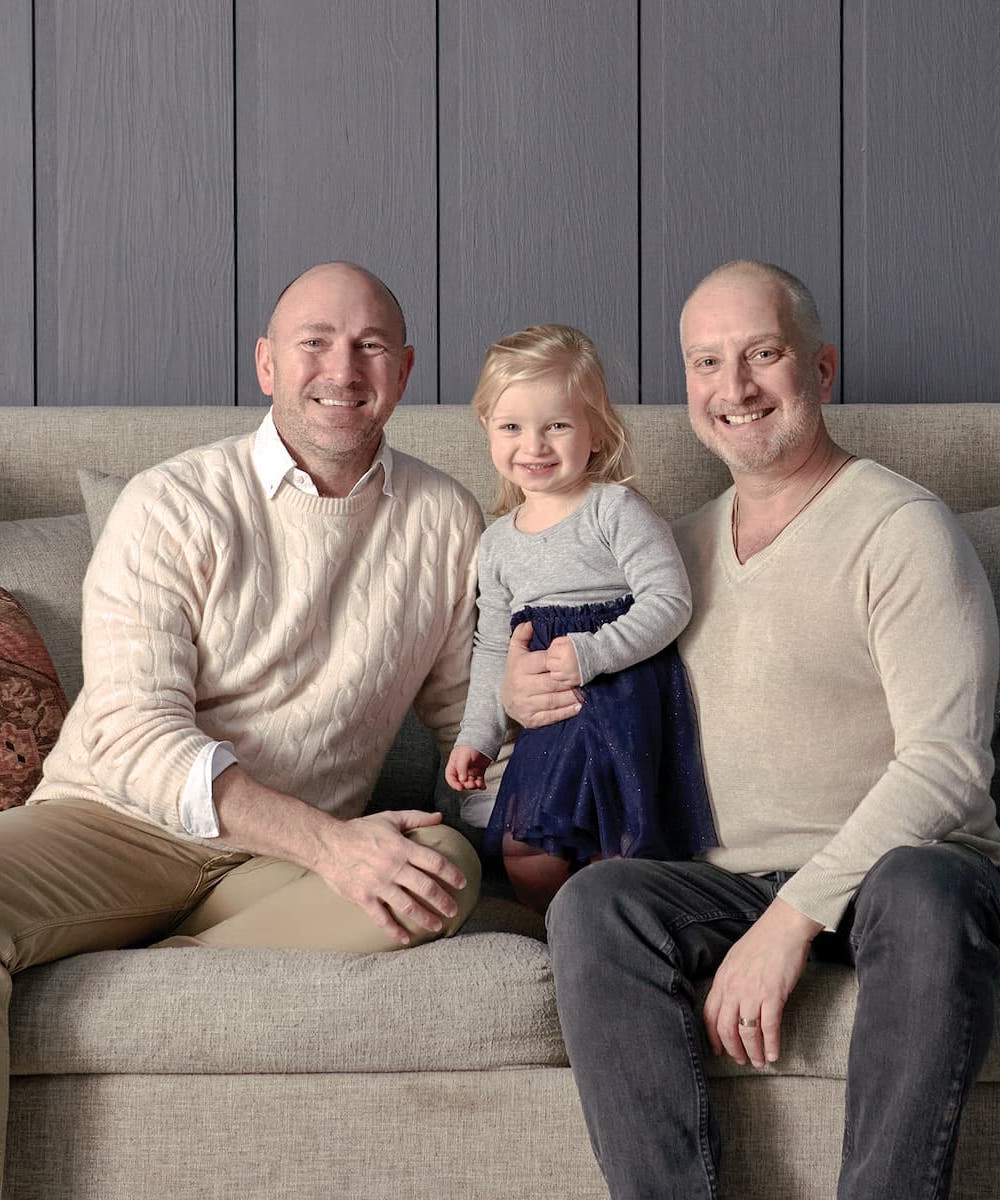
Tailored, clean lines, comfortable, approachable, and always a little bit of glamour. These are a few of the words that best describe the rooms interior designer John Willey has produced. And the same adjectives apply to the home he has created in Lakeville with his husband Frederick Aronstein and their two-year-old daughter Marlo. In other words, it is perfect.

John Gruen

But perfect doesn’t mean sacrificing comfort and style. Willey opened his eponymous firm in 2006 after a career working for some of the most prestigious designers in the business. His work has appeared in countless publications reflecting his popularity both nationally and internationally. When it came time to create his “forever home,” Willey knew exactly what he wanted.

John Gruen

“We had a weekend house in Millerton for seven years,” explains Willey. “We loved it, but it didn’t have a garage or central air conditioning and with the birth of our daughter we needed more space.”

John Gruen

The couple found their dream house in Lakeville in 2009. And then the fun began.

“The house was built in 1972 and is very contemporary in style with a slung roof. It was a little off the beaten path and the fact that it was just one story was a huge plus. Stairs present a challenge when raising a toddler,” says Willey.

The 4000-square-foot house comes with four acres and features five bedrooms. Having all the rooms on one floor gives the house a palatial feel and seamless flow of space. After the closing Willey worked his magic to make his dream home a reality.

John Gruen

“We basically gutted the house,” he says, “and went through nine months of construction. Our other house sold immediately and the new owners bought all of our furniture, so we were living in a hotel. I designed the kitchen of my dreams, created a home office for each of us, and a playroom for Marlo. The biggest change we made was raising the ceilings throughout the house. We have a very large attic, so we took the eight-foot ceilings and raised them to 11 feet. It was a very dramatic transformation and added to the house’s spaciousness.”

John Gruen

Following a tradition he started with their previous houses, Willey painted the front door in a striking deep color. In Millerton their door was a bright shade of red. For this house he chose a high gloss black, which accentuates the hand-blown windows on either side.


John Gruen

The majority of rooms are painted in a soft, cooler palette of grays and blues, accented by the perfect accessories, from a piece of art, a vignette of collected objects, stylish throw pillows, and a mixture of modern pieces with traditional upholstered ones to create rooms that one never wants to leave.

John Gruen

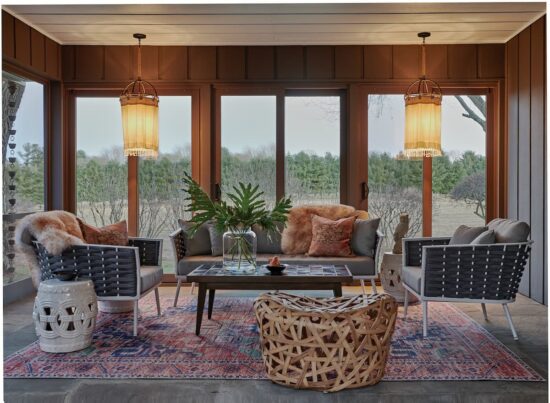
Like so many during the pandemic, the couple has pared entertaining down to small groups. The spacious kitchen, truly a space to fulfill anyone’s notion of the perfect space, affords ample seating, incredible views, and tons of natural light. The glass-enclosed sunroom, with its heated floors (and minus the ‘70s hot tub) has become the perfect spot to spend cold weather days.

John Gruen

When the project began Aronstein announced that he did not want to be involved. 

“‘Just design it he said,’” recalls Willey. “He pretty much stayed out of my way. I think he sat on one sofa, saw one piece of fabric and one set of tiles. The perfect client!”

John Gruen

Fortunately they are both ecstatic about the finished product, as is their daughter, who has a room of her own and plenty of space to play—and no stairs to deal with.

Synergy of Beauty at Byrde + the b – SPONSORED

Byrde and the b

Byrde and the b recently welcomed an acupuncturist and an aesthetician to the team, as it continues to expand services.

East Meets West at Byrde + the b 

By Clementina Verge

Imagine leaving your local salon not only with spectacular tresses and a fabulous manicure, but with glowing skin and a rejuvenated body poised to heal itself. You can experience this at Byrde + the b, which recently welcomed an acupuncturist and an aesthetician to the team, as it continues to expand services and affirm its status as a leading full-service luxury salon equally focused on beauty and health.

Joining the award-winning Washington Depot staff are Fon-Lin Nyeu, a practitioner of Chinese medicine and acupuncture, and Danielle Occhialini, a former beauty advisor and resident artist at luxurious labels including Lancome and Chantecaille. Using acupuncture, Gua Sha massage, and customized facials in tandem with medical-grade Celluma light therapy, a lymphatic drainage suit, and the salon’s superior skin care products—such as the Vitamin A-infused Environ line—“the two talented women offer treatments that are different but complementary,” enhancing overall skin health rather than merely concealing superficial signs of aging, notes owner Scott Bond.

Occhialini’s interest in beauty began after high school when she started doing make-up, and shortly after, she realized her passion for skin care. Advancing in corporate settings, she learned the business aspects of the industry, but also the practical side involving ingredients and skin conditions.

Harmonizing such knowledge and experience, she provides personalized facials and a tailored plan for each client, infusing skin with vitamins and hydration.

“I custom-blend peptides and create individual serums for each client, in front of them, and allow them to take it home to continue treatment between visits,” Occhialini explains. “I don’t know anybody else who does that.”

Skincare becomes particularly important during the cold and dry winter months, something recognized in Chinese medicine, which urges preparation for next season, this season. “For skin to be good in spring and summer, you need to work on it in fall and winter,” shares Nyeu, who also treats clients in New York City, where she resides.

After studying biology and women’s studies at Cornell University, Nyeu realized she wanted to be a doctor, but not work in hospitals or research labs. Drawn into a different direction, she pursued alternative medicine, earning a doctorate while also becoming a licensed herbalist, yoga and pilates trainer, and certified doula.

Bridging such holistic practices, she uses the skin as a way to evaluate what is happening throughout the body. Used for thousands of years in traditional Chinese medicine, facial acupuncture is not just a beauty regimen that covers appearance, but a genuine medical procedure that promotes health and skin rehabilitation from within. By stimulating sensory nerves under the skin and in the muscles, acupuncture produces natural substances, such as pain-relieving endorphins, and helps even post-stroke patients with facial paralysis, she explains.

Its benefits are numerous, Nyeu notes, citing brighter tone, reduced sagging, restored muscles, decreased wrinkles, increased collagen and elastin, improved lymphatic drainage, and even balanced digestion.

“We stand for more than just great hair and nails,” assures Bond. “We are committed to all-over health.”

byrdeandtheb.com
10 Titus Rd, Washington Depot
860-619-0422

Current Issue
March / April 2026
Our Kind of Healthy
The Health & Wellness Issue
Subscribe Now
.
  • STAY IN THE KNOW

    Your weekly guide to can't-miss events, hidden gems, and local favorites in Litchfield County. Sign up now for curated things to do, eat, and explore—delivered every week. It’s free. It’s local. It’s essential.

  • Karen Raines Davis