Your guide to the heart of Litchfield County:
Discover local stories, hidden gems, and must-know events.

Elizabeth Gilbert Returns to Litchfield

Elizabeth Gilbert reflects on her childhood, Christmas tree farm, and creative roots in Litchfield, Connecticut.

By Wendy Carlson
Photograph by Deborah Lopez

Ever since grammar school, author Elizabeth Gilbert has been writing. By middle school, she was mimeographing poems in the principal’s office and handing them out to classmates. At Litchfield High School (Class of 1987), she was already sending short stories to The New Yorker, hoping for publication.

The author of nine acclaimed works of fiction and nonfiction—including the best-selling memoir Eat, Pray, Love, which catapulted her to international fame, and became a film starring Julia Roberts—Gilbert returned to the Warner Theatre in Torrington this fall to discuss her latest memoir, All the Way to the River. The riveting story centers on the love of her life: a queer, recovering-addict hairdresser from Queens, and how her death led to Gilbert’s greatest awakening.

Litchfield Magazine spoke with Gilbert about how growing up on a Christmas tree farm in Litchfield County helped shape her lifelong pursuit of happiness and fulfillment.

First, what was it like during the holiday season growing up on Bees, Fleas & Trees, the Christmas tree farm your parents, John and Carole Gilbert, own? 

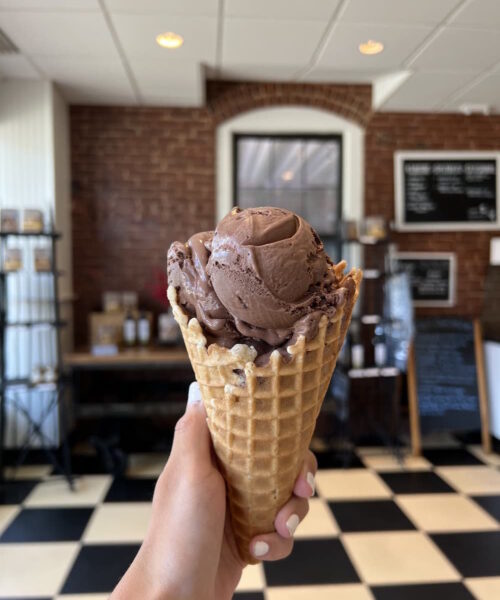
 I’ve often said that selling Christmas trees is like selling ice cream (and I’ve done both, so I really know what I’m talking about here!) in that people are always cheerful and happy to buy these products. I loved December on the Christmas tree farm—the physical labor of cutting down and bailing trees, the joy of little kids running around the farm, and the endless hot chocolate and doughnuts. My parents really had (and still have) a talent for making people feel warm and welcome, and over the decades my friends from high school, college, and beyond all loved working on the farm. It’s an exhausting but ultimately really satisfying time of the year. 

 What was a typical Christmas like for your family—anything that might surprise people?

 The joke (not really a joke) that we always tell in my family is that we always had the worst tree for us! People assume that our own Christmas tree must have been the most lush and beautiful one, but nothing could be further from the truth. My dad wasn’t going to waste a perfectly profitable tree on his own family, and anyway we were all pretty tired of Christmas by the time the actual holiday rolled around. So we always got whatever un-sellable tree was left on the lot. “The cobbler’s children have no shoes,” is what my Dad always used to say! 

How did farm life teach you independence and spark your creativity?

What I learned more than anything else is that you are allowed to make your own thing in life. You are allowed to have passions and curiosities that exist outside of the “normal” realm of day-to-day life. My mom was a nurse and my dad was an engineer, but that’s just what they did to make a living; everything on the farm was what they did for love. Gardening, sewing, taking care of bees and chickens and goats, growing trees—these were just some of their sideline artistic projects. So what I grew up seeing were two really important lessons about how to be an artist, even though I don’t think either of my parents would have called themselves “artists.” I saw that you should always have a day job that you can rely upon to be financially independent, AND you get to pour all your love and passion into your heart’s true calling, which is your own business, doesn’t need to make sense to anyone else, and will fulfill your spirit. This is fantastic training for the arts. So I followed in my parents’ footsteps—not by becoming a farmer or a master gardener, but by moving to New York, getting a day job, and working on my writing in the evenings and on the weekends. They modeled that dual sense of responsibility and freedom beautifully for me. 

Who encouraged and inspired you as a young writer growing up in Litchfield?

I was writing my whole life—as soon as I could spell! (okay, to be fair, I still can’t really spell.) I remember writing poetry in grammar school, plays in middle school, and short fiction in high school. I had a slew of teachers who were so encouraging—but Bill Bucklin and Sandie Carpenter [Litchfield High School] were the most generous with their praise, guidance, and time. The librarians at the Oliver Wolcott Library in Litchfield were also like a team of loving literary aunties to me—and they gave me the run of the library, which was so kind. I consider myself so lucky to be the product of a really good public education system and really good public libraries. As the years have gone by, I have only appreciated more the education that Litchfield offered to me, in so many ways. 

What places in Litchfield feel most like home to you today?

While much of Litchfield has changed, the most special part of it to me remains the same—or is even improved. The woods at the White Memorial Foundation were always a haven of silence and beauty for me growing up, and I still love to go wandering those trails, which are even nicer now and better kept up than they were 40 years ago. There is something about the Connecticut woods that isn’t like anything else for me, that mix of sun and shade; the smell of pine and ferns and even skunk cabbage; the moss and the outcroppings of granite. Being in those woods brings me right back to the best memories of my childhood, where, even as a restless teenager, I knew that this was a beautiful and special place. So my favorite thing when I come is to put on some hiking boots and go straight to the woods. It clears my spirit the same as it ever did. Of course there are more bears now than there used to be, but that just makes life more exciting! 

Readers eager to join Elizabeth Gilbert on her journey of love, loss, and self-discovery can seek out her memoir, All the Way to the River: Love, Loss, and Liberation. Bees, Fleas & Trees is at 551 S. Plains Road, Litchfield.

A Cipoletti Christmas in Litchfield

Jenny and Freddie Cipoletti celebrate Christmas in their Litchfield home, blending family, tradition, and festive charm.

From City Streets to Country Hearths  
By Brandee Coleman Gilmore
Photographs by Ashley Nicole Photography 

“When I think of Christmas, I think of tradition, of the kind of warmth that’s passed down through generations. It’s the smell of butter and pine, the glow of candlelight on brass, the comfort of rituals repeated year after year.” 

If Jenny Cipoletti’s gift is to paint a “romantic life well-lived” with words, it’s her husband Freddie’s gift to cook it up (literally), or to conjure it in images—with Jenny comfortably poised as muse.
“From the very beginning, our partnership has been rooted in shared creativity and mutual respect for each other’s talents,” says Jenny.

If you don’t know the Cipolettis, that could be because they’re relatively new in these parts. They bought their Litchfield home, Sunnymead, in July 2024. But the Cipolettis aren’t new on the scene; they’re household names to the couple’s combined half-million Instagram followers. The pair built a brand on their dolce vita-inspired lifestyle, and as their following has grown for a decade-plus, so has their purview. In the past five years, they’ve launched Jenny Cipoletti Jewelry; Italian provisions company Cucina Cipoletti (find their pastas on shelves at Petraroia Deli, Warren General, 100 Main, and Milton Market); and brought two daughters, Lucy and Mia, into the world.

“Our work is an extension of our life, the places we’ve traveled, the meals we’ve shared, the family we’ve built.”

Freddie was born and raised in New York City, Jenny in Palo Alto, Calif. They’ve lived in an art deco apartment in Los Angeles and a brownstone in New York, but a pandemic-era trip to Washington’s Mayflower Inn got them thinking about greener pastures.

“There was something about that golden pocket of Connecticut, the beauty of the landscape, the quiet rhythm of life, that planted a seed in our hearts,” Jenny says. Fast-forward five years, and their combined creative powers have given them an 1840 Colonial Revival to call home. Sunnymead was the only house they looked at. “The moment we walked through the doors, we could see our life unfolding here. It felt warm, lived-in, and full of stories waiting to be continued,” Jenny recalls. And perhaps no family tale is as exciting to write as the holidays in a new home.

“The architecture itself seems made for it: the wide hallways, the big windows that let in winter light, the scent of pancakes on a slow morning. It’s in those moments, surrounded by family and the quiet beauty of the season, that I’m reminded how deeply place and memory are intertwined, and how I am creating those same core memories for our girls,” she says.

The Cipolettis are working with Litchfield-based architect/interior designer Julia Metcalf, and Litchfield millworker/designer Jessica Fabri to renovate the home’s kitchen and master suite—while a captivated fan base follows Jenny sifting through fabric swatches, and tackling the DIY to-do list. Behind the scenes, life as usual is anything but for the former city dwellers.

“Living just five minutes walk from downtown Litchfield gives us the best of both worlds, the quiet charm of a historic neighborhood with the ease of modern convenience… I can’t wait to fill these rooms and our new kitchen with the people I love most, to have my family gathered under one roof, laughter echoing through the halls, and traditions both old and new woven together. It’s in those moments that Christmas becomes more than a season. It becomes a living memory, growing richer and more meaningful with each passing year.

Michael Trapp’s Eclectic Sharon Home

Michael Trapp’s Sharon home blends global antiques, bold design, and timeless character in a reimagined farmhouse.

By Troy McMullen
Photographs by Rana Faure

The renovated Dutch barn in Sharon—where Michael Trapp stores the antiques and architectural fragments he sells—is filled with the items that have helped establish his reputation for originality. 

The labyrinth of spaces inside the barn is a treasure trove of metalwork, pottery, and colonial furniture amassed from years of traveling to exotic locales to discover distinctive interior items. 

While the variety of pieces underscores how Trapp harnesses an eclectic style for his work as an antiques dealer and interior and landscape designer, the juxtaposing of old and new to create timeless environments also informs how he lives at home in Sharon. 

Inside the 18th-century farmhouse that he shares with his husband, equestrian M. Michael Meller, Trapp has created interiors imbued with baroque qualities that radiate a unique warmth. The barn and the farmhouse where he lives sit on a 22-acre property in Sharon.

“Eclectic is a gentle way of describing my aesthetic,” says Trapp, who spent his early life living in Europe with a father who was a professor of logistics in the Air Force. The family eventually settled in Ohio, where he studied landscape architecture before selling architectural items at antiques shows nationwide. 

“Most people just call my style unusual, but the truth is I’m curious about so many things, and I simply traffic in things I find beautiful.”

Uncovering eclectic beauty is evident inside a home he spent years renovating. Though the exterior of the eyebrow colonial has hardly changed, the interiors underwent a renovation that included removing walls, doors, and staircases. The demolition transformed a once-dilapidated house into a 3,000-square-foot residence that Trapp says reflects his taste.

“It looks innocent on the outside, but the interiors went through a real demolition,” he adds. “It was the kind of place with wonderful possibilities, if you’re willing to put in the work.”   

Trapp’s penchant for creating unusual yet beautiful interiors is on display in the home’s living and dining rooms, where sofas covered in 19th-century deep-red wool carpets from Anatolia share space with a whale’s skeleton suspended above the dining room table. (The hulking piece was procured from a museum in the Spice Islands in Indonesia, and assembled by Trapp and two assistants.)   

Walls in the room are covered in blue-and-white porcelain Ming Swatow plates salvaged from a 16th-century shipwreck off the coast of Sumatra. Two 19th-century Spanish chandeliers hover above 17th-century bluestone flooring in a living room dotted with pillars and other historical relics gathered from his years of global traveling.

“Nothing is ever truly finished,” Trapp explains. “But you take enormous comfort in knowing that you’ve created something that fits your life.”

Trapp says he’s rarely at home for the holidays, but that he and his husband enjoy occasionally infusing the interiors with seasonal cheer. Unlike the eclectic tastes that typically influence the home’s interiors, he leans toward more restrained Christmas decorations, as a contrast to his surroundings.  A tastefully decorated evergreen tree is the centerpiece in a living room with tables outfitted with baby’s breath flowers, foliage, and coral-colored Tibetan beads. A 19th-century Italian terracotta urn is filled with birch branches painted fire engine red.

“It’s a season of feeling grateful to be in such a lovely, unspoiled part of Connecticut,” says Trapp, who spends monthsn each year traveling the world in search of architectural items for his clients, and to sell in his West Cornwall store.  “We’re just really lucky to live here.” —michaeltrapp.com
Merwinsville Hotel’s Historic Christmas Fair

Step into holiday magic at Merwinsville Hotel’s historic Christmas Fair, featuring trains, crafts, and festive cheer.

By Michelle Madden
Photographs by Rana Faure

Walking into the Christmas Fair at the Merwinsville Hotel Restoration is like taking a trip in a time capsule. The floors are sloped, the ceilings low, the smell of old wood and the feeling of Christmas’ past are pervasive. Dominating the space is a Charles Dickens miniature village, with an electric train meandering through.

There is a holiday arts-and-crafts show featuring local artisans, selling one-of-a kind gifts; a miniature amusement park has rides that move, from a time when toys were made to last; there’s a crowd of nutcrackers—and not just your standard soldier-style nutcrackers, but rock-star and Frankenstein nutcrackers! Freshly cut trees and handtied wreaths are for sale. And if all of that is not enough: There’s free hot chocolate.

With the industriousness of Christmas elves, each year a small group of volunteers, led by the indomitable Georganne Bensh, works day and night—well over 1,000 hours—to bring the fair to life. It is an enormous operation with intricate details, sequenced steps, and sheer muscle. Seven tables are precisely lined up, to support the village and train, with its dedicated power and lighting system. 

Thirty-six heavy boxes have to be brought up from the basement, containing 130 village houses, landscaping, trains and tracks, wagons, and toy people. It takes 14 days just to unpack and place the village. 

“In the end,” says Bensh with a twinkle in her eye, “it’s worth the pain and suffering.”


What makes this holiday fair so authentic is that the hotel was built the same year—though an ocean apart—that Charles Dickens published A Christmas Carol. 

In 1843, local entrepreneur Sylvanus Merwin—upon learning that the Housatonic Railroad would be routed through the area—bought the land, built the hotel, and then (when the lawyers arrived to negotiate for right-of-way through his land) was more than happy to oblige, with one caveat: All trains must stop at his hotel for meals. Oh, and the station had to be named after him: Merwinsville. (He also appointed himself station master, just to be sure things went as planned.)

Merwin operated the hotel until 1877, when the Pullman Car—which allowed for eat-on-board meals—no longer traveled this route. After 1915, the trains bypassed the station altogether. It was bought by a family as their residence, then for 30 years after that was left vacant, and began the slow process of death-by-abandonment. 

In the 1970s, a local man, George Haase, saw the potential in its withered beauty, bought the hotel for one dollar, established a nonprofit, and with the devotion of many volunteers over nearly 50 years, has lovingly restored it. It is one of the nation’s oldest purpose-built hotels.

So when you come to the fair and your senses awaken to the joys of the season, remember the well-fed travelers who stood on the same floor boards, nearly 200 years ago. As the daughter of George Haase and president of the hotel, Jeremy Ruman, said, “If you don’t get into the Christmas spirit here, there’s no hope for you.”

The fair this year will be  held November 28 to 30 and December 5 to 7, from 10 am to 5 pm. Admission is free.

merwinsvillehotel.org

Pinnacle: Washington Depot’s Stylish Women’s Boutique

Pinnacle in Washington Depot offers curated, stylish women’s clothing and accessories with local charm and personalized service.

More Than Just Gorgeous Clothing
By Michelle Madden 
Photographs by Ryan Lavine

It’s early on a Saturday and Pinnacle is getting ready to host a make-up event. Caroline Klein (one half of the founding duo behind the women’s clothing store in Washington Depot) is impeccably dressed in creams and Chanel ballet flats, and has just lit a scented candle. Betsy Goldin (the other half) comes through the door, effortlessly clad in a winter floral blouse and tan jeans, holding bottles of champagne. She offers me a glass. It’s 9 am, but whatever. Welcoming guests comes naturally to Klein and Goldin.

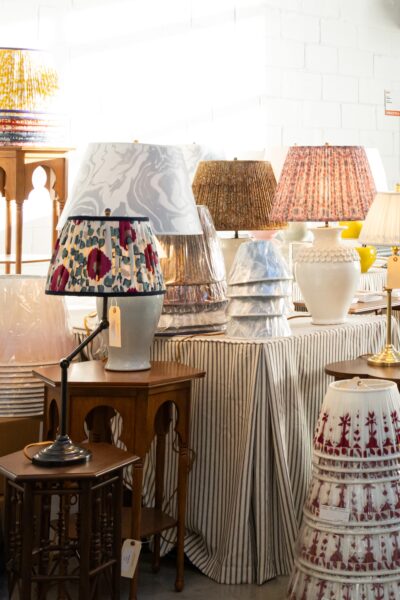
At Pinnacle, no detail is overlooked, and craftsmanship is prized. Curated vignettes dot the store: A fringed leather jacket hangs art-like on a wall, along with a baseball cap, a handbag, and a framed watercolor; hostess gifts such as whimsical cocktail napkins are interspersed with stylish bracelets; a stack of books serves as a platform for a pair of boots; a one-of-a-kind green floral ceramic lamp adds warmth at the checkout counter.

The style of clothing at Pinnacle is best described as classic with a playful twist: hiking shoes by Voile Blanche with shearling peeking out the sides; a navy cotton blouse by TWP cropped just enough to feel daring; leather pants by SPRWMN that you could go for jog in, thanks to a drawstring waist; denim jeans designed by Agolde or Frame that just fit better; or a short-sleeved knit top by Guest in Residence, with three little buttons and a collar that make it anything but ordinary. 

“We hope you’ll find that piece you never knew you needed,” says Goldin with a grin. 

Though the new kid on the block, Pinnacle is not shy. They launched Titus Road Design Collective where, on the second Saturday of each month, five local design boutiques engage in an open house. They frequently host trunk shows (a recent one was with Aztech Mountain, a ski-wear brand), hold food drives for local pantries, gather friends for mahjong nights and yoga days, lead hikes up Pinnacle Mountain (their namesake), and this month are hosting “The Twelve Days of Chrismukkah,” where the town is invited to holiday events and giveaways.

Supporting local is a core principle, and with a clear nod to the Gilmore Girls, they offer a candle called “I Smell Snow” by Literie. Local skincare brands V Reserve and Lines are available, and Jorga’s carry-all bag is, according to Goldin, “Prada quality without the price.”

Goldin’s past is in graphic design and Klein’s in operations. It was a 12-year friendship and a realization of a mutual love for design, clothes, and connecting people that led them to open Pinnacle this past summer. They shared a vision of a gathering place where you could go to not only find brands that you wouldn’t find within 50 miles, but also a space that felt warm and inviting. “We both love entertaining. Pinnacle is just an extension of our lives,” says Klein.

Their fashion tips for the holiday? Chocolate brown is the new black. Pair complementary textures, and go with the unexpected: a satin skirt with a casual striped sweater. If you don’t want to splurge on an entire outfit, buy one memorable holiday piece, and shop your closet. When party-shoe-removal threatens to ruin an outfit, pack a pair of light-weight Mary Jane flats like those by Vibi Venezia, which come in tweed and velvet; and most important, advises Goldin, “Don’t save your party clothes for a party. If you love it, wear it!!”

“Come back later on!” Goldin and Klein say as I leave the store. ”There will be a truck selling floral arrangements out front, and the champagne will be open.” 

6 Bee Brook Road, Washington Depot —thepinnaclect.com 
Westerlind Brings Chic Outdoor Style to Litchfield

Westerlind opens in Litchfield, offering stylish outdoor apparel and gear inspired by global travel and active living.

Westerlind Arrives in Litchfield

By Paula Cornell

Westerlind, the chic outdoor fashion and gear boutique, is coming to Connecticut for the first time, in the heart of Litchfield. 

The new boutique will open in the historic Cobble Court––a gorgeous courtyard with brick storefronts dating back to 1889. Alongside other local favorites like Milton Market, the location matches Westerlind’s unique blend of classic style with modern functionality. 

Named for its Swedish owner, Andrea Westerlind, the store has a legacy of entrepreneurial brilliance embedded in the name itself. Her family owned a fashion house from the 1940s, and “Westerlind” means “the linden tree in the west”––a fitting name for a store built around stylish adventure.
Westerlind moved to the U.S. in the early 2000s to launch the Swedish brand Fjallraven––which became the most successful launch of any non-domestic outdoor brand on the North American market. 

After that, Westerlind created her own brand. In 2008, at age 25, she opened her first store on Mott Street in New York. 

“I remember it like it was yesterday,” she says. “I couldn’t sleep or eat for a month before the opening. I never thought it could be the success it turned into.” 

On opening day, the first customer was a man from Wall Street who was delighted to find out he was the first to shop there—and told all his friends to stop by. 

“That kind of support and enthusiasm is a big part of the reason why I’ve stayed in the U.S.,” Westerlind says. “The positive spirit of the people in and around New York is undeniable.”

From that first store, Westerlind has grown to five locations across New York and Massachusetts, and this upcoming opening in Litchfield will be the sixth. 

Westerlind features over 100 brands from around the world, gathered from Westerlind’s travels. 

“My brain is a constant scanner for cool new items and ways to dress for a life on the go. I couldn’t turn that off even if I tried,” she says.

Beyond her travels, a large part of her inspiration comes from her own athleticism and personal love of the outdoors. She’s done a wide variety of activities, but her current favorites are trail running, bicycling, fly-fishing, and cold plunging. As a single mother, she also loves watching her two young children play outside.

When asked why she chose Litchfield for her next store, Westerlind says, “My friends and customers keep telling me I have to do it. So I decided to listen to them!” 

Westerlind hopes her store will offer a new kind of value for the area, allowing the community to live and travel seamlessly between the hills and forests of Connecticut, the city streets, and beyond. 

“I hope I can continue to spread joy through functional gear that lets people spend less time worrying about being comfortable, and more time enjoying the beautiful environment. It really means everything to me.”

westerlindoutdoor.com

52 Years of Flavor and Tradition at Kent’s Fife ’n Drum

Enjoy 52 years of classic American cuisine, live music, and award-winning wines at Kent’s beloved Fife ’n Drum.

52 Years of the Fife ’n Drum

By Charles Dubow
Photographs by Jim Henkens

Watching Elissa Potts prepare her famous roast half duck flambé tableside is to see a master at work. The confident way she swirls the pan and ignites the duck with a blue flame is pure restaurant theater—and the result is absolutely delicious. Of course, as the owner of celebrated local favorite Fife ’n Drum in Kent she’s had a lot of practice. “How many times have I done this?” she laughs. “Try at least once a day six days a week for 52 years.”

Potts’s father, Dolph Traymon, opened the Fife back in 1973, well before the Litchfield Hills became the popular weekend destination it is today. “There weren’t many other fine dining establishments up here back then,” she says. “And none are still owned by the same family.”

And Potts is a hands-on owner. When not making the duck—or the filet au poivre or Caesar salad tableside, while wearing the same blue striped shirt and necktie as the rest of her veteran staff—she’s waiting tables and chatting with her legion of regular customers. Her presence is part of the Fife’s charm, along with the dark wood paneling and beams, roaring fireplace, and the always-busy long bar that give the place its authentic old-school ambience.

What also makes dining at the Fife so special is its consistency. For more than a half-century—such longevity is remarkable in the restaurant world—it has continued to serve reliably delicious classic American cuisine. There is nothing innovative on the menu. Nothing is cooked sous vide or with liquid nitrogen. In addition to its tableside favorites, highlights from the menu include the pan-seared pork chop in a cherry port wine sauce, the blackened salmon with a fresh herb chimichurri sauce, chicken parm over linguini, and steak frites. A special treat served only on Fridays is the roast prime rib au jus, cooked to pink perfection. For a more casual meal, you can’t go wrong with their French dip, corned beef Reuben or Cowboy Burger, made with cheddar, bacon, BBQ sauce, and onion rings.

Because Dolph Traymon was a Juilliard-educated pianist who accompanied such greats as Frank Sinatra and Peggy Lee before opening the Fife, it soon became known not just for its food but also for live music. For years, Traymon himself on the Fife’s Steinway piano was the main entertainment. After his death in 2016, such local musicians as David Grausman (winner of Litchfield Magazine’s 2025 Reader’s Choice award for Best Musician) and Potts’s husband, George, a talented guitarist, have become regular attractions.

Traymon ’s other significant legacy is the Fife’s 7,000 bottle wine cellar, which is known for both its selection of many of the world’s greatest wines—for example, a nearly complete range of Opus One dating back to 1984 and a plethora of regal Bordeaux and Burgundies—and the reasonableness of its prices. Unsurprisingly, this cellar, which rivals any found in New York City, has been awarded Wine Spectator’s Best of Award of Excellence every year since 1992. 

Fife ’n Drum Restaurant, 5 Main St. —fifendrum.com

Saturn Press: Kent Letterpress Renaissance

Saturn Press brings timeless letterpress artistry to Kent, creating handcrafted cards that blend history, beauty, and personal messages.

By Clementina Verge
Photograph by Jim Henkens

In a restored 1821 church in Kent, history hums beneath the whir of antique printing machinery. This is the new home of Saturn Press—a letterpress card company rooted on a remote Maine island that is now experiencing a thoughtful renaissance.

When James Anderson and his wife Deirdre Keogh-Anderson acquired the business last year, they didn’t just buy a brand; they became stewards of a craft. Letterpress printing, with its rich texture and restrained beauty, dates to the 15th century and speaks to a time when communication was intentional and art was meant to be held.

Founded on Swan’s Island, Maine, in 1986, Saturn Press is known for image-forward greeting cards ranging from vintage-inspired trail signs to ethereal celestial prints—so beautiful that customers often frame them, Anderson reveals.

The story began serendipitously in 2021, when the Andersons’ daughter Julia and her husband, Zach Bucek, visited the original studio on their honeymoon. Captivated, they discovered the business was for sale. Julia informed her father; the idea felt impractical, yet lingered. Two years later, as Anderson considered life beyond his Manhattan career, Saturn Press orbited back—still needing a home. The Andersons had the place: A decommissioned church with “great light and open floor plans.”

They had already restored a 1739 farmhouse in Kent, loving “the idea and process of bringing old buildings back to their former glory, and finding contemporary uses that enable them to survive.”

Within two months, the church had new floors, upgraded wiring, and mini-split HVAC systems to stabilize humidity (crucial when working with fine paper). On an island ferry, then on a truck, the analog presses, dating from 1840 to 1910 and weighing 2,500 to 3,500 pounds, were transferred in.

Today, the family’s hands-on approach runs deep. Son Fitzwilliam manages operations. Bucek, an artist with a background in painting and museum work, is art director, and collaborates with Keogh-Anderson, a former educator who scours archives and ephemera for historical imagery. Many designs originate from forgotten 19th-century illustrations or vintage postage stamps, which are respectfully adapted into letterpress form.

“We strip away detail and specificity, so individuals who send our images can infuse them with their own message,” Bucek explains, emphasizing artistic transformation, not reproduction.

“We honor the legacy of the artists, identifying them on the back of our cards whenever possible,” says Keogh-Anderson, who pens design notes on her “Artistic Notes” blog.

This gives people “something timeless and beautiful to hold onto,” Anderson reflects. “What makes our cards truly meaningful is a blend of artistry and the personal message from a loved one.”

Once designs are complete, printer Rob Rice runs the presses. From inventory to fulfillment, operations stay in-house. Growth hasn’t changed their ethos: to bring elegance, history, and tactile design into the everyday.

Producing more than 120 designs and 250,000 cards annually, Saturn Press ships worldwide from its website, and sells through museum shops and independent bookstores, including House of Books in Kent and Lakeville Books.

Holiday cards—designed, scored, folded, and packed by hand—remain a seasonal favorite.

In a world of fleeting digital experience, Saturn Press offers something enduring: A way to send beauty, one letterpress card at a time.saturnpresscards.com.

Colonial Floral Design Blooms in Litchfield

Beth Fowler revitalizes Colonial Floral Design, creating bespoke holiday arrangements with foraged elements for local Litchfield clients.

Bespoke Meets Foraged   

Colonial Floral Design Begins a New Era
By Andrea Valluzzo

Beth Fowler cut her teeth in floral design working on and off for the Spangenburg family, which had owned Litchfield’s Colonial Greenhouse for 90 years. Bobby Spangenburg Siddell said she’d be calling when considering retirement. Last year, Fowler was ready to work in florals full time after spending nearly 30 years as a fashion stylist. She contacted Siddell, who was ready to retire and enjoy time with her grandchildren.

In May she took over the business and renamed it Colonial Floral Design; Fowler was eager to honor its heritage while putting her own stamp on it. The shop is tucked just off the town Green at 32 Meadow Street.

The native Californian, now in New Preston, says she traveled so much for work that she was a bit nervous about being in one spot every day. “But I’ve grown to totally love it, and the town is amazing. It’s such a rare opportunity to buy a heritage business and rebrand in a really respectful way.”

Fowler, who studied floral design at the New York Botanical Garden, previously ran Loam Foam Design out of her home. She started growing flowers in 2018, but as she was often on location for work, she shuttered the farm. She still has a side business, Bloom Booth, offering photobooth and floral backdrop rentals for events. “Event work, design, production, and artistry have always been my passion,” she says. She’s often seen driving around town in a wallpapered and tricked-out van, “Flora,” which she launched during COVID for selling flowers.

For the holidays, she’s busy making arrangements, from porch styling to tablescape centerpieces. Asked what’s popular, she says Hanukkah is about whites, and sparkle, while Christmas has many different color palettes beyond the traditional red and green. “My whole business is boutique and bespoke. I work with clients to see what is significant for them, their families and traditions,” she says.

“I love a client who gives me an idea of what they would like, and trusts me enough to go and curate it for them. So much of what I do is visual storytelling; it’s hard to give you a recipe, but it’s client based and tailored in concert with them to bring out what they want.”

She incorporates big textures into arrangements, often adding unexpected touches like mushrooms she forages while on hikes. “I love to forage branches most of all, especially ones with lichen; and anything trailside that is blooming and has interesting texture and foliage,” she says. 

With a greenhouse in back, Fowler will soon be growing some of her own flowers, including dahlias, her favorite. She has potted amaryllis and paperwhites, and also sources flowers from Chrisella Farms in Litchfield.

Popular for the holidays, especially for hostesses, are her giftables, such as her Sheldon Tavern box that pairs a floral arrangement with wine sourced from a New Preston wine store. Customers can choose from a list of red or white wines, and later remove the flowers for separate display.—colonialfloraldesign.com

Izak Zenou: Beauty in Imperfection

Izak Zenou blends Parisian elegance and New York energy, creating illustrations that celebrate imperfection and lived beauty.

The Art of Imperfection
By Sarah Belzer
Photograph by Ryan Lavine

There is something ineffably Parisian about Izak Zenou—even after decades in New York. His humor, his grace, and his affection for elegance feel lived in and honestly earned. His art exists at the intersection of French elegance and New York energy—an effortless balance that has made his work instantly recognizable. From Parisian ateliers to New York fashion houses, Izak’s illustrations have graced the pages of Vogue and campaigns for the crème de la crème of luxury brands—including Chanel, Guerlain, Lancôme, Lipault, Estée Lauder, Longchamp, Swarovski, Hanro, and Sephora—capturing not only beauty, but life: unpolished, poetic, and alive.

A Parisian in New York
Izak’s career began in France, where he quickly made a name for himself working with major fashion and beauty houses. “It was spectacular,” he recalls. His first agent, Virginie Challamel, encouraged him to try America. He hesitated—Italy seemed more his style—but a call from New York agent Michelle Rebalovitch changed everything. Within months, he traded his Paris apartment for one on Bleecker Street and, like a scene from A Couch in New York, never looked back.

Birth of an Aesthetic
Before illustration, Izak worked as a fledgling fashion designer with Trend Bureau, a forecasting agency predicting future colors and fabrics. “It was the perfect bridge between designing and illustrating,” he says. But it was the art—fluid, expressive, imperfect—that ultimately captured his passion. “For me, it has to be beautiful, and my kind of beautiful is when it’s dreamy.”

His inspirations were many: the genius of Toulouse Lautrec; the elegant brushwork of René Gruau, whose Dior campaigns defined post-war glamour; the photography of Richard Avedon, Dominique Isserman, Lilian Bassman, and Sarah Moon. “Early in my career, my sister was my muse—tall, big eyes, funny smile.”

The Bendel Years
For more than 20 years, his lively “Izak Girls”—graceful, confident, and unmistakably his—became the face of the Henri Bendel brand and a fixture in New York fashion. Bendel’s was his creative home. “We were family,” he says. Not surprisingly, his Girls outlived the brand itself.

House of Chanel
Among Izak’s collaborations, none was more defining than Chanel. “Chanel is part of my DNA,” he says. Through Alain Lachartre of Vue Sur La Ville, their agency, he was chosen to illustrate a campaign for Allure, Chanel’s new perfume. “I illustrated Art Deco playing cards, and a small book inspired by Gabrielle Chanel’s life,” he recalls. Chanel ultimately purchased 46 of his original works—now preserved in the house’s archives. He smiles. “Maybe when I’m in my 70s, they’ll find Izak, the old master, more interesting.”

The Discipline of Instinct
“Most artists struggle with their own work,” Izak admits. “There are moments of grace when something extraordinary happens… You can’t reproduce it—you just hope for another.” He smiles. Sometimes the balance between muse and perfection is hard to find. “Better can be the enemy of good. If you look at the work of any master, there’s always a flaw,” he says. “What matters is the expression, the energy of the face. The rest should whisper, not shout.” 

Finding Home in Litchfield
After decades in Paris and New York, Izak felt the pull of quiet. Now, from his lakeside home, he draws inspiration from the changing colors. “It’s like watching National Geographic from my living room.”

From the elegance of Paris to the rhythm of New York and the peace of Litchfield, Izak Zenou’s work reminds us that beauty lives in imperfection—and that the most luminous art, like the most luminous life, is rarely ever about precision, but about presence.

Current Issue
March / April 2026
Our Kind of Healthy
The Health & Wellness Issue
Subscribe Now
.
  • STAY IN THE KNOW

    Your weekly guide to can't-miss events, hidden gems, and local favorites in Litchfield County. Sign up now for curated things to do, eat, and explore—delivered every week. It’s free. It’s local. It’s essential.

  • Karen Raines Davis