
Your guide to the heart of Litchfield County:
Discover local stories, hidden gems, and must-know events.

Marina Muñoz shines at The Pink House in Cornwall

Marina Muñoz creates a welcoming community hub at The Pink House through hospitality, food, and connection.

By Charles Dubow
Photographs by Ryan Lavine

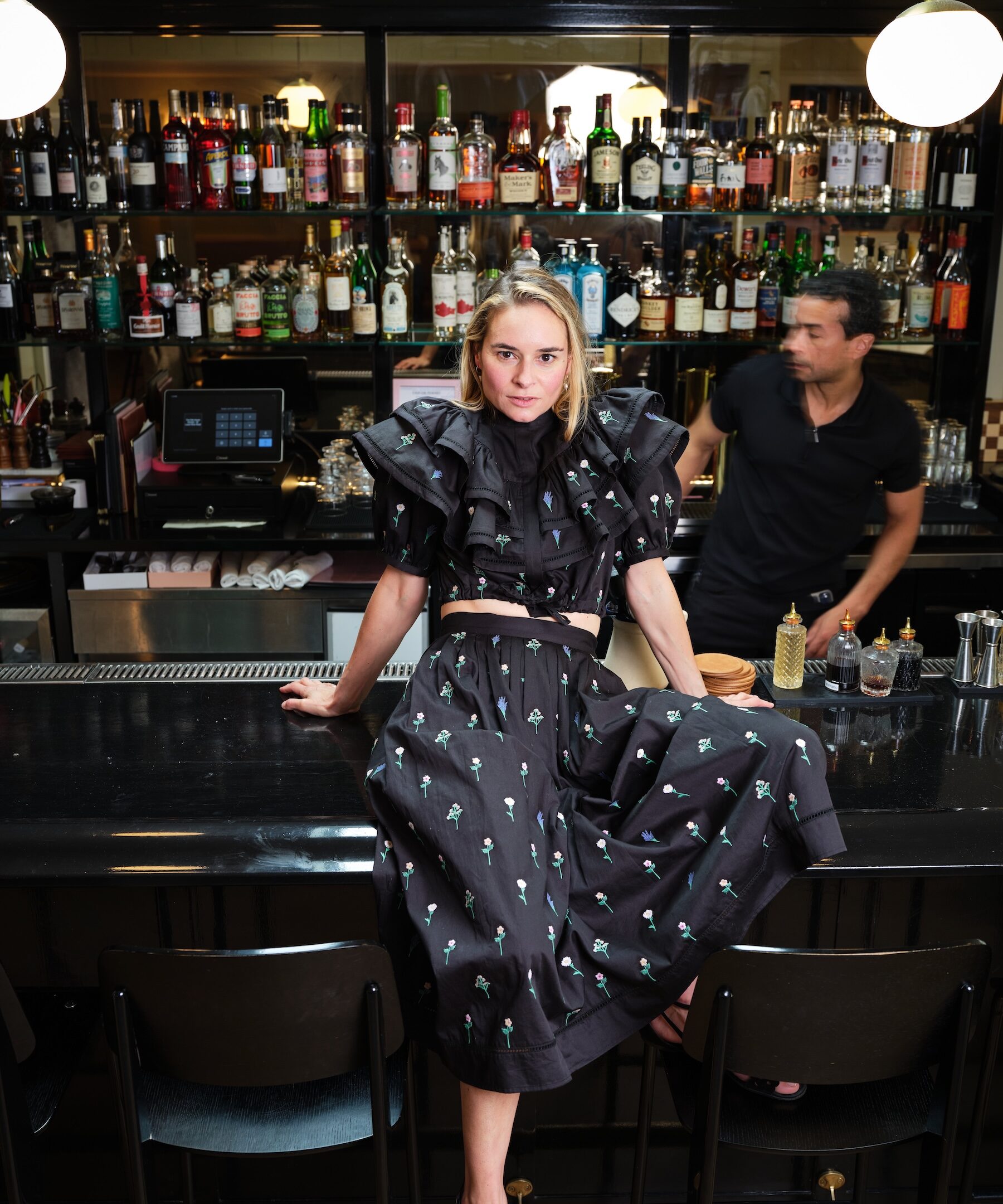
Walk into  West Cornwall’s The Pink House restaurant and it is hard not to notice Marina Muñoz flitting from table to table, chatting with customers, talking to the kitchen, working the room, and generally acting like any good host would at a dinner party. The restaurant’s creative director, general partner and manager, she has lived all over the world, speaks many languages, and has the kind of beauty that is seen in movies
and magazines.

In an age where chef-driven restaurant culture has prevailed for years—think Wolfgang Puck, Daniel Boulud, Gordon Ramsey, et. al.—there is still something special about a restaurant with a great host. A host is more than just a maître d’ taking reservations and showing people to their tables. A great host knows how to make every diner feel important—and want to come back. In Litchfield County we are fortunate to already have some pretty terrific hosts, such as James O’Shea at West Street Grill, Jo-Ann Makovitsky at Community Table, and Dino Kolitsas at Greca, and Muñoz possesses such talent in abundance.

“Being a good host is a very Latin thing. We love welcoming people, sharing meals. It’s in my blood,” says Muñoz, who is originally from Buenos Aires. But running a restaurant has also been a steep learning curve for her. “Kitchens are hard. Restaurants are hard. It’s not just about beautiful food and a beautiful room. It is about keeping the lights on, paying people fairly so they can afford to live and work here, buying food, managing waste, building a wine program, handling insurance and liability, and getting through slow weeks, snow days, and all the unexpected problems that come with this industry.”

Before moving to West Cornwall in 2022 Muñoz had no restaurant experience. “I started modeling as a teenager for Ford, and then worked as a fashion consultant and stylist with such clients as Vogue and Tiffany.” It was while renovating her home in the area that she was featured in HBO’s “For the Love of Kitchens”. She then connected with The West Cornwall Development Group, which offered her a chance to open a general store in town. “But then I pivoted again from retail to food,” she says. “And it’s such fun getting different groups together, throwing a nightly party. That’s when you get the real magic. So much of what I want is to bring more people to this beautiful town.”

To that end, she has worked with organizations such as the Cornwall Library and local artists and musicians to offer
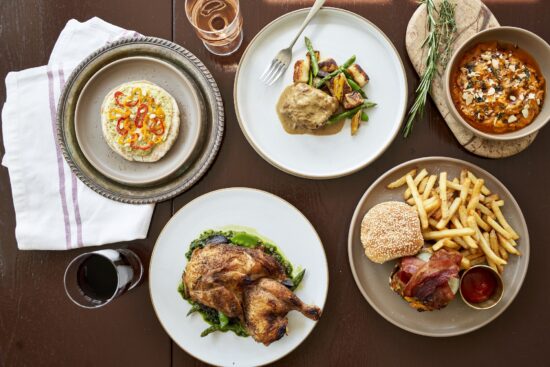
The Pink House as a place where the community can gather. “We are a place where everyone is welcome,” she says. “Snowboarders in winter, fishermen in summer, families, weekenders. We have books and chessboards and even pink chalk for children to draw with. Come in for a cocktail, a cup of Oolong, or a meal.”

For a few months in late 2025 the restaurant had to temporarily close and Muñoz and her business partner, lawyer David Ellen, strove to reopen. “I am incredibly grateful,” she says. “Other restaurant owners, hospitality friends, and people in the community have reached out and helped me through some very hard moments. That has reminded me why I want to be here and why The Pink House matters. I believe in this place, I believe in this community, and I am going to keep fighting for it. My hope is that The Pink House will be here for years and years as a place where people come together, share meals, work hard, feel cared for, and make memories.” thepinkhousect.com


Kent’s House of Books Turns 50 with Staff Cookbook Picks

House of Books staff recommend favorite cookbooks while sharing the Kent bookstore’s top bestselling culinary titles.

House of Books in Kent turns 50 this year. In the spirit of our food issue,  we asked the staff for their favorite cookbook recommendations—the list that came  back is as eclectic as the store itself. Their top three bestsellers are here too.

Turtle Island by Sean Sherman

“The best cookbooks are also about people and places. Here, Lakota chef Sherman delves into indigenous cuisines from North America, with astonishing stories linking the recipes to the natural world, its seasons, its peoples.”
Benjamin Rybeck
General Manager

The Hot Dog Cookbook by Farideh Sadeghin

“This smart little book has it all: history, cooking techniques, buns, and of course recipes from across
the states and around the world.”
Mary Hembree
Bookseller

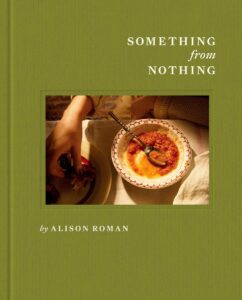
Something from Nothing  by Alison Roman

“Creative and delicious recipes using what you have on hand, like an appetizer of radishes with butter and salt to complement a main course of spicy vinegar chicken and tomatoes. Wonderfully simple!”
Mary Hembree
Bookseller

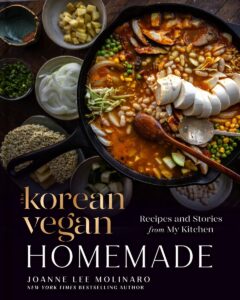
The Korean Vegan  by Joanne Lee Molinaro

“An Instagram star also crafts rich, beautiful cookbooks. Personal stories are interspersed with recipes that prove vegan dishes can easily equal meat and dairy in flavor and fun.” 
Benjamin Rybeck
General Manager

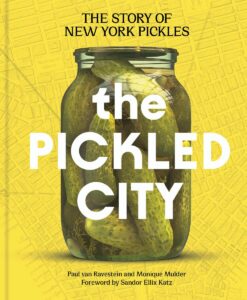
The Pickled City  by Paul van Ravestein, Sandor Ellix Katz, and Monique Mulder

“Take a briny journey through New York City, one pickle at a time. This book is for pickle-lovers, yes, but also for lovers of history and culture, compiled through vivid photographs and stories of interest”.
Rye Bell
Inventory coordinator

Top Three Bestsellers Are:

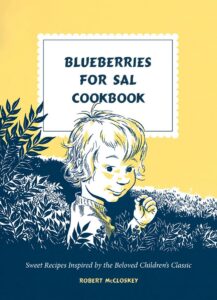
Blueberries  for Sal Cookbook credited to  Robert McCloskey
(the original children’s  book author; the cookbook is a  tie-in to his classic)

Good and Sweet by Brian Levy

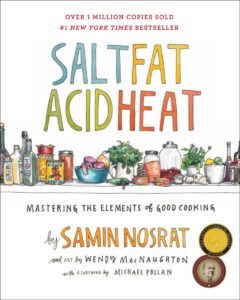
Salt Fat Acid Heat by Samin Nosrat

Arts Connected Returns at Buck’s Rock Camp in New Milford

Arts Connected brings artists, performances, and community together at Buck’s Rock Camp to support Northwest Connecticut’s creative culture.

Once each year, artists, patrons, and cultural advocates from across Northwest Connecticut gather to celebrate the creative spirit that defines this corner of the state. This summer, the Northwest CT Arts Council’s signature fundraiser, Arts Connected, finds an inspiring new home at Buck’s Rock Camp in New Milford, a legendary haven for young artists and makers for more than 75 years.

On Saturday, August 29, from 5 to 8 pm, guests will explore the camp’s picturesque grounds while enjoying an evening of art, music, performance, and community. Original works by notable regional artists will be on display for purchase, alongside local culinary offerings and cocktails. Live entertainment unfolds throughout the campus, with performances ranging from live jazz and African drumming to plein air painting demonstrations. The evening culminates with a special performance by internationally acclaimed dance company MOMIX, performing pieces from Botanica.

This year’s celebration is hosted in partnership with a distinguished committee of local arts champions whose support helps sustain the region’s vibrant cultural landscape: Tim Daly and Téa Leoni, Diane von Furstenberg, Patti LuPone, Jack O’Brien, Sam Waterston, Maria Horn, and Paul Winter.

More than a festive summer gathering, Arts Connected supports the artists, organizations, and creative initiatives that enrich life throughout Northwest Connecticut. Reservations: artsnwct.org

Page to Plate Returns to Sharon

Page to Plate brings acclaimed cookbook authors, culinary demonstrations, and food storytelling to Sharon in support of the Hotchkiss Library.

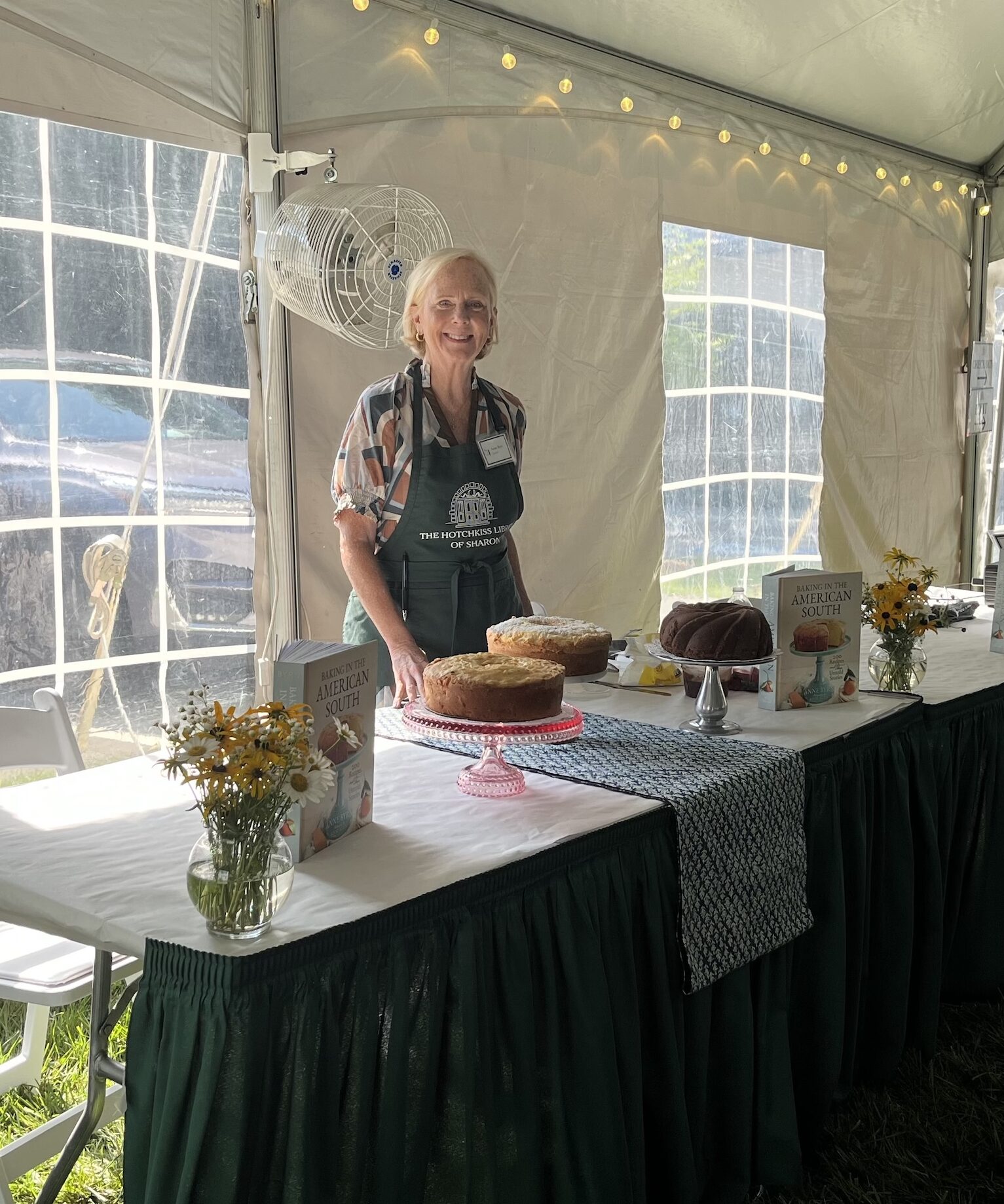
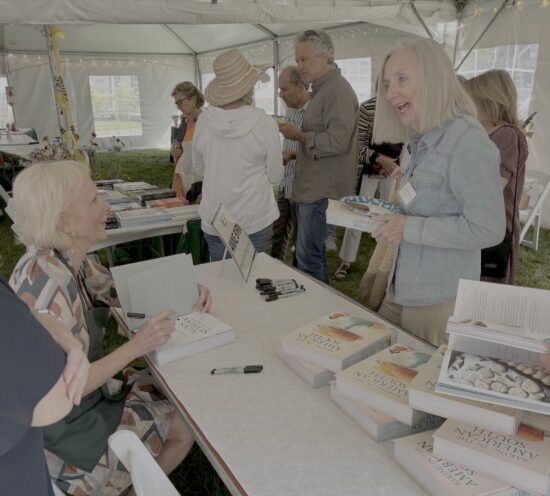
Page to Plate, a celebration of cooks and cooking, returns to the Hotchkiss Library of Sharon on Saturday, August 1, from 10 am to 4:30 pm as part of the 28th Annual Sharon Summer Book Signing Weekend. The day is built for anyone who likes to cook, read about food, or simply enjoy a good meal. Six accomplished food writers, cookbook authors, and cooks will gather to share stories, recipes, tips, and tricks, with signed books available for purchase after each presentation.

This year’s lineup brings together a remarkable range of culinary voices. Elisa and Robert Bildner will present The Berkshires Farm Table Cookbook. Melissa Clark of The New York Times will discuss Dinner In One and Dinner in French. Sabrina Rudin shares Healthy with a Side of Happy. Valerie Stivers offers The Writer’s Table: Famous Authors and Their Favorite Recipes. Anna Stockwell presents The Butter Book, and Kevin West closes with The Cook’s Garden. Whether you cook for one, two, or many, whether you are vegan, vegetarian, or a committed carnivore, there is something on the menu for every kind of reader and every kind of eater.

All proceeds directly support the daily operations of the Hotchkiss Library of Sharon. Morning, afternoon, and all-day tickets, which include lunch, are available at hotchkisslibraryofsharon.org/page-to-plate-2026. For more information, call the library at 860-364-5041.

Clinton Kelly’s Magic Sauce Recipe

Clinton Kelly shares his Litchfield County-inspired Magic Sauce recipe, a versatile pesto-style blend for pasta, sandwiches, and more.

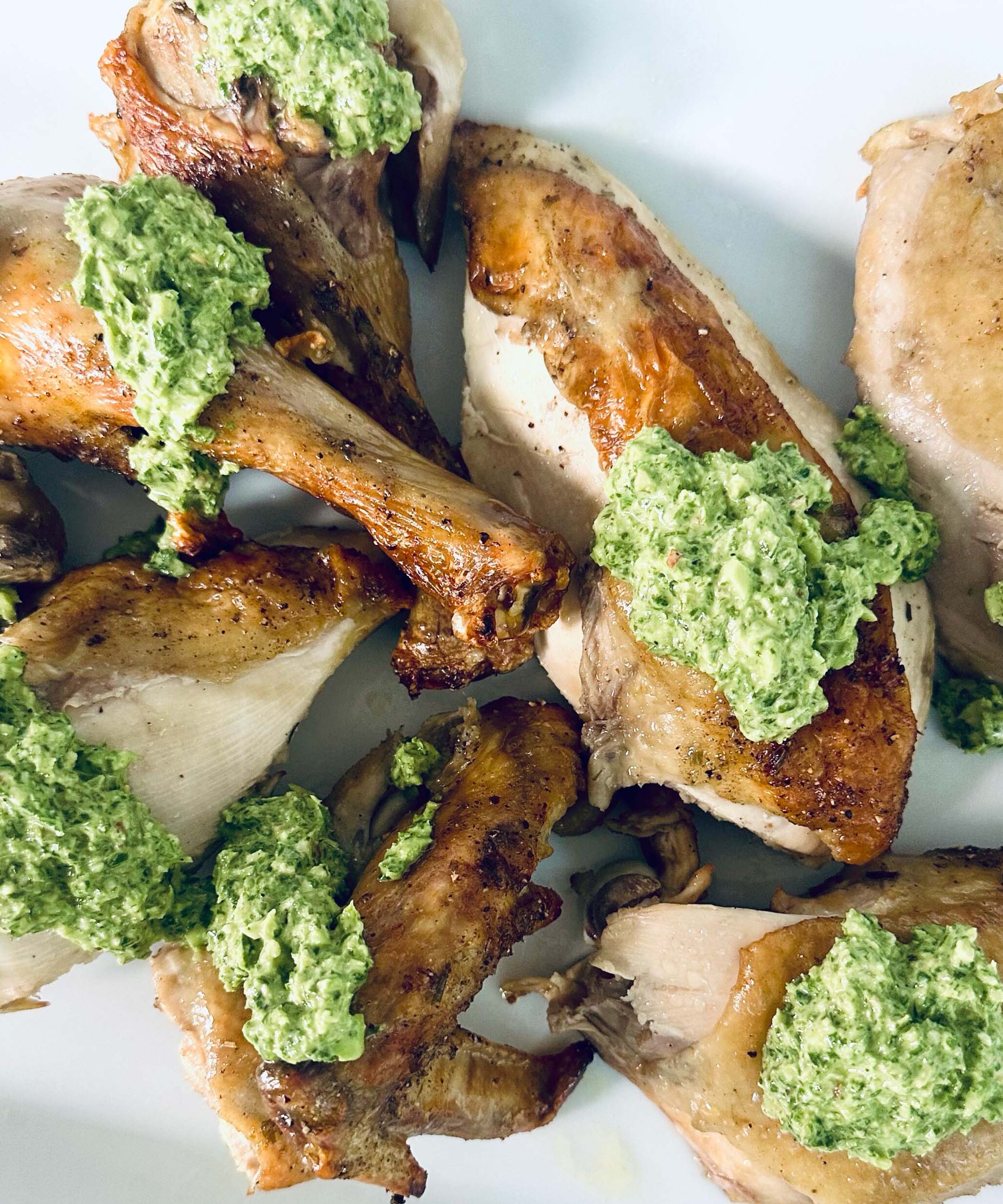
Let’s be clear: I’m not saying this is pesto. However, if you’ve spent some time in Italy, you might be aware that “pesto” comes from the Italian verb pestare, which means to pound or crush. And you also probably know there are dozens of regional variations besides the most common in the U.S., pesto alla Genovese. So, technically, I could call it pesto. But I don’t. Around my house, we call it Magic Sauce—my personal Litchfield County variation on pesto.

I toss it with pasta. I smear it on a roast beef sandwich. I dollop it on vegetables and fresh mozzarella. But its highest calling is being spooned over roast chicken the moment the bird comes out of the oven.

Ingredients:

A big handful of basil, a big handful of carrot tops, four garlic scapes, a small handful of walnuts, juice of half a lemon, a squirt of mayo, salt, pepper, and red pepper flakes, olive oil.

Put everything in a mini food processor (except the oil) and blend. Then add enough olive oil to make it saucy and spoonable. That’s it. Prego! (I mean that in the Italian “you’re welcome” kind of way, not the meh jarred sauce kind of way). —Clinton Kelly

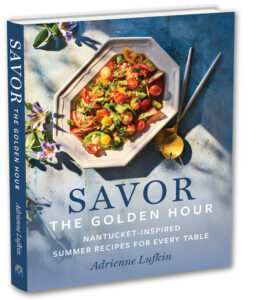
Adrienne Lufkin’s Savor the Golden Hour Celebrates Summer Cooking

Adrienne Lufkin’s Savor the Golden Hour shares effortless summer recipes inspired by Nantucket gatherings and golden evenings.

For Adrienne Lufkin, a longtime Litchfield County resident, summer means Nantucket—and Nantucket means the Golden Hour. That brief, radiant window when the sun begins its descent and water, sky, and sand dissolve into a single amber glow is the heartbeat of her new cookbook, Savor the Golden Hour, a love letter to the island and the easy, elegant meals that mark its long summer evenings.

Like so many in our region, Lufkin knows the rhythm of hosting friends and family through the warm months: the impulse to feed everyone beautifully, and the equally strong impulse to actually sit down and enjoy it. Savor the Golden Hour is built around that tension. The recipes are designed to be made ahead, to multiply into the next day’s lunch, and to leave the cook free to pour a glass of wine and watch the sky turn. An Everyday Balsamic Dressing pulls double duty as a marinade. Grilled vegetables become tomorrow’s pizza topping. Breakfast Bread Pudding moonlights as dessert, then quietly reappears at breakfast.

Lufkin, the founder of Struesli, the organic superfood granola brand, brings the same balance of approachability and refinement to every page. The result is a cookbook that travels well from a Nantucket porch to a Litchfield County kitchen— one that quietly reframes summer cooking as something to be enjoyed, not endured.

House of Books Turns 50

This year marks the bookstore’s 50th anniversary— a milestone owed in no small part to the community that has sustained it for decades.

By Paula Cornell

The doors of Kent’s House of Books open onto a clean, light-filled space lined with colorful spines and the faint smell of crisp paper. This year marks the bookstore’s 50th anniversary— a milestone owed in no small part to the community that has sustained it for decades.

House of Books first opened in 1976, founded by Carol Hoffman Matzke and her then-husband, John Hoffman. Matzke, who passed away earlier this year, leaves behind a lasting legacy in the store she built. Today, it’s in the hands of general manager Benjamin Rybeck. Rybeck has managed two other bookstores, but says few communities compare to Kent, where the town’s identity as a literary haven still holds.

“This is a smart group of people up here,” he says. “They care about books—not just because this is their local store. They care about this store because we care about books.”

Independent bookstores have weathered decades of disruption— from big-box retailers to Amazon to e-books. That House of Books continues to thrive is both rare and telling.

“You can’t discount the spirit of opinionated New Englanders,” Rybeck says. “People who care deeply about their town, their community. This is their place. Their home. They know every inch of it.”

For your next read, start with the staff picks wall or check the calendar for upcoming events. This summer brings authors Jenny Jackson and Grant Ginder for a talk and signing moderated by local author Amy Poeppel. The monthly book club is revisiting titles popular in 1976 in honor of the anniversary.

A look at what landed on the table in Litchfield County 250 years ago

A look at what Litchfield County families ate in 1776, from hearth-cooked meals and garden harvests to preserved foods.

By Alexandra Mazza
Illustrations by Shannon Blanton

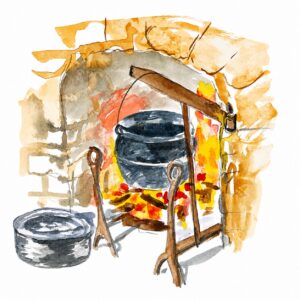
In the summer of 1776, as ink dried on the Declaration of Independence in Philadelphia and the young nation fought for its survival, the farm families of Litchfield County were doing what they did every night: pulling a cast-iron pot from the hearth and ladling out dinner.

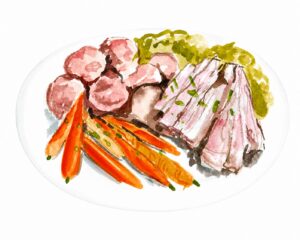
In the warm months, the meal was lighter and brighter than its winter counterpart. The brine barrel in the cellar stayed sealed, and the table filled with what the garden, the river, and the woods could provide. A summer supper might begin with fresh greens, peas, and new beets from the kitchen garden, alongside a piece of beef or pork too tender to bother salting. Trout from the Housatonic, eels, and the occasional partridge or rabbit from the surrounding hills rounded out the plate.

Salt meat still anchored the colonial diet, a cornerstone of tavern, military, and mercantile cooking in the days before refrigeration. But summer offered a brief, welcome reprieve. “A tavern or a large farm family might have a brine barrel in the cellar in which salt beef was kept for weeks.” In June, July, and August, that barrel could rest.

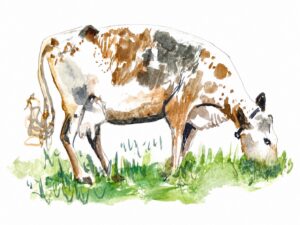
In Litchfield County, cattle were central to the local economy and identity. The rolling hills were well suited to animal husbandry, which meant beef–fresh in warm months and salted through the winter–was more accessible
here than elsewhere in colonial New England. A farm family in Cornwall, Washington, or Litchfield would have made the most of summer’s bounty before fall slaughter returned them to the brine.

In 1776, Connecticut was a primary provisioner of the Continental Army, and Litchfield, already an important crossroads and supply center, played a direct role in feeding the war effort. The same salt beef that fueled soldiers on the march fed the families who sent them off.

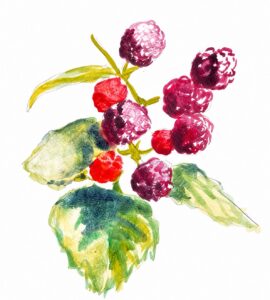
Breakfast was simpler: bread and milk or a cornmeal porridge called hasty pudding, cooked thick and sweetened with molasses, which was far more common than sugar in colonial households. The midday meal was the largest of the day, and supper was light. Summer brought fresh garden vegetables and wild berries. Eels and pickerel from the Housatonic, and the occasional partridge or rabbit from the surrounding hills, rounded out the plate. 

Preservation 
Before refrigeration, salting, pickling, smoking, and drying kept food edible through the year. Meat was brined in large barrels. Seafood, green walnuts, eggs, and fruits like cherries, peaches, and pears were packed into ceramic pots with vinegar, salt, sugar, and spices.

Drinks 
Meals were washed down with homebrewed cider, small beer, or diluted spirits, since water quality was often unreliable. Cider was a particular favorite across Connecticut and New England.

Kitchen Gardens 
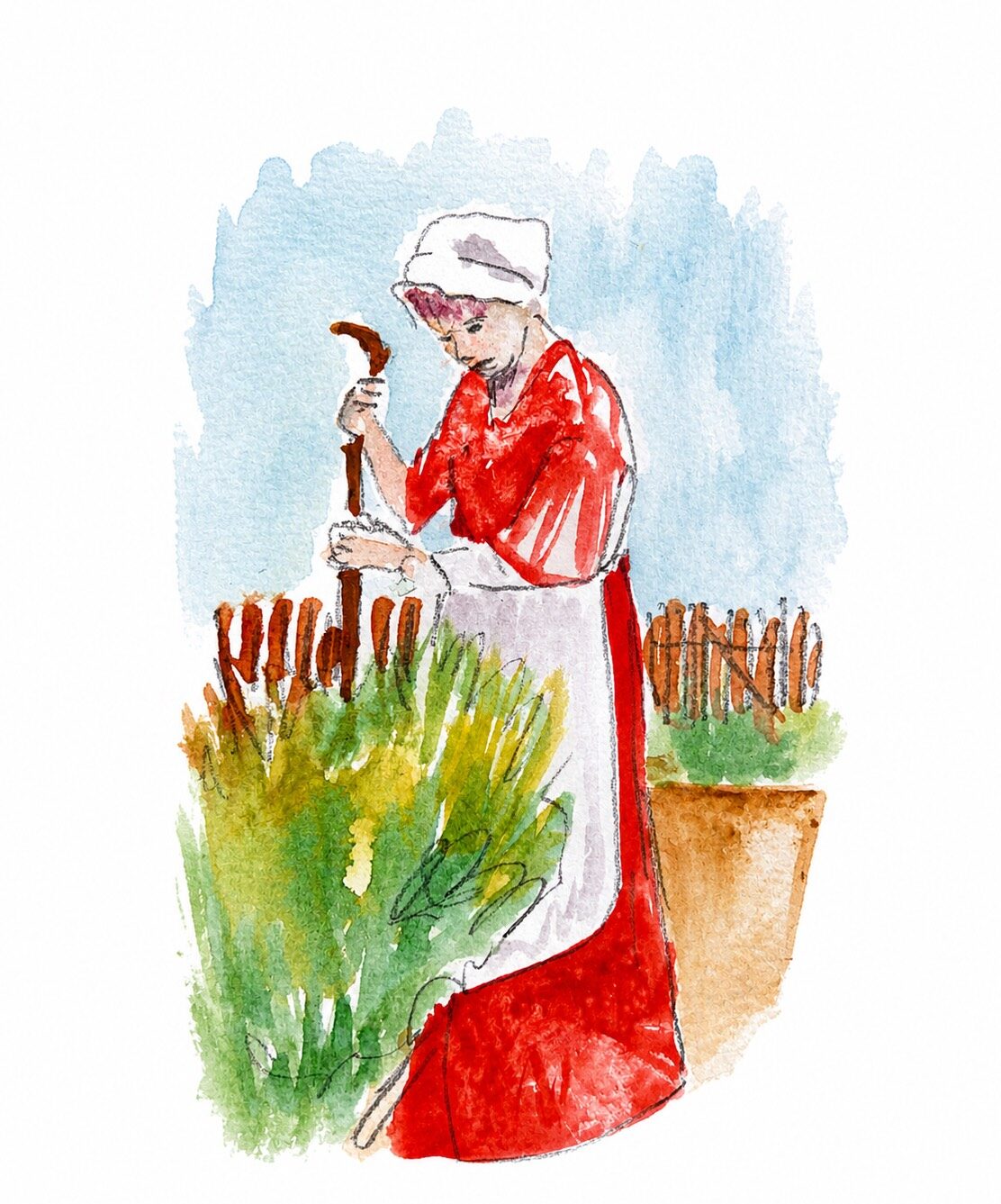
Most families kept a “kitchen garden” planted close to the house. These plots provided fresh vegetables, herbs, seasonings, and medicinal plants, since transporting produce any distance was difficult, especially in summer and winter.

The Hearth 
In a typical Connecticut home, the hearth was the heart of the house, used for warmth, light, and nearly every meal. Virtually all cooking happened over an open fire in cast-iron pots and kettles, even in the warm months.

Candy 
Sweets appeared mostly on special occasions like weddings and holidays. Most were made from maple sugar, which was also boiled down to coat hickory nuts and butternuts, a prized delicacy.

Cornbread
Cornbread and cornmeal dishes were essential rather than incidental. New England’s rocky soils and wheat blight made wheat unreliable, so flour had to be shipped in from New York, Pennsylvania, and beyond. Cornmeal stood in, eaten alongside meat and stew to soak up broth and stretch a portion.

4th of July Firework Shows

As you make plans for the 4th of July this year, here are some places in Litchfield County to keep in mind for firework shows.

As you make plans in celebration of the 4th of July, here are some places in Litchfield County to keep in mind for firework shows.

Bethlehem

America 250 parade and town picnic
When: July 4, parade at 3pm, town picnic 4:30 pm, firework display 9 pm
Where: Plumb Hill Middle School

Full event schedule: https://bethlehemct.org/index.asp?SEC=9A9D78CD-3FE3-44CB-B70A-73D95DBF5C86

Canaan

Summer Nights of Canaan
When: July 18, 9 pm
Where: Bunny Mcguire Park

More Information: https://www.northcanaaneventscommittee.org/event

Litchfield

Litchfield Park and Recreation
When: June 26, gates 6 pm, music 1pm, fireworks at dusk
Where: Plumb Hill Middle School

More Information: https://litchfieldct.myrec.com/info/default.aspx

Morris

Morris Bluegrass Festival
When: July 4, doors 12 pm, music 1pm, fireworks 9:15 pm
Where: South Farms

More Information: https://www.morrisbluegrassfestival.com/

Bantam Lake Protective Association
When: July 4, 9 pm
Where: Town of Morris Beach and Rec Facility

Full event schedule: https://ctvisit.com/events/bantam-lake-protective-association-fireworks

New Milford

The Greater New Milford Chamber of Commerce
When: July 3, fireworks at dusk
Where: Village Green

More Information: https://newmilford-chamber.com/events/fireworks-at-dusk/

New Preston/Washington

Lake Waramaug Association Fireworks
When: July 4, 9 pm
Where: Lake Waramaug

More information: https://waramaugassoc.org/upcoming-events/fireworks

Roxbury

When: July 3, Waterbury Symphony Orchestra 8 pm, fireworks 9 pm
Where: Hurlburt Park

More Information: https://www.roxburyct.com/DocumentCenter/View/1581/2026-06-12—Town-Email-News–Announcements?bidId=

Salisbury

The Salisbury Association
When: July 4, laser light show 9 pm
Where: Satre Hill

More Information: https://www.salisburyct.us/2026/06/4th-of-july-its-the-nations-250th-birthday/

Thomaston

Thomaston Fire Department Anuual Fireworks
When: July 31, 9 pm
Where: Sanford Field on Sanford Ave

More information: https://patch.com/connecticut/across-ct/thomaston-volunteer-fire-department-annual-carnival-parade-include-fireworks

Torrington

Torrington’s Independence Day celebration
When: July 10, rain date July 11, 4 – 1o pm
Where: Torrington Middle School

More information: https://www.fox61.com/article/news/local/2026-connecticut-fireworks-july-4th/520-b2b8bf07-f129-45cc-965f-2809ae4c4f43

Woodbury/Middlebury

3-D Fireworks
When: July 4th, 10:00 pm
Where: Lake Quassapaug

More information: quassy.com

Watertown/Waterbury

Fireworks at Holy Land

When: July 5, 9:15 pm
Where: Holy Land USA – Brass Mill Center

More information: https://ctvisit.com/events/waterburys-independence-day-fireworks


Where Childhood Meets the Working Farm

Arethusa Farm Camp offers hands-on agricultural education, connecting kids with animals, sustainability, and farm-to-table practices.

Arethusa Turns 140 Acres into a Summer Classroom

By Clementina Verge 

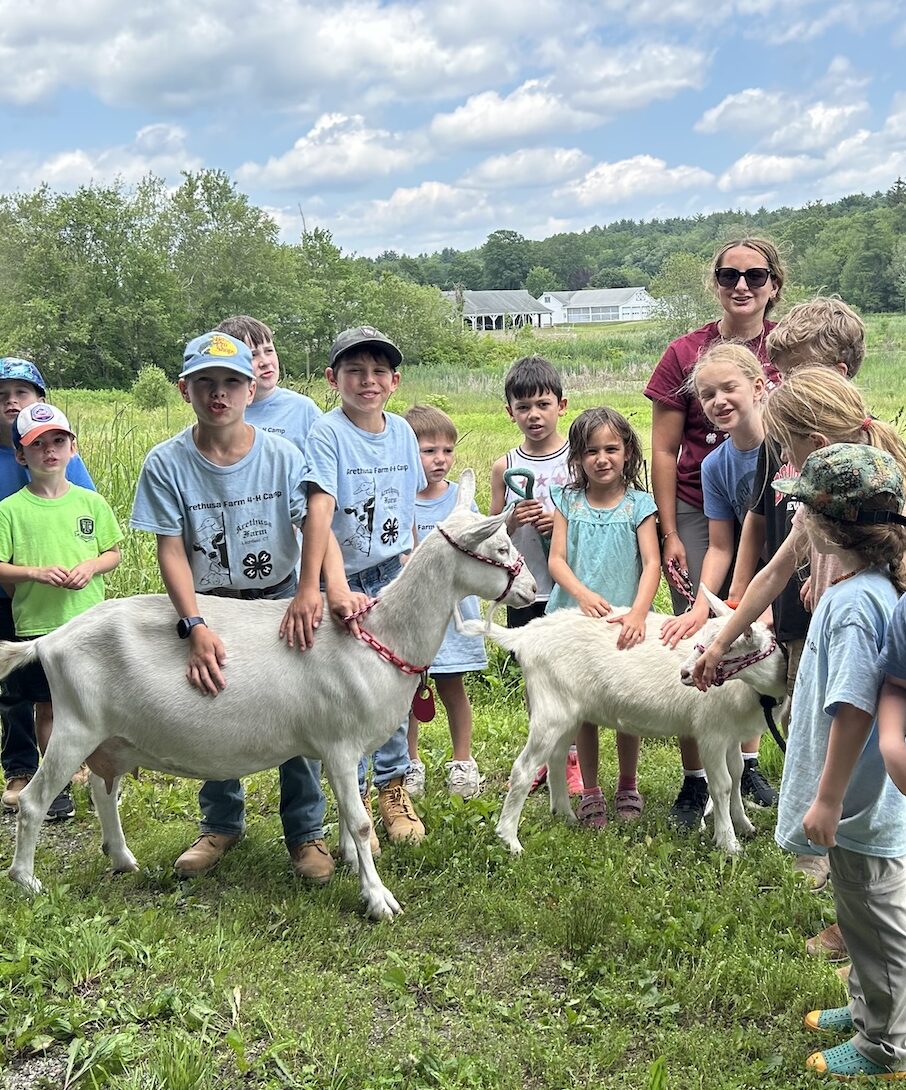
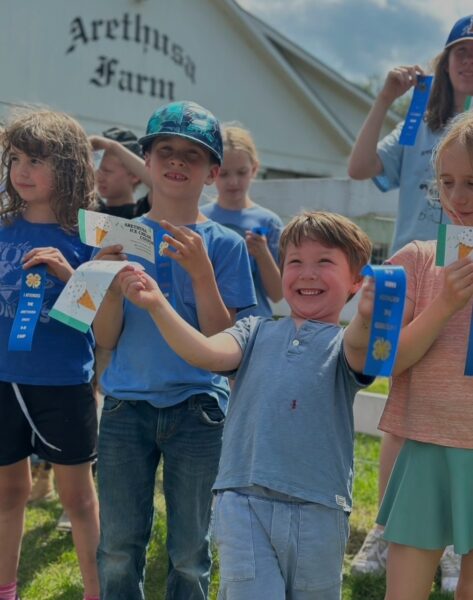
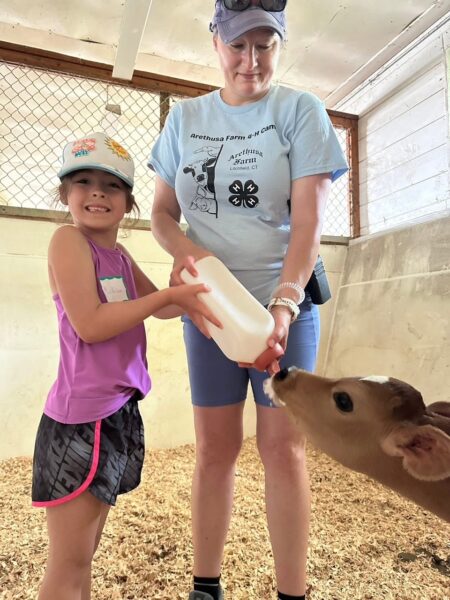
As children care for cows and goats, await poultry incubation, and learn about tractor maintenance, their days at Arethusa Farm Camp provide exciting opportunities to connect with nature, learn sustainable practices, and cultivate a lifelong appreciation for where food truly comes from.

Here, children replace screens with fresh air, and step into the daily rituals of a working farm that once housed the nation’s leading dairy cattle. What unfolds over the course of each weekly session, June through August, is not simply recreation, but an authentic agricultural experience.

“There are increasingly fewer farms, less connection to agriculture and food sources,” says newly appointed executive director Bill Davenport, a lifelong Litchfield resident and seasoned agriscience educator. “We strive for children to learn appreciation for farms and farmers, for local food, and for open land. It becomes a lifelong connection to all aspects of agriculture as we nurture the next generation.”

The camp is one of the most visible ways that Arethusa Farm Foundation, established in 2023, honors the donation of 140 acres by philanthropist Anthony Yurgaitis, who envisioned preserving the land’s rural character while establishing a center for agricultural education for all ages. Honoring the mission, camp days are thoughtfully structured, tactile, and joyful.

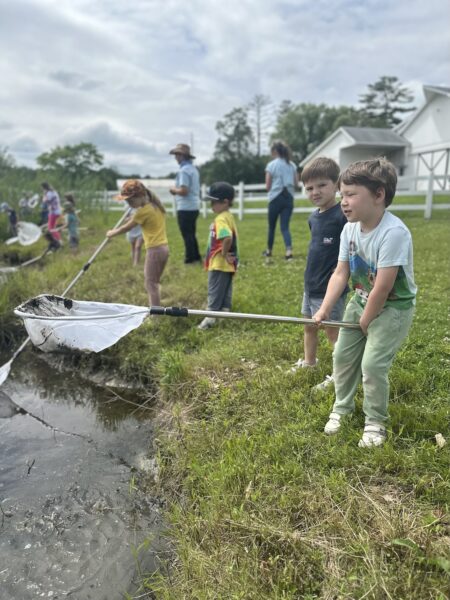
Arethusa was established in 1868 and named after an orchid that grew in a swamp on the land. Almost 160 years later, children ages five to 13 explore its meadows and woodlands, observe wildlife, and go hiking and fishing. Among garden beds, lessons in soil science, composting, and companion planting abound, while beekeeping emphasizes the importance of pollinators in balancing sustainable ecosystems.

The experience continues in barns and pastures where, under expert guidance, children learn the fundamentals of animal care—from feeding and grooming, to understanding the needs of horses, cows, pigs, sheep, and goats. Veterinary sessions include professional guest speakers who share core concepts, discuss current issues, and offer practical insight into animal health, bridging science with real-world application—like learning to suture—in a way that feels engaging and empowering, evidenced by children’s enthusiasm and parent feedback.

“Parents tell us that children go home exhausted, excited to go to bed and to return in the morning. It’s a win-win,” Davenport jokes. He also notices markedly increased confidence in children as they acquire skills and practice creativity through using tools, woodworking, and handling farm equipment. Whether they are taking measurements, building birdhouses, repairing a fence, or checking fluid levels and tire pressure, the experiences leave an imprint.

By week’s end, the transformation is noticeable in campers gushing with stories, carrying a deeper awareness about the “farm to table” process, and displaying a sense of independence and connection increasingly lost in modern childhoods molded by technology.

With more than three decades of experience spanning teaching and 4-H leadership, Davenport brings expertise and authenticity to the foundation’s expanding programs. This commitment ensures that initiatives like the summer camp remain a priority, nurturing the next generation with an understanding of agriculture and sustainability. Adults will find inspiration and hands-on education here, too, whether they’re acquiring new skills or deepening existing passions.

Camp registration is open until filled, sign up at arethusafarmfoundation.org

  • STAY IN THE KNOW

    Your weekly guide to can't-miss events, hidden gems, and local favorites in Litchfield County. Sign up now for curated things to do, eat, and explore—delivered every week. It’s free. It’s local. It’s essential.

  • Karen Raines Davis