

Your guide to the heart of Litchfield County:
Discover local stories, hidden gems, and must-know events.

YardScapes: Expert Landscaping Design & Maintenance

YardScapes offers expert landscaping design, construction, and maintenance services in Connecticut, creating sustainable outdoor spaces.

YardScapes Landscape Professionals has been transforming outdoor spaces across Connecticut for 35 years. Founded in 1990 by Shayne Newman, the company specializes in landscape design, construction, and maintenance for residential and commercial clients. Known for its commitment to excellence, sustainability, a passionate team with deep-rooted love for the natural world, YardScapes continues to create outdoor environments that bring people closer to nature.

1. What services does your business provide?
YardScapes offers a full suite of landscaping services, including design and build for outdoor kitchens, waterscapes, hardscapes, and ornamental gardens. Maintenance services cover garden care, lawn care, pruning, mulching, and landscape pest control. We also handle seasonal needs like spring/fall cleanups and snow removal, ensuring year-round care for every property.

2. What inspired you to start this business, and what do you love most about it?
Growing up in the Colorado and Idaho wilderness, I developed a deep appreciation for nature. That experience inspired me to pursue a career where I could stay connected to the outdoors. Founding YardScapes allowed me to combine my passion for landscaping with the desire to help others enjoy their outdoor spaces. What I love most is knowing we’re helping clients strengthen their relationship with nature.

3. What makes your business unique compared to others in the area?
We’re proud to be the only Landscape Industry Accredited company in Connecticut. We stay involved in our industry through professional organizations and commit to continuous learning. Our team regularly attends local and national seminars to stay on the cutting edge. We’re also deeply engaged in the community through volunteer events, including two annual Days of Service, Renewal & Remembrance in Washington, D.C., and our annual Quad-Am Golf Classic, now in its 20th year.

4. What is your favorite flowering plant for adding color to a garden?
White hydrangeas bring timeless beauty to any landscape. They brighten both sunny and shaded spots, pair well with other plants, and offer a long bloom period. Some favorites include Bobo, Vanilla Strawberry, and Annabelle hydrangeas.

5. What eco-friendly or sustainable gardening practices do you recommend?
We advocate for Integrated Pest Management (IPM), which balances cultural, biological, and chemical methods to protect landscapes. It starts with soil testing, then includes regular monitoring, organic-based fertilizing, proper watering, pruning, and aeration. This comprehensive approach keeps landscapes healthy while reducing the need for chemicals.

6. What is one common mistake gardeners make, and how can they avoid it?
Improper watering is a big issue—both overwatering and underwatering. Too much leads to disease and weak roots; too little causes wilting and stunted growth. We recommend deep, infrequent watering to reach the roots and promote drought tolerance. This applies to both flower beds and lawns. – yardscapeslandscape.com.

[Sponsored]

Lakeville Daffodil Field: A Stunning Springtime Spectacle
Admire a stunning acre of over 50,000 daffodils in Lakeville, a vibrant spring spectacle that captivates all who visit.

Spring’s Glory: The Daffodil Field in Lakeville
By Jane Garmey

Photographs by Rana Faure

For a few precious weeks beginning around mid April, cars swerve to a stop on Salmon Kill Road in Lakeville; bicyclists and hikers gaze, mesmerized. Their attention is directed toward a ravishing sweep of more than 50,000 daffodils, stretching as far as the eye can see in front of a picture-perfect 1797 saltbox.

This breathtaking display, immortalized by the 19th-century English poet William Wordsworth as “fluttering and dancing in the breeze,” is a glorious reminder that winter is finally over and spring is here.

When Inge Heckel, former president of the New York School of Interior Design, purchased her house in 1998, it came with the incredible bonus of an acre of daffodils. They were planted by Pearce Davis, the previous owner but one. He was an economics professor who had owned the house for more than 50 years. It was his idea to fill the acre that the daffodil field now occupies. To do this, he must have planted at least 1,000 daffodils a year.

For any gardener or garden lover, inheriting an established field of daffodils of this size is like winning the lottery. Each year, Inge and her husband, Jeff Hamlin, add more daffodils along the fence line and fill in any bare spots they find. However, Inge sees her role as more caretaker than curator. As she explains, “I just leave everything alone; but it is critical for the field to be mowed annually, and I wait until August to do that.” Some years, depending on how fast and tall the meadow grows back, she will have it mowed again in October so the daffodils will have an easier time of pushing through the grass in the spring.

Cultivating a low-maintenance garden is today’s hot topic. Wildflower meadows, drifts of native blooms, adopting organic practices, and moving away from perfectly mown lawns are all part of a movement to bring a more natural and less cultivated look to our gardens, and to design them with ecology in mind. What this usually means is not so much a low but a lower-maintenance garden. A garden of daffodils, however, is truly low maintenance.

There are 36 known varieties  of daffodils and literally thousands of cultivars. We know they flourished in gardens as long ago as 300 BC, when the Greek botanist and philosopher Theophrastus listed and described them. Spreading from Europe to northern Africa, daffodils were brought to Britain by the Romans. In addition to being low maintenance, their other virtues include being  deer resistant, self-propagating, and easily able to multiply. All they ask for is a good haircut once or twice a year. What more could one ask from any plant?  Think Wordsworth, spring, and drifts of glorious blooms. And for those lucky enough to live in this part of the Northwest Corner, don’t forgo the pleasure of making a detour to see Inge and Jeff’s daffodils.

Secondhand Chic: The Art of Consignment

Stella Rose offers curated high-end consignment fashion, saving resources and offering unique, stylish pieces at great prices.

By Michelle Madden
The problem with fast fashion is fast waste. We buy, wear, and dispose, and think little of environmental impact. Theresa Mieczkowski, the owner of Stella Rose Designer and Vintage Consignment in New Preston, shares a startling statistic: “Last month, we sold 750 items, which saved over half a billion gallons of water required to grow the cotton and dye the materials.” 

Mieczkowsk’s guiding principle—of doing right by the environment—has led to a thriving business.

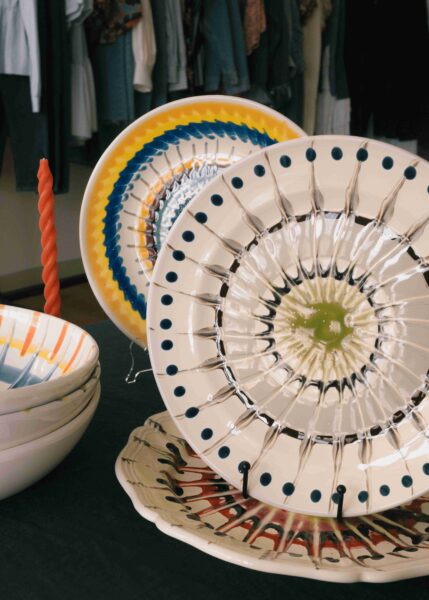
The shop is a whimsical, sensory delight. Two skeletons greet you. A candle is burning. Necklaces dangle from light fixtures. Shoes fill a repurposed kitchen hutch. And a dog named Mr. Darcy, made from recycled newspaper, sits quietly on a table.

Brands like Hermes and Prada hang not far from J.Crew and L.L. Bean. As you go down the shop’s corridor, so too do the prices, until the final “last chance” room at 75% off. Anything that doesn’t sell is given to local shelters—500 items in the past year.

Lower prices may be a draw, but it’s the partnership with the consignees that keeps the business in high gear. Mieczkowski gets about three new consignees a day. “When I post an outfit on Facebook and it’s one of their items, they share it with all their friends!” Best of all, our planet shares in the upside too.

255 New Milford Turnpike, New Preston 

—Stellarosect.com 

Enjoy this listing of consignment shops in the area:

The Hunt
This large emporium and beautifully curated space specializes in glassware and other housewares, clothing for all ages, books, jewelry, shoes, purses, and other accessories.
20 Bank St., New Milford
@thehuntct

Rachel’s Quality Consignment
Featuring high-end, gently used designer treasures including clothing, handbags, shoes, furs, fine and costume jewelry, and everyday wear for women, children, and men.
465 Bantam Rd., Litchfield
@rachelsqualityconsignment

Emporium of Litchfield
An eclectic consignment shop specializing in gently used antique and modern home decor, including furniture of all sizes, artwork, and kitchenware.
624 Bantam Rd., Bantam
@TheEmporiumofLitchfield

Stella Rose Designer & Vintage Consignment
New consignments arrive daily at Stella Rose, where stylists help curate women’s fashion, with high-end purses, shoes, and clothing from brands like Prada, Louis Vuitton, Burberry, and J.Crew.
255 New Milford Tpke., New Preston
@stella_rose_consignment_

Thrift Mart of New Milford
A volunteer-run thrift shop with gently used toys, books, shoes, clothing, and home decor, and constant sales.
146 Danbury Rd., New Milford
@ThriftMartOfNewMilford

Thread Emporium
Located in downtown New Hartford, Thread Emporium specializes in seasonal fashion and shoes, offering a comfortable environment with new items every week.
537 Main St., New Hartford
@TheThreadEmporium

Peacocks & Lilacs Thrifty Boutique
Run by a mother-daughter team, Peacocks & Lilacs offers high-end, gently used clothing from brands like Coach, Talbots, and Burberry, with a soothing lilac-painted shop filled with repurposed items and a peacock theme.
452 Main St., Winsted
@Peacocks&LilacsThriftyBoutique

Christina’s Consign Mint
In a brightly colored, welcoming shop, Christina’s Consign Mint specializes in women’s fashion at reasonable prices, with a selection of designer bags and prom/party dresses.
18 McDermott Ave., Torrington
@Christina’sConsignMint

The King’s Closet Thrift Store & More
Located on Main Street with a window display of their treasures, The King’s Closet specializes in modern and vintage clothing, and gifts for special occasions and holidays.
40 East Main St., Torrington
@kingscloset21

Petals and Threads
A trendy consignment shop specializing in the latest women’s fashion, jewelry, soaps, and eco-friendly items, including plants, macrame plant holders, and green gifts.
705 Main St., Watertown
@petalsandthreadsct

Clothes Tree
A nonprofit charitable thrift store offering a large variety of antiques, home decor, and clothing, with a wide selection of children’s clothes and toys spread across five rooms in a home.
906 Bantam Rd., Bantam
@clothestreebantam

The Quality Thrift Shop
The Quality Thrift Shop is a non for profit supporting local charities.  We have household goods, women’s, men’s, children’s items as well as something for your pet!
99 N Main St., Kent
@qualitythriftshopkent

Indoor Tulips Bloom Early at Anderson Acres Farm

Discover Anderson Acres Farm’s vibrant indoor tulips and year-round cut flowers, bringing spring early to Kent.


In February and early March, the fields are brown and veiled in icy frost when Cameron Caruso arrives for work at Anderson Acres Farm in Kent. But then she opens the door to the greenhouse, and it’s instantly spring. Not just a hint of spring, but the full-blown beyond-the-rainbow version. By the hundreds, tulips are unfolding in luscious colors that would make Rembrandt’s brushstrokes envious. There’s the earthy scent of warm soil, there’s a hint of floral perfume mixed in, and the power surge of nature’s bounty is unleashed. 

Most of us would find the disconnect between the season outside and what’s happening indoors to be disconcerting, but for the crew at Anderson Acres Farm, delivering spring to the region ahead of schedule is the mission statement.

It’s all part of Michelle Saltz’s vision. She and her husband, Ron Saltz, fell in love with Anderson Acres in 2011, purchasing the 214-acre farm from Ky Anderson, whose family bought it as a dairy farm in 1903. In the 1960s, it morphed into a horse boarding/riding stable, until Ky put it on the market when she was 86. “She came over on a tractor to meet us,” Saltz remembers of the day when she and her husband became “so overcome by the beauty of the place that we couldn’t stop thinking about it.”

There were issues. Although the parcel totals 214 acres, the land is largely protected by a conservation easement, with only a 20-acre envelope available to be developed. Subtract wetlands, and fewer than five farmable acres remain. 

Another stumbling block was lack of experience. The Saltzs came from an acre in Scarsdale, never having farmed before. And yet, they bravely dove into livestock. When the chickens (and several other false starts) didn’t work out, Anderson Acres ultimately veered into cut flowers. 

Although their inventory of cut flowers is long and inventive, tulips turned out to be their parachute. When COVID shut everything down, the greenhouse was bristling with a particularly robust crop of those promising spring flowers, all poised to perform. Anderson Acres had a surplus of the world’s happiest, most-beloved blossoms in April 2020 when the world went into lockdown. 

In a moment of unprecedented trauma, tulips came to the rescue. “I put the word out on Instagram, people spread the news, and we sold every flower that we could grow,” Saltz recalls. “It was a place where the community could safely come together.”

Enthusiasm for the crop never stopped. Anderson Acres still sells tulips by the thousands, now under the expert eyes of farm manager Cameron Caruso and a hardworking, creative team of very dedicated staff. In October and November, the work begins. Each crate gets 66 bulbs. They are chilled in coolers, then brought into the warmth in relays. The farm grows the gamut of types, from mainstays to rarities. 

And the tulip interlude is just the beginning of a petal parade that segues into anemones and ranunculus, followed by daffodils and hyacinths, then swinging to the full pageant of field-grown flowers: annuals, perennials, shrubs, you name it. The CT Flower Collective, a co-op of floral farmers and florists, and several local outlets are the primary customers. 

And Anderson Acres continues to serve their neighbors as well. Hand-tied bouquet subscriptions are impressively popular, starting in spring and continuing nonstop through the various crops. Not only is the year a kaleidoscope of colorful blossoms, but Michelle Saltz can now proudly add “farmer” to her resume. We all have the humble tulip to thank. —andersonacresfarm.com

By Tovah Martin
Photographs by Rana Faure


Kay Sage: Creative Journey in Woodbury

Kay Sage’s time in Woodbury marked a period of artistic breakthroughs, including bold colors, collage work, and creativity.


By the time she moved to Woodbury in 1941, the artist Kay Sage had already established herself as a prominent Surrealist painter.

An art movement that began in Europe after World War I, Surrealism sought to express the unconscious mind. Sage gained notice in Europe and the U.S. for employing subdued colors and diffused light to create landscape images as a metaphor for the mind.

Yet her arrival to the Northwest Corner of Connecticut—settling into a 19th-century farmhouse on Old Town Farm Road after living in Paris and New York—proved to be the most productive period of her career. It coincided with a surge of new works, as well as five volumes of poetry.

There were also artistic breakthroughs.

Woodbury is where Sage began experimenting with bolder and more intense colors, and the use of drapery in paintings like Too Soon for Thunder, which features a desolate landscape filled with architectural motifs. She introduced tightly controlled brushstrokes to further separate herself from the work of her husband, the French artist Yves Tanguy, whose paintings displayed a recognizable style of nonrepresentational Surrealism. And she began working with collage, which garnered acclaim for the way she assembled abstract shapes cut from magazines, drawings, and watercolors.

Woodbury also supplied Sage with a bustling milieu of artists that aided her creative output.

Artists Alexander Calder and Arshile Gorky were Litchfield County neighbors and frequent visitors to the Sage home, as was Roberto Matta. André Breton, known as the father of Surrealism, made regular trips to Woodbury from New York to mingle with the growing number of transplanted Parisian artists who transformed Connecticut into a Surrealist capital-in-exile.

Sage’s cousin, sculptor David Hare, also lived nearby in Roxbury, and was a regular at the Sage residence—a wood-framed home filled with original Surrealist art, mid-century furnishings, and a barn that housed separate studios for Sage and Tanguy.

“The influx of artists into Woodbury really formed an atmosphere of creative energy in the town,” says Karen Reddington-Hughes, Woodbury’s first selectman and the owner of Abrash Gallery on Main Street. She says Woodbury appealed to New York artists who craved the rural countryside but couldn’t afford the more affluent Fairfield County. “So, when Calder and Gorky began arriving in the late 1930s and early ’40s, they attracted other creatives who felt very comfortable living and working here.”

Some of Sage’s creative output during her Woodbury years is currently on display at the Mattatuck Museum. “Modern Women: Georgia O’Keeffe and Kay Sage” runs until June 15, and includes works from a collection of more than 400 items gifted to the museum through Sage’s estate.

It’s the largest holdings of Sage art and ephemera of any institution, says Keffie Feldman, Mattatuck’s chief curator. The trove goes well beyond paintings and drawings to include collages, constructions, prints, and personal artifacts.

“The exhibition really tries to capture the full breadth and scope of Sage’s work,” says Feldman. mattmuseum.org/exhibition/modern-women

By Troy McMullen

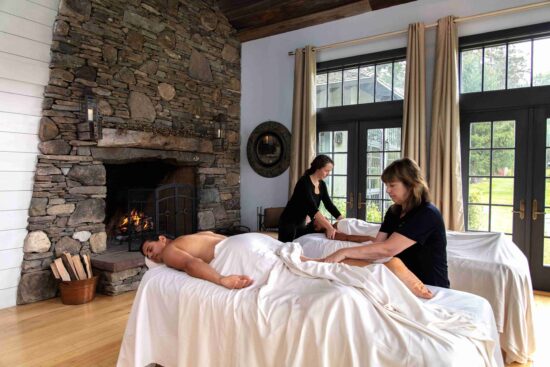
Charym: A Sanctuary for Holistic Wellness in Litchfield

Discover Charym in Litchfield, a wellness sanctuary offering yoga, massage, acupuncture, and more for holistic health.

By Wendy Carlson

Photograph by Wendy Carlson

There wasn’t a defining moment in Silvana Da Luca’s life that set her on the path of yoga and wellness. “It was more like three roads converging: my personality, my upbringing, and years of unresolved trauma,” says the new owner of Charym in Litchfield. 

Born in Bulgaria, Silvana grew up living in different places in southern Europe, where she walked everywhere, hiked, biked, skied in the winter, and swam all summer. Even now, if she goes too long without physical or mental activity, she feels restless. Throughout her teens, she was a jazz ballet dancer and played volleyball. Then in her 20s and 30s, she discovered Pilates. “Yoga came later, in my 40s, when my body signaled the need for gentler practices. With scoliosis and two epidurals behind me, Pilates and yoga have been essential for keeping my core strong and managing back pain,” she says.

Wellness has always been a throughline in her life. She grew up on a vineyard with a small farm, where family meals centered on homegrown fruits and vegetables. In fact, she hadn’t tried eating cereal or fast food until she moved to the U.S. in her early 30s. So it was no surprise that Litchfield, with its organic farms, hiking trails, and rural beauty, felt like home to her when she first visited, more than eight years ago. At that time, she was also in the middle of that journey of self-discovery, and was healing from a toxic marriage and divorce. Reconnecting with nature, slowing down, and returning to her roots has helped her find balance and peace. 

Silvana and her current husband, Jeff, have raised four kids—all in college now. Despite having a full-time corporate job in New York City and running a global nonprofit for digital commodities, she found herself looking for the next challenge. The opportunity to take over Charym last year came at a serendipitous intersection of timing and shared need—both for her and for Bruce Schnitzer and Alexandra Champalimaud, the husband-and-wife team who were the studio’s founders and are owners of West Street Yard, where Charym is located. 

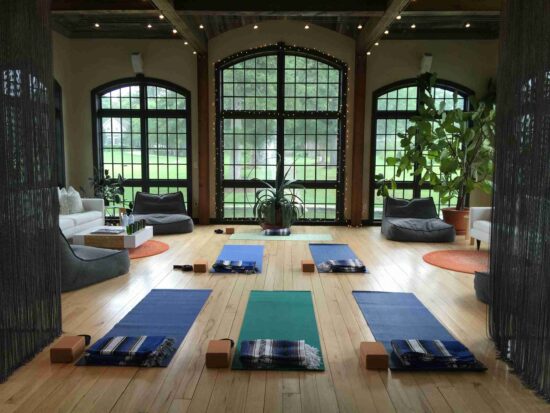
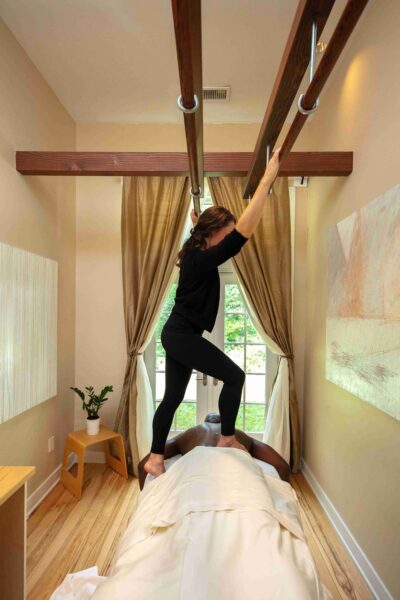
Silvana envisions Charym evolving into a sanctuary for holistic wellness, a gathering place that nurtures mind, body, and spirit. Under the Charym brand, she is expanding the studio’s menu to include therapeutic massage, acupuncture, nutritional counseling, Ayurveda, and other modalities that promote overall well-being. She has been working with local businesses to organize the first Health and Wellness Festival this summer, set for July 5 and 6. It will be a step toward her goal of making Litchfield a health and wellness destination. 

“Ultimately, I want Charym to be more than a studio—I want it to be a cornerstone of healing and self-discovery, where everyone feels welcomed, seen, and cared for, no matter where they are on their path,” she says.

“I truly believe that when you infuse a place with good intentions, positive energy, and love, it transforms into something special.”

Rewilding Your Yard to Support Pollinators

Learn how rewilding your yard with native plants helps support pollinators like bees, promoting a balanced and thriving ecosystem.

Learn how to support pollinators like bees and moths by planting natives and rewilding your yard.

By Frances Chamberlain

It’s almost spring, and time for the air to fill with flying insects, moths, and bees. While we may find them annoying, they are necessary to our environment. In fact, according to John Markelon, an environmental educator from Litchfield, about 80 percent of a human’s calories come from ecological pollinator foods. And pollinators are part of the food chain for all other animals.

All these moths, wasps, bees, and even flies help to pollinate plants. The insect collects pollen from a flower, then flies to another plant, where the pollen sticks and helps to make other fruits and flowers. Foods that depend on pollination include apples, oranges, coffee, peaches, pears, and many others. Bees are among the best-known pollinators because they also give us delicious honey.

Flanders Nature Center in Woodbury, a 200-acre preserve with several beehives, uses no pesticides or herbicides, providing lots of food to keep the bees healthy and happy. The Flanders bees live in an electrified enclosure—to protect them from bears—and are close to a wide-open field, where they can feast on goldenrod. 

Al Avitabile, a longtime beekeeper and consultant to Flanders, is assisted by a board member, John Trainor. They care for the bees, which involves treatment for mites and checking the hives a couple times a month. The fascinating story of how beehives work is complex but includes behaviors like fanning the air when the temperature rises above 95 degrees. Avitabile says bees can recognize ultraviolet colors and identify shapes like triangles and circles. They have very particular habits around their hives that help protect the hive from danger and keep the queen safe.

Extracting the honey is time-consuming, says Trainor, who recently harvested 70 pounds from two hives—but it took him two days to pull the honey through cheesecloth to make 36 quarts.

According to Avitabile, large beekeepers make their operations profitable by renting beehives to farms. “Ninety percent of the world’s almonds are pollinated by 1.5 million hives being brought in.”

Food for humans requires keeping pollinators well-fed and happy. The average person can do their part easily. “It’s a standard paradigm of maintaining your lawn or developing it as a habitat with a real function,” Markelon says.

He recommends getting rid of non-native or invasive plants, reducing mowing, and starting to learn about native trees and flowers. “Be cognizant of the fact that native plants are what pollinators need, not black-eyed Susans from Montana,” he says. “Cherries, willows, maples, and birches all support pollinators. Witch hazel, woody raspberry, and wildflowers are all good. A 1/8-acre lot of native plants—instead of lawn—makes a measurable difference,” he notes.

Tracy Zarrillo, an assistant agricultural scientist at the Agricultural Experiment Station in New Haven, said they encourage people to use a variety of plants for bees. “We advocate diverse flowers, and dogwoods, willow, blueberry plants, plus early-season things like bee balm.  

“Rewilding our yards makes better habitats for pollinators,” Zarrillo says. “The more diversity in your yard, the more birdsong.”

KC&E Adventures: Custom Cycling Tours for Active Travelers

KC&E Adventures offers custom cycling tours with local guides to unique destinations for active travelers.

KC&E Adventures curates cycling and travel experiences in Litchfield County and around the world.


For Collin and Caitlin Daulang, travel is a way of life. One might even say, it’s a calling. The fact that the founders of the Washington-based KC&E Adventures launched their travel company soon after they met ten years ago—well, that was just written in the stars. “Our first date was at a restaurant called Casablanca,” Collin recalls. “Which is pretty funny when you realize that Morocco is one of our most popular destinations.”

When they met in 2015, Collin was working for a bike company, and Caitlin had just returned from Italy, where she organized VIP tours for a luxury travel company. They married soon after, quit their jobs and moved to Burke, Vt.—a hotbed of mountain biking—and KC&E Adventures was born. They initially focused on mountain bike tours in and around Burke, and soon expanded into northern New England. 

In 2019 they began offering cycling trips to Iceland and, after a COVID-related interruption, they added Italy and Morocco to the mix. As their geographic reach grew (including the U.S. and Croatia), so did their dreams. “We are trying to get people out to experience the world that we enjoy,” says Caitlin. For the couple, that means highly curated itineraries—led by a network of local insiders—that bypass overcrowded tourist spots. “One of the great things about smaller groups is that we can get access to things that bigger groups can’t get access to,” adds Collin. That might mean a private dinner at a home in Umbria overlooking a beautiful vineyard, or a dinner for 12 in the Saguaro National Forest.

In addition to its scheduled departures—new this year is a wellness-themed ride in Umbria, where the emphasis is on lifestyle and longevity—the couple also designs bespoke adventures. This summer, for instance, Collin will lead a group of advanced riders on a cycling trip through the Scottish Highlands. For one longtime client and his family, they created a tour of the Dominican Republic—that involved everything but cycling. 

The Daulangs are also expanding their footprint in Litchfield County. “We are really trying to develop some great local experiences, and tying that back to the whole sustainable travel movement,” says Collin.

They’ll be offering self-guided bike tours, with maps on their website, as well as a calendar of both local and regional cycling tours. Their KC&E Experience Centers (scheduled to open this summer in Connecticut and Vermont) will have rental bikes, demo bikes, and self-guided tours, as well as bike and equipment sales. The centers will serve as hubs for cycling-focused activities and community gatherings, and will feature coffee bars for socializing pre and post ride.

The recently revamped Ride Club (annual membership is $125), initially launched during COVID, will offer cyclists a way to get out into their community and interact with other people. Organized rides are scheduled the first Saturday of the month from March through September. The season kicks off with a March 1 ride from Krafted Brew Lab in Bantam. Afterward, participants get to learn about the coffee roasting process, different bean varieties, and how to craft coffee drinks. Another program highlight is the June 7 Signature Experience, which will feature a post-ride panel of experts including physical therapists and performance psychologists.

For the Daulangs, the Ride Club is just one more way to share their passion for travel and adventure with the community. “I believe in the importance of experience, whether that’s a day trip at home or in another country,” says Caitlin.

“Litchfield County is one of my favorite areas to ride, and one of the most beautiful around,” Collin adds. —kceadventures.com

By Jamie Marshall

Clinton Kelly Says Wear It

Clinton Kelly encourages self-expression and confidence in his new show, promoting the freedom to wear what you want.


Clinton Kelly debuts Wear Whatever You Want on April 29, a new Amazon Prime show about authentic personal style.


By Sari Goodfriend

I have a new show coming out. If you enjoyed “What Not to Wear” (and realize how insanely dated the concept is now), you might like it. It’s called “Wear Whatever The F You Want.” In it, I encourage people to wear whatever the F they want. Brilliant, right? But wait! I don’t mean sporting flannel pajamas to Community Table. It’s more about finding the courage to express your True Self to the rest of this crazy, mixed-up world. Like, if you always wanted to be a Goth but you never did it because your parents threatened to write you out of their will. 

What does this have to do with Litchfield County? A lot, actually!

When I began shooting “WNTW” 22 years ago, I lived in Manhattan and had been working steadily in the magazine publishing industry. One of my more memorable gigs was writing under the pseudonym Joe L’Amour for Mademoiselle, a once-respectable Condé Nast mag that died slowly of irrelevance. Scores of women would write me every month—genuine handwritten letters!—and ask why the guy they hooked up with on Saturday night neglected to call them back after explicitly stating, “I’ll call you tomorrow.” And every month I’d have to find a different way of telling our dear readers that you shouldn’t believe a word out of a man’s mouth until he is 30, at which point you should, at best, believe every other word. 

But I digress. At the time I was really caught up in the rat race, and one of the rules of the rat race was to look like one of the most fashionable, well-groomed rats so that you could get a better office and make more money, which you could spend on looking like an even higher-quality rat! It was all very American Psycho, without as much murder. 

So when I got the “WNTW” job and would watch “secret footage” of people sporting hoodies and sweatpants and scuffed shoes, I was positively horrified! I channeled that horror into making some pretty decent money advising our “clients” that their lives would improve significantly if they wore more dark jeans, statement necklaces, and structured blazers. Then, with some of my winnings—I mean, earnings—I bought a house in Kent and soon realized that—get this—my happiness wasn’t contingent upon the label sewn in my cashmere sweater. Mind. Blown. I could have a conversation with the cashier at the IGA while wearing flip-flops and not feel like I was being judged a degenerate. I could buy an eight-pack of mouse traps at Ace Hardware in ripped jeans and not have to worry that my money wouldn’t be accepted. I could show up at the Fife ’n Drum with a teeny tiny bleach spot on my polo shirt and not fear being ushered to a cozy table situated on the threshold of the men’s room. 

I could wear whatever the F I wanted, and it was nice. 

During the pandemic, when my manager asked me what I’d like to do with the rest of my life, I said, “Garden.” He lives in LA, so he was unfamiliar with that concept. I continued: “I don’t know, maybe do a show where I taught people to really love the clothes they put on their bodies, regardless of other peoples’ opinions.” 

He liked it, so we pitched the idea to my former co-host Stacy London, and she was in. Yay! Then we brought it to Amazon Prime and they bought it. Yay! And now it’s ready to stream on your favorite device beginning April 29. I probably won’t watch it because I lived it, but I’d be happy if you did. I’ll just be over here getting my dahlia tubers in the ground. 

*Author’s note: This account of my personal growth has been condensed and grossly simplified for reasons of space and your attention span. 

Savage Construction: 40 Years of Expert Masonry & Landscaping

Andy Savage’s Savage Construction brings 40 years of expert masonry, hardscapes, and custom landscapes to high-end properties.

By Clementina Verge

Andy Savage’s career, spanning four decades, has established him as a key figure in the Tri-State Area’s construction industry, specializing in transforming high-end properties with his unique approach to landscape design.

A native of Amenia, N.Y., Savage moved to Connecticut in 1984, and founded his masonry business in Sharon. In 2000, he rebranded it as Savage Construction, reflecting its expanding scope and evolution. 

“Over the years, I’ve had the privilege of working on a variety of fascinating projects,” he reflects. “From building stone and brick homes to crafting custom fireplaces and masonry structures. But I most enjoy designing custom landscapes.”

Savage’s portfolio showcases a variety of creations: from a wood-burning oven and indoor grilling area of a kitchen that won him recognition in House Beautiful magazine, to strategically placed boulders that create magnificent hardscapes, and impressive fireplaces that add luxury and warmth, whether indoors or out. 

His masonry work also includes columns and pergolas that beautify pool areas and expand living spaces throughout the region, along with services for maintenance, repairs, and historic restorations.

His philosophy of success is rooted in a commitment to exceptional craftsmanship.

“High quality is what keeps us separate from the competition,” he notes. “It’s the only way to be successful for decades: Your quality has to be better than the rest.”

For Savage, the satisfaction derived from his work extends beyond client approval. The opportunity to express creativity while building lasting, meaningful structures is deeply fulfilling. 

“This business allows my creative side to thrive,” he shares, emphasizing his love for hardscapes and landscapes. “There’s instant gratification when you complete terrace walls, place plantings. Suddenly, you’ve not only enhanced and added value to a property, but to someone’s life.”

The blend of artistic expression and tangible results makes the work meaningful, both in the visible transformation of spaces and in the lasting impact it has on clients.

Judy Murphy of Old Farm Nursery, a longtime collaborator in Lakeville, affirms this sentiment, praising Savage for his professionalism, knowledge, and reliability. 

“Andy’s ability to keep a promised schedule and budget is nothing short of a blessing in projects when there are deadlines,” she notes. “I have worked with him on projects as simple as a stone walk to multimillion dollar projects that involve stone buildings, water slides, spiral staircases, and terraces. Andy’s love for the work and his consistent effort to do the best job that can be done are rare and honorable characteristics.”

Savage does not take all the credit, praising his team, and crediting timeless principles for his business longevity: good relationships, customer care, and hard work. 

“You are only as good as the people around you,” he says, proudly acknowledging his crew and reflecting on a recent return to a property he serviced 20 years earlier. “We strive to hire only the best, and to keep our clients happy. When you execute something at a high level, its longevity is another level of reward. As it ages, as the patina sets in, it actually becomes more beautiful with time.” —savageconstructioninc.com

Current Issue
March / April 2026
Our Kind of Healthy
The Health & Wellness Issue
Subscribe Now
.
  • STAY IN THE KNOW

    Your weekly guide to can't-miss events, hidden gems, and local favorites in Litchfield County. Sign up now for curated things to do, eat, and explore—delivered every week. It’s free. It’s local. It’s essential.

  • Karen Raines Davis