
Your guide to the heart of Litchfield County:
Discover local stories, hidden gems, and must-know events.

Celebrate Fall at Hollister House Garden in Washington

Hollister House Garden in Washington offers autumn beauty, festive events, and expert talks for garden lovers.

Celebrate Fall at Hollister House Garden

Nestled in the Litchfield Hills, Hollister House Garden in Washington is an American interpretation of a classic English garden, surrounding a historic 1770 homestead. With its series of intimate “garden rooms,” stone walls, and meandering paths, it is a place where structure meets seasonal abundance. As autumn arrives, the garden glows with dahlias, grasses, and late-blooming perennials, setting the stage for a season of celebration and learning.


Autumn kicks off with Hollister House Garden’s Garden Party on Saturday, September 6, from 4 to 7 pm. Gather with friends and neighbors to support the garden while enjoying cocktails, hors d’oeuvres, and music by John Mastroianni and Friends. Bid on an extraordinary silent auction and take home spectacular plants from Broken Arrow Nursery and Cricket Hill Garden. All proceeds from this evening provide critical funding for Hollister House Garden’s educational programming and community engagement initiatives.

The season continues with the Barn Talks series. On September 13, Yuki Kaneko, senior horticulture manager at New York City’s iconic High Line, presents Editing the Garden: Advice from the High Line, offering expert strategies for creating a thriving four-season garden. Then, on October 11, celebrated potter and floral designer Frances Palmer shares Life with Flowers: Inspiration and Lessons from the Garden, blending art, horticulture, and design.

This fall, Hollister House Garden promises inspiration, beauty, and community for every garden lover. —hollisterhousegarden.org

Waterbury Symphony Orchestra Opens 87th Season

Waterbury Symphony Orchestra opens its 87th season with Masterworks, Holiday Pops, Candlelight Concerts, and flexible subscriptions.

Classical music lovers who fre-quent Carnegie Hall may soonfind themselves enchanted closerto home. The Waterbury Symphony Orchestra (WSO) opens its 87th sea-son riding a wave of artistic acclaim and audience growth, with over 60 percent of patrons from Litchfield County. Under Maestro Leif Bjaland and energized by dynamic new leadership, WSO is one of New England’s best-kept musical secrets. The season begins with Mozart’s exquisite Gran Partita on September 14 in Litchfield, followed by full orchestra drama with Tchaikovsky and a Twist of Fate on October 5 at the 800-seat Fine Arts Center. From stirring Master Works and festive Holiday Pops to chamber gems in Litchfield and performances at Newtown’s historic Edmond Town Hall,WSO’s three series offer something for every music lover. New this season is the Candlelight Concert, featuring the string quartet performing music by The Eagles, Fleetwood Mac, and Queen. Flex subscriptions allow patrons to choose three or more concerts for savings and waived fees. Expect brilliance and passion.

waterburysymphony.org

Hogpen Hill Farms Celebrates 20 Years in Woodbury

Hogpen Hill Farms in Woodbury marks 20 years with nearly 100 sculptures, open meadows, wooded trails, and seasonal visits.

This fall, Hogpen Hill Farms in Woodbury is marking a milestone: its 20th anniversary. For two decades, the sculpture park created by artist and data visualization pioneer Edward “ET” Tufte has quietly evolved into one of the most interesting cultural destinations in the area.

Spread across open meadows, rolling hills, and wooded trails, the park is a place of discovery as much as it is of art. Visitors meander along paths that lead to awe-inspiring works—nearly 100 sculptures in all—ranging from lacy stone walls and silent megaliths to gleaming stainless steel creations that seem to catch every flicker of light. Together, they form a landscape that feels both otherworldly and simultaneously connected to nature.

Among the most striking are Rocket Science 3: Airstream Interplanetary Explorer, a stainless steel sculpture measuring 84 feet long and rising more than 30 feet high, and Celestial Dancer with Calipers and her DNA, a piece that merges science, movement, and myth. Inside the studio gallery, visitors find a more intimate side of Tufte’s work, including prints, Feynman diagrams, and books on data visualization—an extension of the artist’s lifelong exploration of how humans interpret and communicate information.

Michele McDonald of The Boston Globe once described the park as “wild, whimsical, grand, incredibly beautiful,” while Lonely Planet declared it “magical, a joy.” Part of the park’s magic is the time it takes to experience it fully. Guests are encouraged to plan for two to three hours, allowing the sculptures and scenery to unfold gradually. A picnic on the grounds is not only permitted but encouraged, and the trails invite lingering with friends or quiet solo wandering.

Hogpen Hill Farms is open nine weekends this season, from September 5 through November 2. Gates open at 9:30 a.m., with visitors asked to depart by 2:30 p.m. Admission is $72 per car (up to six occupants), $50 for a single driver, and $40 for Friday-only visits. Dogs are not permitted, but picnic baskets and walking shoes are encouraged.

More information and tickets can be found at tufte.com or at the gate.

New Chef in Town at the Mayflower Inn & Spa

Mayflower Inn & Spa welcomes new chef Luke Dowdy, elevating Washington’s luxury dining with refined menus and standout dishes.

The Mayflower’s New Bloom
Luke Dowdy is the luxury inn’s talented new chef

By Charles Dubow
Photographs by Ryan Lavine

For many who frequent Litchfield County, the Mayflower Inn & Spa in Washington has a well-earned reputation as one of our most beautiful, not to mention luxurious, properties. Originally opened in 1920, it has become an institution of sorts, a place where for generations both locals and out-of-towners have come to celebrate milestone events; birthdays, weddings, graduations, engagements. But it is also a place where people can roll up to the cozy Tap Room to enjoy a casual meal and a cocktail for no reason at all. 

This past summer the owners, Auberge Resorts Collection, brought in a talented new chef who has made dining at the Mayflower better than ever.

Luke Dowdy, 34, is a veteran of both the Thomas Keller Group and Jean-Georges. He also started as the chef of Keswick Hall, a luxury inn in Charlottesville, Va., which taught him about the particular demands associated with serving sophisticated clientele at a high-end hotel. Most recently, he was chef at The Parlour Room Bar and Grill in Midtown Manhattan. 

“It was a great place to work, but then a recruiter reached out to me about the Mayflower, and it was too good an opportunity to pass up.” So he packed up his wife and young children, and moved to Litchfield County.

Originally from Virginia, Dowdy got his start cooking in his mother’s restaurant when he was 14, and eventually wound up in Myrtle Beach. “There was one place called Nacho Hippo,” he laughed. “It was a Tex-Mex place. We made all our food from scratch using the best locally sourced ingredients. We could have bought bulk guacamole but ours was so much better. It taught me never to cut corners.”

He also credits the rigor that he learned under Chef Keller. “Everything has to live up to a 3 Michelin Star standard. Make it the best you can. It doesn’t matter what you are cooking, it should all be made to the best of your ability.”

Since arriving at the Mayflower in July, he has already had a positive impact on the menu, which has been streamlined and simplified. One of his new dishes is a basil-infused oven-roasted Maine lobster entrée, served with avocado, heirloom cherry tomatoes, and sweet corn gazpacho. It was a unique and absolutely delicious spin on everyone’s favorite crustacean—fresh, light, and succulent. 

Other highlights include the toothsome 12-ounce rib eye, with stewed peppers, tomatoes, and Tap Room butter; the grilled free-range chicken with toasted orzo, black garlic-eggplant purée, and baby zucchini; and the Raven & Boar Heritage Pork Chop (from Columbia County, New York), served with charred lemon, roasted fingerling potato salad, and chicories. 

And, at the risk of sounding hopelessly pedestrian, his Mayflower Burger is a triumph. Loaded with American and cheddar cheese, lettuce, heirloom tomato, pickles, red onion, and his signature Tavern Sauce, it was one of the best I’ve ever eaten. Welcome Chef Luke, here’s to the Mayflower’s bright future!

Mayflower Inn & Spa, 118 Woodbury Road, Washington 

aubergeresorts.com

George Hendricks’ Sculptures Pay Homage to Mother Nature

Landscape sculptor George Hendricks creates monumental, nature-inspired works blending reverence, engineering, and artistry in Woodbury.

By Michelle Madden 

“Oh look, they’ve built a nest in there,” observes George Hendricks. “Nothing brings me greater joy.” We watch swallows dip into nooks in the cedar arch that Hendricks built at New Morning Market in Woodbury. Hendricks is a landscape sculptor for whom nature is his muse. He works with profound reverence for his environment, in an almost religious way. “I like to think that I do not build things. I just listen to the materials, and they tell me what they want to be.” 

His formal training was at Rice University, but his most significant influence was his time in Kyoto, Japan. His asymmetrical, temple-style arches reflect this, but more so his deep symbiotic relationship with his environment. “Nature will always win,” says Hendricks, “Obey her and she will return your love a million fold.” 

Hendricks has the body of a woodsman, with forearms bearing evidence of a lifetime of lifting and cradling hundred-pound pieces of stone. His long hair is tied back, his wide eyes serene and kind. He is of another time, when the Earth felt sacred and the artisan was revered. He speaks about a tree giving him “permission” to build a pergola beneath it, and chides himself for not “listening” to the stone when it pushed back as he tried to build a path into it. He is loath to waste, and rescues lost material: a chopped-down cedar about to be fed to the wood chipper, unused curbing from roadways, discarded wire from Eversource.

His projects are rarely small and never simple. Mastering feats of engineering, though, is something of a familial distinction. Hendrick’s grandfather, Karl Koch III, played a crucial role in the steel supply and the building of the World Trade Center (Hendricks’ design for a memorial made it through the early rounds). His parents, whom he describes as “the kindest souls that ever lived,” were artists, and as a tribute to them, he is designing Winterwood Nature Preserve—a 16-acre sanctuary and artists residence on the grounds of his Woodbury home.

Hendricks tends to attract clients for whom anything is possible and nothing is compromised. Emily Frick calls him a “genius of engineering,” and commissioned a 20-by-16- foot ellipse-shaped fountain inspired by the Italian architect Bernini (who designed St. Peter’s square at the Vatican). For Hope Winthrop, he created a Living Gate consisting of undulating branches, and a Stone Menagerie—a collection of forest creatures chipped from stone surrounding an expansive vernal pool requiring 300 tons of granite.

“He is a magician,” says Winthrop. The economist H. “Woody” Brock describes him as “the most distinguished sculpture of his kind in America.” On Brock’s estate he constructed a 40-foot tall obelisk in the middle of a water-filled quarry, clad with hand-hammered copper, topped with a granite bird taking flight, signifying the triumph of nature over man. It is called Sing. 

All his creations are given a name. Like a poem. Written with stone. hendrickssculpture.com

The Black Sheep of New Milford

Windy Meadow Farm in New Milford raises rare Black Welsh Mountain Sheep, producing sustainable wool prized by designers.

By Wendy Carlson
Photos by Wendy Carlson

When Jennifer Ouellette’s family bought a former dairy farm in New Milford more than six years ago, they knew they wanted to raise sheep, but not the fluffy white breeds that you might see dotting the county’s pastures. Instead, they decided on Black Welsh Mountain Sheep, a heritage breed designated as threatened by Heritage Livestock Conservancy, which works to protect endangered livestock and poultry breeds from extinction.

Historically, black sheep have had a bad rap. In the days of yore, when a black lamb was born into a flock of white sheep, it stood out; think of the pejorative “black sheep,” which refers to someone who is out of place in a group. 

Moreover, black wool is notoriously difficult to dye, which makes it less profitable—hence, rarely used in traditional yarn production.

Not so now. Black sheep have earned boutique status in the textile industry. The wool is sought after by designers, among them the Italian brand Loro Piana, which has its own flock, and has turned black sheep wool into a luxury item. Since the wool can be woven without dye, it’s chemical-free, sustainable, and can come in a range of neutral tones. 

Fashion wasn’t top of mind when Ouellette and her family started Windy Meadow Farm, where they breed and sell their registered Black Welsh Mountain Sheep. As she put it: “We didn’t like the way white sheep looked when they got all muddy and dirty in the field. We started researching, and found one that is both a meat and wool breed. We sort of stumbled upon it, and then developed our flock.” Ouellette holds a degree in animal science from the University of New Hampshire, where she first worked at breeding horses and dairy cows. 

“We also didn’t want to compete with the farms on either side of us that raise other types of livestock, so we chose sheep,” added Ouellette, whose day job is as project manager for Lambert and Barr Construction, owned by her parents, Jim and Cathy Lambert (who also live at Windy Meadow). 

Ouellette gets help from her son Jeremy, 17, who holds the shepherd’s staff and is centerstage during lambing season. Except for the ram, whose name is Evan, the 50 sheep in the flock are fondly referred to by the number tagged on their ears. “Over here, 31,” Ouellette demonstrated, calling a stray lamb forward, coaxing it with a bucket of grain.

Windy Meadow isn’t selling wool wholesale—at least not yet. As the only breeder of Black Welsh Mountain Sheep in the state, the farm supplies offspring from its flock to starter farms throughout the Northeast. 

Cleaning and processing roughly 75 pounds of raw wool each year is time consuming. So, Windy Meadow offers raw wool at no cost to artisan spinners, who make a donation toward shearing costs. —windymeadowsheep.com

Plein Air Litchfield’s Artistic Fall Celebration

Plein Air Litchfield 2025 brings 33 juried artists to capture historic landscapes in a six-day celebration of art.

By Clementina Verge

This fall, Litchfield’s historic charm and pastoral elegance will once again set the stage for one of New England’s most anticipated cultural celebrations: Plein Air Litchfield 2025 (PAL). The six-day event invites collectors and art lovers alike to experience the unique beauty of art created outdoors—in real time and natural light.

From September 30 to October 5, Litchfield transforms into a living atelier as 33 juried artists—chosen from over 100 applicants across 25 states—spread throughout town to capture its timeless essence. With brush in hand and light as their guide, they’ll interpret tree-lined roads, weathered barns, colonial storefronts, and rolling fields with skill. Their media vary, but their shared subject is the fleeting poetry of the landscape.

Screenshot

“Art is food for the soul, giving it a visual voice,” says Michele Murelli, PAL director. “It’s about seeing the land, history, and people through a new lens.”

Produced by Art Tripping, a Litchfield nonprofit, last year’s inaugural two-day event drew 25 artists and generated more than $10,000 in art sales within two hours. This expanded six-day festival builds on that momentum with a robust schedule elevating artistic excellence and public engagement.

Highlights include Paint the Historic District Day on October 2—where artists focus on architecture and bring to life Litchfield’s mile-square historic district. The day ends with an exclusive public exhibition and sale showcasing these works.

The following evening, the Belden House—distinguished event host—welcomes guests to an intimate, ticketed affair. Set against the Firehouse and Mews green lawn, this exhibition features nearly 100 plein air works. Admission grants access and serves as credit toward purchases, offering collectors a unique chance to acquire fresh art.

Throughout the week, artists will paint not only in town squares and farmland but in unexpected venues such as local restaurants—including the acclaimed @ The Corner. Their locations will be shared in real time on social media, allowing visitors to observe the artistic process up close. “It’s both educational and inspirational,” says Murelli. “You witness the translation of atmosphere into emotion—moment by moment.”

Returning artists include Litchfield-based sculptor Susan Wakeen, regional painter Thomas Atkins, and New York-based Ylli Haruni, an Albanian-born artist known for his luminous realism. They are joined by an impressive cohort of new participants, many drawn by the festival’s growing national reputation—thanks in no small part to plein air master Zufar Bikbov.

Bikbov, a Russian-born Connecticut resident blending Soviet-era Impressionism with an American palette, is a cornerstone of the event.

“He gave us the credibility for other artists to show up and make this possible,” Murelli notes.

This year’s juror, acclaimed painter and Litchfield native Eric Forstmann, brings a discerning eye and deep reverence for the plein air tradition, lending further gravitas to the awards process.

More than an art event, Plein Air Litchfield aspires to be a cultural catalyst—fostering connections between art, education, land conservation, and local heritage. 

“This event will change the way people see Litchfield, placing us firmly on the national plein air map,” Murelli affirms.—pleinairlitchfield.com

A Look Into Arthur Miller’s Writing Studio in Roxbury

Arthur Miller’s Roxbury writing studio is being restored as a cultural landmark, preserving the playwright’s legacy and creative spirit.

By Anthony D’Aries

Photos by  Inge Morath / Magnum Photos

Across from Roxbury Market, behind Town Hall, beyond rock salt piles and snowplows, Arthur Miller’s handbuilt writing studio sits on skids.

It’s hard to see from the road, but if you drive slowly, you can glimpse the corner of the roof or a weathered cedar shingle. Built in 1958, the studio once lived on the edge of Miller’s home in Roxbury, and every morning his writing ritual began with a walk from the main house to the studio tucked into the tree line. Here he wrote the screenplays for The Crucible and The Misfits, as well as his autobiography, Timebends. Like many of Miller’s iconic characters—from Willy Loman in Death of Salesman to Eddie Carbone in A View from the Bridge to Victor Franz in The Price—the studio awaits redemption.

Fortunately, an organization of scholars, architects, and artists is dedicated to preserving this important cultural landmark and relocating it to its permanent home adjacent to Roxbury’s Minor Memorial Library. The Arthur Miller Writing Studio (AMWS), in collaboration with the Arthur Miller Society and the Inge Morath Estate, envision the refurbished studio as an inspirational and educational site where writers, theater companies, and schools, as well as the public at large, can connect with the soul and vision of one of America’s most influential playwrights.

“Not only is keeping Arthur Miller’s studio in Roxbury a way to honor his presence and provide a window into his creative process,” says Sarah Griswold, board president of AMWS, “it’s a personal marker for me of the extraordinary people who have made this area their home, and who continue to enrich it to this day.”

Longtime Roxbury resident and master builder Marc Olivieri, along with award-winning architects Peter Talbot and Joseph Matto, head up AMWS’s site committee. Olivieri lived across from the Millers since 1980, and often helped Arthur with home projects, including renovations after a fire in 1983. Since then, Olivieri has remained a close family friend. He and his son oversaw the delicate transportation of the studio from Miller’s home to Roxbury Town Hall after Arthur’s daughter Rebecca gifted it to the community.

Olivieri and his team plan to restore the studio to its original condition, complete with Miller’s daybed, library, and writing desk. The project also includes a new climate-controlled archival cellar.

Of course, a project of this magnitude requires funding. Impressively, AMWS has raised half of the $1 million-dollar goal, in part from the generous support of Roxbury residents. This past August, the organization hosted a sold-out event featuring Rebecca Miller’s documentary, Arthur Miller: Writer, followed by a discussion with the filmmaker. Many attendees knew Arthur personally. To them, he wasn’t a mythic icon; he was a neighbor, a friend, the guy down the road you could ask for help rebuilding a fence or planting fruit trees. “He did really feel like he belonged to this town,” Rebecca said, smiling, “and that the town belonged to him.”

AMWS hosts a free film series focusing on Litchfield County artists and writers, as well as a yearly international conference in October. Donations to AMWS can be made online at, arthurmillerstudio.org/contact.

Hands-On Learning With TradesUp’s SPARK Initiative

TradesUp’s SPARK inspires kids through hands-on learning with tradespeople, building confidence, creativity, and interest in skilled careers.

The New Apprenticeship
TradesUp Adds SPARK to Childhood 

By Clementina Verge

Photographs by Ian Abrams

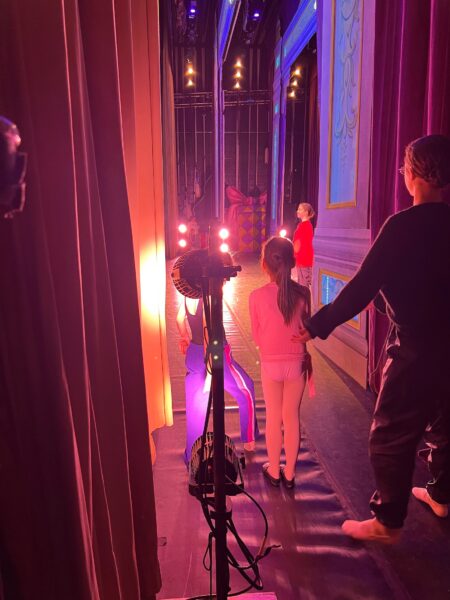
Smiles mix with the rhythmic hum of tools as children in safety goggles focus intently—steadying their grip on drills, saws, and hammers. Nearby, seasoned tradespeople offer guidance and encouragement. This is SPARK, an inspired initiative from TradesUp, a Kent-based nonprofit reshaping the next generation of master craftspeople.

“We’re tradespeople whose love for hands-on work was sparked in childhood,” says Mason Lord, founder of TradesUp. “We remember the mentors who believed in us—who gave us the confidence to build something lasting with our own hands. That was our spark,” he reflects, referencing the inspiration behind the event names, and his career in building and remodeling with Hudson Valley Preservation. At just eight years old, following the loss of his father, Lord found solace and inspiration in carpentry, guided by a neighbor’s steady hand. The cobalt-blue stool they crafted endures—a poignant emblem of resilience, mentorship, and craftsmanship.

Those same values now live on through free SPARK events that pair children ages seven to thirteen with tradespeople, in a welcoming, skill-sharing environment. Arborists, electricians, woodworkers, and even farriers bring their trades to life for young learners, letting them tinker with tools and build small projects—no experience required.

On Saturday, October 25, the fourth annual SPARK Kent returns to the Eric Sloane Museum and Connecticut Antique Machinery Association, inviting families to enjoy a curated celebration of hands-on learning.  “It honors people in different ways by honoring different learning styles,” notes Andrew Rowand, curator at the museum, explaining that event layouts reflect a thoughtful approach: Sensory-friendly areas allow children who are sensitive to noise or crowds to still fully engage.

This inclusive celebration of kinetic learning reflects a forward-thinking philosophy, embraced by educators for its impact on cognitive growth and emotional wellness. At its core, SPARK is about more than education; it’s about giving children the chance to create something real, build confidence, and explore what inspires them. 

“How do you know if you’ll love something if you don’t try it?” Rowand adds.
In a culture that often prizes digital fluency over tactile skill, TradesUp awakens the transformative power of making something by hand, and the deep human connection it can foster.

With misperceptions of what careers in trades offer, many schools eliminating shop classes, and childhoods increasingly shaped by screens, TradesUp aims to bridge the widening gap between generations, knowledge, and meaningful work. 

“If children leave SPARK inspired to pursue a trade, that’s fantastic,” says Lord. “But if they walk away with a lifelong hobby or simply the confidence to use their hands, we consider that a success, too.”

The results are telling. At a recent SPARK event in Litchfield County, some 400 attendees filled the grounds of the Sloane museum. Nearly half of the attendees were girls—reflecting a broader cultural shift in how the trades are being perceived. Twenty percent of the tradespeople onsite were women, helping debunk outdated stereotypes and create space for diverse perspectives in traditionally male-dominated fields.

As TradesUp’s presence expands—with an upcoming event on Martha’s Vineyard and national inquiries from schools and communities—the mission remains deeply personal, supported by donations and volunteers—www.tradesup.org

Community Dinners with American Legion Post 27

Morgan-Weir American Legion Post 27 welcomes all with weekly dinners, community events, and camaraderie supporting veterans.

Photographs by Wendy Carlson
By Wendy Carlson

As the saying goes, food brings people together. Nowhere is this more true than at Morgan-Weir American Legion Post 27 in Litchfield on a Wednesday evening—where you don’t have to be a veteran to dine on meals like fried chicken with mashed potatoes and gravy, salad, and rolls. More and more these largely male bastions are becoming a place for people in the community to meet and connect.

The letterboard sign out front of the Litchfield post welcomes non-members to weekly dinners; by 5:30 pm the parking lot is jam packed. One of the best no-fuss meal deals in town, these gatherings have also become a way for the organization to open its doors to the community. American Legions as well as Veterans of Foreign Wars (VFW) posts throughout the county have long had a bit of an image problem, says Legion Post 27 president Gary Gillman. Some operate out of nondescript buildings—which, when viewed roadside, often don’t feel inviting. 

“Everybody thought this was a smoky old men’s club. The Wednesday dinners help ease that stigma,” he says.

Non-members pay $15, seniors and members pay $10 for sit-down or takeout dinners. In the lounge downstairs, the line to the buffet table snakes past the pool table, the fireplace, and then around a small bar, where alcohol prices are from the ’90s. Bottled beers sell for $4, cocktails are $6. The walls are covered with war memorabilia commemorating local veterans; in one corner, a velvet rope cordons off a small table set for one, meant to symbolize POWs and MIAs missing from the Legion’s ranks. 

The post was founded in 1919, and named for Frank Morgan and James Weir, both of whom died fighting in World War I, according to Gillman, who also serves as head chef and “Mr. Fix It and Chief Lawn Mower.” 

Most Wednesdays, he can be found in the kitchen juggling trays of food along with a crew of volunteers. Above the lounge, there is a meeting room where weekly community line dancing lessons, karaoke, and corn hole competitions are held. The weekly dinners and paid activities help raise money for a planned $1 million renovation to the aging structure, which was built in 1938 to house the Italian American Society. 

They also serve the Legion’s broader mission of building its membership, which includes sons of veterans and a women’s auxiliary. Nationally, membership both in the American Legion and VFW have declined with the passing of older veterans, particularly those who served in World War II, Korea, and Vietnam. The challenge, Gillman says, is attracting veterans from recent conflicts in Iraq and Afghanistan, which have left more than 1 million veterans. 

Community dinners are one way—along with the annual clambake, flag retirement service, Memorial Day parade, and veteran ceremonies. Other posts, like the VFW Couch-Pipa Post 6851 in North Canaan, also feature public events, including summer barbecues, a car show, and tours of its museum of military memorabilia. 

So far, the camaraderie of sharing meals has been effective. The Legion’s membership is up, and the renovation is now slated for September. It will include installing an elevator and handicap accessible bathrooms for older veterans—as well as a fresh facade to attract new members.

Current Issue
March / April 2026
Our Kind of Healthy
The Health & Wellness Issue
Subscribe Now
.
  • STAY IN THE KNOW

    Your weekly guide to can't-miss events, hidden gems, and local favorites in Litchfield County. Sign up now for curated things to do, eat, and explore—delivered every week. It’s free. It’s local. It’s essential.

  • Karen Raines Davis