


September 10, 2025
By Wendy Carlson
Photos by Wendy Carlson
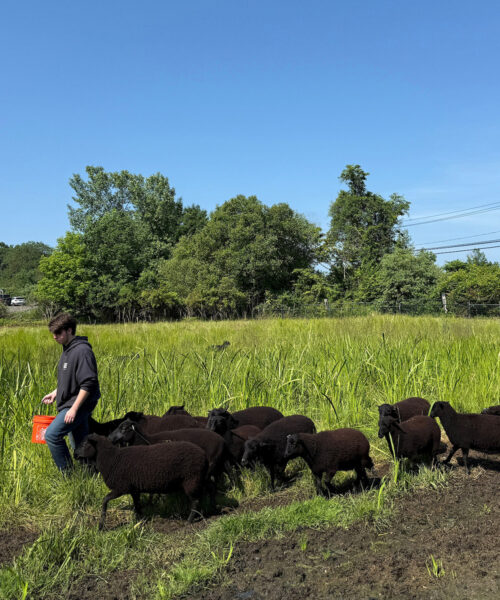
When Jennifer Ouellette’s family bought a former dairy farm in New Milford more than six years ago, they knew they wanted to raise sheep, but not the fluffy white breeds that you might see dotting the county’s pastures. Instead, they decided on Black Welsh Mountain Sheep, a heritage breed designated as threatened by Heritage Livestock Conservancy, which works to protect endangered livestock and poultry breeds from extinction.
Historically, black sheep have had a bad rap. In the days of yore, when a black lamb was born into a flock of white sheep, it stood out; think of the pejorative “black sheep,” which refers to someone who is out of place in a group.
Moreover, black wool is notoriously difficult to dye, which makes it less profitable—hence, rarely used in traditional yarn production.
Not so now. Black sheep have earned boutique status in the textile industry. The wool is sought after by designers, among them the Italian brand Loro Piana, which has its own flock, and has turned black sheep wool into a luxury item. Since the wool can be woven without dye, it’s chemical-free, sustainable, and can come in a range of neutral tones.
Fashion wasn’t top of mind when Ouellette and her family started Windy Meadow Farm, where they breed and sell their registered Black Welsh Mountain Sheep. As she put it: “We didn’t like the way white sheep looked when they got all muddy and dirty in the field. We started researching, and found one that is both a meat and wool breed. We sort of stumbled upon it, and then developed our flock.” Ouellette holds a degree in animal science from the University of New Hampshire, where she first worked at breeding horses and dairy cows.
“We also didn’t want to compete with the farms on either side of us that raise other types of livestock, so we chose sheep,” added Ouellette, whose day job is as project manager for Lambert and Barr Construction, owned by her parents, Jim and Cathy Lambert (who also live at Windy Meadow).
Ouellette gets help from her son Jeremy, 17, who holds the shepherd’s staff and is centerstage during lambing season. Except for the ram, whose name is Evan, the 50 sheep in the flock are fondly referred to by the number tagged on their ears. “Over here, 31,” Ouellette demonstrated, calling a stray lamb forward, coaxing it with a bucket of grain.

Windy Meadow isn’t selling wool wholesale—at least not yet. As the only breeder of Black Welsh Mountain Sheep in the state, the farm supplies offspring from its flock to starter farms throughout the Northeast.
Cleaning and processing roughly 75 pounds of raw wool each year is time consuming. So, Windy Meadow offers raw wool at no cost to artisan spinners, who make a donation toward shearing costs. —windymeadowsheep.com