



March 1, 2026
By Clementina Verge
Photography by Ryan Lavine
Darlene Kascak’s sense of identity took shape in kindergarten, when a teacher told her she “didn’t look Native American.” Soon after, her great-grandmother anchored her in something deeper: “You are Schaghticoke; you come from a long line of strong women.” The words stayed with her, guiding her sense of purpose and responsibility.
“To be a citizen of the Schaghticoke Tribal Nation is to carry a relationship—to land, to ancestors, to community, and to the generations still coming,” reflects Kascak, a Traditional Native American Storyteller and educational outreach ambassador at The Institute for American Indian Studies in Washington, Connecticut. “It’s not a title or a status. It’s a way of moving through the world with a sense of rootedness that can’t be replicated or replaced.”
For centuries, the Schaghticoke Tribal Nation has lived in what is now Litchfield County. Place names—from Algonquin State Forest to the Aspetuck River and Lake Waramaug—trace a history spanning more than 12,000 years. Across that expanse of time, the community has endured displacement and colonization, while maintaining its connection to land and stories.
An anchoring principle is the Seven Generations teaching: Make decisions with those yet to come in mind.
“The Schaghticoke people see the land not as a resource to be exploited, but as a living, breathing partner,” Kascak says. “The land gives us food, shelter, and guidance. In return, we have a responsibility to protect and care for it.”
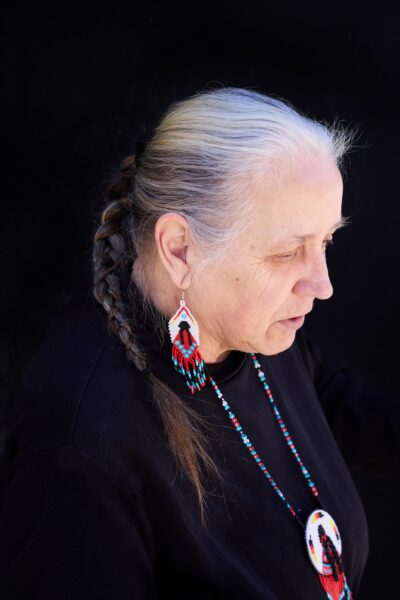
Today, as a museum professional and member of the Schaghticoke Women’s Traditional Council, Kascak works with journalists, educators, and cultural institutions to ensure Native histories are represented with accuracy and depth. Her work continues a long tradition of Schaghticoke women leading in diplomacy, land stewardship, and community care—safeguarding stories and collective memory.
In institutional spaces, she often encounters narratives that begin too late. Museums frequently frame Native history at the moment of European contact, overlooking the thousands of years of Indigenous governance, innovation, and nationhood that preceded it. Distinct cultures are flattened into generic categories. Objects are displayed as static artifacts rather than expressions of living relationships. The realities of colonization—land theft, forced removal, boarding schools, violence—are softened, and Native voices are sometimes invited in only after key decisions have been made. The result is a focus on loss, rather than on resilience and governance.
To combat this, Kascak works to ensure that Indigenous histories are told in their fullness—recognizing not just loss, but survival, resilience, and the ongoing presence of Native peoples.
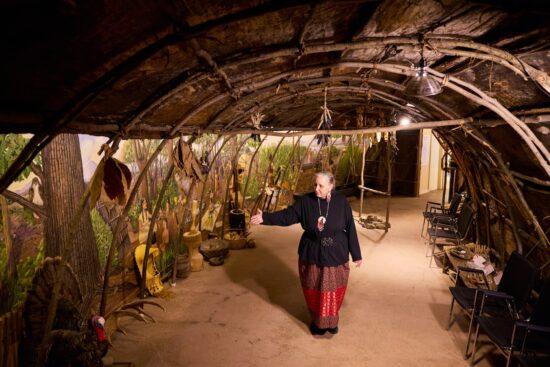
For those who wish to support the accurate and respectful storytelling of Indigenous histories, she offers simple advice: “Listen first, uplift Indigenous voices, respect cultural boundaries, and push for accountability within institutions.” These steps, she believes, are crucial in building a more truthful, respectful, and hopeful future.
“Our stories aren’t just tales from the past—they’re teachings about how to live with respect, responsibility, and relationship,” Kascak reminds, emphasizing that those traditions are about more than survival; they shape the world we leave for future generations. —iaismuseum.org