

Your guide to the heart of Litchfield County:
Discover local stories, hidden gems, and must-know events.

Angels of Love

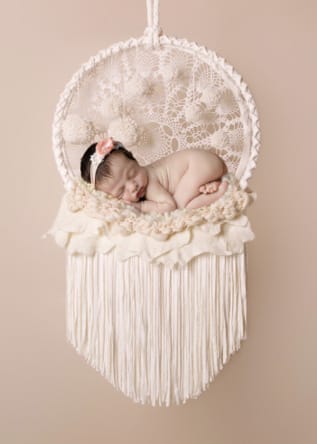
Bridgewater resident and professional photographer Natalie Buck captures the tender innocence of newborn babies in her amazing and creative works of art.

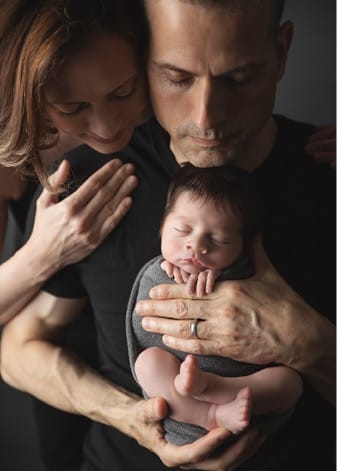
Newborn babies are the perfect representation of love and beauty. Parents think so, and grandparents too. Capturing their sweetness as a work of art is what Natalie Buck does so very well. Out of her studio in Bridgewater, she creates images of babies (toddlers, families, and expecting women, too) that bring out their tender innocence.


Natalie Buck Photography

Natalie Buck is a fine art photographer specializing in Newborn & Maternity Photography. She has won numerous awards for her newborn photography and is known for her pure organic style, fused with elegance and creativity. Her custom-designed artistic newborn and maternity, and creative cake smash first birthday sessions are much in demand these days, especially during the holiday season. Her goal is to capture those precious moments of families’ lives and to showcase them in beautiful works of art to be enjoyed forever.

Natalie Buck Photography

Natalie also photographs outdoor maternity and family sessions which are shot on location throughout Litchfield and Fairfield County. “Life is a journey full of little moments that intertwine to create our very own story. Photographs bring our stories to life.” In every session she aims to capture emotion and connection between the families. She works with the natural surroundings and creates magic with light.


Natalie Buck Photography

Born in Australia, she moved to the USA as a 5-time National Australian Ice Dance Champion. After retiring from competitive world figure skating, she picked up her camera and fell in love with the art of photography with a fierce passion. Here is what she has to say about her background, her work, and her approach to capturing those precious moments:

You were born in Australia— how did you end up in Litchfield County?

That is a pretty long story, but the short version is that I ended up moving to Connecticut to train as an international competitive Ice Dancer. My Ice Dance partner and I were Australian National Ice Dance Champions and we moved to Connecticut to train with a world renowned Ice Dancing Coach. We spent our lives training here and traveling the world competing. After retiring as a competitive ice dancer, I took up coaching at a couple of the local rinks here and also met my husband, got my Wiener dogs (not necessarily in that order)… and the rest is history!


Natalie Buck Photography

After retiring from the competitive world of ice skating, how did you get into photography?

I have always loved photography and art, ever since I was a small child. I remember my parents giving me my first wind-up film camera for Christmas. It is something that I have always loved to do in my spare time but never thought to take it any further than just as a hobby. When I moved to the United States, my life was skating. I didn’t have any family or friends over here. I spent the little amount of spare time that I had taking photos of mostly nature and macro photography. It was a great outlet for my creativity and I always found it peaceful.
Natalie Buck Photography

I don’t have any formal training in photography. I actually went to collage for Marine Biology at Sydney University. I am mostly self taught in photography through a lot of hard work and tireless hours. Obviously, with photographing newborn babies, which is what I mostly do now, there is a lot of training involved with the handling of newborns, learning how to pose them correctly and of course baby safety. I am diligent in continuing my education with the newborns. I have mentored under some of the world’s best newborn photographers. I have taken courses in baby safety, posing and lighting. Each year I aim to better myself by training with those that are leading the industry of newborn photography.

Natalie Buck Photography

Was there someone who influenced you? A family member, a teacher?

I am one of those people that, once they get an idea in their head, I do everything within my power to achieve that goal. Honestly, one day, I was walking my dog and I was trying to figure out what the next stage in my life was going to be after skating. I loved photography, but I never thought I could make something of it. That day when I was walking my dog I just decided that I was going to be a Photographer. From that day on, every decision I have made has pointed me in the direction of my goals.


Natalie Buck Photography

I decided on Newborn Photography specifically after watching a Creative Live class of this amazing Australian Newborn Photographer by the name of Kelly Brown. Her work was flawless, elegant and just stunning. She not only photographed those very first amazing moments of a newborns life, but she created gorgeous works of art. It was at that point that I saw that Newborn Photography could be a combination of photography and creating works of art, both of which I love to do.

Natalie Buck Photography

I think if you ask most newborn photographers how they came to photographing babies, most of them will tell you that they had their first child and wanted to start documenting their baby’s life, from there they evolve into the passion of Newborn Photography. I don’t have any children so for me it was more of a decision. The process of pregnancy and childbirth is such an amazing moment in a families life. Creating life and bringing it into the world is life changing. I am so passionately connected to my work and I get the most satisfaction when I know that these moments that I am capturing are some of the most important moments in these peoples lives. What brings me the most joy is watching my moms tear up when they see the final photographs from their session of their precious sweet little baby. Their newness, their sweet little tiny details. I have captured a moment that they will never be able to get back, but now they will have something to hold onto and remember forever.

Natalie Buck Photography

Your ability to capture such beautiful precious moments of adorable babies is amazing. How do you get them to pose without crying or moving?

A LOT OF PATIENCE! haha. The posing I have learnt over time. Every baby is different. It is amazing that babies can have a personality at 2 weeks old. Some sleep the entire session and others need a lot more coaxing off to sleep. It requires a lot of patience. You really have to love it. The adorable little poses require the baby to be asleep. This is generally why all my sessions happen within the first 2 weeks of a baby’s life. At this point they are still fresh from the womb and like to be all curled up, but also they spend a lot of time sleeping and are much less alert than older babies. The window for this type of photography is very tight.

Natalie Buck Photography

Your styling aesthetic is stunning. What inspires and influences you?

I feel like my style is always changing and evolving. I am inspired by my fun creativity but also drawn to everything vintage, rustic, earthy and organic. I love incorporating these aspects into my Newborn Photography. For me, each photograph of your newborn is a piece of art. I see in colors, shapes and light. I think there is a fine line in Newborn Photography between cheesy and artistic. I try to stick to the artistic fun side.
Natalie Buck Photography

Do you prefer portraiture over landscapes or interiors?

Definitely Portraiture. I am completely drawn to portraiture. I love capturing emotion and connection. I enjoy landscape photography here and there, but portraiture is where my heart is.

Natalie Buck Photography

You also offer family portraits at people’s homes and properties. How is that different than shooting newborns in your studio?

My studio is set up perfectly for photographing newborns. It provides a perfectly heated environment and I have complete access to my endless supply of props and accessories that my creative mind needs for any newborn session. There is a lot of equipment involved in newborn photography and having a perfectly controlled environment such as my studio allows me to have complete control over my photographs.

I travel to people homes for portrait and family sessions, but these are usually shot outdoors or on location. These are more candid moments, less staged and don’t usually require any amount of props and accessories.
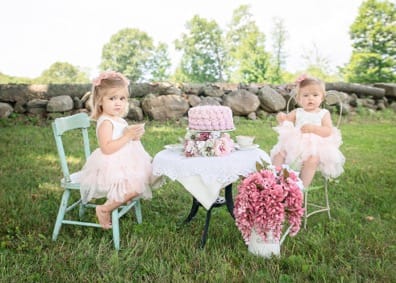
Natalie Buck Photography

The cakes in your photos are gorgeous. Who makes them?

I have an amazing local baker in New Milford that makes all my cakes for my 1 year old Cake Smash Sessions. The Sweet Spot in New Milford is amazing. Nearly all the cakes in my shoots are baked by them. Their work is outstanding and just beautiful. They are able to create anything!


Natalie Buck Photography

Tell us about your maternity sessions. How do they work?

Maternity Sessions are best photographed between 28-34 weeks. The last few weeks of pregnancy can be fairly tiring and exhausting. We want the maternity session to be an enjoyable experience and so we try to capture it before those last few weeks. The session is usually focused around the mother, but I always encourage partners and other children to be a part of the session.
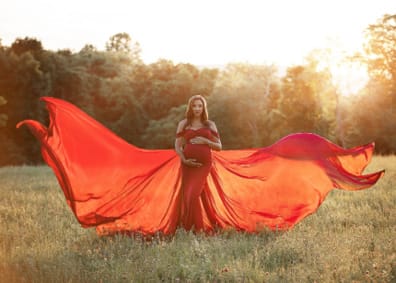
Natalie Buck Photography

I am very lucky that my studio is located in a beautiful part of Bridgewater that is surrounded by gorgeous fields, woodlands, dirt roads, rock walls and amazing sunsets. This allows me to provide my clients with the opportunity to capture both a combination of indoor studio and outdoor photos all within the one session. We start the session in the studio and then head outdoors for the last half an hour of sunset light to capture that magic light that I love so much. I do also offer on location sessions if my clients have something more specific in mind, but most clients come to me here in Bridgwater as I am able to provide them with everything needed for a perfect session.
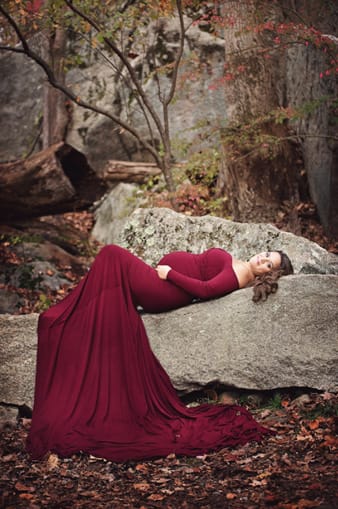
Natalie Buck Photography

I have a wardrobe of gowns that I offer my clients to borrow for their sessions. The use fo the gowns is complementary with their session booking. Often my clients have a very specific idea of what they want to wear and choose to purchase their own gown for their session. If this is the case, I will then provide them with a great list of online boutique stores that sell gorgeous maternity gowns to help them start their search for the perfect gown for their session.
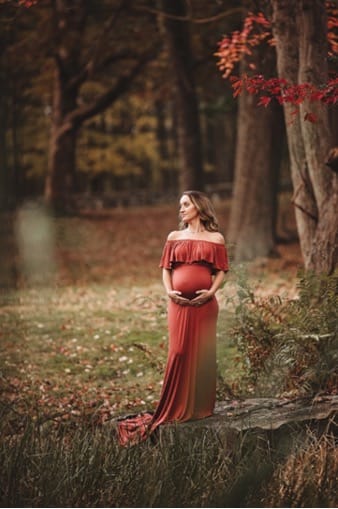
Natalie Buck Photography

Maternity Sessions differ from general portrait photography in that you are photographing a very intimate moment in a couples life. My goal is to capture emotion and intimacy in my sessions, the connection between a mother and their unborn child or that pure joy between a couple at the thought of the little life they are bringing into the world. There is almost no looking at the camera, no cheesy smiles, just feelings, love and raw emotions.

Natalie Buck Photography

Who are your clients and where are they from?

I have clients come from all over, throughout Connecticut, Massachusetts, New York and Manhattan. Living in Bridgewater for so long, being surrounded by such beautiful nature all the time, I often forget that people from the city don’t see what I see every day. My clients come for the experience, to capture those ethereal magical photographs. I also think that being able to provide my clients with a bit of both Studio and outdoor photography within the one session is also a big bonus. The majority of my clients come from either word of mouth, Instagram and searching online.

Natalie Buck Photography

What are your plans for the future of Natalie Buck Photography? Do you have additional areas in your work that you would like to explore?

This year was such an explosion for my business, I am going to have to sit down at the beginning of next year once all the holiday craziness is over and figure out where I would like to go from here. I feel like when I started out I had all these huge goals, and this year was a big year for achieving most of them. I am so grateful that all my hard work is finally paying off. But to be honest, the root of my joy comes form documenting such special moments in people lives, as long as i can keep doing that and also feeding my creative side, I will be completely happy. I have a few creative ideas in my head but mostly, my heart is in Newborn and Maternity Photography. I think I am definitely going to have to look into hiring a full time assistant though!
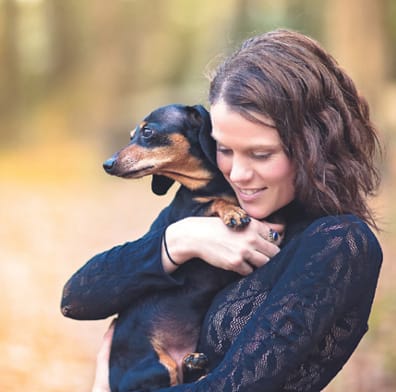
the artist aNd her dog, Natalie Buck photography

Natalie Buck Photography
Bridgewater
Nataliebuckphotography.com
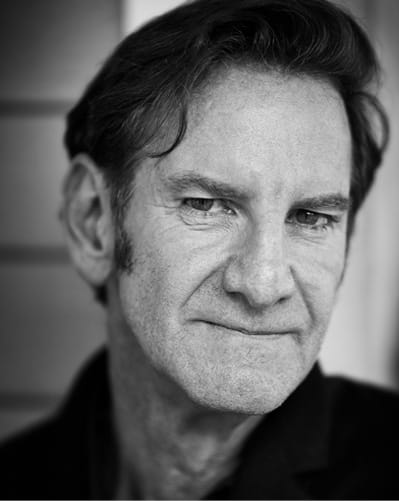
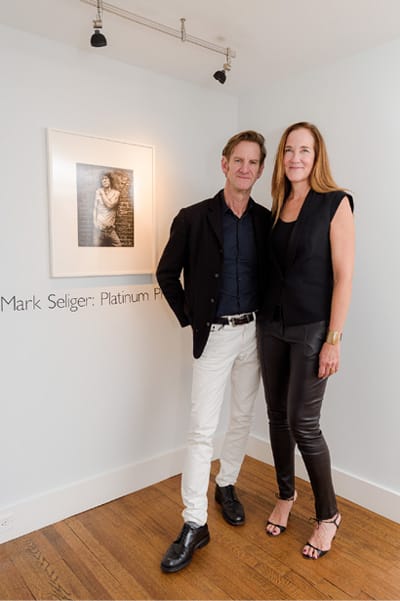
Mark Seliger: Platinum Prints

KMR Arts is currently showing the platinum prints of legendary photographer Mark Seliger. His iconic portraits of rock stars and celebrities are a never-ending source of joy to look at.

Mark Seliger was born and raised in Amarillo, Texas. Some say that his Southern charm and warmth are the source of his connectedness with his subjects. His vibe makes you want to trust him. Mark attended the High School for Performing & Visual Arts in Houston, and then studied the history of documentary photography at East Texas State University. He later moved to New York City where he soon became very much in demand by all of the top magazines.

Mick Jagger, new york, ny, 2005, photograph by Mark Seliger, kMr artS

At Rolling Stone magazine, he produced more than 125 covers. His striking portraits captured the heart and soul of Mick Jagger, Jerry Seinfeld, Lenny Kravitz, Curt Kobain, Keith Richards, Susan Sarandon, David Byrne, Willie Nelson, Tony Bennett, Diana Krall, President Obama, and the Dalai Lama. And he’s got stories to tell about every photo session.

Mark Seliger & kathryn Mccarver root, photographed by Mike yaMin

This year Mark Seliger has had his work exhibited in shows in New York, Paris and Los Angeles. And now he has a show in Washington Depot. How did this happen? Enter Kathryn McCarver Root…

Kathryn McCarver Root grew up in Memphis, attended college in Virginia, majoring in French, and landed an internship at Esquire magazine in New York City. During her lunch hour she would borrow books from the magazine’s great collection of photo books. This position led to 20 years as a photo editer in the magazine publishing world.

diana krall, vancouver, canada, 2003, photograph by Mark Seliger, kMr artS

Kathryn began working with Mark Seliger in the late 80s at Esquire, then US Weekly, and later at InStyle magazine. Their professinal relationship continued to grow over the years, and when his 30-year retrospective came out in a large book published by Harry Abrams, he acknowledged her. They have a good connection built on trust and respect and have remained friends.

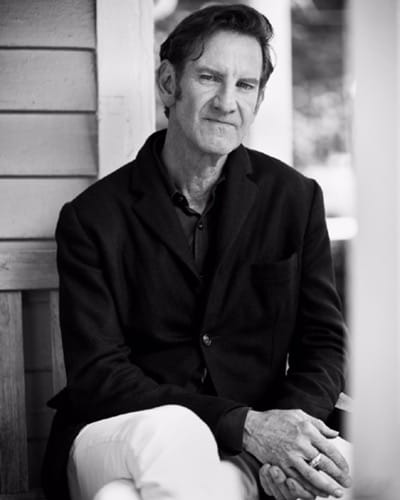
Mark Seliger, photographed by Mike yaMin

In 2007, Kathryn opened KMR Arts in Washington Depot, a gallery specializing in established fine art photographers. She is very interested in the photograph as object. In portraiture, she finds the subject sometimes competes with the art of the photograph.She loves prints with depth and appreciates the process in the darkroom. Kathryn understands Mark’s complicated process in making platinum prints and admires his range. “Mark can go into a studio and have a huge crew — he is good at running the circus—and nail it, but if you really strip it down and it is just him and his subject, like the 20 minutes he had with Warren Beatty, he is also at his best. He came away with a fantastic portrait. And to do it at that level and consistency for 30 years is incredible.”

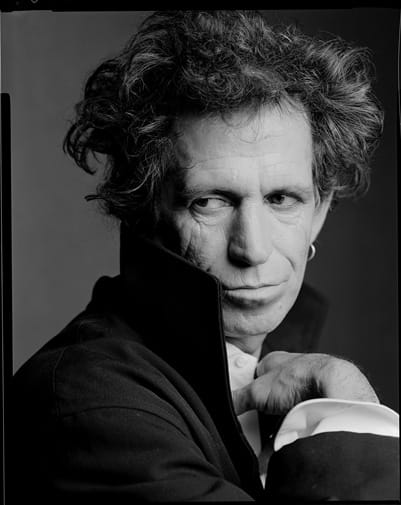
keith richardS, new york, ny, 1994, photograph by Mark Seliger, kMr artS

Mark Seliger’s love of photography began early with a camera given to him by his brother. But his main interest was not in taking the pictures — he was more excited in the process of making the prints. Here is a quote from an interview on NPR:

“I was really not drawn to photography to take pictures — I was actually really inspired through the darkroom. … I made a darkroom in my parents’ house when I was growing up. They would go out on a Saturday night and I would spend hours making prints. I just fell in love with the process. And as that love kind of grew, I had to have something to be able to print, so I thought: I better start taking pictures — and that’s how it all evolved. I never really thought that I’d end up here.”

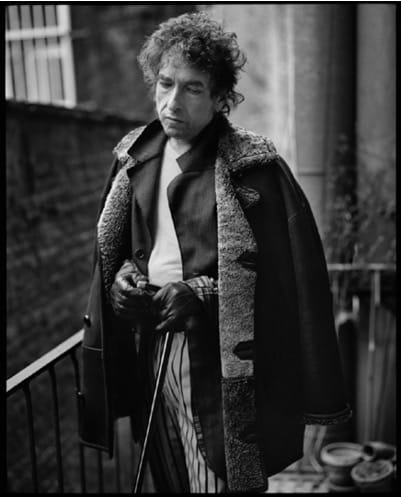
bob dylan, new york, ny, 1995, photograph by Mark Seliger, courteSy kMr artS

This unexpected path led him to create award-winning photographs that have appeared in numerous magazines all over the world such as Vanity Fair, Elle, Italian Vogue, German Vogue, L’Uomo Vogue, GQ and Rolling Stone, and to receive such accolades as the Alfred Eisenstaedt Award, Lucie Award, Clio Grand Prix, Cannes Lions Grand Prix, and many ASME’s. In 2017, Seliger’s work became a part of the permanent collection of the National Portrait Gallery at the Smithsonian Institution in Washington, DC.

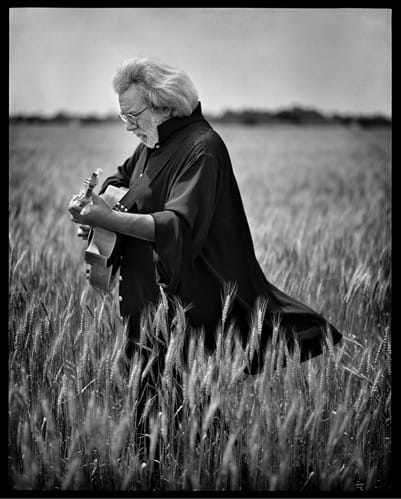
Jerry garcia, indianapoliS, in, 1993, photograph by Mark Seliger, kMr artS

The platinum prints at KMR Arts are a striking collection of celebrity portraits, nudes, landscapes and personal work. This month Mark Seliger will have a satellite show at the Judy Black Park in the Depot which will have large 30×40 prints in color and b&w. He will give a talk about his process and his path.

iMan, new york, ny, 2001, photograph by Mark Seliger, courteSy kMr artS

Mark has published several books of his work. His new book Mark Seliger Photographs features images from the last 30 years and is available for $75 at KMR Arts.

Mark Seliger: Platinum Prints continues at KMR Arts through December 29, 2018.

KMR ARTS
2 Titus Road
Washington Depot
860.868.7533
kmrarts.com

Portrait of a Lake

A man of many talents, Charles Raskob Robinson is the author and artist of Lake Waramaug Observed, a wonderful book dedicated to the history and beauty of our enchanted lake.

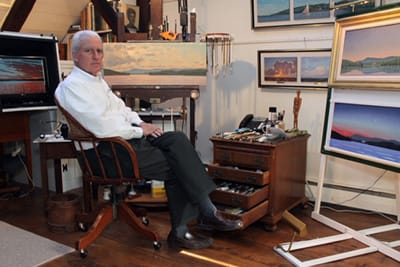
Charles Raskob Robinson paints in the studio in which the artist and writer Eric Sloane painted. He says, “It is little changed: A Franklin stove, northern skylights in a post and beam farm house built before the French and Indian War, the Revolution, the Constitution, the French Revolution – a long time ago! This was Eric’s home – back in the 1950s.” The studio is on his Washington property called Brush Hill and this is where Charles has written and painted for decades. He writes a column known as “Notes from Brush Hill” which is published in the American Society of Marine Artists’ quarterly magazine, the ASMA News and Journal.

Charles raskob robinson in his studio, photographed by Walter V. kidd

Robinson has published a new book titledLake Waramaug Observed: Its Beauty In The Four Seasons, Its Amazing History And Its Promising Future. It is divided into three parts. The first part deals with the Present— its Beauty— and consists of Robinson’s thirty-five paintings of the Lake in four seasons from the same vantage point painted on location (except for the two night scenes). The second part deals with the Past—the lake’s history. The third part focuses on the Future— its preservation. The paintings are a fascinating documentation of the lake’s changing faces, through light and color as it affects the water and the landscape. His work captures not only the beauty of Lake Waramaug, but its soul as well.

august high, august 2008, (#2 of 35) Charles raskob robinson

As a young child, Charles Raskob Robinson would swim in a spring-fed farm pond, then he spent summers on the Eastern Shore of Maryland and in the waters off the coastline in Maine. During his high school years, he rowed 2,000 miles down the Ohio and Mississippi Rivers to the Gulf of Mexico and then travelled alone 4,500 miles up the Amazon River and its tributaries. His love of water is evident in his lifelong experiences with ponds, rivers, lakes, and oceans.

hurriCane hanna, september 2008, (#10 of 35) Charles raskob robinson
sun glare and shadoWs, august 2008, (#5 of 35) Charles raskob robinson

Charles Raskob Robinson was exposed to art in his early years through the influence of Howard Pyle, the Wyeths and other artists of the Brandywine School, having grown up in the Brandywine Valley of Pennsylvania. While working in the banking world in New York City, he attended the Art Students League and Carnegie Hall Studios, and became a professional artist. Over the years, his art has appeared in many magazines – from Architectural Digest to the cover of Yankee Magazine and he has written for others, and is a regular contributor to Fine Art Connoisseur Magazine.

We caught up with Charles to find out more about his background and his process in creating the paintings of Lake Waramaug:

boxing day, deCember 2008, (#16 of 35) Charles raskob robinson

You were born and raised in Pennsylvania— how did you end up living in the Northwest Corner of Connecticut?

A wonderful act of God. And those so blessed know how wonderful it is.

When did you become interested in art?

I was an economics major in college and studied international economics at graduate school (The Johns Hopkins School of Advanced International Studies in Washington, D. C.); I was introduced to art at Bankers Trust Company (then one of the 10 largest banks in the U.S.)

tranquility of summer, august 2008, (#8 of 35) Charles raskob robinson

What was it that informed your decision to leave the banking world after a 20-year career to become a professional artist?

Observation. Banking was most interesting but the world offered more.

You have successfully merged three of your passions—your love of water, the process of painting, and your concern for the environment—into art. Was this planned or accidental?

How much of life is “planned” and how much is as the gods have it.

ephemeral summer, september 2009, (#28 of 35) Charles raskob robinson

Through your paintings and book, you have brought tremendous public awareness about the beauty and preservation of Lake Waramaug. Was this your goal or was it a more personal mission?

I am the first to question how much “tremendous public awareness” my efforts brought to the subject matter but thank you for the thought. It was really Part II of the book that prompted action. Do have a look at it. This is the part that has been used in various talks in conjunction with various environmental groups involved in the lake. These are the heroes.

the lone spring sailor, june 2009, (#23 of 35) Charles raskob robinson

What did you learn over the two years you spent painting Lake Waramaug from the same vantage point?

Increasing humility. As a species we are overly full of ourselves. Just look at that 3/16th of an inch in the football field example and if that doesn’t prompt sobriety, raise your head to look at the very small part of the universe you can see. Humility.

What was your favorite time of day and light while painting the lake?

Each had its merits. All were important to present the overall picture.

Your log observations for each painting provide insight into your process and the many moods of the weather on the lake. Do you find taking notes forces you to pay more attention to the details?

Yes. And, in finishing the plain air painting in the studio, very important in remembering what the situation was.

true Colors of noVember, noVember 2009, (#31 of 35) Charles raskob robinson

As a young boy, the American naturalist John Burroughs (whom you quote at the end of your book) used to sit on a favorite rock on his family’s farm and “study the ways of nature around him”. Do you attribute your early childhood experiences being near water—whether a pond, a river, or the ocean— to your interest in the natural world and in documenting your observations through words, art and even music?

Good question. Borroughs is not known to readers today yet he was the most widely read American author of his time. I would encourage your readers to revisit him.

As to my experiences and the influence of water – who knows. Clearly 2000 miles of the Ohio and Mississippi Rivers and 4500 miles of solo on the Amazon, the Chesapeake, Blue waters of the Atlantic, etc. supplemented whatever the farm pond in PA offered. But you know well, who knows what actually influences us.

What are you working on now and do you have any plans for future projects that you would share with us?

Yes. Something that indeed you might be interested in: Iceboating in Northwestern CT (and the northern hemisphere). I am a member of the Connecticut Ice Yacht Club (how does that sound?!), the oldest iceboating yacht club in the state going back for nearly a century and, surprisingly, located right here in the middle of your readership territory, Bantam Lake. I have been working on a a series of paintings that feature what they call “Hard water” sailing. Clearly something that is going on and has been going on in the Hills of Northwestern Connecticut!

broken skies With autumn Winds, oCtober 2009, (#30 of 35) Charles raskob robinson
CresCent moon in Cold january dusk, january 2010, (#32) Charles raskob robinson

To learn more about Brush Hill, go to: brushhillgardens.com

Lake Waramaug Observed is available at the Hickorystick Bookshop in Washington Depot. The price: $55.00, a great gift for the holidays. The book can also be ordered from: lakewaramaugobserved.com

Outspoken

Currently showing at the Hotchkiss Tremaine Gallery is the exhibition Outspoken: Seven Women Photographers featuring works depicting the lives of girls and women. Worth a visit!

The Tremaine Art Gallery at Hotchkiss School in Lakeville is now presenting an exhibit featuring the work of seven women photographers: Nadine Boughton, Blake Fitch, Nancy Grace Horton, Marky Kauffmann, Tira Khan, Rania Matar and Emily Schiffer.

The exhibit, Outspoken: Seven Women Photographers will run November 2, 2018 – January 13, 2019. The exhibit has traveled extensively to galleries throughout the northeast including Nesto Gallery, Milton Academy; Cornelius Ayer Wood ‘13 Gallery, Middlesex School; De Menil Gallery, Groton School; Hess Gallery, Pine Manor College; and Providence Center for Photographic Arts.

BLast oFF, nancy Grace Horton, ©2010
eMILy at FIve, eMILy scHIFFer, ©2005

The award-winning photographers gathered for the exhibit depict a range of cultural experiences, ages, and settings in their portrayal of the lives of women and girls, from early childhood to advanced age, from refugee camp to the backyard clothesline – all with the aim to amplify the voices of women and girls.

aMIa, BLake FItcH, ©2015

In the words of curator, educator, and photographer Marky Kauffmann, “The images in this show ask the viewer to question assumptions about what is fair, right, or possible for women and girls. What do girls get to do or be before the cultural onslaught inevitably comes? If growing up is in part about gaining power over our lives, then what do girls gain or lose as they navigate the hurdles with which they are confronted? What happens to the search for identity in a patriarchal world? As a female, do I dare stand out, shout out, be outspoken?”

venus rIsInG, nadIne BouGHton, ©2014
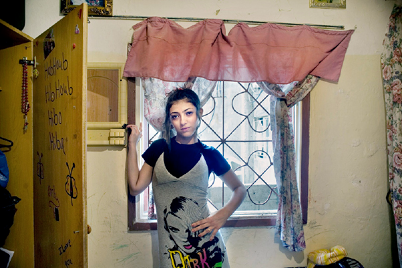
HIBa, sHILa PaLestInIan reFuGee caMP, BeIrut LeBanon, ranIa Matar, ©2010
aFter caMP, tIra kHan, ©2013

A gallery talk with curator and photographer Marky Kauffmann, Tira Khan, and Nancy Grace Horton followed by a reception and exhibit preview on November 1 at 7 pm.

The Tremaine Art Gallery is open Tuesday through Saturday, 10 a.m. to 4 pm, and Sunday, noon to 4 pm.

Gallery Talk and Reception: November 1, 7 pm
(please call 860.435.4423 to RSVP for gallery talk)

Hotchkiss Tremaine Gallery
The Hotchkiss School
11 Interlaken Road
Lakeville

www.hotchkiss.org/arts
860.435.4423

Know Your CT Farmer

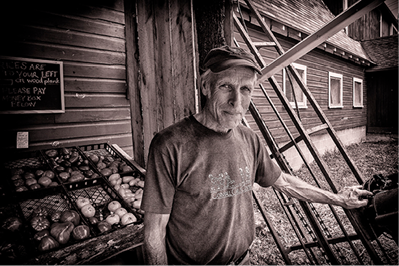
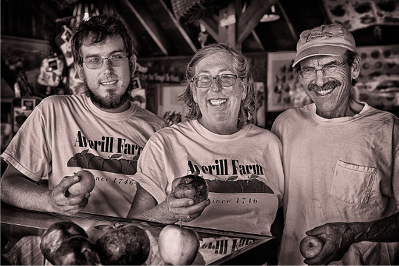
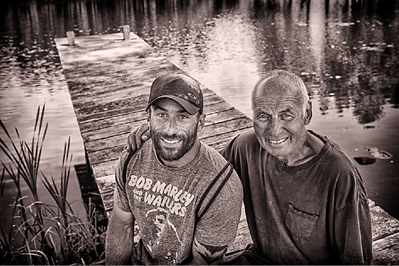
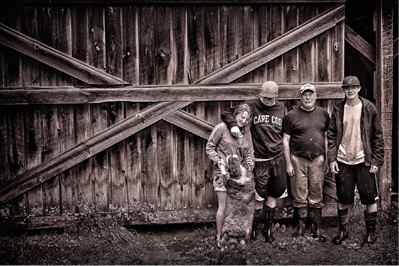
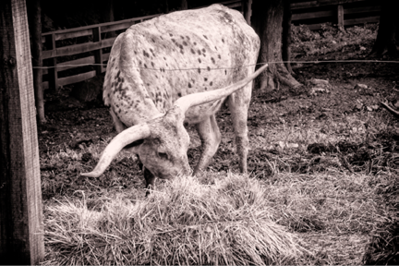
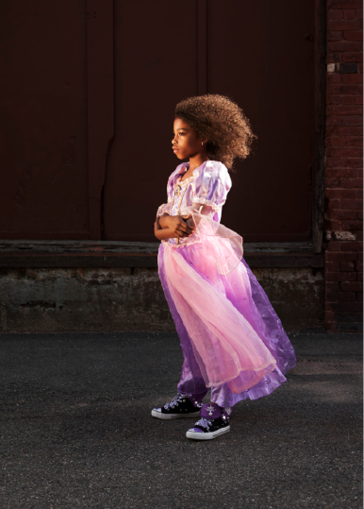
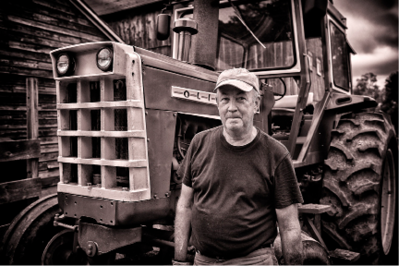
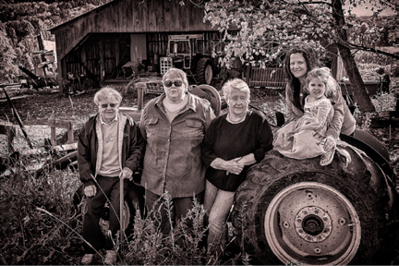
Photographer Jack McConnell’s portraits of Connecticut farmers and their farms are beautiful, gritty, and intense. As a collection, they are an important testament to agricultural life.

For years Jack McConnell photographed covers for the SNET city telephone directories, Connecticut Tourism brochures, TV spots, corporate brochures, billboards, and calendars. McConnell is an annual report/advertising photographer, who travels the USA and Europe for Fortune 500 clients.

He was the photographer and cinematographer for Aetna Life & Casualty, chief photographer for United Technologies at Pratt & Whitney, and photographer for Cold Regions Research Labs and North Country Journal. He also worked as a photographer for the US Army 82nd Airborne, 921st Combat Engineers for 2 years.

stonewall DairY in cornwall

He has won numerous awards for his work and his work has been exhibited in juried shows and galleries. Many of his photographs are in corporate collections. His stock photo library of 250,000 images is located in Wethersfield, and marketed to advertising and fine art clients around the world via his website: www.jackmcconnellphotography.com and www.connecticutstockphotography.com
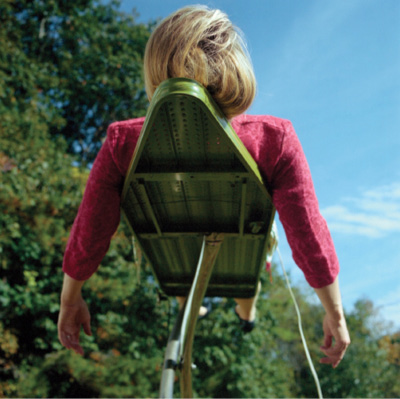
During his prolific career, Jack also found time to create some portfolios of images that he initiated, such as Hartford Parallax: City Abstracts, ‘Round Hartford, A Walk Down Main Street, At Water’s Edge, We Two, Sit Down, Quintessential Connecticut, Days and Nights in Portugal, New England Stone Walls: Icon at Risk, Island Time, Just Winter, Classic New England, A Walk Down Park Street, and Know Your CT Farmer. It is this last project that caught our attention and is the focus of this feature.

Mohawk bison farM in goshen

Jack McConnell grew up in Gorham, NH near Mt. Washington. “As a kid I hiked all over the White Mountains and worked as a backpacker on the Appalachian Mountain trails carrying supplies up to the hut system. When I graduated from high school, Joe Dodge sent me up to the top of Mt. Washington where I worked for four years as a weather observer in the Mt. Washington Observatory, and then as a weather technician in the aeronautical testing facility nearby, where they did cold weather testing to see how jet engines would react in freezing and icing conditions.”

Mohawk bison farM in goshen

When he was drafted into the Army in the early 60s, Jack was sent to Fort Leonard Wood, Missouri as part of the 82nd Airborne, 921st Combat Engineers, and worked as photographer during combat training and reconnaissance events. After serving, he took a job as a research photographer at Cold Regions Research Labs in Hanover, NH, and traveled to Greenland, the Medicine Bowl, and the Boulder-Denver Watershed Areas, where he documented soil movement studies at high altitudes and ice core sampling.

From there McConnell worked as a photo journalist for the North Country Journal for a short time, before coming to Connecticut as a research photographer at the Pratt & Whitney division of United Technologies. That was followed by six years as Chief Photographer and Cinematographer at Aetna Life & Casualty in Hartford, where he worked on shooting PSAs and 23 full-length documentary films for the Property Casualty division on such topics as hurricane hunting, glass making, warehousing, lumberjack safety, and money management subjects.

averill farM in washington

Jack was never trained or educated as a photographer,—he was completely self-taught and learned on the job. “I fell into photography, quite by accident, while working on Mt. Washington as a weather observer. The extreme weather presented opportunities for me to see amazing conditions caused by ice, wind, and clouds. One inspirational moment I remember was opening the door of the Tip Top House on the top of Mt. Washington after an extremely brutal couple of days of high wind and snowfall, only to find a 3×10’ column of snow with knife-sharp edges shaped by snow entering at high speeds through a 2” keyhole in the door that had allowed the wind-driven snow to pile up inside the corridor in the same keyhole configuration. I was amazed,” he recalled.

“Another time I ventured out after a ferocious snowstorm to see a field of foot-high icy sculptures created by my earlier footsteps that had packed the snow, and then high winds had scoured away the powdered snow surrounding them leaving the foot-high footsteps behind. So, in times like these, I just “knew” I had to somehow document these scenes. And fortunately, my dad had a 35mm camera tucked away in a drawer that I “adopted” to take my first-ever photographs.”

March farMs in bethleheM

After years of working for corporations, Jack decided to go out on his own. “In 1972 I tore off my corporate necktie, and left Aetna to start my own freelance photography business. For 46 years I’ve traveled the USA and Europe for Fortune 500 clients, shooting annual reports and advertising campaigns. With my wife Paula McNamara I began my stock photo library in 1978, which has grown to 250,000 images which we market to clients around the world. About 20 years ago I started showing my fine art photography in galleries, and selling to corporate art collections around the state.”

riDgwaY farM in cornwall

McConnell grew up in a small, rural New Hampshire town in the 50s and was was not exposed to art education and had no artists within his family and friends. “Guy Shorey, a landscape photographer from Gorham who documented the North Country had a small camera shop in Gorham (and I probably pressed my nose to the window of his shop as a kid) and Dave Atwood, who was an exceptional local portrait photographer, were the only professionals I had the chance to observe in my youth. Once I did pick up a camera, I admired the photographs of the Farm Security Administration photographers like Walker Evans, Dorethea Lang, and Margaret Bourke White, who produced the story-telling black and white photos of the harsh life in the Dust Bowl during the Great Depression.”

riDgwaY farM in cornwall

Twenty years later, Jack McConnell had many photographers to admire, such as W. Eugene Smith, Jay Maisel, Ernst Haas, John Sexton, and the great environmental portraitist Arnold Newman whose work he saw in magazines, books, as well as their commercial work. “Occasionally I took workshops from Maisel, Newman, and Sexton at the Maine Photo Workshops in Rockport, ME. And by the 80s I was giving workshops myself on Corporate Photography in cities all over the country for Calumet Photographic.”

The idea to document Connecticut farms and farmers came to him while photographing stone walls for his collection called New England Stone Walls: Icon at Risk. Jack began talking with farmers around the state and learned that farming in Connecticut is a $4 billion industry, supporting 22,000 jobs, and 5997 family farms. “That was a startling number to me and when I asked my friends how many farms they thought were in the state, they would inevitably guess 50, 200, maybe 500 at most. No one had any idea there were close to 6,000 farms around the state.”

riDgwaY farM in cornwall

“All the farmers I met were wonderful, generous, thoughtful people who loved working the land, and had a “calling” to work to produce food for their communities. They were independent, resourceful, and hard-working, much like the lobstermen of Maine, whom I had photographed at an earlier time. I love doing environmental portraits, and I love shooting in black and white. It all fit together nicely.”

So far, Jack has photographed about 100 farmers, including about 25 in Glastonbury near his studio in Wethersfield. “This project is completely serendipitous – I’m open to wherever it may tumble next. If I could find the resources, I would do a portrait book about Connecticut farming, or a more comprehensive documentary.”

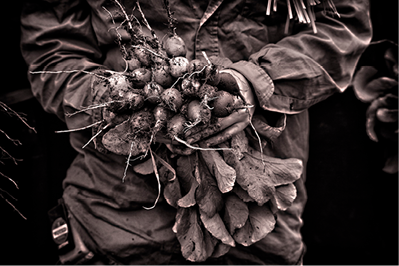
For the farming project images, Jack turned to a sepia tone instead of color. “I’ve always loved shooting and printing in black and white, and I’ve spent thousands of hours in my darkroom, listening to music and swishing my prints through a chain of chemicals. Now that I’m shooting and printing in digital, I can “tone” my prints with a simple twist of a dial. I experimented within a suite of toning choices called Silver EFEX Pro preferring a bronze, copper toning that seemed appropriate for the farmer portraits, in a style reminiscent of the FSA farm portraits of the 30s. I wanted the photos to have an earthy, retrospective feeling that was appropriate to the subject of farming. After viewing the prints last year, the Hartford Public Library asked me to put together a show of 60 prints to go along with the city-wide reading of John Steinbeck’s Grapes of Wrath. So I must have struck a chord.”

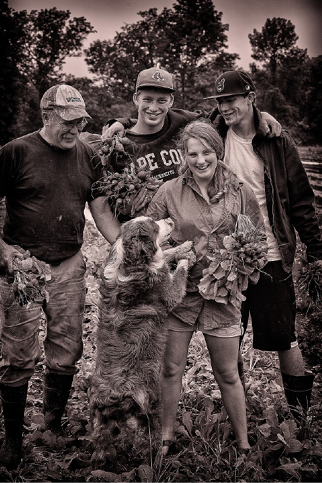
wike brothers farM in sharon

The farmers and their families responded to this project with some a hesitancy at first. “For the most part, when I first approached a farmer to photograph them, many were reluctant because they were busy clearing fields, planting, weeding, pruning, feeding their animals. But once we got talking and photographing, they barely let me go, because they had such a pent-up need to share how they felt about their land, and about farming. Most explained their choice of farming as a calling.”

“By now, I’ve visited some individual farms maybe 10 or 20 times, and I see the farmers at local Farmers Markets or at their own farm stands. I invite them to my shows and they bring their families and stand conspicuously near their portraits ready to engage passersby; or they eat at restaurants where their photos hang on the walls.”

wike brothers farM in sharon

His striking photographs of the farmers and their farms are featured in videos for a television show called This Life Calls to Me (CPTV.com/SharingCT). We asked McConnell about his expectations in terms of the impact the new awareness may have on the agricultural community in Connecticut.

“I think they appreciate my effort to publicize their need for support and understanding by their local communities. People are catching up to the need for local food security and these photos are an easy way to get them to start thinking about some of the issues involved.”

Today’s Connecticut farmers provide locally-grown food to nine million people living within a half-day’s drive of Connecticut farms. Connecticut has some of the finest growing soil in the world, and a safe abundance of water. With recent improved methods of food production, farmland preservation, CSAs and other distribution channels, the Farm-to-Table movement, Farm-to-Schools, and farming without pesticides, people have advanced awareness about eating fresh, local, healthful foods.

thorncrest farM in goshen

“Because people tend to respond to pictures and stories, rather than facts and figures, I hope to engage the public to consider what kind of food they eat, and where and how it is grown. In terms of the Earth’s longevity, American farmers have only existed for the blink of an eye. Decisions made today will determine how we will feed ourselves in the next blink of an eye. Will it be Agri Business and warehousing, or a renewed emphasis on the local family farm?

Other serious concerns like climate change, the disappearance of forests and trees which provide the very air we breathe, and the careless pollution of reservoirs and streams, are gathering momentum; and I hope my farm interpretations will help people delve into the problems of food insecurity in many parts of the world, and even in some corners of urban America where grocery stores and fresh produce are relatively unavailable. There are so many helpful state organizations that are educating the public about these problems, and I hope my photos will give people access to these concerns.”

thorncrest farM in goshen

Spending so much time with the farmers, Jack’s understanding of the agricultural community in Connecticut has grown. “I have learned that the issues involved are serious, and in some cases are reaching a dangerous tipping point, such as the decline of dairy farms within our state. If we don’t do a better job of protecting Connecticut farmland, of encouraging young farmers, and supporting those who are growing our food, we will go down with them.”

Looking towards the future, we asked McConnell if he had any thoughts or plans for his continued work. “While working on the CT Farm Project, which is all about an intense, rustic-style of black and white portraiture, I’ve been simultaneously working on a totally different style of photography, shooting colorful architectural abstracts in the capital city of Hartford, using only my extreme long 400-550mm lens, my extreme wide 8-15mm wide lens, and a multi-colored polarizing filter that intensifies the color found in sun, shadows, and reflections of sky, clouds, and one building reflected in another nearby building. I’ve created what I call a Parallax Effect to help people drop their old perceptions of the city and be open to rethinking what they can imagine for Hartford. It’s not the same-old, beige and gray city of their memories.”

thorncrest farM in goshen

He added, “Taking this one step farther, I am now shooting various neighborhoods in Hartford, and iconic photos in the 28 towns surrounding Hartford, with a fish-eye 8mm lens, in a new series titled ‘Round Hartford. These 180 degree spherical photos encompass everything the eye can take in, from the sky on high to the tips of my toes, to the view of my finger-tips stretched wide. Again, this is photography with purpose as I try to get my viewers to see with fresh clarity, to not allow their old prejudices and preconceptions to color the reality of the city around them, left and right, close and distant. And to realize that we’re all in this together; that a strong core city is essential to the welfare and success of the surrounding towns, and like the trees in the forest we all thrive when we support and nourish one another.”

Marwin farM in new hartforD

You may view Jack McConnell ‘s photographs This Life Calls to Me on exhibit at The Good News Café in Woodbury starting January 8 through April 9, 2019.

Watch This Life Calls to Me on CPTV: viewings of six 3-minute videos and a half-hour compilation video from Season 1; and on the website CPTV and click on This Life Calls to Me to see the six videos from Graywall at Farmers Cow, Cato Corner, Beaver Brook Farm, Eddy Farm, Beltane Farm, and Lyman Orchards. Four of six farms have been shot for Season 2, including Oak Ridge Farm (dairy), Thrall Farm (hops), Lavender Pond Farm (lavender), and Ideal Fish; with the Jones Family Farm and Thorncrest Farm.

McConnell & McNamara
Wethersfield, CT
860.563.6154
jack@jackmcconnellphotography.com
JackMcConnellPhotography.com
ConnecticutStockPhotography.com
StonewallJack.com
The Baker with a Sweet Tooth

Jessie sheehan, photographed by alice gao

Following her passion for old-fashioned desserts, local Sharon resident Jessie Sheehan just completed her second cookbook — a tribute to vintage baking.

Jessie Sheehan is a cookbook writer, recipe developer and food blogger. She has developed recipes for many cookbooks, besides her own, and has contributed recipes/and or written for epicurious, Food52, Fine Cooking, TASTE, and Main Street Magazine, among others. Her first book, Icebox Cakes, was published a few years ago.

Before she got her start in baking, Jessie was a lawyer, and before that, an actress. After leaving her career in law behind, she began working at Baked in Red Hook, Brooklyn as an assistant pastry chef and found that she loved it. Now she has two books under her belt, thousands of followers, and book signings across the country.

Her second book, The Vintage Baker was published in May of this year. It includes over 50 old-fashioned recipes for sweets and treats, from Jessie’s vintage recipe booklet collection, that have been twisted and tweaked for the 21st century baker. Each headnote includes some history about the dessert and its ingredients, and almost all are accompanied by a vintage image from the collection. For instance, her chocolate cream pie with meringue topping becomes a Mexican hot chocolate pie crowned with a peppery meringue, the ladyfingers of her Charlotte Russe (the precursor to the icebox cake) are flavored with thyme, and her banana cupcakes are filled with salty caramel.

Mexican hot chocolate bavarian pie; alice gao

“I might as well come clean and confess that I have just the tiniest (okay, a smidge bigger than tiny) bit of a white-trash palate when it comes to sweets (okay, all food). I love super-simple, homey desserts (my next book is unlikely to include a recipe for croquembouche), and if such desserts include pudding or whipped cream or graham crackers, I’m basically in heaven,” acknowledges Sheehan.

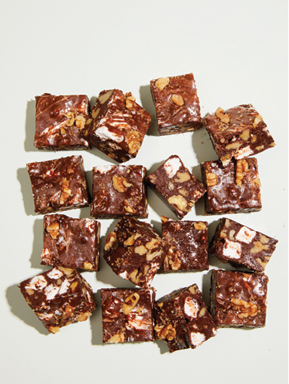
chocolate MarshMallow walnut fudge; alice gao

Each chapter in the book begins with a fabulous quote from the past, such as this 1974 quip, “Though no one remembers the genius who invented the pie, nobody ever forgets the woman who bakes the perfect one.” Another one from 1936 is “When a batch of candy is in the making, a festive air pervades the kitchen.” Also worth noting are the tips, spread out over the pages of the book under the umbrella of “Vintage Advice for the Modern Kitchen”, all of which still hold true today.

We love the modern takes on traditional desserts in The Vintage Baker. We also love the book design and photography which is perfectly aligned with the theme of the cookbook. So we reached out to Jessie Sheehan and delved deeper into her early years, her sweet tooth, and her trajectory into the world of baking:

Where are you originally from and how did you end up in Litchfield County?

I am originally from Brookline, MA, but have lived in NYC since college. Although my husband and I love the city, after our second son was born, we wanted to find a place outside of it, to spend weekends and summers. A friend had a home in Amenia, NY, and another in Sharon. After visiting them, we were impressed with how close Litchfield County is to the city, while at the same time so rural. We rented a home in Salisbury starting that fall, and by the summer we had bought a piece of property in Sharon.

sliver cake with pink frosting; alice gao

Have you always enjoyed baking?

No. I have a notorious a sweet tooth, and am filled with the fondest memories of all of the delicious (to me) store-bought treats that were on offer in my childhood home (Oreos, Devil Dogs, Pepperidge Farm turnovers). But no one in the house was baking from scratch, including me.

I did not start making sweets at home until my second son was born, 13 years ago. It was then that I began thinking about baking professionally. I was on a 3-year maternity leave (a joke: I had left my law firm when my first son was born, and had never gone back) and decided to go into a bakery in my neighborhood of Red Hook, Brooklyn, and ask the head baker if I could intern or apprentice. Although, at first she seemed a bit surprised, I’m not sure how many moms in their mid-thirties walk in off the street and make such a request, they hired me. Once working in the bakery, I quickly realized that I was “home” professionally and was finally doing what made me the happiest.

Was there anyone in your childhood such as a relative or mentor who influenced your decision to go into baking?

I did not grow up surrounded by homemade sweets or homemade sweets-makers (Hostess and Nabisco did all the heavy lifting). But my paternal grandmother, who lived in Cleveland, was an excellent home baker. We visited her several times a year and I loved her mini and very crispy Tollhouse cookies, her flourless chocolate Swiss roll cake filled with Hershey’s Syrup and coffee flavored whipped cream, and her lemon velvet cake. A story about that cake can be found here.

Did you attend culinary school or did you learn your craft at BAKED in Brooklyn?

I learned everything about baking from Baked, in Brooklyn. When I started at the bakery, because I knew so little/nothing, I was given menial tasks like filling and sealing plastic bags with their homemade granola. But slowly, they developed confidence in me, and I started making easy things, like banana bread or cookie dough. Moreover, the two owners of the bakery, Matt Lewis and Renato Poliafito, started writing cookbooks while I was there, and asked me to test recipes at home, they wanted someone who was not a “professional” but who knew enough about baking to be able to explain why a recipe worked or didn’t, and what might be useful in changing it; and, eventually, to develop them for their books. Funny aside, I loved the testing, as I think it called on all of the nerdy skills I had honed while practicing law, the precision, the research, the importance of being thorough, etc.

cinnaMon raisin flake apart bread; alice gao

Do you specialize in sweets or do you also bake savory dishes?

I specialize in sweets, most definitely, but I love to bake some savory items, like the everything buttermilk biscuits and the cacio e pepe popovers in The Vintage Baker. I also love a Parker House roll and make those frequently for dinner parties and on Thanksgiving.

What are your personal favorite desserts?

I love cake. My favorite is probably the devils food sheet cake with sea foam frosting that I developed for The Vintage Baker. The cake is moist and deeply chocolate-y and tastes like the best cake from a boxed-cake-mix you ever did have (I have always been a huge fan of such cakes). The frosting tastes like marshmallow. It is a seven-minute frosting that is made with brown sugar rather than granulated. The combination of marshmallow and chocolate is a favorite of mine. I also love thick and chewy chocolate chip cookies and am always on a personal quest to develop the perfect one. Finally, nothing is more comforting and delicious to me than chocolate pudding – and I love the malted milk chocolate one that I developed for The Vintage Baker.

Do you enjoy the process of developing recipes from scratch? Or do you prefer working with classic recipes and giving them new twists?

I love both. And in some ways they are the same. Even when developing something “from scratch,” one is always working from something that already exists. I always remind myself that I am not reinventing the wheel here, and no one expects me to. Instead, I am putting my own spin on something to which someone else has put their spin, be it 50 years ago or five.

As a food writer, what kind of subjects do you get most excited about?

I like to write about the desserts that I love – stories about the perfect chocolate chip cookie, for instance. I also like to write about desserts that are important to me, like my grandmother’s lemon velvet sheet cake. Finally, I like to write about my family, and the trials and tribulations of feeding them – both sweets and savory. As luck would have it, I have boys who like sweets, but not enough for my taste. Often I ask them to try a dessert that I am working on, like the cranberry loaf I made earlier this week, and it is like pulling teeth to get either of them to try a slice.

What’s next on your to-do list? Are you planning another cookbook?

I would love to write another cookbook and I have some ideas that I am shopping around, so stay tuned!

The Vintage Baker is available in bookstores and online.

Catch Jessie’s blog at: jessiesheehanbakes.com
Check out Jessie’s Instagram photos and videos on
Instagram at @jessiesheehanbakes

The Idea of Beauty in Objects

An expert on authentic early American furniture and objects, Gail Lettick is a passionate antiques dealer and collector — with a love for history and an ability to recognize quality and beauty.

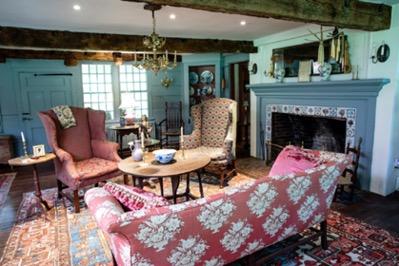
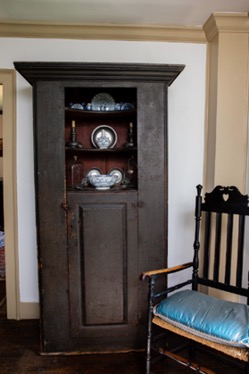
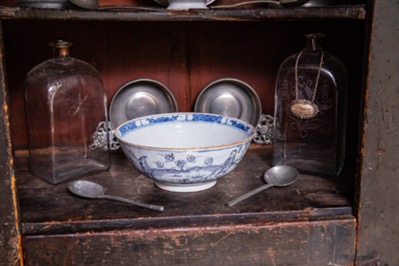
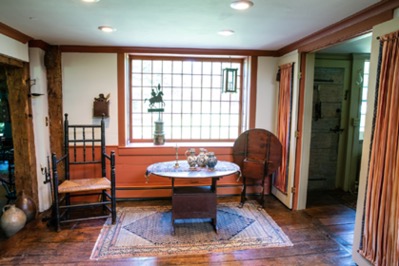
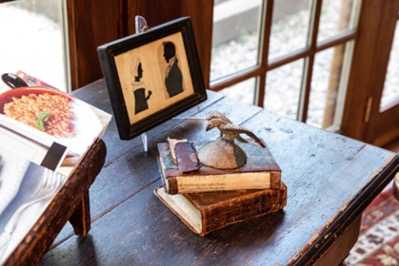
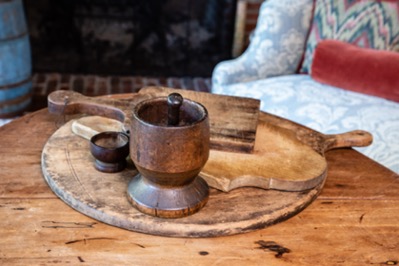
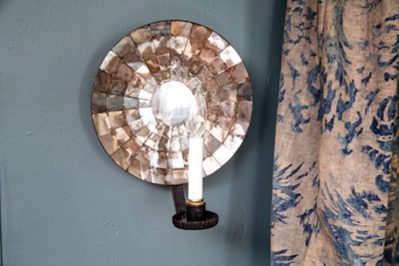
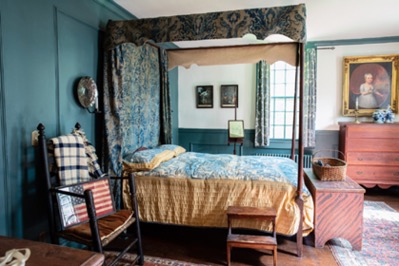
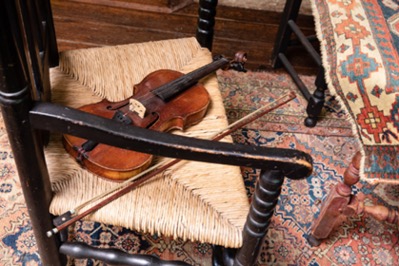
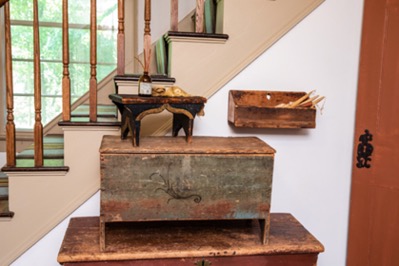
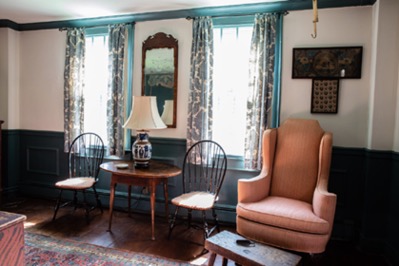
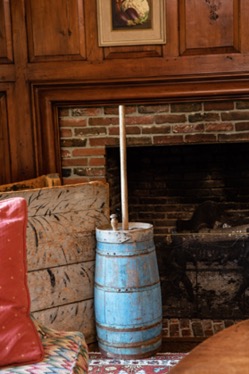
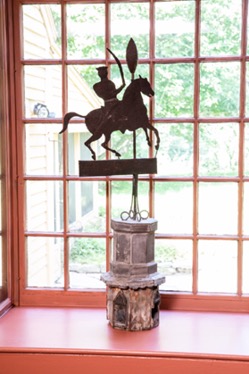
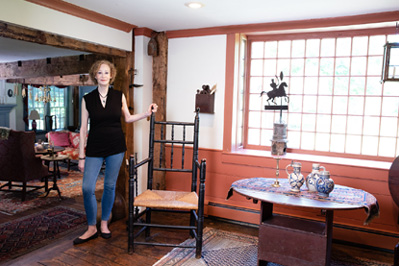
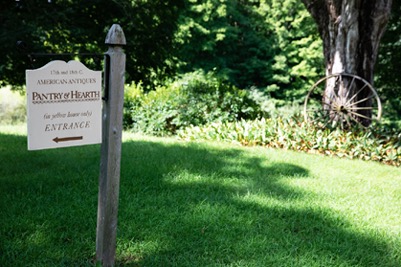
Gail Lettick has been an Antiques Dealer for over 30 years. She ran her business out of 4 floors in a brownstone in New York City for about 26 years and then moved to Woodbury in Connecticut where she founded Pantry & Hearth American Antiques on Main Street, specializing in authentic, superior quality Pilgrim, 18th and early 19th C. Americana, original surface or painted high country furniture and accessories, 17th and 18th C. needlework, folk art, early lighting and treen. Her extensive knowledge of the history of each piece she sells is impressive.

bleAcher+everArD
bleAcher+everArD

When Gail Lettick was about eighteen years old, she walked into an antiques shop on the Connecticut shoreline and it was love at first sight. Her journey into the world of antiques began there. She still remembers her first purchase: a pair of cobalt blue salt & pepper shakers. “You are at first attracted to old things, you are attracted to the surface, the design, but you don’t know the history. So you study it and the more you know, the more you want to learn. As antiques dealers, we all love to teach, to expound on what we sell. On the history of objects, to explain how they work. It is like a disease — you can’t stop, once you are hooked,” Gail explains. “What I love about it is that you learn about the history of things. You get deeper and deeper all of the time. And I am still learning.”

bleAcher+everArD
bleAcher+everArD

Gail was born in New Haven, Connecticut and graduated from Temple University in Philadelphia, where she completed a Fine Arts Major and an Art History Minor. She met her late husband artist Birney Lettick back in New Haven while taking a painting class he was teaching and together they went on to live in New York City. In the beginning, she worked as a designer at Dell Publishing designing book covers, followed by a period of doing freelance graphic design projects. After some years of designing, she decided to follow her growing interest in antiques and opened her business in Manhattan. From there, she moved to Woodbury and operates Pantry & Hearth American Antiques from her beautiful antique home situated on a stunning property.
bleAcher+everArD
bleAcher+everArD
bleAcher+everArD

Dealers want to educate their clients, so they invest their time in knowing the business. Over the years, Gail has taken courses, attended seminars, read and studied a great deal. She also says that she learned from her mistakes. An important part of her education, Gail has been spending part of the year in Europe for many years. Her love of Italy, of the Renaissance period, and her travels inform her understanding of the American vernacular, which is based on the English period of 17th C. furniture which is based on Italian and Flemish objects from the Renaissance. “If you look at the turnings, the form, the finials of their designs, it was basically adopted from Renaissance furniture brought over to America by the European craftsmen who also brought their skills with them. They produced the same pieces in America but simpler because they didn’t have all of the tools. The simplicity of Americana is a wonderful thing to behold. Americana is more human and realistic. The pieces in Europe are more rigid due to adhering to the specifications of the Guild.”

bleAcher+everArD
bleAcher+everArD

From early on in her career, Gail found that her instincts led her to earlier pieces. “I have always been attracted to the earlier works because I live in Italy part time. Earlier is extraordinary.” The people who collect early things are really knowledgable. In this period of Americana, utilitarian is a given, but each piece has to stand on its own as a piece of art— the design, integrity, originality, the wear and use which has created a patina that qualifies it as a piece of art.

bleAcher+everArD
bleAcher+everArD
bleAcher+everArD

Some of Gail’s clients have been collecting for 30 to 40 years. She has found that some of her younger clients are interested in the culinary history, following a recent trend in “hearth” cooking. Many of her clients are looking for things and tools made by hand, made by people who were trained and apprenticed in the techniques. The Idea of Beauty in Objects — this is something they could hold onto and derive peace and calm from history.

bleAcher+everArD

We asked Gail where she sources her pieces. “Nowadays finding rare and special objects continually gets more difficult. Since my clients are mostly very advanced, knowledgeable collectors, who only want the best objects that have originality of construction and surface as well as provenance, I must search everywhere possible to obtain such objects. This includes, but not limited to private collections, some of my long term clients, other dealers, random people who call me with family pieces to sell and other searches.”

bleAcher+everArD
bleAcher+everArD

As with most retail businesses now, a greater percentage of Gail’s business comes via sales from her website, pantryandhearth.com. Usually her out-of-town clients from around the country, call and make an appointment to visit when they are coming through Connecticut. Others see a piece on her website and want to come see it in person. Less frequently these days, she occasionally gets off the street antiquers, but it still happens.

bleAcher+everArD

Asked what are the popular pieces she sells, Gail replies, “It is difficult to be precise as to what are the most popular selling pieces, but in general I sell a great deal of early American furniture, the rarer the piece the easier the sale. In smaller objects, there is a good demand for early lighting pieces, treenware, early wrought iron and needlework in very good condition with strong colors.”

bleAcher+everArD

How does one decorate a home with 17th C. furniture? Does your home have to be old as well? “Early furniture, as well as small objects, work sculpturally with modern pieces and add interest and another dimension to rooms in contemporary homes. I have many clients, who mix old with new very stylishly and successfully.”

Getting antiques delivered across the country can be a delicate matter but Gail has extensive experience having items delivered to her clients. Lettick ships anything everywhere. “I have an array of truckers and independent movers depending on which area of the country my clients live. I also use UPS, FedEx or the post office as needed or requested.”

bleAcher+everArD

We asked Gail what is the best part of her job: “Antiques are in my soul; they have been my passion, fascination and addiction since I was a teenager. I love the search for great pieces that speak to my heart and sense of aesthetics as a dealer and collector. When I find an early object that in my professional opinion is not just functional in its form, but because of its quality and beauty it stands on its own as a true piece of Art, I get a satisfaction and thrill that is absolutely a integral part of the essence of joy in my life.”

She added another insight into what makes her happy: “I adore both buying and selling! I believe I am blessed with wonderful clients from all over, who share my cultural values. Most have become friends for which I am very grateful as I cannot think of any other way I would have met and befriended so many interesting, special people! We continue to share life long experiences and antique connections. I believe that we enhance each other’s lives through our mutual love of history and things that were made by the hands of those who lived centuries before us. For me being an antiques dealer is not a job, it is a way of life.”

bleAcher+everArD

Pantry & Hearth American Antiques
994 Main Street South
Woodbury

203.263.8555
gail.lettick@gmail.com
www.pantryandhearth.com
A World of Beauty & Design

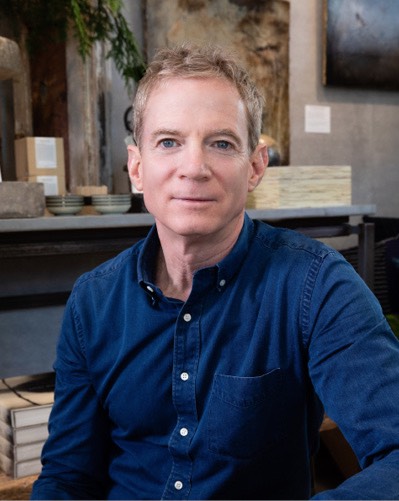
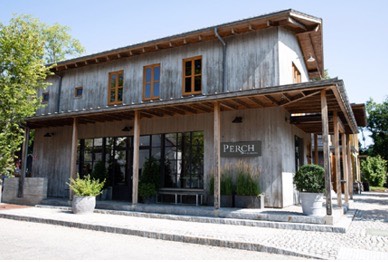
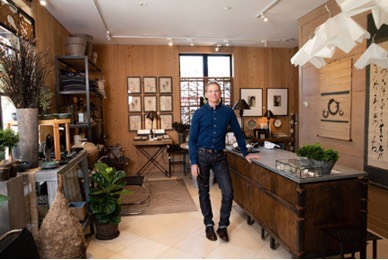
The owners of Pergola in New Preston, David Whitman and Peter Stiglin, have branched out and launched another gorgeous shop — this time in Kent—called PERCH.

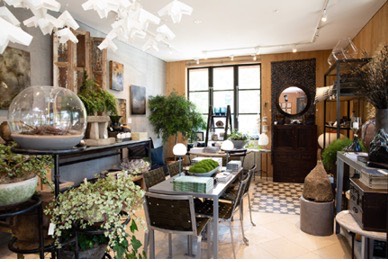
Peter Stiglin and David Whitman have been in the Northwest Corner of Connecticut for over 20 years. Before opening Pergola, their beautiful store in the Village of New Preston, they worked together on creative marketing projects. Before they met, David lived and did similar work in New Mexico for 10 years and Peter was in music production in New York for 10 years. Now they have opened a new shop in neighboring Kent which still has that naturalist aesthetic we all love but with a distinctive design approach. Filled with tasteful collections and artisanal objects, the space is a delight to those who are drawn to designs based on nature, both old and new. Following is a conversation we had with David regarding the new shop:

bleacher+everarD

Everyone loves Pergola, your original shop in New Preston. What made you decide to open another shop called PERCH in Kent?

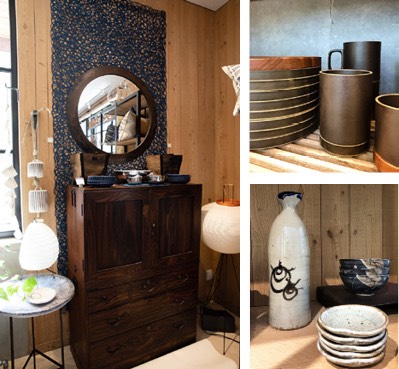
A combination of things led to PERCH…the more modern tone of the physical space was an appealing “stage” for some of the artisans and collections we have started to discover more recently, especially during our trips to Japan. We were excited about a different “project” space to present work and items which might get lost in the many layers and rooms found at Pergola.

bleacher+everarD

What is the difference between Pergola and PERCH?

Pergola has remained true to its botanical focus through a naturalist lens. Perch has a distinct design focus through that same lens.

bleacher+everarD
bleacher+everarD

Do you find that there is interest in America for Japanese objects, dishes, art and furniture?

Since we first started traveling to Japan and buying for Pergola, about 9 years ago, we have definitely seen an increased interest from our clients in things from both new and old Japan. I don’t know about the rest of the country — Japanese art and design has always drawn a bit of niche audience.
bleacher+everarD

Do Japanese objects and art go well with modern pieces and antiques when decorating a home?

They certainly can – these days it’s all in the mix. But it should be carefully considered with a sense of design.

bleacher+everarD

Japanese lighting can be really beautiful. Is it the simplicity of the designs that make them so appealing?

The washi paper lighting designed by Noguchi are sculptures and light source as one. Form and function.

bleacher+everarD

The shop is beautiful and has a kind of monochromatic palette. Did you intentionally use minimal color when creating the space?

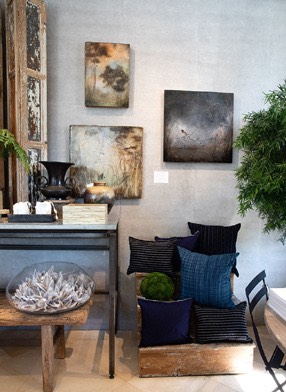
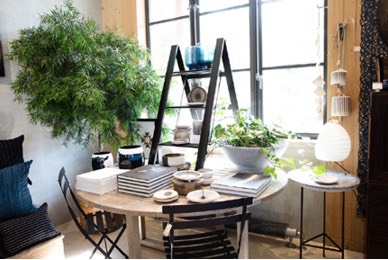
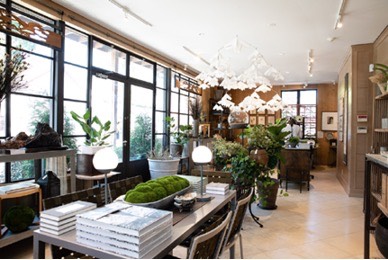
As PERCH is essentially a one-room shop, we pretty much adhere to a natural palette — wood colors, grey shades, a range of blues, green plants, creams, golden light. There actually is a lot of color but it’s mostly on the cool side. Which I think is more pleasing in the one room.

bleacher+everarD

Many of the items in the store come from nature. Is this the common thread between Pergola and PERCH?

A naturalist lens is certainly in the Pergola DNA. As a project of Pergola, PERCH shares in that but with a slightly different focus.

bleacher+everarD
bleacher+everarD

Are your customers locals and weekenders, out of town visitors, or both?

Both the full-time and part-time communities in our area have been wonderfully supportive of what we have done at Pergola, and continue to do at PERCH. The area in general certainly gets a nice share of visitors from near and far places, and we do see many of them especially at certain times of the year — Summer and Fall mostly.

bleacher+everarD

Do you offer design services and commissions as well as what is for sale in the store?

Not really but we do help out with design decisions regarding a piece a client may be considering.

bleacher+everarD

What do have in mind for the future of PERCH?

PERCH is still at an early stage, and will evolve organically. These kinds of projects kind of tell you where they want to go.

PERCH
4 Fulling Lane
Kent Barns
Kent
860.592.0401
info@pergolahome.com

A Tale of Two Artists

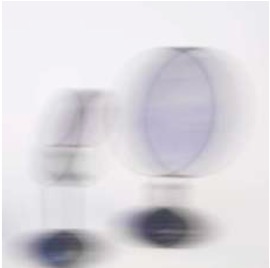
In a stunning exhibition, James Barron Art presents the work of Jeanette Montgomery Barron and Laura de Santillana.

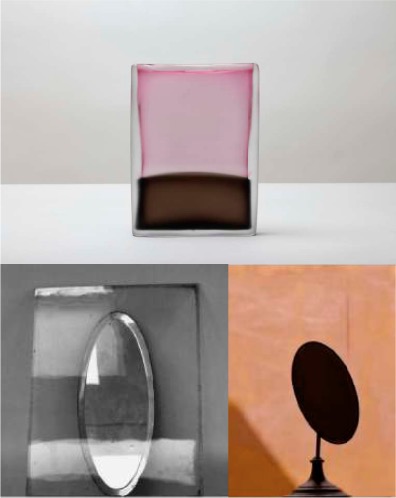
In his new space at 17 Old Barn Road in Kent, James Barron is once again mounting shows that are unique, unexpected, and exciting. On September 8th the gallery will open “Mirrors and Glass,” a dual exhibit featuring the works of Jeanette Montgomery Barron and Laura de Santillana. Both women work in different mediums and their work has never been shown together. In fact, until the idea for the show began to germinate, they had never met.

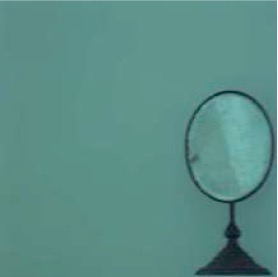
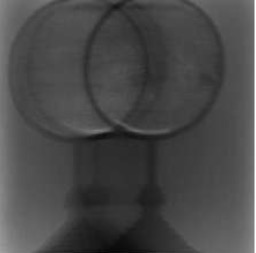
Jeanette Montgomery Barron, cyan mirror #1, 2003-2018
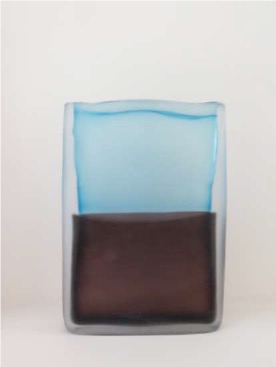
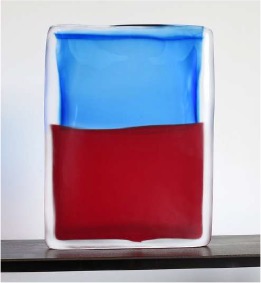
Laura de Santillana, Tokyo-Ga (sky blue – warm brown), 2018

“Jeanette has been photographing mirrors since 1990 and Laura de Santillana had her first exhibition of her glass sculptures in 1979. She is the third generation of glassblowers in her family” says James Barron. “But they did not know each other. They were born one year apart, Jeanette in Atlanta, Georgia, and Laura in Venice, Italy. So when we were last in Rome I arranged for us all to have coffee. It felt as if I had set up the perfect blind date. Both women have a sense of calm and a similar sense of peace. I started playing in my head with combinations of their images and I saw so many parallels. I knew I had to mount a show of the two artists together.”

“The first mirrors were shot in black and white,” Montgomery Barron explains. “Then in 2003 I began to shoot some in color. Laura lives in Venice in the Giudecca and travels every morning to Murano where her family’s glass factory is located. She leaves before sunrise and see this horizon with the light coming up. She is inspired by the atmospheric haze of color over the water.”

Laura de Santillana, quartet 3, 2018
Jeanette Montgomery Barron, purple mirrors #1, 2016

Both artists follow a path of minimal aesthetic and an exploration of color through repetition of from. “My work is about refracted light, low water and the horizon line. There is a very old technique, incalmo, which is the joining of two pieces. When you have incalmo on a round form, you don’t see much. When you bring together two walls, then you get things happening. You get an ellipse, or it doubles up, or the rim is folded inside and you get double color. All these things you only see because you are bringing the two walls together.”

Laura de Santillana, Tokyo-Ga (blue aqua – red), 2017
Jeanette Montgomery Barron, red mirror #1, 2018

Both women present work that is about stillness and meditation. The difference, in most cases, is that de Santillana is looking at light reflecting on water and Montgomery Barron is photographing in her studio. But the pieces are eerily similar in their affect on the viewer. And while they both work with glass in different forms, the use of color is inherent in their work.

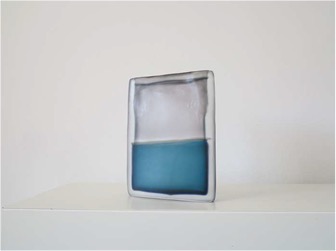
Laura de Santillana, Tokyo-Ga (violet grey – blue green), 2018
Jeanette Montgomery Barron, mirror #24, nyc, 2002

Viewing the two artists’ work side by side the similarities are remarkable and the emotional aspects of working with color define both the similarities and the striking differences. Montgomery Barron’s red mirrors, for instance, were the result of a rainy day.

“I started reading about the meaning and connotations of red: it’s power; there is a force to red. I thought, ‘I’ve got to play around with this color.’ I’ve never really photographed with strong colors. Then the orange one came about, and other kind of electric colors. Some of the red mirrors came out of mistakes. I did a double exposure by mistake, and it led into a whole new series.”

Laura de Santillana, quartet (from white to grey), 2018
Jeanette Montgomery Barron, blue mirrors #1, 2015

In de Santillana’s case, two colors sometimes make the difference.

“When I work with two colors, one is always harder. The harder color pulls, and then you get the softer one, which makes the line.”

“Mirrors and Glass” is an exciting and original look at two talented artists, their approach to color, light, space, and perhaps to art and life itself. And once again James Barron has presented a stunning and unique show.

Opening: Saturday, September 8, 2018

Jeanette Montgomery Barron and
Laura de Santillana: Mirrors and Glass
will run through October 21, 2018.

James Barron Art
17 Old Barn Road
Kent

917.270.8044
info@jamesbarronart.com
jamesbarronart.com

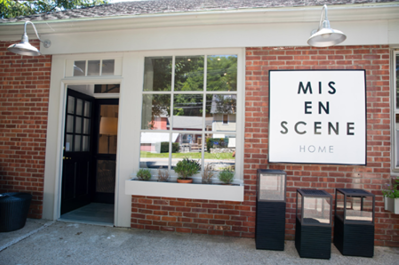
Mis en Scene Home

Addressing the need for homes to be furnished quickly, Claire Maestroni and Giorgio Stefano Maroulis can get the goods in record time and design a stunning, modern look.

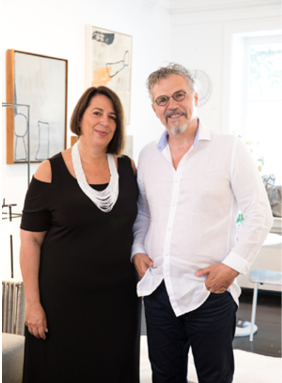
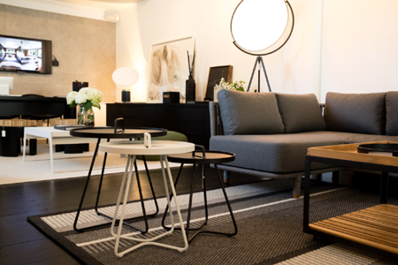
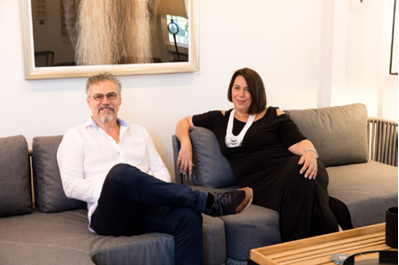
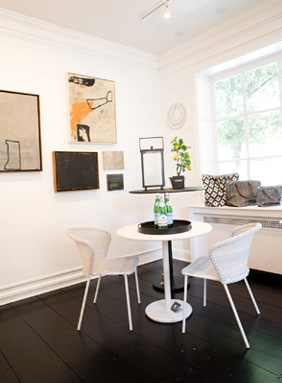
The name Mis en Scene is French for “Setting the Stage.” Claire Maestroni and Giorgio Stefano Maroulis are interior designers who enjoy setting the stage for a recently purchased home or for a home about to go on the market. With clean lines, simple designs, and a modern aesthetic, the two designers can provide a fresh look to a ‘tired’ house in an instant, or they can create a customized, original design to a single room.

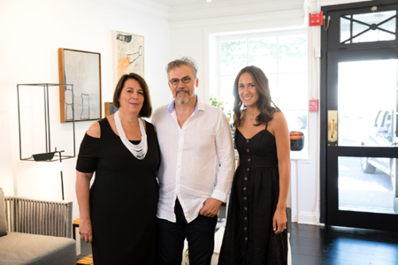
Claire is originally from France and moved to the United States about 28 years ago. Giorgio is from Italy and Greece and has been here for 42 years. They have a business in Greenwich and they recently opened a new business and shop in Washington Depot (where Huntington & Hope used to be). Their European outlook towards form and functionality combined with their passion for design sets the premise of Mis en Scene Home.

bleacher+everard

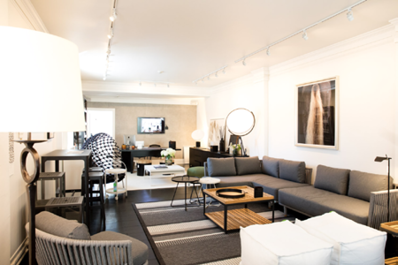
Mis en Scene’s unique philosophy and business approach are based on a quick turnaround. Claire and Giorgio found that their clients wanted instant gratification—they didn’t want to wait three months for a sofa to arrive. With this in mind, the designers decided to select products from companies that had inventory and could quick-ship. They discovered products that are not the kind you can find anywhere, ones that have quality craftsmanship with the best materials. These are the things that motivated Claire and Giorgio to put together the collections they sell. With a big warehouse stocked with lighting, area rugs, furniture, artwork, and accessories for staging, they can design an entire house in two weeks. Or they can design one room, or provide one piece of furniture — fast. This is their Turnkey Concept.

bleacher+everard

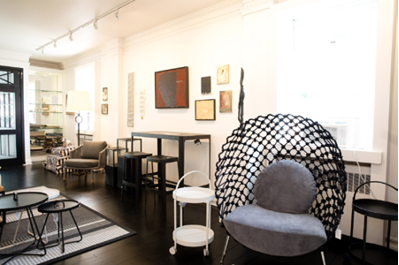
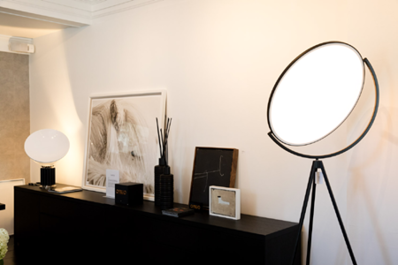
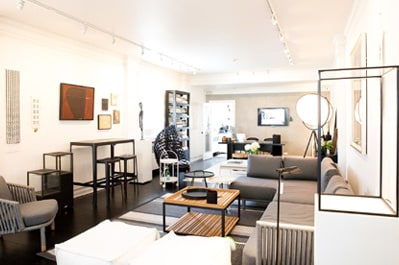
The aesthetic is modern and clean, more minimalist than other shops in the area. By using a vocabulary that has a minimal platform with a sense of romanticism that draws emotion, a vocabulary that uses texture as an important element, their rooms are inviting and calm. Furniture made of unusual materials contrast well with the walls’ flat textures. Beautiful rugs from Finland (that have never been sold in the U.S.) bring together the pieces in a room. Naturally attracted to materials, Giorgio and Claire mostly use organic, sustainable materials so as not to hurt the environment.

bleacher+everard

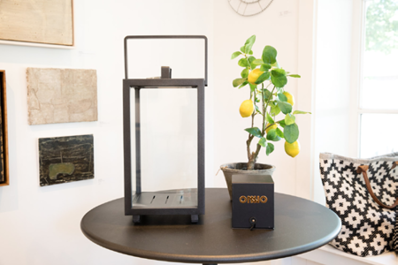
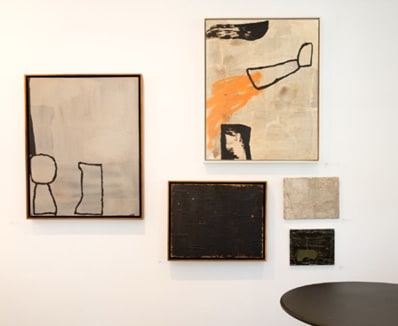
Their design process begins around the client’s art or art that they have selected. Once you have your color and form, it helps to stay on the whole aesthetic. By not compromising the art, it is not treated as decoration. In fact, they feature works by a new artist on the walls of their shop every month. Their artists are from around the globe. While the artworks provide color, the rest of the pieces have more of a monochromatic theme.

bleacher+everard

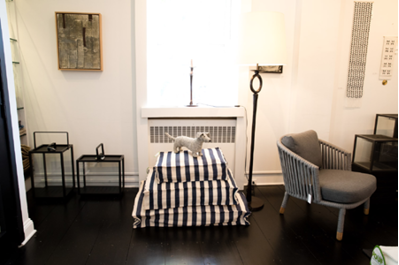
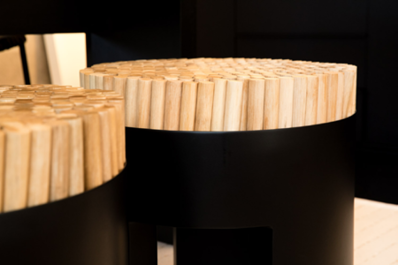
When it comes to architectural details, they use fewer materials and keep the walls and trim in a home very simple, staying away from too many layers of crown molding. Planning the design of a house, they often use recycled flooring or create pieces from repurposed wood. Wall treatments include delightful, textured wallpapers. Window treatments are simple and made of linen, raw silk, and bamboo. In the back of the shop are two stools made with a cast aluminum base, a rubber cushion, and bamboo sticks that move as you sit down. Surprisingly, the stools are very comfortable.

bleacher+everard
bleacher+everard

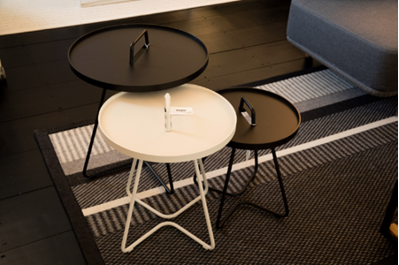
Close to the stools is the Dragnet Chair, a large round chair that looks a bit like a geodesic dome made with a metal frame covered with black fabric. The designer Kenneth Cobonpue uses materials from the Philippines. The chair which can be used indoor or outdoor comes in black, red or white and has grey cushions made with Sunbrella fabric. Function also plays an important role in the pieces that Giorio and Claire have selected. A nearby coffee table opens up into two wings for use as a buffet. A set of three small tables, called On the Go, are versatile and portable— their tops have handles and lift off to be used as trays.

bleacher+everard

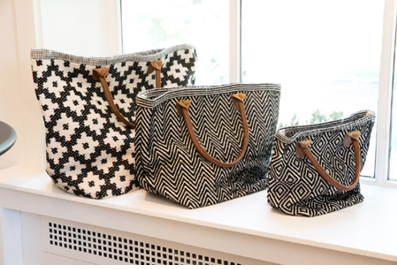
Everything in the shop has a story. Textile wall hangings and jewelry are made by a tribal group of Masai women in Tanzania. Handbags are made with an outdoor fabric. And every month the shop will feature a new collection of products. This month it is an Outdoor theme. The stock keeps evolving as the seasons change.

bleacher+everard

In New York City and Greenwich, Claire and Giorgio designed residential spaces, hotels, and apartments for developers. They didn’t just work on the interior design but were involved in the architecture as well. Houses were made with sustainable woods, zinc roofs, and other natural materials. They moved to Washington Depot a year ago, after living in New York City and Greenwich. They love living here in the country, being away from distractions. It helps them to unplug and be creative. They love the beauty, the architecture, the creative energy, and the cultural activity in the area. We asked them a few questions — here’s what they had to say:

bleacher+everard

You both seem very passionate about design. Were you interested in art and beauty and function from an early age? Who or what were your influences?

G: Yes indeed, it was natural as I grew up in a family environment of artists and craftsmen. My mother practically “made” every gift she presented, from clothing to decorative objects. My father was a builder and my brother is an architect and artist. Music, sound, and theater was my passion and early studies, ending up in the Environmental Department at Parsons School of Design, and later on Grad School, Masters in Decorative Arts at the Cooper Hewitt Museum.

giorgio stefano maroulis, photograph by bleacher+everard

C: Right after my Bar Exam in Paris, I went to study International Law at NYU, and worked for a few years as a lawyer between New York and Paris. One day, the house we were renting, was visited by some potential buyers and they wanted to buy all our furniture and hire me as a designer! Several neighbors asked me as well to design their home. I always had an appreciation for art and design and decided that it was may be time to change career… As I wanted to be formally educated, I went back to school to study Interior Design at Parsons. It was a complete change of career, however, my legal and business education helped with the organizational skills required in the interior design field, and has allowed us to always establish and keep a controlled budget for our clients.

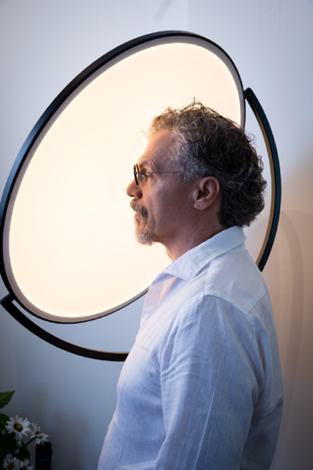
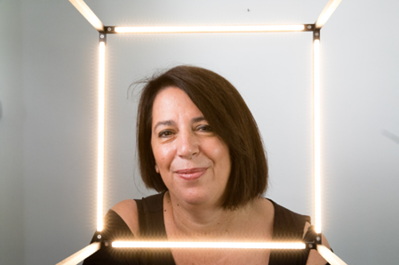
claire maestroni, photograph by bleacher+everard

Are all of the products you choose to work with made of natural materials and using sustainable practices? Why is this important to you?

G & C: We live in a time where humans have placed the environment in great danger. We are not presenting ourselves as the advocates to save the environment, but it is our responsibility to do anything possible not to deplete the resources available to us. What we elect to surround ourselves with, reflects our needs and creates the history of the times we live in. For instance, adding three layers of crown wood molding on a ceiling is just not responsible, while using LVL beams to support a ceiling is. Keeping up with innovation in materials and technology is a must, and when we intertwine that with great craftsmanship we realize our dream. Necessity becomes art and that is what drives the design solutions.

bleacher+everard

Can you tell us where you get rugs, textiles, furniture, lighting, and accessories? How do these companies philosophies align with yours?

G & C: Rugs are from Belgium and Scandinavia, using a variety of materials from natural fibers to recycled bottles. Lighting is also from Belgium, Italy, France and others, again using sustainable, recycled and/or recyclable materials from bamboo, aluminum, bronze to resin. For furniture, we like a company in Belgium, sustainable wood furniture and organic textiles in Italy, corian manufacturers from Denmark and Australia, both outdoor/indoor furniture manufacturers. Italian wood veneers, glass and aluminum, natural and recycled fibers, from Belgium, and reclaimed wood flooring, and many others.

Their philosophy aligns with ours in the terms of providing the public with product lines that are made with sustainable, recycled or recyclable materials. Whether synthetic or organic, always in line with our aesthetic of clean, minimal, timeless, yet with a romantic sense that helps discover and/or being aware of the beauty that exists in all things, either new or old, synthetic or natural, in pure form, amorphous or distorted.

bleacher+everard

What makes your business different from other home and design shops in the area?

G & C: Two things really set us aside. Our European background and Turn Key concept.

Both of us are European—French/Corsican, Italian, and Greek— in the full sense of the word: Mediterranean. We grew up literally surrounded by a “sea of culture.” We have been submerged in so much art, architecture and design. We also have access to European craftsmanship and artisans. Most of the companies that we showcase are European or International.

Our Turn Key concept came to answer today’s needs of our clients: the design world has changed: instant gratification, internet sales, and new access to resources made us realized, that waiting for the completion of the design of a home for sometimes over a year, was not satisfying and even frustrating. For these reasons, we work with companies that have a quick ship program. In addition, we own a 10,000 square feet warehouse full of lighting, furniture, rugs … Our expertise as stagers allows us to furnish and style a complete home in little as two weeks.

bleacher+everard

You have an impressive stable of artists providing paintings and photographs for your clients and they are featured on the walls of your shop. How do you find them and what do you look for?

G & C: We work with art curators, as well as established or upcoming fine artists. We also travel extensively and attend international shows where we can source new art.

bleacher+everard

When you design, how important are collaborations with artists, furniture makers, and other designers such as lighting or fabric and rug specialists?

G & C: It is absolutely essential. The collaboration with artisans and craftsman further inspires our design work. Meeting with a glass blower, a weaver, a woodworker, a metalsmith is so fulfilling and opens up so many horizons. These moments are the one that makes us create further than the selection of a piece of furniture. Understanding how a piece is made and who makes it, the story of this person, is indirectly giving soul to a home.

bleacher+everard

What is your philosophy about the use of color when designing rooms for a residence? Where do you begin? What is your process?

G & C: We mostly set our color palette from art. Colors derive either from a painting the client already has in their possession, or we show them selections or “color stories” for selection. Then we will study the space for light and shadows and fine-tune our selection. We like a clean and timeless design and are privileging furniture and lights with pure lines that allow the unobstructed mind to rest and appreciate the surroundings and settings.

What is the most fulfilling part of what you do? And the least?

G & C: In addition to the collaboration with artisans and craftsman mentioned previously the most fulfilling part is the reveal. To see the “dream” that we have helped the client build become a reality. Sometimes our clients even cried because they are so happy and don’t recognize the space. It is a gift to watch.

The least fulfilling part can be working with clients who are unsure of what they want us to do. They have clearly hired us because they trusted us and liked our design aesthetics, but they aren’t willing to let go or are getting influenced by friends or family. It is a challenge to achieve the design they imagine if they are not willing to let us do the work, and/or keep changing their mind.

bleacher+everard

What has the response been from the Litchfield County community since you opened the shop?

G & C: Everyone that has visited our new store has been most gracious and encouraging of our designs. They have also commented that it is quite different and more modern than other designers and home furnishing stores in the area, which we are encouraged to hear. We have also embraced our location in Washington Depot as it has an incredibly artistic community.

claire, giorgio, and skylar by bleacher+everard

What are your goals, hopes, and plans for the future of Mis en Scene Home?

G & C: We are in the process of creating a collection of Mis en Scene signature homes, redesigned and fully furnished, ready to enjoy. Our concept is to provide Turn Key houses that reflects our passion for art and clean design and architecture where the buyers will come only with their “toothbrush.”

Hours are Monday to Saturday, 10 am to 5 pm, and

Sunday by appointment.

Mis en Scene Home
2 Green Hill Road
Washington Depot
860.619.0577
misenscenehome.com

Current Issue
May / June 2026
The Garden Issue
Subscribe Now
.
  • STAY IN THE KNOW

    Your weekly guide to can't-miss events, hidden gems, and local favorites in Litchfield County. Sign up now for curated things to do, eat, and explore—delivered every week. It’s free. It’s local. It’s essential.

  • Karen Raines Davis