

Your guide to the heart of Litchfield County:
Discover local stories, hidden gems, and must-know events.

Washington Friends of Music brings fresh perspective

Wendy Sutter Adds Fire to WFM
By Charles Dubow
Photos by Carl Weese

In what arguably might be one of the most agreeable ways to usher in the New Year, ever since 2013 the Washington Friends of Music (WFM) has presented a live concert featuring the gorgeous and soothing strains of such composers as Bach, Handel, and Vivaldi. But in recent years, longtime patrons cannot help but notice subtle yet distinct changes to these concerts: The program has now expanded beyond the Baroque, the January 1 concerts are now held in the Gunn School’s dazzling new performing arts center, and the artistic director is a statuesque brunette in a long dress playing the cello. 

Called by The Wall Street Journal “one of the great leading cellists of the classical stage,” Wendy Sutter has brought a fresh new perspective to WFM. “My goal was to open up the repertoire, and introduce composers from the Classical and Romantic eras, such as Dvorak and Schubert, as well as Modernist American composers such as  Copland. The challenge was reassuring two Germans that the music of Beethoven was worthy of their concerts,” she says with a laugh.

The two Germans in question are WFM’s founders and guiding lights, Hermann and Waltraud Tammen. The two former bankers started coming up to Washington on weekends more than 20 years ago. “We were looking for local musical events that featured classical music,” says Hermann, “but couldn’t find any. So we decided to start our own.” 

Today WFM hosts five concerts per year: the New Year’s concert and, during the summer, four additional performances at Washington’s historic Congregational Church. “Our concerts have become a destination to an ever-growing audience of music lovers from all over Connecticut,” says founding board member Charles Raskob Robinson, “and we couldn’t be more excited to have Wendy bring it to new heights.”
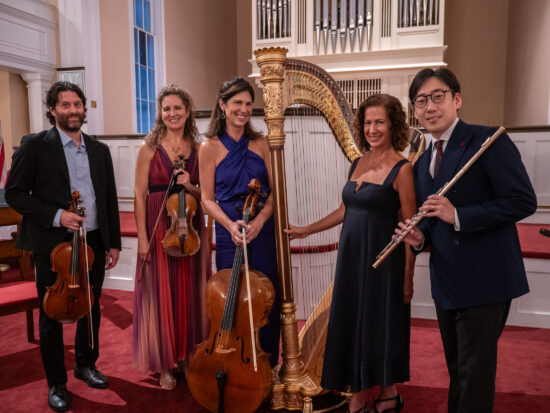
“In 2022 we felt it was time to take a more professional approach and attract a new audience,” says Waltraud. “That’s why we approached Wendy. She is a renowned cellist and connected with many musicians. We asked her to organize a few concerts and were so impressed that we invited her to come on full time.” 

Sutter continues to have a rich career playing with such orchestras as the New York Philharmonic and the Shanghai Symphony. (To list all the orchestras she has soloed with would take up more space than this article is allotted. Rest assured, it’s impressive.) “The chance to curate performances and work with musicians of my own choosing is what really attracted me to WFM,” says the Juilliard grad. “It’s like being in a candy store for me—but it’s also a lot of work. We are professional musicians who only get a few weeks off per year. So we have to coordinate schedules, and arrange rehearsals and transportation. One of the nicest things about playing in Washington, though, is that we don’t simply slip out the back door, like we do after most performances. It’s been lovely getting to know the people here. I feel really blessed that Hermann and Waltraud reached out to me.” washingtonct4music.blogspot.com
Paul Pearson of the White Hart Inn

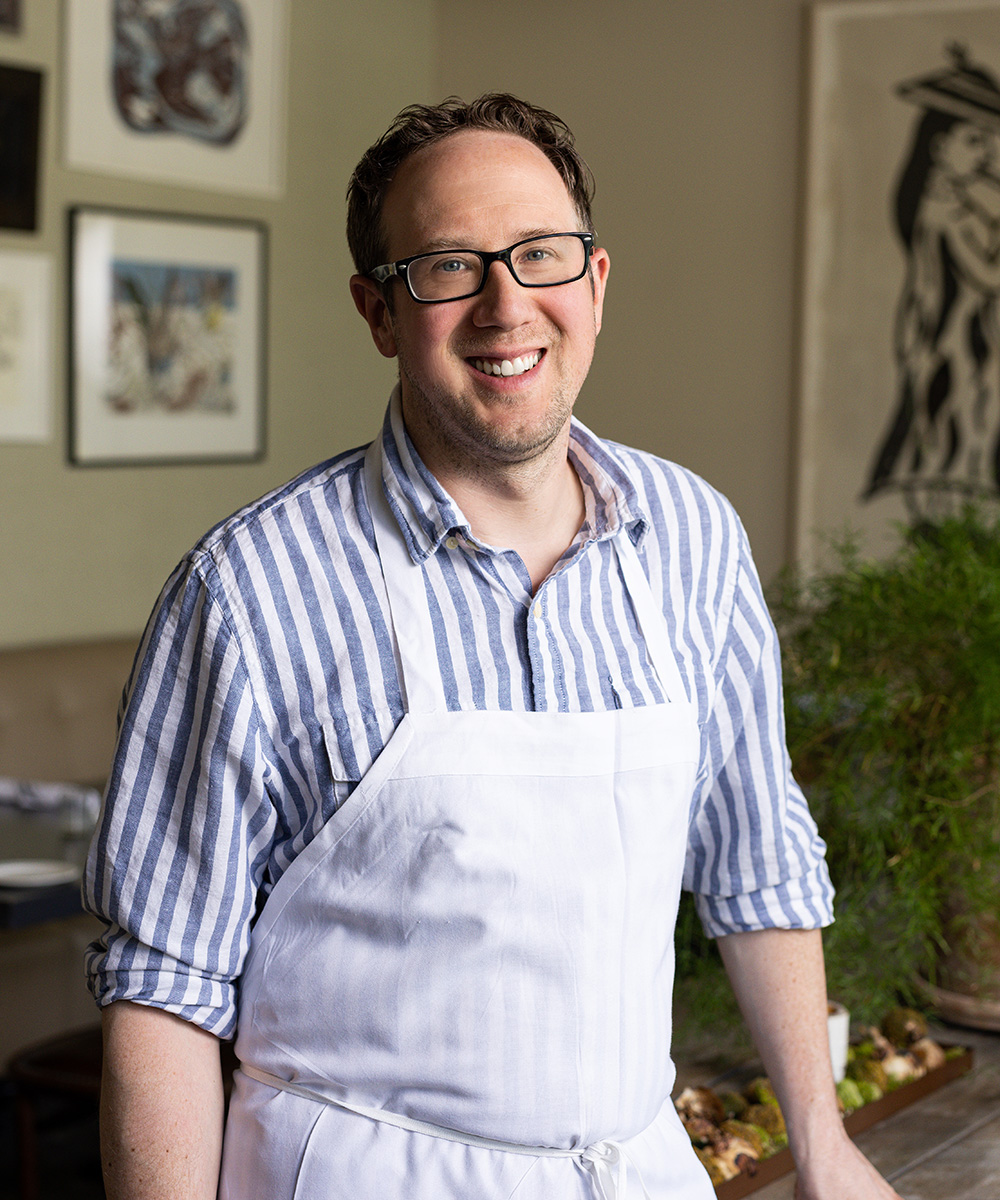
My name is Paul Pearson, and I’m the chef at the White Hart Inn on the Green in Salisbury. I’m originally from York, England, where I trained in various hotels and restaurants before setting sail for Bermuda, and from there to the U.S. I landed a job at Blantyre in Lenox, where I met my wife. Eventually we moved to Chicago, where I led the kitchen at North Pond. Wanting to get back East, we moved to Rhode Island, where I headed up Seasons at the Ocean House, and then on to the White Hart, with a two-year stint in the middle at Community Table in Washington.

1.What is your favorite produce source? 
My go-to spot is the Sharon Farm Market. They always have a great selection of fresh, seasonal produce, much of it from local farms. Their fish counter is always stocked with the freshest, best-looking fish. And there’s a great selection of prepared foods. They also have a sushi station, and that’s a quick, easy fix for my daughter’s dinner. 

2. What’s your favorite bread source?
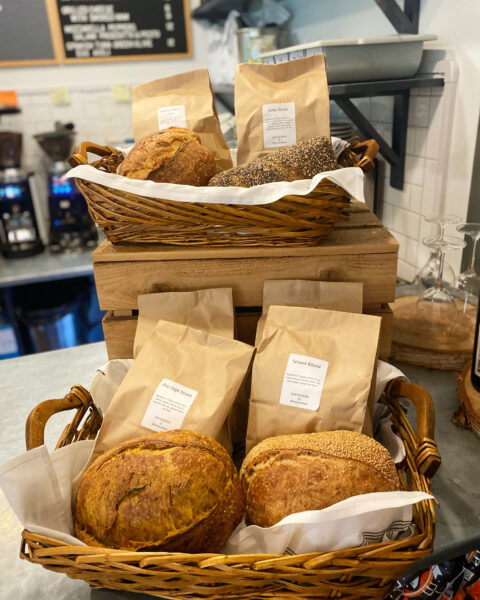
Every Friday and Saturday we get a delivery to Provisions at the White Hart from Travis Brecher from Creature Bread. My favorite is the caramelized onion with turmeric; it’s pretty special!

3. What’s your favorite tomato source?
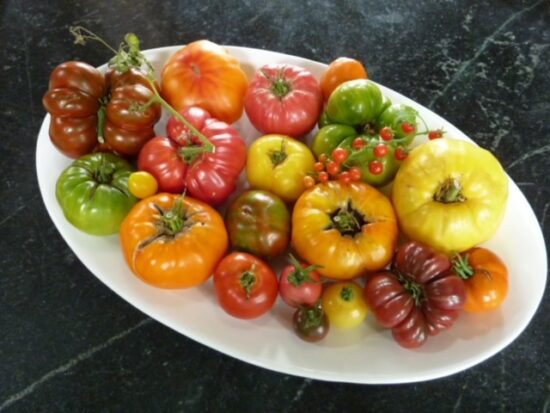
The best tomatoes, I believe, are grown by Parker Boal, right here in Lakeville at Green Hollow Farm. I met Parker in 2014; we’ve used her tomatoes ever since. She’s so passionate about them, and it really shows in the flavor and quality. She picks them in the morning, and they’ll be on the plate a few hours later for dinner service. 

4. Your favorite dairy source?
We exclusively use Five Acre Farms, which was founded by Daniel and Patrick Horan. The taste of their milk is rich and sweet; we use it in all our coffee drinks at Provisions. It makes a great cappuccino. 

5. Favorite meat source?
I buy any meat for a special occasion at Whippoorwill Farm, where we also get all our ground beef and top rounds for the inn. Robin and Allen Cockerline have raised grass-fed beef for more than 40 years. Their farm is on Salmon Kill Road in Salisbury, and it’s the most idyllic setting, definitely worth the drive on a Friday or Saturday to pick up a quality cut for the weekend. 

7. What’s new at the White Hart Inn? 
I’ve been putting a lot of work into the pizza program that we run on Wednesday nights. We purchased a wood-fired pizza trailer, which we set up on the Green on Wednesday and Thursday evenings. That way, people can gather, order a pie, get a drink at the outdoor bar, and relax outside. 

8. What’s your favorite hike? 
A great trail right in Salisbury called Lion’s Head. It’s around 2.5 miles out and back, with the last part a scramble up some rocks. But once you get to the top, the views are amazing. 

Ore Hill Strikes Gold

Under the direction of new culinary director—and celebrity chef—Tyler Anderson, and executive chef Ryan Connelly, Ore Hill has hit its stride. 

Elegant indulgence in Kent
By Charles Dubow

If you are in the mood for a truly Lucullan feast, I urge you to try the elegant tasting menu at Ore Hill in Kent. There are few restaurants in Litchfield County that offer such a deep and indulgent dive into all the natural goodness that our best local farms and dairies can produce. But be warned: Bring an appetite, because even though the portions for the tasting menu are moderate, there are enough of them to satisfy even the most heroic of eaters.

Under the direction of new culinary director—and celebrity chef—Tyler Anderson, and executive chef Ryan Connelly, Ore Hill has hit its stride. 

Many Connecticut eaters will know of Anderson’s accomplishments. In addition to being a James Beard nominee seven years in a row, earning Chef of the Year honors from the Connecticut Restaurant Association, and being a participant in season 15 of “Top Chef” (among other accomplishments), he and his restaurant group currently own and operate several dining locations across Connecticut, including Millwright’s in Simsbury, his TA-Que food truck, and an eponymous catering company. It was under Anderson’s leadership that Ore Hill was recognized last year by the New York Times as the best restaurant in Connecticut. 

Connelly, a Woodbury native and a graduate of the Culinary Institute of America in Hyde Park, has been gaining a reputation of his own, having earned his bones at such establishments as New Morning Market, as sous chef at Winvian under chef Chris Eddy, and with award-winning chef David DiStasi at Materia in Bantam until coming to Ore Hill in October 2023.

While there are many restaurants that espouse a farm-to-table philosophy, what sets Ore Hill apart is its connection to Rock Cobble, the 1,000-acre farm founded by the late philanthropist Anne Bass. The farm  grows heirloom varieties of vegetables, fruits, and flowers exclusively for Ore Hill and its sister restaurant, the more casual Swyft. Rock Cobble also provides beef from its Randall Lineback cattle and dairy products from its creamery. 

The menu is updated seasonally. Among recent highlights were the Rock Cobble Beef Tartare “Pizza” with horseradish cheese curds and pickled sunchoke; risotto with spinach, morels, and parmesan; seared scallops with saffron, peperonata, and chickpeas; and veal tenderloin with Swiss chard, salsify, turnips, and pancetta.

To heighten the enjoyment of your meal,  request the wine pairing for each course, designed by sommelier James Hopkins (whom sharp-eyed diners may remember from Community Table). His curated and original wine list features many smaller vineyards from both the Old and New Worlds; and many of his bottles are reasonably priced.

Connelly, who nightly helms the kitchen for both Ore Hill and Swyft, says that to him, “Ore Hill is all about focusing on local ingredients for local residents and beyond. I want to invite our guests in, and allow them to experience the flavors of the seasons.” Meal prices: prix fixe is $110, chef’s tasting is $145, wine pairing is $78. Open Thursday through Saturday for dinner.—orehillandswyft.com.

A Fish and Cheese Shop Cohabitate

Curds of Love

By Michelle Madden

Photos by Ryan Lavine

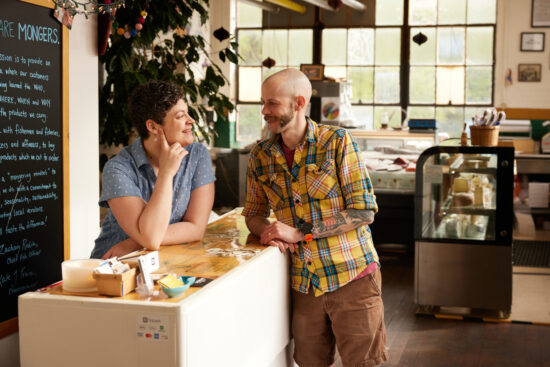
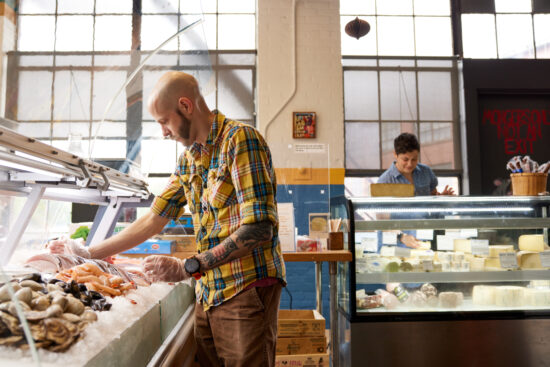
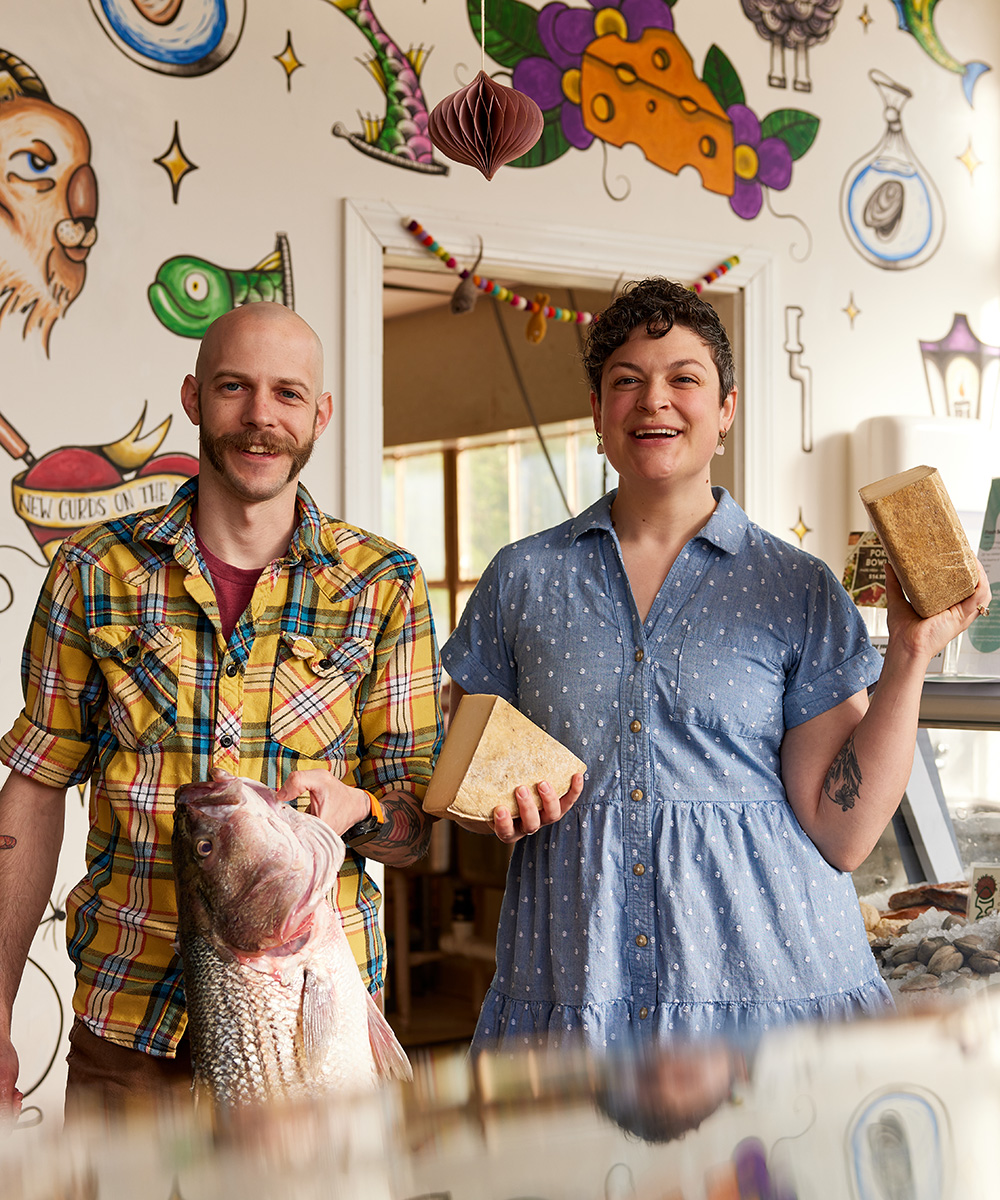
 Look for the old factory, around the back, keep going, up the fire escape, second floor, and you’ll find it. To the Gills (the fish shop) and New Curds on the Block (the cheese shop) share a bright, lofty space, so tucked away that you’re sure you’re the first to discover it. (You’re not).

Fish and cheese are not known to “go together” but when the fishmonger falls in love with the cheesemonger, what do you expect. Zachary Redin and Kate Truini worked at neighboring shops in Greenwich and soon discovered many shared loves­­. As Redin admits, “I found myself going in and buying a lot of cheese I didn’t want.”

What distinguishes Redin and Truini is their devotion to transparency. “Would you like to see what the salmon eat?” Redin walks over with a bottle of brown pellets (from ground-up plants and fish) and pours them into my hand––like a sommelier pouring wine into your glass to smell. “The question should not be––is wild better than farmed? Farmed salmon can be equally nutritious if it’s farmed sustainably.” Redin’s are farmed on the Faroe Islands, halfway between Iceland and Norway, and kept on ice (never frozen) for the voyage to America. He taught me about pen density (lower is better), corn-free feed (good), and red dyes in feed (bad). Turns out devotion to quality, though, is at odds with a good night’s sleep. “I apologize if I seem tired,” Redin said, lifting a 12-pound salmon by the tail. “I’ve been up since 1 am to get to the fish market.” He does this weekly.

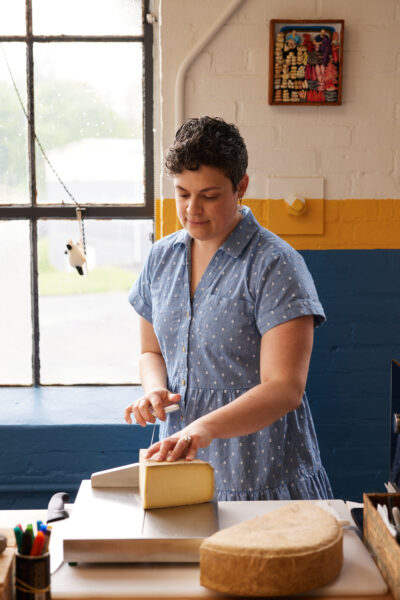
 Two feet from Redin’s counter is Truini’s. She is a self-proclaimed “taste diagnostician.” If you tell her you love Parmesan, you may walk out with Moosalamoo from Blue Ledge Farm. All her cheeses are from the Northeast, and her goal is to open your mind to new ones. “In Europe, cheese is part of daily life,” Truini explains. “It’s not just for special occasions. If a hard cheese blooms [“gets moldy” in non-cheese speak] just scrape it off. Cheese is mold!” Truini declares.

Connoisseurship is a cornerstone of Truini’s mission. “You want to eat cheese at ‘peak deliciousness,’” she says, squeezing rounds of High Lawn Queen, a semi-soft cheese from High Lawn Farm, to see whether they’re soft enough or need time to ripen. “My personal favorite,” Truini muses, after being pressed to choose a favorite child: “I’d have to go with Ewe’s Blue, a young sheep’s-milk cheese from Old Chatham Creamery. It really should be a controlled substance.”

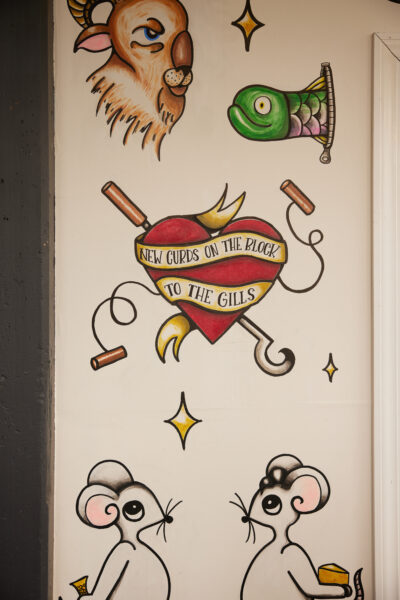
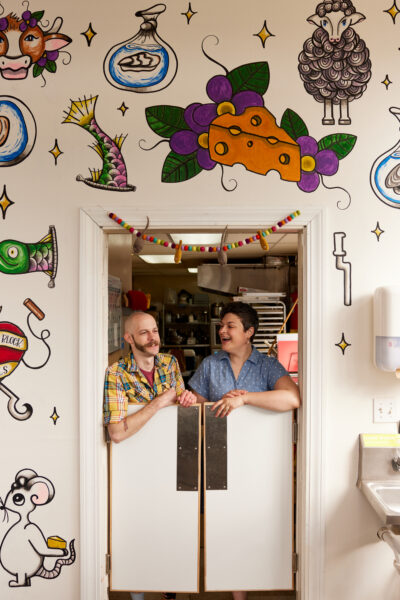
When you spend time with Redin and Truini you can’t imagine their businesses––not to mention their lives––not coexisting. They’re the kind of people you’d hope would drive by if your car ran out of gas. They also share a keen sense of humor: A sign on an emergency exit shows a mouse holding a flag with a diamond ring on it, which Truini drew on the one-year anniversary of their shop, and the day they got engaged.

They got married this summer.

 tothegillsseafood.com

(203) 940-3528

newcurdsontheblock.com

(203) 318-4520

900 Main St., Watertown, and the Farmers Market in Washington Depot (Saturdays)

Sam Waterston

Through Oceana, Sam Waterston Makes Waves

By Elizabeth Maker

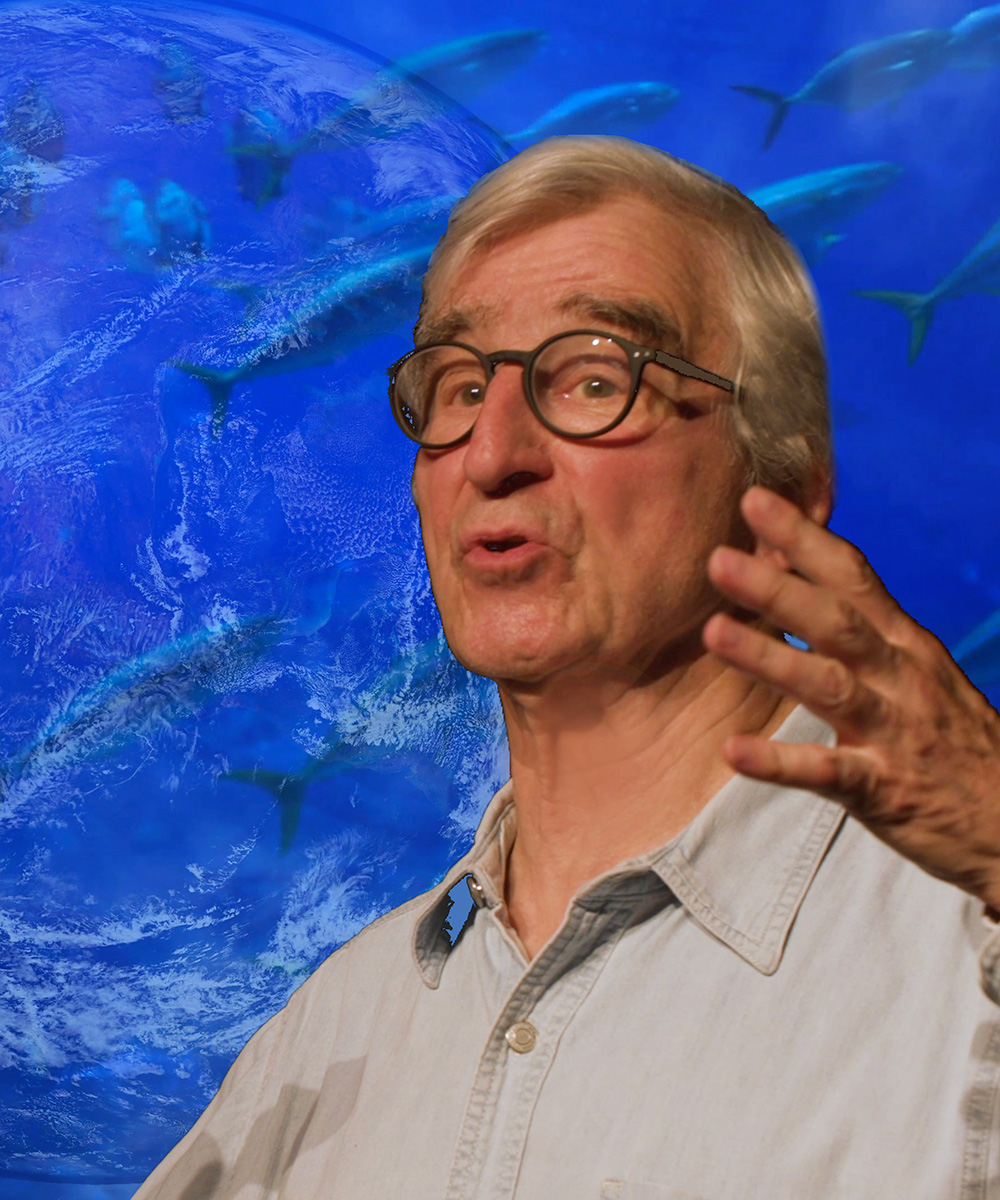
As District Attorney Jack McCoy in “Law & Order,” the actor Sam Waterston is aggressively persuasive in proving his cases. As Sol Bergstein in “Grace and Frankie,” he’s the gentle, comforting gay husband of actor Martin Sheen, sometimes giddy, sometimes nearing tears when discussing an important issue.

Both personas were displayed on stage at the Housatonic Valley Regional High School in Falls Village last summer, only this time Waterston wasn’t acting. This was his real-life role as board chairman of Oceana, the largest global organization working to restore and protect the world’s oceans.

“It’s really the most important thing that I or any of us can do to change the course of climate history and preserve life on Earth,” Waterston says, urging everyone to join the nonprofit Oceana that was started in 1991 in large part by his close friend Ted Danson, the actor from “Cheers.” Danson, who graduated from Kent School in 1966, was “called to help the oceans,” Waterston says, when he was at a beach and his children emerged from the water with their feet covered in tar from the offshore oil wells. “That’s what led him to start Oceana, which he sees as his greatest achievement.”

Waterston has lived with his wife, Lynn, in Litchfield County since 1978, and they own a 250-acre Galloway cattle and Icelandic sheep farm in West Cornwall called Birdseye & Tanner Brooks Farm. While preserving land and raising organic livestock is important, nothing is more crucial for human survival than saving our oceans, Waterston stresses.

At his presentation, which was sponsored by the nonprofit Salisbury Forum, Waterston said his concern for oceans began when he learned that codfish were becoming extinct off the shores of Massachusetts, his native state. “The collapse of the cod fishery was the beginning of my own awakening,” he says, explaining that overfishing and oil drilling contributed to their decline. He spoke of New York’s Hudson River, which “held more oysters than all of the rest of the world put together,” until it was used as a dumping ground for garbage, sewage, and subway cars. He shared videos of the devastation humans have caused through careless disrespect of our greatest natural resource. “Each year, 33 billion pounds of plastic wash into the ocean. Sea turtles, birds, fish, and other marine life confuse it for food, or are entangled by it, and die.”

But Waterston went on to share the group’s success stories. With 275 policy victories around the world, including regulating commercial boats to stop overfishing, Oceana has protected 4 million square miles of ocean.

Many countries and American states have enacted bold plastic reduction policies, he says, reminding listeners to curb their use of single-use plastics. Even the Atlantic codfish is making a comeback, thanks to Oceana-influencing laws. “For the first time in 20 years, we have seen a successful year of cod, and they seem to be growing at a very good rate,” says Kevin Stokesbury, dean of marine science & technology at the University of Massachusetts Dartmouth. “Thanks, in a big way, to Oceana.”

Waterston asks that climate activists switch their focus to the oceans and become a “Wave Maker” at Oceana.org. “The oceans deserve our attention. They are 70 percent of the earth’s surface. They produce 50 percent of the earth’s oxygen. When well managed, they can produce enough wild-caught fish to feed a billion people a healthy protein meal every day of the week for the rest of time! You can tell I’m super-psyched about this! Oceana is a moving train, please come aboard.” —oceana.org 

Chef Bolivar Hilario at Community Table

A Head Chef Reveals His Purpose and Passion
By Michelle Madden
Photos by Rana Faure

Community Table: The hip, locavore restaurant that is restrained yet warm, and where community is a religion. The dishes are plated on local pottery, the walls dressed with art from neighborhood galleries, the ingredients sourced from local farms, and the chairs warmed by sheepskins—well, OK, those are Swedish. 

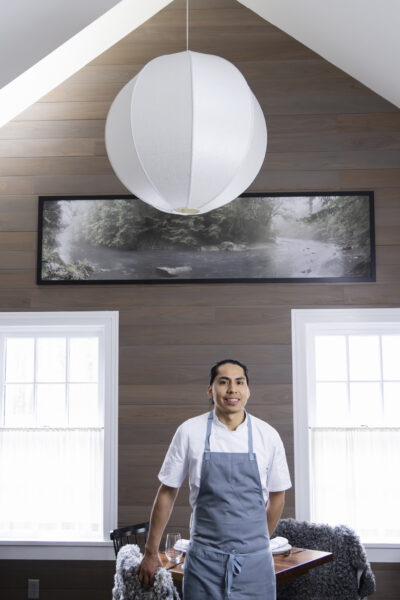
Bolivar Hilario, the head chef, brings this same sensibility. Within minutes of meeting, you feel his warmth, and sense the passion and integrity he has around his cooking and the community. “A chef’s personality is on the plate,” Jo-Ann Makovitzky, the managing partner, explains. “Bolivar is very personable, gentle, and cerebral, and it shows in his food.”  

 This is a second act for Hilario. He arrived at Community Table in 2016, quickly becoming sous chef (after working at South End in New Canaan.) He left to broaden his technique in New York at Chumley’s, Michelin-star The Musket Room, and Shoji––where he picked up a Japanese (cooking) accent. He returned to Connecticut via SWYFT and its sister restaurant, Ore Hill––soon advancing to chef. He has taken the helm at Community Table with a sense of purpose, and an eagerness to leave a mark. 

“Every chef has a signature,” he explains. “For me it’s kombu dashi”––a Japanese soup stock made by cooking seaweed for four hours, to extract its essence. Seventy-five percent of Hilario’s dishes get a dose of dashi—a natural way of augmenting flavor and adding umami.

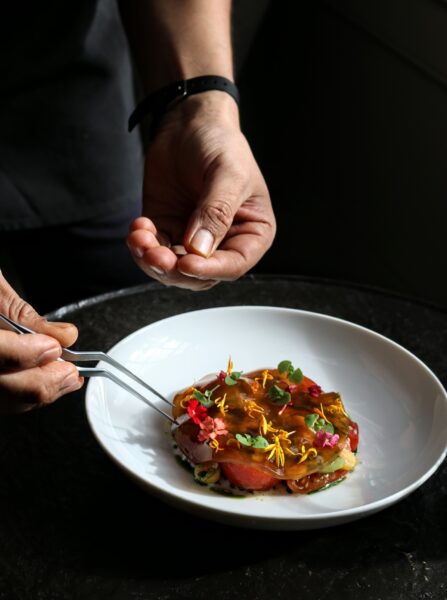
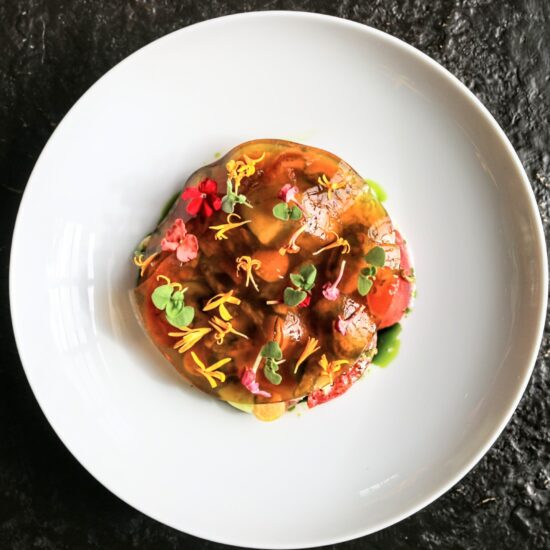
Hilario’s menu is built on a foundation of sustainably produced local foods, while pulling in a bit of French, a bit of Mexican, and a significant helping of Japanese. Take the Head-on Prawns (a favorite dish, though not always on the menu). The dashi is made from the prawn shells; the butter is infused with the dashi; the finishing is done on a Japanese bincho grill; and a Mexican hot guajillo chile oil is drizzled around the plate. The Heirloom Tomato Salad begins with local tomatoes and tomatillos (Mexican inspired, locally sourced), lying on a smear of buttermilk and maple syrup (French technique), while topped with a Japanese-inspired smoky gelee, made with seaweed, bonito flakes, vinegar and… kombu-dashi. “When people see this on the menu, and then see the dish, there is a big element of surprise. That’s what I aim for,” Hilario says with a grin.

“What inspires me?” the chef ponders. “Landscapes, nature. I created a dish that was inspired by spring days when green shoots are coming up––and then it snows.” Not surprisingly, foraging is also core to Hilario’s process. “Watercress and ramps in the spring, Black Trumpet and Pheasant Back mushrooms in the summer––you can find them in the woods around here.”

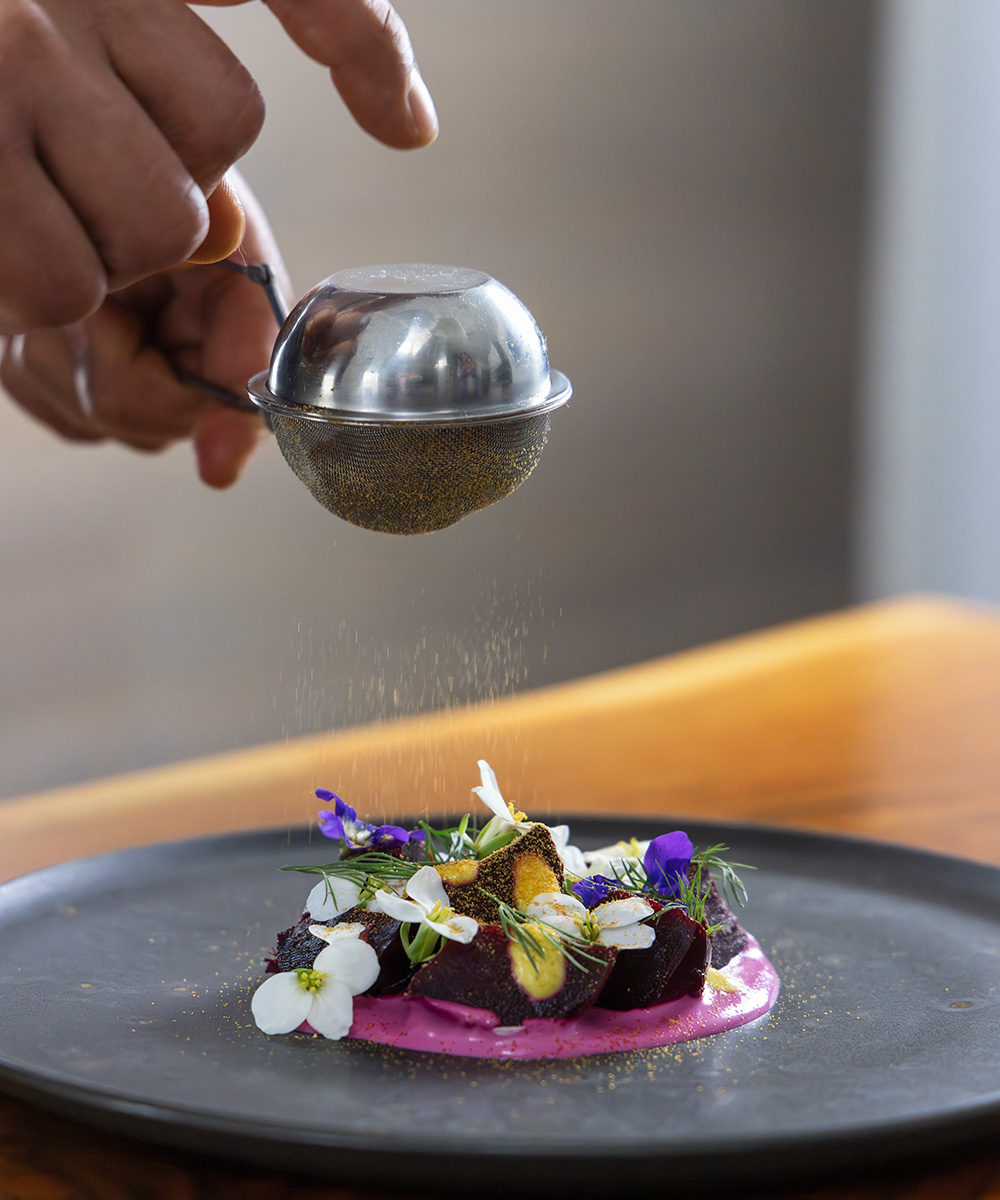
Spending time with Hilario makes you wonder if this strict adherence to principles is what actually fuels his creativity. In the kitchen awaits a trolley with aluminum trays stacked high. One holds freshly discarded onion skins (for making onion dashi); another––black charred onion skins (to make ash that’s sifted on top of lamb); and a third––something translucent-green. “Oh, that’s potatoes and water blended with leftover green onions and rolled out on a sheet,” says Hilario. “I’m not quite sure how I’m going to use it yet.” I look forward to the surprise.
Community Table, 223 Litchfield Turnpike, New Preston.communitytablect.com
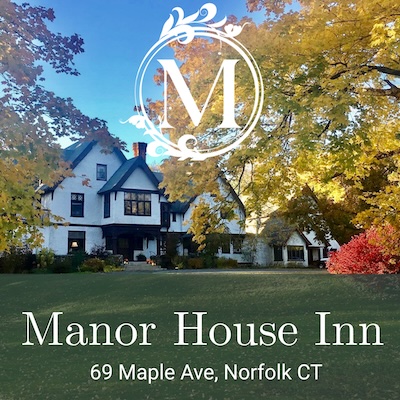
Hopkins Vineyard

Warren’s Award-winning Hopkins Vineyard

By Charles Dubow

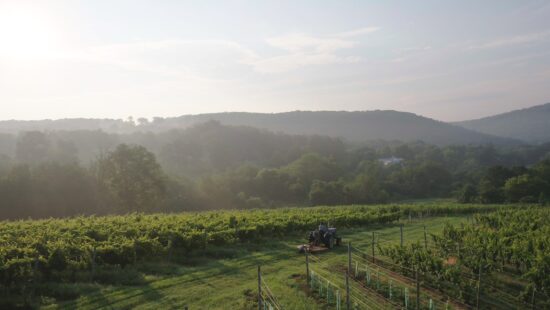
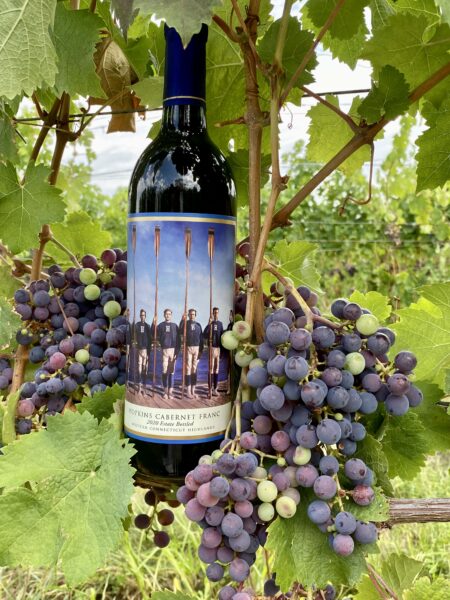
On a beautiful summer day there are few more pleasant ways to spend an afternoon than sitting outside at a table at Hopkins Vineyard in Warren overlooking Lake Waramaug, listening to live music, and sipping a glass of their estate-bottled Chardonnay. 

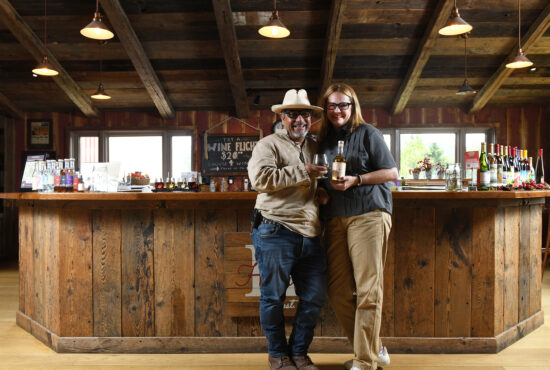
“We welcome visitors every day,” says owner Hilary Hopkins Criollo, whose ancestor Revolutionary War veteran Elijah Hopkins first purchased this historic farm back in 1787. “We also host weddings, anniversaries, reunions. It’s such a beautiful place, and we are so lucky to be able to share it.”

Originally a dairy farm, Hilary’s father, Bill, converted the land to a winery in 1979, when the Connecticut Legislature passed the Farm Winery Act. which permitted the growth and sale of wine. 

“My dad was a real pioneer,” says Hilary, who today runs the vineyard with her husband, George, and winemaker Jim Baker. “We are now the oldest family-owned and operated winery in the state.” 

Today they produce up to 17 different wines, depending on the season. In addition to their Chardonnay, other popular wines include their semi-sweet red Sachem’s Picnic, a semi-sweet white Westwind, a peach wine, a Riesling, a sparkling, a rosé, and a Cabernet Franc. Visitors can also purchase local craft beers from Kent Falls, as well as cheese platters and other snacks. All their products are available for sale in their shop or online.hopkinsvineyard.com

Margaret Miner

Connecticut’s rivers lose a friend 

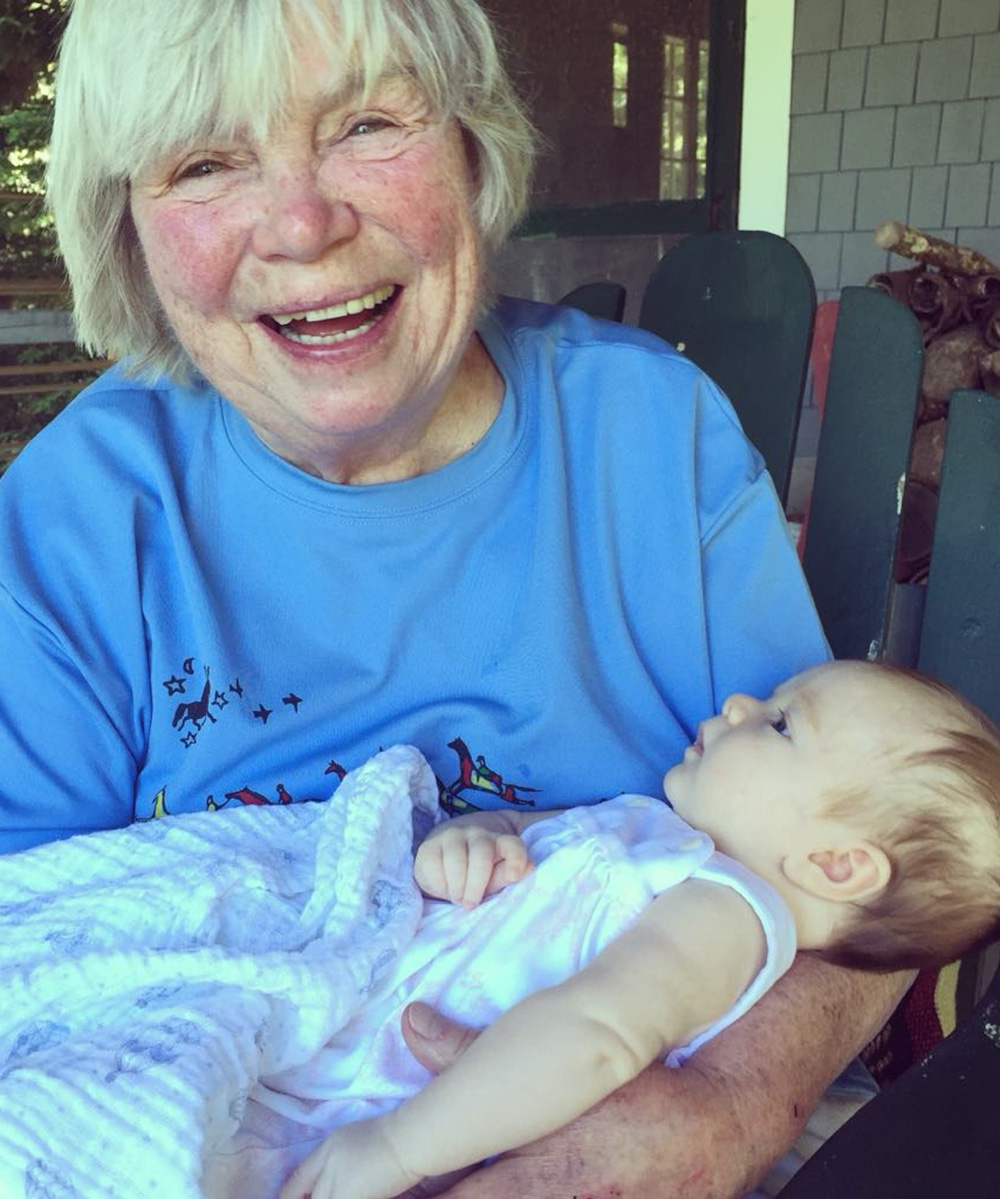
A native of New York City who grew up in The Dakota and graduated from the Brearley School and New York University, Margaret Miner went on to become one of the outstanding protectors of the environment in her adopted home of Connecticut. She passed away at 86 on May 5. Her loss will be felt deeply, not just in her home community of Roxbury but throughout the state. Miner’s environmental efforts, accomplishments, and awards are too numerous to list here. 

Her primary focus was on the waters that run through the state. Among her accomplishments,  she helped pass legislation requiring a statewide water plan. She was executive director of the Rivers Alliance of Connecticut for 18 years, and continued her stewardship of the waters after stepping down. She was executive director of the Roxbury Land Trust; and was a vocal advocate for affordable housing and human rights, here and abroad. She helped protect funding for the state Council of Environmental Quality, and the U.S. Geological Survey. 

Honors and awards for her came from organizations as diverse as the federal Environmental Protection Agency and the Connecticut Women’s Hall of Fame. Miner was passionate about her causes, but was also known for her wit and her sense of fun. Up to the end of her life, she “enjoyed playing poker whenever possible,” says her son, Nathaniel Rawson. 

Thorncrest Farm

The Secret to Sweet Chocolate?
By Clementina Verge

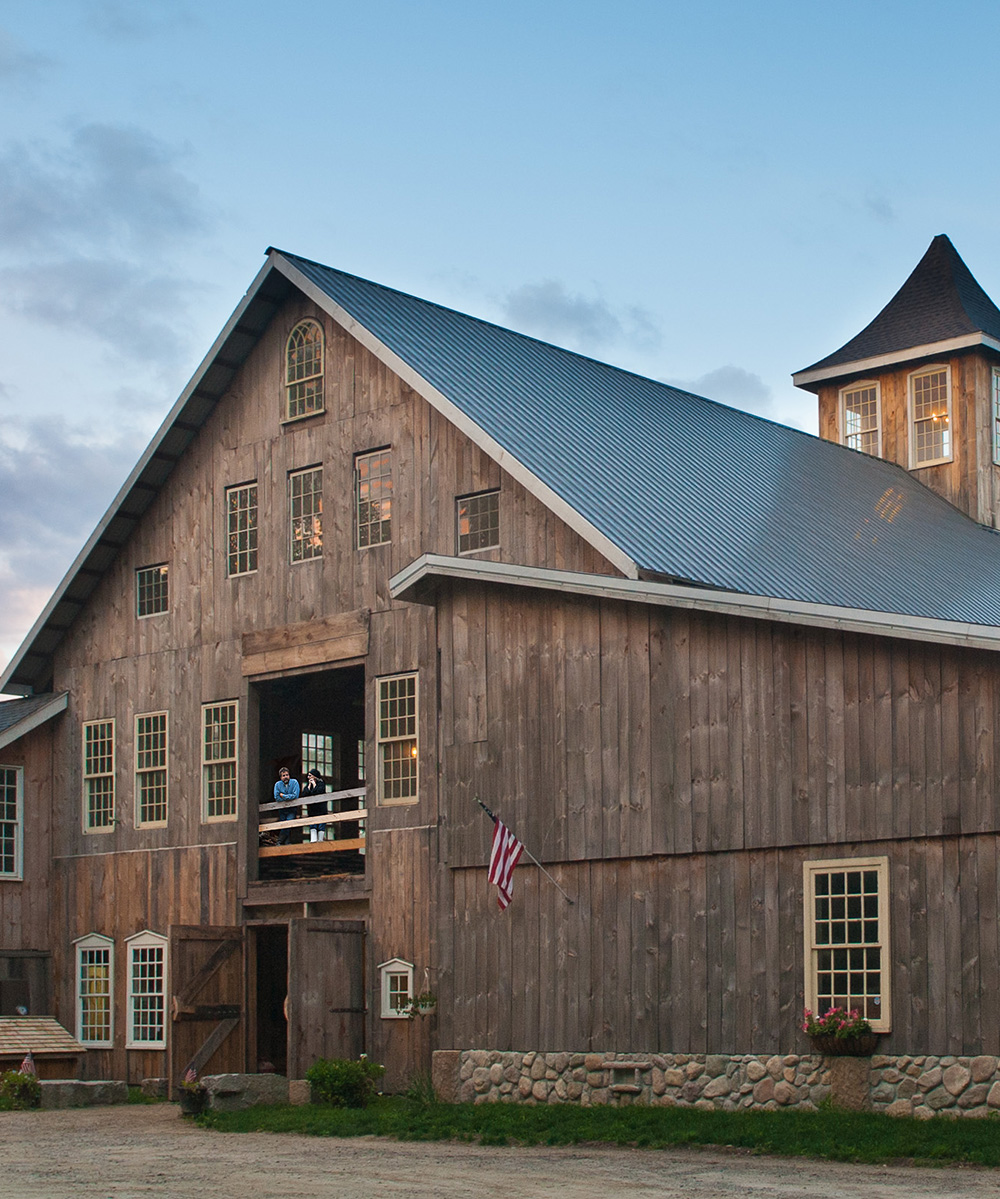
Hidden away on a rural road in Goshen, Thorncrest Farm is a prime destination for chocolate lovers. 

The Thorn family—Kimberly, Clint, and sons Garret and Lyndon—steward a meticulously maintained barn that provides a comfortable, relaxing environment (the secret to sweet milk) for their dairy herd. Open doors allow cross-breezes and encourage greetings from visitors.

“The most important thing we do here is care for our cows,” explains Kimberly. “We are farmers who happen to make chocolate and hay, but these ladies give the milk and cream, and our main goal is to treat them and the land right.”  

Adjacent to the barn, a small shop grand in charm and creativity showcases bespoke selections handmade by Kimberly. Famous for its vanilla milk and repeatedly voted “Best Chocolates in Connecticut,” Thorncrest exceeds 170 varieties throughout the year, rotated based on season and the cows milking at any given time; each bovine creates  uniquely flavored milk geared for specific chocolates.
Crafted in small batches, confectionaries exclude preservatives or unpronounceable ingredients. Fair Trade cocoa nibs, pasteurized milk, sweet cream, and butter are complemented by nuts, fruits, and spices that create unique and complex textures and flavors. 

Whether it incorporates fresh mint from the Thorncrest gardens, citrus peels, ginger, hazelnuts, or organic almonds, every bar and truffle is a labor of love, sure to leave a decadent memory.—milkhousechocolates.net

Boardman Bridge Butchers

Boardman Bridge Butchers Make the Cut
By Charles Dubow
Photos by KTC Marketing,

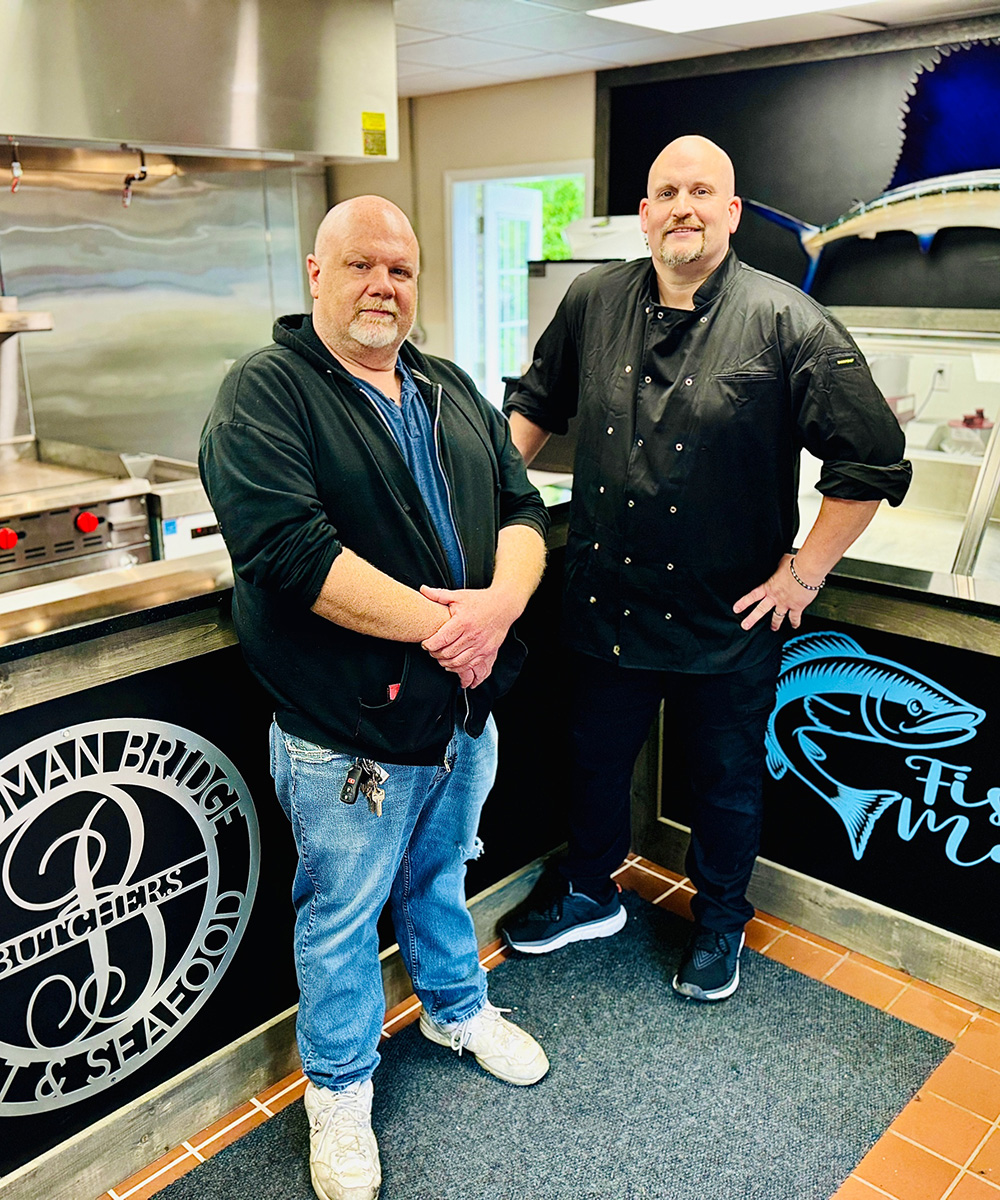
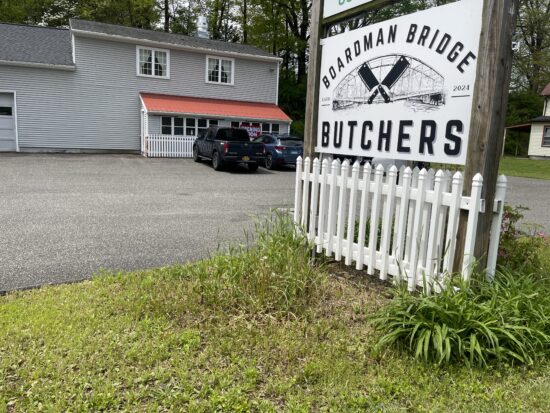
So you’re having a few friends over for a cookout this coming weekend, but don’t have time to get to the butcher. What do you do? You call Boardman Bridge Butchers and, whether you are looking for T-bones or Tomahawks, they will deliver.

Recently opened on Kent Road in New Milford, across from Boardman Bridge, the shop was founded by two jovial veterans of the profession, Marc Rohlsberger and Donald “The Sausage King” Feiler. Rohlsberger has been in the business for 38 years, including serving as head butcher of Lespinasse at Manhattan’s St. Regis Hotel, and as general manager of all the DeCicco & Sons gourmet markets. That’s where he met Feiler, who was managing the DeCicco branch in Somers and has been a butcher since high school.“We have contacts all over the industry,” says Rohlsberger. “We can get prime aged beef from suppliers in Hunts Point as well as organic meat from local farms.” 

And they’re selling more than beef.  “We are working with two fish vendors to get the highest–quality fish, and are also cooking and selling our own dry aged beef and prepared meals, such as chicken parm and handmade sausages. We want to provide the area with the best meat, pork, poultry, and seafood at affordable prices. We want to serve the whole town.”—boardmanbridgebutchers.com
Current Issue
March / April 2026
Our Kind of Healthy
The Health & Wellness Issue
Subscribe Now
.
  • STAY IN THE KNOW

    Your weekly guide to can't-miss events, hidden gems, and local favorites in Litchfield County. Sign up now for curated things to do, eat, and explore—delivered every week. It’s free. It’s local. It’s essential.

  • Karen Raines Davis