

Your guide to the heart of Litchfield County:
Discover local stories, hidden gems, and must-know events.

Ellsworth Home: Timeless, Thoughtful Residential Design

Ellsworth Home creates timeless, soulful residences across New England, blending architecture, interiors, and site planning seamlessly.

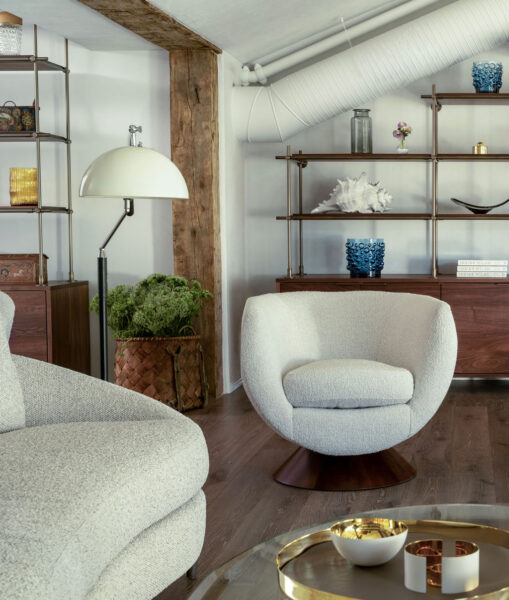
Ellsworth Home is a residential design studio dedicated to creating homes with soul—whether restoring historic gems, reimagining spaces, or building from the ground up. Guided by restraint, natural palettes, and the ever-changing influence of light, their work balances beauty with atmosphere, crafting serene, timeless environments across New England and beyond.

For Jason VanWarren, founder of Ellsworth Home, good design isn’t about ornament—it’s about intention. “My ideal client is someone who’s opinionated but open,” Jason says. “Someone who wants their home to work hard and wear well. Most of all, someone who understands that good design isn’t decoration. I’m not a fan of pretense in design or designers.”

That belief informs a philosophy he describes as edited, livable, and timeless. VanWarren’s goal is to create spaces that balance utility with feeling. “If a room makes you pause, breathe deeper, or smile without knowing why, we’ve done our job,” he explains. “A home can be beautiful and inspiring while also reflecting the way people live today.”

What sets Ellsworth Home apart is its commitment to focus. VanWarren doesn’t take on more work than he can fully invest in, and he stays involved from the first sketch to the final move-in. Unlike many firms, Ellsworth Home integrates architecture, interiors, and site planning into one seamless process. “We think in totality,” Jason says. “Our homes are seamless because they’re considered from every angle, from sight lines to furniture plans and outdoor spaces.”

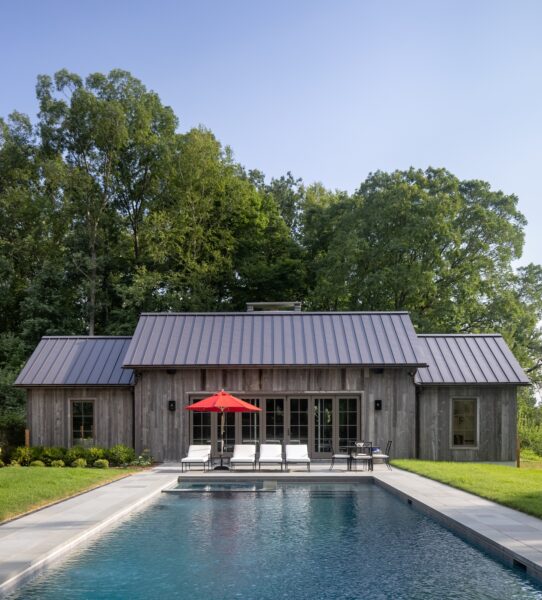
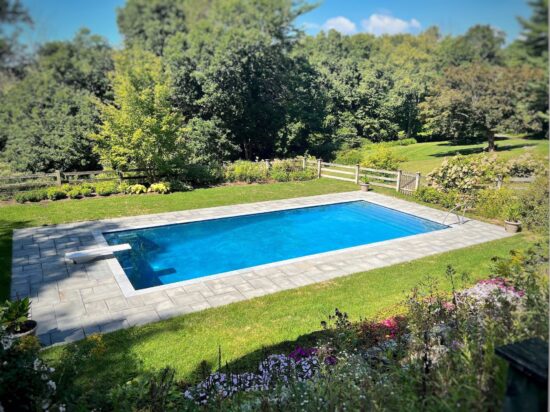
A recent project in the Oblong Valley illustrates that ethos. Jason updated a modest three-season cottage, keeping its soul intact while opening it to the landscape. Additions on either end created new flow, while the original building was reconfigured to capture sweeping views of the hills and a nearby brook. “You could hear the water in every bedroom,” VanWarren recalls. “It was about clarity—about letting the house breathe in its setting.”

Craftsmanship and sustainability are cornerstones of Ellsworth Home’s approach. VanWarren believes that when you build with care and use honest materials, sustainability naturally follows. Innovation appears not in flashy gestures but in rethinking flow, maximizing light, and building smarter, healthier environments.

The reward, for VanWarren, comes in the personal touches. He recalls a Boston project where he secretly incorporated a grand piano as a surprise for a client’s wife. “When she arrived, a pianist was playing their wedding song. That kind of moment stays with you. It’s why we do this work.”

Looking ahead, Jason sees a shift in priorities: “Less show, more soul. People are craving homes that support real life—layered, livable, personal.” For him, that instinct is nothing new. From his early work with a top architect in Maine, to high-end renovations in New York City, to founding Ellsworth Home in Connecticut, VanWarren has stayed true to one principle: listen first. “Helping people feel truly at home in their home—that’s the real luxury,” VanWarren says. “Not showiness, but belonging.” —ellsworthhome.com

Rising Teen Triathlete Amelia Post Aims for IRONMAN

Seventeen-year-old Amelia Post trains for IRONMAN, raising funds to support both her race and Roxbury Land Trust.

Seventeen-year-old Roxbury resident Amelia Post has her sights set on one of the toughest challenges in endurance sports: the IRONMAN. A rising senior at Phillips Exeter Academy, she splits her time between New Hampshire during the school year and her hometown of Roxbury, where she has lived for the past 11 years.

Already a standout athlete, she has competed in several local triathlons, recently winning her age group at the Sharon Sprint, and qualifying for nationals two years ago. She is also an accomplished rower, with two regional championship titles and three national qualifications to her name. But it was a YouTube documentary she watched in middle school that sparked her biggest dream: to complete an IRONMAN.

She has already signed up for the Florida Half IRONMAN this December, funding the entry fee herself with money earned from her job. If all goes to plan, she will enter IRONMAN Texas in April, just after her 18th birthday—making her one of the youngest competitors in the country.

But IRONMAN racing is not only physically demanding, it’s also costly. To cover expenses, she launched a GoFundMe with a unique twist: for every dollar raised for her race, four dollars will go to the Roxbury Land Trust, where she has been interning this summer. For this young athlete and environmentalist, it’s the perfect way to merge two passions: sport and stewardship. Her goal: To raise $1,000.

www.gofundme.com/f/support-a-young-aspiring-ironman-connecticuts-wilderness

Belinda Sinclair’s Magical Women at The Conjuring Room

Experience Belinda Sinclair’s The Conjuring Room in Cornwall, celebrating female magicians with immersive magic, history, and storytelling.

Acclaimed magician and storyteller Belinda Sinclair brings her unique brand of theatrical magic to the Hughes Memorial Library in Cornwall with The Conjuring Room: An Evening of Magical Women—a 90-minute immersive experience that fuses illusion, allegory, and history. Sinclair, known internationally for her sleight of hand and narrative craft, has long explored the hidden stories of women in magic—those who, through wit and daring, convinced audiences that miracles were not only possible but real.

In this intimate performance, Sinclair transforms the stage into both classroom and séance, leading guests through centuries of magical history from the perspectives of the women who shaped it. Her storytelling moves seamlessly between the scholarly and the spectacular, revealing how female magicians and mediums operated at the margins of theater, science, and spirituality to challenge convention.

Part performance, part historical journey, The Conjuring Room invites participation from the audience, who become part of the unfolding mystery. Each gesture, each trick, is layered with meaning—an allegory for perception, power, and belief.

Belinda Sinclair’s work has been featured at the Magic Circle in London and the Metropolitan Museum of Art, and her current engagement in Cornwall offers local audiences a chance to witness her acclaimed blend of artistry and intellect.

Performances run from 7:30 to 9:30 p.m. Reservations are required. Details and booking information can be found at theconjuringroom.com.

Slatted: Sustainable Upcycled Hardwood for Timeless Design

Slatted provides sustainable, heirloom-quality upcycled hardwoods, combining durability, beauty, and eco-conscious design for clients.

After two decades of working alongside some of the world’s most innovative architects and designers, Michelle Meadows and Andy Kjellgren launched Slatted, a certified women-owned business based in Bantam, with a clear mission: to provide heirloom-quality recycled hardwoods, world-class production, and an unwavering commitment to sustainability. Drawing on years of experience in high-end design, Michelle and Andy wanted to create a company that functions like a dedicated wood consultant for clients—guiding designers, architects, and homeowners through the process of selecting the perfect wood for any project. With a carefully curated line of upcycled hardwood decking, siding, paneling, flooring, and lumber, Slatted ensures that every specification is not only beautiful and high-performing, but also built to last.

The founders’ dedication to sustainability is rooted in a concern for the environmental impact of the timber industry. For decades, the U.S. appetite for virgin tropical hardwoods, like ipe decking, has fueled the destruction of the world’s remaining rainforests. With growing environmental awareness, homeowners, designers, and architects now actively seek alternatives that are both ecologically responsible and visually striking. Upcycled woods are an ideal solution. Salvaged from structures built 150 to 200 years ago, these materials were originally harvested from old-growth forests when trees were plentiful, and only the finest cuts were used. The result is wood of unmatched durability, density, and character—a quality impossible to replicate today.

Specifying Slatted upcycled teak decking or ulin siding allows designers to achieve exceptional performance and timeless beauty while offsetting the need to cut down three to five old-growth hardwood trees per project. 

Each piece tells a story, carrying with it the history of its original use and the environmental care taken to preserve it. For Andy and Michelle, this narrative of stewardship and innovation is no less important than the wood’s technical performance. “Upcycled wood isn’t just a material,” Michelle explains, “it’s a story of history, sustainability, creativity, and innovation.”  

Over the years, Slatted has watched sustainability move from niche to mainstream in the design world. Today, designers are embracing recycled woods not only for their environmental benefits but for the aesthetic richness they bring. Marks of prior use, weathering, and subtle imperfections are celebrated as points of interest, connecting clients more closely to the material’s story. This “aesthetics of sustainability” resonates strongly, especially with the new generation of design leaders who value beauty, meaning, and responsibility in their work.

One recent example of Slatted’s impact is the reclaimed teak used in public benches at New York City’s High Line, which demonstrates the material’s visual appeal and enduring quality. Andy and Michelle’s mission is to make upcycled hardwoods so accessible and easy to specify that cutting down the world’s remaining old-growth forests becomes unthinkable. With every project, Slatted invites designers and clients to create spaces that are not only exceptional in craftsmanship but also conscious in purpose.—slatted.co

Luis González Palma: Early Portraits

Explore Luis González Palma’s early work at KMR Arts, highlighting Mayan heritage, mysticism, and Guatemalan identity.

Niño Sol 

Luis González Palma creates portraits of Guatemalan people of Mayan descent to honor their heritage and draw attention to the discrimination and exclusion they have faced. In doing so, he has gained a deeper understanding of his own mestizo ancestry. As González Palma notes, he has lived “in a country ravaged by more than thirty years of armed conflict.”

Blending Christian iconography with social and cultural symbolism, González Palma has developed a unique visual language that explores universal themes of life and death, fate, spirituality, and mysticism. Through the poignant, searching gazes of his subjects, he invites viewers to reflect on Mayan identity and the complex social history of Guatemala.

Another layer of meaning emerges—one that speaks to the recurring story of humanity’s trespasses against itself. These are not pristine photographic prints meant to impose a single narrative, but tactile, textured objects that bear the mark of human touch and serve as poetic evidence.

González Palma’s work is included in numerous museum collections worldwide, and he has published three monographs to date.

On view through November 22 a KMR Arts
2 Titus Rd, Washington Depot, kmrarts.com 

Oldest Continuously Occupied House in Litchfield County

The Marsh-Whitlock House, built in 1738 in Warren, is Litchfield County’s oldest continuously occupied historic home.

By Jack Sheedy
Photograph Courtesy of Warren Historical Society

Discounting the Thomas Painter House (c. 1686) that was moved from New Haven to Litchfield in 1959, Warren’s Marsh-Whitlock House (1738) claims the distinction of being the oldest continuously occupied house built in Litchfield County.

An allotment on what is now Brick School Road was sold by Elisha Williams to Ebenezer Marsh early in 1738, after which Marsh built a post-medieval saltbox with a steeply pitched, side-gabled roof, says Heather Forstmann, curator/town historian of the Warren Historical Society. It likely was originally unpainted. A large central stone chimney is still a prominent feature.

The next long-term tenant/owner was Samuel Whitlock in 1754, Forstmann says. “Whitlock’s family retained ownership well into the 19th century.”

Whitlock probably updated the oven and hearth, according to a report by Fred and May Hill, who owned it in the 1980s. The Hills helped determine it was the oldest house in Warren, and they gave it the name it bears today.

The Hills also passed on a legend that a woman named Granny Carey, who owned the house from 1937 to 1969, would bring her horse, Connie, inside on cold nights so she could warm herself with the mare’s body heat. 

The Marsh-Whitlock House sits on 28-plus acres with a pond, walking paths, and detached barn, according to a 2024 real estate listing. It is currently owned by an entity identified as 1120 Trust, Forstmann says.

Eleish Van Breems: Timeless, Thoughtful Residential Design

Eleish Van Breems creates personalized, sustainable, and inspiring residential spaces blending antiques, modern design, and craftsmanship.

For nearly three decades, Rhonda Eleish and Edie Van Breems have been creating homes and spaces that are thoughtful, personal, and profoundly inspiring. Their boutique design firm, Eleish Van Breems Interior Design, specializes in holistic, full-service residential projects, guiding clients from the ground up with an approach that values collaboration, intuition, and trust.

The origins of Eleish Van Breems trace back to a life-changing trip to Sweden, where the founders explored their Scandinavian roots. During that journey, Eleish’s great aunt, Ingvor Gullers—a renowned textile and dollhouse collector, and antiques advisor to the Swedish Royal Family—took them under her wing. She introduced them to the antiques and art world of Stockholm, opening doors to a heritage of craftsmanship and design that would forever influence their practice. 

The firm’s design philosophy is fluid and client-centered. “A home needs to be a conscious project,” Eleish and Van Breems explain. “It takes time to develop trust and intuitively channel what will work in each space. Realistic expectations and open communication make all the difference.” Their ideal clients are those who enjoy collaboration and value the journey of co-creating a space that is uniquely theirs.

Eleish Van Breems stands apart in the design world through its boutique, family-run structure, which allows the team to dedicate time and focus to a limited number of extended residential projects. Sustainability, craftsmanship, and respect for heritage are central to their process. Drawing on early experience as antiques dealers, Eleish and Van Breems developed a keen eye for materials, patinas, and construction. Learning from Scandinavian artisans and studying folk art, metalsmithing, and historic furniture informs their careful selection of furnishings, ensuring each piece blends function, beauty, and responsibility.

A standout project is the historic renovation of their Westport flagship store, a 1760 sea captain’s trading post with original chestnut beams, custom bronze windows, and architectural details from Italy. Once home to the iconic Remarkable Bookstore—Eleish and Van Breems’ beloved childhood bookstore, previously owned by Van Breems’ great-uncle—the property now features a pink/cardamom Fika coffee bar and specialty design bookstore. “Fika in Swedish means to pause and enjoy—a moment to gather with friends,” shares Eleish. The Fika Bar embodies their approach to design: thoughtful, joyful, and rooted in creating spaces that bring people together.

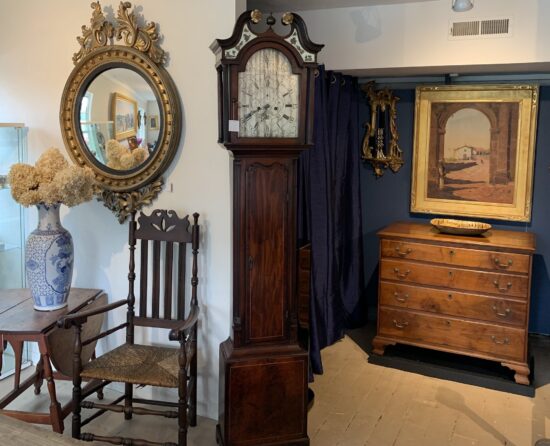
Across multiple locations, the firm creates curated experiences blending antiques, mid-century modern, contemporary furniture, and artisanal decor. Their collections include Cane Line, Lee, Louis Poulsen, Thayer Coggin, Reijmyre Glass, Agneta Livijn pottery, and Georg Jensen, reflecting a commitment to quality and timeless design. Recent additions, like Augarten porcelain and commissioned Swedish mugs, highlight both craft and the delight of sharing spaces with family and friends.

Looking ahead, the new Eleish Van Breems Barn in Roxbury, opening this fall, will serve as a laboratory for mid-century and antique furniture. For Eleish and Van Breems, the ultimate reward remains seeing clients feel completely supported in their homes, knowing that their vision has been realized with skill, care, and inspiration.—evbantiques.com

Marcel Breuer’s Modernist Legacy in Litchfield

Marcel Breuer’s Modernist homes in Litchfield, Connecticut, blend innovative design with historic New England architecture and heritage.

Nestled among the historic Colonial and neoclassical homes of Litchfield are sleek Modernist gems, once seemingly futuristic for their time. These are the creations of Marcel Breuer, the Hungarian-born Bauhaus master whose daring vision reshaped a quiet New England town. 

Breuer was invited to work in Litchfield in the early 1950s by Rufus Stillman, a local business owner and passionate advocate for Modern design. 

Stillman, inspired by Breuer’s 1949 exhibition at the Museum of Modern Art, commissioned the now-iconic Stillman House I. The flat-roofed structure, with its expansive glass walls, cantilevered porches, and a bold mural overlooking the pool by artist Alexander Calder (a resident of nearby Roxbury), transformed the domestic space into an elegant, immersive work of art.

Enthralled by the possibilities of this new design movements, friends of Stillman such as Andrew and Jamie Gagarin followed suit, commissioning experimental homes of their own. They and others created a small but influential enclave of Modernist residences in northwest Connecticut. These houses were not merely architectural statements, but also became gathering places for artists, writers, and thinkers, including Calder, Arthur Miller, and Philip Roth, forging a postwar bohemian community. 

Breuer’s influence extended beyond private homes to public architecture, including the Oliver Wolcott Library addition by one of Breuer’s former students, Eliot Noyes. Together, these works left a lasting mark on Litchfield County, showcasing Modernism while honoring the region’s architectural heritage, ensuring Breuer’s Litchfield period remains both inspiring and legendary. 

Modern Supply: Litchfield County’s Premier Bath Showroom

Modern Supply combines luxury fixtures, expert design guidance, and personalized service for exceptional home renovations.

For more than four decades, Modern Supply has been a trusted name in Litchfield County. What began as a family plumbing business in the 1980s has evolved into the area’s premier bath showroom—a place where luxury, practicality, and seasoned design expertise come together to transform homes.

Modern Supply’s story is rooted in legacy. More than 20 years ago, the team carried forward founder Steve Berger’s family tradition by unveiling a newly renovated showroom, created not only to highlight high-end luxury fixtures, but also to showcase a wide spectrum of styles and price points. The vision was simple: Every homeowner should be able to find the right balance of beauty, function, and budget. That philosophy still drives the business today.

From the very beginning, Modern Supply set out to combine carefully selected products with attentive service and professional design support. As word spread, the team expanded, drawing in designers, architects, builders, and homeowners who valued both the creative eye and the technical know-how available under one roof. Whether it’s choosing a single faucet for a kitchen or bathroom, or mapping out an entire new home build, the staff approaches each project with the same personalized care.

The design professionals at Modern Supply pride themselves on guiding clients through every stage of the process. Beyond selecting fixtures and fittings, they help coordinate small details—like paint, tile, hardware, and all those finishing touches that tie a project together. By serving as both resource and partner, they take the stress out of home projects, ensuring that clients feel confident and inspired rather than overwhelmed.

The company also remains deeply committed to the professionals who keep the region’s homes running smoothly. A robust parts counter has grown alongside the showroom, offering technicians and contractors everything from hard-to-find components to practical tools. With decades of industry experience, the staff understands that having the right part at the right time can keep an entire project on schedule.

Modern Supply’s New Milford showroom features more than 100 product lines, all sourced from across the United States and northern Europe—from sleek contemporary vanities to classic freestanding tubs, from sophisticated lighting to innovative steam and sauna systems, curated with versatility in mind. Many of the lines offer custom finishes and sizes, allowing clients to shape spaces that reflect their individual style. To keep the showroom fresh, displays are regularly sold directly off the floor, giving customers unique opportunities for savings while ensuring that the latest design trends are always on view.modernplumbing.biz      

Modern Supply, 101 Danbury Road, New Milford 06776 860-354-4448

An Afternoon in Cornwall

Guests enjoyed a private Cornwall Castle tour, sustainable farm visit, and cheese and wine tasting in Cornwall.

Photos by Cedric Gairard

On September 27 our Happening in the Hills Curated Experiences event featured an enchanting private tour of the Cornwall Castle, a visit to the Gracey brothers’ sustainable farm on their family land, and a cheese and wine tasting at Tommy Eucalitto’s Coltsfoot Valley Dairy Farm with wine curated by Erika da Silva of Ten Mile Table. Follow us @litchfieldmagazine for more events.

Current Issue
May / June 2026
The Garden Issue
Subscribe Now
.
  • STAY IN THE KNOW

    Your weekly guide to can't-miss events, hidden gems, and local favorites in Litchfield County. Sign up now for curated things to do, eat, and explore—delivered every week. It’s free. It’s local. It’s essential.

  • Karen Raines Davis