
Your guide to the heart of Litchfield County:
Discover local stories, hidden gems, and must-know events.

Master of the Beat

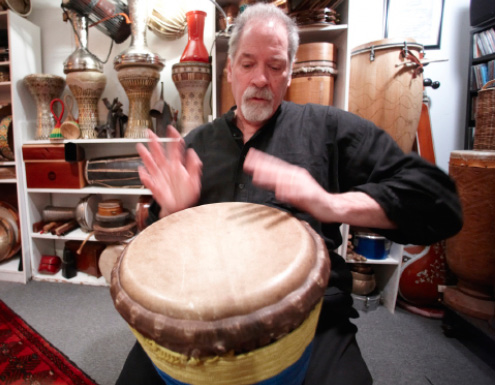
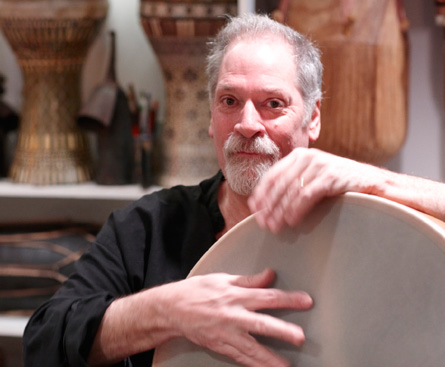
When John Marshall was very young, maybe 8 or 9 years old, he would listen to the parades going by in his hometown of Ridgefield. As an adult, he still remembers the time that he had his “aha” moment. More than just seeing the drums, he could hear them being played, and he felt startled because he could feel it in his body.

John Marshall has been a part of the music scene in Litchfield County
for years and now he has formed a new percussion quintet.

When John Marshall was very young, maybe 8 or 9 years old, he would listen to the parades going by in his hometown of Ridgefield. As an adult, he still remembers the time that he had his “aha” moment. More than just seeing the drums, he could hear them being played, and he felt startled because he could feel it in his body.

Later on, he watched The Beatles perform on The Ed Sullivan Show, particularly Ringo on the drums. He wanted to be a Beatle, to have their hair, to be a musician. A young friend of John’s, a girl who lived nearby, had a spanking new drum set and he was convinced he had to have one too. He asked his mother for a drum set, and slowly—piece by piece—he got one. Then he begged for lessons.

His first teacher was from Korea. John recalls that he was very good, but stern. With this instructor, John learned how to read music, and was classically trained in percussion. “I traveled quite a distance on a weekly basis as a boy to study with Dong Wook Park, a master classical percussionist who went on to direct the Seoul Symphony. His whole approach was old school, and for our entire sessions we focused on percussion rudiments and reading manuscript— difficult then, invaluable now! I’ve had the opportunity to study with great teachers since then, Glen Velez, Elvin Jones, Royal Hartigan, Naren Budhakar, but if I hadn’t done the fundamental work with Mr. Park, I wouldn’t have been able to connect the dots.”

The Beatles were a great influence for John. At 12 and 13 years old, John was still following their music, and as they traveled to India to play with Ravi Shankaar, John’s taste in music evolved, and he began listening to music from India as well. He moved on to Bulgarian music, and eventually to music from all over the world. Part of the deal with his mother was that he had to take lessons with a jazz piano player from Westport. “John Lewis taught me about scales, melody, harmony and improvisational freedom— he also taught me about the history and narrative of truly American musical forms like jazz, blues, R&B, etc.”

While in high school, John studied primarily with a young graduate of Oberlin who was a real modernist. “He was the music teacher at school, and instead of having a traditional high school band, he would lead an improvisational ensemble that would offer concerts for the whole school with just us musicians showing up with our instruments—no sheet music, no rehearsals, just on the spot performances of improvised music—amazing! Very arty—with sounds of water being poured into buckets and bird whistles and re-tuned guitars, etc.—that was an incredibly expressive experience. Of course, on the side, I had the experience of being in jazz fusion type bands which were all the rage—and yes, we did win the Battle of the Bands competition and toured all around. It was lots of fun!” At that time the Battle of the Bands was a great vehicle for launching young talent. John remembers that Dave Brubeck’s sons, and John Scofield, and Adam Nussbaum were all a part of it.
scott phillips
scott phillips

John Marshall’s career can be defined by five major areas: performing, composing, teaching, collaborating, and building personal skills. “These five areas share the spotlight of my full attention, and come in and out of primary focus,” he explains. “I suppose my personal skill building (becoming a better player) might be the most important component to me, because the search for refined musical expression is constant and alluring. There’s always a gap between my artistic imagination and my reality, and that’s the energy that makes this five-spoke wheel of mine moving.”

For years now, many children from the area’s schools have enjoyed John’s workshops and classes. John loves to teach, especially children because they dodge the editing process. Since 2001, he has been teaching at Indian Mountain School in Lakeville, where he instructs the Drum Ensemble elective to students in grades seven to nine, and gives private drumming lessons to a handful of the school’s students each term. He also teaches adults. For the past four years, he has been running The Salisbury Drum Ensemble, a group of 20 adults. They meet once a week to play traditional West African sequences, and they sing, as well. “I feel honored when I’m successful at imparting information that conveys musical joy to a student. It’s like passing a torch, or gift giving—it’s joyful.” In recognition of how good a teacher he is, Marshall has received two national grants for teaching, in 2010 and 2012, from the Jubilation Foundation and the Tides Corporation. He has also been honored to receive several awards and endorsements from national and international percussion companies.
scott phillips
scott phillips

Asked if people are born with rhythm, or if they learn it, John believes we are all born with rhythm, but, “We get out of rhythm in the ways we live. People get out of sync.” He says that personally, he has to play the drums—it’s essential to him. Even when he had Lyme disease and developed arthritis, he stayed with his drumming. “The physical activity is restorative. There are brain changes and breathing changes, it’s like detox.” John sees it in people he works with on a long-term basis. Their brain waves change and it revitalizes their energy.

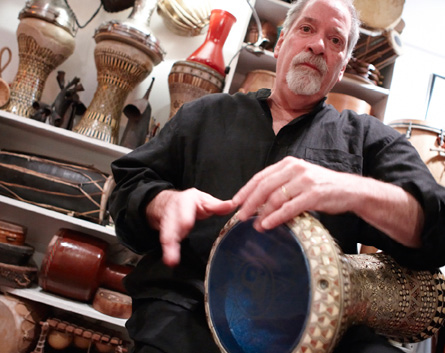
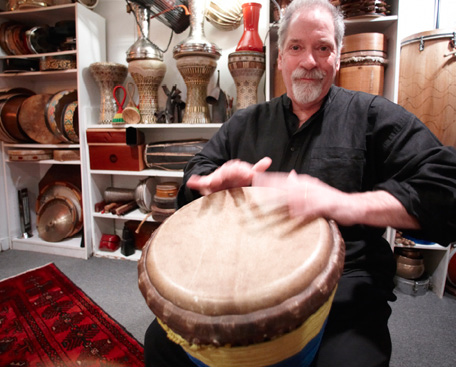
John’s top instruments now are the tabla (classic frame drum) and the sabarr, (from Senegal) which is used with one stick in one hand. He continues to study Middle Eastern percussion, using the riq, darabucca, daff and bendir—all folk instruments. “I recently was fortunate to receive a beautiful handmade mother of pearl frame drum from Lebanon which I enjoy playing very much. And, of course, I’m always honing skills on the traditional jazz drum kit. And I compose at the piano.”

John also studies tabla with an Indian gentlemen named Naren Budhakar in Manhattan. North Indian tabla has a classical repertoire. John says “Studying a classical instrument, that interests me.”
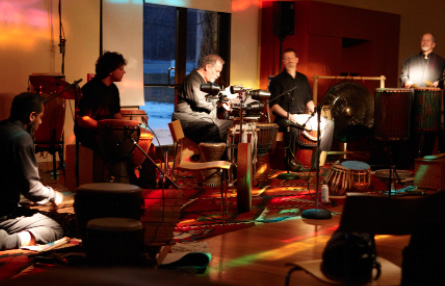
terra coda, photographed at the litchfield coMMunity center, by scott phillips

Recently, he has formed a new quintet called Terra Coda. They are all professional percussionists: Andrew Parker, Randy Steward, Mark Ingram, and Rick Quintinal. Two of them were John’s former music students. Having worked intensely over the last four months, they each have a role. “We see Terra Coda as an expression of sound hierarchies that move from lows to highs, from obvious to mysterious, and from tonal to rhythmic. We all share those roles, but fundamentally, Rick plays the djun djun (base drums) and provides the bottom, Mark carries a lot of the melody, providing the high end with gyil and mbira, and Andy, Randy and I float along in the middle, conversing and soloing.” John’s role is multipurpose. He directs the ensemble and composes the pieces. “There’s actually very little improvisation within our set. The pieces are all rehearsed and written out. Yes, there are solos, but the forms are constant. We’re also rehearsing pieces by other composers like Steve Reich, Norman Scott Robinson and B. Michael Williams.” Indeed, John has plans to produce professional recordings with Terra Coda. At a recent concert in Litchfield, Terra Coda played to a full house, and the energy in the space was palpable. The five percussionists created a full sound that had the audience mesmerized.
scott phillips
scott phillips

The broad spectrum of John’s collaborations—Middle Eastern gigs, movie scores, jazz concerts, winds and percussion recordings, and West African rhythms—is a testament to the incredible talent and versatility he has developed over his career. John says, “Playing solo can be challenging—it’s easier to have accompaniment. I love duo percussionists. Music is about communication, and I like to light the sparks on stage in real time as an organic process with others. That’s easy to do with duos, trios, ensembles of all sizes—not always easy to do in a solo setting. I will say, though, that when I’m successful as a solo artist in conveying any clarity of the creative process, it’s a real accomplishment, and there’s nothing more rewarding.”

“Practice is a huge thing for me.” Referring to riyaz, an Indian term for the art of practicing, he says it is a spiritual undertaking for him. “I’m devoted to it, and it’s a fundamental cornerstone of my identity. I try to do it everyday, sometimes for several hours, when my schedule affords it. Dawn is the best time for sitting with an instrument. There’s a tradition in India that claims that the gods are most pleased with musical practice at the breaking of dawn.”
Scott Phillips
Scott Phillips

John has composed original pieces for the dance company, Pilobolus, and for ASAP (After School Arts Program). He does original compositions for movie scores with Robert Weinstein, a guitarist and David Darling, a cello player. “Recently I’ve recorded original music with Duo JOPA, which is a collaboration of winds and percussion. I’m excited about this project. Most of our listeners are located in Egypt. You can hear our music on Sound Cloud.”

Asked what he listens to these days, John replies, “A pretty wide range: Bach, Stravinsky, Debussy, Miles Davis, Brazilian, Ghanaian, lots of North indian classical—Zakir Hussain always floors me.”

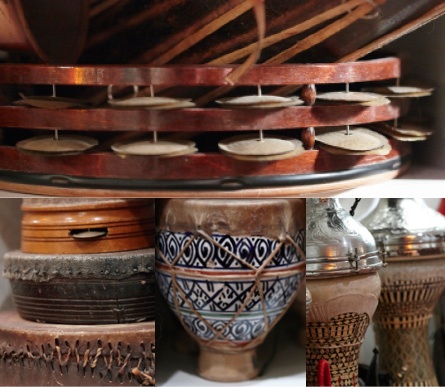
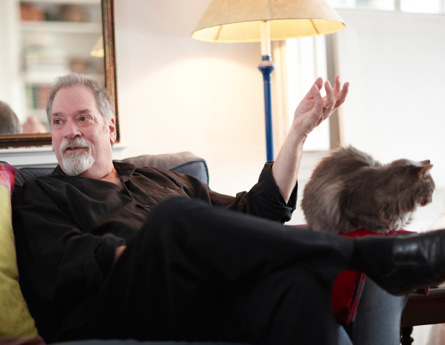
Friendly and with a comfortable, gentle manner, it’s easy to see why John Marshall is respected and beloved in the region. Father of three and grandfather of one, he lives in the Northwest Corner with his wife, artist Cecilia Marshall. In the basement of his charming home, his studio is filled with hundreds of percussion instruments of all kinds and from all over the world. The folk instruments in his impressive collection “represent the music of a people, passed on verbally.” Hearing him speak about his work and about music, it’s clear that he is a natural teacher who has a lot to offer. This openness extends into his collaborations with other musicians and seems to be key to his success. “I consider myself extremely fortunate, to feel a sense of integrity in the profession I have chosen.” It took a lot of courage to raise his kids and live in Litchfield, Connecticut, instead of New York City, (where the music biz is centered). “It’s much easier to have a musical career in the city than in the country. I’m proud of what I’ve done.” And that’s what he tells his students, “Get out there and do it now.”
Scott Phillips
Scott Phillips

John Marshall’s music has been featured on National Public Radio’s All Things Considered, Echoes, Hearts of Space, PBS Television and the British Broadcasting Company (BBC). John will be performing with Crystal Cymbalogy at Open Sky Barn in Redding on April 19. On April 27, he will be at the Drum Connection in Boston. Check back with us for future, local Terra Coda performances. John presently has four instructional books with CDs available through Amazon.com, and he has DVDs forthcoming. John’s series of workshops offers a rare opportunity to gain proficiency in worldwide hand drum techniques. Workshops may be designed to fit any schedule; half day, full day, weekend or extended residencies. Private organizations, colleges, community groups, corporations and learning centers of all kinds are welcome to inquire. John also teaches individuals and small groups at his studio. For more information on private instruction, contact him at: jomarshall@earthlink.net
Learn more about John Marshall at www.marshalldrum.net.
A Modern Mecca in Woodbury

I enter the George Champion Modern Shop in Woodbury and suddenly feel as if I’ve broken into someone’s home circa 1960. A Rolling Stones LP is playing quietly in the background on a refurbished vintage McIntosh stereo component, and I’m surrounded by an enviable collection of modern furniture, objects and artwork.

In the heart of antiques territory, the George Champion Modern Shop is
the place to go to for classic mid-century furniture, objects, and art.

I enter the George Champion Modern Shop in Woodbury and suddenly feel as if I’ve broken into someone’s home circa 1960. A Rolling Stones LP is playing quietly in the background on a refurbished vintage McIntosh stereo component, and I’m surrounded by an enviable collection of modern furniture, objects and artwork.

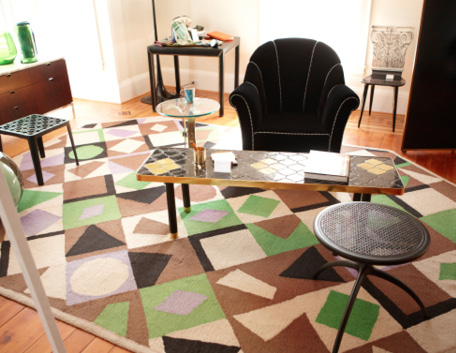
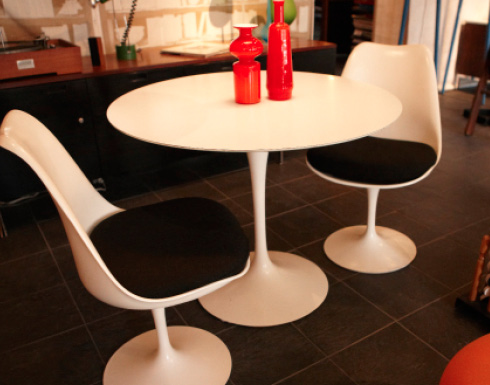
To my left, past the George Nakashima sideboard, is a vintage Saarinen tulip table and matching chairs. An iconic Arco lamp arches over a Harvey Probber couch upholstered in creamy-brown velvet, topped with an Alexander Girard cushion. The list goes on. This tiny space is packed with treasures.

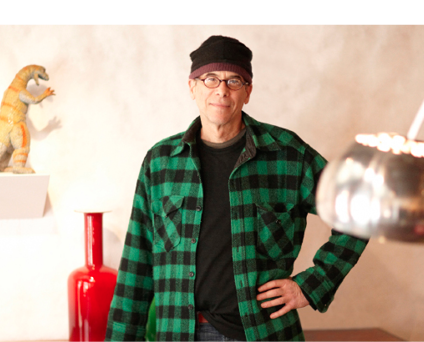
George Champion appears. In jeans rolled at the cuffs, a wool cap and Blundstone work boots, he’s unexpectedly approachable. We wander among the collection together and it becomes clear that Champion has an encyclopedic knowledge of designer furniture. Every piece is immaculately presented, thoroughly researched and well documented. One gets the sense that inventory moves quickly here. And the striking quality of this space is clearly a product of someone who knows and cares deeply about the beauty of a well-designed object. Had I come a week earlier, I would have seen a full ‘studio set’ by George Nakashima — including a sideboard, 8 chairs, and dining table — among the most valuable work he’s sold lately.

Next door there is more. A year ago Champion expanded into a 4,000 sq. ft., two-story Victorian. Within the domestic spaces of the freshly renovated, elegantly detailed show house, one can wander among two floors of fully furnished rooms, including living, dining, kitchen and bathrooms, all roughly grouped by designer and time period.

JJP: How did you get into this business, George? Do you have a design background?

GC: Well, no. I have a business background. But my Dad was in manufacturing, and he used to take me to work with him. We’d visit factories up and down the Naugatuck valley. He’d sell machinery to these places and he was a stickler for quality. He really knew nothing about the modern design movement, but he had and eye for detail and really cared about well-made things. Like he would never wear poorly made shoes.

JJP : And how did you come to open the Modern Shop?

GC: When I started out, I used to have furniture shows out of my house and barn. I’d put together pieces and invite people to events a few times a year. I opened the store in 2004. It was originally built to house a sporting goods store in 1968, then in 1997 the building was extensively renovated — they added the trusses, the cupola, the double entry doors, the slate floors, the tin ceiling, etc. All I did was put up my sign — and the Edward Tufte sculpture out front (a large cast aluminum fish called Magritte’s Smile).

GEORGE CHAMPION PHOTOGRAPHED BY SCOTT PHILLIPS

JJP: It’s a beautiful little building. And now you have more space next door?

GC: Yes, a few years ago I bought and fully renovated the space to use as a show house. It gives people a different experience. If someone comes who travelled some distance – like if they come up from the city — they used to take 5 or 10 minutes to look around here, and then they’d ask, ‘Is there anywhere else that sells modern?’ The answer is ‘No.’ Now I can say, ‘There’s more next door (a lot more)’. They usually get burned out over there.”

JJP: How do you determine what type of work you sell here? Is it all mid-century modern?

GC: No, it’s not all mid-century pieces. I collect what I like — as long as it’s good design.

SCOTT PHILLIPS
SCOTT PHILLIPS

JJP: What’s your most recent acquisition?

GC: Most recently, this Arco lamp (designed in 1961 by Achille and Pier Giacomo Castiglioni for Flos) — it’s not all that unusual, but this one’s the real thing.

JJP: So how do you tell the difference between the real thing and a recent reissue, or a knock off?

GC: This one has the original label, and the sticker (in two places) showing the original importer of the lamp, Atelier International, which has been out of business for years. There are a lot of knock-offs of this lamp around, made in China, for modern housewares stores in the US. But making the retractable steel arm is not that easy. There is a big quality difference between a knock-off and the original.

JJP: In a different category from knock-offs, there are the official reissues of many modern pieces by companies like Knoll and Herman Miller. How does this affect sales of the originals?

GC: Well, I try to stick with original, older material. I just documented that this Eero Saarinen dining set, manufactured by Knoll, is an original. This chair is made differently than the one they sell now. This one looks vintage – it has a lacquer finish on it that yellows with age, giving it a warmer, ivory color. If you buy a new one, it’s going to be powder coated in something called Rilsan. It gives it a bright white finish, like a refrigerator. So a new one’s going to have a bright, white, plastic-y look to it. And it stays that way. It won’t look at all like this vintage one. I don’t buy those. I buy these.

I had a new piece once — a little Knoll stool. I wound up selling it at a deep discount. I couldn’t stand it any more! Plus, their newly made version of these chairs, which I don’t think looks as good, is much more expensive. I’m asking $2,500 for the set of four chairs and a table. It would cost you about $8,000 to duplicate this set new. So shopping here can be cost-effective, too. Just because something is real doesn’t mean it’s going to be more expensive.

Ask Champion anything about the pieces he has in his collection and there’s a good chance you will be treated to an entertaining story. He’ll disappear, only to reappear with a book, catalogue, or magazine photo depicting the piece in question, elaborating on its history with a personal story.

SCOTT PHILLIPS
SCOTT PHILLIPS

If you are curious, he will explain to you the manufacturing process devised to produce the tongue-in-cheek Mr. Bugatti armchair in the shop window, by the contemporary furniture designer Francois Azambourg. This glossy red armchair—made of crinkled metal—looks like it was mishandled by the movers. In fact, the metal is hand-distressed before it’s seamlessly welded together, then painted. Or he’ll tell you the story of the piece that was, in fact, mishandled by the movers: a Richard Artschwager sculpture made to look like a table in a moving crate. “It was like ‘Who’s on First’ trying to explain to them that the crate was the not the crate, the crate was the sculpture,” he laughs.

Since George Champion Modern Shop stands out among its more distinctly antiquarian neighbors, I ask Champion what it’s like to be part of the community. He says he is a member of WADA (the Woodbury Antiques Dealers Association). But, he adds, “Some people come in here and never make it off that mat,” pointing to the doormat at the front entrance. “To them I would say, step off the mat! Look around! There’s even a Shaker stool in the corner.” Definitely visit this modern mecca, but leave yourself some time.

George Champion Modern Shop, 442 Main Street South in Woodbury. 203.263.8442, www.championmodern.com

Jessica Jane Perkel holds a Masters degree in Architecture from Yale University. She works as Director of Exhibits at Cornwall Bridge Gallery in Cornwall. She also writes and makes art (visit her at www.jessjaner.tumblr.com ).

A New Apothecary Collection

Spruce Home & Garden has launched an exclusive collection of candles and two kinds of diffusers. The candles are made with hand-poured, 100% soy wax and blended with natural oils, and finished with an all-cotton, lead-free wick that ensures a long, clean burn. for a clean, pure burn.

Turn your home into a relaxing retreat with this wonderful line of
candles and diffusers from Spruce Home & Garden in New Milford.

Spruce Home & Garden has launched an exclusive collection of candles and two kinds of diffusers. The candles are made with hand-poured, 100% soy wax and blended with natural oils, and finished with an all-cotton, lead-free wick that ensures a long, clean, and pure burn. The environmentally-friendly soy wax burns cooler and lasts longer, producing 90% less soot than paraffin candles.

The high quality reed and clay diffusers are also made with natural oils and are environmentally safe to use. The longlasting scents are therapeutic and carefree. Mix and match from room to room in your home—all of the scents are available in both candles or diffusers.

Spruce’s in-house product designer team created both the products and the packaging. Instead of descriptive names, the different scents are presented as  numbers, so the scent isn’t ruled out by its name. For example, our favorite, No. 66, is also known as Grapefruit, and has a refreshing, distinctive aroma. No. 14 is Herb, and No. 56 is Fresh. Other scents are No. 39 (Cashmere), No. 25 (Linen), No. 35 (Midnight), No. 51 (Blackberry), No. 36 (Macaroon), No. 67 (Bark), and No. 54 (Driftwood)—all are delightful and original.

The packaging is handsome and elegant, wrapped with a black rubber band to be used for placing a sprig, or a stone, shell, or another item of your choice into it, along with black gift cards. The signature Spruce diffuser bottle has a clean, modern look topped with a graphic black cap, and the frosted glass candle holder has a stylish, square shape—both designs would fit in well in any home décor.

A second type of diffuser has a white flower made of clay sitting on top of a more decorative glass bottle. The fragrance is carried through the clay flower and permeates the room. In this style, there are three inviting scents to choose from.

Any of these products make great gifts. Keep a few for yourself and fill your home with lovely aromatic notes every day. Candles are $29 and diffusers are $35. The new collection is available in the store at: 20 Bank St, in New Milford or on-line at www.sprucehomeandgarden.com.

Going Modern in the Country

Asked to picture the architecture of Litchfield County, most people think of traditional, colonial-style New England homes. This classic form for a home has always been revived over the centuries, and it remains the defining style of many of Litchfield’s oldest and most distinguished homes.

How a visionary architect and a war veteran with a passion for
modern architecture brought the Future to the Litchfield Hills

Asked to picture the architecture of Litchfield County, most people think of traditional, colonial-style New England homes. This classic form for a home has always been revived over the centuries, and it remains the defining style of many of Litchfield’s oldest and most distinguished homes.

Yet there was a time, shortly after WWII, when a different architectural style held sway in Northwest Connecticut — it was modernism. For a few decades, nostalgia for the past was trumped by enthusiasm for the future. The1950s and ‘60s have been called America’s Golden Age of Futurism, when there seemed unlimited potential for gains in science, technology and human achievement.

This was the era Walt Disney formulated his vision for EPCOT (Experimental Prototype Community Of Tomorrow). Finding Futureland was a national obsession. In Litchfield, the future arrived thanks to the efforts of a few young couples wishing to raise their families in a style appropriate to that vision.

American Modernism—particularly in the Northeast—was a direct outcome of the carnage of World War II and the rise of the Nazis. Between Boston and New York, the Northeast saw the growth of an immigrant community of internationally recognized artists and architects pioneering the new style. They gave form to a vision of housing, education and infrastructure for the booming post-war population. Modernism, as a movement, was at its heart a style and an ethos for the growing American middle class and their imagined future.

Much of it began with the arrival of Walter Adolph Georg Gropius (1883 –1969), who, fleeing his native Germany, came to the US on an invitation to direct the Graduate School of Deign at Harvard in 1937. He brought to the GSD the principles of the German Bauhaus, a design school Gropius had founded in 1919 in Dessau, Germany. The guiding principles of the Bauhaus were the synthesis of art and life, work and play. And efficiency and economy of design became the hallmarks of Bauhaus architecture.

For his own family home in Massachusetts, Gropius built a house founded on Bauhaus principles, but already his work had taken a distinctly American turn. Identifying with early American architecture’s material thriftiness and aesthetic simplicity, the Bauhaus design ethic had more in common with the Colonial than one might assume. Today, Gropius House is preserved in its original, fully furnished, condition. It is available for public tours at at 68 Baker Bridge Road, Lincoln, MA (for information call 781-259-8098 or visit www.historicnewengland.org).

The Gropius’ professional and social lives were populated by many of the leading figures in the arts and education. Just as they had in the Bauhaus, they exchanged artwork, furniture and ideas in a rich stream of gifting and collaboration. One of the most important of these friendships was between Gropius and Marcel Breuer. Marcel Lajos Breuer (May 22, 1902 – July 1, 1981) was a Hungarian of Jewish descent. He was first a student, then a teacher at the Bauhaus in the 1920s. Breuer is best known for his early furniture designs using bent steel bar (The Breuer and Wassiliy Chairs), and later for his bold, sculptural buildings, such as the Whitney Museum of American Art in New York City.

Escaping the threat of Nazi occupation in the 1930s, Breuer moved to England, but struggled there to find satisfactory work. Upon the urgings of Walter Gropius and his wife Isa, Breuer followed his friend and mentor to the Northeast in 1937 to teach at the Harvard Graduate School of Design.

At the time Gropius house was built, Breuer had become partners with Gropius in his firm. He was, in fact, one of the primary designers of the Gropius home, but his role was downplayed.

In true Bauhaus fashion, Breuer’s lifetime friendship with a man named Rufus Stillman resulted in the proliferation of his work here in Litchfield. He and his wife commissioned a total of three homes from Breuer for their growing family over the course of his lifetime. Stillman jokingly describes himself as Breuer’s “amateur public relations officer,” and indeed he played an instrumental part in promoting his work (and the work of Breuer’s contemporaries), to friends and public officials throughout the growing town.

Rufus Cole Stillman (1921 – 2009) was a Litchfield native. He graduated from Taft School in Watertown, Connecticut; attended Yale University; and then joined Gen. Patton’s 3rd Army Tank Corps in Europe during World War II. When he returned home after the War – having lost a leg below the knee as the 3rd Army drove toward Berlin – Mr. Stillman settled with his wife, Leslie Caesar Stillman, in Litchfield, Connecticut. As the nephew of Edith Chase (of Litchfield’s Topsmead Estate), and President and Chief Executive Officer of Torrington’s Torin Manufacturing Company, he was a prominent, active local figure. But what he loved most was modern architecture, painting and sculpture.

Stillman said, “Once upon a time an editor asked me what I did, ‘I’m a manufacturer.’ He said, ‘But what do you really do?’ What I really did was fall in love with modern architecture. And with it developed an interest in, no, a passion for, painting and sculpture.”

In 1950, Rufus and Leslie Stillman had visited the Museum of Modern Art. They saw Breuer’s exhibition homes, erected for the public to view in the museum sculpture garden. Public interest in the modernism was high. The Stillmans were among a the growing set of young, middle class families interested in adopting a new way of life, reflecting their present time, and the image of a bright future so alive in the public imagination.

Breuer himself spoke cautiously about the permanence of the radical changes modern architecture offered his clients: “I am particularly interested to see which of these changes are due to moods or fashions and which are due to the developments of a creative and long-term drive behind our work. Is there such a thing as a long-term direction in modern architecture? I believe there is … with allowances for our errors and for our desperate doubts about progress. Still, I believe in progress.

Stillman houSe i. ken Sena
STILLMAN HOUSE I, SIDE ELEVATION. KEN SENA

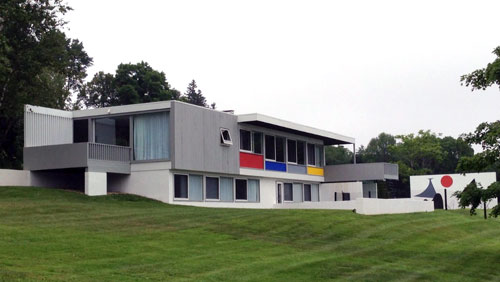
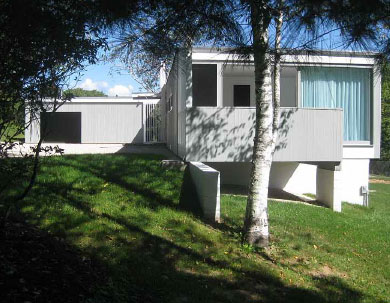
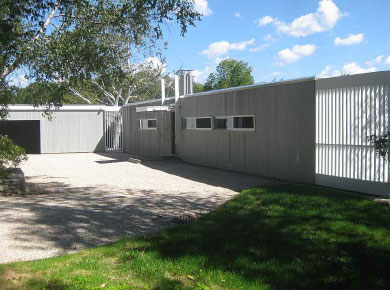
The first house for Rufus and Leslie Stillman, completed in 1951, is known today as Stillman House I (it is privately owned and not available for public viewing). The small, flat-roofed house with vertical siding is a far cry from its 18th and 19th century neighbors. And it remains still strikingly modern 62 years later. The entire home (pictured here) is just under 2000 square feet, built into a slope overlooking fields and woodland at the end of a small street in the town of Litchfield.

Perhaps to placate the neighbors and maintain their privacy, the side of Stillman I facing the street is a demure one-story structure, with narrow horizontal windows. This all changes on the opposite side of the house facing the woodland, where two stories of large plate glass windows, cantilevered porches and panels of siding painted primary colors appear. Here, the pool is located, connected to the balcony above by a stairway which lands on the pool’s diving platform. The pool is bookended by a large, colorful mural wall, painted by Alexander Calder. Calder was a friend to Breuer and the Stillmans, and lived in neighboring Roxbury.

Stillman houSe i, front elevation. ken Sena
STILLMAN HOUSE I, FRONT ELEVATION. KEN SENA

Breuer’s work for the Stillmans rapidly led to additional design work for Breuer in Litchfield County. It also led to a deep and abiding friendship between the designer/architect and his patron. Indeed, the Stillmans and Breuers vacationed together.

Modern homes today are the shell for what was a total lifestyle. The modernist version of domesticity redefined the organization of space and materials, emphasizing light and air, simplicity and efficiency. It also generated a close community of like-minded people. The modern homes of Litchfield were decorated with Alexander Calder’s murals, paintings and sculptures, and were furnished with the chairs, tables and textiles of major modern designers such as Aero Saarenin and the Eamses. It was a life rich with friendships between artists, architects, designers, and their clients.

A revival of interest in Modernism is growing in Litchfield today. Several individuals have purchased, and privately funded, restorations of these Modern masterpieces. Ken Sena describes how he and his partner stumbled into ownership of the Stillman I. Not suprisingly, it was through their friendship with the aging Rufus Stillman: “We had no burning desire to live in a modern home. However, our first home in Litchfield actually happened to be one designed by Breuer, built by Rufus Stillman… Through spending time with Rufus, we developed a great admiration for him, the houses, and all the other work in the community he had done.  When Rufus passed in 2009, we received a call from his daughter asking us if we could help them find a buyer for the house. Almost out of a protective instinct, we decided to buy it.  In the end, and maybe not unexpectedly, we have never not felt Rufus’ presence at the house — his or Breuer’s, I suppose.”

Breuer was far from alone in designing mid-century homes and buildings in Litchfield County. Thanks to Stillman’s tireless support and promotion among close friends and relatives, ten modernist houses were built in the area by the end of the 1950s, and another five by 1975.  They were designed by Breuer, Richard Neutra, John Johansen, Eliot Noyes, Edward Durell Stone, and Edward Larrabee Barnes.

In 1966, Eliot Noyes, Breuer’s former student (and, earlier, a partner in his firm), designed an addition to the Oliver-Wolcott Library. Adding a steel and glass addition to the back of the eighteenth-century Elijah Wadsworth residence was a radical choice for this conservative town. Yet Litchfield’s library remains a vital gathering place and well-loved resource for the town today. The airy, light-filled space plays no small part in the library’s popularity.

As Litchfield’s architectural historian Rachel Carley cautions, the champions of modernism in Litchfield should not be misunderstood, “as provocateurs or as instigators of an organized effort to reinvent their town… What did account for such enlightened planning? Ultimately, the answer lay in a commitment to good, meaningful design.”  The library, occupying the center of town, with it’s elegant combination of styles spanning several centuries, embodies the modernist sensitivity to the past and future, combined in the present moment. In the words of Rufus Stillman it was simply that, “we knew we had to build in our own time.”

Jessica Jane Perkel holds a Masters degree in Architecture from Yale University.  She works as Director of Exhibits at Cornwall Bridge Gallery in Cornwall, CT.  She also writes and makes art (visit her at www.jessjaner.tumblr.com).

Many thanks to N. Silberblatt and N. Worden for their editorial support.

Recycled, Reworked, and Reinvented

Furniture that looks industrial or distressed has been in demand for many years now thanks to places like Restoration Hardware and Pottery Barn, to mention a few. Many of these items are newly manufactured and then made to look old and used. None of the furniture sold at ReWorx Collective is new or imported.

ReWorx Collective, a group of artisans who embrace the green
movement, produce stylish, one-of-a-kind pieces in Watertown

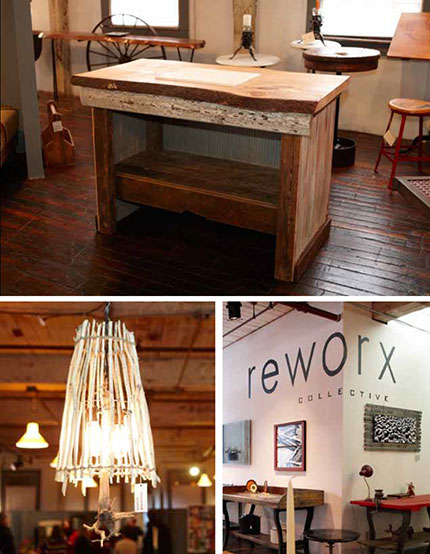
Furniture that looks industrial or distressed has been in demand for many years now thanks to places like Restoration Hardware and Pottery Barn, to mention a few. Many of these items are newly manufactured and then made to look old and used. None of the furniture sold at ReWorx Collective is new or imported. All of the twenty local artisans who form the group create original pieces using salvaged materials, such as recycled wood, doors, pipes, metal, or even twigs. Some pieces are built using a vintage base combined with handcrafted parts. The common bond among all of these artists is that they use only natural-and-reclaimed or recycled materials.

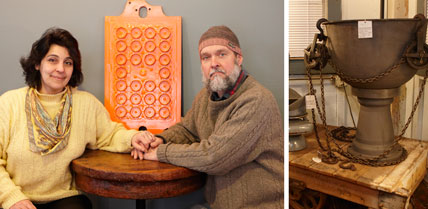
Steve and Maureen Garceau PhotoGraPhed by Scott PhilliPS

Steve Garceau, a partner of ReWorx, grew up following his parents as they spent time at tag sales and flea markets. They were resellers of vintage items and antiques. So it seems natural that he would continue in the family tradition by forming an artists’ collective to promote and sell artisanal pieces of furniture using salvaged materials. A craftsman himself, he has a background in machine engineering which ties right in with this new venture.

His wife, Maureen Garceau, owner and partner, grew up in retail, watching her parents operate their stores. She fell into the antiques business by chance and was instantly hooked. Together, they have a deep commitment and passion for the vintage aesthetic, and for well-made, original creations that have an artist’s touch. The pair take great satisfaction in giving an old, discarded piece a second chance at a new life.

Located in an old textile factory in the center of Watertown, the 5,000-square-foot space is filled with fascinating furniture, lamps, smaller items, and sculptural wall pieces. These pieces are not limited to being used in the home. They would easily fit right into an office or shop. And many pieces have multiple uses. A distressed table with industrial machinery legs can be used as a dining table, desk, or kitchen island. From old doors to gears, to steel tubes and pattern blocks, the range of materials they use is impressive.

All of the artists at ReWorx have full-time jobs and do their craft on the side. They have different skills, styles and techniques. By taking care of the management of the group and handling publicity, Steve and Maureen free up the artists’ time to concentrate on their pieces. And they provide the space and opportunity for the individual craftspeople to display and sell their work, all under one roof.

The Garceaus also make sure all glass is tempered (for safety), tabletop finishes are food safe, and bare metal surfaces are cleaned, sealed, and waxed. Basically, all of the items are safe for a home or work environment.

Scott PhilliPS
Scott PhilliPS

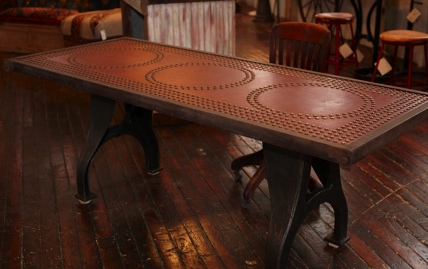
The top of a dark red leather table decorated with a geometric design of brass nailheads was actually a door from Harvard University; it now sits handsomely on a base of steel machinery legs. The door was set into a wood fame and will soon be topped with a piece of tempered glass, making a striking desk.

Scott PhilliPS
Scott PhilliPS

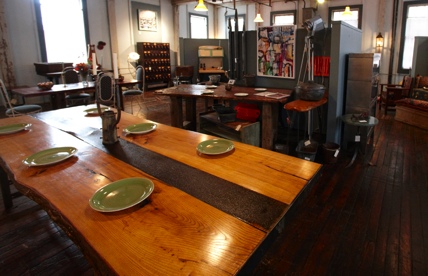
Another beautiful, long table looks like a slice of a tree, still edged with bark, and in the middle of the table, running vertically, is a long brown piece of rough-hewn metal.

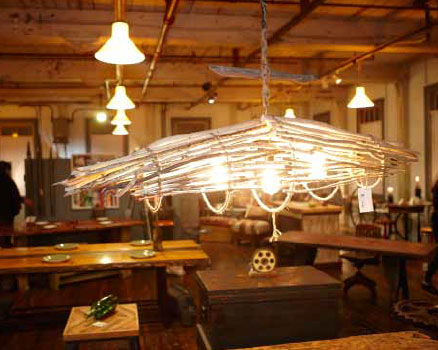
Hanging from the ceiling are a few organic-shaped lamps made of twigs and rope. The light streams through the twigs and creates a lovely effect. Any of these stunning lamps would be the center of attention over a dining table or in an entrance hallway—a conversation piece, for sure.

ReWorx’s clients are diverse—homeowners, decorators, realtors, merchants, and collectors. They come from towns in Litchfield and Fairfield Counties, as well as from New York City. In addition, the online arm of the business attracts clients from across the country.

Scott PhilliPS
Scott PhilliPS

While the main showroom features one-of-a-kind “statement” pieces, downstairs Maureen runs a vintage and antiques shop called Mélange, where one can find less-expensive, smaller gift items such as pottery, jewelry, accessories, and some furniture as well.

Once a month, on a Saturday night, ReWorx opens its doors for a casual gathering of artists and clients, what they call a Meet & Greet. The idea is for the customers to meet the artisans. They hope to encourage discussions that could lead to commissioned pieces that involve more input from clients. Collaboration is encouraged, and often a client will be interested in purchasing a piece but would like a change made to it. Maybe the color isn’t quite right, or the height needs to be lowered. Pieces can be customized to the specific desires of a client. Also, if a potential customer sees a piece they like, but the price is not within their budget, the discussions could lead to ordering a similar piece with less labor and material costs involved.

At these monthly gatherings, there are drinks, small bites, and live music. They are always well attended. New pieces are brought in and there’s a sense of community, a cool vibe, as people mingle and consider taking a piece of furniture home with them. If the piece is too large to carry, no problem—ReWorx ships anywhere, anytime.

Scott PhilliPS
Scott PhilliPS

Once the party is over, many of the local artists and visitors move on to a nearby restaurant or to one of the three local bars on Main Street. The scene in this small town is hopping and there are a few good restaurants, shops, spas, a cinema, and live theatre—just on Main Street alone. Visitors from New York City are encouraged to check out the other places in town. Steve and Maureen seem to know everybody and are more than happy to make suggestions for where to eat and shop, where to stay, and what to do. They are putting Watertown on the map with their new venture. Indeed, their enthusiasm and passion are infectious.

ReWorx Collective, 30 Echo Lake Road, Watertown.
860.417.2858 or  www.reworxct.com


A Deft Design Duo

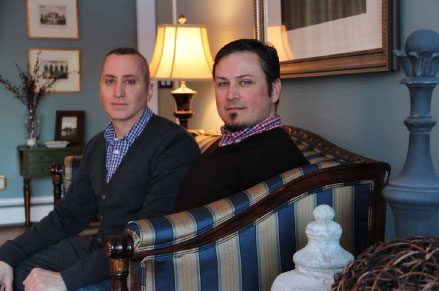
In their studio, on the second floor of a charming colonial house in Litchfield, Paul Brighton and Timothy Forry generate ideas for a wide range of clients. They are the creative force behind Tovero + Marks Creative, a full-service graphic design and commercial media boutique.

Tovero+Marks Creative is a formidable design studio where art,
writing, music, film, and graphic design are in high pitch.

In their studio, on the second floor of a charming colonial house in Litchfield, Paul Brighton and Timothy Forry generate ideas for a wide range of clients. They are the creative force behind Tovero + Marks Creative, a full-service graphic design and commercial media boutique. Five years ago, they relocated from New York City to the Northwest Corner and brought with them a multitude of talents.

Every inch of their home is beautifully designed and styled, an indication of the tasteful eye and attention to detail that is also carried over into their work. The two partners produce captivating advertising campaigns (print and online), websites, CD covers, posters, magazine ads, videos—and much more—for an impressive roster of clients, including Sir Paul McCartney, Donnie and Marie, Dionne Warwick, Helena Rubinstein, L’Oreal, and the list goes on.

Bringing with them twenty years of experience, Paul and Timothy have honed their skills in many areas. Whether they are creating a brand, a website, or an image, Timothy and Paul will handle the writing, art direction, food styling, prop making and styling, music, lighting, shooting, and retouching. They collaborate so well that the results are always highly polished and professional. As if that isn’t enough, their mastery of the latest technology helps to bring it all together in a variety of formats.

This is what separates their firm from other design studios. Paul aptly describes Tovero+Marks as a “one-stop shop.” From the first consultation with the client, to the photography shoot, Paul and Tim are completely involved in every aspect of a project. Most graphic design studios do their own art direction and design, and hire photographers or videographers, illustrators, plus props stylists, fashion stylists, or food stylists, depending on the job. Tovero+Marks does it all. Of course, when the occasion demands, they do draw upon a reliable group of talented people with whom they have worked in the past.

Because they do it all in-house, Paul and Timothy are able to bring a sophisticated, professional quality to their work at a lower cost for their clients. They also have the control and flexibility to be creative in the moment, as they are working, without being hampered by the demands of a crew. Being able to understand the nature of their projects and being in tune with their clients’ tastes is something they pride themselves on. In fact, Paul says they almost always develop strong relationships with their clients and end up becoming friends.

COURTESY OF TOVERO+MARKS CREATIVE
courtesy of tovero+Marks creative

Aside from the big names we mentioned earlier, they also work with small, local businesses—retail, corporate and food related, including one of our favorite retail shops, Terston, in Kent.

Paul’s and Timothy’s life stories inform and shape their creative energies. Paul’s parents are from Sicily, and although he was born in this country, he recalls that he was six years old before he spoke English. His father was a skilled stonemason, a craft that demands painstaking attention to detail, which Paul now demonstrates in his own artistic efforts. Paul fell into design by chance when a friend, Jim Fitzgerald, a respected graphic artist from New York City, gave him a copy of Photoshop (when it first came out) and encouraged him to try the program. He never looked back.

Timothy grew up in Elizabethtown, Pennsylvania, the son of a Mennonite family. He remembers fondly that all of the books handed to him by his parents were old and used, never a new one. Timothy built upon his own love of painting and illustration into an impressive collection of finely illustrated children’s books. Before joining Paul in Tovero + Marks, Timothy worked with a design firm in New York City, whose client list included MTV, VH1 and J.P. Morgan Chase.

In addition to their work with Tovero+Marks, Paul and Timothy have mastered a daunting array of creative talents. Paul is a musician, artist, actor (having studied with William Hickey of Prizzi’s Honor), and also the writer, director and producer of a soon-to-be-released movie Brilliant Mistakes (which has already garnered several awards at various independent film festivals). Timothy is also a writer, artist, and dealer of rare and collectible children’s and illustrated books (he runs E. M. Maurice Books out of his showroom and online), and he is the co-writer and co-producer of Brilliant Mistakes.

Out of their small studio in their Litchfield home, the partners take on whatever comes their way with genuine interest and energy. It seems that there is nothing they can’t do. They are the design duo that can’t be defined.

You can check out their website and/or contact them at:
www.toveromarks.com

The Prince of Poetry

Neil Silberblatt writes prose for a living, but poetry is his passion. A poet since his early college days at Cornell University, he was inspired by his English teacher at Stuyvesant High School, a certain Frank McCourt, who told Neil that he had a literary voice.

Neil Silberblatt is on a mission: to spread the word,
literally, to the folks of Litchfield County

Neil Silberblatt writes prose for a living, but poetry is his passion. A poet since his early college days at Cornell University, he was inspired by his English teacher at Stuyvesant High School, a certain Frank McCourt, who told Neil that he had a literary voice. Neil remembers vividly, after all these years, that Mr. McCourt described him as a “story-teller in verse.” Indeed, Neil has a way with words, a way of getting to the essence of a story, using a natural rhythm and style. Drawing from his personal experiences, Neil’s poetry has a wonderful mix of humor and depth. His poems are raw, poignant, and memorable.

A native of New York City, Neil has lived in Connecticut for more than twenty years. His talent as a poet has received recognition in print and on the web, both locally and nationally. A collection of Neil’s poems, So Far, So Good, has been published by www.lulu.com and two of his poems – Stand Your Ground and After the Tempest – were selected for the Fall 2012 issue of Verse Wisconsin, an online and print literary journal. Another of Neil’s poems — Madison Avenue, part of his New York Suite — was selected as the Grand Prize Winner by Hennen’s Observer for its Open Community Poetry Contest and was nominated for a Pushcart Prize.

Silberblatt, however, is not content to sit on his laurels. He’s an ardent advocate of poetry, bringing together a community of mostly local poets in the Northwest Corner and providing them with opportunities to give voice to their original poems in a live setting. Neil has organized and participated in several local literary readings, including an Afternoon of Poetry & Jazz at the Washington Art Association this past summer; an Afternoon of Poetry & Music at The Sherman Playhouse; Voices of Poetry at the Wooster School; and  the first “open reading” by poets and writers at Danbury Library entitled From Our Hands to Your Ears. Future events in this series are scheduled at venues throughout Litchfield and northern Fairfield Counties, including the Minor Memorial Library in Roxbury, the Gunn Memorial Library in Washington, and The Aldrich Contemporary Art Museum in Ridgefield. These events feature a diverse and talented array of poets, writers and musicians—including national poets Alfred Corn, a Guggenheim fellow; Leslie McGrath, a Neruda Poetry Prize winner; and the former Poet Laureate of Connecticut, Marilyn Nelson. The caliber of local poets is also impressive, including names like Dimitri Rimsky, Faith Vicinanza, Davyne Verstandig, and Marianela Medrano. The readings have drawn crowds from various towns around the Corner and are beginning to build momentum as the charmed audiences leave the performances with words and images engrained in their memories.

Along with noted area poets, Silberblatt brings in musicians to perform at these live events. Singer/songwriter and guitarist Don Lowe, tenor saxist Doug White and his Trio, Missy Alexander, and Mark Louis Miller are just some of the great musicians who have participated in the series. It all adds up to an extraordinary afternoon or evening of unique local entertainment.

A few months ago, Neil started a Facebook group called Voices of Poetry, which consists of poets, writers and lovers of the written word. At last count, it had 218 members. Neil uses the site to keep the group updated on all things poetry related, and many members have participated in the events around the region.

neil-poets

He is deeply committed to the group and to giving poetry a platform. A true patron to the arts, Neil is involved in many fundraising efforts and is also looking for corporate sponsorships to help with support. Indeed, one could refer to him as the Prince of Poetry. Shrugging away his instrumental role in being the catalyst for the group’s rising popularity, Neil points out that his efforts are nothing compared to the voices and talent of the poets who contribute. A humble prince, no less.

SCOTT PHILLIPS
SCOTT PHILLIPS

Here, for our pleasure, is one of Silberblatt’s poems. The poem was written in response to a friend’s comment that poetry is (by and large) fairly useless:

You Are Right

You are right, of course;
poetry serves no
useful purpose.

A poem will never hammer in a nail
or remove a splinter
when you walk
barefoot
though warned so often not to.

A poem will never suture a wound
or dry a tear
or remove a tumor
or prevent one from
growing.

A poem cannot lift its own weight.
It will never stop
a sneeze
or a bullet
certainly not a tank,
or protect
those who
stand in their way.

No, a poem is
impotent,
a eunuch
in the bordello of words.
It watches from the sidelines
at the folly, pleasure or misery
of others.
A beggar at the banquet
who makes note of,
but never partakes of,
the feast
but describes with exquisite detail
the taste of the food.

So, tell me then
why tyrants
fear us so.
Why our work
is cast upon flames.
Why our pages are ripped from books
like flayed skin.

Tell me then
why bullets
are wasted on us,
when they
can be so better used
on
critics.

c. Neil Silberblatt


Silberblatt’s poetry chapbook So Far, So Good, can be purchased at: http://www.lulu.com/shop/neil-silberblatt/so-far-so-good/hardcover/product-20163005.html. His next collection of poems, For Better or Verse, will be coming out this April and will be sold at The Book Nook, House of Books, and the Hickory Stick Bookshop. It will also be sold at Voices of Poetry events.

For more information regarding Voices of Poetry, you may email Neil Silberblatt at: silbneil@gmail.com.

The photographs of Neil Silberblatt were taken at the stunning Morrison Gallery in Kent. Many thanks to William Morrison and his staff. The Morrison Gallery is located at 8 Old Barn Road, near the intersection of Routes 7 and 341.

Voices of Poetry will be performing at two local events this month. Get the details in our GOINGS ON section.

An Art Gallery with a Twist

Cornwall Bridge Gallery is not a traditional art gallery. Instead of having one curator/director representing individual artists, the gallery provides curatorial opportunities to artists, curators, collectors and other arts professionals.

Cornwall Bridge Gallery is a fresh addition to the
rich culture that we enjoy in the Northwest Corner

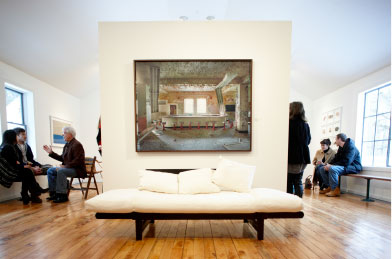
Cornwall Bridge Gallery is not a traditional art gallery. Instead of having one curator/director representing individual artists, the gallery provides curatorial opportunities to artists, curators, collectors and other arts professionals. The intent is to keep the content of their shows to a contemporary idiom and to high standards, while the work shown will vary depending on the choices of the guest curator.

David Meharg, the owner of the gallery, loves abstract art and has great respect and curiosity for the many local artists doing excellent work. He feels strongly that fostering an accessibility to area artists and even musicians, is critical to the future vitality of the space. He says, “We want it to be a place that artists want to be — to show here, to engage with the work on exhibit, to come for live music, artist’s talks and other events.” It is his conviction that collectors and people serious about contemporary artwork will flow from this, despite (or maybe because of) the remote setting in Cornwall.

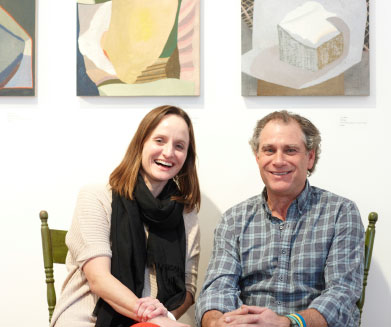
JESSICA JANE PERKEL AND DAVID MEHARG, PHOTOGRAPHED BY SCOTT PHILLIPS

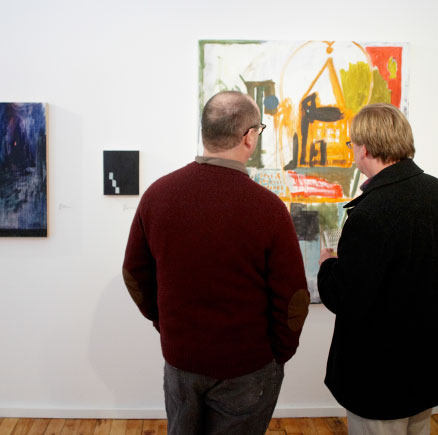
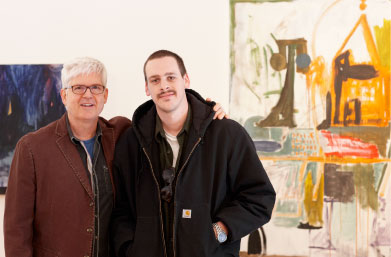
Meharg continually bounces ideas off of his wide network of friends and acquaintances, and makes it a priority to support local businesses. He generally operates with a team-player spirit, and gives the impression that this gallery will always function in a “collective” spirit. For example, the work that was selected for the gallery’s first show, CARAVAN, was put together by the artists. They decided which pieces would be on exhibit. Jessica Jane Perkel and fellow artist-curator Ted Gahl invited the artiststo participate in the show. Some of the artists divide their work and life between the city and the country. They show in New York galleries like Feature Inc, DODGE, and Morgan Lehman in New York, Geoffry Young Gallery in Great Barrington or Giampietro gallery in New Haven. Others are not represented by commercial galleries, showing their work in Pop-up galleries in NY or CT, libraries, or other regional locations. The name CARAVAN, which Ted Gahl conceived, reflects the way in which these artists, loosely linked by regional and personal affiliations with one another, casually banded together for the show. This format will not necessarily by continued in subsequent shows, though a CARAVAN 2013 show, with a similarly loose curatorial structure, may become an annual event.

SCOTT PHILLIPS
SCOTT PHILLIPS

The Director of Exhibits, Jessica Jane Perkel, is an artist, herself. She attended Brown University and Sydney University in Australia, acquiring two degrees, a BA in English, followed by a BA in Fine Art (Sculpture and Installation). She also has a Masters in Architecture from Yale University. Her experience with  founding, editing and writing for various publications, at art school and architecture school, as well as art-handling experience at the New Orleans Museum of art, provided her with a range of skills useful to mounting a show like CARAVAN. It has been so well received that she plans on staying with CBG to hang and coordinate future shows. She’s hoping to find a way to strike a balance in her life between the gallery, time at her studio, and time with her family.

SCOTT PHILLIPS
SCOTT PHILLIPS

We asked Jessica Jane Perkel if there was an artist whose work she was particularly excited about, an artist who stands out, or whose work is heading in an interesting direction and she replied, “I hate to pigeonhole people with overused terms like “emerging” or “up-and-coming”, especially since Ted Gahl is arguably past this point. But he is still in his 20s, very serious about what he is doing, and one to follow closely. His work unabashedly takes as its heritage the early Modern Masters, recalling the compositional techniques of Henri Matisse and Claude Monet, with with painterly brushwork that recalls abstract expressionists such as Franz Kline and Robert Motherwell. The work is surprisingly mature, yet the volume, versatility and range of what he produces remains fresh and curious, resulting in paintings that balance angst and humor in colorful, intriguing compositions.”

The gallery has begun to invite artists and local arts professionals to consider making proposals for future shows. Soon the gallery website will be updated with guidelines for proposal submissions. Cary Smith is slated to curate a group show sometime in the fall. Other plans in the works are a juried show of student work from local private schools in the early spring, and a show of local sculptural work, utilizing the 2.5 acres of outdoor space at the gallery. David Meharg has a degree in landscape architecture and is planning on installing a sculpture garden on the property. There is another building on the property that David has renovated and he plans to provide art services such as photography or framing from there.

On a recent Sunday, the gallery held a Waffle Breakfast for Artists. The beautifully renovated space was filled with laughter and conversation amid the works of art, a sure sign that the gallery’s goal to create a place for artists to gather and show their work has already been met.

The Cornwall Bridge Gallery
131 Kent Road South
Cornwall Bridge
Open Thursday – Sunday, 11 a.m. to 5 pm
or by appointment.
860 -672-0096
art@cornwallbridgegallery.com
cornwallbridgegallery.com

SCOTT PHILLIPS
SCOTT PHILLIPS

The Natural Beauty
of Art Tile

The art of tiling has been around since the earliest days of civilization. Tiles have had many uses—from adorning the rooms of a royal palace, or commemorating a historical event, to covering floors, walls, or the bottom of swimming pools.

A studio in Woodbury offers original art tiles and pots
by artist Linda Boston and other artisans

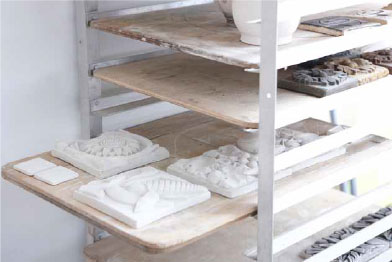
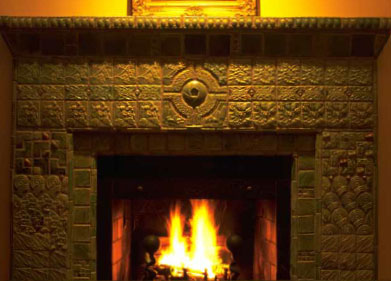
The art of tiling has been around since the earliest days of civilization. Tiles have had many uses—from adorning the rooms of a royal palace, or commemorating a historical event, to covering floors, walls, or the bottom of swimming pools. Most of us are familiar with field and border tiles, decorating our backsplashes, mantels, and showers with them. But art tile is in a class by itself. Art tile almost always has a hanger, to give the option of hanging it like any other piece of art. But it can also be installed in backsplashes, hearths and fireplaces, floors, fountains, and anywhere commercial tile is used. Art tile often looks really wonderful when paired with tumbled marble, too. While a few tiles are within everyone’s reach, an entire large fireplace of all custom-made tile gets expensive fast, so using a choice like tumbled marble, from a tile shop, with a few accent art tiles, or perhaps an art tile border, can be very effective and affordable.

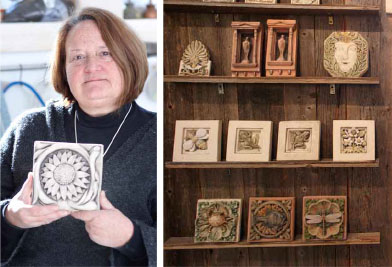
We went to visit Linda Boston at her art studio, Boston Pot & Tile in Woodbury, where she creates beautiful art tiles and pottery, and carries pieces by other artists, both local and from the midwest. Her  showroom features a wide variety of tile and pottery that can be purchased, ordered, or commissioned. The studio is in a lovely building with ample space for her kiln, glazing kitchen, work area, showroom, and other areas designed specifically for pottery and tile making. As she gives us the studio tour, we realize how deep her knowledge is of the art form and how talented and experienced she is. The showroom features displays of her stunning tiles and pots, as well as the works of the artists that she represents. There are some big names from the ceramics world, including John Glick from Farmington, Michigan. He did the commission for Rosalyn Carter’s state dinner at the White House. He is just one example of the caliber of artistry found at Boston Pot & Tile.

Linda Boston grew up immersed in the world of art, having artists for both of her parents. Her father was a professional illustrator and her mother was an interior designer, who was passionate about sewing, knitting and crochet. By the time Linda earned a Bachelor of Art from Michigan State University, she had become proficient in design, illustration, and several fiber arts, and conversant in clay, etching, painting, and art history. While working as an art director on advertising, in the Detroit metro area, she studied ceramics at Detroit’s historic Pewabic Pottery off-and-on for 20 years, and developed a deep appreciation for art tile.

SCOTT PHILLIPS
SCOTT PHILLIPS
SCOTT PHILLIPS
SCOTT PHILLIPS

She volunteered on the board for the Royal Oak (MI) Art Fair, which sought ways to commemorate the 25th anniversary of their outdoor art fair. She suggested an art tile, for which she could volunteer the design and sculpt, and advised production by Pewabic Pottery. This became her first commission. The effort was very successful, and the work was featured in “500 Tiles,” all very encouraging. Then came a commission for a large fireplace with a custom theme, which was featured in the publication “Ceramic Art Tile for the Home.” But this was still years before she would move to ceramics full-time.

Linda relocated to Connecticut in 2001 for an art direction job with a magazine publisher. When that position was eliminated a few years later, she made ceramics her second career, and built a studio designed for workshops with visiting artists, as well as for her own projects in tile and pottery. Linda says, “The presence of art tile is much stronger in the midwest, where the arts and crafts movement was more prevalent 100 years ago, giving rise to a strong ceramic industry. So my hope is to introduce many of the best tile artists working today to the Connecticut market, inviting them to teach workshops in my studio and offering their work in my display area.”

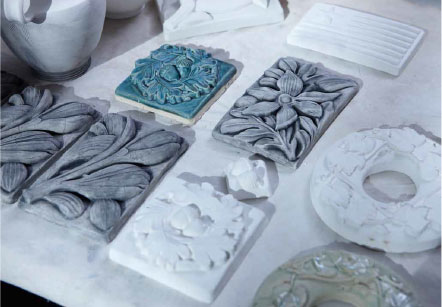
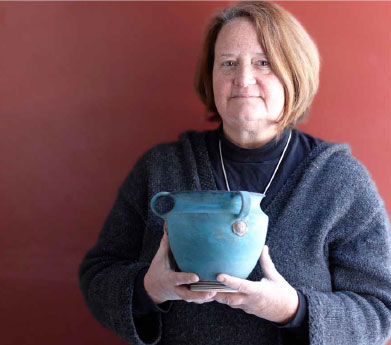
Linda’s art pieces come in many forms and finishes, but her most distinctive feature is her naturalistic style. Her handmade tiles are sculpted, like stone carvings, using elements from nature. They seem to come alive, projecting from their frame. Other pieces have indented medallions, with tiny details and small lettering recessed into the clay. Linda says she likes to combine tile making with pottery, and she enjoys using medallion motifs in both. “Most of my pottery is stoneware, and that means it’s non-porous, and suitable for vessels intended to hold water. I would like to do more terra cotta for garden pieces,” she says.

One project of Linda’s that stands out is a fireplace that was made completely with custom tile. The photographer who commissioned it wanted a Michigan theme. He hunted and fished, so there were images of grouse, trout, and depictioss of water as ice as well as liquid. The seasons change as your eye travels around the tile. In the spring quadrant, there are cherry blossoms on intertwining branches; as it turns to summer in the next quadrant, those same intertwining branches are laden with cherries, for which Michigan is famous. “This is the sort of thing you’ll never find in a commercial tile store, as lovely as they are around Connecticut,” Linda points out. For a commissioned installation, Linda can treat the back of the tile differently, putting a rough texture instead of the hanger, so it makes a better join with the mortar. “You get to customize like that, structurally as well as aesthetically, when you make it,” she says.

Another beautiful art piece is a commission Linda worked on a few years back when she was on the board of the Northwestern Connecticut chapter of the Alliance Francaise. “They ordered 300 small bowls to commemorate the Washington/Rochambeau march, which went through something like 9 states and turned the tide of the Revolutionary War in our favor. I used stamps of 2 uniform buttons, one French and one American, on opposite sides of the rim.” These bowls were recently presented to Gov. Malloy, Senator Blumenthal, and Rep. Larson at another event for the march.

SCOTT PHILLIPS
SCOTT PHILLIPS

In recent years, Linda travelled quite a bit for the study of clay arts, participating in anagama firings in Arizona as well as here in Connecticut, and helping in five kiln builds in Michigan, North Carolina, and Virginia. She spent two weeks in LaBorne, France, a tiny ancient town which sits on a vein of lustrous black clay and has been a ceramic center since the 10th century — after a few days traveling through Somerset, England’s potteries. Last February, Linda spent two weeks studying mosaic technique in Ravenna, Italy. “Tile conferences and workshops throughout the states have taught me to always have a few tiny bisque pots to pack in a pilot’s case, ready to guest fire anywhere I may be visiting, should I be able to participate in a wood firing,” she says, smiling. “This experience, and these travels, support a life in design which has enabled me to help people realize a vision. Design is communication, and I’m able to interpret, and then convey, a message. My studio is very close to completion, and once it’s done, I look forward to work on public and private commissions.”

Linda Boston expects to open her studio in late spring. Her shop will be open to the public and she will be offering workshops run by guest artists. Check back with us for details on the classes and workshops.

For more information regarding Linda and her studio, Boston Pot & Tile, visit www.bostonpotandtile.com.

A Warming Winter Risotto

With the busy holiday season behind us, we asked Goshen resident and Chef Mary Kravec for a simple recipe to get us through the winter months ahead. This creamy vegetable risotto is hearty and satisfying, and the caramelized pear slices are the perfect garnish.

Using vegetables available during the winter,
this recipe is easy to make and simply delicious

With the busy holiday season behind us, we asked Goshen resident and Chef Mary Kravec for a simple recipe to get us through the winter months ahead. This creamy vegetable risotto is hearty and satisfying, and the caramelized pear slices are the perfect garnish.

Risotto with Jerusalem Artichokes,
Yams, and Swiss Chard

Serves 6 to 8

2 quarts vegetable stock
4 Tbs. unsalted butter
1 Tbs. olive oil
1 cup minced yellow onion
2 tsp. minced garlic
1 cup peeled, 1/2-inch-diced yams
1 1/3 cups peeled, thinly sliced Jerusalem artichokes
2 1/4 cups arborio rice
1 firm Bartlett pear
2 cups packed, cleaned, stemmed, and coarsely chopped Swiss chard
1 cup grated Parmigiano-Reggiano; more for serving
Kosher salt and freshly ground black pepper
Freshly grated nutmeg
1/2 cup toasted walnut pieces (optional)

  1. In a large saucepan, bring the vegetable stock to a simmer on a back burner.
  2. In a 12-inch saute pan or Dutch oven, heat 3 Tbs. of the butter and the oil over medium heat and add the onion and garlic; sautée until softened, about 5 minutes.
  3. Add the yams and artichokes and sautée until they start to soften, about 8 more minutes.
  4. Add the rice and toss to coat with the butter and oil. Keep the heat on medium.
  5. Add about 2 cups of the simmering stock. Stir and simmer until stock is absorbed by the rice. When absorbed, add another 2 cups of stock, stirring and simmering.
  6. While rice is cooking, heat the remaining 1 Tbs. butter in a medium skillet over medium-high heat. Core and slice the pear lengthwise and sautée, browning on both sides. Set aside.
  7. Add the Swiss chard and another 2 cups of stock to the rice. Stir and simmer until absorbed, and then test the risotto. The grains of rice should still be a little firm in the middle and a sauce should be forming. Add the rest of the stock and simmer until absorbed.
  8. Add the Parmigiano, season to taste with kosher salt, freshly ground black pepper, and a grating of nutmeg.
  9. Spoon the risotto into large, shallow bowls, and arrange a few pear slices on each. Sprinkle with a little more cheese and some toasted walnuts, if using, and serve.

Chef Mary can be found teaching culinary classes at Middlebury Crossings, and working as a private chef and culinary consultant. The former director of the renowned Silo Cooking School in New Milford has taught classes for all levels, from ages 5 to 85. If you are interested in cooking classes or the services of a private chef, contact Chef Mary at russkimama@yahoo.com. You can also attend or arrange for a private custom cooking class with her at Middlebury Crossings.

Current Issue
May / June 2026
The Garden Issue
Subscribe Now
.
  • STAY IN THE KNOW

    Your weekly guide to can't-miss events, hidden gems, and local favorites in Litchfield County. Sign up now for curated things to do, eat, and explore—delivered every week. It’s free. It’s local. It’s essential.

  • Karen Raines Davis