


March 1, 2026
By Andrea Valluzzo
Photo courtesy of Heritage Land Preservation Trust
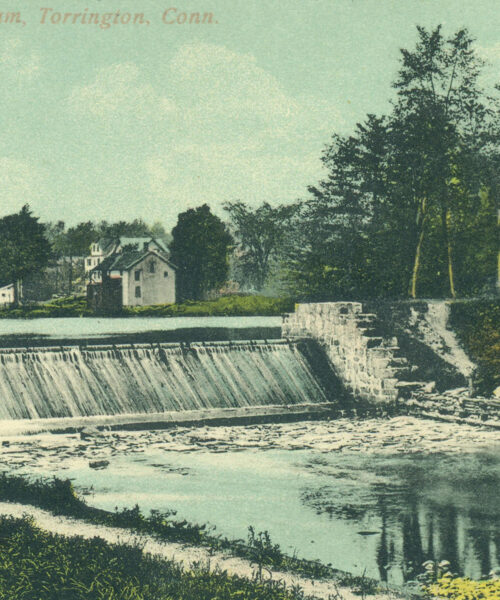
When Jim Febbroriello bought his Torrington home in 1975 (five years after Earth Day officially debuted), he couldn’t see the dam about 150 feet behind his house because of the thick forest.
The Coe Brass Dam is one of the last traces of Torrington’s once-thriving brass industry, and the surrounding mill pond is a haven for wildlife. Embracing a suggestion that the area would make a wonderful neighborhood park, Febbroriello, his family, and volunteers began clearing forest land on their property adjoining what is now the Coe Dam Park.
Owned by the Heritage Land Preservation Trust, Inc., the 12-acre Coe Dam Park is open for daytime passive recreation and is the city’s only privately owned neighborhood park. Febbroriello routinely makes improvements to preserve the park. Having people enjoy the space is meaningful, but he also says, “It’s important to me because of the wildlife that is around here. We not only have geese, ducks, and beavers but woodchucks, possums, foxes, and an occasional bear.”
Every year since 1970, April 22 has served as a rallying cry to focus on cleaning up the planet. For people like Febbroriello and others, however, Earth Day is a year-round mindset taking many forms.
The fashion industry generates millions of pounds of clothes, mostly destined for landfills. As chairman of Litchfield’s Waste Reduction Committee, Jerry Geci is determined to reduce the amount of trash he and his neighbors dump. A few years ago, he helped secure state permits to recycle unwanted clothing, shoes, and textiles. He also helped to install containers at the town’s recycling center; the town even makes some money in the process. Besides participating annually in the town’s Earth Day roadside cleanup, he is also proud of helping the town start a food composting program. Litchfield is one of the few towns in Connecticut to have its own composting facility. “It’s stunning to think that about 30 to 40 percent of the weight of our trash is really in food scraps and kitchen waste,” he says.
A story about Earth Day would not be complete without mentioning trees, and for Mike Zarfos, trees and forests are always on his mind. He is the executive director of Great Mountain Forest, a nonprofit forest and land trust with 6,300 acres located in Falls Village and Norfolk. It’s the second largest privately owned contiguous forest in the state.
“We have been managing it for over 100 years, and management is sort of our DNA,” he says. “We are all about trying to teach folks the different ways they can manage a forest for different outcomes.”
The organization undertakes or hosts projects to promote biodiversity, plant native species like tulip poplars, and reclaim forest from invasive species like Japanese barberry. One of the older efforts here involves crossbreeding American chestnut trees with Chinese chestnut trees that are blight-resistant, to reintroduce a species devastated in the 1900s. “It’s a very challenging project and a long process, as the trees take a long time to become sexually mature,” he says.