
Your guide to the heart of Litchfield County:
Discover local stories, hidden gems, and must-know events.

A Cipoletti Christmas in Litchfield

Jenny and Freddie Cipoletti celebrate Christmas in their Litchfield home, blending family, tradition, and festive charm.

From City Streets to Country Hearths  
By Brandee Coleman Gilmore
Photographs by Ashley Nicole Photography 

“When I think of Christmas, I think of tradition, of the kind of warmth that’s passed down through generations. It’s the smell of butter and pine, the glow of candlelight on brass, the comfort of rituals repeated year after year.” 

If Jenny Cipoletti’s gift is to paint a “romantic life well-lived” with words, it’s her husband Freddie’s gift to cook it up (literally), or to conjure it in images—with Jenny comfortably poised as muse.
“From the very beginning, our partnership has been rooted in shared creativity and mutual respect for each other’s talents,” says Jenny.

If you don’t know the Cipolettis, that could be because they’re relatively new in these parts. They bought their Litchfield home, Sunnymead, in July 2024. But the Cipolettis aren’t new on the scene; they’re household names to the couple’s combined half-million Instagram followers. The pair built a brand on their dolce vita-inspired lifestyle, and as their following has grown for a decade-plus, so has their purview. In the past five years, they’ve launched Jenny Cipoletti Jewelry; Italian provisions company Cucina Cipoletti (find their pastas on shelves at Petraroia Deli, Warren General, 100 Main, and Milton Market); and brought two daughters, Lucy and Mia, into the world.

“Our work is an extension of our life, the places we’ve traveled, the meals we’ve shared, the family we’ve built.”

Freddie was born and raised in New York City, Jenny in Palo Alto, Calif. They’ve lived in an art deco apartment in Los Angeles and a brownstone in New York, but a pandemic-era trip to Washington’s Mayflower Inn got them thinking about greener pastures.

“There was something about that golden pocket of Connecticut, the beauty of the landscape, the quiet rhythm of life, that planted a seed in our hearts,” Jenny says. Fast-forward five years, and their combined creative powers have given them an 1840 Colonial Revival to call home. Sunnymead was the only house they looked at. “The moment we walked through the doors, we could see our life unfolding here. It felt warm, lived-in, and full of stories waiting to be continued,” Jenny recalls. And perhaps no family tale is as exciting to write as the holidays in a new home.

“The architecture itself seems made for it: the wide hallways, the big windows that let in winter light, the scent of pancakes on a slow morning. It’s in those moments, surrounded by family and the quiet beauty of the season, that I’m reminded how deeply place and memory are intertwined, and how I am creating those same core memories for our girls,” she says.

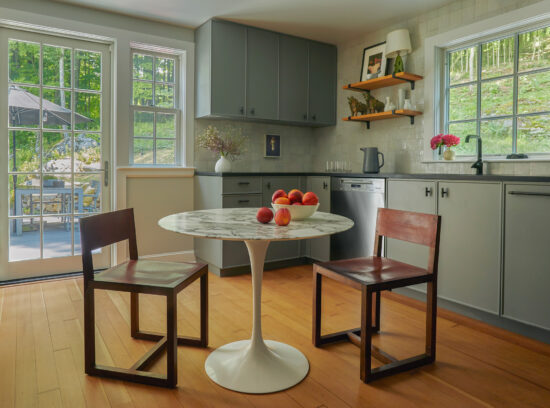
The Cipolettis are working with Litchfield-based architect/interior designer Julia Metcalf, and Litchfield millworker/designer Jessica Fabri to renovate the home’s kitchen and master suite—while a captivated fan base follows Jenny sifting through fabric swatches, and tackling the DIY to-do list. Behind the scenes, life as usual is anything but for the former city dwellers.

“Living just five minutes walk from downtown Litchfield gives us the best of both worlds, the quiet charm of a historic neighborhood with the ease of modern convenience… I can’t wait to fill these rooms and our new kitchen with the people I love most, to have my family gathered under one roof, laughter echoing through the halls, and traditions both old and new woven together. It’s in those moments that Christmas becomes more than a season. It becomes a living memory, growing richer and more meaningful with each passing year.

Michael Trapp’s Eclectic Sharon Home

Michael Trapp’s Sharon home blends global antiques, bold design, and timeless character in a reimagined farmhouse.

By Troy McMullen
Photographs by Rana Faure

The renovated Dutch barn in Sharon—where Michael Trapp stores the antiques and architectural fragments he sells—is filled with the items that have helped establish his reputation for originality. 

The labyrinth of spaces inside the barn is a treasure trove of metalwork, pottery, and colonial furniture amassed from years of traveling to exotic locales to discover distinctive interior items. 

While the variety of pieces underscores how Trapp harnesses an eclectic style for his work as an antiques dealer and interior and landscape designer, the juxtaposing of old and new to create timeless environments also informs how he lives at home in Sharon. 

Inside the 18th-century farmhouse that he shares with his husband, equestrian M. Michael Meller, Trapp has created interiors imbued with baroque qualities that radiate a unique warmth. The barn and the farmhouse where he lives sit on a 22-acre property in Sharon.

“Eclectic is a gentle way of describing my aesthetic,” says Trapp, who spent his early life living in Europe with a father who was a professor of logistics in the Air Force. The family eventually settled in Ohio, where he studied landscape architecture before selling architectural items at antiques shows nationwide. 

“Most people just call my style unusual, but the truth is I’m curious about so many things, and I simply traffic in things I find beautiful.”

Uncovering eclectic beauty is evident inside a home he spent years renovating. Though the exterior of the eyebrow colonial has hardly changed, the interiors underwent a renovation that included removing walls, doors, and staircases. The demolition transformed a once-dilapidated house into a 3,000-square-foot residence that Trapp says reflects his taste.

“It looks innocent on the outside, but the interiors went through a real demolition,” he adds. “It was the kind of place with wonderful possibilities, if you’re willing to put in the work.”   

Trapp’s penchant for creating unusual yet beautiful interiors is on display in the home’s living and dining rooms, where sofas covered in 19th-century deep-red wool carpets from Anatolia share space with a whale’s skeleton suspended above the dining room table. (The hulking piece was procured from a museum in the Spice Islands in Indonesia, and assembled by Trapp and two assistants.)   

Walls in the room are covered in blue-and-white porcelain Ming Swatow plates salvaged from a 16th-century shipwreck off the coast of Sumatra. Two 19th-century Spanish chandeliers hover above 17th-century bluestone flooring in a living room dotted with pillars and other historical relics gathered from his years of global traveling.

“Nothing is ever truly finished,” Trapp explains. “But you take enormous comfort in knowing that you’ve created something that fits your life.”

Trapp says he’s rarely at home for the holidays, but that he and his husband enjoy occasionally infusing the interiors with seasonal cheer. Unlike the eclectic tastes that typically influence the home’s interiors, he leans toward more restrained Christmas decorations, as a contrast to his surroundings.  A tastefully decorated evergreen tree is the centerpiece in a living room with tables outfitted with baby’s breath flowers, foliage, and coral-colored Tibetan beads. A 19th-century Italian terracotta urn is filled with birch branches painted fire engine red.

“It’s a season of feeling grateful to be in such a lovely, unspoiled part of Connecticut,” says Trapp, who spends monthsn each year traveling the world in search of architectural items for his clients, and to sell in his West Cornwall store.  “We’re just really lucky to live here.” —michaeltrapp.com

Contrast and Character: A Cornwall Home

Natalie and Greg Randall’s Cornwall home reflects RT Facts’ signature mix of antique charm and modern craftsmanship.

By Christopher Stella
Photographs by Colin Bazzino

On summer evenings in Cornwall Village, Natalie and Greg Randall, owners of RT Facts Design and Antiques in Kent, often walk a quiet neighborhood loop, past the town Green, the idyllic steepled churches, and the library that sits across from their Federal-style home. They watch the fireflies rising above the grass, and the cows in neighboring pastures. It’s a setting both grand and simple, a perfect backdrop for home that exemplifies the magic that emerges from a convergence of contrasts.

Before moving to Litchfield County, the Randalls built their business in New York. Natalie, trained as a knitwear designer, spent years in fashion designing for major labels such as Ralph Lauren and others. Greg grew up in the world of 18th-century furniture. Together they launched their first antique store and design business 33 years ago. As their business increasingly filled orders for clients in Litchfield County, the Randalls moved it to Kent where they purchased the former town hall to serve as a showroom and home. They later moved to Kent Barns, where the shop sits today. RT Facts itself is a purveyor of well-curated antiques and a contemporary furniture line produced here by local artisans.

This blend of antique and contemporary defines the Randalls’ aesthetic, as their house in Cornwall brings together patina and polish to create something uniquely theirs. Their Federal-style home once belonged to the Yale Foreign Mission School, and was later purchased by the Woolsey family and passed down through its descendants until it was purchased by the Randalls. The property contains a main house and two guest cottages—which formerly served as Cornwall Bridge’s post office/library, and first selectman’s office—along with a barn that now serves as a design studio. 

The Randalls spent a year-and-a-half on renovations—from insulating the walls, to repairing the foundation and roof, and expanding its kitchen. Along with essential updates, they returned the house’s original character, stripping doors to their original blue milk paint, and the floors to show time-worn tracks. “We did a lot of work to make it look like we didn’t change much,” recalls Natalie. “Patina shows something has been well-loved.”

The arrangement of the living spaces is where the Randalls’ design aesthetic is most pronounced. The dining room is a grand space that contains a life-sized bronze angel that once sat atop a church, and now sits among classical busts. The rustic dining table serves as a setting for creative thinking. “Sometimes it’s hard to get on a roll in the office; there’s always a proverbial fire to put out,” says Natalie. “Our dining room gets wonderful light through these reclaimed French doors we restored—it’s a peaceful place for the team to sit face-to-face and collaborate.” The room also serves as a staging area for photo shoots, used for the company’s look book. “Our shop has 20-foot ceilings, which makes it difficult to imagine how a piece of furniture looks in a residence,” says Natalie. “We can use the house as a laboratory to examine how different pieces—from furniture to wall hangings—might fit together aesthetically.”  

For the Randalls, aesthetics extend beyond their well-curated rooms. From holiday potluck dinners to the diverse programming of the town library, Cornwall Village offers a tapestry of people and programs that make the community both traditional and refreshingly new. “Cornwall residents are so creative: artists, curators, writers, gardeners,” notes Natalie. “Everyone is committed and accomplished—and yet welcoming and unassuming.”

Whimsical Greek Revival Home in Washington

Jennifer Hunter’s Greek Revival home blends classic architecture with playful patterns, colors, and textures.

By Jamie Marshall
Photographs by Rikki Snyder

 Interior designer Jennifer Hunter had long dreamed of buying an antique house in Washington, after she and her husband, Bradley, first visited the area ten years ago. They started searching in earnest when they married, but nothing ever felt right. So, the designer did the only sensible thing:“I decided to buy a piece of land, and build from scratch.”

Working with a blank slate gave Hunter the freedom to design her dream home. For the Albert Hadley alum, that meant combining a classic style with a fresh, youthful punch. “We are a young family, and I wanted it to be cheerful,” she says.

The 4,000-square foot Greek Revival, which was finished in 2023, sits on 2 acres of land within walking distance of the village. For Hunter, there is no greater compliment than when someone tells her the house looks as if it has always been there. “I love it when people don’t know it’s a new home,” she says.

Behind the traditional facade is a space that exudes joy. Hunter’s clever use of patterns, colors, and textures juxtaposes beautifully with the period details: crown and dog ear moldings, for instance, and the reclaimed wooden beams in the kitchen. The effect is both whimsical and playful, while still maintaining a tie to the home’s traditional roots.

The front entry hall sets the tone, where an Albert Hadley wallpaper, “Happy,” in a custom colorway by Zina Studios, serves as a backdrop for a commissioned collage series of flowers by Denise Fielder for Paste. “The artwork is an instant conversation starter,” says Hunter.

The living room’s eggplant-drenched walls (Farrow & Ball’s Pelt) are at once classic and unexpected. The designer kept the moldings and ceiling white, to lighten the space. As a nod to the founding father, she had Fielder do the portrait of George Washington above the mantle. “It was the first piece I commissioned, even before we broke ground,” she says. A pair of Christopher Spitzmiller table lamps is topped with shades hand painted by the same artist. “I gave her my palette and told her, ‘do what you want!’”

For the dining room, Hunter drew inspiration from the Garden Room at Washington’s Mayflower Inn. “I love that room so much, so I thought, what if we put a twist on that motif?” The lighting fixture in antique mercury glass is a focal point.

The dining chairs are dressed in denim and a whimsical block print. “It’s a fun nod to the country,” she says. “Literal but not too literal.”

If the front of the house has a formal tone, the back of the house has a looser, more lived-in feel. In the family room, the colors are softer and the club chairs are upholstered in washed linen, with little skirts like “your grandma’s might have.” To play down the open floor plan (“not my favorite,” Hunter says) she created a break between the two rooms by adding different ceiling heights, and wooden beams and posts to delineate a separate space for the kitchen.

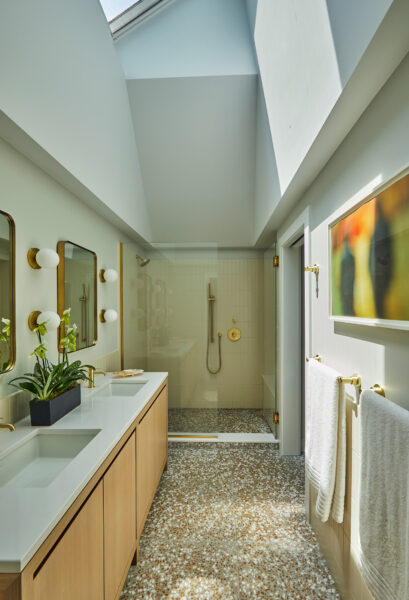
Even the primary bath was a source of creative fun. The floor is meant to evoke a tartan rug, so she hand laid 3-by3-inch gray, white, and black tiles to achieve her desired effect.

For Hunter, the home has served a dual purpose: It’s the family home of her dreams, and—oddly—it’s also been a design incubator, of sorts. “I think it’s hard to convince a client to do many of these things,” she says. “Being able to execute them in my own home has given my clients the guts to do it in theirs. I was happy to be a guinea pig!”

The Art of Joy Brown Sculptures: Whimsy, Clay, and Healing

Joy Brown sculptures bring whimsy and healing through clay, blending humor, spirituality, and Japanese-inspired artistic tradition.

By Frances Chamberlain
Photographs by Rana Faure

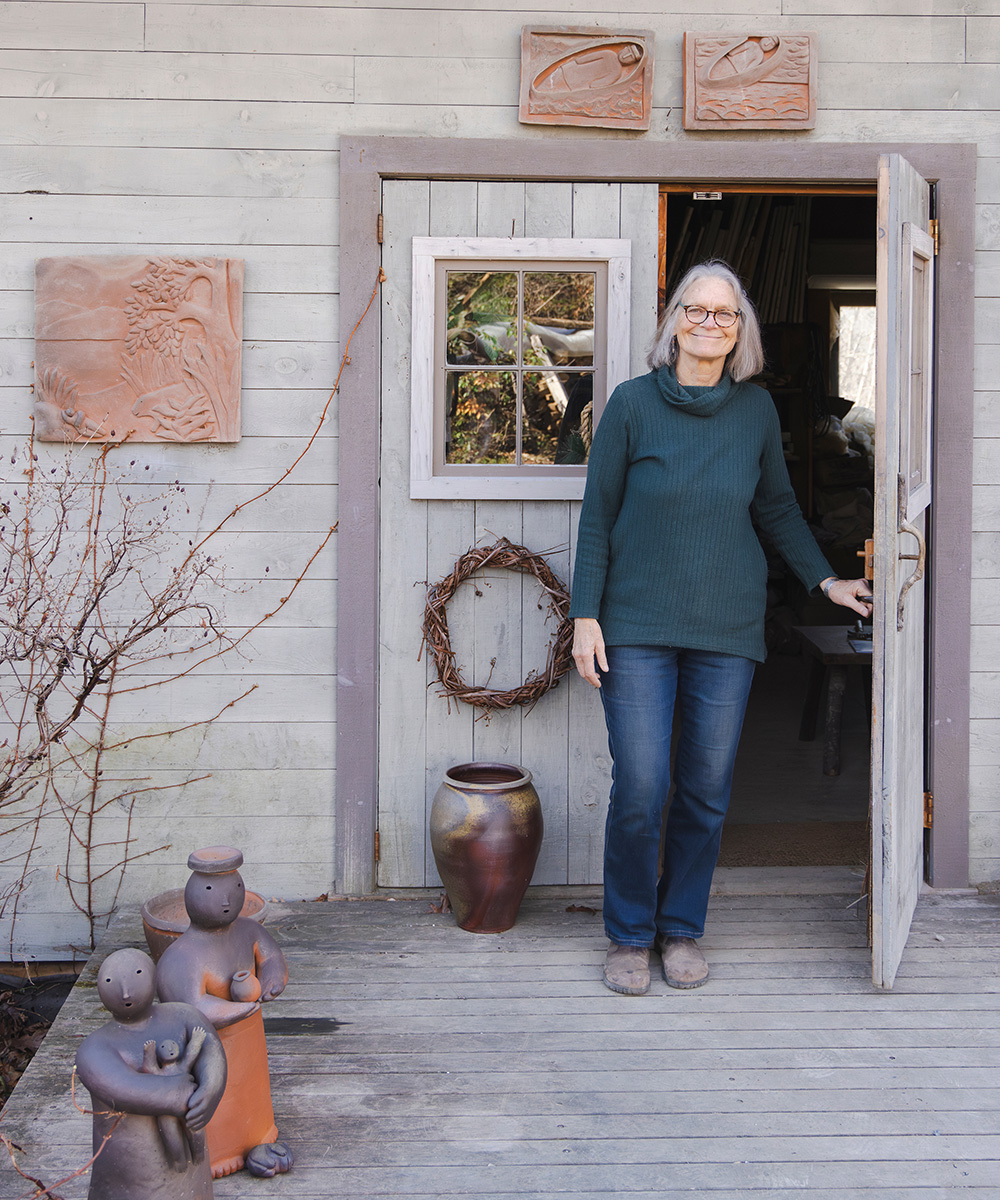
Joy Brown’s human-like sculptures are watching you, everywhere you go. Their benign faces are not blank, but whimsical, humorous even. The faces of the large oven-fired  figures have deep-set eyes and small open mouths, and seem to watch as people walk around them. 

“I work in clay because it makes me happy. Calm, grounded,” Brown says. “And I think when other people see them, they feel happy—and that in itself is a healing force in this old world.” 

“When I saw my big pieces in New York City on Broadway, with everybody going about their business at crosswalks, and cars passing by, nobody paying any attention to the sculpture … The sculpture sat there quietly, watching all this going on. The sculptures are representative of that part of us that’s witnessing everything we do, our spirit self, watching, aware.”

Her work, Brown says, embodies a wholeness and presence. No doubt, a lot of her experience came from training with a traditional Japanese artist.

“At first, in Kyoto, in a very rigid medieval environment, I made sake cups. I helped in the studio, and then threw on the wheel. It was a kind of meditation, an intuitive connection.”

After Kyoto, she went to study with Shige Morioka in the mountains of Wakayama, Japan. “I gained a broad understanding of ceramics. It had a profound impact on my work.”

Brown had grown up in Japan, where her missionary father had started a hospital. After living in Osaka, she studied in the U.S. and then returned to focus on ceramics in Japan. After her apprenticeship she came to Wingdale, where she says she got over being shy because she had to sell her work.

After producing so many sake cups in Japan, her work evolved into small animals. “They were little spirit forms, not aware of age, gender, culture, or skin color,” she says. “They touched a human part of myself.”

She met Denny Cooper, her mentor, in 1993. “He made me see my spiritual way in a community.” They formed Still Mountain Center, a nonprofit, and opened the studio to busloads of schoolchildren. Teaching in front of groups of children through Still Mountain, she explains, brought another good skill.

“It’s healing for me, once a sculpture goes out,” she says, “and a healing thing when people see a sculpture. You put a clay cup to your lips, and it’s healing. Clay is what people have done for tens of thousands of years.”

At her studio, she uses a woodfired kiln to finish her work. “It’s a nine-day process, in a 30-foot-long tunnel, she says. “It starts like a campfire; after four days, we’re putting wood in every 15 to 20 minutes.” The front is bricked up and wood goes through vents.

“Firing is like asking the universe for what you need,” she says. “Working together is what brings people together.” She needs a lot of friends to help manage the firing for the nine days.

Her partner, Jimmy Griffin, doesn’t help with the firing but he’s essential in many other ways. “He’s a masterful, self-taught engineer, and can move sculptures that weigh from 1,200 to 1,800 pounds,” she says. “In his spare time, he likes to rebuild vintage Volvos.”

Brown is part of this year’s Clay Way Studio Tour, which will take place on October 18 and 19,  from 10 am to 5 pm. She is also the subject of a documentary, The Art of Joy Brown, by Eduardo Monte-Bradley.

The film about Joy’s work, “The Art of Joy Brown” has been accepted at the Mystic film festival and it will screen Otober 4, 11:30 AM in Mystic.

joybrownstudio.com; clayway.net

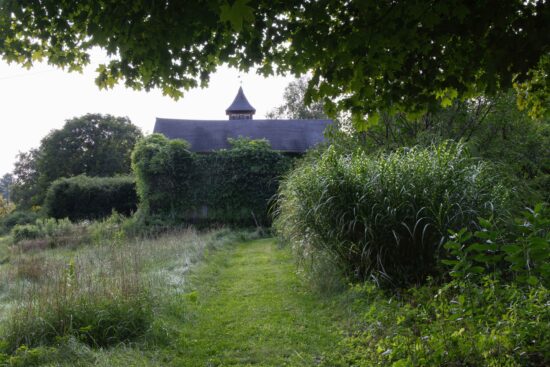
From Tree Stumps to Secret Garden in Cornwall

Debby and Barton Jones transformed storm-ravaged land in Cornwall into a lush, pastel-hued English-style garden retreat.

By Jane Garmey
Photos by Rana Faure

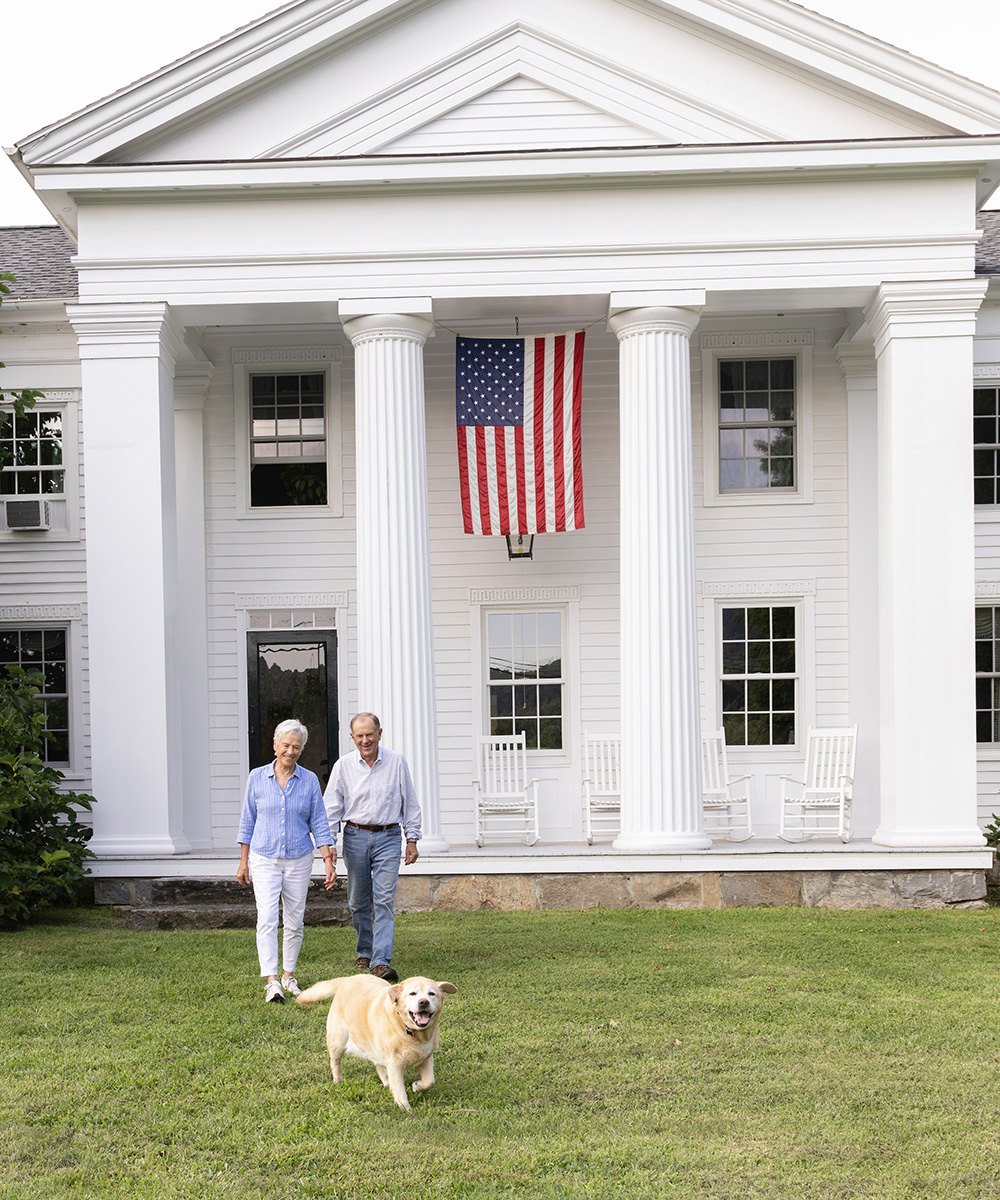
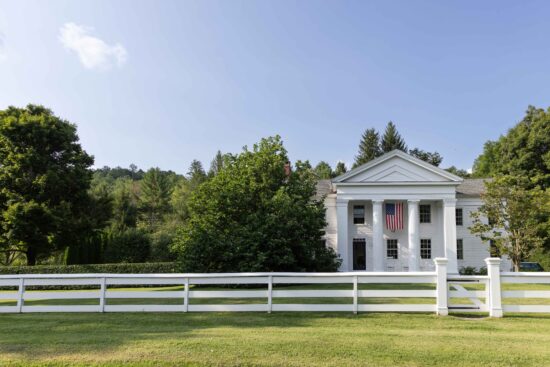
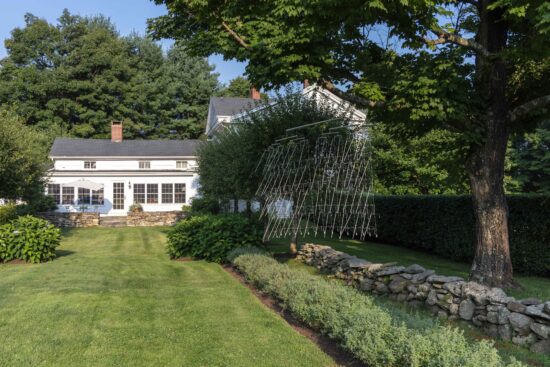
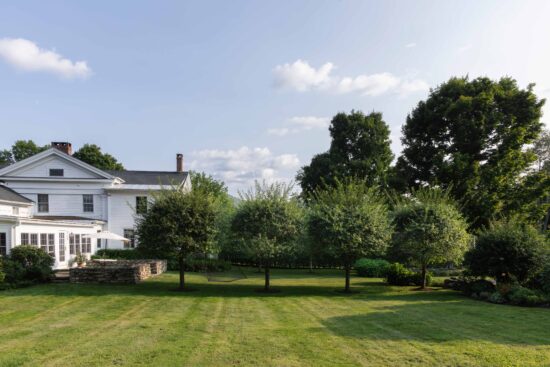
It is almost 25 years since Debby and Barton Jones moved into their 1836 Greek Revival  house in Cornwall. Known in local circles as “The White House” on account of its five imposing front pillars, the property had languished on the market for two years, as the house needed work. In addition, a freak tornado that swept through Cornwall four years earlier had demolished the garden, and felled almost every tree on the property. All that remained were 30 unsightly tree stumps and two small rock pools. 

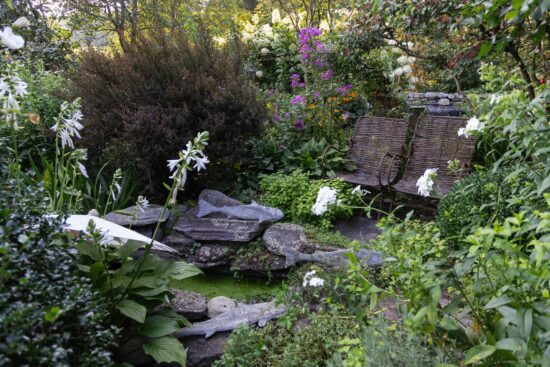
The Joneses were not, however, discouraged either by the condition of the house or the lack of a garden. Debby, an artist and designer by profession, decided to turn those dispiriting tree stumps into building blocks for a new garden, and chose the smaller pool to be the starting point for a series of pathways to wind around the stumps and, in so doing, to carve out a number of undulating flower beds.

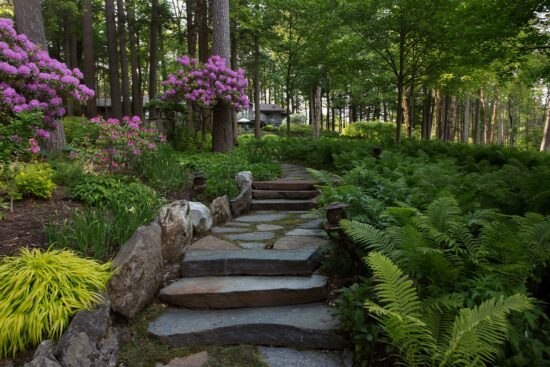
Initial plantings were determined by what would grow close to the stumps. Clematis worked well (two of Debby’s favorites are Etoile Violette and Guernsey Cream.) Since the land is on a gentle incline, she fashioned a set of stone steps to reach the highest point and planted a long row of arborvitae, now grown huge, along the far side of the slope. 

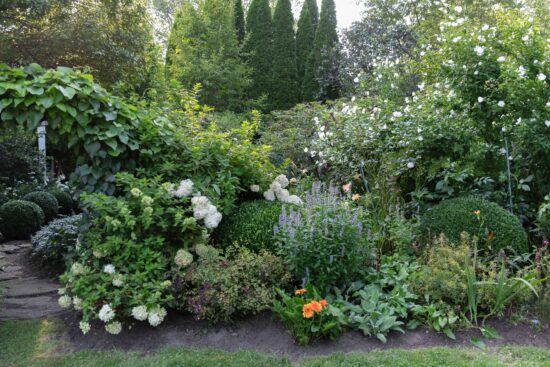
Over the years, the plants have grown and multiplied. What began as a way to disguise some unattractive tree stumps is now a secret garden full of labyrinth-like twists and turns—and a treasured refuge for its owners. Vertical interest is provided by three arbors laced with clematis and roses, four white posts rescued from the dump and topped with bird houses, and even a decorative antique French bottle drying rack—an impulse tag sale buy. 

Interspersed with orbs of boxwood, the color palette is predominantly pastel, and in early summer pinks, lilacs, and whites predominate. By mid-summer this extends to yellows and purples with a profusion of delphiniums, foxgloves, iris, lilacs, alliums, peonies, salvias, lilies, and lady’s mantle. But what Debby treasures most are the roses, her particular favorites being Fantin-Latour, Félicité Parmentier, Souvenir de la Malmaison, and Constance Spry.  

When she first began growing roses, Debby ordered 30 bare-rooted bushes from Canada. Unable to plant them right away, she left them in water and, to compensate for the delay, added far more than the prescribed amount of the grower’s recommended growing aid. “A horrible error,” she recalls. “For four years, they grew and grew and had enormous glossy green leaves but never bloomed.” Today, that is all past history, and the roses, still her passion, now bloom magnificently in early summer. 

A few years ago, a deer fence was installed around the entire property, ingeniously hidden from view at the front of the house by being enmeshed within a hedge of cornus mas. Another inspired addition was an elegant crab apple allée that breaks up a large expanse of lawn and complements the formal style of the house. Also new is a kitchen garden outside the back door. Jubilantly planted  with tulips every spring, it later sports dahlias, castor beans, and other jungly plants—their  vibrant colors an intentional antidote to the delicate blooms of late spring and early summer.

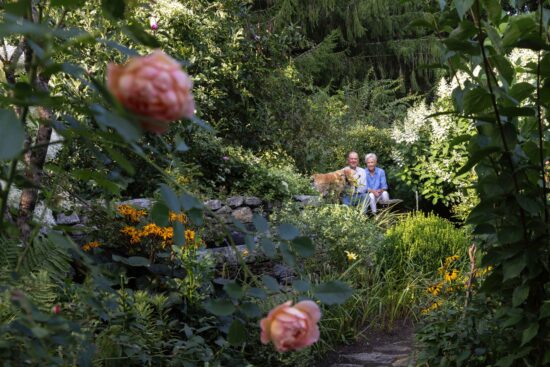
“I love English cottage gardens. No yuccas for me,” is how Debby defines her horticultural style. While Bart mixes compost, drags stones, and takes charge of heavy jobs, assuming the role, as he puts it, of the family mule, Debby takes the lead on color, scale, and design. A harmonious division of labor that makes for a pastoral and picturesque garden—and not a yucca to be seen!

A Storied Boathouse on Washinee Lake

Anne MacDonald transformed a historic stone boathouse on Washinee Lake into a stunning summer retreat and gathering space.

A Historic Lakeside Gem, Lovingly Restored

By Tara Kelly
Photos By Colin Bazzano

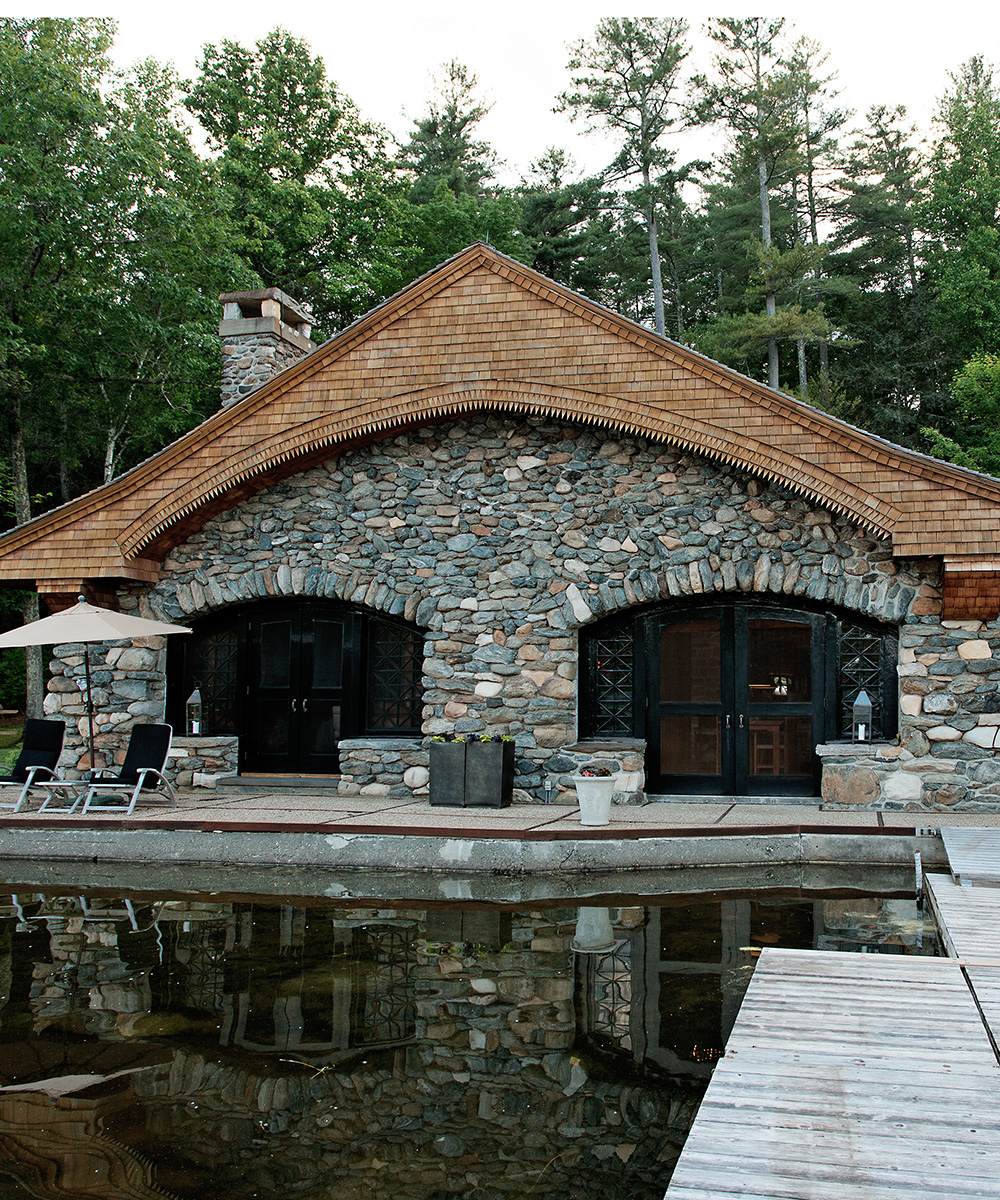
Way back in 1986, Anne MacDonald was living in an old farmhouse on Taconic Road in Salisbury, adjacent to Washinee Lake, when she saw the stone boathouse for the first time. “I used to kayak by there, and thought, wouldn’t it be spectacular to live on the lake. It was the most wonderful building.”  

It had been built by the Scovilles, a centuries-old family with extensive land holdings on Taconic Road and surrounding the Twin Lakes. They owned several grand estates, with many accessory buildings, many of them made of stone. “Depending on whom you ask, the boathouse was built in the early to mid or late 1800s,” MacDonald says. 

The one thing that is not in dispute is the elegance and allure of the building. 

When MacDonald acquired the property in 1999, the boathouse had sat mostly unused for many years. And it came with a 1960s-style modern house. “It was low-ceilinged, despite a high-pitched roof line like a ski lodge, and filled with Formica and chintz,” she says. 

“I was unsure how to renovate the boathouse. So many people knew the building. It seemed challenging. So, I did the house first, then started on the gardens, and literally worked my way down to the shore.”

 By the time she started on the boathouse, MacDonald had assembled a team of designers, artisans, and craftsmen she trusted. Cassidy & Teti, a design team based in Salisbury, architect Pat Scarlett, and Rick Wells of Undermountain Builders, all worked on the project. They were able to retain much of the original interior. 

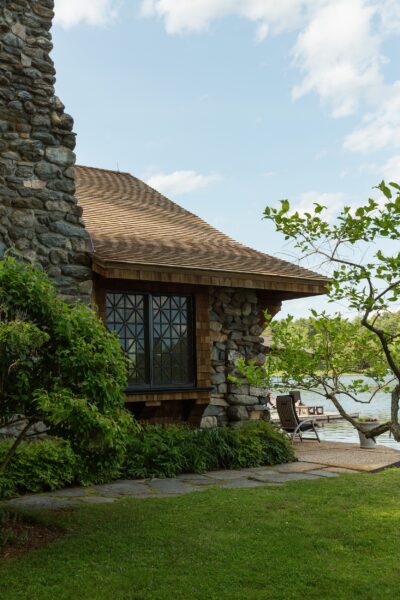
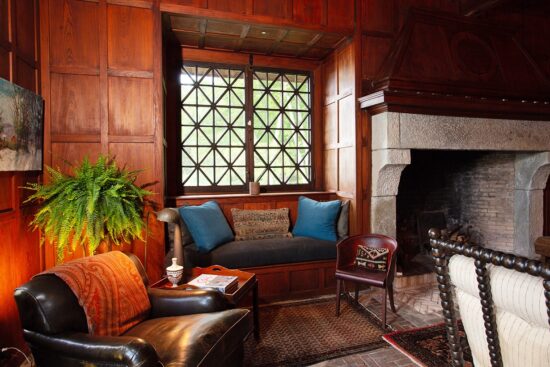
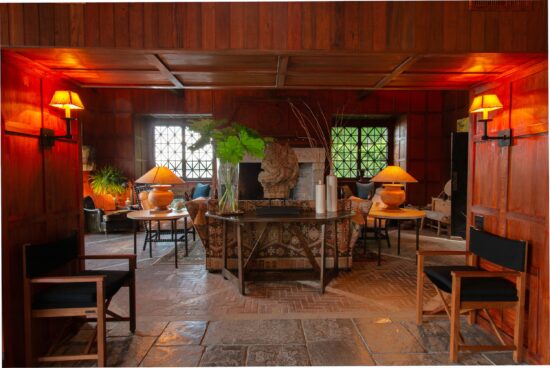
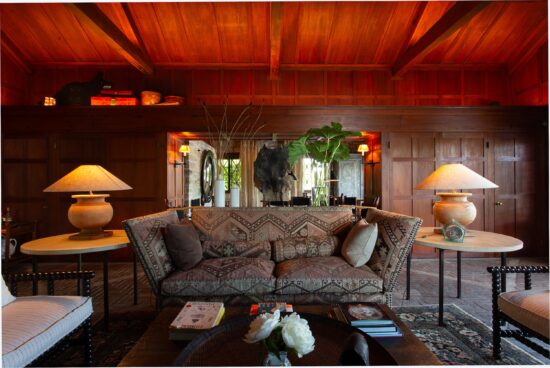
“The fireplace, windows, brick floor, and wood paneling in the living room area  needed to be deep-cleaned, and the wood restored,” MacDonald says. “Dave and Tyler Beaujon, put up scaffolding like they were painting the Sistine Chapel. They still take care of the wood today.”  

The two-bay structure and footprint are the same, but now, where boats used to be stored for the winter, there is a dining space with a kitchen and bath (creatively tucked out of sight behind a stone wall), inspired by something MacDonald saw in a restaurant in Singapore. 

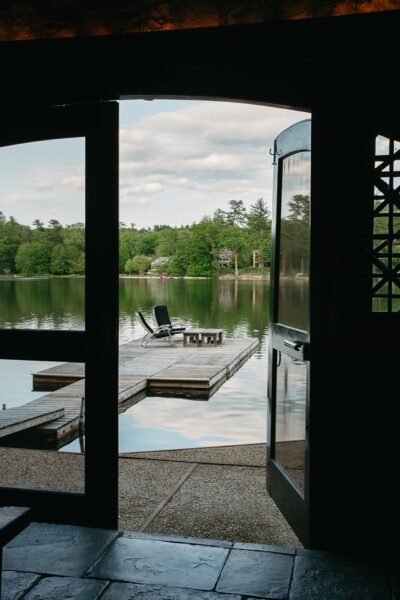
While it does have heat, she uses it mostly in the summer, for dramatic dinner parties, and weekend lunches—invitations coveted by her friends. But for all waterside passersby, the stone boathouse looks almost the same as it did more than 100 years ago.

And MacDonald, who rowed in college and did club rowing when she was in business school in England, has taken up the sport again. “When I moved here,” she says, “I would watch the boys from Salisbury School rowing, and say to myself, I really should get back to it.” Now she’s a member of the Salisbury Rowing Club, and keeps her single-seat wood scull at the Salisbury School boathouse. 

Except during COVID.  “My friend Dick Kirber and I kept our boats in my boathouse. He would go out at 6 am and I would go out at 8. The boathouse got a chance to be a boathouse again.” 


Danish Design Gets Bold in a Sharon Forever Home

Architect Daniel Heighes Wismer transforms Danish minimalism with bold layers in a Sharon home designed to last forever.

Photographs by John Ellis

Portrait by Theo Coulombe

By Cynthia Hochswender

In general, the idea of Danish design is understated, mellow, austere; it often creeps into mid century modern interiors, with their emphasis on space, light, and cool vibes. 

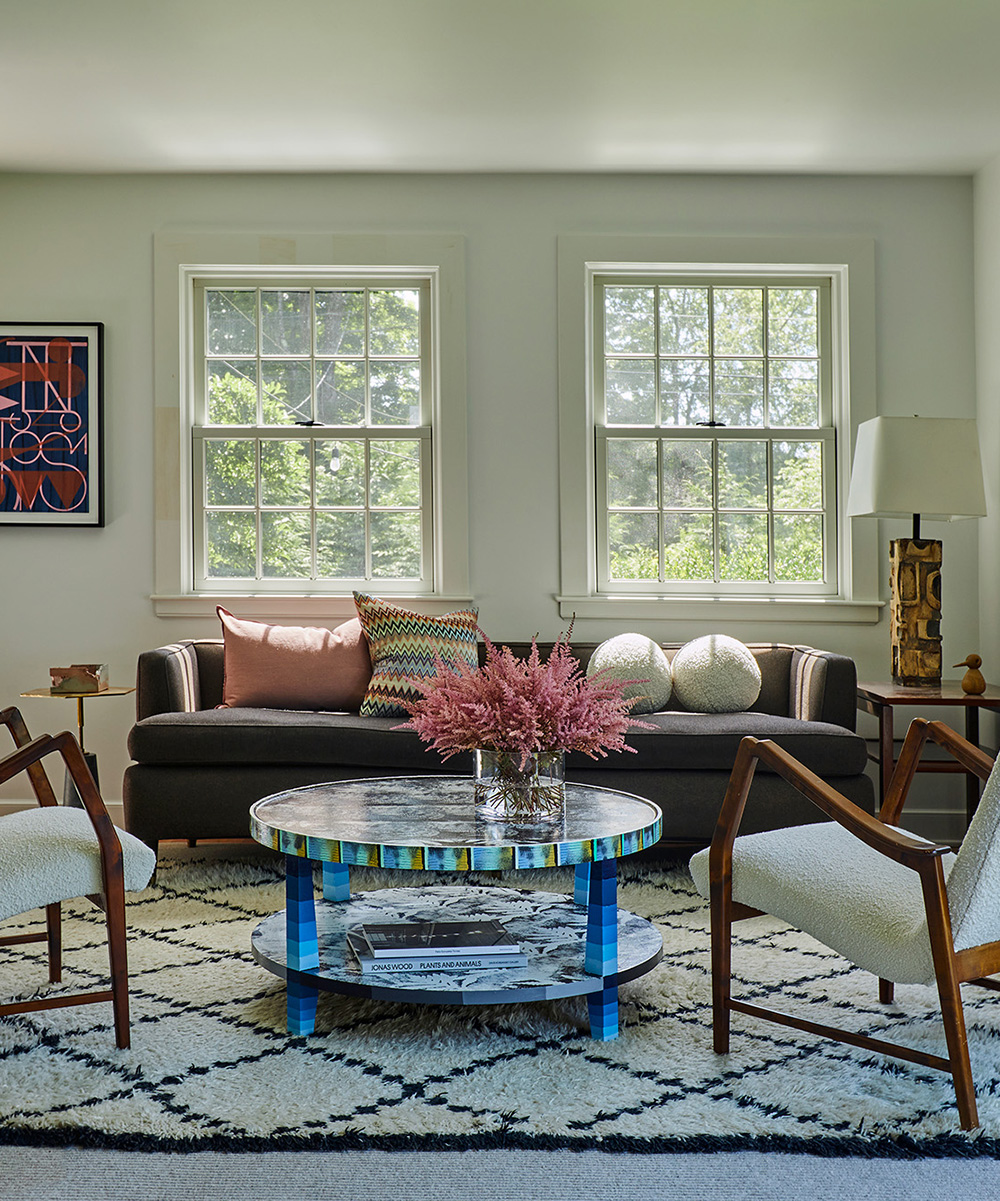
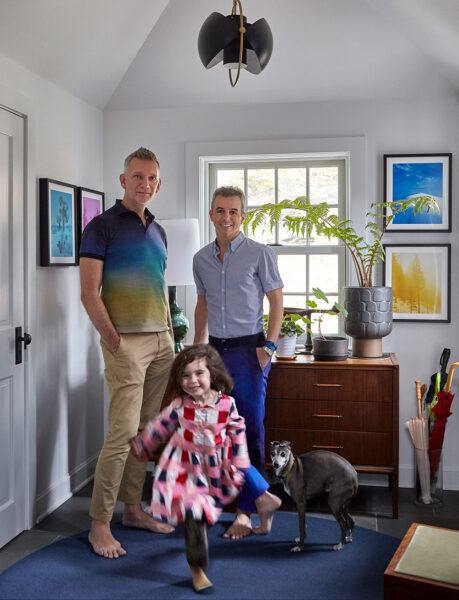
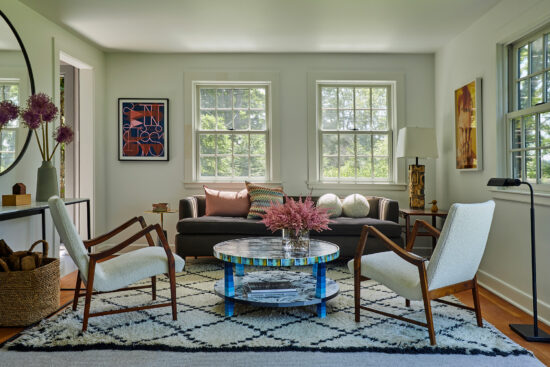
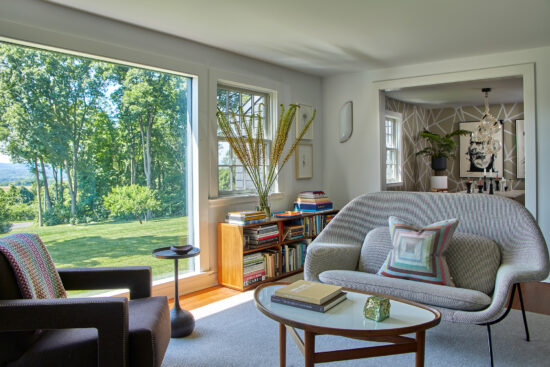
But in the hands of designer/architect Daniel Heighes Wismer—and especially at the home in Sharon that he shares with husband Travis Wismer and their young daughter—Danish becomes a neutral palette that allows for layers of pattern, texture, and attitude. If most Danish design is like toasted seed bread with a swipe of butter, the Wismer house is like a cherry Danish.

“We’re not afraid of color,” says Daniel, who is a partner in the Manhattan-based firm Dufner Heighes. Fear is not, in fact, apparent anywhere in the mix of fabrics, patterns, artwork, wallpaper, floor coverings—all of which blend seamlessly.

One of the triumphs of this mix is that the spouses found a way to take chances with their interiors without straining their relationship. Their method: They agree on a concept, then Daniel presents options.

“I’m an estate manager, so I know what’s out there,” says Travis. “But Daniel has so many more resources.”

Both share a strong sense of space and how to use it. And in fact, although the decor is what hits the eye first, the Wismers primarily like to talk about the spaces in their house, and the changes they have made to it. 

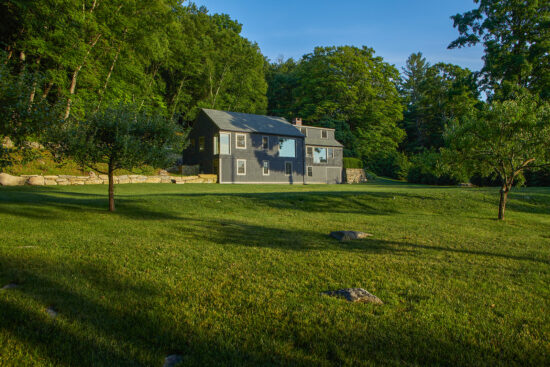
When they bought their 1940s Cape Cod in Sharon, the year was 2016, and the house was 1,000 square feet. They didn’t yet have a child. They were still using the property as a weekend escape from the city. 

Then 2020 came along, and brought with it COVID-19—and the birth of their daughter. 

“We sold our apartment in the city, and began a renovation up here,” says Daniel. “We added two bedrooms and two bathrooms, and put in a big playroom for our daughter, an office for Travis, and a gym.”

They also adjusted the flow of movement through the house, by reorienting the entry so it faces the road (and by adding a foyer), and moving the kitchen to be close to the front door. 

“The house is now set up so that guests enter, come through the kitchen to get a drink, and say hello,” explains Travis. “Daniel makes elaborate dinners, so he’s always in the kitchen when people arrive. 

“Then we go to the dining room, and after dinner we end up in the study, sitting on this enormous sofa that Daniel designed.”

The couple had furnished the house and made some adjustments when they first moved in, nine years ago. During this more recent and extensive renovation, the Wismers consciously chose strategies and products that they truly loved. 

“We’d think, ‘If we do this, then it’s a house we’d like to live in for five years,’” Daniel recalls. “Or if we do this other thing, then it becomes our forever house.”

The tipping point: “When we moved the kitchen, it became our forever house.” —dufnerheighes.com

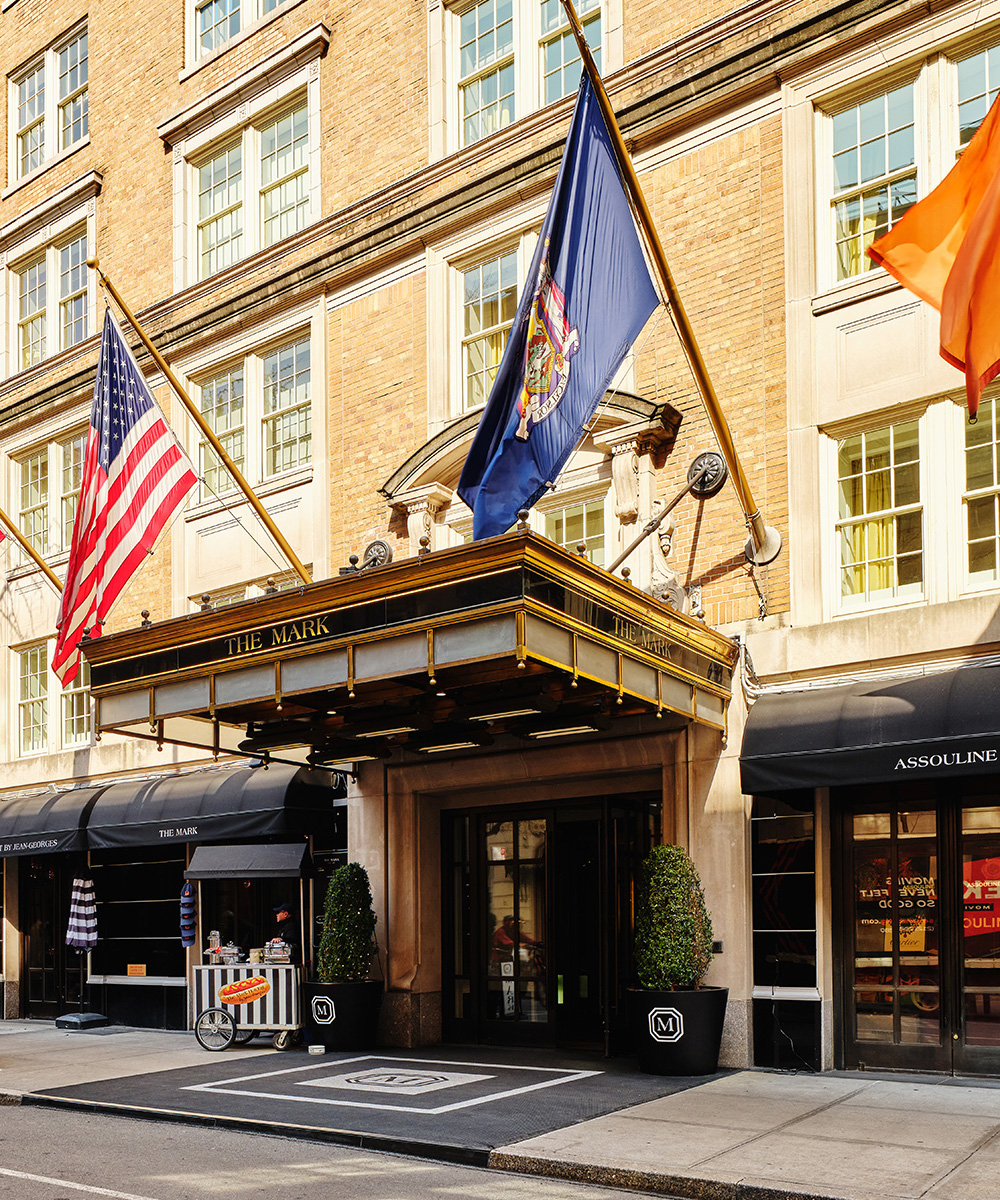
Luxury Mini-Break in NYC: Stay at The Mark Hotel

Experience art, fashion, and fine dining at The Mark Hotel—NYC’s luxury boutique escape just two hours from Litchfield.

By Andrea Valluzzo

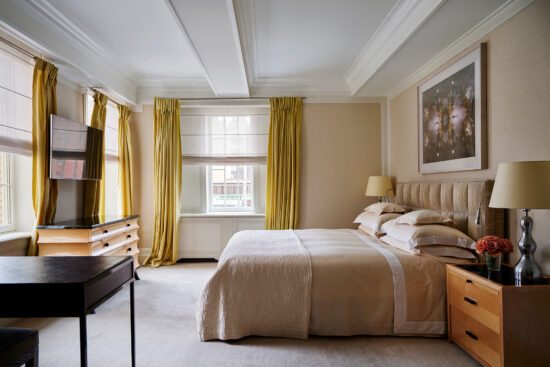
Manhattan is an easy two hours from most parts of Litchfield County, making it a destination for quick trips in: theater, business, lunch with friends. But with all those quick trips, it’s easy to forget that New York is one of the world’s great cities. Why not just go in for a mini break, and treat yourself to a luxury stay at one of the world’s greatest hotels: The Mark, nestled in glamour central, at Madison and 77th.

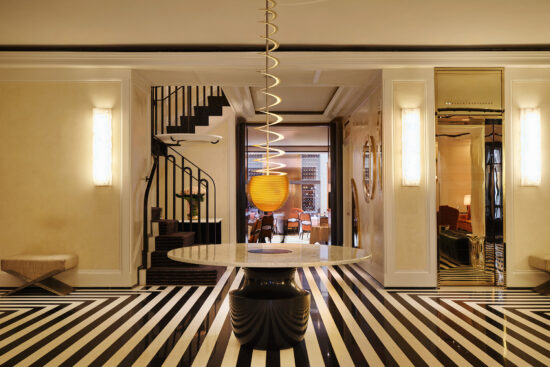
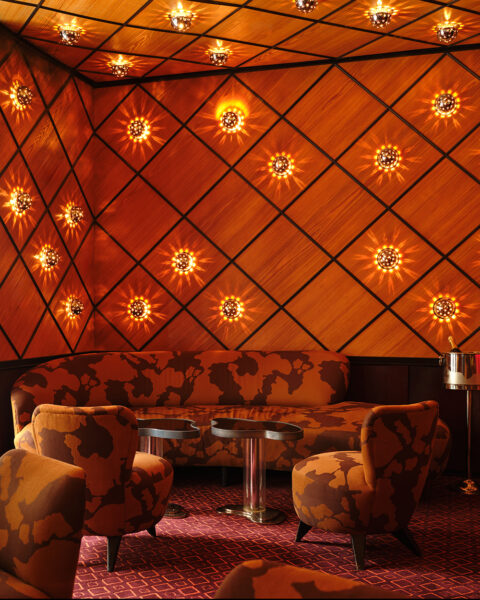
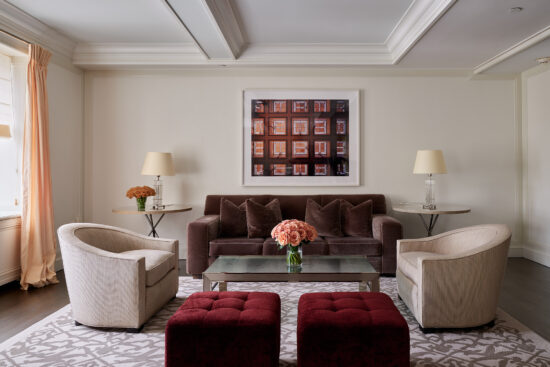
Stepping into the lobby, which is smallish but makes a big impression, visitors are immersed in a universe of curated design. The black-and-white striped floor visually encourages you to pause—and admire a striking Ron Arad pendant light, suspended over an Eric Schmitt table. Orchestrating this aesthetic was designer Jacques Grange, who reimagined the hotel in 2009, collaborating with leading design names. General manager Etienne Haro describes the lobby as “a work of art,” featuring bespoke pieces designed for The Mark by Mattia Bonetti, Paul Mathieu, and Anne and Vincent Corbière. Such cohesive collaborations extend throughout the hotel, from custom Vladimir Kagan curved sofas and armchairs in the bar and guest rooms, to a partnership with famed hairstylist Frédéric Fekkai, whose main salon is here.

Owned by Izak Senbahar and his Alexico Group, The Mark exudes the essence of an international boutique hotel, with a strong Parisian vibe. Even the hallways smell French, courtesy of master perfumer Frédéric Malle’s fragrance, “Jurassic Flower,” the hotel’s custom scent.

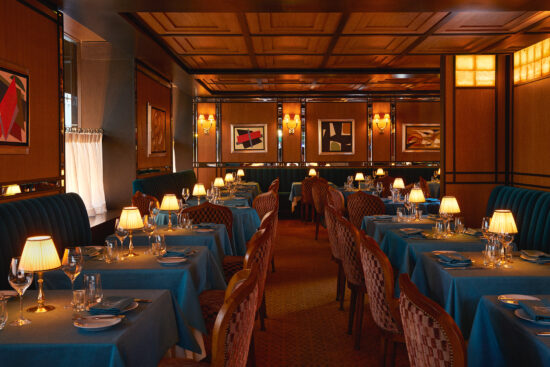
World-renowned chef Jean-Georges Vongerichten creates imaginative dishes for The Mark restaurant, including the popular Crispy Salmon Sushi with chipotle mayonnaise and The Mark Cheeseburger with black truffle dressing. Caviar Kaspia, the Paris institution that, like The Mark, debuted in 1927, opened its first East Coast location here in 2023. It’s famous for its twice-baked potato with caviar—but in a nod to its New York setting, caviar bagels are a popular option, available on weekends. Guests can even host a dinner party or cooking class in their room, orchestrated by Jean-Georges and his team.

French luxury book publisher Assouline has a shop at The Mark, featuring beautifully designed hardcovers on topics such as fashion, travel, culture, and more.

Guests at The Mark can take advantage of New York-only outings, such as chartering a Hudson River cruise on the hotel’s 70-foot sailboat. Simpler pleasures can include a $6 hot dog from the Mark’s haute hot dog cart, or a catered picnic, prepared by Jean-Georges and staff, to enjoy in the park. “The picnics connect our guests to the best amenity of New York City—Central Park—in a way that is refined, and connected to who we are as a brand,” explains Haro.

Connecticut travelers will be delighted to know their furry friends are welcomed in style, with plush pet beds and Jean-Georges’ “spoiled dog menu.” 

The Mark transcends the hotel experience, turning it into a destination that offers carefully crafted experiences and delightful surprises. “We are a hotel that is at the intersection of culture, fashion, and design,” Haro says.

Belden House & Mews: Litchfield’s Luxury Boutique Hotel

Discover Belden House & Mews, a historic-meets-modern luxury hotel in Litchfield offering design, wellness, and exceptional service.

Belden House & Mews

Reflecting the Unique Heritage of a Historical Landmark

By Christopher Stella
Photos by Read McKendree

We want to hold a mirror up to the region, and help guests find their way through it in a way that is comfortable and enticing,” says Anthony Champalimaud, owner of Belden House & Mews, the Litchfield luxury hotel that opened in March 2025. From its artisanal touches to personalized services, it presents a gorgeous reflection of a community steeped in history and creativity.

Initially built in 1888 as a residence for Dr. Charles Belden, Belden House sits on three acres among the historic mansions of North Street in Litchfield. It is now owned and operated by the team behind Troutbeck in Amenia, N.Y., an expansive 250-acre estate hotel, and recipient of a prestigious Michelin Key. “The properties share a historical DNA and the same perspective on hospitality,” says Champalimaud. “If Troutbeck is a country house hotel, Belden House & Mews is its High Street counterpart.”

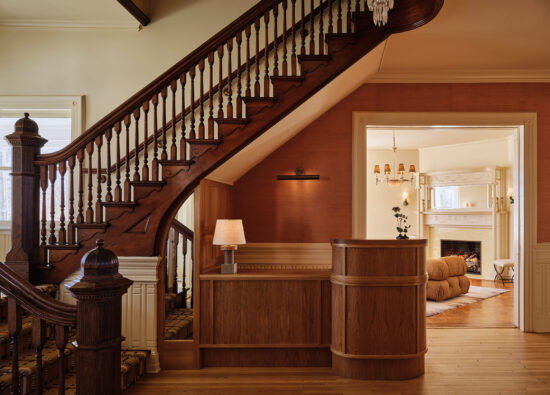
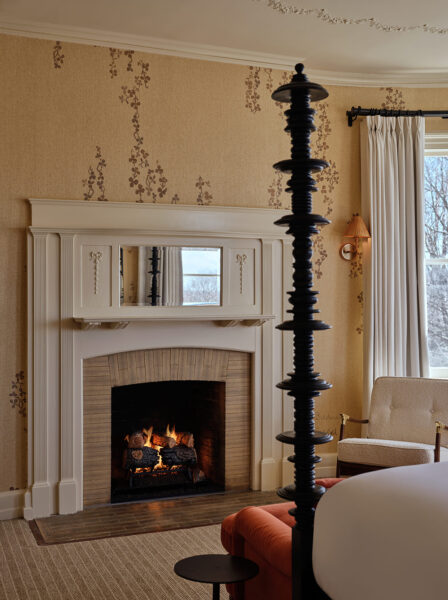
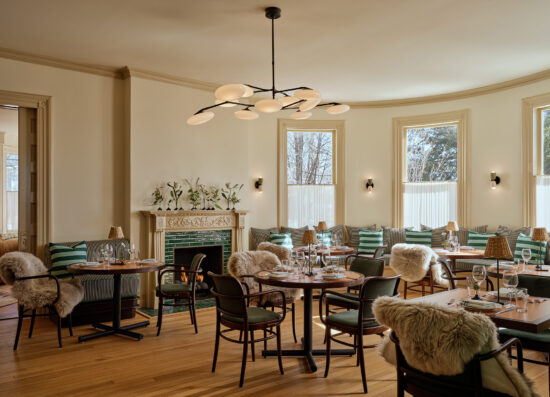
Upon entering Belden House, visitors will find a cozy foyer flanked by an elegant library. Beyond is a spacious living room illuminated by large bay windows, a light-filled dining room, and a stunning bar crafted by White Dog Woodworking. Guests who dine at Belden are treated to seasonal cuisine by Chef Tyler Heckman—an alumnus of New York City’s El Quijote, Ferris, and Le Turtle, and a Connecticut native—who builds his menu from regionally sourced vegetables, protein, and especially seafood. 

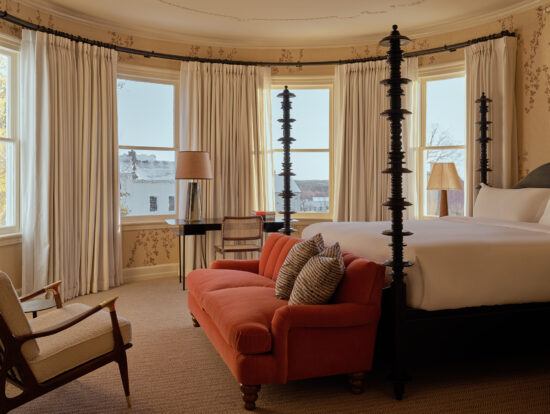
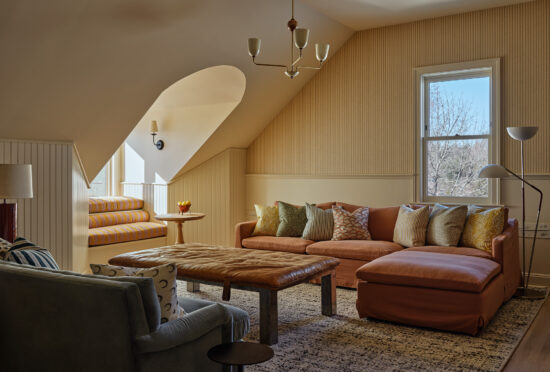
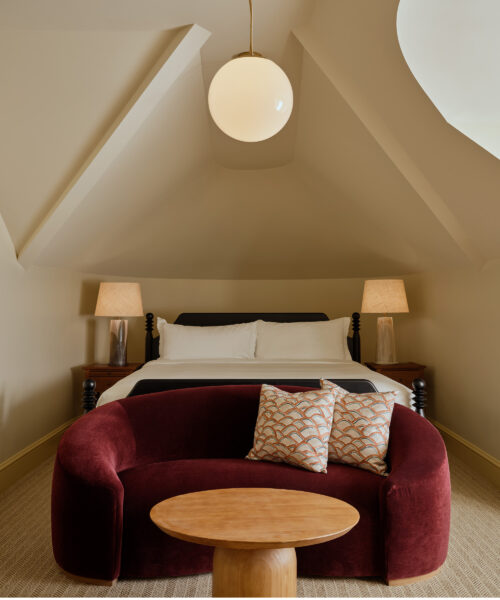
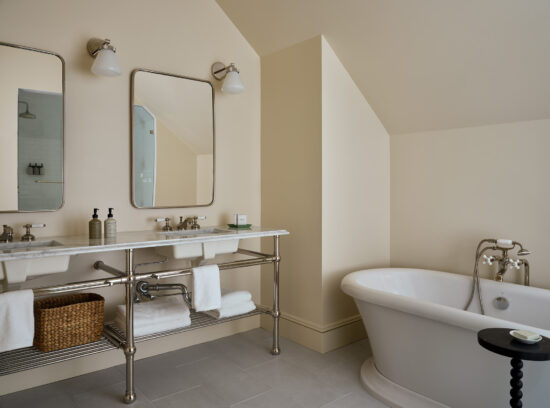
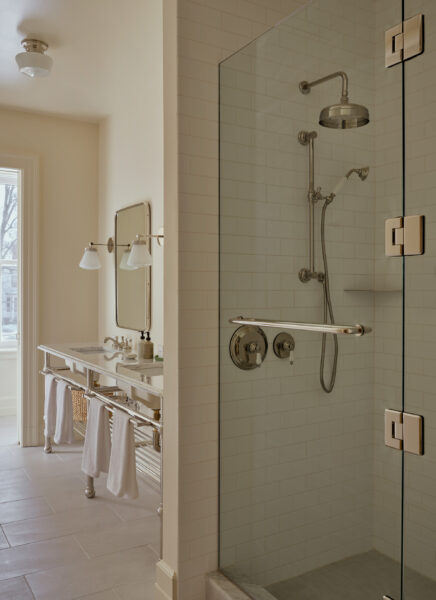
Upstairs, the 10 bedrooms possess stunning historical elements, such as original moldings, fixtures, and tiled fireplaces—and updated bathrooms with heated floors, marble vanities, and products by Wildsmith, a UK-based, cruelty-free luxury skincare line. The top floor boasts a 2,100 square-foot suite with its own dining room, and a private balcony that overlooks the town.

Each room, the creation of Champalimaud Design, is textured with distinctive wainscotting, luxurious upholstery, and custom grasscloth wallpaper by twenty2 wallpaper, its patterns based on design elements found throughout the house. There is something to be discovered in every nook. For example, the signatures of the building’s original craftsmen—found on the woodwork during the renovation—are reproduced on the walls of select rooms. “The property and hospitality experience need to remain interesting; that’s essential to us,” notes Champalimaud. 

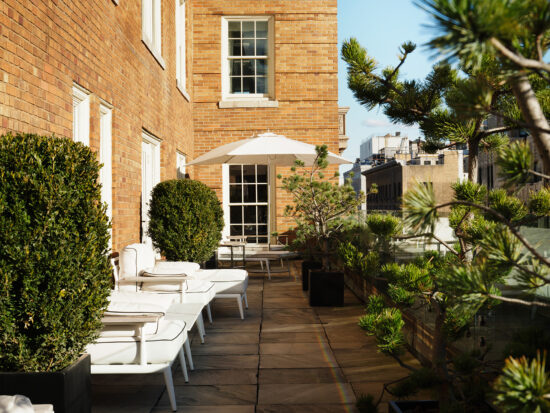
As Belden House evokes Litchfield’s Victorian past, the Mews, set on the grounds behind it, reflects Litchfield’s modernist era (in the mid-20th century, luminaries including Marcel Breuer, Alexander Calder, and Eliot Noyes were drawn to the town, which became the setting for much of their iconic work). Built in 1959, it now contains 21 guest rooms, seven of which are accessed via their own private terraces. The rooms nod to the town’s design heritage— for example, featuring Breuer chairs—as well as contemporary local artisans such as Dumais Made, whose fixtures illuminate them. The Mews also contains Bathhouse, a wellness center featuring fitness equipment, a sauna and steam room, and an impressive Japanese Ofuro tub for hydrotherapies. The facility offers acupuncture, massage, and other services to guests by appointment only, to maintain the intimacy of their experience. Just beyond the Mews, visitors can take advantage of the seasonal outdoor pool. 

Guests are indeed well-cared for, having access to optional butler service 16 hours each day, valet service, and a BMW they can drive, to explore locally. “You are met at the front step when you arrive, and looked after throughout your stay,” says Champalimaud, who hopes guests will venture beyond the property to explore the region’s beauty. “A good hotel provides more than a bed, meal, and luxurious stay; it builds relationships and serves the community,” he continues. “We want guests to leave with an appreciation for this part of the world, and a desire to come back.”

Belden House & Mews, 31 North St., Litchfield  

beldenhouse.com

Current Issue
March / April 2026
Our Kind of Healthy
The Health & Wellness Issue
Subscribe Now
.
  • STAY IN THE KNOW

    Your weekly guide to can't-miss events, hidden gems, and local favorites in Litchfield County. Sign up now for curated things to do, eat, and explore—delivered every week. It’s free. It’s local. It’s essential.

  • Karen Raines Davis