


May 4, 2026
Finding joy and calm in Litchfield’s wild spaces
By Wendy Carlson
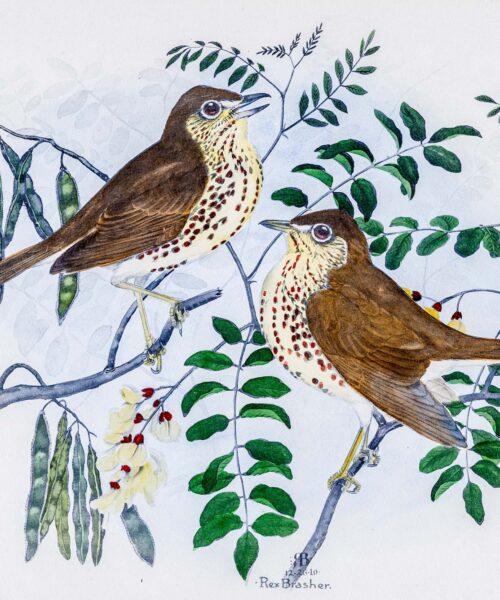
Illustrations by Rex Brasher
If the early morning chorus of birdsong outside your window sounds more like a racket than a symphony to you, it’s time to reconsider. Turns out that tuning into the avian world can make us happier. New studies have shown that birding, the act of observing and listening to birds, can reduce anxiety, stress, and depression by directing our attention outward. The therapeutic practice of observing birds, known as ornitherapy, has been likened to forest bathing and sound bathing, which promote mindfulness, strengthen our connection to nature, and inspire a sense of wonder, ultimately leading to relaxation and a sense of well-being.
So, maybe there’s some truth to the expression “the bluebird of happiness”.
“I think that almost everyone can appreciate the beauty, wildness, and charm these animals bring to our lives, whether we live in an urban landscape or on the slope of a mountain somewhere. Their songs move us, comfort us, and arouse curiosity in us,” says Sharon Audubon naturalist Bethany Sheffer.

You don’t have to be a globetrotting bird enthusiast to reap the health benefits of birding. The 4,000- acre White Memorial Foundation in Litchfield, with its diversity of habitats including woodland, water, six miles of river frontage, and 40 miles of trails, is rated one of the top five birding hot spots in the state. The Foundation lists 240 bird species and is known for its nesting warblers, with 15 or more species breeding.
Litchfield County is also home to two national Audubon centers: The Sharon Audubon Center and Miles Wildlife Sanctuary and The Bend of the River Audubon Center and Sanctuary in Woodbury. In spring, both host free guided bird hikes and hold monthly-themed programs like “Tech Assisted Birding.” Fee-based guided tours and private photography sessions are offered at Ripley’s Waterfowl Conservancy in Litchfield, which features more than 90 species of rare and endangered birds.
If you can’t tell a Barn Swallow from a Tree Swallow without reaching for a guidebook, no worries. Birding has become much easier for beginners with the availability of bird ID apps and bird song ID tools that help newbies recognize species quickly and identify birds by sound. Tech has helped birding become an increasingly popular hobby in the United States with the U.S. Wildlife and Fish Service reporting that nearly one-third of adults in the United States engage in some form of birding, whether it’s observing birds in their natural habitats, creating bird sanctuaries, or keeping watch on backyard feeders.
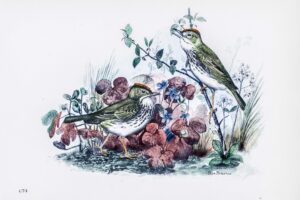
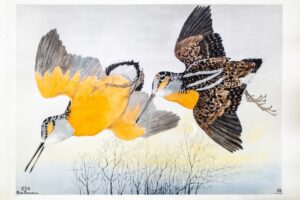
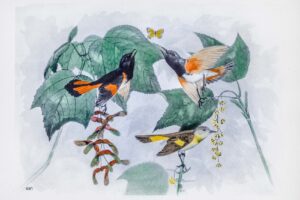
Beyond making us feel happier, birding enhances our cognitive function and teaches us patience, says Geri Griswold, White Memorial’s director. Bird watchers might start by learning species names, but move on to studying behaviors, breeding rituals, migratory patterns, and habitats. Griswold finds the stories of each bird fascinating. “You become aware of habitats and the other plants and animals that share theirs with birds,” she says. She eagerly awaits the first Woodcock, Ovenbird, Wood Duck, American Redstart, Bobolink, and Wood Thrush; and, of course, the harbinger of happiness, the Bluebird.
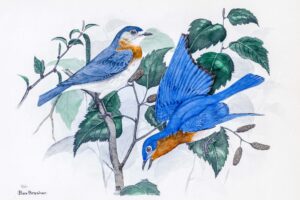
Beautiful illustrations of spring birds by Rex Brasher. In his lifetime, Brasher painted every bird species in North America; and, notably, he painted more birds than James John Audubon. Learn more about his life in Kent and view his work: rexbrasher.org
Rex Brasher, world famous artist, ornithologist, and Kent resident whose detailed artwork of birds illustrates this story, died in 1960. But bird lovers pay homage to the artist by visiting his grave at Morningside Cemetery in Gaylordsville.