



May 3, 2026
By Christopher Stella
Photographs by Amber Schulde
“I was told we were the best kept secret in Litchfield County,” says Drew Combs, head coach and director of the Litchfield Hills Rowing Club. “But that should never be our tagline, and it no longer fits.”
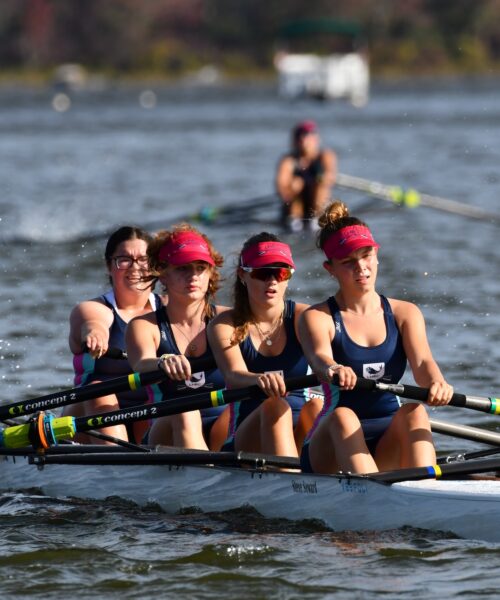
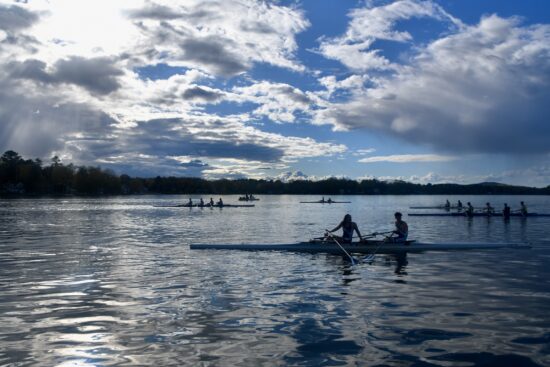
Perched on Connecticut’s largest natural freshwater lake, Bantam Lake, the LHRC has grown from approximately 40 members in 2018 to more than 390 in 2025, evolving from a modest high school program into a nationally competitive club serving athletes from ages 12 to 90. Its message is simple, powerful, and inspiring: rowing is a sport for anyone willing to put in the work.
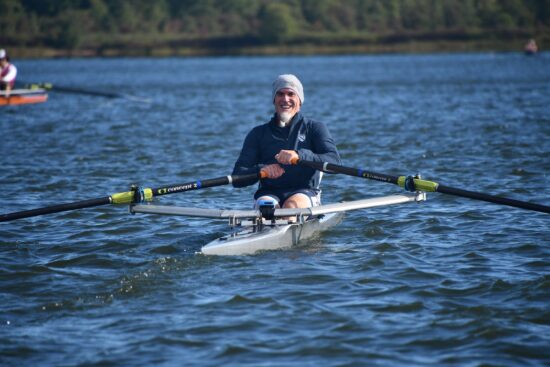
Founded in 1967, the club serves two constituencies: junior rowers (middle school and high school students) who lack access to the sport at their local schools, and Masters rowers–adults interested in rowing and competing. For both, it provides access to what has historically been an elite activity.
“It’s an expensive sport, an eightman shell can run $50,000 to $60,000,” says Greg McKim, a board member and Masters rower. “You also need a boathouse, insurance, coaches, launch boats.”
Combs arrived in 2019 with a rowing legacy in tow. His grandfather introduced the sport to Lake Waramaug in the 1940s, his father ran the regattas, and Combs grew up working them before he was old enough to pick up an oar. After rowing Division I at Marist College, he coached at Northeastern, University of Buffalo, Fairfield University, and the Kent School, among other prestigious programs. When the LHRC posted an opening, returning to Litchfield County was an easy decision.
The sport has broad appeal across age groups. “Rowing and swimming are the two most cardiovascular full-body workouts you can get,” says Combs. “They are low-impact and adaptable at any age.” He notes that about 60 percent of Masters rowers never picked up an oar before 40. For juniors, the sport rewards anyone willing to train. “I don’t do that word ‘can’t,’” says Combs. “I prefer ‘not yet.’ You can do anything, you just haven’t done it yet. We’re no longer looking for the perfect stroke, we’re looking to create your perfect stroke.”
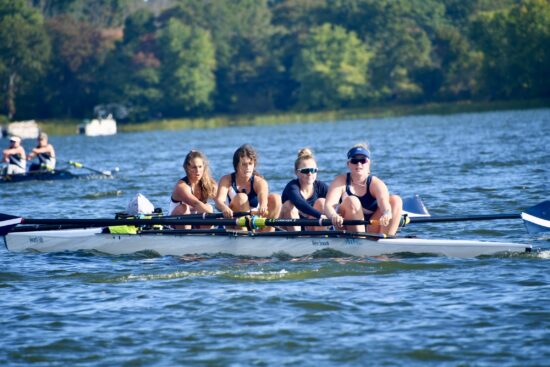
The effort speaks for itself. Junior rowers from Lakeview High School and the Forman School can letter in rowing through the LHRC, and nearly 35 percent go on to row in college, with another 30 percent of those receiving scholarships. Club members have gone on to row at Yale, University of Virginia, Vanderbilt, Syracuse, and UNC Chapel Hill, among others. A financial aid program ensures the sport remains within reach. The LHRC competes at U.S. Rowing Nationals and events as prestigious as the Royal Canadian Henley in Ontario and the Head of the Charles in Boston. At the 2025 Philadelphia Youth Regatta, the club took home 26 gold medals.
There is much ahead. This summer, the LHRC will host its inaugural Head of the Swain, a regatta benefiting the Alzheimer’s Association. The club is also fundraising to double the size ofvits boathouse, adding a dedicated fitness center where members can train on specialized erg machines year-round, along with boat storage, locker room, and office facilities.
For those curious enough to show up, LHRC offers low-cost learn-torow programs and an open invitation to ride in the coaching launch. Most who come realize more than a sport. “The reward for me is tenfold. It’s friendships, it’s camaraderie,” says McKim. And if nothing else, there is always the water. “At the end of the day, you’re just messing around in boats,” says Combs. “It’s the most fun thing you can do.” —litchfieldhillsrowing.org