


June 28, 2026
By Alexandra Mazza
Illustrations by Shannon Blanton
In the summer of 1776, as ink dried on the Declaration of Independence in Philadelphia and the young nation fought for its survival, the farm families of Litchfield County were doing what they did every night: pulling a cast-iron pot from the hearth and ladling out dinner.
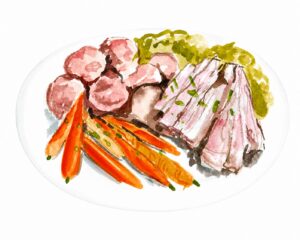
In the warm months, the meal was lighter and brighter than its winter counterpart. The brine barrel in the cellar stayed sealed, and the table filled with what the garden, the river, and the woods could provide. A summer supper might begin with fresh greens, peas, and new beets from the kitchen garden, alongside a piece of beef or pork too tender to bother salting. Trout from the Housatonic, eels, and the occasional partridge or rabbit from the surrounding hills rounded out the plate.
Salt meat still anchored the colonial diet, a cornerstone of tavern, military, and mercantile cooking in the days before refrigeration. But summer offered a brief, welcome reprieve. “A tavern or a large farm family might have a brine barrel in the cellar in which salt beef was kept for weeks.” In June, July, and August, that barrel could rest.
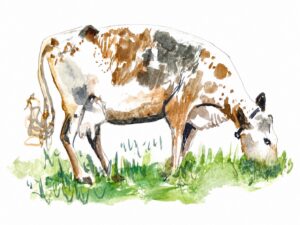
In Litchfield County, cattle were central to the local economy and identity. The rolling hills were well suited to animal husbandry, which meant beef–fresh in warm months and salted through the winter–was more accessible
here than elsewhere in colonial New England. A farm family in Cornwall, Washington, or Litchfield would have made the most of summer’s bounty before fall slaughter returned them to the brine.
In 1776, Connecticut was a primary provisioner of the Continental Army, and Litchfield, already an important crossroads and supply center, played a direct role in feeding the war effort. The same salt beef that fueled soldiers on the march fed the families who sent them off.
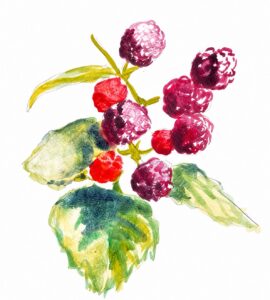
Breakfast was simpler: bread and milk or a cornmeal porridge called hasty pudding, cooked thick and sweetened with molasses, which was far more common than sugar in colonial households. The midday meal was the largest of the day, and supper was light. Summer brought fresh garden vegetables and wild berries. Eels and pickerel from the Housatonic, and the occasional partridge or rabbit from the surrounding hills, rounded out the plate.
Preservation
Before refrigeration, salting, pickling, smoking, and drying kept food edible through the year. Meat was brined in large barrels. Seafood, green walnuts, eggs, and fruits like cherries, peaches, and pears were packed into ceramic pots with vinegar, salt, sugar, and spices.
Drinks
Meals were washed down with homebrewed cider, small beer, or diluted spirits, since water quality was often unreliable. Cider was a particular favorite across Connecticut and New England.
Kitchen Gardens
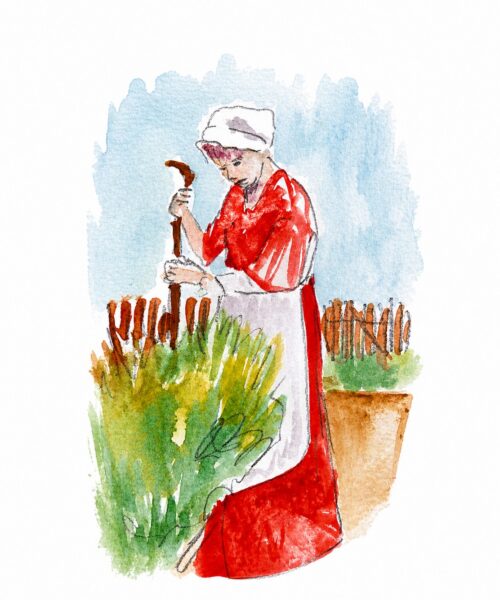
Most families kept a “kitchen garden” planted close to the house. These plots provided fresh vegetables, herbs, seasonings, and medicinal plants, since transporting produce any distance was difficult, especially in summer and winter.
The Hearth
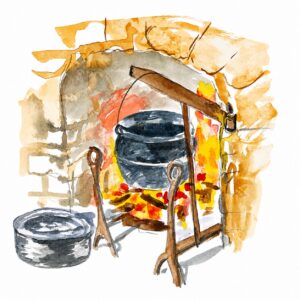
In a typical Connecticut home, the hearth was the heart of the house, used for warmth, light, and nearly every meal. Virtually all cooking happened over an open fire in cast-iron pots and kettles, even in the warm months.
Candy
Sweets appeared mostly on special occasions like weddings and holidays. Most were made from maple sugar, which was also boiled down to coat hickory nuts and butternuts, a prized delicacy.
Cornbread
Cornbread and cornmeal dishes were essential rather than incidental. New England’s rocky soils and wheat blight made wheat unreliable, so flour had to be shipped in from New York, Pennsylvania, and beyond. Cornmeal stood in, eaten alongside meat and stew to soak up broth and stretch a portion.