September 29, 2026
By Clementina Verge
Photographs by Ryan Lavine
In the studio behind his West Cornwall home, Todd Piker spends most days as he has for more than half a century: preparing clay and throwing the functional pottery that has become his life’s work. At 74, he still believes beauty belongs in everyday rituals: a morning cup of coffee, a meal, fresh flowers in a vase.
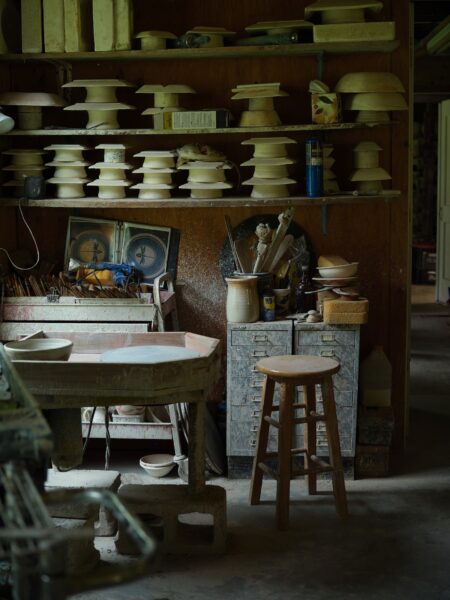
The philosophy began when Piker was 18. After discovering pottery in high school, the Long Island native applied to apprentice with legendary British potter Michael Cardew, one of England’s most influential studio artists. Cardew accepted him, beginning a mentorship that shaped Piker’s craft and understanding of beauty and function in everyday life.
“One of the most meaningful things Cardew said to me when I was learning how to make a mug was that drinking is a form of kissing,” Piker says. “I had to think hard about that spot, how it needs to be smooth and feel right.”
The lesson extended far beyond a mug’s rim. For Piker, the curves and surfaces of every vessel should elevate ordinary moments.
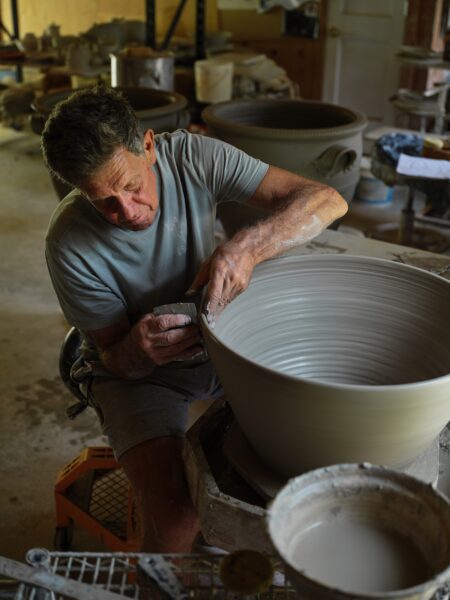
After leaving Cornwall, England, Piker found himself in Cornwall, Connecticut, where he established Cornwall Bridge Pottery in 1974. Today, he remains committed to firing his work in a traditional wood-burning kiln, embracing a centuries-old process that blends technical precision with the unpredictability of flame.
“It is clay, a maker’s hands, temperature, fire, and alchemy,” he says.
Unlike electric or gas firing, a wood-fired kiln allows flame, ash, and mineral vapors to produce subtle, unrepeatable variations of color, texture, and pattern in every piece.
“It’s like autumn leaves,” Piker says. “They may look alike from a distance, but no two leaves are identical. Each one reveals something different up close.”
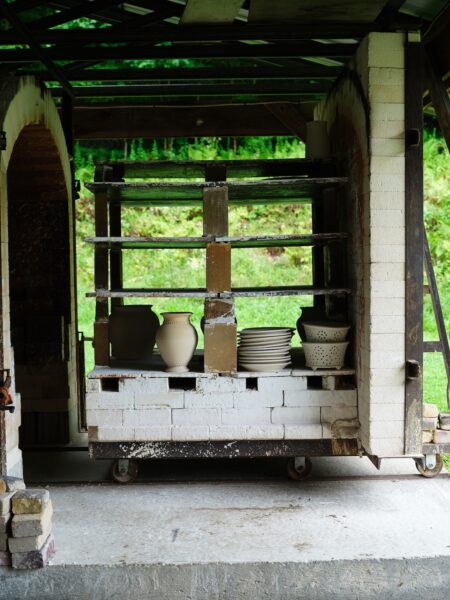
Now fired only once a year, the kiln reaches temperatures of nearly 2,300 degrees Fahrenheit and burns for days before cooling to reveal its contents.
“In the beginning, it took about 100 firings and ten years to get things right,” he says. “Each firing was a huge mystery. Sometimes it ended with beautiful surprises. Other times, it meant shoveling broken pieces from the kiln and starting over.”
That willingness to embrace uncertainty shaped his career. His creations found their way into retailers such as Macy’s and Bloomingdale’s, private collections, and the American Museum of Ceramic Art. For decades, his Cornwall store drew locals and travelers alike before he closed it and moved the gallery to his studio.
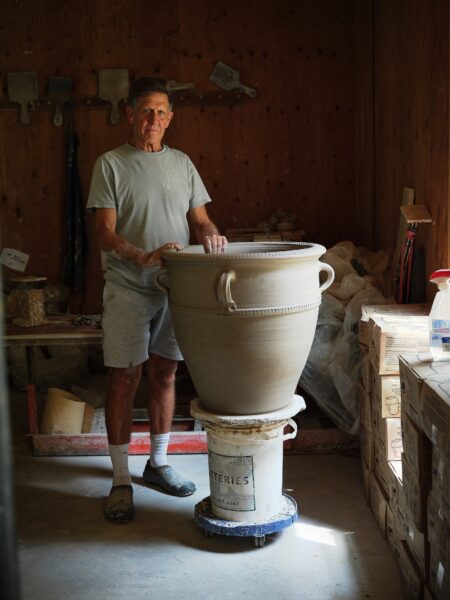
Age has brought a different kind of freedom, the flexibility to work more for love of the craft than commerce, he reflects.
Through every chapter, Piker credits his wife, Ivelisse, and the Cornwall community for the “immeasurable” support that has sustained his life’s work.
Today, Cornwall Bridge Pottery is more than a working studio. It is a place where tradition continues, artists gather, and Piker shares with his apprentices the same philosophy Cardew entrusted to him decades ago.
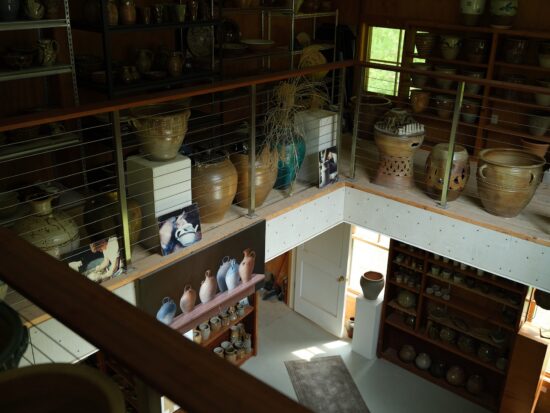
That legacy will be on display during the Clay Way Studio Tour, October 17–18, when nine studios across western Connecticut welcome visitors to meet 25 ceramic artists. The event celebrates the enduring connection between earth, fire, human hands, and objects that enrich everyday life.