November 16, 2026
By Clementina Verge
Photographs by Rana Faure
It began with two Highland cows, acquired “just for fun.” Today, a fold of 12 roams the 100-acre property in Kent, their sweeping horns and shaggy coats lending the landscape Scottish character. For Lee Ogden, what started as a whim has become something enduring: a daily connection to the land.
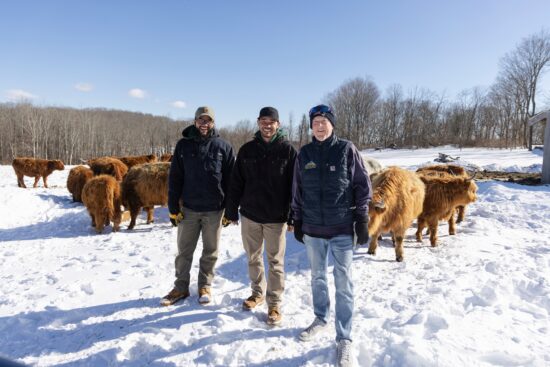
Ogden’s affinity for animals took root long before the herd. Growing up north of Boston around horses, he developed an appreciation for their presence and the responsibilities that came with caring for them. Years later, Highland cattle would offer a different kind of relationship, one shaped by open fields, changing seasons, and the rhythms of farm life.
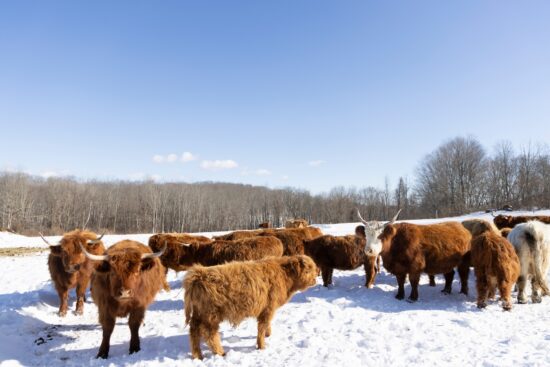
The property, which has belonged to his wife’s family since the ’60s, was once home to cows. Ogden wanted to bring the tradition back. When David and Laura Miller of Race Hill Farm in Roxbury decided to sell their herd, he didn’t hesitate. “I went from two to 28 about ten years ago,” he recalls. He fenced the fields, arranged for water, and initially partnered with a member of his extended family to manage the growing operation.
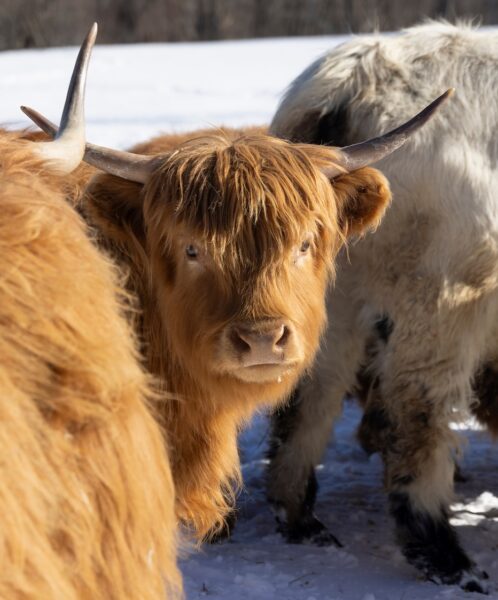
The fringes that drape over their eyes give Highland cattle an endearing and recognizable presence. Among Scotland’s oldest cattle breeds, they are prized for their hardiness, docile temperament, and resourcefulness. Thick double coats protect them against harsh weather, making them well suited to Ogden’s exposed hilltop, some 1,200 feet above sea level. Even in bitter cold, the cattle often seem content to stand outdoors rather than seek shelter.
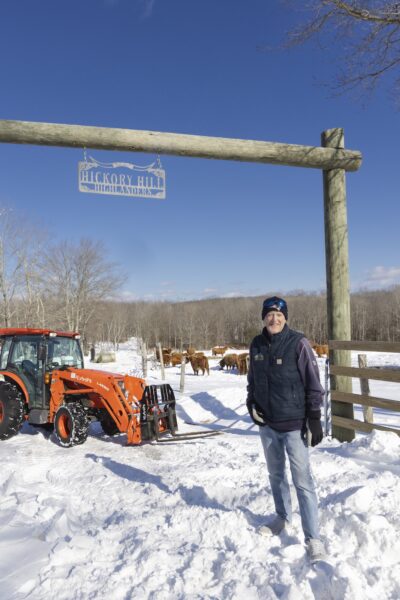
For much of the year, they live fully off the land, Ogden reveals, foraging and grazing freely across the property. Winter brings the practical business of supplying locally sourced hay and ensuring that water remains accessible as temperatures plunge. Their resilience makes them remarkably self-sufficient, but their care still demands attention.
Ogden’s mornings begin with a drive through the fields, following the familiar tracks his truck tires have pressed into the landscape. The headcount takes about 15 minutes, a check to make sure everyone is present and well. His St. Bernard and Labrador often ride along. It is a peaceful routine, watching the fold’s personalities emerge. The females tend to stay close to their mothers; adolescent males, meanwhile, can be mischievous enough to wander through a fence as though it were barely there.
There are harder moments, including the birth of a stillborn calf, but also extraordinary ones: the arrival of twins, or watching a newborn find its feet within minutes. Ogden delights in the small details, from naming calves after the calendar—Cinco arrived on May 5, Bunny on Easter—to exchanging bulls with neighboring farms to encourage greater variety in coat color.
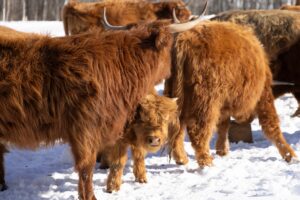
His affection for the breed has even shaped his professional identity. His business, Highland Management, incorporates the animals’ distinctive horns into its emblem, a nod to their strength and resilience.
“I could watch them all day,” Ogden says. “It’s a simple life. There’s just a peacefulness to their existence. In the world we live in and the lives we lead, it’s simplicity and joy.” On this Connecticut hilltop, that may be the greatest luxury of all.