October 26, 2026
By Clementina Verge
Photographs by Rana Faure
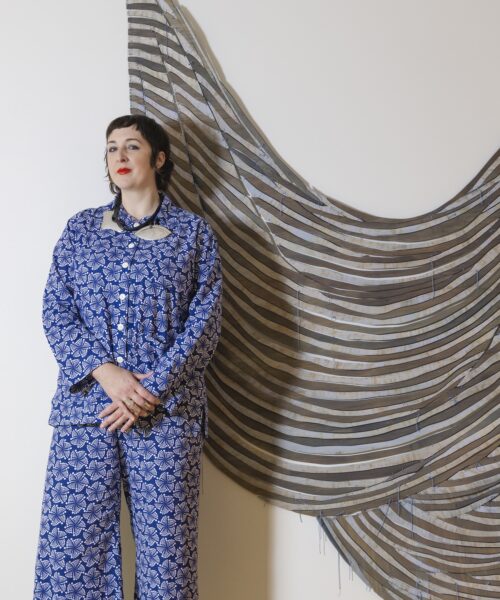
We often imagine how a new home, landscape, or relationship could provide a fresh start. Yet changing our surroundings does not necessarily change what lies within us. For psychotherapist Ash Compton, that distinction sits at the heart of her practice. Based in Kent, she works with creatives, highly sensitive people, and those navigating trauma and the uncertainties of contemporary life.
“We bring our complexes, histories, relationships, defenses, distresses, and ways of making meaning with us,” she reflects. “There is a deep distinction between changing your environment and changing your inner relationship to your life. We may move somewhere beautiful and discover that we are still inhabiting the same inner landscape.”
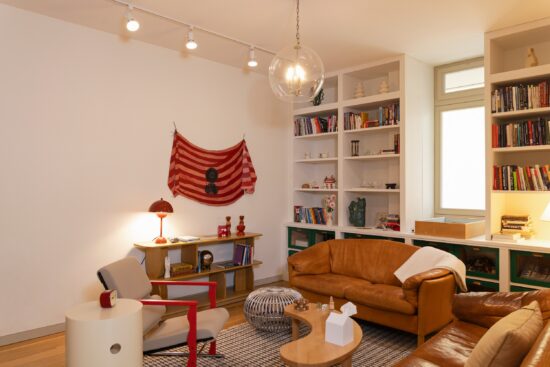
A cultural ecologist as well as a psychotherapist, Compton moves among Jungian psychology, environmental grief, systems thinking, communications design, and personal history. Her work looks beyond what is immediately visible and considers the emotional, relational, and environmental forces that shape how we experience the world.
That interest in the invisible extends naturally into another medium: scent. Compton is also an olfactory artist and the creator of Fray Ardens, a perfume line exploring memory, imagination, and relationships to place. Scent can arrive before a thought. It forms an unusually intimate connection with memory and emotion, returning us instantly to a person, a season, or a place we thought we had left behind.
For Compton, fragrance is not simply about reproducing what a place smells like but about translating the experience of being there into another sensory language.
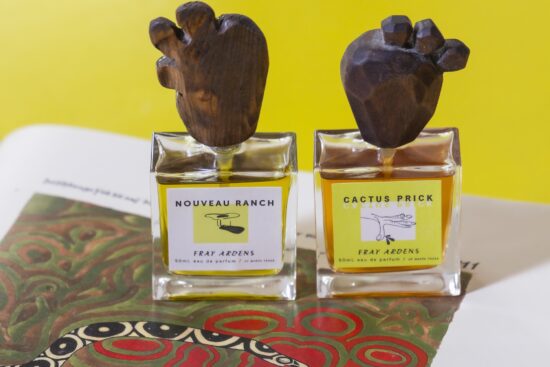
As a child, she had color-grapheme synesthesia, a blending of sensory associations. In creating fragrance, she began asking not simply what something smelled like but what it might look, sound, or feel like.
That sensibility is evident in Nouveau Ranch, from Fray Ardens’ first collection, Mythopoesis. Created while Compton was living in Marfa, Texas, the fragrance emerged from long walks along ranch roads and a fascination with the grasses of the Chihuahuan Desert.
Blue grama grass, her favorite, barely has a scent. Rather than attempting to reproduce an aroma that was scarcely there, Compton asked a more imaginative question: What would this grass smell like?
Working from visual impressions, sounds, journals, and memory, she created a translation between senses, a way of turning a place into something that could be carried.
The idea becomes particularly poignant as familiar landscapes change. Compton’s work in environmental grief recognizes that losing a landscape can be both ecological and deeply personal. Places hold memory and shape identity; when they change or disappear, something within us may shift too.
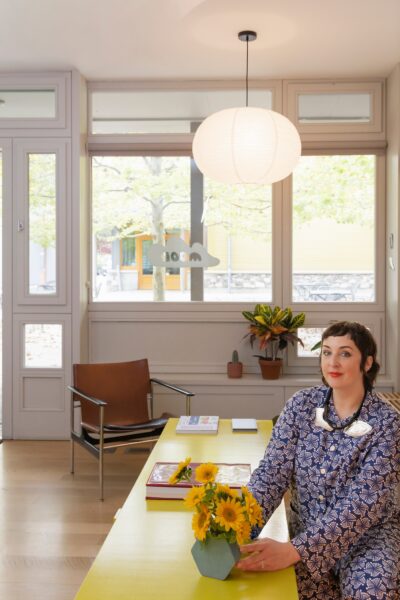
Her psychotherapy, environmental work, and perfume-making ultimately circle the same territory: the invisible patterns, associations, and atmospheres that shape experience before language arrives.
The inner anchor, then, is not immunity from change but the ability to remain in relationship with what changes—to grieve without becoming immobilized, to remember without becoming trapped, and to carry something beautiful forward when the original place is no longer there.
Like scent, the things that shape us may be invisible, but no less real for being so. — moodpsychotherapy.com