September 4, 2026
Rumsey Hall was founded in 1900. How has the school changed while holding onto its founding mission? Rumsey has grown from a small boys’ boarding school into a coeducational community serving day students from Pre-K through ninth grade and boarders in grades six through nine. Our programs, facilities, and teaching have evolved, but our core belief has not: a school can be both highly rigorous and deeply human. Children learn best when they are challenged, known, and cared for.
Why is middle school treated as such a defining stage at Rumsey? Middle school can be one of the most challenging stages of childhood. Young people seek greater independence but still need structure, reassurance, and guidance. Students take on responsibility gradually, surrounded by adults who understand this age and know them well.
With a 6:1 student-teacher ratio, what does that mean in the classroom? In a class of 12, it is difficult for a student to disappear, and that is a good thing. Teachers learn how each child thinks, where they need encouragement, and how best to challenge them—whether that means extra support, inviting a quieter student into the conversation, or giving another room to pursue a subject more deeply.
What role does Rumsey’s 331-acre campus in the Litchfield Hills play in daily school life? Many classrooms open directly outdoors, so students step outside as they move through the day. The rivers, trails, fields, and changing seasons become natural extensions of the classroom, whether students are conducting a science investigation, sketching outdoors, or riding mountain bikes. Children learn and grow best when they have room to move, explore, play, and connect with the world around them.
Rumsey graduates go on to selective secondary schools across the country. How do you prepare them for that transition? Preparation is about more than academics. Students learn how they work best, when to ask for help, when to advocate for themselves, and how to manage greater independence. Our secondary school counseling process then helps each family find the school where that student will thrive.
With 42 athletic offerings—from crew to ice hockey to mountain biking—what’s the philosophy behind such a wide range? At Rumsey, being a three-season athlete means participating in an athletic or recreational activity in the fall, winter, and spring. The breadth of choices allows experienced competitors and beginners alike to find their place while building teamwork, resilience, and confidence.
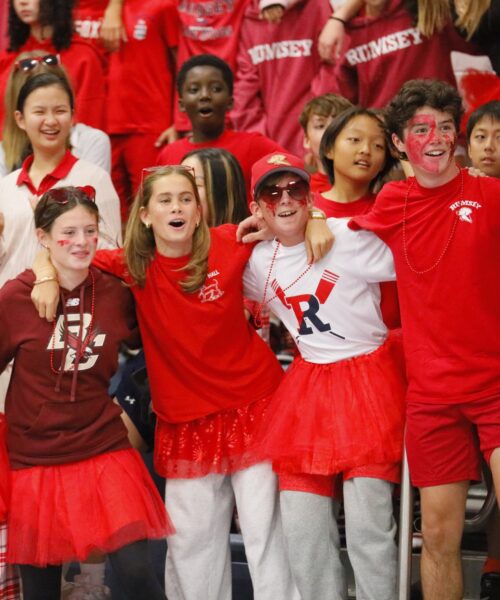
Why do traditions matter so much at Rumsey? Traditions connect generations of students and help them understand that they are part of something larger than themselves. Red vs. Blue, the Blue Dog Parade, holiday dinners, the annual ski trip to Bromley, and other events bring different ages together and create lasting memories, and give the school a shared history that students become part of.
How does Rumsey develop leadership from Pre-K through ninth grade? Leadership begins with small, age-appropriate responsibilities and grows as students do. Younger students take on classroom jobs and lead assemblies, while older students serve as team captains, student government representatives, club leaders, and mentors.
What distinguishes Rumsey? Rumsey educates the whole child within one connected community. A student can move from a small class to extra help, orchestra, art, theater, or athletics, all on the same campus. Teachers, coaches, and advisors know students in different settings and work together to support their growth. —rumseyhall.org